The Complete Guide to Selling Into School Districts: How Signal-Driven Outreach Replaces the RFP Grind

· 13 min read
MarketBetter Team
Content Team, marketbetter.ai

Selling to school districts is a different beast from selling to enterprise tech companies. And most B2B sales advice — built for SaaS-to-SaaS, startup-to-enterprise motions — is borderline useless for education technology companies navigating the realities of public sector procurement.

Consider what you're dealing with:

  • 13,000+ school districts in the United States, each with its own budget cycle, technology director, and procurement rules
  • Buying windows measured in fiscal years, not quarters — miss the budget planning season and you're waiting 12 months
  • Committee decisions where the technology director likes your product but the superintendent controls the budget and the school board has final approval
  • Geographic territory complexity where your 3 SDRs each own 4,000+ districts across multi-state regions
  • RFP-driven purchasing that rewards lowest-bid compliance over product-market fit

And yet, despite these unique challenges, most edtech companies still try to sell with the same playbook they'd use for selling CRM software to mid-market companies: cold email blasts, LinkedIn connection requests, and conference booth scanning.

This is the story of how one education technology company — an IoT connectivity platform serving over 1,400 school districts nationwide — rebuilt their entire sales motion around buying signals instead of cold outreach. The result: 3x demo volume without adding a single SDR.

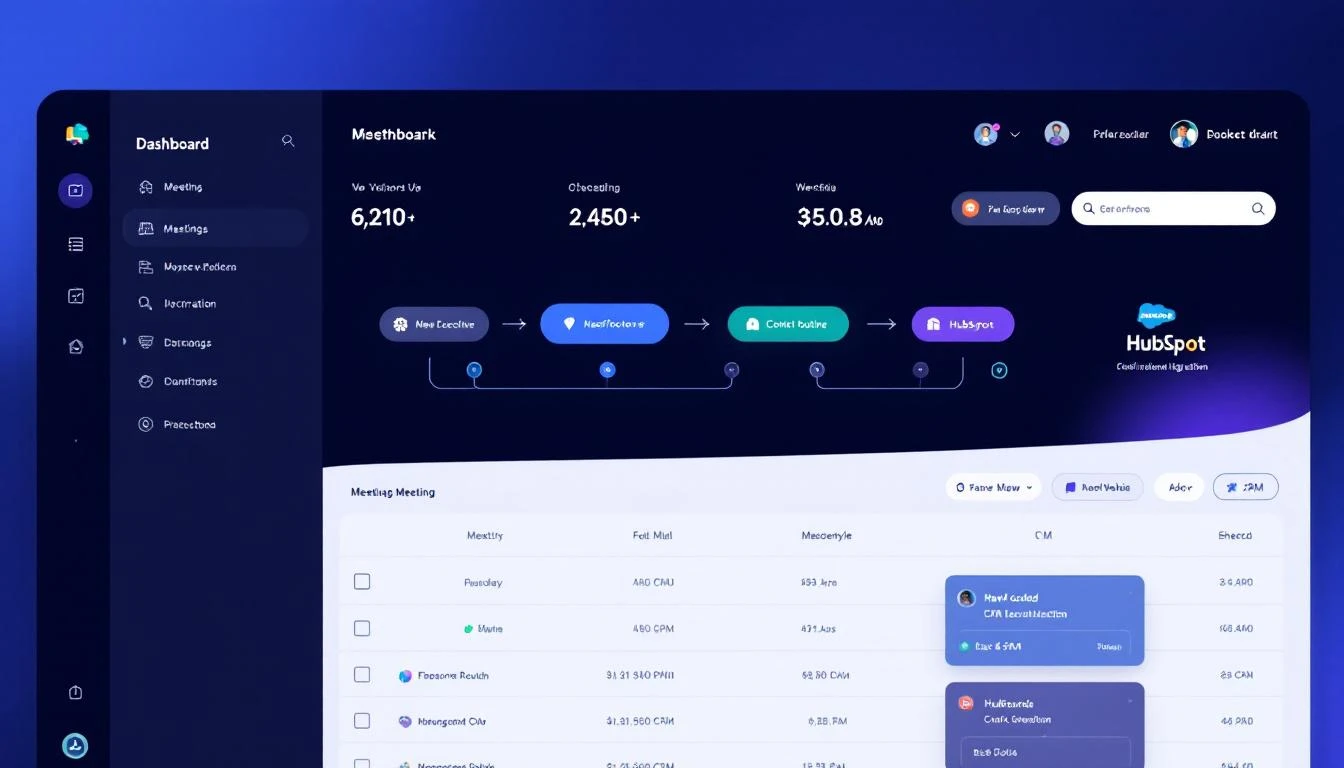
Signal-driven selling to school districts with technology overlay

Smart Scheduler: How AI Qualification Turns Every Inbound Lead Into a Booked Meeting

· 11 min read
MarketBetter Team
Content Team, marketbetter.ai

I've watched SDR teams lose winnable deals for a decade. And the number one killer isn't bad messaging, weak value props, or even the wrong ICP. It's time.

Specifically, it's the 47 minutes — on average — between when an inbound lead fills out a form and when a human being actually responds. In those 47 minutes, that lead has already opened three competitor tabs, re-read a G2 comparison, and started to forget why they were excited about you in the first place.

We all know the data. Harvard Business Review published the speed-to-lead research years ago: companies that respond within five minutes are 100x more likely to connect than those that wait 30. And yet, the average B2B company still takes over 40 minutes.

Why? Because between "lead fills out form" and "rep picks up phone," there's a broken chain of manual steps, routing logic, and round-robin roulette that nobody has fixed.

Until now.
AI-powered lead qualification workflow

The 40% Problem Nobody Talks About

Here's a stat that should make every VP of Sales uncomfortable: roughly 40% of inbound leads never get a meaningful first response. Not "never close" — never get responded to properly.

Some get lost in CRM assignment queues. Some get routed to reps who are on PTO. Some hit a round-robin and land on a rep who already has 15 open opportunities and isn't checking their new lead notifications. Some arrive at 4:47 PM on a Friday and by Monday, they're ghosts.

This isn't a people problem. Your SDRs aren't lazy. Your ops team isn't incompetent. The system is broken.

Here's what the typical inbound flow looks like at most B2B companies:

  1. Lead fills out a form
  2. Marketing automation assigns a lead score (maybe)
  3. Lead gets pushed to CRM
  4. CRM assignment rules fire (round-robin, territory, whatever)
  5. Assigned rep gets a notification
  6. Rep checks their queue 2-3 hours later
  7. Rep researches the lead manually
  8. Rep tries to qualify via email or phone
  9. Maybe — maybe — a meeting gets booked

That's nine steps. Nine failure points. Nine places where a perfectly good lead can fall through the cracks.

The median time from step 1 to step 9? Three to five days, if you're being honest. And by then, the lead is cold, distracted, or has already talked to your competitor who got there first.

If you're still running legacy lead routing processes, you're fighting a battle that was lost before your reps even knew it started.

What If AI Could Collapse That Entire Chain?

MarketBetter's Smart Scheduler does something deceptively simple: it compresses those nine steps into one continuous flow that takes seconds, not days.

Here's the waterfall:

Lead arrives → AI qualifies in real-time → CRM lookup matches company to existing owner → Meeting books directly on the right rep's calendar

Let me break down why each piece matters.

Step 1: AI Qualification in Seconds

The moment a lead submits any form — demo request, content download, chatbot interaction — AI evaluates the submission against your qualification criteria. Not a static lead score. Not a threshold number somebody set six months ago and forgot about. Actual, contextual qualification.

Does this person match your ICP? Is their company in your target segment? Is the signal strong enough to warrant immediate action?

This happens in seconds, not hours. No human queue. No waiting for an SDR to manually research the company on LinkedIn. The lead gets qualified while they're still looking at your thank-you page.

Step 2: CRM Owner Lookup — The Most Underrated Feature in Sales Tech

Here's where Smart Scheduler does something that almost no other scheduling or routing tool gets right: CRM owner matching.

When a new inbound lead arrives, the system checks your CRM — whether that's HubSpot or Salesforce — to see if that lead's company already has an assigned owner. If Sarah owns the Acme Corp account because she's been working that deal for three months, the new lead from Acme Corp goes to Sarah. Period.

This sounds obvious. It is not.

Most round-robin systems treat every inbound lead as a net-new contact and distribute them randomly. That means a new contact from an account that already has an active opportunity might get assigned to a completely different rep. The new rep doesn't know the account history. The existing rep doesn't know someone else from their account just raised their hand. The prospect ends up confused, getting outreach from two different people at the same company.

I've seen this happen at companies doing $50M+ in revenue. It's more common than anyone admits.

CRM owner lookup eliminates this entirely. If the company exists in your CRM with an owner, the inbound lead goes to that owner. It's account-level routing, not contact-level routing. And it works across both HubSpot and Salesforce, which matters because CRM migration is messy and plenty of companies are running hybrid setups during transition periods.

Step 3: Intelligent Fallback for Unmatched Leads

What about truly net-new leads — companies that don't exist in your CRM yet? That's where configurable routing rules take over.

Smart Scheduler doesn't just default to basic round-robin. You can configure routing based on:

  • Territory: Geographic or vertical-based assignment
  • Round-robin: Equal distribution across available reps
  • Capacity: Weighted by current pipeline load
  • Specialization: Route based on product interest, company size, or use case

The key word is configurable. Every sales org is different. Some have strict territory models. Some run pods. Some have different teams for inbound vs. outbound. Smart Scheduler adapts to your model rather than forcing you into a one-size-fits-all distribution.

Step 4: The Meeting Books Itself

This is the part that changes everything. Once the lead is qualified and routed to the right rep, the meeting booking happens immediately. The lead sees the rep's calendar and can book a time — right then, while they're still engaged, while the intent is still hot.

No "someone will reach out within 24 hours." No "check your email for scheduling options." No five-email back-and-forth to find a time that works.

The lead goes from form fill to booked meeting in one unbroken flow. That's the speed-to-lead advantage that every sales org claims to want but almost none actually achieve.

The Round-Robin Problem Is Worse Than You Think

Let me spend a minute on why traditional round-robin routing is so destructive, because most sales leaders underestimate this.

Round-robin assumes all leads are equal and all reps are interchangeable. Both assumptions are wrong.

Not all leads are equal. An inbound demo request from a VP at a 500-person company in your target vertical is worth dramatically more than a content download from a student. Treating them the same — distributing both through the same round-robin queue — means your best leads get the same treatment as your weakest ones.

Not all reps are interchangeable. Some reps specialize in enterprise. Some crush it in the mid-market. Some know a specific vertical cold. Round-robin ignores all of this. It's the scheduling equivalent of random assignment in a world where pattern matching drives conversion.

And then there's the account ownership problem I mentioned earlier. Round-robin actively works against account-based selling strategies. If you're investing in ABM, if you're building account plans, if you're trying to create unified experiences for buying committees — and then your inbound routing randomly assigns new contacts to different reps — you're undermining your own strategy.

Smart Scheduler's CRM owner matching is designed specifically to prevent this. It respects your existing account relationships and only falls back to configurable rules for genuinely new accounts.

Why This Matters More in 2026 Than Ever Before

Three trends are converging to make intelligent inbound routing a necessity rather than a nice-to-have:

Buying Committees Are Bigger

The average B2B deal now involves 11+ stakeholders. That means multiple people from the same company will hit your website and fill out forms at different times. If each one gets round-robined to a different rep, you're creating chaos instead of coherence. CRM owner matching ensures every touchpoint from the same account flows to the same rep — building a complete picture instead of fragmented conversations.

AI SDRs Are Raising the Bar

Competitors are deploying AI chatbots and AI-powered qualification tools that respond instantly. If your competitors are booking meetings in 30 seconds and you're booking them in 30 hours, you're not competing. You're spectating. Smart Scheduler puts you at parity — or ahead — by automating the qualification-to-booking pipeline end to end.

Inbound Volume Is Increasing, But Quality Is Noisy

With more content, more ads, and more channels driving traffic, SDR teams are dealing with higher inbound volume but more noise. AI qualification acts as a real-time filter, ensuring reps spend their time on leads that actually match your ICP rather than manually triaging a queue that's 60% unqualified.

The Real ROI Isn't Speed — It's Accuracy

Most people focus on speed-to-lead when they think about scheduling automation. And speed matters — that 5-minute response window is real.

But the bigger ROI is accuracy. Getting the lead to the right rep, not just a fast rep.

When a lead gets routed to the rep who already owns that account, conversion rates jump — not by 10 or 20 percent, but often by 2-3x. Why? Because that rep already knows the company's pain points, their tech stack, their buying process, their internal champions. They don't need 20 minutes of discovery to get up to speed. They can have a relevant, intelligent conversation from minute one.

This is the difference between "I saw you filled out a demo request, tell me about your business" and "Hey, I've been working with your team on the deployment project — saw you wanted to discuss the new use case, let's dive in."

One of those sounds like a vendor. The other sounds like a partner. The difference is routing accuracy.

What About Leads That Don't Book?

Not every lead will book a meeting immediately, even with a frictionless scheduling flow. Some people prefer email. Some want to do more research first. Some fill out forms on mobile and plan to follow up later.

Smart Scheduler accounts for this. Leads that are qualified but don't book in the initial flow get assigned to the matched rep (or the appropriate fallback rep) with full context about the lead's qualification profile. The rep can then follow up via email, phone, or personalized outreach — but they're following up with a warm, pre-qualified lead, not starting from scratch.

The system doesn't treat unboooked-but-qualified leads as failures. They're opportunities in motion, and the rep who gets them has all the context they need to convert.

The Waterfall, Visualized

Here's how the complete flow works for every single inbound lead:

1. Lead Arrives Form submission, chatbot interaction, or scheduling request triggers the workflow.

2. AI Qualification Real-time evaluation against your ICP criteria, qualification rules, and engagement signals. Qualified leads proceed; unqualified leads get appropriate nurture treatment.

3. CRM Owner Lookup The system checks HubSpot or Salesforce for an existing company match. If the lead's company has a CRM owner, that owner is the routing target.

4. Owner Match → Direct Booking Lead sees the account owner's calendar and can book immediately. No round-robin, no queue, no delay.

5. No Owner → Configurable Routing For net-new companies, routing rules fire based on your configuration — territory, round-robin, capacity, specialization, or any combination.

6. Meeting Confirmed Calendar invite sent, CRM updated, rep notified with full lead context. The entire process completes in seconds.

Every step is automated. Every step happens in real-time. Every step is designed to ensure that no qualified lead ever waits in a queue wondering if anyone's going to call them back.

Stop Leaking Pipeline

The hard truth is that most B2B companies are losing 30-40% of their inbound pipeline to slow response times and wrong rep assignment. That's not a marketing problem. That's not a demand gen problem. That's a plumbing problem.

Smart Scheduler fixes the plumbing.

If you want to see what your inbound conversion rates look like when every lead gets qualified in seconds, routed to the right rep, and given a frictionless path to booking — it's worth seeing it in action.

Because in the time it took you to read this post, someone at your company probably lost a lead.


Adam Grant leads GTM at MarketBetter, where he helps B2B sales teams turn inbound intent into booked meetings — without the manual triage that kills conversion rates.


What's New: Smart Scheduler Redesign, Sequence Controls, AI Auto-Recharge & More

· 5 min read
sunder
Founder, marketbetter.ai

Big week at MarketBetter. The team shipped a stack of updates that make your day-to-day workflow faster and give you more control over your pipeline — without ever leaving the platform.

Here's everything that's new.

Smart Scheduler: Completely Redesigned

We rebuilt the meeting routing experience from the ground up.

What changed:

Previously, setting up meeting routing meant configuring abstract rules in a list. Now you'll see a clear, visual two-step waterfall flow that makes it obvious exactly how leads get routed:

  • Step 1: CRM Account Owner — When a lead comes in, MarketBetter checks your CRM for an existing account owner. If there's a match, the meeting goes directly to the right rep.
  • Step 2: Unmatched Leads — Leads without a CRM match get distributed via round robin or routed to a specific fallback rep.

The entire UI uses generic "CRM" terminology now, because this brings us to the biggest improvement:

HubSpot Support for Meeting Routing

Smart Scheduler now works with both Salesforce and HubSpot. If you're connected to either CRM (or both), the system automatically detects your integration and routes leads through the right one. No configuration needed — it just works.

For teams on HubSpot, this means you finally get the same intelligent owner-based routing that Salesforce users have had.

Smart Scheduler waterfall routing with CRM integration

Also new: You can't accidentally activate Smart Scheduler with an empty SDR pool anymore. The toggle stays disabled until you add at least one rep, with a clear warning explaining why.

Pause, Resume & End Sequences — Right From Activity

Your Activity page just became a lot more powerful.

Every lead in your Activity feed now shows its current sequence status — Active, Paused, Ended, or Completed — with a colored badge so you can scan at a glance.

More importantly, you can now take action directly from the Activity page:

  • Pause a running sequence to temporarily stop outreach
  • Resume a paused sequence to pick back up where you left off
  • End a sequence entirely (with a confirmation dialog, so you don't accidentally kill a live campaign)

No more digging through separate sequence management screens. See a lead's engagement dropping? Pause the sequence right there. Ready to re-engage? Resume with one click.

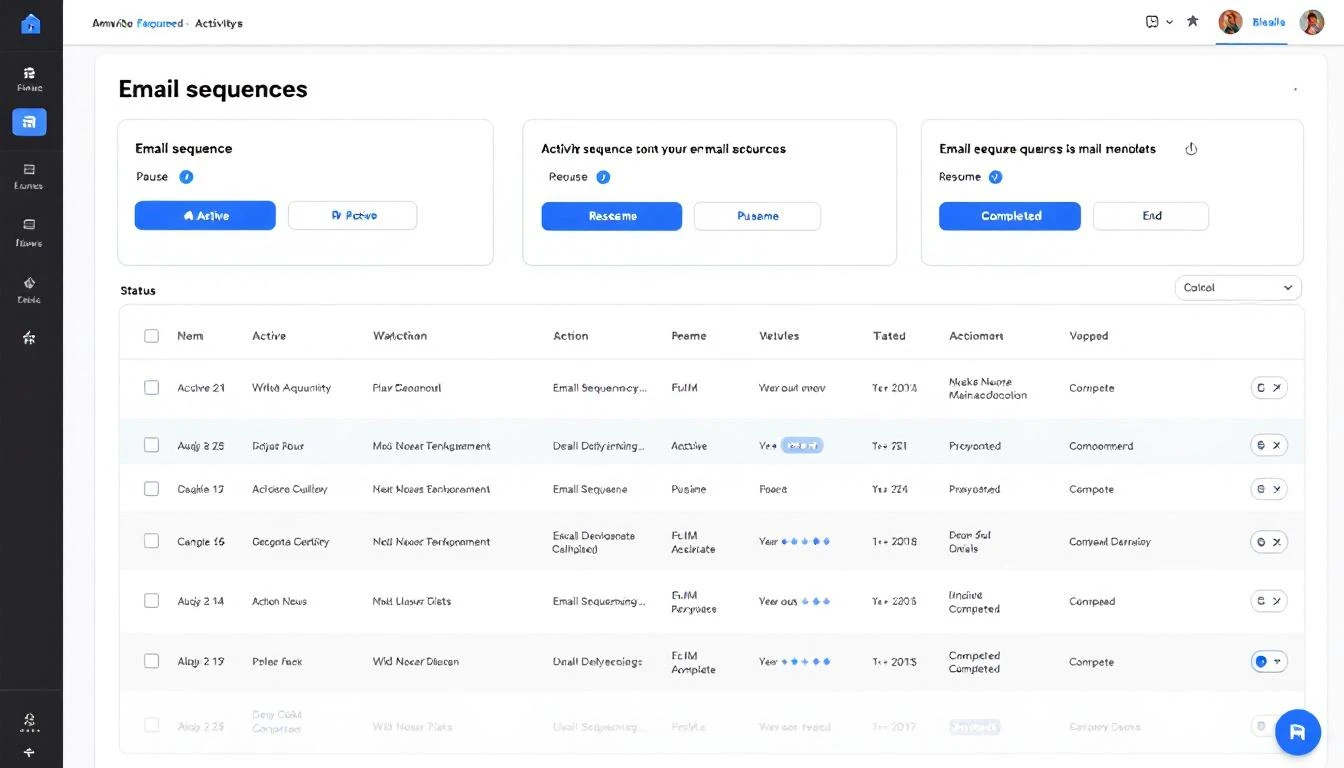
Sequence controls in the Activity page with status badges

AI Credit Auto-Recharge

Running out of AI credits mid-campaign is the kind of thing that quietly kills pipeline. Now you can set it and forget it.

How it works:

  1. Go to Settings → Billing & Usage
  2. Under AI Credits, toggle on Auto-Recharge
  3. Set your recharge threshold (e.g., when balance drops below 500K credits)
  4. Pick a package size (small, medium, or large)

When your balance hits the threshold, MarketBetter automatically charges your card and tops up your credits. You'll get an email notification every time it fires. Same flow you already know from enrichment credit auto-recharge — now available for AI credits too.

Self-Serve Seat Purchases

Adding team members just got frictionless.

When you try to enable a team member and you're at your seat limit, instead of getting an error, you'll see an "Add Seat ($99/mo)" dialog. Click confirm, complete the Stripe checkout, and your new seat is immediately available. No back-and-forth with support, no waiting.

The billing page also now shows a clear seat counter (e.g., 3/5 seats used) so you always know where you stand.

Better Booking Experience

We made two small but important changes to the booking flow on your site:

  • The qualifying step now shows a neutral "Please wait a moment..." instead of revealing the qualification process
  • If a visitor doesn't match your ICP, they see a friendly "Thank you, we'll be in touch" message — not a rejection screen

First impressions matter. These changes make sure every visitor has a professional experience, even if they're not the right fit today.

Workspace Security: Domain Enforcement

New workspaces are now tied to your email domain. One domain, one workspace — no more accidental duplicate accounts or unauthorized joins.

Self-service "join workspace" links have been retired. Team members are now added by workspace admins only, giving you full control over who has access.

Improved Email Validation

We upgraded our email validation engine under the hood. What this means for you: more accurate bounce prediction and better deliverability scores across your outreach sequences. Fewer emails hitting dead inboxes means higher sender reputation and more replies landing where they should.

Settings Navigation Update

One small rename: Outreach in your settings menu is now Channels. Same settings, clearer name — because your outreach spans email, dialer, chat, and more. The label should reflect that.


What's Coming Next

We're deep into the next batch of improvements — smarter dialer workflows, expanded analytics, and tighter credit controls for enterprise teams. More soon.


Want to see these features in action? Book a demo →

Why Open Source GTM Agents Won't Replace Your SDR Platform

· 8 min read
MarketBetter Team
Content Team, marketbetter.ai

There's a new GitHub repo making the rounds on LinkedIn. Sixty-seven Claude Code plugins. Ninety-two AI agents. Covers everything from cold-email-sequence generation to churn prediction to ABM campaign orchestration. It's called GTM Agents, and if you read the README, you'd think the entire SDR function just got automated overnight.

I've spent the last week pulling apart repos like this — and I have a contrarian take that's going to annoy a lot of the "AI will replace salespeople" crowd:

Open source GTM agents won't replace your SDR platform. Not this year. Probably not next year either.

Here's why.

The "100 Leads in 5 Minutes" Illusion

Let me paint the picture these repos sell. You clone a repo, plug in your API keys, write a prompt like "find me 50 Series B fintech companies in the Midwest with 100-200 employees who recently hired a VP of Sales," and boom — a list materializes. Maybe it even drafts personalized cold emails for each one.

Impressive demo. Terrible GTM motion.

Here's what that workflow is actually doing: it's querying an LLM with some structured prompts, maybe hitting a public API or two, and returning text. That's it. There's no verification that those companies exist as described. There's no signal that any of them are in-market right now. There's no check on whether the emails it generated will actually land in an inbox instead of a spam folder.

You've got a list. Congratulations. You also had a list when you bought a CSV from ZoomInfo in 2019. The list was never the hard part.

The Four Missing Layers

When I audit these open source GTM agent repos — and I've looked at several dozen at this point — they all share the same blind spots. Every single one is missing at least four critical layers that separate "AI-generated list" from "revenue pipeline."

1. No Signal Layer

The entire premise of modern outbound is timing. You reach out when someone is actively researching your category, not when your AI randomly decides they match an ICP filter.

Open source agents don't have access to intent signals. They can't tell you that a prospect visited your pricing page yesterday, or that their company just started evaluating competitors, or that a champion from a closed-lost deal just changed jobs to a new target account.

Without signals, you're back to spray-and-pray with better grammar. The AI writes a prettier email, but you're still guessing on timing.

2. No Visitor Identification

Here's a specific capability that matters enormously and doesn't exist in any prompt-based agent: identifying the anonymous visitors on your website.

When someone from Acme Corp lands on your product page, reads three case studies, and checks your pricing — that's the highest-intent signal in B2B. But to capture it, you need pixel-level visitor identification infrastructure. JavaScript snippets. IP-to-company resolution. Cookie management. Privacy compliance frameworks.

No LLM prompt does this. No agent framework does this. This is infrastructure, not intelligence.

3. No Deliverability Infrastructure

This is where the "generate 1,000 cold emails" repos get genuinely dangerous.

Email deliverability is a system. It involves domain warmup schedules, sender rotation across multiple domains, SPF/DKIM/DMARC authentication, bounce management, reputation monitoring, throttling to stay under ESP rate limits, and constant adjustment based on inbox placement rates.

An AI agent that generates emails without this infrastructure is like a race car engine without a chassis. You've got power with no way to use it. Worse — if you actually send those AI-generated emails through a half-configured outbound setup, you'll burn your domain reputation in weeks. And once your domain is blacklisted, you're not getting it back easily.

4. No Dialer

Phone is still the highest-conversion outbound channel in B2B. The data on this is unambiguous: multi-channel sequences that include phone connect at 2-3x the rate of email-only sequences.

Open source GTM agents are entirely text-based. No parallel dialing. No local presence numbers. No voicemail drop. No call recording, transcription, or AI-powered coaching. No integration with your CRM that logs the call, updates the contact record, and triggers the next sequence step.

The phone gap alone is disqualifying for any serious SDR operation.

The Real Problem: Execution Infrastructure

Here's the deeper issue. These repos conflate intelligence with infrastructure.

An LLM is intelligence. It can analyze an ICP, draft messaging, score leads against criteria, even suggest which accounts to prioritize. That's valuable! I'm not saying the AI layer is useless.

But GTM execution requires infrastructure:

  • Data pipes that ingest signals from website visitors, CRM updates, job changes, technographic shifts, and funding events in real time
  • Orchestration engines that sequence multi-channel touches across email, phone, LinkedIn, and direct mail with proper cadence and rules
  • Deliverability systems that protect your sender reputation while maximizing reach
  • Analytics platforms that track attribution from first touch to closed-won revenue

Intelligence without infrastructure is a thought experiment. Infrastructure without intelligence is 2020-era sales tech. You need both.

Where the Agent Stack Actually Helps

I don't want to be purely negative. There are areas where these AI agent frameworks genuinely add value — just not as standalone SDR replacements.

ICP refinement. Pointing an LLM at your closed-won data and asking it to find patterns is legitimately useful. It'll surface segments and firmographic patterns that humans miss.

Message testing. Generating 20 variations of a cold email and A/B testing them at scale is a great use of AI. Just make sure you've got the deliverability infrastructure to actually run those tests.

Pipeline analysis. The "pipeline-health-check" agents that review your CRM data and flag stale deals, coverage gaps, or velocity anomalies? Genuinely helpful. These are analytical tasks that LLMs handle well.

Content generation. Blog posts, case studies, competitive battle cards, objection handling guides — AI is a force multiplier here. No infrastructure dependency, just raw intelligence applied to content.

The pattern: AI agents excel at thinking tasks and fail at doing tasks that require real-world infrastructure.

What Actually Works: Intelligence + Infrastructure

The teams I see crushing outbound in 2026 aren't choosing between AI agents and SDR platforms. They're using platforms that bake intelligence into infrastructure.

That means a system where visitor identification happens automatically, intent signals flow into a prioritized daily playbook, AI drafts personalized outreach based on real behavioral data (not hallucinated firmographics), and the whole thing executes through deliverability-safe email infrastructure and an integrated dialer.

This is what platforms like MarketBetter are built around — the full stack from signal capture to execution, with AI woven through every layer rather than bolted on top as a prompt.

The distinction matters because the value of AI in GTM isn't the AI itself. It's the AI applied to real data and connected to real execution channels. A brilliant AI with no data and no channels is a demo. A mediocre AI with great data and reliable channels is a pipeline machine.

The Uncomfortable Truth About "Free"

One more thing worth addressing: the appeal of these repos is partly that they're free. Open source. Clone and go.

But "free" in GTM tooling is a misnomer. The costs are hidden:

  • API costs. Running 92 AI agents against production LLM APIs gets expensive fast. Claude, GPT-4, Gemini — none of these are free at scale.
  • Data costs. The agents need data to query. Enrichment APIs, intent data feeds, contact databases — all paid.
  • Engineering time. Someone has to integrate these agents into your actual workflow. Connect them to your CRM. Build the glue code. Maintain it when APIs change.
  • Opportunity cost. Every hour your team spends wiring together open source agents is an hour they're not selling.

When you add it all up, "free" open source agents often cost more than a purpose-built platform — and deliver less, because you're building the infrastructure yourself.

The Bottom Line

Open source GTM agents are a fascinating development. They represent the bleeding edge of what's possible when you point large language models at sales and marketing workflows. I'm genuinely excited about the innovation happening in this space.

But excitement and production readiness are different things.

If you're a developer who wants to experiment with AI-driven prospecting, these repos are a playground. If you're a revenue leader who needs to hit quota, they're a distraction.

The future of GTM isn't AI agents OR infrastructure. It's AI agents WITH infrastructure. And right now, the infrastructure side is where the actual value — and the actual competitive moat — lives.

Stop chasing clever prompts. Start investing in the pipes that make those prompts useful.


Want to see what signal-based selling looks like when the AI layer and infrastructure layer work together? Check out MarketBetter — real-time visitor ID, intent signals, AI playbook, smart dialer, and deliverability-safe email in one platform.

How Benefits and HR Technology Companies Scale SDR Teams Without Losing Pipeline Quality

· 12 min read
MarketBetter Team
Content Team, marketbetter.ai

Benefits and HR technology company scaling SDR team with AI signals

There's a specific growth stage in B2B sales that breaks more companies than any other: scaling from 2 SDRs to 5.

At 2 reps, everything is informal. Territories are loose. Lead routing is "whoever grabs it first." Both reps know the ICP because they've been living in it since day one. Pipeline quality stays high because the founders or sales leaders are personally reviewing every opportunity.

At 5 reps? That informal system collapses. Reps step on each other's accounts. New hires don't have the tribal knowledge to qualify properly. Lead response times spike because routing rules don't exist. And pipeline quality — the metric that actually matters — craters as quantity replaces precision.

This is the exact challenge that a benefits distribution platform recently navigated. They'd built a solid business with a small sales team, a product that HR departments genuinely needed, and a growing pipeline. But scaling the team from 2 to 3 SDR seats — with plans to reach 5 — threatened to break everything that was working.

Here's how they solved it, and what every HR tech and benefits company can learn from their approach.

How Market Research and Advisory Firms Build Predictable Revenue with Event-Driven AI Signals

· 11 min read
MarketBetter Team
Content Team, marketbetter.ai

Market research advisory firm building pipeline with event-driven AI signals

Market research and advisory firms face a revenue problem that most B2B companies never think about: your pipeline is inherently cyclical.

Conferences drive a surge of interest. A major industry report drops and suddenly everyone wants to talk. A trade show produces 300 badge scans that should become qualified conversations. Then the event ends, the excitement fades, and your sales team is back to cold outreach — hoping the next conference is close enough to keep the lights on.

If you run a market research or advisory firm — particularly in a focused vertical like smart home technology, connected consumer devices, or IoT — you know this rhythm intimately. Revenue clusters around events. The spaces between them are a grind. And scaling beyond a certain point feels impossible because your pipeline is hostage to the industry calendar.

This is the story of how one advisory firm in the connected consumer and smart home space broke out of that cycle — not by attending more events, but by fundamentally changing how they captured and acted on the signals those events generated.

We Analyzed 20+ Studies on AI in B2B Sales: Here's What's Actually Working in 2026

· 12 min read
sunder
Founder, marketbetter.ai

Everyone has an opinion about AI in sales. Vendors say it's magic. Skeptics say it's hype. SDR teams caught in the middle are just trying to figure out what to buy.

So we did something different. Instead of running another survey or publishing another vendor comparison, we analyzed 20+ independent studies, industry reports, and data sets from Salesforce, Deloitte, McKinsey, Gartner, Martal Group, MarketsandMarkets, SuperAGI, HubSpot, and others — covering hundreds of thousands of data points across B2B sales organizations.

The goal: cut through the noise and answer three questions that actually matter.

  1. What's genuinely working?
  2. What's just vendor hype?
  3. Where should sales leaders invest next?

Here's what the data says.

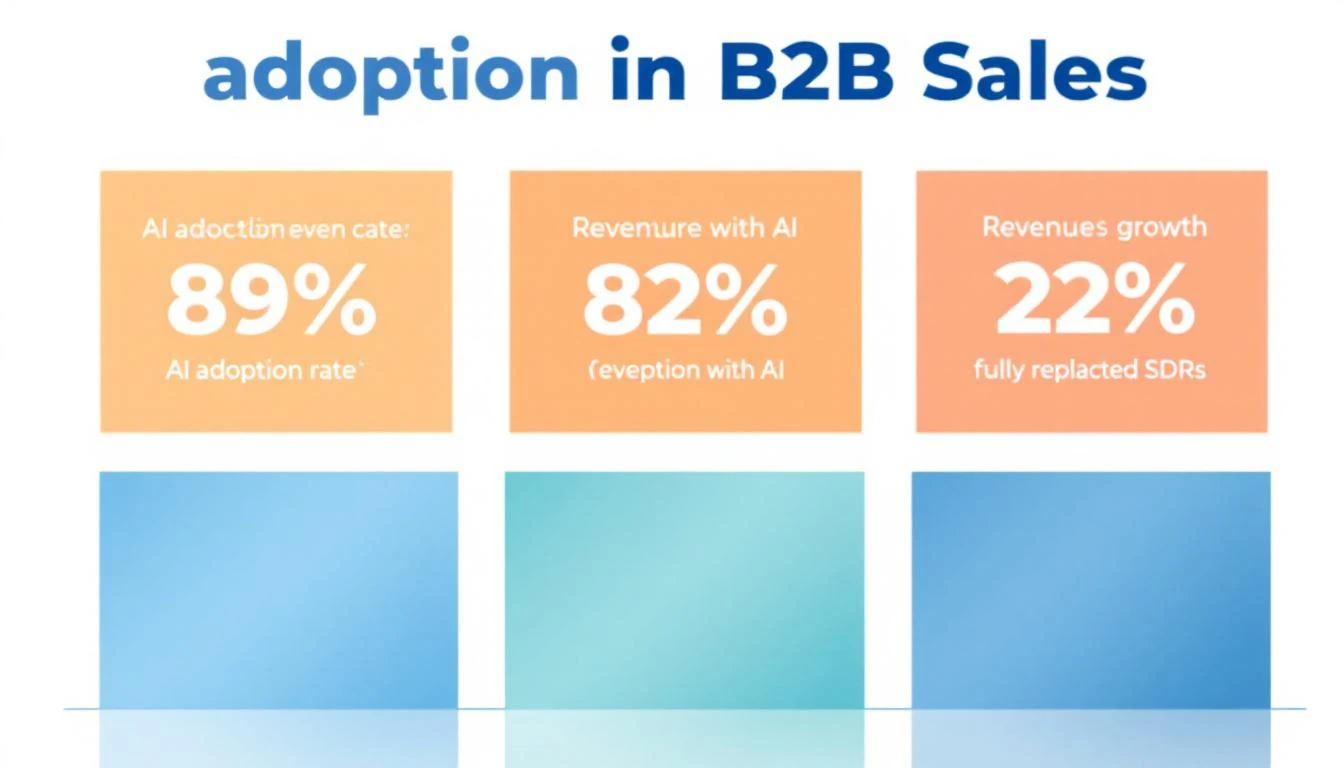
AI adoption statistics in B2B sales 2026

The State of AI Adoption: Near-Universal, Unevenly Applied

Let's start with the baseline. AI in B2B sales is no longer experimental — it's mainstream. But "mainstream" doesn't mean "effective."

The headline numbers:

  • 89% of revenue organizations now use AI in some form — up from 34% in 2023 (Martal Group, Forrester)
  • 88% of businesses report regular AI use in at least one function, up from 78% a year ago (Sopro)
  • 87% of sales organizations use AI for prospecting, forecasting, lead scoring, or drafting emails (Salesforce State of Sales 2026)
  • 92% of sales teams plan to increase AI investment in 2026 (HubSpot)

That looks like universal adoption. But dig deeper and you find a critical gap.

Deloitte Digital's February 2026 study of 1,060 B2B suppliers and buyers found that while 45% of suppliers say they use AI in sales, only 24% have touched agentic AI — the autonomous, workflow-driving kind that actually replaces manual processes. Two-thirds of those not using agentic AI said they plan to. But planning isn't doing.

The data tells us: everyone has AI. Almost nobody has deployed it effectively.

The Performance Gap: AI-Enabled Teams Are Pulling Away

Here's the number that should keep every sales leader up at night.

83% of sales teams using AI saw revenue growth in the past year, versus 66% of teams without AI (Salesforce). That's a 17-percentage-point gap in revenue growth — and it's widening.

More data points from across the studies:

MetricAI-Enabled TeamsNon-AI TeamsGap
Revenue growth83% saw growth66% saw growth+17 pts
Productivity improvementUp to 40%Baseline+40%
Sales cycle length25% shorterBaseline-25%
Revenue increase13-15%Baseline+13-15%
Sales ROI improvement10-20%Baseline+10-20%
ROI within first year86%N/A

Sources: Salesforce State of Sales 2026, McKinsey, Sopro, MarketsandMarkets

Deloitte found an even starker divide. Digitally mature B2B suppliers exceeded annual sales growth targets by 110% more than low-maturity competitors. These mature organizations were five times more likely to use AI extensively and five times more likely to use agentic AI at all.

The takeaway: AI isn't a nice-to-have. It's creating a two-tier system in B2B sales. Teams with effective AI implementations are compounding their advantages while everyone else debates whether to adopt.

The AI SDR Paradox: Volume Up, Quality Down

This is where the data gets uncomfortable for AI SDR vendors.

The AI SDR market is exploding — projected to grow from $4.12 billion in 2025 to $15.01 billion by 2030 at a 29.5% CAGR (MarketsandMarkets). An estimated 22% of sales teams have fully replaced their human SDR function with AI. Another 55% are running AI-augmented workflows.

But here's the paradox the vendors won't tell you:

AI SDR tools churn at 50-70% annually — roughly double the turnover rate of the human reps they replace (UserGems). And Gartner predicts over 40% of agentic AI projects will be abandoned by 2027.

The root cause? A quality gap:

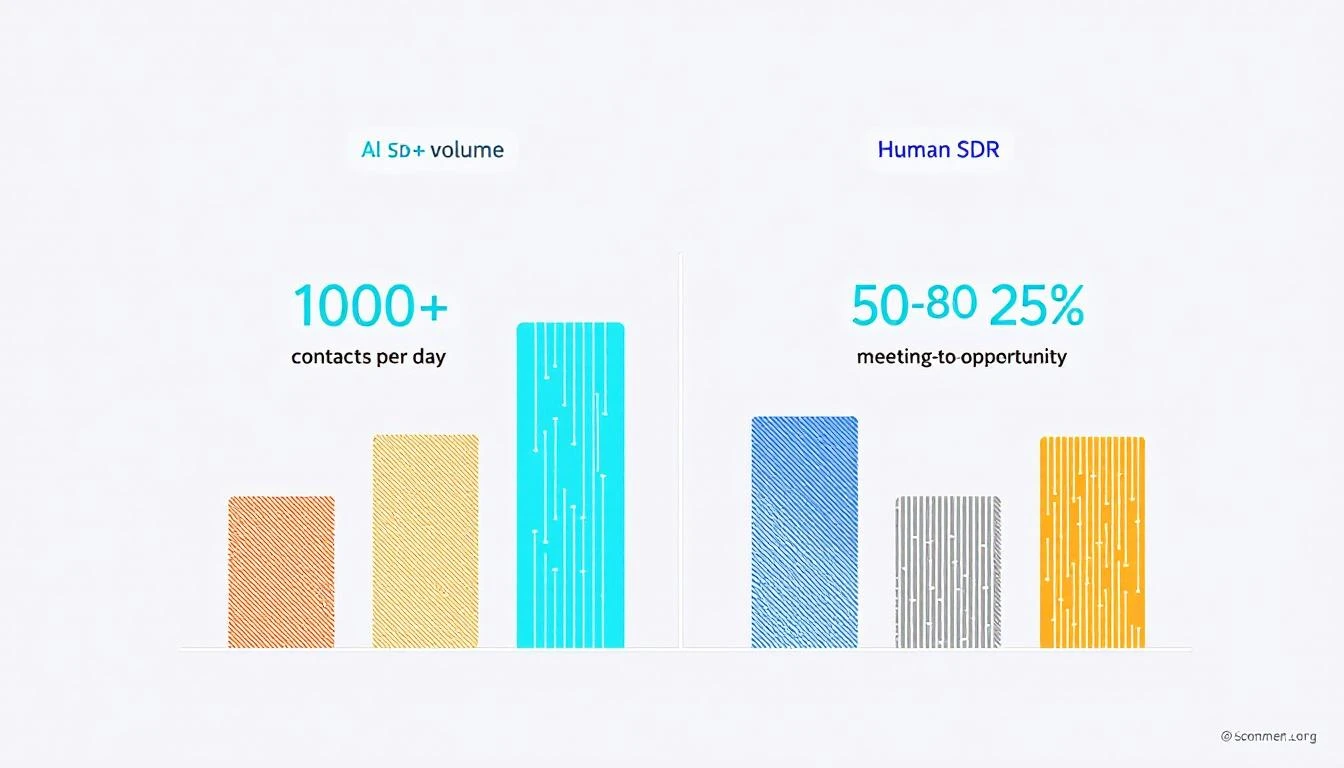
  • AI SDRs process 1,000+ contacts per day vs. 50-80 for a human rep (SuperAGI)
  • But AI SDRs convert meetings to opportunities at just 15% vs. 25% for human SDRs — a 40% performance gap (SuperAGI)
  • Response to inbound: AI responds in seconds. First responder wins deals at 5x the rate of slower competitors
  • Follow-up: 44% of human reps give up after one attempt. AI never stops following up

So AI wins on volume and consistency but loses on conversion quality. The teams getting the best results? They're not choosing one or the other.

AI SDR maturity spectrum in 2026

The Winning Formula: Augmentation Beats Replacement

Across every study we analyzed, one pattern emerges consistently: AI-augmented teams outperform both fully automated and fully manual teams.

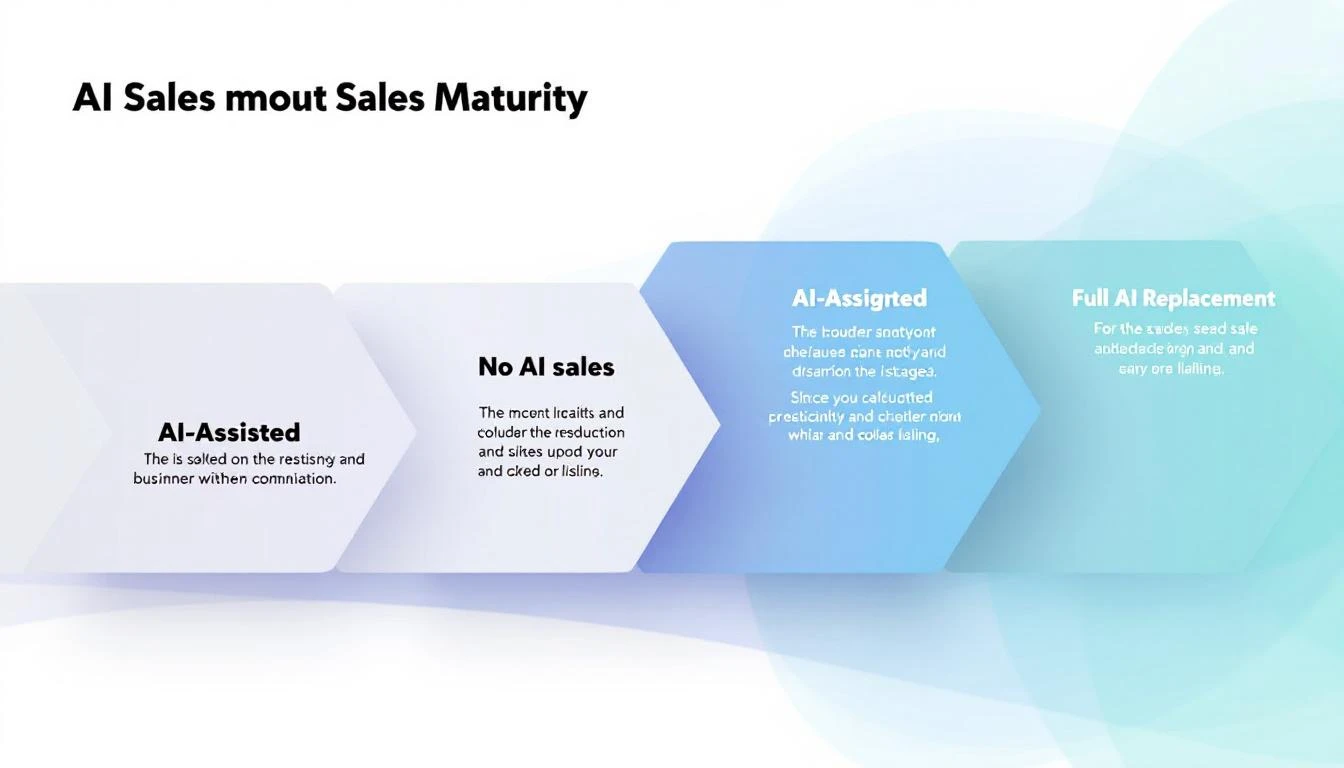
The adoption spectrum breaks down like this:

Approach% of TeamsPerformance
Full AI replacement22%High volume, lower quality
AI-augmented (human + AI)~55%Highest overall performance
AI-assisted (copilot only)~15%Moderate improvement
No AI~8%Falling behind

Source: Autobound AI SDR Buying Guide 2026, cross-referenced with Salesforce and Topo.io data

The augmented model works because it pairs AI's strengths with human strengths:

Where AI excels (let it run):

  • Prospect identification and research (synthesizing SEC filings, hiring data, social activity in seconds vs. 30-60 minutes per prospect for humans)
  • Consistent follow-up cadences (AI never forgets, never has a bad day)
  • After-hours and surge inbound handling
  • Lead scoring and signal prioritization
  • Data enrichment and contact discovery

Where humans still win (keep them in the loop):

  • Complex objection handling
  • Relationship building and trust development
  • Nuanced multi-stakeholder negotiations
  • Creative problem-solving for unique prospect situations
  • Reading tone and emotional context

The SignalFire team put it perfectly after testing AI SDR tools in production: "The most successful sales organizations of the future won't be the ones that replace their SDRs with AI. They'll be the ones who empower them with it."

What's Actually Delivering ROI: The Signal-First Approach

Here's where the data gets prescriptive. Not all AI sales investments deliver equal returns.

Tier 1: Proven ROI (Invest Now)

Intent signals + lead prioritization

  • Conversion rates rise 20-30% when companies integrate predictive AI into their marketing and sales workflows (Sopro)
  • Only 24% of teams with intent data report exceptional ROI — the difference is activation quality, not data quality (Autobound)
  • Signal-based prospecting generates 5.4x more pipeline with 33% fewer calls (from our prior signal quality analysis)

AI-powered research and personalization

  • AI research agents that surface job changes, funding events, and buying signals allow SDRs to write genuinely relevant outreach — not template spam
  • This is where the highest-performing AI-augmented teams invest first: give humans better information, not better email templates

Chatbots for inbound qualification

  • The most straightforward and valuable use case according to multiple studies
  • Responds to every inbound lead instantly, qualifies, and books meetings 24/7
  • Some teams report 25-30% uplift in conversion just from better lead qualification and scoring

Tier 2: Promising But Conditional (Pilot Carefully)

AI-generated email sequences

  • Volume is up. Deliverability is down. The inbox is a battleground.
  • Generic mass-personalized emails (name swap + company swap) get deleted immediately
  • What works: AI that researches THEN personalizes, not AI that templates at scale
  • Rule of thumb: if the AI writes the email AND sends it without human review, expect lower quality meetings

AI cold calling / voice agents

  • Latency and robotic feel remain issues
  • The winning pattern: AI makes the dial, AI qualifies interest, then transfers to a human immediately upon positive signal
  • Legal risks (TCPA, consent, autodialer definitions) remain significant

Tier 3: Overhyped (Proceed With Caution)

Full SDR replacement

  • The 50-70% churn rate tells you everything
  • The 40% meeting-to-opportunity quality gap means you're trading SDR salary for lower-quality pipeline
  • Works only for very specific use cases: high-volume, low-ACV, simple sales motions

AI forecasting as a standalone tool

  • Garbage in, garbage out. AI forecasting is only as good as your CRM hygiene
  • Most teams don't have clean enough data to make AI forecasting meaningful
  • Better to fix pipeline stage definitions first, then add AI on top

AI vs human SDR performance comparison 2026

The ERP Problem Nobody Talks About

Deloitte's research surfaced a finding that most AI sales articles completely ignore.

87% of B2B suppliers are currently upgrading, preparing to begin, or planning ERP modernization within the next year. These projects are multi-million-dollar, multi-year initiatives that absorb the IT bandwidth that AI projects need.

As Deloitte's Paul do Forno noted: "They literally don't have the time. They need to get through the ERP running their business."

This means even when sales leaders want to deploy sophisticated AI, internal IT constraints are the real bottleneck — not budget, not skepticism, not technology readiness. The suppliers pulling ahead are the ones who pair AI deployment with (not after) their ERP modernization, building tighter front-to-back integration.

For sales teams at mid-market companies: don't wait for IT to finish the ERP migration before starting your AI pilot. Choose tools that sit alongside your existing stack rather than requiring deep integration. Start with standalone signal tools and AI research assistants that don't need CRM integration to deliver value.

The Conversion Math Most Teams Get Wrong

Here's a framework from the data that most sales leaders miss.

The median B2B conversion rate across all industries is 2.9%, with most falling between 2.0% and 5.0% (Martal Group). But the real bottleneck isn't top-of-funnel — it's the middle.

MQL-to-SQL conversion: only ~15% of marketing-qualified leads convert to sales-qualified leads.

This means pouring more AI-generated leads into the top of your funnel without fixing the qualification gap just creates more waste. The highest-ROI AI investment for most teams isn't generating more leads — it's better qualifying the leads you already have.

This is where signal-based selling changes the equation:

  1. Visitor identification tells you WHO is on your site
  2. Intent signals tell you WHAT they care about
  3. A daily playbook tells your SDR exactly WHAT TO DO about it

Most AI sales tools give you step 1 and maybe step 2. Very few connect the signal to the action. That connection is where the 20-30% conversion lift actually comes from.

What to Do Monday Morning

Based on our meta-analysis, here's the priority stack for sales leaders who want to be on the winning side of the AI divide:

If you're spending nothing on AI sales tools:

  1. Start with an AI chatbot for your website (instant ROI, low risk)
  2. Add a signal/intent tool to prioritize your existing pipeline
  3. Use AI research tools to enrich prospect profiles before outreach

If you're already using AI but not seeing results:

  1. Stop measuring emails sent. Start measuring meetings booked and pipeline generated
  2. Move from full automation to human-in-the-loop augmentation
  3. Invest in signal quality over outreach volume
  4. Fix your MQL-to-SQL conversion gap before adding more top-of-funnel

If you're seeing good results and want to scale:

  1. Build a daily SDR playbook that converts signals into specific next actions
  2. Layer first-party intent (website visitors, chatbot conversations) with third-party signals
  3. Consolidate your tool stack — the average SDR uses 7-12 tools, but the best teams use 3-4 integrated ones

The Bottom Line

AI in B2B sales isn't hype — the 17-point revenue growth gap between AI-enabled and non-AI teams is real and widening. But how you deploy AI matters more than whether you deploy it.

The data is clear:

  • Augmentation beats replacement. Human + AI outperforms AI-only and human-only.
  • Signal quality beats outreach volume. Better leads beat more leads, every time.
  • Implementation quality is the variable. The technology works. The question is whether your team can operationalize it.
  • Start with signals, not sequences. Know who's buying before you decide what to send.

The teams winning in 2026 aren't the ones with the most sophisticated AI. They're the ones using AI to put the right signal in front of the right rep at the right time — and then letting the human do what humans do best.


Want to see signal-based selling in action? MarketBetter turns intent signals into a daily SDR playbook that tells your team exactly who to contact, how to reach them, and what to say. Book a demo →


Sources

  1. Salesforce, State of Sales 2026
  2. Deloitte Digital, B2B Supplier Digital Maturity Study (Feb 2026)
  3. Martal Group, B2B Sales Statistics and Benchmarks 2026
  4. Sopro, 75 Statistics About AI in Sales and Marketing (2025)
  5. MarketsandMarkets, AI SDR Market Report (Aug 2025)
  6. Gartner, Strategic Predictions for 2026
  7. McKinsey, AI in Sales Performance (2025)
  8. HubSpot, State of AI in Sales (2025)
  9. SuperAGI, AI vs Traditional SDRs Performance Analysis
  10. Autobound, AI SDR Buying Guide 2026
  11. UserGems, Are AI SDRs Worth It? (2025)
  12. SignalFire, Expert Picks: AI SDR Tools (2026)
  13. Landbase, 35 B2B Sales Statistics (2026)
  14. Topo.io, AI SDR Adoption Survey (2025)
  15. Forrester, B2B Buyer Behavior (2026)
  16. Digital Commerce 360 / Deloitte Digital (Feb 2026)
  17. MarketsandMarkets / Fortune Business Insights projections
  18. Salesmate, AI Agent Adoption Statistics by Industry (2026)
  19. PwC, 2026 AI Business Predictions
  20. Netguru, AI Adoption Statistics (2025)

How Benefits Distribution Companies Scale Their SDR Team with AI-Powered Territory Signals [2026]

· 12 min read
MarketBetter Team
Content Team, marketbetter.ai

Benefits distribution is one of the most relationship-driven corners of B2B sales. You're not selling a tool that gets deployed and forgotten — you're selling a platform that touches every employee in an organization, handles sensitive personal data, and sits at the intersection of HR, payroll, compliance, and employee experience. The sales cycle is long, the stakeholders are many, and the difference between a good lead and a waste of time often comes down to knowing exactly which type of deal you're pursuing before you ever pick up the phone.

And yet, most benefits distribution companies still run their outbound motion like it's 2019: a couple of SDRs splitting accounts alphabetically, running the same sequences regardless of whether they're targeting a 50-person startup or a 5,000-employee enterprise, and hoping that volume eventually produces pipeline.

This is the story of how one benefits distribution platform transformed its SDR operation — scaling from two reps to three, defining six distinct ICP deal types, implementing territory-based routing by US state, and building a pipeline machine powered by AI signals instead of gut instinct.

Benefits distribution HR tech AI SDR territory signals

How Niche Healthcare IT Staffing Firms Win Enterprise Contracts with Only 2 SDRs and AI Visitor Intelligence

· 11 min read
MarketBetter Team
Content Team, marketbetter.ai

There's a paradox in niche B2B sales: the smaller your total addressable market, the more valuable every signal becomes — and the more devastating every missed opportunity is.

Healthcare IT staffing sits at the extreme end of this spectrum. The universe of companies that hire specialized healthcare IT professionals — EHR implementation consultants, clinical informatics specialists, health system IT directors — is measured in the hundreds, not thousands. Every hospital system, every health tech vendor, every payer organization that needs IT talent is a known entity.

And yet, most healthcare IT staffing firms still sell like they're in a mass-market business: blasting cold emails, attending the same HIMSS conferences, and hoping the phone rings.

One niche healthcare IT staffing company — a small team with just two SDRs — found a better way. They turned website visitor identification into their primary pipeline source, and in doing so, uncovered a playbook that any niche vertical company can replicate.

Healthcare IT staffing niche visitor intelligence

The Niche Vertical Trap

Healthcare IT staffing isn't like general IT staffing. The buyers are different. The talent pool is different. The sales cycle is different.

Here's what makes it uniquely challenging:

A Tiny Buyer Universe

There are approximately 6,000 hospitals in the United States, but only a fraction actively recruit specialized healthcare IT talent through staffing firms. Add health tech vendors, payer organizations, and government health agencies, and you're looking at a total addressable market of maybe 400–600 organizations — many of which already have existing staffing relationships.

When your entire market can fit on a spreadsheet, traditional top-of-funnel volume metrics are meaningless. You don't need 10,000 leads. You need the right 30 conversations at the right time.

Invisible Buying Windows

Healthcare organizations don't announce when they need IT staffing help. There's no intent data vendor that tracks "hospital system needs EHR migration consultant." The buying window opens when:

  • A major EHR implementation or migration kicks off (Epic, Cerner/Oracle Health)
  • An IT leader leaves and the team is understaffed
  • A compliance deadline approaches (HIPAA audit, Meaningful Use attestation)
  • A merger or acquisition creates IT integration needs

These windows are narrow and unpredictable. Miss them by two weeks, and the contract goes to whoever was already in the conversation.

Relationship-Driven, Trust-Heavy

Healthcare organizations are cautious buyers. They're placing IT professionals who will have access to protected health information (PHI), patient systems, and critical infrastructure. They don't hire staffing firms from a cold email. They hire firms they know and trust.

This creates a chicken-and-egg problem for smaller firms: you need relationships to win contracts, but you need contracts to build relationships.

Before: The Spray-and-Pray Era

Before implementing signal-based selling, this healthcare IT staffing company's sales motion looked like this:

Team: 2 SDRs (that's the entire outbound function)

Approach:

  • Attend 3–4 healthcare IT conferences per year (HIMSS, CHIME, ViVE, regional health IT events)
  • Collect business cards and badge scans
  • Upload to CRM
  • Run a generic drip sequence: "Would you like to discuss your IT staffing needs?"
  • Repeat next quarter

Results:

  • 600 contacts in CRM, most aging and unresponsive
  • 8–12 qualified conversations per quarter
  • Average response rate on cold outreach: 2.3%
  • No visibility into which accounts were actively looking for staffing help
  • Pipeline entirely dependent on conference networking and word-of-mouth referrals

The two SDRs were spending most of their time on activities that didn't convert — researching accounts that weren't in-market, writing emails that weren't read, and following up with contacts who had no current need.

For a company with a tiny team and a tiny market, every wasted hour was expensive.

The Shift: When Your Website Becomes Your Best Salesperson

The breakthrough came from a simple realization: their website was already telling them who was in-market.

Healthcare organizations researching IT staffing options don't fill out forms. They don't download whitepapers. But they do visit websites. They check capabilities pages, look at case studies, review the types of IT professionals available, and compare pricing models.

When the staffing firm implemented visitor identification, they discovered something remarkable: 3–5 new healthcare organizations were visiting their website every week — organizations they had no idea were evaluating them.

And these weren't random visitors. They were:

  • Hospital systems with open IT roles on their careers page
  • Health tech vendors in active hiring mode
  • Organizations whose existing staffing contracts were up for renewal

Every single one of these visitors represented a warm lead — someone who had already found the firm, already started evaluating them, and was somewhere in an active buying process.

The Data That Changed Everything

In the first 30 days of running visitor identification, the team cataloged:

  • 19 unique healthcare organizations visiting the website
  • 7 of those were net-new (not in the CRM at all)
  • 4 were former clients who hadn't engaged in 12+ months
  • 3 showed repeat visit patterns (visiting multiple pages over several days — a strong buying signal)

Of the 19, the team prioritized the 3 repeat visitors and the 4 returning former clients for immediate outreach. That prioritization alone was worth more than a quarter's worth of cold calling.

Building the Niche Vertical Playbook

Here's how the team operationalized visitor intelligence for their specific vertical:

Rule 1: In Niche Markets, Every Visitor Is a Named Account

In a mass-market B2B business, a website visit from an unknown company might mean nothing. But when your total addressable market is 500 organizations, every identified visitor is significant.

The team created a "known universe" list of every healthcare organization they could potentially serve. When a visitor ID matched an organization on that list, it triggered an immediate alert — not a weekly digest, not a dashboard check, but a real-time notification to both SDRs.

Rule 2: Match Visitor Behavior to Healthcare Buying Signals

Not all page views are equal. The team mapped specific website behaviors to healthcare-specific buying signals:

Website BehaviorLikely Buying Signal
Visited "EHR Implementation Staffing" pageActive EHR migration or upgrade
Viewed "Clinical Informatics" capabilitiesExpanding health informatics team
Checked "Compliance & Security IT" sectionUpcoming HIPAA audit or compliance deadline
Viewed case studies for similar-sized hospitalsEvaluating firms, likely comparing options
Visited pricing/engagement models pageLate-stage evaluation, ready for proposal
Multiple visits over 3+ daysHigh intent, likely building internal business case

This mapping turned raw traffic data into actionable intelligence. Instead of "General Hospital visited our website," the SDR knew "General Hospital is likely planning an EHR migration and is evaluating staffing options."

Rule 3: Outreach Must Be Hyper-Specific and Immediate

In a niche market, generic outreach is a death sentence. The team abandoned templates and built what they called "signal-informed personalization":

Example — Former Client Returns:

"Hi [Name], I noticed [Hospital System] has been exploring healthcare IT staffing options again. We placed three clinical informatics specialists with your team back in 2024 — all of whom are still there, by the way. If you're gearing up for another initiative, I'd love to catch up on what's changed. 15 minutes this week?"

Example — Net-New Visitor with EHR Signal:

"Hi [Name], we work with health systems navigating EHR transitions — specifically helping them find implementation consultants who've done Epic/Cerner migrations at similar-sized organizations. If your team is evaluating staffing support for an upcoming project, I can share how we've structured similar engagements. Would a brief call be helpful?"

Notice what's NOT in these messages: no "checking in," no "touching base," no "would you like to discuss your IT staffing needs." Every word is informed by what the visitor data revealed about their likely situation.

Rule 4: Two SDRs Need Ruthless Prioritization

With only two SDRs, the team couldn't work 19 accounts simultaneously. They built a simple scoring model:

Tier 1 (Immediate Outreach):

  • Repeat visitors (3+ visits in 7 days)
  • Visitors viewing pricing/engagement pages
  • Former clients returning after 6+ months
  • Organizations with known active EHR implementations

Tier 2 (Same-Week Outreach):

  • First-time visitors from known universe accounts
  • Visitors viewing capability pages matching current job postings on the org's career site

Tier 3 (Nurture):

  • Single-visit, single-page visitors
  • Organizations outside the core ICP
  • Visitors from departments unlikely to buy (HR checking comp data, students researching)

This prioritization meant the two SDRs spent 80% of their time on Tier 1 and Tier 2 accounts — the ones with the highest probability of conversion.

Rule 5: Layer Visitor Data with Public Healthcare Signals

Visitor identification alone is powerful. But when combined with publicly available healthcare signals, it becomes predictive:

  • Job postings: When a healthcare organization posts IT roles AND visits the website, they're likely considering staff augmentation alongside direct hires
  • Press releases: Announced EHR migrations, mergers, or expansions paired with website visits indicate budget allocation
  • Regulatory deadlines: CMS reporting deadlines, HIPAA compliance cycles, and Meaningful Use attestation windows create predictable demand patterns
  • Leadership changes: New CIO or CMIO appointments often trigger staffing reviews — champion tracking catches these

The team built a simple weekly ritual: every Monday, both SDRs spent 30 minutes cross-referencing the week's visitor data with job postings and healthcare news. This "signal stack" identified the highest-intent accounts for the week.

The Results: Small Team, Outsized Pipeline

After six months of running the visitor intelligence playbook:

MetricBeforeAfter
Qualified conversations per quarter8–1222–28
Response rate (signal-informed outreach)2.3%18.7%
Net-new accounts discovered via visitor ID0/quarter12–15/quarter
Former clients reactivated1–2/year6 in first 6 months
Average time from signal to first contactN/A4.2 hours
Pipeline generated per SDR~$180K/quarter~$420K/quarter

The most telling metric: 18.7% response rate on signal-informed outreach versus 2.3% on cold. That's an 8x improvement — achieved not by writing better emails, but by reaching the right people at the right time with the right context.

The Former Client Effect

The biggest surprise was the former client reactivation channel. Four organizations that had used the staffing firm 12–18 months ago returned to the website — likely evaluating whether to re-engage or try a new vendor.

Because the team caught these visits in real time, they reached out within hours with personalized messages referencing the previous engagement. All four converted to new conversations, and three became active clients again within 60 days.

Without visitor identification, these former clients would have quietly evaluated and potentially chosen a competitor. The staffing firm would never have known they were even in-market.

Lessons for Any Niche Vertical Company

This playbook isn't unique to healthcare IT staffing. It applies to any B2B company selling into a small, well-defined market:

1. The Smaller Your Market, the More Valuable Each Signal

If you sell to 500 potential buyers, a website visit from one of them is statistically significant. Treat it that way. Don't batch these into weekly reports — act on them within hours.

2. Cold Outbound Doesn't Scale in Niche Markets

When your entire TAM can fit in a spreadsheet, blasting 10,000 emails isn't just inefficient — it's damaging. You're burning relationships in a market where reputation matters. Signal-based selling replaces volume with precision.

3. Your Website Is Already Doing Lead Gen (You're Just Not Listening)

Every niche B2B company has prospects visiting their website right now. Without visitor identification, those visits are invisible. With it, they become your highest-converting pipeline source.

4. Two Good SDRs with Signals Beat Ten SDRs Without

This company didn't hire more reps. They didn't increase their marketing budget. They just gave their existing two SDRs better information — and those SDRs more than doubled their pipeline output.

5. Former Clients Are Your Warmest Reactivation Channel

In niche markets, client churn isn't always permanent. Organizations cycle through vendors, and the ones who come back to your website are telling you something. Champion tracking and visitor ID together catch these signals before competitors do.

The Niche Advantage

There's a counterintuitive truth in B2B sales: selling to a small market is actually easier than selling to a large one — if you have the right intelligence.

When your buyer universe is finite and knowable, every signal is amplified. Every website visit, every job change, every conference interaction carries weight. You don't need massive intent data platforms built for enterprises with 50,000 target accounts. You need precise, real-time visibility into the 500 accounts that matter.

Healthcare IT staffing is proof of concept. A two-person SDR team, armed with visitor intelligence and a disciplined playbook, can outperform teams five times their size that rely on volume alone.

The question isn't whether your niche vertical can benefit from signal-based selling. It's whether you can afford to keep selling blind.


MarketBetter's visitor identification and AI-powered signal routing help small B2B teams in niche verticals identify and convert their highest-intent buyers. See how it works →

How IoT Connectivity Platforms Use Champion Job Change Signals to Reactivate Dormant Pipeline Worth $500K+

· 9 min read
MarketBetter Team
Content Team, marketbetter.ai

If you sell IoT connectivity — cellular modules, SIM management, device platforms — you know a painful truth: your deals die when your champion leaves.

The average enterprise IoT deal takes 6–9 months to close. You've navigated procurement, security reviews, technical evaluations, and pilot programs. Then one morning, your champion's LinkedIn updates to a new title at a new company. Your deal goes cold overnight.

For most IoT sales teams, that's where the story ends. The deal sits in a "closed-lost" or "stalled" bucket. Nobody follows up. The new company your champion joined? Nobody even notices.

But for one global IoT cellular connectivity platform running SDR teams across EMEA, the US, and Latin America, champion job changes became their single highest-converting signal — turning what used to be lost pipeline into a reliable revenue engine.

Here's how they did it.

IoT connectivity champion job change pipeline

The Problem: A Global Team Drowning in Cold Outbound

This company — an enterprise IoT cellular connectivity platform — had a familiar setup that wasn't scaling:

  • Three regional SDR teams: EMEA, US, and Latin America (including a Spanish-speaking rep dedicated to the LatAm market)
  • Long sales cycles: 6–12 months for enterprise deals involving hardware integrations
  • High champion turnover: IoT product managers and engineering leads change roles frequently, especially in fast-growing verticals like logistics, fleet management, and smart agriculture
  • CRM full of ghosts: Hundreds of contacts marked as "left company" or "no longer responds" — with no systematic way to track where they went

The sales team was spending 70% of their time on cold outbound. They'd source lists from conferences, scrape LinkedIn, and blast generic sequences. Response rates hovered around 1.2%.

Meanwhile, their best deals — the ones with a warm champion who already understood IoT connectivity — were leaking out the side door every quarter.

The Hidden Cost Nobody Measured

Here's what the leadership team didn't realize until they ran the numbers:

  • 42 champions had left target accounts in the previous 12 months
  • Those champions had been associated with $2.1M in pipeline (at various stages)
  • Of those 42, at least 18 had moved to companies that also needed IoT connectivity
  • Zero of those 18 transitions had been flagged or followed up on

They weren't just losing deals. They were losing their warmest possible pipeline source — people who already knew the product, trusted the team, and had budget authority at a new organization.

The Signal-Based Approach: Champion Tracking Meets Territory Intelligence

The transformation started when the team stopped treating champion departures as losses and started treating them as signals.

Step 1: Map Every Champion to a Job Change Alert

Instead of relying on reps to manually check LinkedIn (they didn't), the team implemented automated champion tracking that monitored every contact who had:

  • Attended a demo or technical evaluation
  • Been the primary point of contact on a deal
  • Engaged with more than 3 emails in a sequence
  • Downloaded technical documentation or API specs

When any of these contacts changed jobs, the system flagged it in real time — not weeks later when someone happened to notice.

Step 2: Route Alerts to the Right Regional Rep

This is where most champion tracking implementations fall apart. The alert fires, but it goes to a general inbox or the wrong rep.

For a global team spanning EMEA, US, and Latin America, routing matters enormously:

  • A champion who moved from a logistics company in Germany to a fleet management startup in São Paulo needed to be routed to the Spanish-speaking LatAm rep — not the EMEA SDR who originally owned the relationship
  • A champion who moved from an agriculture IoT company in Iowa to a smart city project in London needed to go to the EMEA team
  • A champion who stayed in the US but moved to a competitor's customer needed special handling — a different playbook entirely

The team built territory-aware routing rules that matched job change alerts against intent signals, ensuring the right rep got the right signal at the right time.

Step 3: Create a Champion Reactivation Playbook

Cold outbound to a stranger gets a 1–2% response rate. But reaching out to a former champion who already knows your product? That's a fundamentally different conversation.

The team developed a three-touch playbook specifically for champion job changes:

Touch 1 (Day 1): The Warm Reconnection A personal email from the original account owner, congratulating them on the new role and asking if IoT connectivity is relevant at the new org. No pitch. Just a human check-in.

Touch 2 (Day 4): The Value Reminder A brief message referencing what they'd accomplished together — "You were evaluating our cellular connectivity for your fleet management platform. Does [new company] have similar needs?" This leverages shared history that no competitor can replicate.

Touch 3 (Day 10): The Multi-Channel Follow-Up A LinkedIn connection request from the regional rep (if different from the original contact), plus a phone call using the smart dialer. By this point, they've warmed the contact across three channels.

Step 4: Cross-Reference with Visitor Intelligence

Here's where it got really powerful. The team layered champion job change signals on top of website visitor identification.

When a former champion's new company showed up on the website — visiting the pricing page, the API documentation, or the coverage maps — that was a compound signal. It meant the champion was likely already evaluating IoT connectivity options at their new org and had come back to the platform they already knew.

These compound signals (champion moved + new company visiting website) had a 34% demo booking rate — nearly 30x their cold outbound average.

The Results: From Pipeline Graveyard to Revenue Engine

After six months of running the champion reactivation program:

MetricBeforeAfter
Champion job changes detected per quarter038
Reactivation outreach response rateN/A41%
Demos booked from reactivation signals014/quarter
Pipeline reactivated$0$540K
Cold outbound response rate1.2%Unchanged (but volume reduced 40%)
Average deal velocity (reactivated)N/A67 days (vs. 180 days for new prospects)

The most striking finding: deals sourced from champion reactivation closed 2.7x faster than net-new pipeline. Why? Because the champion already understood the technology, had internal credibility at their new organization, and could shortcut the evaluation process.

The LatAm Breakthrough

The Spanish-speaking SDR covering Latin America saw the most dramatic results. The LatAm IoT market is relationship-driven — cold outbound from a US-based company rarely converts. But when a former champion who had evaluated the platform in a US role moved to a LatAm company, the warm connection transcended the typical regional trust barrier.

Three of the team's largest LatAm deals in the period came from champion reactivation — all from contacts who had originally engaged through the US team.

Why This Matters for IoT and Telecom Specifically

Champion tracking works in any B2B vertical, but it's disproportionately valuable in IoT and telecom for several reasons:

1. Technical Champions Are Rare and Valuable

Not every buyer understands cellular connectivity, eSIM management, or device-to-cloud architecture. When you find someone who does — and who's already been through your technical evaluation — losing them is catastrophic. Champion tracking for startups is especially critical when your total addressable market of qualified technical buyers is small.

2. IoT Has High Switching Costs

Once an IoT platform is embedded in a product, switching is expensive. Champions know this. When they move to a new company and need connectivity, they're strongly inclined to go with what they already know — if you reach them first.

3. Global Teams Need Automated Routing

IoT companies typically sell across regions with distinct languages, regulations, and buying behaviors. Manual champion tracking doesn't scale across time zones. Automated intent signals with territory-aware routing solve this.

4. Conference-Driven Relationships Compound

IoT is a conference-heavy industry (MWC, CES, Embedded World, IoT World). Champions you met at events two years ago are some of your warmest contacts — but only if you're tracking where they go. Layer event-driven signals on top of job change alerts for maximum coverage.

How to Build Your Own Champion Reactivation Engine

If you're selling IoT connectivity, telecom infrastructure, or any technical B2B product with long sales cycles, here's how to get started:

Step 1: Audit Your CRM for Champion Data

Pull every contact from the last 24 months who:

  • Attended a demo or technical call
  • Was the primary contact on a deal (won or lost)
  • Engaged meaningfully with your content or documentation

This is your champion database. For most IoT companies, it's 200–500 contacts.

Step 2: Implement Automated Job Change Monitoring

Stop relying on LinkedIn stalking. Set up automated alerts that fire the moment a champion updates their role. The faster you act on a job change, the higher your conversion rate — speed matters more than signal quality in the first 72 hours.

Step 3: Build Territory-Aware Routing

If you have regional teams, ensure alerts route to the right rep based on the champion's new company location, not their old one. A champion who moves from EMEA to LatAm shouldn't stay with the EMEA SDR.

Step 4: Create Differentiated Playbooks

Champion reactivation is NOT regular outbound. Don't put these contacts into your standard 12-email drip sequence. They deserve a personal, high-touch approach that leverages your shared history.

Step 5: Layer with Visitor Intelligence

The compound signal (champion moved + new company visiting your site) is gold. Make sure your visitor identification system is running so you can catch these overlaps.

The Bottom Line

IoT and telecom companies are sitting on a pipeline goldmine they don't even know about. Every champion who leaves a target account isn't a loss — it's a signal. Every "closed-lost" deal with a departed champion isn't dead — it's dormant, waiting for the right trigger.

The companies that systematically track these movements, route them intelligently across global teams, and activate them with the right playbook are seeing results that make cold outbound look like a rounding error.

Your champions are already out there, starting new roles, evaluating new vendors, and remembering the platforms that treated them well. The only question is whether you'll find them before your competitor does.


MarketBetter combines website visitor identification, champion job change tracking, and AI-powered signal routing to help B2B sales teams — including IoT and telecom companies — build pipeline from their warmest signals. See how it works →