Stop Round-Robin: Signal-Based SDR Routing by Intent Tier (And Why Your Best Reps Should Get Tier 1 Leads) [2026]

Walk into any B2B sales org with more than three SDRs and ask how leads get assigned. Nine times out of ten, the answer is some version of round-robin — leads land in a queue, the queue assigns them in order, and whoever happens to be next in line gets whatever happens to come in.
This made sense in 2018. It does not make sense in 2026.
In 2018, your inbound queue was mostly demo requests. They were all roughly equivalent in intent, so dealing them out like cards was fair and approximately optimal. In 2026, your queue is half demo requests, half visitor ID hits, a quarter content downloads, a pile of LinkedIn engagement, and a long tail of newsletter clicks. The variance in actual buying intent across those signals is enormous — and round-robin treats them as identical.
The consequence: your highest-intent leads land in front of whoever's next, regardless of whether that rep is your top closer or someone you hired last Tuesday. Your worst leads also land in front of whoever's next, which means your top closer spends 40% of their week working signals that would never have converted no matter who picked them up.
The fix is signal-based routing — assigning leads to reps based on the intent tier of the signal, not the order of the queue. This post is the playbook.
Why Round-Robin Quietly Destroys Pipeline
Three things go wrong when you assign by queue order instead of by signal:
1. Tier 1 buying intent gets junior reps. A "pricing page visited three times in 48 hours" hit lands in front of a six-week-old SDR because they happen to be next in the queue. They send a generic sequence. The buyer ghosts. By the time the senior rep would have seen it, it's already cold. You lost a deal nobody knew you had.
2. Senior reps burn cycles on low-intent noise. Your best closer spends Tuesday morning working a stack of newsletter-click leads because that's what the queue dealt them. Those leads were never going to convert in this quarter. The opportunity cost — what they could have been working instead — is what kills you.
3. Coverage becomes random. Strategic accounts get whatever rep happens to be next when the signal fires. The named-account model you built quietly evaporates because the routing layer underneath it doesn't respect it.
Round-robin optimizes for one thing — distributing volume evenly across the team — and it does that well. But pipeline isn't a volume problem. Pipeline is a conversion problem, and conversion is driven by matching the right rep to the right signal at the right time. Volume distribution is the wrong objective function.
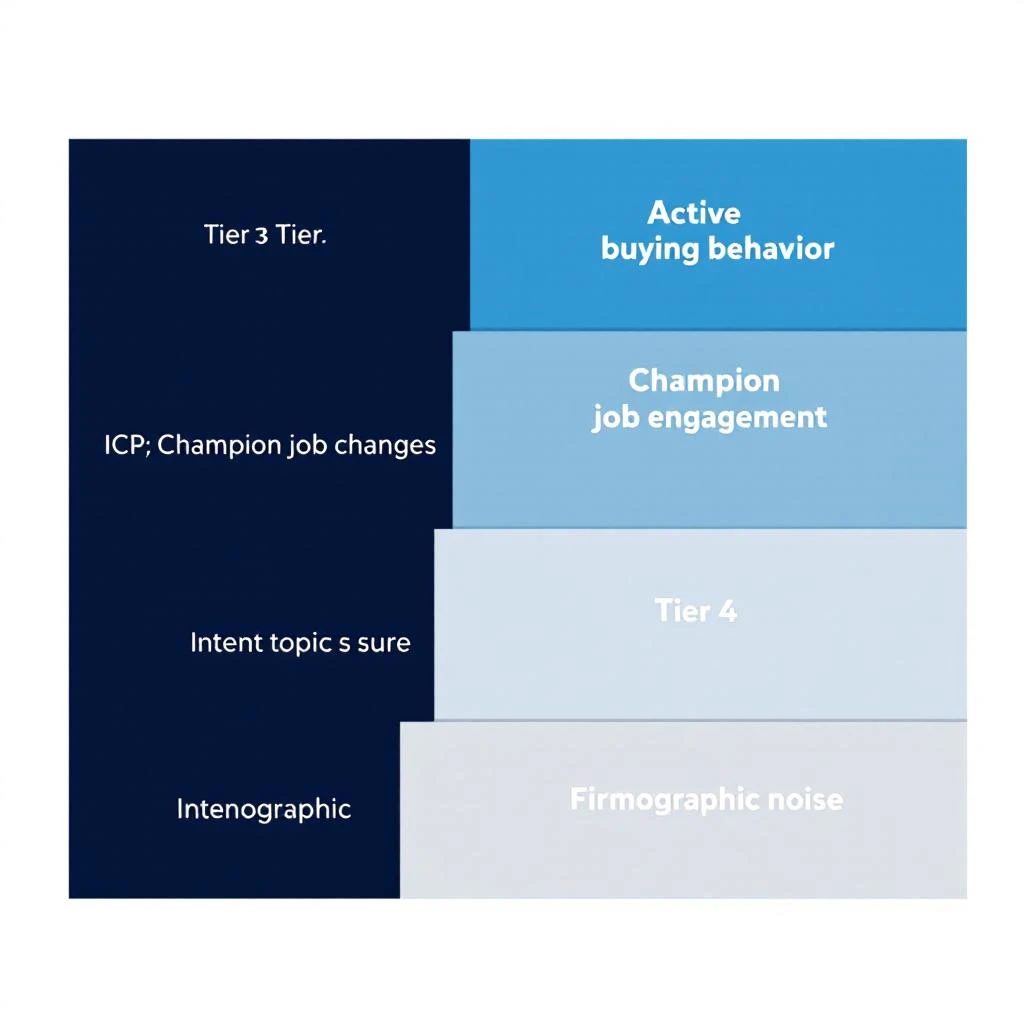
The Five-Tier Signal Hierarchy (Refresher)
Before you can route by tier, you need a tier system that holds up. We've published the full framework in the buying signal hierarchy post, but here's the short version:
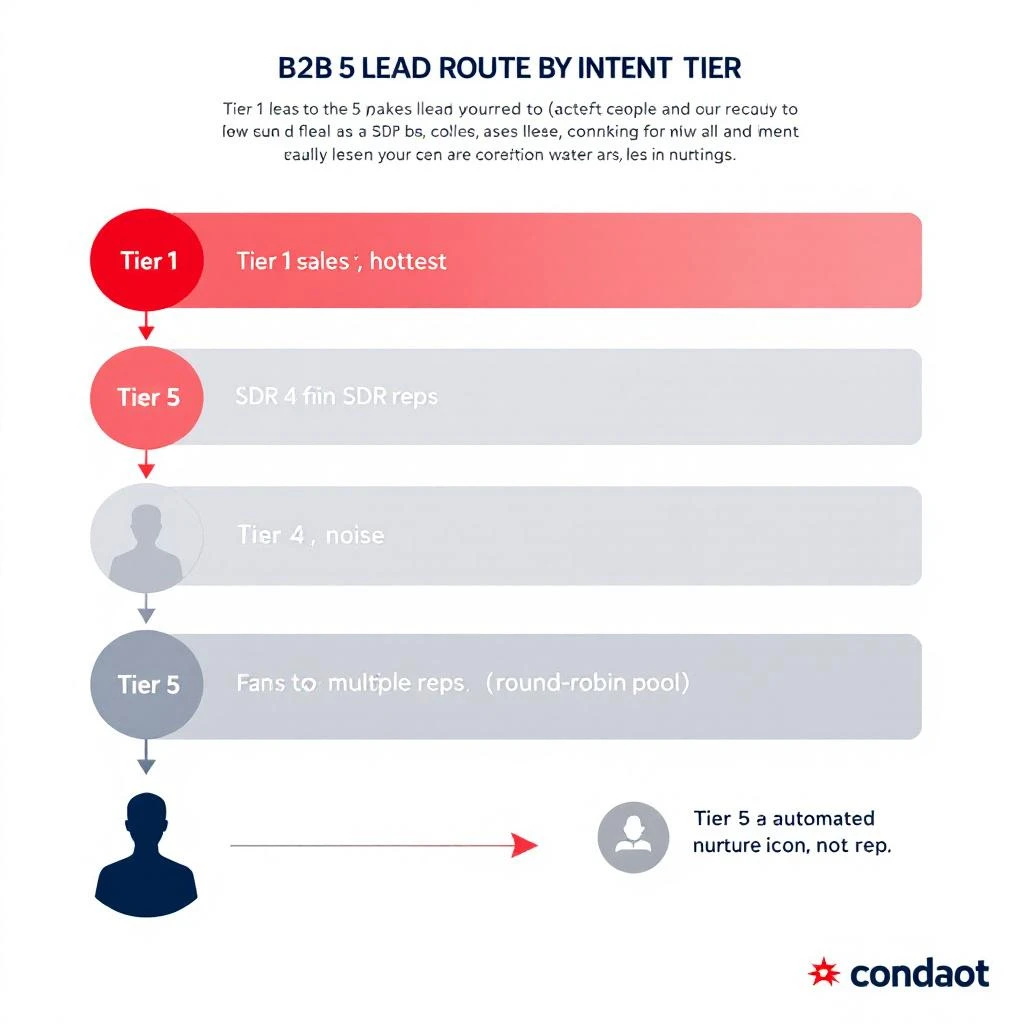
- Tier 1 — Active buying intent. Demo requests, pricing page visits, RFP downloads, direct outreach from a buying committee member. These convert at 18–35% to opportunity within 14 days.
- Tier 2 — Account-level surge. Multiple stakeholders from the same account engaging across multiple channels in a 7-day window. Visitor ID hits with anonymous IP patterns matching your ICP. These convert at 6–12%.
- Tier 3 — Triggering events. Funding rounds, new exec hires in your buyer persona, tech stack changes that signal a replacement window. Convert at 3–7% — but the size of the deal when they do convert is usually larger.
- Tier 4 — Engagement signals. Content downloads, webinar registrations, sustained LinkedIn engagement from a single contact. Convert at 1–3% on a longer time horizon.
- Tier 5 — Noise. Newsletter opens, one-time site visits from unknown sources, generic form fills with no follow-up engagement. Convert at well under 1%.
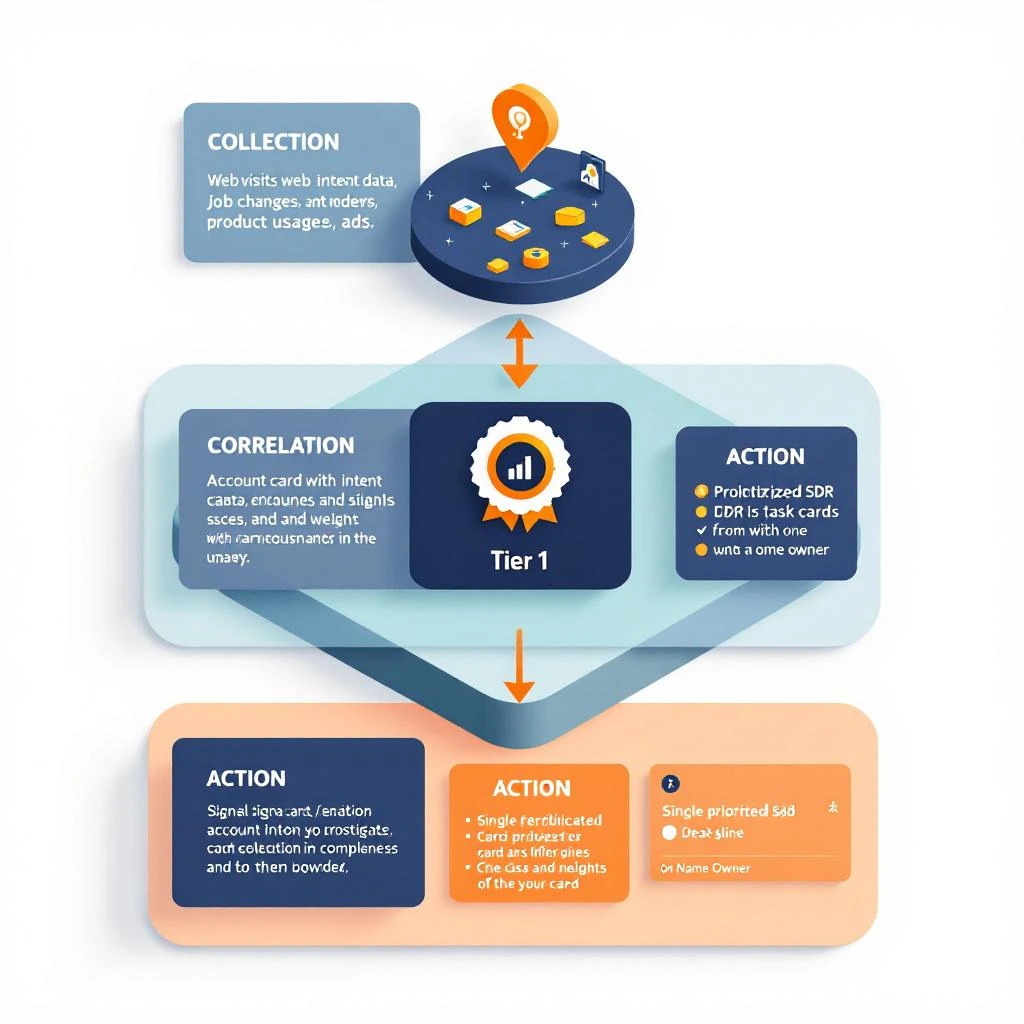
If your team doesn't have a tier system, build that first. Routing without a hierarchy is just round-robin with extra steps. Our three-layer signal stack architecture post covers how to collect, correlate, and rank signals so tiers actually mean something.
The Routing Model: Match Rep Tier to Signal Tier
Here's the rule we use with the teams we work with, and the rule we follow inside MarketBetter:
| Signal Tier | Routes To | Response SLA |
|---|---|---|
| Tier 1 (active buying intent) | Top quartile of reps by closed-won rate | 15 minutes |
| Tier 2 (account-level surge) | Top half of reps, weighted toward account owner if named | 2 hours |
| Tier 3 (trigger events) | Account owner if named; otherwise top half | Same day |
| Tier 4 (engagement signals) | Round-robin across the full team | Next business day |
| Tier 5 (noise) | Automated nurture only; no rep touch | None — nurture stream |
Three things to notice about this model:
Tier 1 deserves your best reps. The signals are the hottest you'll ever get, and the conversion math is unforgiving — a 25% close-to-opportunity rate in the hands of a senior rep collapses to 8% in the hands of a junior rep on the same signal. The talent gap matters most where intent is highest, not lowest.
Tier 4 is where round-robin still makes sense. Once you're below ~3% expected conversion, the variance between reps matters less than the simple fact of equitable distribution and SDR development time. Junior reps get reps (pun intended) on Tier 4. Senior reps get protected from it.
Tier 5 doesn't get a rep at all. This is the part most teams resist. They want every form fill to get a rep touch. Don't. Tier 5 gets a nurture stream that runs without human time, and the rare Tier 5 lead that escalates to Tier 3 or 4 behavior gets re-routed at that point. The cost of an SDR hour on a Tier 5 lead is higher than the expected value of the lead.
The Pricing-Page-Visitor Example
To make this concrete: a contact from a $200M ARR fintech visits your pricing page three times in 48 hours, then loads your enterprise plan comparison. That's a Tier 1 signal. Under round-robin, it lands with whoever's next in the queue — say, an SDR three months into the job.
Under signal-based routing, that signal triggers an alert that goes directly to your top-quartile rep, with the 15-minute SLA clock running. The rep already has a pre-built workflow for this exact signal — research the account, identify the buying committee, run a personalized outbound within 30 minutes.
The conversion delta between those two paths is roughly 3x in our data. Same lead. Same product. Same competitive context. Only the routing changed.
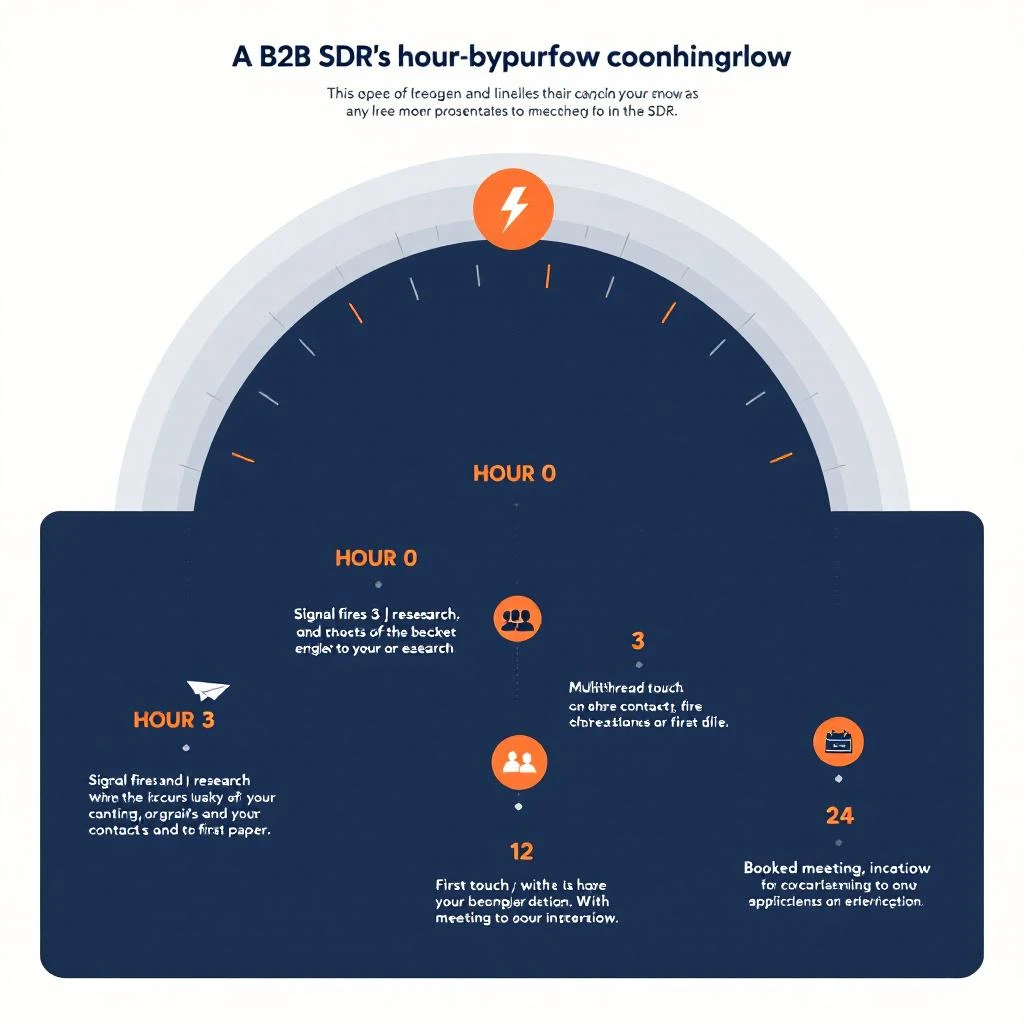
If you want the full timing playbook for how to actually work a Tier 1 signal once it routes to the right rep, our signal-to-meeting in 24 hours SDR workflow is the next post to read.
Implementation: How to Roll This Out Without a Mutiny
Sales teams hate routing changes. Reps think any change in routing is a change in compensation, and they're often right. Here's the rollout sequence that survives.
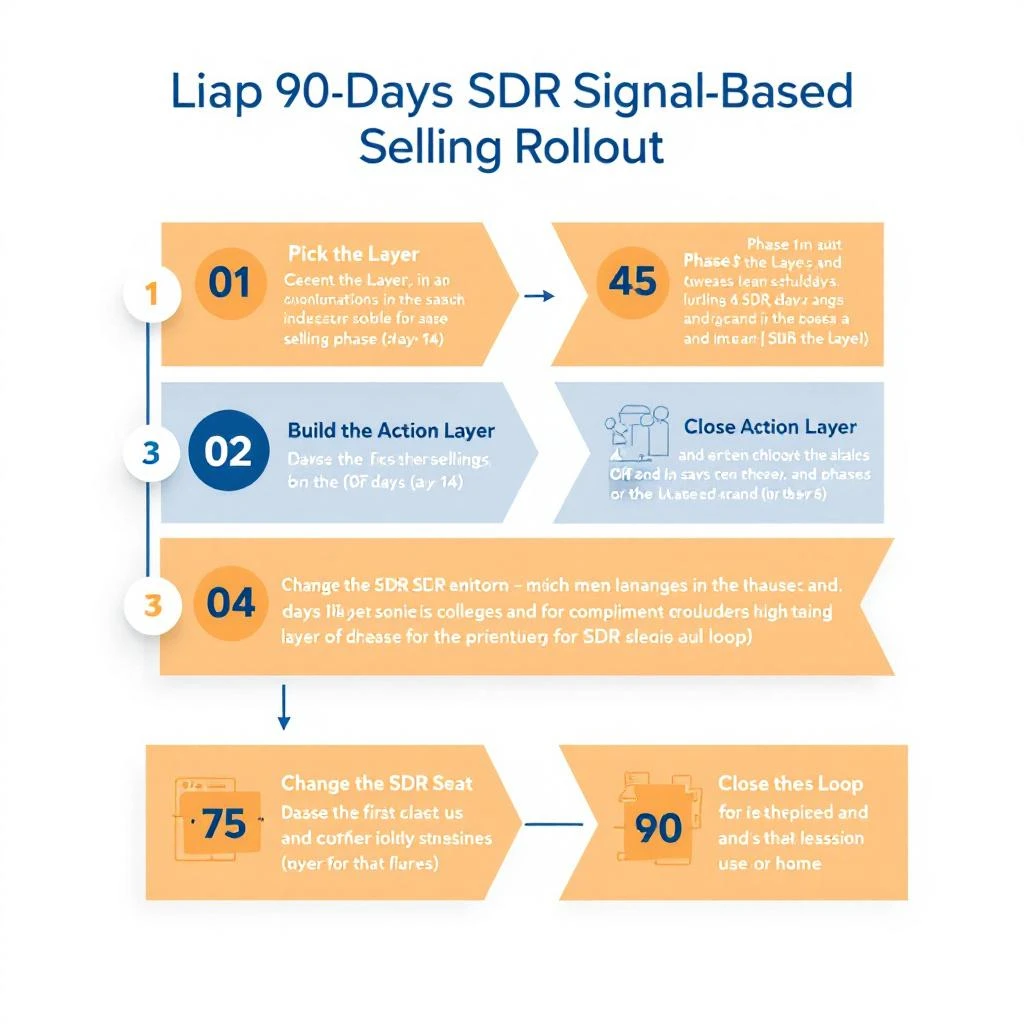
Week 1 — Define tiers, not routing. Get the team to agree on what counts as Tier 1, Tier 2, Tier 3. Don't change any routing yet. Just publish the tier definitions, post them on the wall, and use them in pipeline reviews. ("Was this a Tier 1 signal? Why didn't it convert?") Build the language before you change the system.
Week 2 — Pilot Tier 1 routing only. Pick the three highest-converting signals (usually: demo requests, pricing page visits, direct sales emails) and route them to your top quartile. Leave everything else on round-robin. Measure: how does Tier 1 conversion change? Usually you'll see 30–50% lift inside two weeks.
Week 3 — Add Tier 2. Once Tier 1 shows lift, extend the model to Tier 2 — account-level surges and named-account triggers. This is where named-account owners start getting their actual accounts back, which is also where you'll get pushback from the round-robin defenders.
Week 4 — Cut Tier 5. This is the hardest cut politically. Tell the team that Tier 5 leads now go to nurture only. Reps panic that their pipeline will shrink. It won't — the leads that were converting in Tier 5 were converting despite being worked, not because of it. They re-emerge as Tier 3/4 behavior over the next month and get routed properly then.
Week 5+ — Tune the tier definitions. The first cut of tier boundaries will be wrong. You'll find Tier 2 signals that behave like Tier 1, and Tier 3 signals that decay too fast. Adjust quarterly. Our signal-based selling rollout playbook covers the failure modes that kill rollouts at the 90-day mark — read it before you start week 1.
What Breaks (And How to Fix It)
"Junior reps are mutinying because they're only getting Tier 4." Fair. The fix is twofold: rotate Tier 2 access on a quarterly performance basis so movement is possible, and explicitly use Tier 4 as the development track — pair junior reps with senior reps on Tier 2 calls so they're learning the muscle they'll need when they move up.
"Our top quartile is now overloaded." This is a capacity problem, not a routing problem. It means your Tier 1 volume is higher than your top-quartile bandwidth. Hire more top-quartile reps, or accept that some Tier 1 leads will route down to Tier 2 reps with a longer SLA. The mistake is going back to round-robin to "spread the load" — you're just rebuilding the old problem.
"We can't tell what tier a signal is in real time." This is the signal stack problem, not the routing problem. If your tools can't classify intent in real time, no routing model can help you. Fix the stack first. We covered the architecture in the three-layer signal stack post, and the broader buying universe in our complete guide to B2B intent data.
"Our named-account model conflicts with the tier model." It shouldn't. Named accounts always route to the account owner first, regardless of tier — the tier model only kicks in for unnamed inbound. Run both in parallel.
The Bottom Line
Round-robin was a fair-distribution policy that pretended to be a conversion policy. In 2026, with signal variance as high as it is and SDR capacity as constrained as it is, you cannot afford to assign your hottest leads to whoever happens to be next in queue.
The math is simple: match your best reps to your highest-intent signals, protect them from low-intent noise, and put the rest of the team on a development path. The teams that do this consistently outconvert their round-robin peers by 30–50% on the same lead volume.
If you're running a signal program already and routing is still round-robin, you're capturing maybe half the value of the signal investment you've made. The other half is sitting in the wrong reps' inboxes.
For more on the underlying playbook, see our reopen closed-lost deals AE playbook for how routing logic extends to the AE side, and the Monaco Corner funnel math piece for the broader case against treating SDR pipeline as a volume game. The true cost of the SDR stack post covers what you should be spending on the signal-and-routing layer relative to seat licenses.
Want to see signal-based routing in action? MarketBetter routes leads by intent tier out of the box — Tier 1 alerts go to the right rep with the right playbook attached, automatically. Book a demo →