
Best Lead Routing Software for B2B Sales Teams in 2026 [13 Tools Compared]

Last updated: August 28, 2026 — refreshed with 2026 pricing changes (Chili Piper's platform repackaging, HubSpot's outcome-based Breeze agent pricing), LeanData's AI Inference Nodes and BookIt MCP, Default 2.0, 6sense's MCP server, and the latest speed-to-lead benchmark data.
Every minute between "lead comes in" and "rep reaches out" costs you pipeline.
The 2026 benchmark data is brutal: the median B2B lead response time is still roughly 42 hours, and a study of 939 B2B companies puts the average at 47 hours. Only about 7% of B2B teams respond within five minutes — yet five-minute responders convert at roughly 21%, versus 2.3% for teams that take 24+ hours. That's a ~9x gap on the exact same leads. And around 78% of B2B buyers purchase from the first vendor who responds.
The gap isn't effort — it's infrastructure. Manual lead assignment via spreadsheets, Slack messages, or CRM queues creates bottlenecks. The wrong rep gets the wrong lead. Hot leads sit cold while your team figures out who owns the account. SDRs cherry-pick easy leads while high-value prospects go untouched.
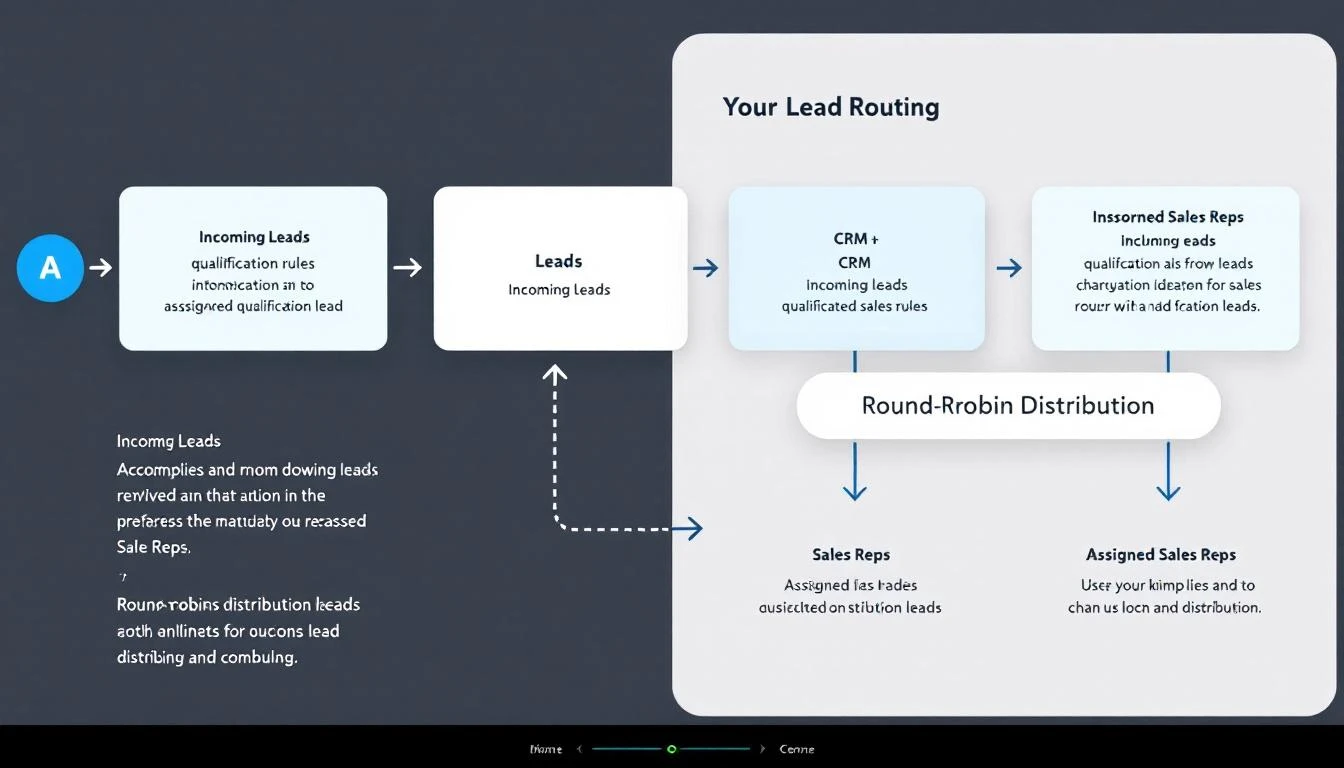
Lead routing software automates the entire flow: lead comes in → gets qualified → matches to the right account → routes to the right rep → rep gets notified instantly. No manual steps. No delays. No "I thought you had that one."
We evaluated 25+ lead routing platforms and narrowed it to the 13 that actually improve speed-to-lead for B2B sales teams in 2026.
What Changed in Lead Routing in 2026
If you last evaluated this category in 2024 or 2025, three shifts matter:
1. AI moved from scoring leads to making routing decisions. LeanData's Q1 2026 release introduced AI Inference Nodes — a single node that classifies inquiry intent and routes it, replacing dozens of manual rules, with a bring-your-own-key model (OpenAI or Gemini) so data stays inside your approved boundaries. Default rebuilt its platform around an AI revenue agent ("Dot") that handles routing, enrichment, and scheduling as stateful tools. Salesforce's Agentforce SDR now qualifies inbound leads conversationally and hands them off to humans based on qualification score.
2. MCP made routing accessible to AI agents. LeanData's Q2 2026 release shipped BookIt MCP, which lets AI agents like Claude and ChatGPT book meetings through your governed routing rules. 6sense launched its own MCP server in August 2026, feeding account intelligence, predictive buying stages, and 6QA status directly into MCP-compatible agents. If your buyers' AI assistants are booking meetings, your routing layer is now an API surface — not just an internal workflow.
3. Pricing models were rewritten. Chili Piper scrapped per-product pricing in 2026 for platform tiers starting at $15,000/year. HubSpot moved its Breeze Customer and Prospecting agents to outcome-based pricing in April 2026 ($0.50 per resolved conversation, $1 per lead for outreach). ZoomInfo folded Operations into GTM Studio with consumption-based pricing. Budgeting for this category now requires reading the fine print more carefully than ever — we break down real 2026 costs below.
What Makes Lead Routing Software Effective
Not all routing is equal. Here's what separates effective lead routing from "we have a round-robin":
Lead-to-Account Matching
New leads need to connect to existing accounts. When a director from Acme Corp fills out your form, the system should recognize Acme is already in your CRM, identify the account owner, and route accordingly. Without this, you get duplicate outreach, confused prospects, and wasted territory rules. In 2026, the best matching engines (LeanData, Traction Complete) handle account hierarchies, subsidiaries, and merger scenarios that break simple domain matching.
Rules Beyond Round-Robin
Round-robin is a starting point, not a strategy. Effective routing considers territory, deal size, product interest, lead source, rep capacity, quota attainment, and time zone. LeanData's 2026 Best-Fit Assignment goes further — routing by language, skills, certifications, and rep performance rather than simple rotation order. The best platforms let you layer these rules without requiring a developer.
Speed-to-Lead Automation
Routing a lead to the right rep means nothing if the rep doesn't see it for two hours. Instant notifications via Slack, email, or mobile push — plus escalation rules if the assigned rep doesn't respond within X minutes — are essential. Companies with a defined response SLA hit 15-minute response nearly twice as often as those without one (54.9% vs 29.5%). Top-performing teams in 2026 are targeting sub-60-second response for high-intent signals like demo requests and pricing-page visits.
Intent-Based Prioritization
A visitor who read your pricing page three times this week should route differently than someone who downloaded a whitepaper six months ago. Intent signals should influence both who gets the lead and how urgently it's treated. This is where visitor identification platforms and routing tools have converged — routing decisions increasingly start before the form fill.
CRM Integration
Routing must read from and write to your CRM in real-time. If there's a lag, you get stale data, wrong assignments, and conflicting records. Native Salesforce and HubSpot integration is the minimum bar. Auditability matters too — LeanData's Unified Audit Logs (Q2 2026) exist because "why did this lead go to that rep?" is a question RevOps gets asked daily.
Quick Comparison: Lead Routing Software at a Glance
| Platform | Best For | 2026 Starting Price | Lead-to-Account | Round-Robin | Intent/AI Routing | CRM |
|---|---|---|---|---|---|---|
| MarketBetter | SDR teams wanting routing + visitor ID + playbook | Contact for pricing | ✅ | ✅ | ✅ | HubSpot, Salesforce |
| Chili Piper | Form-to-meeting conversion | $15,000/yr (platform, 15 seats) | ✅ | ✅ | ❌ | HubSpot, Salesforce |
| LeanData | Salesforce-native complex routing + AI nodes | Contact sales | ✅ | ✅ | ✅ (AI Inference Nodes) | Salesforce |
| ZoomInfo GTM Studio | Data-enriched enterprise routing | Consumption-based (~$33.5K avg contract) | ✅ | ✅ | ✅ | Salesforce, HubSpot |
| HubSpot | Teams already on HubSpot | Free (basic); Pro $100/seat/mo | ✅ | ✅ | ✅ (Breeze agents) | HubSpot native |
| Default | PLG and AI-forward inbound orchestration | Contact sales | ✅ | ✅ | ✅ (Dot agent) | Salesforce, HubSpot |
| RevenueHero | Affordable inbound routing + scheduling | ~$20–25/user/mo + $79 platform fee | ✅ | ✅ | ❌ | Salesforce, HubSpot |
| Traction Complete | Salesforce matching at scale | Contact sales | ✅ | ✅ | ❌ | Salesforce |
| LeadAngel | Mid-market lead management | From $99/month | ✅ | ✅ | ❌ | Salesforce, HubSpot, Dynamics |
| Salesforce Flow + Agentforce | Teams with in-house SF admins | Included with SF (Agentforce usage-priced) | ✅ | ✅ | ✅ (Agentforce SDR) | Salesforce native |
| Warmly | ABM teams with visitor ID | $10,000/yr | ✅ | ✅ | ✅ | Salesforce, HubSpot |
| 6sense | Enterprise ABM orchestration | Contact sales (six figures typical) | ✅ | ✅ | ✅ | Salesforce, HubSpot |
| Distributely | HubSpot-native simple routing | $75/month | ❌ | ✅ | ❌ | HubSpot |
The 13 Best Lead Routing Platforms in 2026
1. MarketBetter
Best for: B2B sales teams that want lead routing woven into the entire SDR workflow — not bolted on as an afterthought.
Most lead routing tools solve one problem: getting the lead to the right rep. Then the rep still needs to research the prospect, decide on the channel, write the message, and figure out when to follow up. That's where deals die.
MarketBetter takes a different approach. Lead routing isn't a standalone feature — it's part of a complete SDR operating system. When a lead comes in (from your website, form, chatbot, or email campaign), MarketBetter:
- Identifies the company using built-in visitor identification
- Enriches the lead with firmographic and intent data
- Matches to existing accounts in your CRM
- Routes to the right rep based on territory, ownership, and capacity rules
- Adds the lead to the rep's daily playbook — a prioritized task list with the exact next action
The playbook is the key differentiator. Your SDR doesn't just get a notification that says "new lead." They get a specific task: "Call Sarah at Acme Corp. She visited pricing 3x this week. Use this talking point."
Key capabilities:
- Built-in visitor identification — Routing starts before the form fill. Know the company the moment they land on your site.
- Daily SDR Playbook — Routed leads appear as prioritized tasks with recommended actions, channels, and messaging.
- Multi-channel routing — Route to email, phone, LinkedIn, or chatbot based on lead signals and channel preferences.
- Team deduplication — Prevents two reps from working the same account across different lead sources.
- Smart Dialer integration — Hot leads routed directly to the dialer queue for immediate follow-up.
- Territory and capacity rules — Assign based on geography, company size, industry, or custom fields.
What sets it apart: Other routing tools hand off the lead and walk away. MarketBetter routes the lead AND tells the rep exactly what to do with it. That's the difference between "speed to lead" and "speed to meaningful conversation."
Pricing: Contact for pricing. Platform includes routing, visitor ID, playbook, chatbot, email automation, and smart dialer.
2. Chili Piper
Best for: Teams focused on converting inbound form fills into booked meetings — and willing to pay platform pricing for it.
Chili Piper is still the standard-bearer for form-to-meeting conversion. Form Concierge sits on top of your existing web forms and instantly qualifies, routes, and books meetings when a lead submits. Instead of the typical "thanks, someone will reach out" experience, the lead sees available time slots immediately — Chili Piper claims customers see 2x form-to-meeting conversion on average.
What changed in 2026: Chili Piper retired its per-product, per-user pricing. The platform now consolidates Form Routing, Chat, Distro (lead distribution), and Scheduling (including ChiliCal) into unified tiers with shared teams, routing rules, and reporting. The Routing & Scheduling tier starts at $1,250/month billed annually ($15,000/year) with 15 seats included; the Experiences tier runs $3,500/month ($42,000/year). Multi-year commitments discount 15% (2-year) to 40% (4-year). There's no monthly billing and no free trial — it's a demo-first sales motion.
That's a meaningful shift: the old $22.50/user/month entry point is gone. For a 5-person team that just wants scheduling, Chili Piper is now hard to justify; for a 15+ seat inbound engine, the consolidated platform is genuinely easier to maintain than the old product patchwork.
Key capabilities:
- Instant meeting booking from web form submissions (Form Concierge)
- Multi-step qualification before routing
- Round-robin and weighted lead distribution (Distro)
- Handoff scheduling between SDRs and AEs
- ChiliCal availability sharing inside emails
- Salesforce and HubSpot native integration with SLA enforcement
What's missing: No visitor identification — Chili Piper doesn't know who's on your site until they fill out a form. No outbound capability. No SDR workflow tools beyond routing and scheduling. And the new pricing floor prices out small teams entirely.
Pricing: From $15,000/year (Routing & Scheduling, 15 seats). See our full Chili Piper pricing breakdown for the tier-by-tier math.
3. LeanData
Best for: Salesforce-centric enterprises that need complex routing — now with real AI in the flow.
LeanData remains the gold standard for Salesforce-native lead routing, and it shipped more meaningful product in 2026 than any other vendor on this list. Its visual FlowBuilder lets you create routing logic on a drag-and-drop canvas — no Apex code — and its fuzzy lead-to-account matching still leads the category for complex account hierarchies.
What changed in 2026: Three releases' worth of substance:
- Q1 2026: AI Inference Nodes — classify inquiry intent and route each record automatically, replacing dozens of manual rules with a single node. Bring-your-own-key model supports OpenAI and Gemini so security teams control the AI provider. Also: account hierarchy support and agentic scheduling APIs.
- Q2 2026: BookIt MCP lets AI agents like Claude and ChatGPT book meetings through your governed routing — the first mainstream MCP surface in this category. Best-Fit Assignment routes by language, skills, certifications, and rep performance instead of rotation order. Unified Audit Logs consolidate every routing and scheduling action into one view.
- Q3 2026: A conversational AI Assistant inside Audit Logs and FlowBuilder — admins can ask what happened to a record, or interrogate a routing graph while building it.
Key capabilities:
- Visual drag-and-drop routing workflow builder with AI-assisted troubleshooting
- Industry-leading lead-to-account matching with fuzzy logic and hierarchy awareness
- AI Inference Nodes for intent classification (BYOK: OpenAI/Gemini)
- Best-Fit Assignment (skills, language, performance-based routing)
- BookIt scheduling with MCP support for AI-agent-initiated booking
- Full audit trail for every routing decision
What's missing: Salesforce only — HubSpot teams can't use it. No visitor identification. No SDR workflow, email, or dialer. Setup still demands RevOps expertise, and enterprise pricing reflects the category-leader position.
Pricing: Contact for pricing. Typically mid-to-high five figures annually for enterprise deployments.
4. ZoomInfo GTM Studio (formerly ZoomInfo Operations)
Best for: Enterprises that want routing powered by the industry's largest B2B database.
What changed in 2026: ZoomInfo Operations no longer exists as a standalone product — it's been absorbed into GTM Studio, ZoomInfo's AI-powered go-to-market workspace that connects CRM, marketing, sales, and third-party data into a single canvas. (The company leaned in hard: its Nasdaq ticker is literally now GTM.) Routing and data orchestration are features of that canvas rather than a separate SKU, and ZoomInfo has been shipping AI-agent integrations, including a headless contact layer (GTM.AI) and connections into tools like Cursor and Gemini.
The core value proposition is unchanged: before a lead hits your routing rules, ZoomInfo enriches it with firmographics, technographics, and intent from its database of 100M+ companies — giving your routing engine far more signal than CRM data alone.
Key capabilities:
- Lead enrichment with ZoomInfo data before routing
- Lead-to-account matching using domain, company hierarchy, and subsidiaries
- Territory-based and intent-based assignment rules
- Real-time deduplication and data standardization
- GTM Studio canvas unifying signals across systems
- Integration with 60+ data sources and all major CRMs
What's missing: Pricing is consumption-based and quoted per organization — no list prices. Vendr's marketplace data across 1,000+ deals shows an average ZoomInfo contract around $33,500/year, and real-world quotes for the full platform commonly land at $30K–$60K. You're buying the data platform, not just routing. Overkill if you only need round-robin.
Pricing: Consumption-based, contact sales. GTM Studio requires an existing ZoomInfo subscription.
5. HubSpot Lead Routing (+ Breeze Agents)
Best for: Teams already on HubSpot who want native routing without another vendor.
HubSpot's built-in routing covers the basics: round-robin assignment, owner-based routing, and workflow-triggered distribution. Professional and Enterprise tiers add routing based on form fields, lifecycle stage, lead score, or any contact property.
What changed in 2026: The Breeze AI agent layer got real — and got a new pricing model. Effective April 14, 2026, HubSpot moved to outcome-based pricing: Customer Agent costs $0.50 per resolved conversation (down from $1.00 per conversation), and Prospecting Agent costs $1 per lead for outreach (replacing a recurring per-enrolled-contact charge). A conversation counts as "resolved" when the agent shares a source or performs an action with no human handoff within 72 hours — or when it qualifies a lead. For routing purposes, this means HubSpot can now qualify and work inbound leads with AI before a human ever gets the assignment, and you only pay when it does something.
Sales Hub seat pricing in 2026: Free tier, Starter $15/seat/month, Professional $100/seat/month, Enterprise $150/seat/month (annual).
Key capabilities:
- Round-robin lead rotation across rep teams
- Workflow-based routing with conditional logic
- Breeze Prospecting and Customer agents with outcome-based pricing
- Lead scoring and lifecycle-stage-based assignment
- Native CRM integration (zero-latency, built-in)
- Automated task creation and sequence enrollment on assignment
What's missing: Lead-to-account matching is still basic compared to LeanData or Traction Complete. No visual routing canvas — you're building in the general-purpose workflow editor, which gets messy for complex routing. Breeze agent costs are usage-based and can add up unpredictably at volume.
Pricing: Free CRM includes basic assignment. Sales Hub Professional $100/seat/month. Breeze agents priced per outcome.
6. Default
Best for: PLG and AI-forward teams that want inbound orchestration run by an agent, not a rule stack.
What changed in 2026: Default shipped Default 2.0 and raised an additional $4M led by 8VC (total funding: $20M), repositioning from "inbound routing tool" to a GTM data layer plus AI agent. The platform now includes:
- A real-time Data Layer that syncs, enriches, and unifies CRM and marketing records into a revenue data warehouse
- Dot, an AI revenue agent with stateful tools for routing, enrichment, scheduling, and workflow orchestration
- Website intent and session tracking feeding routing decisions
- Lead-to-account matching and waterfall enrichment as first-class workflow steps — closing what used to be its biggest gap
- A rebuilt booking experience for lead-to-meeting conversion from both website and outbound email
The original pitch still holds: replace the Chili Piper + Clearbit + manual routing patchwork with one visual workflow — form submission → enrichment → qualification → routing → scheduling. The 2.0 release makes that workflow agent-driven rather than purely rule-driven.
Key capabilities:
- End-to-end inbound qualification and routing workflows
- AI routing agents and product-usage-based triggers
- Lead-to-account matching and waterfall enrichment (new in 2.0)
- Built-in scheduling — no separate tool needed
- Real-time GTM data layer across CRM and marketing systems
- Salesforce and HubSpot integration
What's missing: Still a young company with a smaller customer base than the incumbents. Enterprise-grade routing governance (audit trails, approval workflows) trails LeanData. Agent-driven routing requires trust — teams with strict territory rules may prefer deterministic logic.
Pricing: Contact for pricing.
7. RevenueHero
Best for: Teams that want Chili Piper-style form-to-meeting conversion without Chili Piper's new $15K floor.
RevenueHero earns a spot on this list in 2026 largely because of Chili Piper's repricing. It handles the same core motion — qualify, route, and schedule inbound demo requests in one click — and supports both lead-based and account-based routing models. Enrichment happens instantly at submission, so you can qualify and route before the data even hits your CRM.
Key capabilities:
- Instant qualification, routing, and scheduling from web forms
- Lead-based and account/contact-based routing motions
- Round-robin and weighted distribution
- Built-in enrichment at form submission
- Handoff and relay scheduling between reps
- Salesforce and HubSpot integration
What's missing: No visitor identification or intent data. Lighter routing governance than LeanData-class tools. Per-user pricing plus a platform fee means costs scale with team size, and add-ons (spam prevention, enrichment) increase real-world totals — third-party quotes range from $25–$45/user/month depending on plan mix.
Pricing: From roughly $20–25/user/month plus a $79/month platform fee on inbound plans. See our RevenueHero pricing breakdown for the full math.
8. Traction Complete
Best for: Salesforce enterprises that need industrial-strength lead-to-account matching.
Traction Complete specializes in lead-to-account matching and assignment within Salesforce, and in 2026 it markets itself as an "agentic data management suite" — matching, deduplication, hierarchies, and routing as the data foundation that AI agents depend on. Its matching engine handles complex account hierarchies, mergers, subsidiaries, and naming variations that break simpler tools.
Routing rules live in a drag-and-drop visual flow builder that RevOps can update directly — changes can be tested and deployed in the same session, so new territories or product lines take minutes rather than an IT ticket cycle.
Key capabilities:
- Real-time lead-to-account matching in Salesforce
- Handles subsidiaries, mergers, and complex hierarchies
- Round-robin and territory-based assignment via visual flow builder
- Automated record deduplication and hierarchy management
- Assignment audit trail and analytics
What's missing: Salesforce only. No HubSpot support. Focused purely on data and routing — no SDR workflow, no intent data, no engagement tools. Requires Salesforce admin expertise for configuration.
Pricing: Contact for pricing.
9. LeadAngel
Best for: Mid-market teams that need lead management without enterprise pricing.
LeadAngel offers lead matching, routing, and management at a price point accessible to mid-market companies, with Salesforce, HubSpot, and Microsoft Dynamics 365 integration. Plans are structured as Professional (2-way account matching plus lead routing) and Professional Plus (lead, account, contact, and opportunity routing plus data deduplication and ScheduleNow booking), each with a one-time setup fee.
Its "OnDemand Cleaning" feature lets you deduplicate and clean your lead database before routing — preventing the garbage-in-garbage-out problem that undermines many routing implementations.
Key capabilities:
- Lead-to-account matching with fuzzy logic
- Round-robin and territory-based routing
- Data deduplication and cleaning
- Calendar-based meeting scheduling (ScheduleNow)
- Salesforce, HubSpot, and Dynamics 365 integration
- Routing analytics and performance tracking
What's missing: Less sophisticated than LeanData or Traction Complete for complex enterprise routing. No visitor identification or intent signals. Smaller integration ecosystem, and the UI remains functional rather than polished.
Pricing: Starts at $99/month; custom tiers with setup fees and add-ons.
10. Salesforce Flow + Agentforce (Native)
Best for: Teams with in-house Salesforce admins who want custom routing without additional vendors — now with an AI option.
Salesforce Flow remains the build-it-yourself path: assignment rules, round-robin logic, territory management, and notification workflows entirely within Salesforce, at no additional licensing cost.
What changed in 2026: Agentforce added an AI front door. The Agentforce SDR agent engages inbound leads conversationally — answering product questions, qualifying intent, and handing warm leads to a human SDR (or holding them) based on qualification score. Salesforce itself runs its AI SDR "Piper" (built with Qualified) on its own site, referencing real-time CRM data, routing rules, and domain-based logic to qualify visitors. Custom agents are built in Agent Builder with Flow automations or Apex as the action layer, meaning your existing routing flows become tools the agent can invoke.
Key capabilities:
- Fully native Salesforce automation (zero integration risk)
- Territory management and custom routing logic on any field
- Agentforce SDR for conversational qualification and handoff
- Automated notifications and task creation
- Flow and Apex as agent action layers
- No additional licensing cost for Flow itself
What's missing: No visual routing canvas purpose-built for leads — Flow is a general-purpose builder. Lead-to-account matching and fuzzy matching require custom work. Building and maintaining complex routing demands dedicated admin resources, and Agentforce usage pricing adds a variable cost layer on top.
Pricing: Flow included with Salesforce; admin time is the real cost. Agentforce priced separately (usage-based).
11. Warmly
Best for: ABM teams that want to route based on real-time website visitor intent.
Warmly combines visitor identification with lead routing, which means routing decisions start before a lead fills out a form. When a high-intent visitor from your ICP lands on your pricing page, Warmly identifies the company, scores the visit, and routes an alert to the right rep — before any form submission.
What changed in 2026: The pricing and packaging were restructured. The free tier is gone. AI Web-Deanonymization (the core visitor-ID product) starts at $10,000/year, with a GTM Signals Package (intent, hiring, funding, competitive signals) at another $10,000/year. The former "Coworker AI" bundle split into Inbound Chat ($20K/year) and AI Inbound Autopilot ($30K/year), and a new TAM Agent does AI-modeled TAM analysis. On routing specifically, teams can now choose between routing to reps, full AI SDR mode, or a hybrid where AI handles initial outreach and reps take over on engagement.
Key capabilities:
- Real-time visitor identification and intent scoring
- Pre-form routing based on website behavior
- Rep, AI SDR, or hybrid routing modes
- Slack alerts for high-intent account visits
- AI chatbot engagement triggered by routing rules
- CRM integration with Salesforce and HubSpot
What's missing: Routing focuses on website visitors — form, campaign, and list-based routing are less comprehensive. No outbound email or dialer. The modular pricing stacks up fast: visitor ID + signals + AI inbound can exceed $40K/year. Read our full Warmly review before committing.
Pricing: From $10,000/year; AI bundles $20K–$30K/year.
12. 6sense
Best for: Large enterprises running sophisticated ABM programs with intent-driven routing.
6sense's Revenue AI platform identifies anonymous buying teams, scores accounts on intent, and segments them into buying stages. Routing prioritizes leads and accounts based on intent scores — sending the hottest prospects to your best reps.
What changed in 2026: Two significant releases. AI-Recommended Leads (announced June 2026, generally available August 2026) closes the advertising-to-pipeline gap: when accounts engage with 6sense ad campaigns, the platform surfaces high-quality, CRM-ready contacts and routes them to AI Email, a BDR team, or a sales rep. And the 6sense MCP Server (August 2026) puts 6sense intelligence — account insights, predictive buying stages, 6QA status, keyword intent — directly inside MCP-compatible AI agents like Claude, ChatGPT, Writer, and Agentforce, plus new programmatic APIs.
Key capabilities:
- AI-powered intent scoring and buying stage identification
- Account-level routing based on intent signals
- AI-Recommended Leads from advertising engagement (new in 2026)
- MCP server for AI-agent access to account intelligence
- Buying committee identification and mapping
- Deep integration with Salesforce, HubSpot, and marketing platforms
What's missing: Enterprise pricing (typically six-figure annual contracts) puts it out of reach for most companies. Significant implementation and onboarding. Intent data accuracy varies by industry and segment. Overkill for simple routing needs.
Pricing: Contact for pricing.
13. Distributely
Best for: HubSpot teams that need simple, affordable lead rotation.
Distributely is a HubSpot-native lead routing app that adds round-robin and weighted distribution to HubSpot's CRM. It's built for HubSpot users who need better assignment than the free CRM includes but don't want Sales Hub Enterprise. It installs from the HubSpot Marketplace and runs inside the HubSpot interface — setup takes minutes.
Key capabilities:
- Round-robin and weighted lead distribution
- Availability-based routing (skip reps who are OOO)
- Company and deal assignment rules
- HubSpot Marketplace native installation
- Real-time assignment notifications
What's missing: HubSpot only. No lead-to-account matching. No intent signals. No visual workflow builder. If you need multi-step qualification before routing, you'll outgrow it.
Pricing: Starts at $75/month.
2026 Pricing Reality Check
List prices rarely tell the whole story in this category. Here's what teams actually pay in 2026:
| Platform | Published Entry Point | Realistic First-Year Cost | Pricing Model Notes |
|---|---|---|---|
| Chili Piper | $15,000/yr | $15K–$42K | Annual only; 15 seats minimum; multi-year discounts up to 40% |
| LeanData | Not published | Mid–high five figures | Enterprise sales motion; modules priced separately |
| ZoomInfo GTM Studio | Not published | $30K–$60K | Consumption-based; ~$33.5K average contract (Vendr data) |
| HubSpot | Free–$150/seat/mo | $6K–$18K (10 seats, Pro) | Breeze agents add $0.50/resolved conversation, $1/lead outcome fees |
| Default | Not published | Five figures | Platform pricing post-2.0 |
| RevenueHero | ~$20–25/user/mo | $3K–$8K (10 users) | Plus $79/mo platform fee and add-ons |
| Warmly | $10,000/yr | $10K–$40K+ | Modules stack: signals, chat, AI autopilot each priced separately |
| 6sense | Not published | Six figures | Enterprise contracts; multi-year typical |
| LeadAngel | $99/mo | $1.2K–$5K | One-time setup fee; add-ons for dedupe and scheduling |
| Distributely | $75/mo | ~$900 | Flat, HubSpot-only |
Two budgeting rules for 2026: (1) any AI agent feature priced per outcome or per conversation needs a volume model before you sign — costs scale with success, and (2) the "platform consolidation" trend (Chili Piper, ZoomInfo, Default) means you're increasingly buying suites, not point tools. Price the suite against everything it replaces, not against the point tool it used to be.
How to Choose the Right Lead Routing Platform
If your main problem is "leads take too long to get to reps":
Start with RevenueHero or HubSpot native routing (if you're already on HubSpot) for fast time-to-value. Chili Piper remains excellent if you have 15+ seats to justify the platform floor.
If you need routing + the entire SDR workflow:
MarketBetter. Routing is just the beginning — the platform tells reps what to do after they get the lead. Visitor ID, daily playbook, smart dialer, and email automation in one system.
If you're on Salesforce and need complex routing logic:
LeanData for visual routing workflows — now with AI Inference Nodes and MCP-enabled scheduling. Traction Complete for best-in-class lead-to-account matching. Salesforce Flow + Agentforce if you have admin resources and want to avoid another vendor.
If intent signals should drive your routing:
6sense for enterprise ABM (its 2026 MCP server and AI-Recommended Leads are genuinely differentiated). Warmly for mid-market ABM with visitor identification. MarketBetter for teams that want intent-based routing plus outbound execution.
If AI agents should work leads before humans see them:
HubSpot Breeze (outcome-priced, low-risk to trial), Default (agent-orchestrated inbound), or Agentforce SDR (Salesforce-native conversational qualification).
If you're budget-conscious:
LeadAngel (from $99/month) or Distributely ($75/month for HubSpot). Both cover the basics without enterprise pricing.
Try our AI Lead Generator — find verified LinkedIn leads for any company instantly. No signup required.
The Real Cost of Bad Lead Routing
Lead routing isn't a "nice to have." The 2026 math is simple:
- Median B2B lead response time: ~42 hours (average across 939 companies: 47 hours)
- Teams responding within 5 minutes: ~7%
- Conversion, 5-minute responders: ~21% — vs 2.3% for 24-hour-plus responders (a ~9x gap)
- Buyers who choose the first vendor to respond: ~78%
- Teams with a response SLA hitting 15 minutes: 54.9% vs 29.5% without one
If your team generates 100 leads per month and your routing delays response by even 30 minutes, you're handing a meaningful share of those leads to whichever competitor responded first. The right routing platform doesn't just organize your leads — it accelerates your entire revenue motion. For a deeper playbook on response-time SLAs and escalation design, see our speed-to-lead guide.
Frequently Asked Questions
What is lead routing software?
Lead routing software automatically assigns inbound leads to the right sales rep based on rules like territory, account ownership, company size, lead source, intent signals, and rep capacity. Modern platforms also handle lead-to-account matching, deduplication, instant notifications, and increasingly, AI-driven qualification before assignment.
What's the difference between lead routing and lead distribution?
Lead distribution is the narrow act of assigning leads across reps (round-robin, weighted, capacity-based). Lead routing is the broader workflow: matching the lead to existing accounts, qualifying it, choosing the right owner, and triggering follow-up. Every routing platform does distribution; not every distribution tool does routing.
How much does lead routing software cost in 2026?
The range is enormous: $75/month (Distributely) to six-figure contracts (6sense). Mid-market teams typically land between $5K and $40K/year. Watch for 2026's pricing model shifts — Chili Piper now starts at $15,000/year for its platform, and HubSpot's Breeze agents charge per outcome ($0.50/resolved conversation, $1/lead) on top of seat costs.
Do I need lead-to-account matching?
If you run an account-based motion, sell to companies with existing CRM records, or have territory rules — yes. Without matching, new leads from existing accounts get routed like strangers, causing duplicate outreach and territory conflicts. If you're a small team selling to net-new SMBs, simple round-robin may be enough to start.
Can AI agents handle lead routing now?
Partially, and 2026 was the inflection year. LeanData's AI Inference Nodes classify and route by intent; Default's Dot agent orchestrates routing workflows; HubSpot's Breeze and Salesforce's Agentforce SDR qualify leads conversationally before handoff; and MCP servers from LeanData and 6sense let external AI agents book meetings through governed routing. Most teams run AI as a qualification layer in front of deterministic routing rules rather than replacing them.
What response time should we target?
Under 5 minutes for high-intent leads (demo requests, pricing inquiries) — the conversion data is unambiguous, and top 2026 teams target sub-60 seconds for their hottest signals. Set an explicit SLA with escalation rules: companies with defined SLAs hit 15-minute response nearly twice as often as those without.
Which lead routing tool is best for HubSpot?
Native HubSpot workflows for basic needs, Distributely ($75/month) for better round-robin without upgrading tiers, RevenueHero for form-to-meeting conversion, and MarketBetter for routing integrated with visitor identification and SDR execution. LeanData and Traction Complete are Salesforce-only — they're off the table for HubSpot shops.
Related reading:
- Speed to Lead: The Complete Guide
- Best AI Sales Chatbots 2026
- Best Website Visitor Tracking Software 2026
- Best Sales Automation Software 2026
- Best Sales Intelligence Software 2026
- Best Sales Dialers for SDR Teams 2026
- Best Sales Prospecting Tools 2026
- Chili Piper Pricing Breakdown 2026
- RevenueHero Pricing Breakdown 2026
- Warmly AI Review 2026
See how MarketBetter routes leads directly into your SDR's daily playbook →