Your SDR opens the dialer. The prospect is a VP of Sales at a mid-market SaaS company. Your rep glances at a generic script:
"Hi {Name}, this is {Rep} from {Company}. We help companies like yours improve their sales process. Do you have a few minutes?"
The VP hangs up in 8 seconds. Your rep moves to the next call. Rinse, repeat, 80 times a day.
Here's what your rep didn't know:
That VP just evaluated a competitor last week
Their company posted a Director of Sales Enablement job 3 days ago — they're scaling
They have 3 stalled deals in HubSpot that haven't moved in 45 days
They visited your pricing page twice yesterday
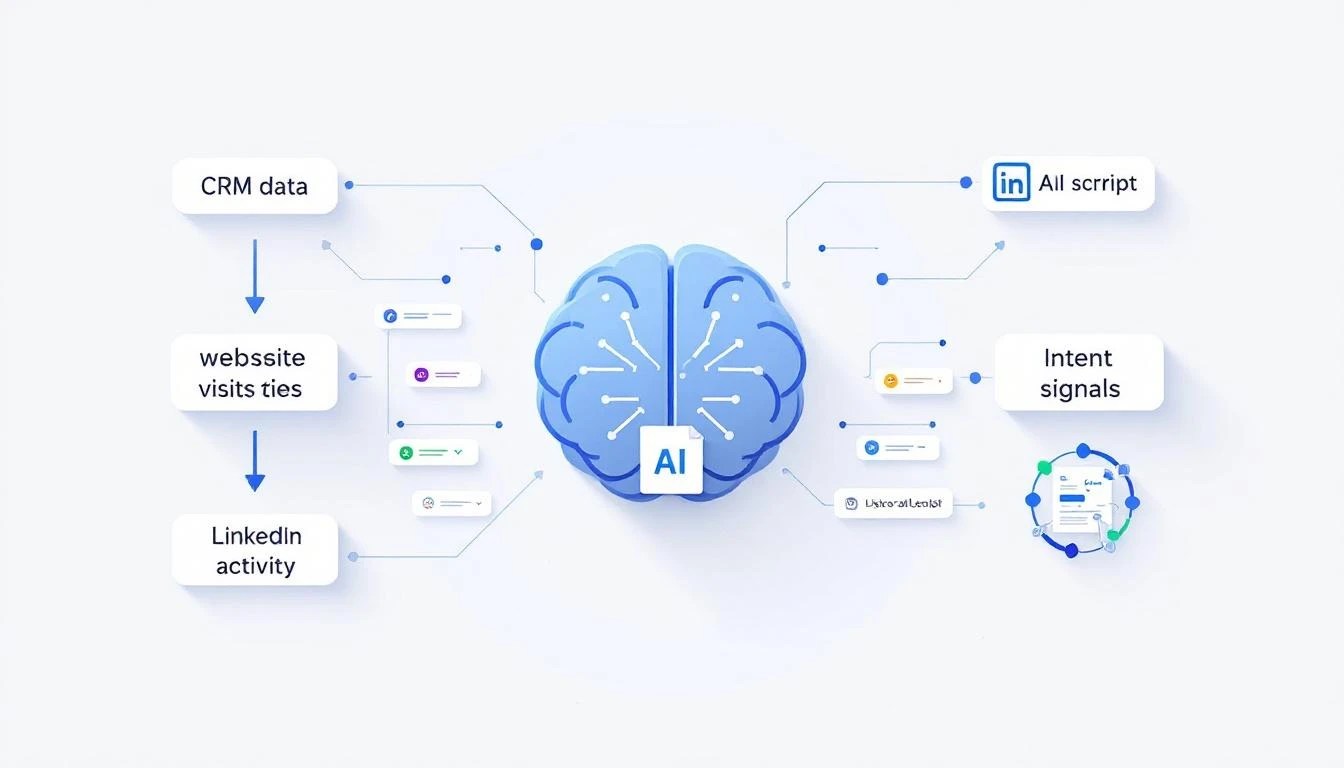
All of that context was sitting in your CRM, your website analytics, and publicly available signals. Nobody connected the dots. Nobody put it in the script.
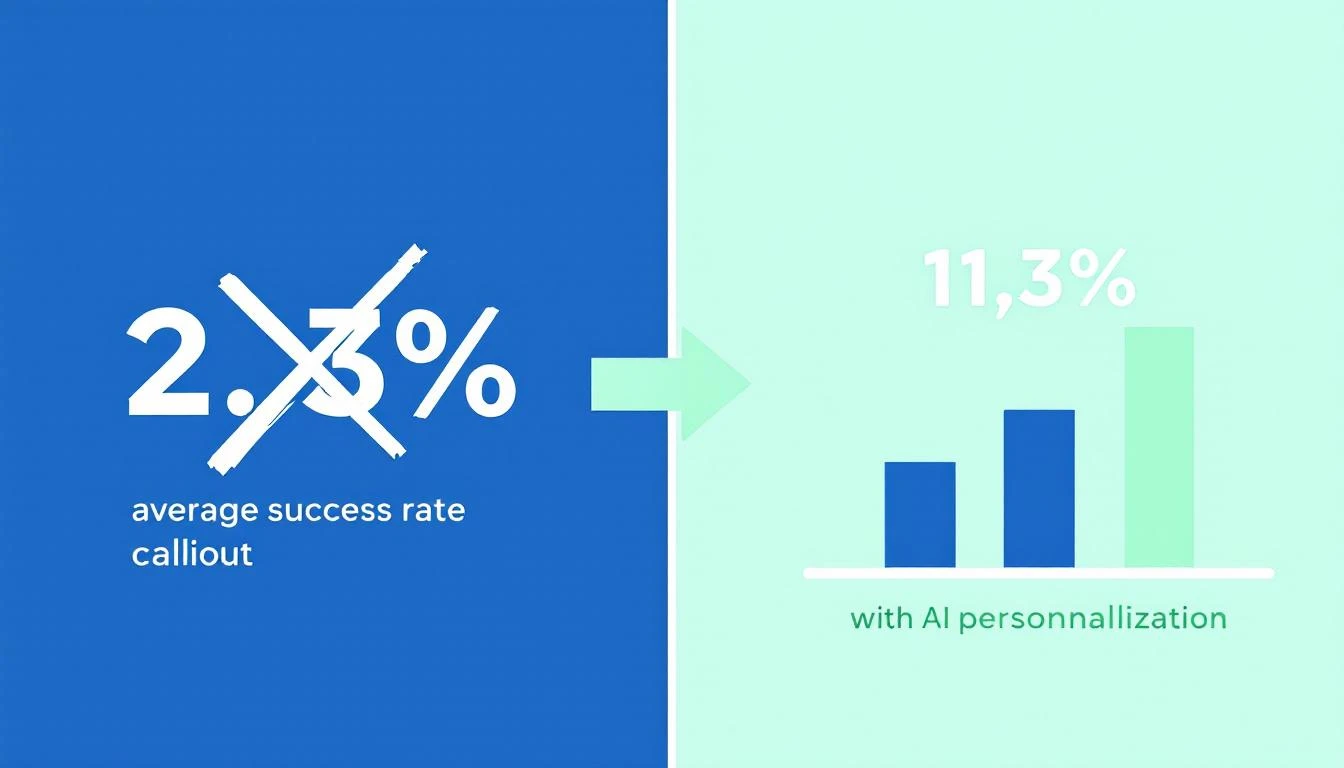
The average cold calling success rate in 2026 is 2.7%. That means for every 100 calls your SDR makes, fewer than 3 turn into anything. Cognism's 2026 report — which analyzed over 200,000 calls — found that teams using generic scripts and spray-and-pray tactics sit at or below that average.
But here's the number that matters: teams using AI-powered personalization and real-time context are hitting 6.7% to 11.3% success rates. That's 3-4x the industry average.
Outreach's 2025 dataset showed it plainly: personalized cold calls with AI-generated context had a 36% higher meeting conversion rate than generic calls.
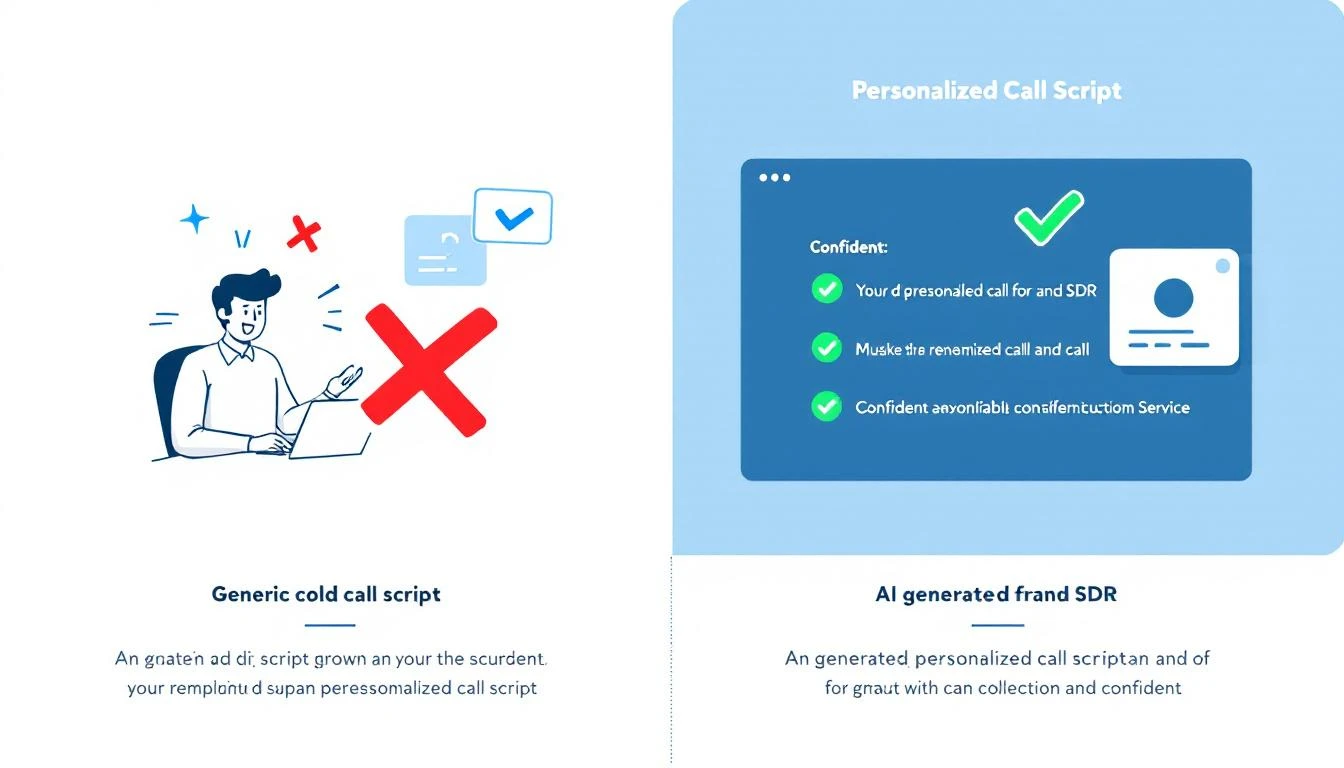
Here's what most SDR teams are working with today. If this looks familiar, that's the problem.
The "Standard" Cold Call Script:
"Hi Sarah, this is Mike from Acme Software. We're an AI-powered sales platform that helps companies improve their outbound efficiency. I was wondering if you had a few minutes to learn how we've helped companies like yours increase their pipeline by 40%?"
What's wrong with this:
No research signal. Nothing tells Sarah you know anything about her company
Generic value prop. "Improve outbound efficiency" could be any of 200 vendors
No trigger. Why are you calling TODAY? What changed?
Permission-based opener. "Do you have a few minutes?" is an invitation to say no
Zero personalization. Swap the name and this works for literally anyone
Your rep might as well be reading from a cereal box. The prospect can tell — and they hang up.
This is what we mean by "winging it." Even teams that HAVE scripts are winging it if the script doesn't reflect what you already know about the prospect.
Now here's the same call — but the script was generated 30 seconds before the dial, using everything the system knows about this specific prospect.
AI-Generated Script (Anonymized):
"Hi Sarah — quick question. I noticed Datastream just posted a Director of Sales Enablement role, and your team's been evaluating outbound tools. We work with a few mid-market SaaS companies that were in a similar spot — scaling their SDR team while deals were stalling in pipeline. Curious if that resonates, or if I'm off base?"
What changed:
Hiring signal → "posted a Director of Sales Enablement role" (from job board data)
Your AI script generator is only as good as the data it can access. At minimum, you need:
CRM integration (bidirectional sync with HubSpot or Salesforce)
Website visitor tracking (who's on your site right now)
Intent data feed (who's researching your category)
Most teams already have these tools. The problem is they're siloed. Your CRM doesn't talk to your visitor ID tool, which doesn't talk to your intent data provider. The best SDR tools in 2026 solve this by consolidating signals into one place.
The script should be ready before the rep clicks "dial." That means:
AI pulls the latest data on the prospect (CRM, signals, research)
It identifies the strongest hook (what's the most relevant signal?)
It generates a personalized opener, talking points, and objection prep
The rep sees the script in their dialer view — no tab-switching, no research time
This is the difference between an AI approach to prospecting and the old way. The AI does the prep work. The rep does the human work — building rapport and listening.
Pre-meeting briefs — when the meeting is booked, AI generates a full brief with company background, stakeholder map, and pricing guidance
The key insight: all-channel personalization from a single context engine. Your rep doesn't re-research for every touchpoint. The AI carries the context across every interaction.
"Hey Chris — saw that TechFlow is hiring two SDR managers. Usually when teams are scaling outbound, the biggest bottleneck isn't headcount — it's ramping new reps fast enough. We've helped a few teams cut SDR ramp time from 3 months to 3 weeks using AI-generated playbooks. Worth a 15-minute look?"
Signals used: Job posting data, company size, SDR ramp benchmarks
"Hi Dana — I'll be direct. I know your team's been looking at {Competitor}. A few of our customers switched from them because they got the data but not the 'what to do next' part. If you're still evaluating, might be worth seeing how we handle that differently. Open to a quick comparison?"
Signals used: Intent data (competitor research), CRM stage, product differentiation
"Jessica — we noticed someone from CloudBase has been on our pricing page a few times this week. I also see we've been in conversation for a while but things went quiet around January. Wanted to check in — has anything changed on your end, or can I send over something more specific to where you are now?"
That's an extra $6,600 per week — over $340K annually — from the same team. No new hires. No new tools (assuming your tools are already connected). Just better scripts.
The SDR productivity crisis isn't about effort. It's about context. Your reps are working hard. They're just working blind.
You don't need to overhaul your entire stack. Here's a practical starting point:
Audit your current scripts. When was the last time they were updated? Do they reference any prospect-specific data? If the answer is "never" and "no," you know the problem.
Inventory your data sources. What signals do you already collect that never make it into a call script? CRM notes, website visits, intent data — most teams have more context than they use.
Pick your highest-value call list. Start with your top 20 target accounts. Manually build AI-assisted scripts for those calls using the framework above. Measure the difference.
Evaluate tools that automate this. The right platform connects your data sources and generates scripts automatically. Look for CRM sync, visitor intelligence, intent signals, and AI content generation in one system.
Measure what matters. Track connect rate, conversation rate, and meetings-per-call — not just dial volume. The goal isn't more calls. It's more conversations that convert.
Your SDRs aren't bad at cold calling. They're under-equipped.
A generic script is a guess. An AI-generated script is an informed conversation starter. The data shows the difference: 36% more meetings, 3-4x higher success rates, and reps who actually look forward to picking up the phone because they know something about the person on the other end.
The question isn't whether AI will write your call scripts. It's whether your competitors are already doing it.
Ready to see AI-generated call scripts in action?Book a demo →
It's 11:47 PM on a Tuesday. A VP of Sales at a 200-person SaaS company lands on your website. She's been researching solutions for three weeks. She's read your case studies, compared you against two competitors, and she's ready to talk pricing.
She clicks the chat widget in the bottom-right corner.
"Hi! How can I help you today?"
She types: "I have a team of 12 SDRs. What does pricing look like for annual plans with CRM integration?"
The chatbot responds: "Thanks for reaching out! Here are some helpful resources about our pricing..." followed by three links she's already read.
She closes the tab. Your competitor had a real conversation with her the next morning. You lost the deal before your sales team even knew she existed.
This is happening on your website right now. And it's costing you more than you think.
The Chatbot Graveyard: $9.5 Billion Spent, Most of It Wasted
Here's the uncomfortable truth about B2B chatbots in 2026:
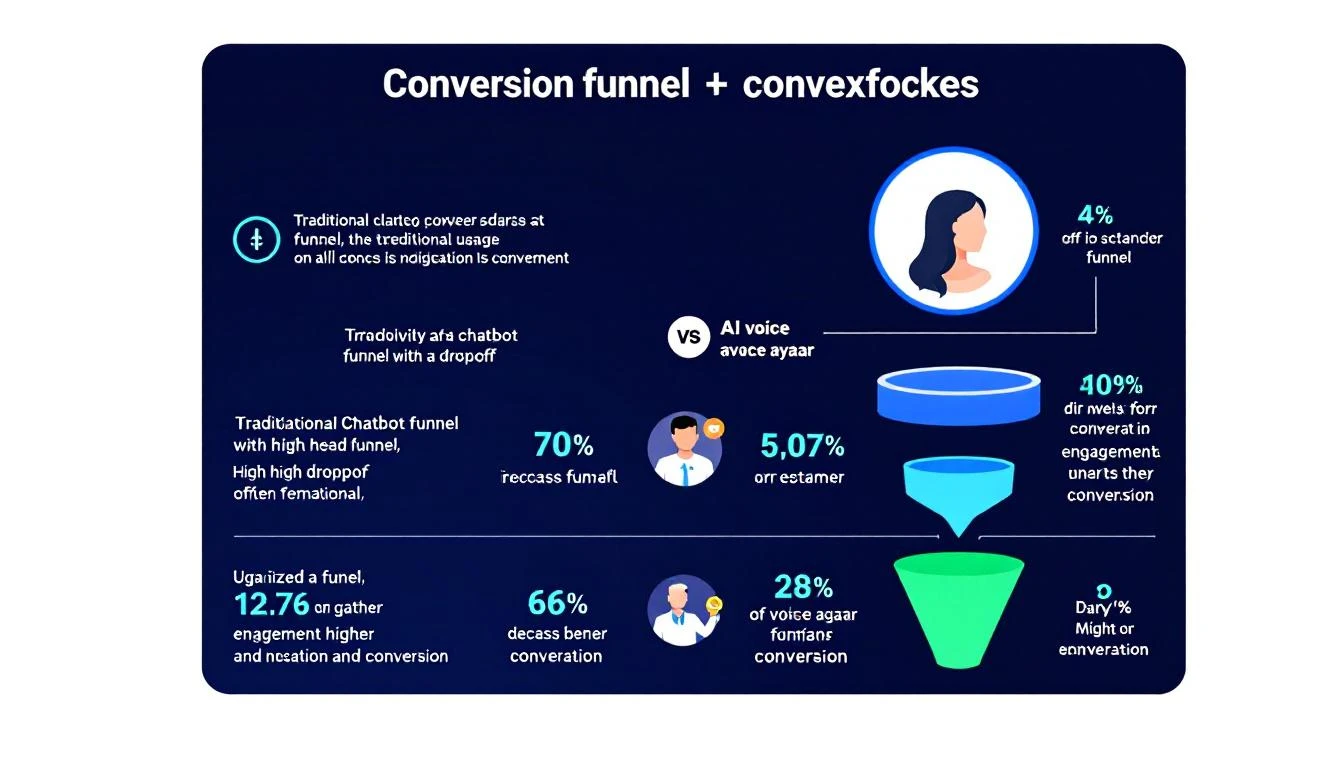
70% of B2B website visitors leave without converting — and most never come back
The average B2B website converts at just 1.8% of visitors
B2B bounce rates sit between 30% and 55%, meaning half your paid traffic disappears instantly
Chatbot conversations that hit a dead end — where the visitor reaches a point with no clear next step — are the number one reason for abandonment
The chatbot market is worth $9.57 billion in 2025 and is projected to hit $11.8 billion by 2026. Companies are spending more than ever on conversational tools. But most B2B chatbots are doing what they've always done: serving up canned responses, routing people to knowledge base articles, and calling it "engagement."
It's like hiring a receptionist who can only read from a script. Sure, they're sitting at the front desk. But they're not actually helping anyone.
The problem isn't that chatbots exist. It's that most chatbots are built for deflection, not conversion.
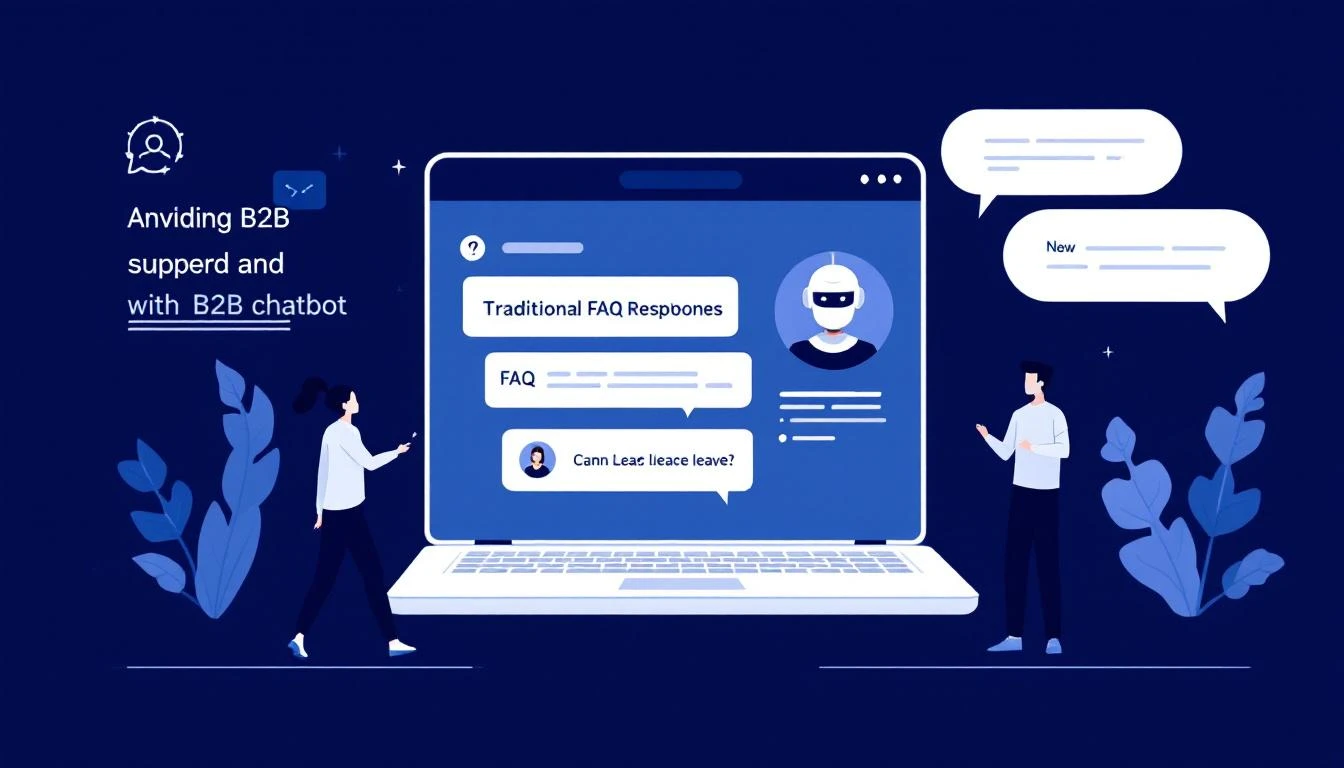
Traditional B2B chatbots are designed to reduce support tickets. They match keywords to pre-written answers. They follow rigid decision trees. They can tell someone your office hours but can't explain why your product is different from the competitor they just evaluated.
Here's what that looks like in practice:
Visitor: "How does your visitor identification compare to Warmly?"
Chatbot: "Great question! Here's a link to our features page."
Visitor: "I downloaded your whitepaper last week. Can someone walk me through implementation for a team our size?"
Chatbot: "Would you like to book a demo? Here's our calendar link."
Visitor: "What's the ROI look like for a 10-person SDR team?"
Chatbot: "Thanks for your interest! A team member will get back to you during business hours."
Every one of these is a missed conversion. The visitor had buying intent. They asked a real question. And they got a vending machine response.
Research backs this up: businesses using AI chatbots see conversion rates 3x higher than those using basic web forms. But that stat only applies to chatbots that can actually hold a conversation. The gap between a smart conversational AI and a keyword-matching FAQ bot is the difference between a 2% conversion rate and a 6%+ conversion rate.
The Voice Avatar Difference: From FAQ Bot to AI Sales Rep
What if your website could actually talk to visitors?
Not just display text responses. Not just route people through a decision tree. But actually speak — with a voice avatar that understands context, remembers previous interactions, answers nuanced questions, and takes action?
This is where voice-enabled AI changes the game for B2B websites. Instead of a text widget that visitors ignore after one disappointing interaction, you get an AI-powered sales rep that:
Speaks naturally in real-time, creating the feel of a real conversation
Understands context — what page they're on, what they've already looked at, and what stage of the buying journey they're in
Answers real questions about pricing, features, competitive differences, and implementation
Books meetings directly on your team's calendar without the "someone will get back to you" runaround
Hands off to humans when the conversation needs a real person, with full context preserved
Works 24/7 — including at 11:47 PM on a Tuesday when your best prospect is finally ready to engage
The difference isn't incremental. Organizations implementing voice AI in their sales process report 43% higher win rates and 37% faster sales cycles compared to those relying on traditional engagement tools.
Three Scenarios Where Voice Beats Text (Every Time)
Let's walk through the exact scenarios where a voice-enabled AI avatar outperforms a traditional chatbot — and what the revenue impact looks like.
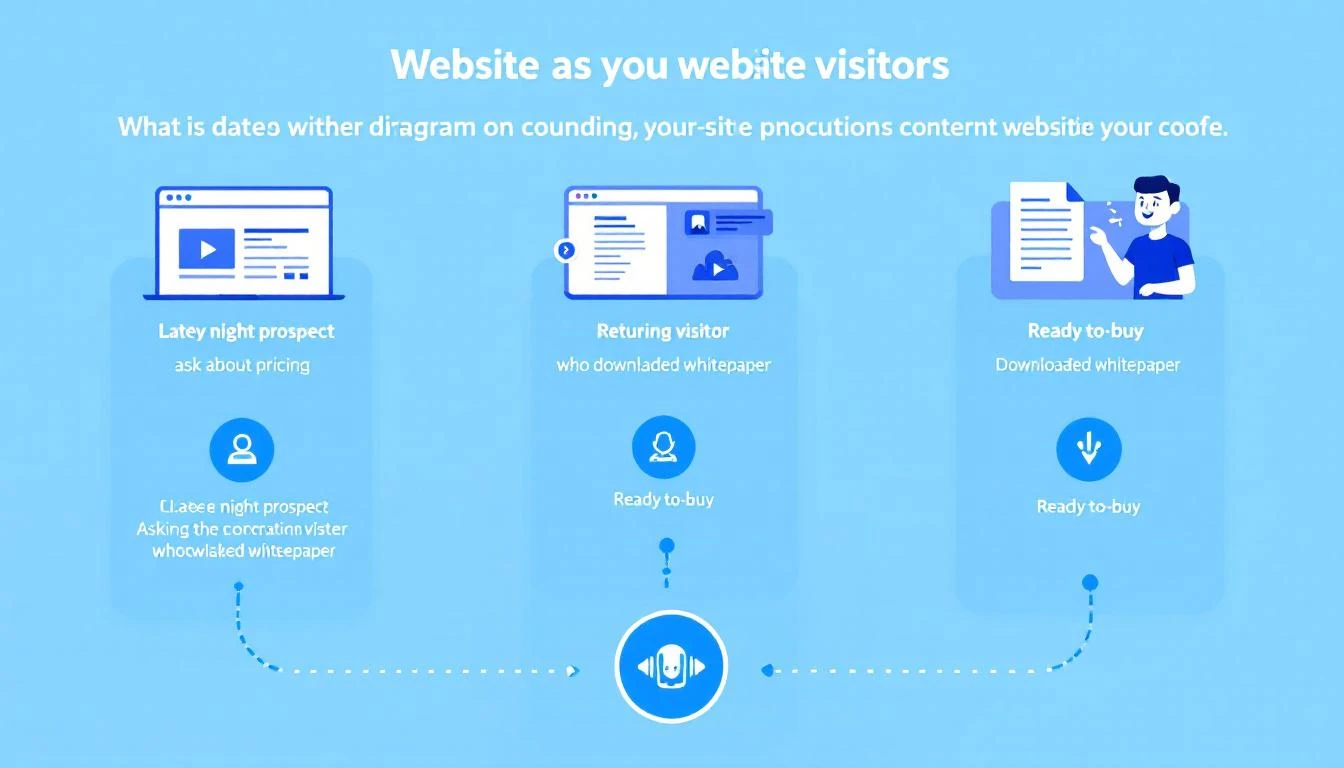
The situation: It's 11 PM Central Time. A Director of Revenue Operations at a mid-market SaaS company is on your pricing page. She's been evaluating three vendors this week. Her shortlist presentation to the VP of Sales is tomorrow at 9 AM.
What a traditional chatbot does: Shows an "away" message or offers to collect her email for follow-up. She fills out the form. Your SDR sees it at 9 AM the next morning — by which time she's already presented her shortlist. You weren't on it.
What a voice avatar does: Engages immediately. "Hey, I can see you're looking at our Enterprise plan. Happy to walk you through pricing for your team size — what's your SDR headcount?" She says "twelve." The avatar explains pricing tiers, compares relevant features against the competitors she mentioned, and books a 15-minute call with your AE for 8:30 AM — before her presentation. You make the shortlist.
Revenue impact: The difference between being on a shortlist and being forgotten. For a $40K ACV deal, that's a conversion worth protecting.
The situation: Someone downloaded your "Complete Guide to B2B Intent Data" two weeks ago. Now they're back on your site, browsing the integrations page and checking out your visitor identification tools comparison.
What a traditional chatbot does: Treats them like a first-time visitor. "Hi! Welcome to our site. How can I help?" No memory. No context. The visitor has to re-explain everything from scratch — if they bother engaging at all.
What a voice avatar does: Recognizes the returning session. "Welcome back — last time you grabbed our intent data guide. Looks like you're checking out integrations now. Are you evaluating how this would fit into your current stack?" The conversation picks up where intent left off. The avatar can reference the content they've consumed and connect the dots between what they've researched and what they actually need.
Revenue impact: Returning visitors convert at 5x the rate of first-time visitors — but only if you treat them like returning visitors. Context-aware engagement is the difference.
The situation: Two visitors are on your site at the same time. Visitor A is a marketing intern researching tools for a blog post. Visitor B is a VP of Sales who just got budget approved and needs to make a decision this quarter.
What a traditional chatbot does: Gives both of them the same experience. Same generic welcome. Same canned responses. Same "book a demo" CTA. Your SDR team wastes 20 minutes on a discovery call with the intern before realizing it's not a real opportunity.
What a voice avatar does: Within 30 seconds of conversation, the AI classifies intent. The intern gets helpful responses and relevant content links — a good brand experience, but no calendar push. The VP gets the red carpet: pricing specifics, ROI calculations for their team size, competitive positioning, and a meeting booked directly with a senior AE. The avatar uses real-time intent classification, not keyword matching, to route each conversation appropriately.
Revenue impact: Your SDR team spends zero time on unqualified conversations. Every meeting booked is with a real buyer.
That's the difference between 1-4 qualified meetings per month and 14-24. At a $30K average deal size and a 25% close rate, that's the difference between $7.5K-$30K in pipeline and $105K-$180K in pipeline — from the same traffic you're already paying for.
The traffic isn't the problem. The conversation is the problem.
Companies that use AI-powered chatbots already see 2.5x higher conversion into sales compared to traditional approaches. Add voice — with natural conversation, real-time context, and instant action — and that multiplier goes even higher.
Here's what the experience looks like when it's done right:
Step 1: Visitor arrives on your site. The AI avatar appears — not as a jarring popup, but as a subtle, friendly presence. On high-intent pages (pricing, comparisons, case studies), it proactively offers to help.
Step 2: The conversation starts. The visitor can type or speak. The avatar responds in natural voice, creating an experience that feels like talking to a knowledgeable team member rather than navigating a phone tree.
Step 3: Context drives the conversation. The avatar knows what page they're on, what content they've consumed, whether they've visited before, and what their likely buying stage is. It asks smart follow-up questions, not generic qualifiers.
Step 4: Action happens in real-time. Need pricing? The avatar pulls relevant tier information and walks through it. Want to compare features? It presents a tailored comparison based on the specific competitor the visitor mentioned. Ready to talk to a human? The avatar checks your team's calendar and books a meeting — right then and there.
Step 5: Handoff is seamless. When a live rep takes over, they get the full conversation context: what the visitor asked, what they care about, what objections came up, and what stage they're in. No "so tell me about your business" restart.
Step 6: Even text interactions stay smart. Some visitors prefer typing over speaking. The avatar adapts — maintaining the same intelligence, context awareness, and ability to take action whether the visitor is using voice or text. It can even trigger interactive forms mid-conversation for things like team size, tech stack, or use case qualification.
If any of these sound familiar, your chatbot is leaving revenue on the table:
Your after-hours form submissions go cold. By the time your SDR follows up, the buyer has moved on. Speed-to-lead matters — response time directly correlates with conversion.
Visitors engage with chat once, get a canned answer, and never return. This is the classic chatbot graveyard. One bad experience kills future engagement.
Your SDR team wastes hours on unqualified discovery calls. Without intent classification, every meeting request looks the same. Your top reps spend time on conversations that were never going to close.
You can't differentiate returning visitors from first-timers. If your chatbot says "Hi! How can I help?" to someone who's visited 6 times and downloaded 3 pieces of content, you're actively degrading their experience. Visitor identification should inform every interaction.
Your website conversion rate is under 2%. The B2B average is 1.8%. If you're at or below average with decent traffic, the problem isn't your product or your content — it's that visitors can't get answers when they need them.
The Bigger Picture: Your Website as a Revenue Engine
The shift from text chatbot to voice-enabled AI avatar isn't just a UX upgrade. It's a fundamental change in how your website participates in the sales process.
Today, most B2B websites are passive. They display information and hope visitors self-serve their way to a demo form. The website is a brochure, not a team member.
A voice-enabled AI turns your website into an active participant in the sales process. It qualifies. It educates. It overcomes objections. It books meetings. It remembers. It works while your team sleeps.
This is where the AI SDR stack is heading. Not just automating outbound emails and LinkedIn messages, but creating intelligent, always-on engagement at every touchpoint — starting with the one place where buyers are already raising their hand: your website.
The companies that figure this out first will have a structural advantage. While competitors are still emailing "just checking in" follow-ups to cold form fills, you'll be having real conversations with ready buyers — at 2 AM, at 2 PM, whenever they show up.
You don't need to rip and replace your entire tech stack. Start here:
Audit your current chatbot conversations. Pull the transcripts from the last 30 days. How many conversations ended with a canned response? How many visitors asked a real question and got a link dump? That's your baseline.
Identify your highest-intent pages. Pricing, comparisons, case studies, and integration pages are where buyers go when they're close to a decision. These are your priority pages for voice-enabled engagement.
Map your visitor segments. First-time vs. returning. Content consumer vs. pricing researcher. SMB vs. enterprise. Each segment should get a different conversation experience — just like they would if they called your office and talked to a real person.
Start with after-hours coverage. The fastest ROI comes from engaging visitors who currently hit an "away" message or a dead form. If 40% of your traffic comes outside business hours, that's 40% of potential conversations you're missing entirely.
Measure conversations, not just clicks. Traditional chatbot metrics — "chat initiated," "messages sent" — are vanity metrics. Track conversation completion rate, meeting booking rate, and speed-to-qualified-meeting. Those are the numbers that connect to revenue.
The AI sales chatbot landscape is evolving fast. The gap between FAQ bots and genuine conversational AI is widening every quarter. The question isn't whether voice-enabled AI will become the standard for B2B websites. It's whether you'll be early enough to capture the advantage.
Your website visitors are already trying to have conversations. The only question is whether anyone's listening.
Prospecting has become a numbers game of diminishing returns. Sales reps spend countless hours on manual research, data entry, and crafting outreach that often gets ignored. This inefficiency doesn't just hurt quotas; it leads to burnout and a stagnant pipeline. The core problem is clear: too much time is spent on low-value tasks instead of high-impact selling conversations. Artificial intelligence offers a powerful solution, but simply adopting any AI platform can introduce more complexity than it resolves, forcing teams to juggle disconnected systems.
This guide cuts through the noise. We provide an actionable, in-depth analysis of the top AI tools for sales prospecting designed to solve this very problem. Our goal is to help you find the right platform that integrates directly into your existing sales process, automates the tedious work, and delivers measurable results. We will move beyond generic feature lists to give you a real-world perspective on how these tools function day-to-day.
Inside this comprehensive resource, you will discover:
Honest pros and cons for each tool based on practical usage.
Specific use-case scenarios for Sales Development Representatives (SDRs), Sales Leaders, and Revenue Operations (RevOps) teams.
A detailed feature comparison matrix to quickly identify which platform best suits your needs, highlighting CRM-native advantages.
Actionable insights on pricing, implementation, and how each tool stacks up against the competition.
Each review includes screenshots and direct links to help you evaluate the options efficiently. For teams looking to expand their outreach channels, it’s also useful to know how different platforms can work together. For instance, to efficiently scale prospecting efforts, businesses can explore various types of LinkedIn automation tools for lead generation. Our focus here, however, is on the core AI-powered sales platforms that form the foundation of a modern, high-performing sales engine. Let's find the right tool to fill your pipeline.
For sales teams seeking a direct path from buyer intent to meaningful outreach, marketbetter.ai stands out as a powerful execution engine. It's built to operate directly within Salesforce and HubSpot, transforming disparate buyer signals like website visits and ICP triggers into a prioritized, actionable task list for SDRs. This CRM-native approach eliminates the common friction of switching between separate engagement tools and the core system of record.
MarketBetter excels by providing a clear “next best action” with all the necessary context, ensuring reps engage the right leads at the right time. Its AI-generated outbound copy is a key differentiator, producing concise, account-specific first-touch emails and subject lines that are ready for immediate use. This isn't generic content; it's designed for high-relevance warm outbound. The platform's built-in dialer, which also lives natively in Salesforce, further accelerates this workflow. It provides talk tracks for call prep and automatically summarizes outcomes back to the CRM, maintaining clean data and clear attribution for RevOps. For a deeper dive into how this compares to other platforms, our guide on the best sales prospecting tools offers additional context.
MarketBetter directly addresses two of the biggest challenges in modern outbound: signal noise and poor CRM adoption. Instead of just identifying intent, it makes that intent actionable within the systems reps already use. The combination of an AI-driven task inbox and a native Salesforce dialer is a potent formula for increasing daily outreach activities while improving connection rates.
Actionable AI Copywriting: Generates sequence-ready, persona-specific emails and subject lines for high-relevance outreach.
Integrated Dialer & Auto-Logging: Features a click-to-dial function within Salesforce with automatic call disposition and note syncing.
Fast Implementation: Setup is quick via a tracking code and CRM connection, with templates available to speed up SDR onboarding.
Potential Considerations:
Demo-Required Pricing: The lack of public pricing requires a sales conversation, which may not suit teams in early-stage evaluation.
Overlap with Existing Tools: Teams with established engagement platforms like Outreach or Salesloft must carefully evaluate how MarketBetter’s CRM-native layer integrates with or replaces their current stack.
Outreach is a powerful enterprise-grade sales engagement platform that uses AI to guide revenue teams through the entire sales cycle, from prospecting to closing. It excels at helping large, distributed teams standardize their outbound activities, ensuring every Sales Development Representative (SDR) and Account Executive (AE) follows a proven playbook. The platform surfaces high-intent prospects, automates time-consuming research, and recommends the next-best action, so reps know exactly what to do and when.
Unlike point solutions that only address one part of the prospecting puzzle, Outreach provides an end-to-end workflow. Where a tool like MarketBetter focuses on executing tasks within the CRM, Outreach acts as a comprehensive command center living outside of it. This is a key advantage for organizations looking to reduce their tech stack and unify their sales process. Its AI conversation intelligence tool, Kaia, transcribes and analyzes sales calls to provide real-time coaching and post-call insights, helping managers improve team performance at scale. This comprehensive approach to sales automation software makes it a top choice for mature sales organizations.
Pricing: Outreach uses a custom, quote-based model typical for enterprise software. Expect premium pricing, as it’s designed for larger teams needing extensive functionality and support.
Implementation: The setup can be complex and lengthy, especially for organizations with intricate sales processes and multiple team roles. This is not a plug-and-play tool but a strategic platform investment.
Actionable Use Case: A VP of Sales at an enterprise company wants to standardize the outbound prospecting motion for a 100-person SDR team.
Build Playbooks: Create and enforce multi-step, multi-channel sequences to ensure consistent messaging.
Track Engagement: Use Outreach's analytics to monitor which sequences have the highest reply rates and adjust accordingly.
Coach at Scale: Leverage Kaia for remote coaching sessions to identify talk tracks that lead to booked meetings and ramp new hires faster.
Salesloft is a complete revenue orchestration platform that provides sales teams with a structured framework for every stage of the customer lifecycle. It excels in helping sellers execute multi-channel outreach, understand buyer engagement, and manage their pipeline from first contact to renewal. The platform’s core strength lies in its Cadence feature, which guides Sales Development Representatives (SDRs) and Account Executives (AEs) through a prescribed series of email, phone, and social selling tasks, ensuring consistent execution across the team.
Compared to other enterprise tools, Salesloft offers a highly connected workflow that bridges the gap between prospecting and deal management. Its AI-powered engine, Rhythm, prioritizes a seller’s daily tasks by analyzing buyer signals, while the Conversations module provides call intelligence for coaching. While Outreach and Salesloft are direct competitors, Salesloft often differentiates with a user interface praised for its ease of use and strong analytics for forecasting. The recent integration with Drift allows teams to capture website intent directly, making it a powerful choice for organizations looking to connect their top-of-funnel activities with their core sales process. This makes it one of the leading ai tools for sales prospecting for teams needing a single pane of glass.
Pricing: Salesloft does not offer public per-seat pricing. Access to the platform requires engaging with their sales team for a custom quote, which is typical for enterprise-grade solutions of this scope.
Implementation: While supported by extensive customer education resources, the setup can be a significant project. It’s best suited for organizations ready to invest time in configuring workflows and integrating them with their existing CRM and marketing automation tools.
Actionable Use Case: A Director of Sales Enablement aims to align SDR and AE activities.
Define Cadences: Create distinct Cadences for SDR prospecting and separate ones for AE deal-cycle follow-up.
Identify Best Practices: Use the Conversations module to analyze top performers' calls and codify their talk tracks into templates.
Monitor Pipeline Health: Track deal progression and identify at-risk opportunities using the integrated forecasting tools to proactively intervene.
Apollo.io stands out as an all-in-one sales intelligence and engagement platform, effectively bundling a massive B2B contact database with the tools needed to act on that data. It combines data enrichment, sequencing, and deal execution into a single, cohesive workflow. This unification is a major advantage for sales teams, especially startups and SMBs, looking to minimize their tech stack and get new reps productive quickly.
Unlike platforms that specialize only in engagement (like Salesloft) or data (like ZoomInfo), Apollo’s strength lies in its integration of both. Its native AI Assistant aids in prospect research and generates personalized messages directly within the platform, making it a fast and efficient option among ai tools for sales prospecting. This ability to move from finding a contact to engaging them in a sequenced campaign without switching tools is a significant workflow improvement. For teams that need both a data source and an outbound engine, Apollo presents a compelling, cost-effective solution.
Pricing: Apollo offers a free-forever starter plan, which is excellent for trial and very small teams. Paid plans are published and are more accessible than enterprise-grade tools, but the credit-based model for contacts and emails requires careful management as you scale.
Implementation: Getting started is relatively fast, particularly for users familiar with prospecting tools. The Chrome extension makes it easy to integrate into daily browsing and LinkedIn activities, allowing for a swift ramp-up.
Actionable Use Case: A demand generation manager at a growing startup needs to equip a new 5-person SDR team.
Build Lists: Use Apollo's database to create targeted contact lists based on company size, industry, and technology used.
Launch Campaigns: Deploy multi-channel outbound sequences using the built-in engagement tools.
Personalize at Scale: Instruct the SDRs to use the AI Assistant to generate personalized opening lines for their top-tier prospects, improving reply rates.
ZoomInfo’s SalesOS is an enterprise-grade B2B intelligence platform that functions as a foundational data layer for go-to-market teams. While not an engagement tool itself, its AI-driven database provides the critical contact data, firmographics, technographics, and buying signals that power other prospecting tools. Its primary function is to help sales teams identify and prioritize high-potential accounts and contacts with unparalleled scale, feeding this rich data directly into CRMs and sales engagement platforms.
The platform distinguishes itself with its deep data coverage and "Scoops," which are timely intent signals indicating leadership changes, funding events, or technology purchases. These signals are crucial for crafting relevant and timely outreach. Unlike an all-in-one like Apollo.io, ZoomInfo specializes solely in providing best-in-class data. It supplies the necessary intelligence for sales teams to build targeted account lists and ensures that downstream engagement tools like Outreach or Salesloft are populated with accurate, actionable information, making it one of the most important ai tools for sales prospecting for data-driven organizations.
Pricing: ZoomInfo does not publish its pricing. Contracts are customized, typically requiring annual commitments and multi-seat licenses. It represents a significant investment geared toward organizations prioritizing data accuracy and breadth.
Implementation: Integrating ZoomInfo requires careful planning, especially when connecting it to a CRM and other sales tools. Setup involves configuring data mapping, user permissions, and credit allowances to ensure teams use the data effectively and within budget.
Actionable Use Case: A Demand Generation Manager needs to build a target account list for a new campaign.
Define Your ICP: Filter companies by industry, size, and specific technologies used (e.g., "companies using Marketo").
Identify Contacts: Find contacts with relevant job titles within those accounts (e.g., "VP of Marketing").
Prioritize with Intent: Layer on intent data to find accounts actively researching your solution category and export these high-value leads directly into Salesforce for immediate SDR follow-up.
6sense operates as a Revenue AI and Account-Based Marketing (ABM) platform that excels at identifying which accounts are actively in-market for a solution like yours. It moves beyond simple firmographics by analyzing anonymous web traffic and third-party intent data to predict which companies are showing buying signals right now. This makes it a critical tool for sales teams looking to prioritize their outreach efforts and focus only on accounts with the highest propensity to buy, feeding SDRs a qualified list of targets.
The platform’s core strength is its ability to create a tight alignment between sales and marketing. While ZoomInfo tells you who to target based on firmographics, 6sense tells you when to target them based on behavioral intent. While marketing uses 6sense to run targeted ad campaigns and content syndication, sales teams receive alerts and prioritized task queues directly in their CRM. This coordinated approach ensures that when an SDR reaches out, the prospect has already been warmed up by marketing activities, making for a much more effective conversation. Among the various AI tools for sales prospecting, 6sense is particularly strong for organizations that have adopted a full-funnel ABM strategy.
Pricing: 6sense follows a quote-based, enterprise-focused pricing model. You will need to engage with their sales team to get a quote, as pricing is not publicly available and depends on the scope of implementation.
Implementation: Setting up 6sense requires a strategic partnership with their team. It involves integrating with your CRM, marketing automation platform, and ad networks, which demands significant technical and operational resources.
Actionable Use Case: A Demand Generation Manager at a B2B tech company wants to run a coordinated campaign.
Identify Intent: Use 6sense to generate a list of 500 target accounts showing intent signals for their product category.
Run Air Cover: Launch a marketing play where display ads are served to key personas at these accounts.
Activate Sales: Simultaneously, have the BDR team receive automated tasks in their CRM to begin personalized outreach, referencing the specific topics the account is researching.
Cognism is a B2B data provider that carves out its niche with a strong emphasis on data compliance and accuracy, particularly for mobile and direct-dial phone numbers. For sales teams building outbound programs in regions with strict privacy regulations like the EU and California, Cognism provides a layer of assurance with its GDPR and CCPA-aligned data collection practices. Its "Diamond Data" feature, which signifies a phone-verified mobile number, is a key asset for call-heavy prospecting teams looking to improve connect rates and bypass traditional gatekeepers.
Unlike competitors who may mix various data sources without clear verification, Cognism’s focus on governance and verification makes it a strategic choice for regulated industries or those targeting senior-level decision-makers. Compared to ZoomInfo, Cognism's database might be smaller in scale, but its value proposition is higher data quality and compliance, especially for European markets. The platform’s Chrome extension allows reps to access this compliant contact data directly on LinkedIn or company websites, integrating into their existing workflow. This focus on providing high-quality, verified mobile numbers makes it a standout among the AI tools for sales prospecting when the primary outreach channel is the phone.
Pricing: Cognism does not offer public pricing and operates on a quote-based subscription model. Contracts are typically sold on an annual basis, which can be a significant upfront investment.
Implementation: Onboarding is generally straightforward, focusing on integrating the platform and training the team to use the Chrome extension and web application. The main effort is aligning data usage with internal compliance protocols.
Actionable Use Case: A demand generation manager for a FinTech company is launching a campaign targeting C-level executives in both the US and the UK.
Build a Compliant List: Use Cognism to build a highly targeted list of prospects, filtering for C-level titles in the financial sector.
Prioritize Mobile Dials: Instruct SDRs to prioritize contacts with the "Diamond Data" tag for their call blocks to maximize connect rates.
Ensure Compliance: Rest easy knowing the data collection methods meet GDPR and CCPA standards, reducing risk for the campaign.
Seamless.AI is a real-time search engine for B2B contact and company data, positioning itself as a direct line to accurate emails and, notably, mobile numbers. Its AI-powered platform and Chrome extension help sales teams find prospect information across websites and social platforms, making it a go-to for reps who need to build targeted lists quickly. The core strength of Seamless.AI lies in its accessibility, offering a generous free tier that provides annual credits, lowering the barrier to entry for small teams or individual contributors.
Unlike all-in-one engagement platforms, Seamless.AI focuses squarely on the top of the funnel: data acquisition. It’s one of the few ai tools for sales prospecting that emphasizes direct-dial mobile numbers, which is a significant advantage for call-heavy sales motions. While Apollo.io offers a similar "data + engagement" model, Seamless.AI is often seen as a more direct competitor to pure-play data providers like ZoomInfo, but with a more accessible price point and a "real-time search" positioning. The platform's AI Pitch Intelligence feature analyzes company and contact data to suggest talking points, helping reps personalize their outreach. This makes it a practical tool for SDRs who need to quickly gather intel and start dialing without a lengthy research process.
Pricing: A free plan is available with a limited number of annual credits. Paid plans are required for higher volume needs, CRM integrations, and advanced features, with pricing based on credit and user counts.
Implementation: Getting started is simple, especially with the Chrome extension. Users can begin finding contacts in minutes. However, integrating it into a CRM and establishing a data verification process is necessary to maintain database hygiene.
Actionable Use Case: A small, scrappy SDR team at a startup needs to build a pipeline from scratch with a limited budget.
Start for Free: Have each rep sign up for Seamless.AI’s free plan to start building lists of key decision-makers at target accounts.
Find Direct Dials: Use the Chrome Extension on LinkedIn profiles to find direct mobile numbers.
Craft Opening Lines: Leverage the Pitch Intelligence feature to get quick talking points for cold calls, increasing relevance.
Clay is a GTM engineering platform that gives teams surgical control over their list-building and data enrichment processes. Instead of providing a static database, Clay acts as a central hub where you can connect over 100 data sources, build cascading enrichment workflows, and use AI to automate web research and craft hyper-personalized messaging. This makes it one of the most powerful and flexible ai tools for sales prospecting for technical sales operations teams.
The platform’s core strength is its "waterfall" enrichment model, where you can query multiple providers sequentially until you find the data point you need, minimizing costs. You can bring your own provider keys, giving you direct control over your data budget and coverage. Unlike any other tool on this list, Clay doesn't provide data itself; it orchestrates data from other sources like Apollo, ZoomInfo, or Clearbit. Clay’s AI agent, Claygent, can be instructed to perform research tasks like visiting a prospect's LinkedIn profile to find a recent post or checking their company’s careers page for open roles relevant to your solution, then drafting personalized first lines based on that research. This approach allows teams to build highly targeted and qualified prospect lists that are then passed to a separate sales engagement tool for execution.
Pricing: Clay uses a credit-based pricing model, with plans starting around $149/month. Actions like enriching data or running AI agents consume credits, so costs can be variable and require careful management to avoid unexpected expenses.
Implementation: This is not a simple plug-and-play tool. Clay requires a strong understanding of data operations and process design. The learning curve is steep, and it functions more like an engineering canvas than a one-click database.
Actionable Use Case: A demand generation manager wants to build a hyper-personalized GTM motion for a new market segment.
Build a Base List: Pull a list of companies from a source like Apollo into a Clay table.
Enrich with a Waterfall: Run a waterfall enrichment to find marketing contacts, trying three different data providers in sequence to maximize fill rate.
Automate Research: Use Claygent to visit each contact's LinkedIn profile, find a recent post, and write a personalized email intro referencing that post before exporting the final list to an outbound tool.
Amplemarket is an AI-native sales engagement platform that combines a B2B contact database with multichannel outreach capabilities. Its core advantage lies in unifying data, intent signals, and execution into a single workflow, which helps sales development teams bypass the need to toggle between separate prospecting and engagement tools. The platform uses AI to identify ideal customer profile (ICP) accounts based on real-time signals and generates highly personalized, multithreaded sequences for email, phone, and social channels.
Unlike platforms that require you to bring your own data, Amplemarket provides it, creating a more cohesive process from discovery to outreach. This makes it a direct competitor to Apollo.io, but it often targets a more mid-market audience with a stronger emphasis on AI-driven personalization and email deliverability. This makes it one of the better ai tools for sales prospecting for teams that want to consolidate their tech stack. A key differentiator is its serious focus on email deliverability, offering robust tools and onboarding support, including its "Amplemarket University," to ensure outbound campaigns don't damage a company's domain reputation. The AI copywriter also allows reps to control the tone and voice, ensuring messages align with brand guidelines.
Pricing: Amplemarket does not list pricing publicly. Interested teams must contact the sales department for a custom quote, which suggests it is geared toward teams with a dedicated budget rather than individual users.
Implementation: The platform's unified nature can simplify setup compared to integrating multiple disparate systems. However, teams will need to invest time in the initial configuration and learn how to best use the integrated data and sequencing features.
Actionable Use Case: A Demand Generation Manager at a mid-market SaaS company wants to scale outbound without hiring more reps.
Identify New Accounts: Use Amplemarket’s database and signal intelligence to find net-new accounts fitting their ICP.
Deploy AI Sequences: Launch AI-generated, multi-channel sequences to book meetings, letting the platform handle the personalization.
Monitor Domain Health: Use the built-in deliverability dashboard to ensure a high volume of outreach doesn't harm their sending reputation.
Gong Engage is Gong's AI-powered sales engagement module, designed to turn conversational insights into effective outreach. It connects the data from Gong's core revenue intelligence platform directly to the top-of-funnel activities of SDRs and AEs. By analyzing real customer calls and meetings, Engage recommends what to say, who to target next, and which talk tracks are converting, creating a direct feedback loop between conversations and prospecting actions.
Unlike standalone sales engagement tools, Engage’s primary advantage is its native integration with Gong's massive repository of conversation data. Where Outreach and Salesloft use AI to optimize generic sales processes, Gong Engage uses AI to optimize your specific sales process based on your team's calls. This allows its AI to provide contextually rich personalization suggestions and guided workflows based on what actually works with your buyers. Reps can execute multi-channel sequences with an integrated dialer and email, all while the system provides AI-generated recommendations. This model is very different from generic AI sales assistants because its guidance is derived from your team’s unique customer interactions, not broad-market data.
Pricing: Gong Engage is sold via a custom, quote-based model. It delivers the most value when bundled with the broader Gong Revenue Intelligence platform, so pricing will reflect a more strategic, platform-level investment.
Implementation: If you are already a Gong customer, adding Engage is relatively straightforward. For new customers, implementation involves setting up the core revenue intelligence platform first, which can require significant time to integrate with your CRM, dialer, and web conferencing tools.
Actionable Use Case: A sales manager for a team already using Gong for call recording wants to arm their BDRs.
Identify Winning Language: Use Gong to analyze the last quarter's successful discovery calls.
Create a Sequence: Build a new outreach sequence in Engage for a product launch.
Arm the Reps: Let Engage's AI recommend specific phrases and value props for emails and calls, pulled directly from the winning language identified in step one.
HubSpot Sales Hub is a widely adopted platform that combines a full-featured CRM with integrated sales engagement tools. Its strength lies in providing an all-in-one environment where prospecting activities are native to the core contact record. AI assistance is woven into the workflow, helping reps draft personalized emails, automate follow-up tasks, and generate reports without toggling between different applications. This native integration is a significant advantage for teams already using HubSpot's ecosystem, as it eliminates data sync issues and reduces administrative overhead.
Unlike standalone prospecting tools that require complex integration projects, HubSpot offers a more direct path to unifying sales and marketing data. The platform's clear, public pricing tiers make procurement straightforward, a notable contrast to the custom quote models of many enterprise competitors. Its primary differentiator is its existence as part of a complete GTM platform (Marketing Hub, Service Hub), making it the default choice for companies committed to the HubSpot ecosystem. Features like built-in sequences, call logging, and email templates are available directly within the CRM, providing a cohesive experience. This makes it a strong contender for organizations looking for transparent packaging and a single source of truth for their entire revenue operation.
Pricing: HubSpot provides clear, public pricing with Starter, Professional, and Enterprise tiers. While transparent, the seat-based model means costs can increase substantially as teams grow, so it is important to model the total cost of ownership carefully.
Implementation: Getting started is relatively simple, especially for teams already familiar with the HubSpot interface. The all-in-one nature simplifies the tech stack, but migrating from an existing CRM can require significant planning and data management.
Actionable Use Case: A demand generation manager for a mid-market company wants to align sales and marketing efforts within HubSpot.
Automate Inbound: Create automated lead nurturing sequences in Sales Hub that trigger when a prospect downloads an e-book from a Marketing Hub landing page.
Track Engagement: Monitor the prospect's entire journey from first touch to close within a single contact record.
Ensure Consistency: Use the AI content assistant to help SDRs draft consistent, high-quality follow-up emails for MQLs.
From Tools to Strategy: How to Make Your Final Decision
We've explored a dozen powerful AI tools for sales prospecting, from comprehensive platforms like Outreach and Salesloft to specialized data providers like ZoomInfo and Seamless.AI. The sheer volume of options can feel overwhelming, but making the right choice isn't about finding a single "best" tool. It's about diagnosing your sales team's most significant bottleneck and selecting the software that directly solves it.
Your next step is to move from reviewing features to defining your strategic needs. A powerful tool implemented against the wrong problem will only add complexity, not revenue. It's time to conduct a frank audit of your team's day-to-day operations.
Before you book a single demo, gather your sales leaders, SDRs, and BDRs. Ask them to identify the single biggest time-waster in their prospecting workflow. The answers will likely fall into one of these three critical areas. Use this framework to narrow your focus and pinpoint the right category of solution.
1. Is your primary problem CRM data integrity and hygiene?
If your reps complain about "logging my calls," "updating Salesforce," or "finding the right contact record," your core issue is data friction. Manual data entry is not just a time sink; it leads to incomplete records, poor follow-up, and inaccurate forecasting.
Your focus should be: Tools with deep, native CRM integration and automatic activity logging. A solution that lives inside your CRM, rather than a separate tab, drastically reduces this friction. Look for features like automatic call logging, email tracking, and disposition capture directly within the contact record. Solutions like MarketBetter, Gong Engage, and HubSpot Sales Hub are built with this CRM-centric philosophy in mind, making data capture a background process, not a manual chore.
2. Are your reps drowning in manual research and guesswork?
Do your sellers spend more time searching for who to contact and why than actually making contact? If so, you have an intelligence and prioritization problem. Without clear signals, reps resort to spray-and-pray tactics, wasting effort on low-intent leads.
Your focus should be: Platforms that serve up prioritized, intent-driven tasks. You need a system that analyzes market signals, identifies buying committees, and tells your reps, "Contact Jane at Acme Corp today about their recent funding round." Account-based intelligence platforms like 6sense and intent data specialists like ZoomInfo excel here. For execution, look at how tools like MarketBetter can translate these signals into a prioritized task queue directly within your CRM, guiding reps to their next best action.
3. Is your dialer adoption failing due to workflow disruption?
You've invested in a dialer, but reps aren't using it. Why? It often comes down to usability. If a dialer forces reps to leave their primary workspace (the CRM), toggle between tabs, and manually log outcomes, they will inevitably revert to using their phones.
Your focus should be: A truly CRM-native dialer. This is more than just an "integration." It means the click-to-call button, the call script, and the disposition fields are all embedded directly within the Salesforce or HubSpot interface. This unified workflow makes dialing seamless and efficient. MarketBetter’s core design as a CRM-native task and dialer system directly addresses this common failure point, driving adoption by making the right way to work the easiest way to work. While Salesloft and Outreach offer robust dialers, their operation outside the primary CRM window can still create the friction you're trying to eliminate.
Choosing from the best AI tools for sales prospecting is just the first step. True success is measured by adoption. The most feature-rich platform is useless if your team finds it too complicated or disruptive.
As you evaluate your options, ask vendors not just what their tool does, but how it fits into a rep's existing day. Prioritize the solution that removes the most clicks, automates the most tedious tasks, and makes it easiest for your sellers to do what they do best: sell. Your goal is to find a partner that simplifies, not complicates, their path to quota.
Ready to eliminate CRM busywork and give your sales team a clear, prioritized path to their next customer? marketbetter.ai is the CRM-native task management and dialing platform that guides reps to their next best action without ever leaving their CRM. See how you can increase sales activity and improve data hygiene by booking a demo at marketbetter.ai today.
In B2B sales, the gap between hitting quota and falling short often boils down to the effectiveness of your outbound motion. But motion without direction is just noise. Your Sales Development Reps (SDRs) are likely drowning in a sea of manual research, disconnected tools, and generic outreach that fails to connect. The result? Wasted hours, low morale, and a pipeline that never quite fills up. This guide cuts through the marketing fluff to deliver an actionable comparison of the 12 best sales prospecting tools on the market today.
We'll move beyond generic feature lists and dive into real use cases, honest limitations, and the critical question: Which tool will actually get my team to execute? To truly stop prospecting blind, it's vital to pair the right platforms with effective sales prospecting techniques that drive real results. This resource is designed to help you do just that.
You'll get an in-depth breakdown of leading platforms like Outreach, Salesloft, ZoomInfo, and Apollo.io, along with newer AI-powered engines such as MarketBetter.ai and Clay. For each tool, we provide:
A concise profile and ideal user.
An analysis of key features like CRM integration and AI capabilities.
Candid pros and cons based on real-world application.
Actionable "when to choose" guidance.
Whether you're a Head of Sales Development, a RevOps leader cleaning up CRM data, or a VP of Sales tired of inconsistent results, this breakdown will give you the clarity needed to make a strategic investment. Let's find the right tools to build a tech stack that creates predictable pipeline, not just more admin work.
As a top contender among the best sales prospecting tools, MarketBetter.ai carves out a unique position by focusing on execution rather than just list building or content creation. It functions as an intelligent task engine embedded directly within Salesforce and HubSpot, designed to close the gap between identifying buyer intent and taking immediate, effective action. Instead of forcing sales reps to juggle multiple platforms, MarketBetter centralizes their workflow, turning signals like website visits and content engagement into a prioritized queue of outreach tasks.
Its core strength lies in its ability to translate raw intent data into concrete, ready-to-execute actions. The platform automatically creates a daily task inbox for SDRs, ranking prospects by a combination of firmographic fit, recent activity, and ideal timing. This ensures reps are always working on the highest-potential leads first, a critical advantage over tools like Outreach or Salesloft which sequence tasks but don't automatically prioritize them based on real-time buying signals.
Use Case: An SDR starts their day and sees a prioritized list of tasks. MarketBetter has flagged a target account that just visited the pricing page. It automatically generates a task to call the decision-maker, complete with relevant context.
AI-Assisted Outreach
Use Case: The AI drafts a short, sequence-ready cold email with subject line variants and a clear call-to-action. For a follow-up call, it generates a talk track, notes on potential objections, and recent company news snippets for rapport-building.
Native CRM Dialer & Logging
Use Case: A rep clicks-to-dial directly from the task in Salesforce. After the call, they use a pre-set disposition to log the outcome, and the AI generates a concise summary, all without leaving the CRM. This keeps data clean and saves significant administrative time.
Multi-Tool Integration
Use Case: A key account manager is added to a Slack channel when one of their high-value accounts shows buying intent, enabling a coordinated and rapid response across sales and account management teams.
When to choose MarketBetter.ai: Pick MarketBetter.ai if your team is already using a CRM like Salesforce or HubSpot and you need to operationalize your data and intent signals into a clear, prioritized workflow. It excels at answering the "what do I do next?" problem for SDRs. While data providers like ZoomInfo give you the "who" and sequencers like Outreach help with the "how," MarketBetter.ai connects everything by prioritizing the "when" and "why," driving immediate action. If your goal is to reduce manual rep work, increase speed-to-lead, and get more out of your existing CRM and intent data investments, MarketBetter should be at the top of your list.
Outreach positions itself as a "sales execution" platform, going beyond simple prospecting to cover the entire sales cycle, from initial contact to deal forecasting. For mid-market and enterprise sales organizations, it's a powerful command center that provides structure and governance for large teams. Its core strength lies in its multi-channel sequences, which allow sales leaders to define and enforce specific outreach cadences that combine email, calls, LinkedIn tasks, and other manual steps.
Unlike more focused prospecting tools, Outreach offers deep integration with Salesforce and HubSpot, ensuring data flows seamlessly between systems. Its conversation intelligence feature, Kaia, records, transcribes, and analyzes sales calls to provide real-time coaching and highlight key moments—a feature that competes directly with standalone tools like Gong or Chorus. For teams needing a single platform for sequencing, forecasting, and coaching, Outreach is one of the most comprehensive options.
Outreach does not list pricing publicly, as plans are customized for larger teams and often involve annual contracts with seat minimums. Be prepared for a higher price point compared to point solutions, as the cost reflects its broad feature set spanning prospecting, deal management, and forecasting. Implementation can also be complex, often requiring dedicated admin resources or help from an implementation partner. Actionable Tip: When negotiating, ask specifically about AI credit usage for Kaia and content generation, as these can significantly impact your total cost.
Pros:
Comprehensive features covering the full sales cycle.
Strong governance controls and analytics for managers.
Deep CRM integration and a large support ecosystem.
Cons:
Opaque and premium pricing with contract minimums.
Significant implementation and administrative overhead.
Add-ons and variable AI credits can increase total cost.
Salesloft is an all-in-one revenue orchestration platform that excels at standardizing the entire sales process, from initial prospecting to closing and renewal. It is a direct competitor to Outreach, often differentiated by its strong focus on user experience and integrated coaching capabilities. For mid-market sales organizations looking to implement a consistent, data-driven outbound motion, Salesloft provides the structure through its multi-channel Cadences, which combine email, calls, and social tasks into a guided workflow for reps.
A key distinction is its Rhythm AI feature, an action engine designed to cut through the noise by analyzing signals across the buyer's journey and prioritizing the next best action for each rep. This moves beyond simple task lists to offer a more intelligent, focused workflow. Comparison: While both Salesloft and Outreach offer robust sequencing, Salesloft's Rhythm AI is more akin to MarketBetter.ai's task prioritization, aiming to guide reps to the highest-impact action at any given moment. For teams who want to embed coaching and AI-driven prioritization directly into their daily sales platform, this makes it one of the best sales prospecting tools available.
Salesloft does not provide public pricing, requiring a direct sales consultation for a custom quote. This typically involves annual contracts and is aimed at teams rather than individual users. Actionable Tip: During your demo, ask to see a side-by-side comparison of Cadences and Rhythm to understand how they work together, as this is a core part of their value proposition. Inquire about the implementation timeline and what dedicated resources are included to ensure a smooth rollout.
Pros:
High ease-of-use ratings and a well-regarded user experience.
Built-in coaching stack for managers and reps.
Good fit for mid-market teams standardizing outbound processes.
Cons:
Pricing is not transparent and add-ons can raise costs.
Requires a multi-week implementation for robust deployments.
Apollo.io has become a go-to unified platform for SMB and mid-market teams by combining a massive B2B prospect database with sales engagement functionality. It directly competes with solutions that require separate tools for data and outreach, offering an all-in-one approach at an accessible price point. Its core value is providing sales reps with everything they need to find, contact, and track prospects without leaving the platform, from lead discovery to executing email sequences.
Comparison: Unlike enterprise-grade suites like ZoomInfo or Salesloft, Apollo.io prioritizes ease of use and speed to value for smaller teams. Its Chrome extension is a standout feature, allowing users to find contact details and add leads to sequences directly from LinkedIn. While it provides deep CRM integrations on higher tiers, its strength lies in being a single source for both data and execution without the heavy overhead of multiple contracts and integrations.
Apollo.io offers a freemium plan and transparent monthly or annual pricing, starting around $49/user/month for paid tiers. This makes it highly accessible. However, it operates on a credit-based system for revealing contact data and sending emails. Actionable Tip: Before committing, calculate your team's average monthly prospecting volume (number of new contacts and emails sent) to determine if a standard plan is sufficient or if you'll need a custom enterprise plan to avoid hitting credit limits. Test the data quality for your specific ICP using the free credits.
Pros:
Strong value by combining a large B2B database with engagement tools.
Frequent product updates and a wide array of search filters for precise targeting.
Lower barrier to entry compared to enterprise platforms like Outreach.
Cons:
International dialing capabilities are limited to higher-priced plans.
Credit-based system for contacts and sends can require careful management.
Data accuracy, while generally good, can vary by industry and region.
ZoomInfo SalesOS is an enterprise-grade B2B intelligence platform primarily known for its extensive contact and company database, with particularly deep coverage in the US market. For sales development teams, it serves as the foundational data layer, providing direct dials, verified email addresses, and detailed organizational charts. It goes beyond simple contact lookup by offering buyer intent signals and website visitor identification, which helps teams prioritize accounts that are actively researching solutions.
Comparison: While Apollo.io bundles data and engagement, ZoomInfo's core strength is its premium data quality. It is a data-first platform. Its optional Engage module adds sequencing, but most customers buy ZoomInfo for its best-in-class contact information and then integrate it with a separate sales engagement platform. This bundled approach makes it one of the best sales prospecting tools for large organizations wanting to consolidate their tech stack with a single vendor.
ZoomInfo operates on a quote-only pricing model with annual contracts, often including auto-renewal clauses that require careful management. The total cost can be high, as it is based on a credit system for data access, seat licenses, and expensive add-on modules. Actionable Tip: Treat ZoomInfo like a strategic data infrastructure investment, not a simple seat-based tool. Negotiate aggressively on credit costs and be very clear about which add-on modules (Engage, Chorus) you truly need. Insist on a trial or a data quality audit for your key accounts before signing.
Pros:
Market-leading contact data scale and accuracy in the US.
Rich intent and account insights for prioritized outreach.
Broad integrations across the GTM stack.
Cons:
Quote-only pricing with annual contracts and auto-renew clauses.
Credit-based consumption and add-ons can make total cost high.
Less affordable for some SMB buyers without negotiation.
Cognism has established itself as a leading global B2B data platform, with a significant emphasis on compliance and high-quality mobile phone data. For teams prospecting internationally, especially in Europe, or operating in industries under strict privacy regulations, its GDPR and CCPA-compliant data processing is a major differentiator. The platform’s core value proposition is built around providing accurate, verified contact information while helping organizations mitigate legal risks.
Comparison: Choose Cognism over ZoomInfo if your primary market is EMEA or if your team relies heavily on compliant mobile numbers for direct dials. While ZoomInfo has broader US coverage, Cognism's "Diamond Verified" feature (manually confirmed phone numbers) and built-in Do-Not-Call (DNC) list scrubbing provide higher confidence for phone-first teams operating globally. This makes it one of the best sales prospecting tools for organizations prioritizing direct-dial accuracy and compliance.
Cognism uses a quote-based pricing model that typically includes a platform access fee plus per-seat licensing, making it a premium choice. Actionable Tip: In your evaluation, ask for specific data coverage metrics for your top three target countries and a demonstration of the DNC scrubbing workflow. Clarify their fair-use policies on data exports to ensure they align with your team's list-building needs. This investment is justified by its risk mitigation and high-quality global data.
Pros:
Strong compliance foundation with GDPR focus and DNC scrubbing.
High accuracy on mobile numbers through its "Diamond Verified" feature.
Ideal for regulated industries and teams prospecting in the EU.
Cons:
Quote-based pricing model creates a higher total cost.
Platform plus per-seat fees can be prohibitive for smaller teams.
Fair-use policies may limit high-volume data extraction.
LinkedIn Sales Navigator serves as the essential social graph for virtually all modern B2B prospecting. It's less of a standalone outreach platform and more of a critical intelligence and discovery layer that sits on top of a sales team's existing tech stack. Its power comes from providing direct access to LinkedIn's live professional network, with advanced search filters that go far beyond what the free version offers. Reps can target prospects by seniority, company size, recent job changes, and dozens of other criteria, making it a foundational tool for account and contact discovery.
Comparison: Sales Navigator provides the "who" and the "why now" (e.g., job changes, company posts), while tools like Apollo.io or ZoomInfo provide the "how to contact" (email, phone). It is not an either/or decision; Sales Navigator is a complementary tool. The platform's real value is realized when paired with a sales engagement tool, where reps can use Navigator’s insights to craft highly personalized messages. Its TeamLink feature, available on higher-tier plans, even reveals warm introduction paths through your colleagues' networks, a unique advantage that makes it one of the best sales prospecting tools for relationship-based selling.
LinkedIn offers several tiers for Sales Navigator: Core, Advanced, and Advanced Plus, with pricing starting around $99/user/month for the Core plan. The Advanced and Plus tiers add features like TeamLink introductions and deeper CRM integrations. Actionable Tip: Start with the Core plan for most reps. Only upgrade to Advanced for reps or leaders who will actively use TeamLink to seek warm introductions. It is not a tool for bulk outreach. Think of it as the ultimate discovery engine to find who to contact and why you should contact them now.
Pros:
Unmatched live profile data and network-based intelligence.
Self-serve seats and fast deployment for immediate use.
Complements any data provider and sales engagement platform.
Cons:
Does not provide phone numbers or verified emails.
InMail effectiveness varies widely by industry and persona.
Key team features and CRM integrations are locked behind higher-priced plans.
For organizations already embedded in the HubSpot ecosystem, the Sales Hub offers a deeply integrated and pragmatic approach to prospecting. It consolidates essential sales actions directly within the CRM, providing a unified workspace that includes sequences, task queues, a built-in dialer, and meeting schedulers. This native integration is its defining feature, eliminating the tool-switching and data-syncing headaches common with third-party applications and accelerating adoption for teams already familiar with the HubSpot interface.
Comparison: Think of Sales Hub as the "good enough" all-in-one for HubSpot users. Its features, like sequencing or calling, may not be as deep as specialized tools like Outreach or Salesloft, but the seamless integration with HubSpot's CRM, marketing, and service data provides a powerful advantage. Sales reps can trigger sequences based on website activity or support tickets, creating highly contextual outreach that is difficult to replicate with external tools.
HubSpot offers a tiered pricing model for Sales Hub, starting with a free version with limited features. The Professional and Enterprise tiers, which unlock most of the serious prospecting automation and reporting capabilities, require per-user monthly subscriptions and often include mandatory paid onboarding fees. Actionable Tip: Before buying, audit your current stack. If you are already paying for separate sequencing, scheduling, and dialer tools, consolidating onto Sales Hub Professional or Enterprise could lead to significant cost savings. Be aware of the daily email send limits and included calling minutes, as high-volume teams may need to factor in additional costs.
Pros:
All-in-one experience with native CRM data for fast admin and user adoption.
Good total cost when consolidating multiple sales tools.
Strong automation capabilities with Workflows at higher tiers.
Cons:
Best value is realized when already using HubSpot CRM.
Mandatory onboarding fees for Professional and Enterprise plans.
Dialer and daily send limits apply; advanced voice features may require partners.
LeadIQ is a prospecting capture tool built for speed and accuracy, focusing on extracting verified emails and mobile numbers directly from LinkedIn and company websites. Its core value proposition is simplicity and reliability, particularly for sales development representatives who spend their days building net-new contact lists. The platform stands out with its transparent credit model, where reps know exactly what they are spending to uncover contact data, a refreshing contrast to more complex pricing structures.
Comparison: LeadIQ occupies a middle ground between lightweight browser extensions and full-scale data platforms like ZoomInfo. It's more robust and accurate than many simple scrapers but not as comprehensive (or expensive) as the enterprise data giants. Its job-change tracking alerts are a key feature, creating timely and warm outreach opportunities. The platform also offers AI-powered message snippets to help reps personalize their outbound communication quickly.
LeadIQ offers several paid tiers, starting with plans for individuals and small teams, scaling to custom enterprise packages. The pricing is based on a credit system, with separate credits for emails and more expensive premium credits for mobile phone numbers. Actionable Tip: If your team's workflow is heavily focused on LinkedIn prospecting, LeadIQ is a purpose-built accelerator. Calculate your expected monthly need for mobile numbers versus emails to select the right credit bundle. Its transparent pricing makes it easy to run a pilot with a few reps to prove ROI before a full team rollout.
Pros:
Simple, transparent credit logic makes it easy to pilot and control costs.
Strong for champion-tracking and job-change trigger workflows.
Good CRM enrichment experience that minimizes manual data entry.
Cons:
Mobile number credits cost more, impacting budgets for call-heavy teams.
Database breadth is smaller than large, all-in-one providers.
Seamless.AI markets itself as a real-time search engine for B2B contacts, offering a self-serve platform that stands out with its genuinely free entry-level tier. This approach makes it a popular choice for individual reps, freelancers, and small teams who need to start prospecting immediately without a lengthy procurement process. Its primary function is providing direct-dial phone numbers and verified emails through a simple search interface and a convenient browser extension that works over LinkedIn and company websites.
Comparison: Seamless.AI is often seen as a direct, lower-cost alternative to ZoomInfo or LeadIQ, but with more variable data quality. Its "try-before-you-buy" model is its key differentiator. While it may not have the same depth or guaranteed accuracy as premium competitors, it serves as an excellent starting point or a supplementary tool to fill gaps left by other platforms. The platform's effectiveness hinges on the quality of its underlying data, which is where many teams turn to dedicated data enrichment services to ensure every prospect profile is complete.
While the free plan is a major draw, scaling up requires moving to a paid plan, where pricing details are less transparent and often require a conversation with their sales team. Actionable Tip: Use the free credits extensively to test data accuracy for your specific ICP before engaging with sales. Export a sample list and manually verify the phone numbers and emails. Be mindful of how credits are consumed, as daily refresh policies can lead to wasted credits if your usage is inconsistent.
Pros:
Truly free starter credits to test data quality and platform fit.
Quick to deploy for lightweight prospecting with minimal setup.
Can supplement other databases for additional contact coverage.
Cons:
Pricing for paid tiers can be opaque, with some reports of contract friction.
Data accuracy is variable; requires evaluation for your specific ICP.
Credit refresh rules can be confusing and lead to waste if not managed.
Clay is a data orchestration and research automation platform that acts as a powerful middleware for outbound teams. Instead of being a self-contained database, it connects to over 100 different data providers, allowing teams to build custom, scalable workflows for lead research and personalization. Its core function is to pull data from multiple sources, scrape websites, run AI-powered research agents ("Claygents"), and then use that information to auto-personalize outreach messages.
Comparison: Clay is not a direct competitor to data providers like ZoomInfo or engagement tools like Salesloft. Instead, it's a "supercharger" for your entire stack. For example, you could use Clay to take a list of leads from Apollo.io, find their company's recent funding announcements, use an AI agent to write a personalized opening line about that funding, and then push the lead and the custom line into an Outreach sequence. It's a tool for highly technical sales ops leaders who want to build a proprietary data engine.
Clay offers transparent, tiered pricing starting with a free plan and paid tiers that scale based on credit usage and features. A key benefit is that paid plans offer unlimited user seats, encouraging team-wide collaboration. Actionable Tip: Before choosing Clay, ensure you have a dedicated "owner" on your team with a technical or ops-savvy mindset. Start with a specific, high-value personalization use case (e.g., referencing recent blog posts or job openings) to prove its value. The total cost can be unpredictable as it scales with consumption, so monitor credit usage closely.
Pros:
Extremely flexible "build-your-own data engine" approach.
Transparent plan tiers with credits that roll over on annual plans.
Reduces reliance on a single, potentially incomplete, database provider.
Cons:
Requires a technical or operations-focused owner to get full value.
Costs scale with credit consumption and external data usage.
Not an all-in-one tool; it must power an existing engagement platform.
Amplemarket presents itself as an all-in-one sales platform built to consolidate a scattered tech stack. It combines built-in contact data, multichannel engagement (email, LinkedIn, calls), and AI-driven assistance, making it an attractive option for founder-led sales teams and scaling organizations trying to avoid vendor sprawl. Its core appeal is replacing separate tools for data sourcing, sequencing, and deliverability management with a single, unified workflow.
Comparison: Amplemarket competes most directly with Apollo.io, offering a similar all-in-one value proposition of data plus engagement. It often differentiates itself with a stronger focus on AI-guided selling and built-in email deliverability tools, which are critical for successful cold outreach. For teams focused on speed and efficiency that want to avoid piecing together multiple tools, Amplemarket provides a compelling, unified solution.
Amplemarket offers a "Startup" tier with clear pricing, providing a direct on-ramp for smaller teams. However, the "Growth" and "Elite" plans are quote-based, and costs can increase depending on the volume of contacts and seats required. Actionable Tip: If you're a startup or small team, the "Startup" tier is a great way to test the platform. When evaluating, pay close attention to the quality of its built-in contact data for your ICP and compare its sequencing capabilities to what you might get from a dedicated tool. Praised for its support, it's a solid choice for organizations that need a guided implementation.
Pros:
Consolidated stack reduces the need for multiple vendors.
Accessible Startup tier provides a clear entry point.
Strong focus on email deliverability and AI-guided selling.
Cons:
Quote-based pricing for higher tiers can be opaque.
Costs can scale quickly with contact volume.
May still require supplemental tools for in-depth account research.
✨ All‑in‑one: data + engagement + deliverability tooling
Building Your Stack for Action, Not Just Activity
You’ve now seen a detailed breakdown of twelve of the best sales prospecting tools available today. Navigating this sea of features, from the expansive data warehouses of ZoomInfo and Cognism to the all-in-one engagement platforms like Outreach and Salesloft, can feel overwhelming. The critical takeaway is that there is no single "best" tool, only the best tool for your specific process, team size, and growth stage.
The most common pitfall for sales leaders is not a lack of features but a failure of workflow. A tool might have the best data on paper, but if it requires your SDRs to open six new browser tabs, manually cross-reference records in your CRM, and then copy-paste information into a sequence, you've added friction, not efficiency. Your evaluation process should obsessively focus on one question: "Does this tool remove steps between intent and conversation?"
Your first major decision point is choosing between a consolidated, all-in-one platform and a more specialized, best-in-breed stack.
All-in-One Platforms (Outreach, Salesloft, HubSpot): These tools aim to be your central nervous system for sales engagement. They combine sequencing, dialing, email, and analytics in one place. This is an excellent choice for teams looking to standardize their process, simplify training, and reduce the number of vendor contracts. The trade-off is often a lack of depth in certain areas. Their data might not be as robust as a dedicated provider, or their AI capabilities might be less advanced than a specialized engine.
Best-in-Breed Stack (e.g., Sales Navigator + ZoomInfo + Clay + MarketBetter.ai): This approach involves layering specialized tools to create a powerful, customized workflow. You might use Sales Navigator for relationship mapping, ZoomInfo for direct dials, and Clay for data enrichment. The challenge here is integration. Without a central execution layer, this stack can become a fragmented mess of manual tasks. This is precisely the problem that tools like MarketBetter.ai were designed to solve, acting as the connective tissue that automates actions across your other tools.
Selecting one of the best sales prospecting tools is only half the battle. Successful implementation is what separates a costly shelf-ware investment from a revenue-generating machine. Before you sign a contract, consider these factors:
CRM Integration Depth: How deep does the sync go? Does it just push contacts, or does it log all activities, update fields bidirectionally, and surface CRM data directly within the tool's interface? A shallow integration is a recipe for data silos and frustrated reps.
Onboarding and Training: Does the vendor provide hands-on onboarding, or do they just point you to a knowledge base? Your team needs to understand not just what the buttons do, but how to use the tool to execute your specific sales plays.
Change Management: How will you get your team to abandon old habits? Plan a phased rollout, identify internal champions who can advocate for the new tool, and clearly communicate the "what's in it for me" to each SDR. Focus on how it will help them hit their quota with less administrative pain.
Ultimately, the goal is to build a tech stack that promotes action, not just activity. It's the difference between an SDR sending 500 generic, untracked emails and an SDR having 10 meaningful, context-aware conversations. Whether you're a small team looking for your first all-in-one tool like Apollo.io or a mature organization aiming to orchestrate a complex stack with an execution engine, your focus should remain the same. Choose the tools that get your reps out of spreadsheets and into conversations that matter.
Ready to stop manually stitching together your prospecting workflow? marketbetter.ai acts as the intelligent execution layer on top of your existing data tools, turning signals from sources like Apollo or LinkedIn Sales Navigator into automated, multi-channel outreach. See how you can build a more efficient pipeline by visiting marketbetter.ai and transforming your sales stack from a collection of tools into a true revenue engine.
Think of it this way: what if every single one of your sales reps had a dedicated expert assistant? Someone who handled all the mind-numbing, tedious tasks, freeing them up to do what they do best—actually sell.
That’s the core idea behind sales automation software. It’s the technology that closes the gap between a brilliant sales strategy and the consistent, daily grind needed to hit quota.
Let's paint a picture of a sales team running on pure manual effort. Reps are drowning in spreadsheets, their monitors are covered in sticky notes, and they have a dozen browser tabs open at all times. They manually log calls (when they remember), take a wild guess at which lead to contact next, and burn hours on admin work instead of building relationships. It’s chaotic, reactive, and just plain inefficient.
Now, imagine that same team with a powerful sales automation platform in place. The system becomes an air traffic controller for each Sales Development Rep (SDR). It intelligently lines up the day’s most important tasks, serves up all the context needed for every call, and handles the busywork humming quietly in the background.
This fundamental shift from manual chaos to guided, predictable execution is exactly why businesses are adopting these tools so quickly. To really get started, it helps to understand the basics of what is sales automation.
At its heart, sales automation software solves a massive problem: it turns your strategy into daily, repeatable action. A VP of Sales can map out the most sophisticated go-to-market plan, but if reps can’t execute it consistently, it’s just a nice-looking document.
Automation is what translates those high-level goals into a predictable workflow.
For instance, instead of an SDR scrambling to find a lead's information before dialing, the software presents it automatically. Rather than guessing who to email, the platform prioritizes leads based on real buying signals. This simple change unlocks some serious benefits:
Focus on Selling: Reps get to spend more of their day on high-value work, like having actual conversations and running demos.
Maintain Consistency: Every single lead gets the right touchpoint at the right time. No more opportunities falling through the cracks.
Improve Data Quality: Calls, emails, and notes are logged to the CRM automatically, giving leadership a crystal-clear view of what's really happening on the ground.
The demand for this kind of efficiency is clear. The global sales automation software market, valued at USD 11.36 billion in 2026, is on track to hit a staggering USD 26.86 billion by 2035. This explosive growth is driven by one simple fact: top-performing teams use automation to create a massive competitive advantage.
To see the real-world impact, let's compare the daily grind of a rep working with and without modern automation. The difference isn't just noticeable; it's a complete transformation of their productivity and effectiveness.
Reps rely on gut feelings or basic list sorting to guess which lead is "hot."
The system analyzes buying signals (like website visits) to automatically surface high-priority tasks.
Outreach Prep
Reps waste 15-20 minutes researching a single prospect across LinkedIn, the company site, and news articles.
Key data points and AI-suggested talking points are presented right within the task, ready to go.
Activity Logging
Reps manually type call notes and email details into the CRM, often forgetting or making mistakes.
Every call, email, and outcome is automatically logged to the correct CRM record without a single click.
Following Up
Reps use a messy system of calendar reminders and spreadsheets, leading to missed or late follow-ups.
The platform automatically schedules the next step in a sequence based on prospect engagement (or lack thereof).
This comparison makes it obvious: automation isn't just about doing things faster. It's about doing the right things more effectively.
By building a true operational rhythm, this software empowers reps to be more strategic and, ultimately, more successful. If you're looking to put these ideas into practice, our guide can help you automate sales processes to get the most out of your team.
Not all sales automation tools are built the same. While many platforms talk a big game about efficiency, the ones that actually deliver are built around a handful of essential features. These aren't just flashy add-ons; they are the core components that solve the biggest problems and time-wasters for modern sales teams.
So, let's move from the 'what' to the 'how.' Here's an actionable breakdown of the four capabilities that are absolutely non-negotiable for any team serious about scaling its outbound efforts. Each one tackles a specific bottleneck, turning manual grunt work into a smooth, repeatable process.
The fastest way to kill adoption of a new tool? Force your reps to leave their primary workspace. If your team lives and breathes in Salesforce or HubSpot, your sales automation software has to live there, too. A true CRM-native workflow means your reps can do everything—make calls, send emails, log notes—without ever having to switch tabs.
This is a world away from tools that just "sync" with your CRM. A sync-based setup still makes reps jump back and forth between applications. It’s clunky, creates a disjointed experience, and almost always leads to messy data and frustrated users.
Actionable Tip: During a product demo, ask the vendor: "Show me how a rep completes their top three daily tasks without leaving their CRM screen." If they have to switch tabs, it's not truly native. A native dialer that lets an SDR click-to-call directly from a Salesforce contact record is a productivity multiplier, ensuring 100% of call activity gets logged automatically.
The best sales teams don't just work harder; they work smarter. Intelligent task automation is the engine that makes this happen. It acts as a guide for your reps, sifting through a sea of buyer signals and turning them into a clear, prioritized to-do list.
Compare these two scenarios:
Without it: A rep starts their day looking at a huge list of 200 leads and asks, "Who should I call first?"
With it: The software analyzes buyer signals (like a pricing page visit or a competitor's contract ending) and surfaces the top 5 highest-priority tasks for that moment.
This shifts your team from a reactive "who should I call next?" mentality to a proactive, signal-driven workflow. Instead of reps playing a guessing game, the system points them toward the very next best action, ensuring their energy is always focused on the most qualified opportunities.
Writer's block is a massive productivity drain, especially for reps trying to hit high outbound numbers. It's easy to waste precious minutes staring at a blank screen, trying to come up with the perfect cold email. AI-powered messaging solves this by generating relevant, context-aware drafts that reps can quickly personalize and send.
This isn't about churning out robotic, one-size-fits-all templates. A good AI engine analyzes the prospect’s persona, their industry, and details about their account to create outreach that feels specific and human. A generic tool might just insert {\{first_name\}}, but a context-aware AI might reference a recent company announcement or a common pain point for their role, giving the rep a huge head start.
For an SDR staring down a tough list of cold prospects, this feature is a lifesaver. It provides a solid, high-quality starting point for every conversation, boosting both the speed and the relevance of their outreach.
If an activity isn’t in the CRM, it might as well have never happened. Every sales leader knows this, but getting reps to consistently log their work often feels like a constant battle. Automated data hygiene makes clean data the default by capturing every touchpoint without any manual work.
Let’s compare the old way versus the new way:
Activity
Manual Logging (The Old Way)
Automated Logging (The New Way)
Email Sent
Rep has to remember to Bcc the CRM or use a plugin. It's easy to forget.
Every single email sent from the platform is logged to the contact record. Instantly.
Call Made
Rep manually creates a task, types out notes, and sets the outcome.
The call outcome, duration, and any notes are logged automatically the second the call ends.
Data Quality
Spotty, full of gaps, and not something you can trust for forecasting.
A clean, complete, and trustworthy record of every single sales activity.
This isn’t just about making life easier for reps; it’s a game-changer for RevOps and sales leadership. You get a crystal-clear, real-time picture of team performance and pipeline health, which means more accurate forecasting and data-driven coaching—all without adding another administrative task to your reps' plates.
Let's be honest, "AI in sales" gets thrown around a lot. But there's a world of difference between a generic AI content spinner and an AI that’s truly built to drive sales. One spits out soulless, robotic text. The other acts as an intelligent co-pilot for your reps, making every single interaction smarter.
The market is already voting with its wallet. The AI sales software space is on a tear, projected to jump from $35.9 billion in 2026 to a staggering $71.83 billion by 2031. This isn't just hype; it's a fundamental shift. We're moving past tools that just store data and toward platforms that provide real-time guidance to make reps better at their jobs.
This new wave of AI isn't about replacing your team. It’s about making them more potent by turning a flood of data into a clear list of prioritized actions and high-quality outreach.
A huge, and frankly valid, fear is that AI-written emails sound robotic. And often, they do. That’s because most basic AI tools are flying blind—they lack crucial context. They pull from the vast, generic internet, creating messages that feel impersonal and instantly get deleted.
True sales automation software with sophisticated AI works differently. Think of a context-aware AI engine as a seasoned researcher working alongside every single rep.
It knows things like:
Account Details: It's aware of the prospect's industry, company size, recent funding rounds, and their current tech stack.
Buyer Persona: It understands the difference between a VP of Finance and an IT Manager, tailoring the message to focus on financial ROI instead of technical specs.
Intent Signals: It flags when a prospect has visited your pricing page or downloaded a whitepaper about a specific problem.
By weaving these data points together, the AI can generate a hyper-personalized draft that a rep can fine-tune in seconds. It might suggest an opening line like, "Saw your team recently expanded its logistics division, which often puts pressure on supply chain visibility..." That’s a conversation starter, not a generic "Hope you're having a great week!"
For many sales teams, the biggest productivity killer is manual research. An SDR can easily sink 20 minutes digging through LinkedIn, company websites, and press releases just to prep for one email or call. Purpose-built AI collapses that entire process into a few seconds.
Actionable Tip: Instead of reps playing detective, the AI serves up the clues. When a task pops up, it should arrive pre-loaded with talking points, likely objections, and relevant company insights. This completely changes the game.
Imagine this workflow: a high-priority task is created. The moment an SDR opens it, they see:
A pre-written email draft that's 80% of the way there, referencing the prospect’s specific role and a recent company milestone.
A call script with three key bullet points to guide the conversation.
A quick list of common objections from that persona and how to counter them.
This execution-first approach doesn't just make reps faster; it makes them better. They spend their time having meaningful, well-informed conversations, not buried in prep work. To see how this works in the real world, check out our guide on how AI sales assistants are changing the game. It’s this focus on execution that directly translates into a stronger pipeline and real business growth.
How to Choose the Right Sales Automation Software
Picking the right sales automation software is a big decision. It’s not just another tool for the tech stack; it's a strategic investment in your team's ability to hit its numbers and drive real growth. But with so many options out there, all making big promises, it’s easy to feel overwhelmed.
Let’s cut through the noise. This guide is designed to give you a clear, practical framework for evaluating your options so you can choose a platform with confidence. Making the wrong call means more than just a wasted budget—it leads to frustrated reps and a tool that sits on a digital shelf collecting dust.
To avoid that, we'll focus on the handful of make-or-break factors that truly matter.
This is the big one. The single most important factor for getting your team to actually use a new tool is whether it lives where they work. If your reps have to constantly jump between their CRM and another tab, they just won't do it. It creates friction and kills momentum.
You need to look for true CRM-native integration. This means your team can do everything—make calls, send emails, log notes, and manage tasks—without ever leaving Salesforce or HubSpot.
When you're talking to vendors, ask pointed questions to see how deep the integration really goes:
Can my reps click-to-dial a contact and have the call logged automatically inside our CRM? No manual entry needed?
Do email sequences run from a separate app, or are they managed directly within our CRM's interface?
How do you handle data sync conflicts? Is it a one-way or two-way push, and what's the delay?
A huge red flag is any workflow that forces reps to manage their day in a separate web app. If it’s not truly native, adoption will fail. Period.
Does It Adapt to Your Workflows (and Is the AI Actually Smart)?
Your sales process is your secret sauce. A rigid, one-size-fits-all automation tool will force you to change your proven workflows, not enhance them. The software has to be flexible enough to bend to your will, whether you're running complex, multi-touch enterprise plays or high-velocity SMB outreach.
Just as important is the quality of the AI. Let's be honest, a lot of "AI" out there is just generic template-filling that spits out robotic, impersonal messages. That doesn't help; it hurts your brand. What you need is context-aware AI that produces genuinely helpful, human-sounding drafts.
A great AI engine isn't just a text generator; it's a research assistant. It should be able to look at account details, buyer personas, and recent buying signals to help your reps write relevant, insightful messages that give them a massive head start.
To get a better handle on what's possible, it's worth checking out some of the best AI sales automation tools for 2026. Seeing what top-tier platforms can do will give you a solid benchmark.
Will Your Team Use It (and Can It Grow With You)?
Even the most powerful software on the planet is worthless if your team finds it clunky or confusing. A clean, intuitive interface is absolutely essential for high user adoption. During a demo, pay close attention to the user experience. How many clicks does it take to complete a core task, like making a call or personalizing an email?
At the same time, you have to think about tomorrow. Will this platform scale as you grow your team and your ambitions?
Think about scalability and analytics from these angles:
Performance Insights: Does it give you clear, easy-to-read dashboards on activity metrics, sequence performance, and individual rep productivity?
Team Growth: How easy is it to add new users, create team-based templates, and manage permissions as you expand?
Drill-Down Analytics: Can you dig into the data to see exactly which activities and messages are driving meetings and closing deals?
Choosing a tool that reps love to use and that gives leadership the insights they need is the key. It ensures the platform delivers value from day one and can keep up as you scale.
To help you stay organized during your search, use a scorecard to compare vendors side-by-side. This turns a subjective process into a more objective, data-driven decision.
Can reps execute 100% of their workflow inside the CRM without switching tabs?
High
Data & Activity Logging
Are all calls, emails, and tasks logged automatically and in real-time to the correct record?
High
AI-Assisted Messaging
Does the AI analyze the contact/account to provide context-aware, relevant drafts?
High
Workflow Flexibility
Can we build custom, multi-step sequences that match our unique sales plays?
High
Ease of Use (Adoption)
How many clicks does it take to complete a core task? Is the interface intuitive?
High
Leadership Dashboards
Does it provide clear, actionable analytics on team and sequence performance?
Medium
Onboarding & Support
What does your onboarding process look like, and what level of support is included?
Medium
Scalability & Pricing
Can the platform grow with our team? Is the pricing model transparent and predictable?
Medium
By rating each potential vendor on these critical points, you'll have a much clearer picture of which platform is the best fit for your team's specific needs and long-term goals.
In the world of sales automation, there are two competing ideas about how to make reps more productive: engagement and execution. They might sound like two sides of the same coin, but the difference is huge. It's the key to understanding why some tools become a team's secret weapon while others end up as just another login nobody uses.
Picking the right approach is critical. Let's dig into what sets them apart.
Most traditional Sales Engagement Platforms (SEPs) are built around the idea of "engagement." At their core, they operate like glorified project management tools, but for sales. Reps are expected to live in this separate platform, managing complex sequences, sifting through endless task lists, and trying to orchestrate their outreach from a system that's completely disconnected from their main workspace—the CRM.
This creates a whole new layer of admin work. Instead of making a rep's day simpler, it adds another system to juggle. The result? Poor adoption, inconsistent activity logging, and a whole lot of frustration.
An execution-first workflow completely flips that model on its head. The goal isn't to manage the work; it’s to create the perfect moment for a rep to actually do the work.
Instead of showing a rep a giant to-do list of a hundred things they could do, an execution-first platform surfaces the single next best action they should be taking, right now.
This is all about collapsing the distance between a sales signal and the action that follows. It's about delivering a task to a rep with everything they need to execute it instantly, all without ever asking them to leave their CRM.
Here's what that looks like in the real world:
A Buyer Signal Occurs: A prospect from a high-value account visits your pricing page. A traditional tool might just log the event. An execution-first platform sees this as an urgent trigger for action.
A Task is Automatically Created: The system instantly creates a high-priority "Call & Email" task for the account's owner. It's not just another item on a list; it’s flagged as the most important thing to do next.
The Rep Executes Instantly: When the SDR clicks into that task inside their CRM (like Salesforce or HubSpot), they aren't met with a research project. They're immediately presented with an AI-generated email draft and a click-to-call button.
This workflow directly solves the most common headaches plaguing sales teams: wasted admin time, spotty data, and the low adoption of tools that pull reps out of their main workflow.
The fundamental difference comes down to where the platform directs a rep's focus. One asks them to manage a process. The other guides them to take an action.
This is the simplified, action-oriented workflow that an execution-first platform creates.
The real beauty of this process is its efficiency. It cuts out all the manual steps that usually get in the way between spotting an opportunity and acting on it.
Let's break down the comparison even further:
Feature
Engagement-First (The Old Way)
Execution-First (The New Way)
Primary Goal
Manage complex sequences in a separate platform.
Drive the next best action from within the rep's existing CRM workflow.
Rep Experience
Reps juggle their CRM and the SEP, managing lists and deciding what to do next.
Reps get prioritized tasks inside their CRM and have everything they need to act immediately.
AI's Role
Often used for generic content generation that needs heavy editing.
Generates context-aware drafts for emails and calls, presented right at the moment of action.
Data Logging
Relies on a sync that can be slow or break, leading to incomplete CRM data.
Automatically logs 100% of activity in real-time because every action happens inside the CRM.
The contrast is clear: engagement platforms give reps another tool to manage, while execution platforms give them a system that helps them act. The latter is far more effective at driving consistent outbound motion and ensuring no opportunity is missed.
At the end of the day, the goal of sales automation software shouldn't be to add more complexity. It's to build a system that makes doing the right thing the easiest thing. By focusing on that moment of execution, you empower your team to be more productive, more consistent, and ultimately, far more successful.
Investing in new tech always boils down to a single question: what’s the return? With the right sales automation software, the ROI isn't just theoretical—it's something you can actually see, measure, and feel across your entire revenue team. The payoff goes way beyond simple convenience, creating a clear financial and operational impact that leadership can get behind.
This push toward automation is happening fast. In fact, sales force automation (SFA) software solutions are on track to grab over 72% of the market share by 2026, with a global value topping US$9.0 billion. Top-performing sales teams are already way ahead of the curve, with 61% integrating automation compared to just 46% of underperformers. The result? Better productivity and higher conversion rates. For sales leaders, this trend points to a clear path for building a scalable, consistent outbound engine.
For the leader on the front lines, the impact is immediate and dramatic. An SDR Manager’s world is all about activity, consistency, and how fast they can get new reps ramped up. The right platform directly improves all three.
Instead of spending weeks getting new hires up to speed, managers can see them become productive almost overnight. When AI handles the grunt work of research and call prep, a brand-new rep can confidently start making high-quality calls on day one.
Actionable Metric: This isn't just a feeling; it translates into real numbers. A manager might see new hires hitting their quota 50% faster than before. Across the whole team, cutting out manual tasks can lead to a 30% lift in daily outbound activities per rep—all while improving the quality of every single interaction.
What does a VP of Sales need more than anything? A predictable pipeline. An execution-first sales automation platform delivers exactly that. By enforcing a consistent sales process and giving clear visibility into team performance, it takes the guesswork out of forecasting.
They’re no longer flying blind and relying on anecdotal updates from the floor. Now, they have a dashboard showing precisely how many calls and emails are going out, which sequences are actually working, and where the pipeline is coming from. This data-driven clarity is gold for strategic planning and reporting up to the board.
For a RevOps leader, the holy grail is clean, reliable data in the CRM. They are often stuck chasing reps for updates and trying to stitch together reports from incomplete or just plain wrong information. It's a huge time sink and a constant source of frustration.
The right sales automation software solves this problem at its source. By automatically logging every call, email, and task outcome, it guarantees pristine data hygiene. Finally, a RevOps leader can actually trust the numbers in their reports. This frees them up to focus on higher-value work, like optimizing workflows and uncovering strategic insights. The ability to measure success accurately is a core part of growth; you can learn more about applying AI to revenue attribution for GTM teams.
Achieving 95% activity logging compliance without any manual nagging isn't a pipe dream. It's the direct result of a system built for execution, not just engagement.
As you explore sales automation software, some important questions are bound to come up. Let's walk through the most common ones I hear from sales leaders to help you find the right path for your team.
This is a fair question. Many teams have tools that manage their sales engagement, but very few have tools that actually drive execution. There's a huge difference.
If your reps are living in Salesforce but have to jump over to another browser tab for their dialer or task list, you’re paying a hidden "app-switching tax." This constant back-and-forth drains momentum, kills productivity, and almost always leads to incomplete data in your CRM.
A truly effective sales automation platform brings the work directly to your reps, right inside their CRM. It tees up the very next best action—the call to make, the email to send—without them ever having to leave the screen. This execution-first approach removes friction, skyrockets daily activity, and guarantees every single action is logged automatically. The result? You finally get data you can actually trust.
I get it. The thought of robotic, impersonal AI messages going out under your company’s name is a real concern. The generic AI writing tools we’ve all seen are famous for producing exactly that kind of content.
But the AI built into modern sales automation software is a different beast entirely. It’s context-aware. This means it digs into account details, buyer personas, and recent buying signals to create drafts that are surprisingly relevant and human-sounding.
Actionable Tip: Think of it less like a robot writing for you and more like a brilliant assistant handing you a solid first draft. Your action is to empower reps to take that 80% complete draft and add their own 20% of personalization. This preserves your brand’s voice while moving much, much faster.
A long, painful implementation can destroy a new tool's ROI before your team even gets started. That's why a smooth, low-friction rollout isn't just a "nice-to-have"—it's critical. The best strategy is to begin with a single, high-impact workflow that delivers value on day one.
For example, you could start by simply turning on a native CRM dialer and automated task logging. Reps immediately feel the benefit of saved time, and leadership gets clean, accurate activity data from the get-go.
Once that foundation is set, you can start layering in more powerful features like AI-assisted messaging or real-time call coaching. This allows your team to adopt new habits and capabilities at a comfortable pace, ensuring the tool actually gets used.
Ready to see how an execution-first workflow can reshape your team’s outbound efforts? marketbetter.ai turns buyer signals into a prioritized task list and helps reps execute faster with AI-powered outreach and a dialer that lives right inside your CRM. Discover a better way to drive pipeline.
Your best prospects are researching solutions like yours right now. They're reading comparison articles, checking G2 reviews, attending webinars, and visiting your pricing page.
But they haven't filled out a form. They haven't booked a demo. As far as your CRM is concerned, they don't exist.
This is the reality of B2B buying in 2026: up to 70% of the buyer journey happens in the dark funnel — the invisible research phase where buyers evaluate vendors without ever raising their hand. By the time they contact sales, they've already shortlisted 2-3 vendors. If you're not on that shortlist, you're not in the deal.
Intent data changes the equation. Instead of waiting for buyers to come to you, it reveals who's actively researching solutions in your category — so you can engage them while they're still making decisions.
The B2B buyer intent data market is worth an estimated $4.5 billion in 2026, growing at a 15.9% CAGR. But market size doesn't mean market maturity. Most sales teams still get intent data wrong — buying expensive signals they can't activate, drowning SDRs in noise instead of giving them focus.
This guide covers everything: what intent data actually is, the different types and where they come from, how to evaluate providers, implementation frameworks that work, and the mistakes that burn budgets.
Attio is one of the most impressive CRMs to launch in years. Flexible custom objects, sub-50ms performance on millions of records, Notion-like UX — it's the CRM that Salesforce should have built a decade ago.
But here's the disconnect: your SDR team doesn't just need a better place to store contacts. They need to know which contacts to call right now, what to say, and which anonymous website visitors are checking your pricing page at this moment.
Attio solves the CRM problem beautifully. MarketBetter solves the SDR workflow problem — the part that actually generates pipeline.
The bottom line: Most growing sales teams need both a CRM and an SDR execution layer. The question isn't Attio or MarketBetter — it's whether you need Attio plus MarketBetter, or whether MarketBetter's built-in pipeline management is enough.
Attio is a next-generation CRM built for teams that outgrew spreadsheets but find Salesforce too rigid. Founded in London, it's backed by Point Nine and Balderton Capital, with a 4.7/5 rating on G2.
Core strengths:
Custom objects — model any business relationship (deals, partnerships, investors, whatever)
Real-time data syncing across Gmail, Outlook, and calendar
Automatic contact enrichment on every record
Sub-50ms query performance even on 50K+ contact databases
Workflow automation with conditional triggers
Clean, Notion-like interface that non-technical teams actually enjoy using
What Attio is NOT: An outbound sales execution platform. It doesn't identify anonymous website visitors, build daily SDR task lists, automate email sequences with AI personalization, or provide a smart dialer. It's a record system, not an action system.
MarketBetter is a complete SDR platform that turns intent signals into pipeline. Instead of storing contacts and hoping your reps figure out what to do, it tells them exactly who to contact, how to reach them, and what to say.
Core strengths:
Website visitor identification — see which companies are on your site right now
Daily SDR Playbook — prioritized task list based on signals, not guesswork
What MarketBetter is NOT: A general-purpose CRM for managing every business relationship. It's purpose-built for sales development — finding, engaging, and converting prospects into pipeline.
1. Custom data modeling. If your business has complex relationship structures — investors, portfolio companies, partnership hierarchies — Attio's custom objects are genuinely best-in-class. MarketBetter's data model is optimized for sales development, not general-purpose relationship tracking.
2. CRM flexibility. Attio adapts to how your business works. MarketBetter prescribes a workflow (daily playbook → prioritized outreach → multi-channel execution). That prescription is its strength for SDR teams, but it's more opinionated.
3. Performance at scale. Sub-50ms queries on millions of records is impressive engineering. Attio handles large datasets gracefully.
4. Non-sales use cases. VC deal flow, recruiting pipelines, partnership tracking — Attio handles all of these. MarketBetter is purpose-built for sales development.
5. Design and UX. Attio's Notion-like interface is genuinely beautiful. Every G2 reviewer mentions it. It's one of the best-designed B2B tools on the market.
1. Knowing WHO to contact. Attio stores contacts you already have. MarketBetter identifies anonymous website visitors and surfaces buying signals from companies you've never spoken to. That's the difference between a database and a pipeline engine.
2. Knowing WHAT to do. Attio shows you a pipeline view. MarketBetter gives your SDRs a prioritized daily playbook: "Call this person first because they visited your pricing page twice yesterday and their company just raised funding." Context + action, not just data.
3. Multi-channel execution. Attio syncs emails and has basic calling on Pro. MarketBetter orchestrates AI-personalized email sequences, a smart dialer with call scripts, LinkedIn touches, and an AI chatbot — all coordinated so prospects don't get hit from every channel simultaneously.
4. Speed to lead. When a target account visits your website, MarketBetter can alert your SDR within minutes and suggest the right message. With Attio, you'd need to integrate a separate visitor ID tool, build a Zapier workflow, and manually write the outreach.
5. SDR accountability. MarketBetter tracks SDR activity, shows which reps are executing, and measures conversion from signal to meeting. Attio tracks deal stages but doesn't measure the SDR behaviors that create pipeline.
Attio (or HubSpot/Salesforce) for CRM — long-term relationship management, deal tracking, forecasting, cross-functional data
MarketBetter integrates with major CRMs. Your SDRs work in MarketBetter for prospecting and outreach. Qualified opportunities flow to your CRM for AE management and forecasting.
The worst setup? Using Attio alone for SDR work. It's like using a Swiss Army knife to build a house — technically possible, painfully slow.
Attio is the best next-gen CRM on the market. Beautiful design, flexible data model, excellent performance. If you need a CRM, it's hard to beat.
But a CRM isn't an SDR platform. Attio doesn't tell your reps who to call, what to say, or which website visitors to prioritize. It stores the data. MarketBetter acts on it.
Pricing verified from attio.com and hackceleration.com as of February 2026. G2 ratings and review quotes sourced from G2.com. MarketBetter is our product — we're transparent about that.
Hunter.io was the first tool most salespeople used to find an email address. Type in a domain, get a list of emails. Simple. Effective. Built for 2015.
But here's the problem: finding an email is step 1 of a 10-step sales process. Your SDR still needs to figure out who's actually worth contacting, what to say, when to reach out, which channel to use, and how to follow up — all before they book a single meeting.
Hunter.io finds emails. MarketBetter runs the entire SDR workflow — from identifying who's visiting your website to delivering a daily playbook that tells each rep exactly what to do next.
This comparison breaks down where each tool fits, what they actually cost when you add up the full stack, and when Hunter.io is genuinely the right choice.
Hunter's domain search is still one of the fastest ways to find email addresses associated with a company. Type "acme.com" and you get a list of employees with their email addresses, confidence scores, and the public source where the email was found.
That source transparency is unique to Hunter. You can see where the email came from — a blog post, a press release, a conference page — which helps you gauge reliability.
Hunter's free plan gives you 50 searches per month. For a solo founder or early-stage SDR doing light prospecting, that's often enough. No credit card required, no time limit.
Compare that to most SDR platforms that require a demo call before you even see the product.
Hunter hasn't tried to be everything. The UI is clean, fast, and does exactly what it says. There's no feature bloat, no confusing navigation, no 6-tab dashboard you'll never use.
For teams that need email addresses and nothing else, that simplicity is a feature.
Hunter's verification checks MX records, SMTP responses, and catch-all detection. It's not perfect — no verifier is — but it's reliable enough to keep bounce rates under control for most campaigns.
Hunter treats every email address the same. The CEO who downloaded your whitepaper and the intern who showed up in a domain search get equal treatment.
Without intent signals, your team is spray-and-pray prospecting. They'll burn through credits sending emails to people who have zero buying intent.
Hunter added email campaigns, but they're basic: Gmail or Outlook integration, simple templates, basic scheduling. No phone integration, no LinkedIn steps, no SMS, no chat.
Modern outbound is multi-channel. Email-only outreach gets 2-3% reply rates. Adding phone bumps that to 8-12%. Hunter doesn't support that workflow.
Hunter uses confidence scores (e.g., "87% confidence") to predict emails. But a confidence score is a guess — not a verified delivery confirmation. Sending to unverified addresses at scale tanks your sender reputation and lands you in spam.
Before your SDR even opens their inbox, MarketBetter shows them which companies visited your website, which pages they viewed, and how many times they came back. A prospect who read your pricing page 3 times this week is a fundamentally different lead than a random domain search result.
Every morning, each SDR gets a prioritized task list: "Call Sarah at Acme (visited pricing page twice, matches your ICP). Email the VP of Sales at Globex (downloaded case study yesterday). Follow up with the Initech deal (no response in 5 days)."
No guessing. No digging through dashboards. Just a clear list of what to do next.
When the playbook says "call," your SDR clicks one button. The smart dialer connects the call, logs it automatically, and surfaces pre-meeting context so they're not going in blind.
While your SDR team is working outbound, the AI chatbot is engaging every website visitor in real-time. It qualifies leads, answers questions, and books meetings — even at 2 AM.
Email, phone, LinkedIn, chat — all orchestrated in one workflow. MarketBetter doesn't just find the contact; it manages the entire conversation across every channel your buyer uses.
MarketBetter bundles visitor ID, enrichment, email sequences, smart dialer, AI chatbot, and the daily playbook into one platform starting at $99/user/month for small teams — a fraction of the stack cost above.
Hunter.io is a good email finder. It does one thing well. But in 2026, email finding is a commodity — every major sales tool includes it. The question isn't "can I find the email?" but "should I even email this person, and if so, what should I say?"
MarketBetter answers that question. It shows you who's interested (visitor ID), tells you what to do about it (daily playbook), and gives you the tools to execute across every channel (email, phone, chat, LinkedIn).
If you just need emails:Hunter.io at $34/mo is fine.
SalesHandy can send 240,000 emails per month for $139. That's impressive — if your only problem is sending volume.
But here's the question most teams skip: who are you emailing, and why them?
SalesHandy excels at one thing: getting cold emails into inboxes at scale with unlimited email accounts and built-in warmup. It's a cold email cannon — load prospects, write sequences, fire. MarketBetter takes a fundamentally different approach: identify who's already showing buying signals, build a prioritized daily playbook, and orchestrate outreach across email, phone, and chat.
This guide breaks down both platforms honestly — pricing, features, real user feedback — so you can decide whether you need more sending volume or smarter selling.
SalesHandy = Send more emails to more people, faster. It's a cold email automation tool built for high-volume outbound. You bring the lists, write the sequences, connect unlimited email accounts, and SalesHandy handles delivery, warmup, and tracking.
MarketBetter = Know who to contact, when, and why. It's a complete SDR operating system that combines website visitor identification, buyer intent signals, a daily prioritized playbook, smart dialer, AI chatbot, and email automation into one platform.
Think of it this way: SalesHandy is the engine. MarketBetter is the engine, GPS, and dashboard combined.
What costs extra: Lead Finder credits (50-100 included per plan, then pay-per-credit), AI credits (100-500 included, one-time), email verification credits.
The real cost: SalesHandy looks cheap at $25/mo, but to actually run campaigns you need:
Lead lists (SalesHandy gives 50-100 credits, not enough for real prospecting)
Email infrastructure (domains, mailboxes — you set these up yourself)
Lead enrichment (phone numbers not available in cold emailing tier at all)
A separate tool for calling, visitor ID, or any non-email channel
Realistic total cost for a 3-person SDR team: $200-600/mo for SalesHandy + $150-400/mo for leads + $100-300/mo for calling tool = $450-1,300/mo across 3-4 tools.
If your strategy is high-volume cold email, SalesHandy's price-per-email is hard to beat. 240,000 emails/month for $139 is aggressive pricing. For agencies managing dozens of client mailboxes, the unlimited account model is a real advantage.
SalesHandy has invested heavily in deliverability: sender rotation across up to 1,000 accounts per sequence, built-in spam word detection, inbox placement testing, and the TrulyInbox warmup partnership. For teams whose primary challenge is getting emails to land in the inbox, this matters.
White-labeling, unlimited clients, and the ability to manage multiple brands from one dashboard make SalesHandy popular with cold email agencies. The $139/mo Scale plan with unlimited teams and whitelabeling is genuinely hard to find at that price.
$25/mo to start cold emailing with unlimited accounts and basic automation. No demo calls required. No annual contract on monthly plans. For solo founders testing outbound, SalesHandy removes friction.
SalesHandy doesn't know who visited your website, who's showing buying signals, or which prospects are actively researching solutions. You're emailing lists — not warm leads. In 2026, cold email alone converts at 1-3%. Warm outbound (targeting prospects who already showed intent) converts at 5-15%.
SDRs using SalesHandy still have to decide: who do I email first? What should I say? SalesHandy provides sequences, not strategy. Your reps are still switching between multiple tabs to figure out their day.
Users consistently flag SalesHandy's reporting as limited. You get open rates, reply rates, and click rates. You don't get pipeline attribution, revenue impact, or conversion analytics. As one G2 reviewer noted: "The analytics could be more detailed for granular campaign tracking."
Multiple G2 and Reddit reviews mention deliverability issues when scaling past a certain volume. One detailed Reddit review titled their post "Comprehensive Review of Saleshandy — Not Good," citing problems with infrastructure quality and support responsiveness at scale.
SalesHandy's built-in Lead Finder (700M+ contacts) sounds impressive, but users report mixed accuracy. Phone numbers aren't available in the cold emailing tier. And the included credits (50-100 per plan) are barely enough to test, let alone run a real prospecting operation.
MarketBetter identifies companies visiting your website and surfaces them with context: which pages they viewed, how often they've returned, and what intent signals they're showing. Your SDRs email people who are already interested, not cold strangers.
Instead of "here are your sequences," MarketBetter gives each SDR a prioritized task list every morning: call this prospect (they visited pricing twice), email this lead (champion just changed jobs), follow up on this deal (engagement dropped). It turns data into action.
Email alone isn't enough. MarketBetter combines email sequences, a built-in smart dialer for phone outreach, and an AI chatbot for real-time website engagement. Your SDRs work one platform, not four.
Track every touchpoint from anonymous website visit to closed deal. Know which channels, messages, and sequences actually generate revenue — not just replies.
Users praise: Easy setup, intuitive interface, affordable pricing, unlimited email accounts, good for beginners.
Users complain about: Limited integrations beyond email, basic reporting, warm-up effectiveness varies, support can be slow, deliverability issues at scale, lead data accuracy concerns.
Common pattern: Works great for small campaigns and solo senders. Teams that try to scale past 50K emails/month often run into deliverability walls.
MarketBetter (G2: 4.97/5 — Top Performer in 15 categories)
Users praise: Daily playbook transforms SDR productivity, visitor ID accuracy, multi-channel in one platform, responsive support, fast setup.
Users note: Higher starting price than email-only tools, works best for B2B teams with website traffic.
SalesHandy is a cold email machine. If cold email is your entire strategy and you want maximum volume at minimum cost, it delivers. But in 2026, the teams booking the most demos aren't the ones sending the most emails — they're the ones reaching the right prospects at the right time with the right message across the right channel.
MarketBetter costs more than SalesHandy because it does more than SalesHandy. It's not just email automation — it's the complete SDR operating system that tells your team who to contact, when, and why.
The real question isn't "which tool sends more emails?" — it's "which tool books more meetings?"
Ready to see the difference signal-driven selling makes?Book a demo and see your daily SDR playbook in action.
Vidyard dominates B2B video prospecting, but at $99/user/month for the Teams plan, many SDR leaders are looking for alternatives — either cheaper video tools or complete platforms that include video alongside other channels.
Here are 7 real alternatives, organized by what you're actually looking for.
Smart dialer — built-in calling with context on every prospect
AI chatbot — engages visitors 24/7 and routes hot leads
Pricing: starting at $99/user/month full platform
Best for: SDR teams that want to consolidate 4-5 tools into one. You lose Vidyard's dedicated video recording, but gain every other channel plus intent signals that tell you who to send videos to.
If you want cheaper video: Loom ($15/mo) or Hippo Video ($20/mo) give you 80% of Vidyard at a fraction of the cost.
If you want video + email: BombBomb or Sendspark combine video with email workflows.
If you want to consolidate your entire stack:MarketBetter replaces Vidyard + your email tool + your dialer + your visitor ID tool — all in one platform.
If you want enterprise-grade everything: Drift/Salesloft bundles video with conversational sales at enterprise pricing.
The right choice depends on whether video is your primary channel or one of many. For most SDR teams, it's one of many — which means the total stack cost matters more than any single tool's price.
Want to see what an all-in-one SDR platform looks like?Book a MarketBetter demo and stop paying for 5 separate tools.