10 posts tagged with "chatbot"

View All Tags

Your Website Visitors Are Having Conversations โ€” With Nobody [2026]

ยท 13 min read
sunder
Founder, marketbetter.ai

Traditional chatbot vs AI voice avatar engaging website visitors

It's 11:47 PM on a Tuesday. A VP of Sales at a 200-person SaaS company lands on your website. She's been researching solutions for three weeks. She's read your case studies, compared you against two competitors, and she's ready to talk pricing.

She clicks the chat widget in the bottom-right corner.

"Hi! How can I help you today?"

She types: "I have a team of 12 SDRs. What does pricing look like for annual plans with CRM integration?"

The chatbot responds: "Thanks for reaching out! Here are some helpful resources about our pricing..." followed by three links she's already read.

She closes the tab. Your competitor had a real conversation with her the next morning. You lost the deal before your sales team even knew she existed.

This is happening on your website right now. And it's costing you more than you think.

The Chatbot Graveyard: $9.5 Billion Spent, Most of It Wastedโ€‹

Here's the uncomfortable truth about B2B chatbots in 2026:

  • 70% of B2B website visitors leave without converting โ€” and most never come back
  • The average B2B website converts at just 1.8% of visitors
  • B2B bounce rates sit between 30% and 55%, meaning half your paid traffic disappears instantly
  • Chatbot conversations that hit a dead end โ€” where the visitor reaches a point with no clear next step โ€” are the number one reason for abandonment

The chatbot market is worth $9.57 billion in 2025 and is projected to hit $11.8 billion by 2026. Companies are spending more than ever on conversational tools. But most B2B chatbots are doing what they've always done: serving up canned responses, routing people to knowledge base articles, and calling it "engagement."

It's like hiring a receptionist who can only read from a script. Sure, they're sitting at the front desk. But they're not actually helping anyone.

Why Traditional Chatbots Fail B2B Buyersโ€‹

The problem isn't that chatbots exist. It's that most chatbots are built for deflection, not conversion.

Traditional B2B chatbots are designed to reduce support tickets. They match keywords to pre-written answers. They follow rigid decision trees. They can tell someone your office hours but can't explain why your product is different from the competitor they just evaluated.

Here's what that looks like in practice:

Visitor: "How does your visitor identification compare to Warmly?" Chatbot: "Great question! Here's a link to our features page."

Visitor: "I downloaded your whitepaper last week. Can someone walk me through implementation for a team our size?" Chatbot: "Would you like to book a demo? Here's our calendar link."

Visitor: "What's the ROI look like for a 10-person SDR team?" Chatbot: "Thanks for your interest! A team member will get back to you during business hours."

Every one of these is a missed conversion. The visitor had buying intent. They asked a real question. And they got a vending machine response.

Research backs this up: businesses using AI chatbots see conversion rates 3x higher than those using basic web forms. But that stat only applies to chatbots that can actually hold a conversation. The gap between a smart conversational AI and a keyword-matching FAQ bot is the difference between a 2% conversion rate and a 6%+ conversion rate.

The Voice Avatar Difference: From FAQ Bot to AI Sales Repโ€‹

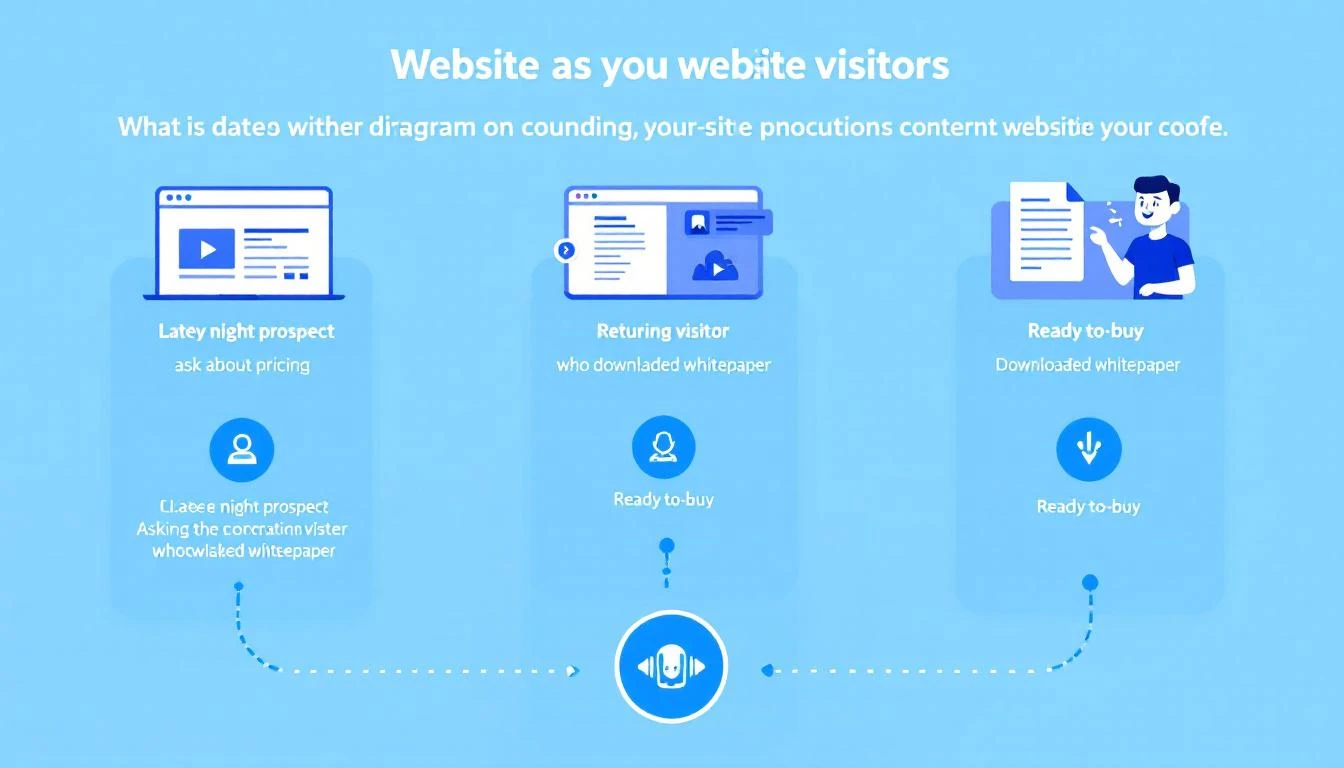
Three visitor scenarios handled by an AI voice avatar

What if your website could actually talk to visitors?

Not just display text responses. Not just route people through a decision tree. But actually speak โ€” with a voice avatar that understands context, remembers previous interactions, answers nuanced questions, and takes action?

This is where voice-enabled AI changes the game for B2B websites. Instead of a text widget that visitors ignore after one disappointing interaction, you get an AI-powered sales rep that:

  • Speaks naturally in real-time, creating the feel of a real conversation
  • Understands context โ€” what page they're on, what they've already looked at, and what stage of the buying journey they're in
  • Answers real questions about pricing, features, competitive differences, and implementation
  • Books meetings directly on your team's calendar without the "someone will get back to you" runaround
  • Hands off to humans when the conversation needs a real person, with full context preserved
  • Works 24/7 โ€” including at 11:47 PM on a Tuesday when your best prospect is finally ready to engage

The difference isn't incremental. Organizations implementing voice AI in their sales process report 43% higher win rates and 37% faster sales cycles compared to those relying on traditional engagement tools.

Three Scenarios Where Voice Beats Text (Every Time)โ€‹

Let's walk through the exact scenarios where a voice-enabled AI avatar outperforms a traditional chatbot โ€” and what the revenue impact looks like.

Scenario 1: The Late-Night Decision Makerโ€‹

The situation: It's 11 PM Central Time. A Director of Revenue Operations at a mid-market SaaS company is on your pricing page. She's been evaluating three vendors this week. Her shortlist presentation to the VP of Sales is tomorrow at 9 AM.

What a traditional chatbot does: Shows an "away" message or offers to collect her email for follow-up. She fills out the form. Your SDR sees it at 9 AM the next morning โ€” by which time she's already presented her shortlist. You weren't on it.

What a voice avatar does: Engages immediately. "Hey, I can see you're looking at our Enterprise plan. Happy to walk you through pricing for your team size โ€” what's your SDR headcount?" She says "twelve." The avatar explains pricing tiers, compares relevant features against the competitors she mentioned, and books a 15-minute call with your AE for 8:30 AM โ€” before her presentation. You make the shortlist.

Revenue impact: The difference between being on a shortlist and being forgotten. For a $40K ACV deal, that's a conversion worth protecting.

Scenario 2: The Returning Whitepaper Readerโ€‹

The situation: Someone downloaded your "Complete Guide to B2B Intent Data" two weeks ago. Now they're back on your site, browsing the integrations page and checking out your visitor identification tools comparison.

What a traditional chatbot does: Treats them like a first-time visitor. "Hi! Welcome to our site. How can I help?" No memory. No context. The visitor has to re-explain everything from scratch โ€” if they bother engaging at all.

What a voice avatar does: Recognizes the returning session. "Welcome back โ€” last time you grabbed our intent data guide. Looks like you're checking out integrations now. Are you evaluating how this would fit into your current stack?" The conversation picks up where intent left off. The avatar can reference the content they've consumed and connect the dots between what they've researched and what they actually need.

Revenue impact: Returning visitors convert at 5x the rate of first-time visitors โ€” but only if you treat them like returning visitors. Context-aware engagement is the difference.

Scenario 3: Tire-Kicker vs. Ready Buyerโ€‹

The situation: Two visitors are on your site at the same time. Visitor A is a marketing intern researching tools for a blog post. Visitor B is a VP of Sales who just got budget approved and needs to make a decision this quarter.

What a traditional chatbot does: Gives both of them the same experience. Same generic welcome. Same canned responses. Same "book a demo" CTA. Your SDR team wastes 20 minutes on a discovery call with the intern before realizing it's not a real opportunity.

What a voice avatar does: Within 30 seconds of conversation, the AI classifies intent. The intern gets helpful responses and relevant content links โ€” a good brand experience, but no calendar push. The VP gets the red carpet: pricing specifics, ROI calculations for their team size, competitive positioning, and a meeting booked directly with a senior AE. The avatar uses real-time intent classification, not keyword matching, to route each conversation appropriately.

Revenue impact: Your SDR team spends zero time on unqualified conversations. Every meeting booked is with a real buyer.

The Conversion Math: Why This Matters at Scaleโ€‹

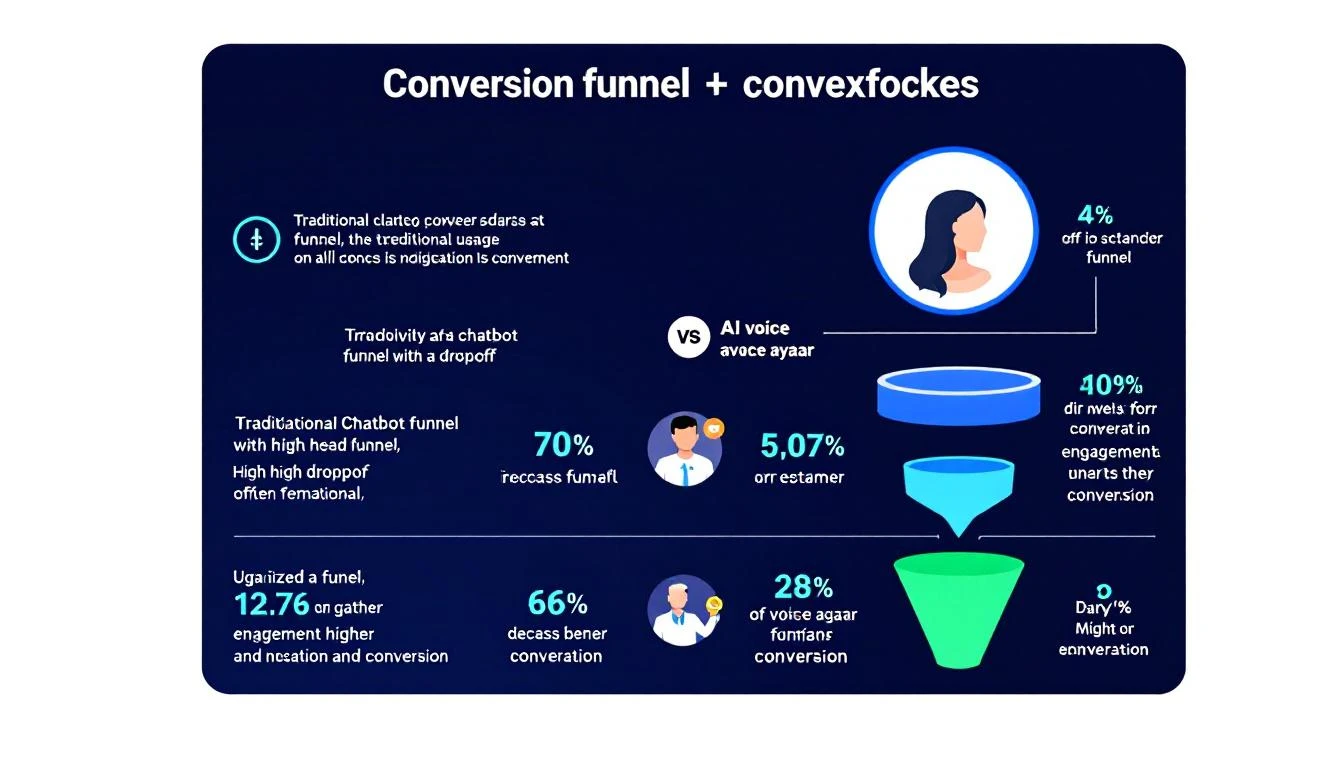
Conversion funnel comparison: traditional chatbot vs AI voice avatar

Let's run the numbers on a typical B2B website:

MetricTraditional ChatbotVoice-Enabled AI Avatar
Monthly website visitors10,00010,000
Chat/voice engagement rate2-3%8-12%
Conversation completion rate25%70%+
Meeting booking rate5% of conversations20%+ of conversations
Qualified meetings/month1-414-24
After-hours coverageโŒ Form onlyโœ… Full AI voice

That's the difference between 1-4 qualified meetings per month and 14-24. At a $30K average deal size and a 25% close rate, that's the difference between $7.5K-$30K in pipeline and $105K-$180K in pipeline โ€” from the same traffic you're already paying for.

The traffic isn't the problem. The conversation is the problem.

Companies that use AI-powered chatbots already see 2.5x higher conversion into sales compared to traditional approaches. Add voice โ€” with natural conversation, real-time context, and instant action โ€” and that multiplier goes even higher.

What a Voice-Enabled Website Actually Looks Likeโ€‹

Here's what the experience looks like when it's done right:

Step 1: Visitor arrives on your site. The AI avatar appears โ€” not as a jarring popup, but as a subtle, friendly presence. On high-intent pages (pricing, comparisons, case studies), it proactively offers to help.

Step 2: The conversation starts. The visitor can type or speak. The avatar responds in natural voice, creating an experience that feels like talking to a knowledgeable team member rather than navigating a phone tree.

Step 3: Context drives the conversation. The avatar knows what page they're on, what content they've consumed, whether they've visited before, and what their likely buying stage is. It asks smart follow-up questions, not generic qualifiers.

Step 4: Action happens in real-time. Need pricing? The avatar pulls relevant tier information and walks through it. Want to compare features? It presents a tailored comparison based on the specific competitor the visitor mentioned. Ready to talk to a human? The avatar checks your team's calendar and books a meeting โ€” right then and there.

Step 5: Handoff is seamless. When a live rep takes over, they get the full conversation context: what the visitor asked, what they care about, what objections came up, and what stage they're in. No "so tell me about your business" restart.

Step 6: Even text interactions stay smart. Some visitors prefer typing over speaking. The avatar adapts โ€” maintaining the same intelligence, context awareness, and ability to take action whether the visitor is using voice or text. It can even trigger interactive forms mid-conversation for things like team size, tech stack, or use case qualification.

Five Signs Your Website Needs a Voice Upgradeโ€‹

If any of these sound familiar, your chatbot is leaving revenue on the table:

  1. Your after-hours form submissions go cold. By the time your SDR follows up, the buyer has moved on. Speed-to-lead matters โ€” response time directly correlates with conversion.

  2. Visitors engage with chat once, get a canned answer, and never return. This is the classic chatbot graveyard. One bad experience kills future engagement.

  3. Your SDR team wastes hours on unqualified discovery calls. Without intent classification, every meeting request looks the same. Your top reps spend time on conversations that were never going to close.

  4. You can't differentiate returning visitors from first-timers. If your chatbot says "Hi! How can I help?" to someone who's visited 6 times and downloaded 3 pieces of content, you're actively degrading their experience. Visitor identification should inform every interaction.

  5. Your website conversion rate is under 2%. The B2B average is 1.8%. If you're at or below average with decent traffic, the problem isn't your product or your content โ€” it's that visitors can't get answers when they need them.

The Bigger Picture: Your Website as a Revenue Engineโ€‹

The shift from text chatbot to voice-enabled AI avatar isn't just a UX upgrade. It's a fundamental change in how your website participates in the sales process.

Today, most B2B websites are passive. They display information and hope visitors self-serve their way to a demo form. The website is a brochure, not a team member.

A voice-enabled AI turns your website into an active participant in the sales process. It qualifies. It educates. It overcomes objections. It books meetings. It remembers. It works while your team sleeps.

This is where the AI SDR stack is heading. Not just automating outbound emails and LinkedIn messages, but creating intelligent, always-on engagement at every touchpoint โ€” starting with the one place where buyers are already raising their hand: your website.

The companies that figure this out first will have a structural advantage. While competitors are still emailing "just checking in" follow-ups to cold form fills, you'll be having real conversations with ready buyers โ€” at 2 AM, at 2 PM, whenever they show up.

How to Get Startedโ€‹

You don't need to rip and replace your entire tech stack. Start here:

  1. Audit your current chatbot conversations. Pull the transcripts from the last 30 days. How many conversations ended with a canned response? How many visitors asked a real question and got a link dump? That's your baseline.

  2. Identify your highest-intent pages. Pricing, comparisons, case studies, and integration pages are where buyers go when they're close to a decision. These are your priority pages for voice-enabled engagement.

  3. Map your visitor segments. First-time vs. returning. Content consumer vs. pricing researcher. SMB vs. enterprise. Each segment should get a different conversation experience โ€” just like they would if they called your office and talked to a real person.

  4. Start with after-hours coverage. The fastest ROI comes from engaging visitors who currently hit an "away" message or a dead form. If 40% of your traffic comes outside business hours, that's 40% of potential conversations you're missing entirely.

  5. Measure conversations, not just clicks. Traditional chatbot metrics โ€” "chat initiated," "messages sent" โ€” are vanity metrics. Track conversation completion rate, meeting booking rate, and speed-to-qualified-meeting. Those are the numbers that connect to revenue.

The AI sales chatbot landscape is evolving fast. The gap between FAQ bots and genuine conversational AI is widening every quarter. The question isn't whether voice-enabled AI will become the standard for B2B websites. It's whether you'll be early enough to capture the advantage.


Your website visitors are already trying to have conversations. The only question is whether anyone's listening.

See how MarketBetter turns website visitors into booked meetings โ†’

10 Best Qualified Alternatives in 2026 (Cheaper, More Flexible)

ยท 8 min read

Best Qualified alternatives for B2B sales teams in 2026

Qualified is the #1 AI SDR on G2 with a 4.9/5 rating across 1,400+ reviews. Their AI agent Piper delivers exceptional chatbot conversations and meeting booking for Salesforce-native enterprise teams.

But two things push B2B teams to look for alternatives:

  1. Price โ€” Qualified starts at ~$40Kโ€“$68K/year (list), plus you need Salesforce ($30Kโ€“$60K/year for a team). Total cost easily hits six figures.
  2. Salesforce requirement โ€” If you're on HubSpot, Pipedrive, Close, or anything else, Qualified literally doesn't work.

If either of those is a problem, here are 10 alternatives worth evaluating โ€” ranked by how well they replace Qualified's core value (converting website visitors into pipeline).


Quick Comparisonโ€‹

ToolStarting PriceAI ChatbotVisitor IDSmart DialerMulti-CRMBest For
MarketBetter~$99/user/monthโœ…โœ… Person + companyโœ…โœ…Full SDR execution platform
Drift (Salesloft)~$2,500/moโœ…โœ… Account-levelโŒโŒ (Salesloft)Enterprise chat-first teams
Intercom~$39/seat/moโœ…โŒโŒโœ…Support + sales hybrid
HubSpot Sales Hub$20/seat/moโœ… BasicโŒโŒHubSpot onlyAll-in-one CRM + chat
Warmly~$700/moโœ…โœ…โŒโœ…Signal-based selling
Freshchat (Freshworks)$19/agent/moโœ…โŒโŒโœ…Budget-friendly chat
Tidio$29/moโœ…โŒโŒโœ…SMB chatbot
Apollo.io$49/user/moโŒโŒโœ…โœ…Outbound + data
11x (Alice)~$50K/yrโœ…โŒโŒโœ…Autonomous AI outbound
Common RoomCustomโŒโœ…โŒโœ…Signal aggregation

1. MarketBetter โ€” Best Overall Qualified Alternativeโ€‹

Why it's #1: MarketBetter is the only alternative that matches Qualified's visitor identification AND adds outbound capabilities (smart dialer, email, LinkedIn) in a single platform.

Where it beats Qualified:

  • Smart dialer โ€” Built-in calling that Qualified doesn't offer
  • Daily SDR playbook โ€” Tells reps exactly who to contact and how, not just chat-originated leads
  • Person-level visitor ID โ€” Identifies individual contacts, not just companies
  • Multi-CRM support โ€” Works with HubSpot, Salesforce, and others
  • Price โ€” Starting at $99/user/month vs. $40K+/year for Qualified

Where Qualified is better:

  • Deeper Salesforce-native integration
  • More mature AI chatbot with video capabilities (PiperX)
  • 1,400+ G2 reviews vs. MarketBetter's growing review base

Best for: SDR teams that need a complete execution platform โ€” not just chat โ€” at a fraction of Qualified's cost.

Book a demo โ†’


2. Drift (Now Part of Salesloft)โ€‹

What it is: The original B2B conversational marketing platform, acquired by Salesloft in February 2024. Drift pioneered the "stop making buyers fill out forms" movement.

Where it beats Qualified:

  • Broader ecosystem โ€” Salesloft acquisition gives access to email sequences, call recording, and coaching tools
  • Fastlane โ€” Accelerates meeting booking for known high-intent accounts
  • Slightly lower pricing โ€” ~$30Kโ€“$60K/year vs. $40Kโ€“$68K+ for Qualified

Where Qualified is better:

  • Deeper Salesforce integration
  • Piper's AI is more advanced than Drift's chatbot
  • Less acquisition uncertainty (Drift's product roadmap now depends on Salesloft's priorities)

Best for: Teams already using or considering Salesloft for sales engagement who want chat bundled in.

Read more: MarketBetter vs Drift/Salesloft


3. Intercomโ€‹

What it is: Customer messaging platform that spans support, sales, and marketing. Intercom's Fin AI agent handles both support tickets and lead qualification.

Where it beats Qualified:

  • Flexible pricing โ€” Starting at $39/seat/month vs. $40K+ annual commitment
  • Support + sales โ€” Handle both use cases in one tool
  • Multi-CRM โ€” Works with HubSpot, Salesforce, Pipedrive, and others
  • Broader use case โ€” Not limited to B2B enterprise sales

Where Qualified is better:

  • Purpose-built for B2B pipeline generation
  • Deeper account-level intelligence and intent signals
  • Better enterprise analytics and attribution

Best for: Companies that need both customer support and sales chat in one platform, especially at mid-market budgets.


4. HubSpot Sales Hubโ€‹

What it is: HubSpot's sales CRM with built-in chatbot, email sequences, meeting scheduling, and pipeline management.

Where it beats Qualified:

  • All-in-one โ€” CRM + chat + email + sequences in one subscription
  • Price โ€” Professional starts at $100/seat/month, far below Qualified's $40K+ entry
  • No CRM dependency โ€” IS the CRM (no additional stack required)
  • Ecosystem โ€” 1,500+ integrations, massive partner network

Where Qualified is better:

  • AI chatbot quality isn't in the same league as Piper
  • No autonomous AI SDR capabilities
  • Chat is a feature, not the product โ€” less sophisticated visitor intelligence

Best for: Teams already on HubSpot who want good-enough chat without adding a $40K+ point solution.


5. Warmlyโ€‹

What it is: AI-powered signal-based sales platform that identifies website visitors and orchestrates outreach based on intent signals.

Where it beats Qualified:

  • Multi-CRM โ€” Works with HubSpot and Salesforce
  • Signal aggregation โ€” Combines first-party and third-party intent data
  • Lower price point โ€” Starting around $700/month
  • Outbound triggers โ€” Automatically initiates outreach when high-intent signals fire

Where Qualified is better:

  • Superior AI chatbot quality
  • More mature enterprise features
  • Deeper Salesforce-native integration
  • Larger customer base and review volume

Best for: Teams focused on signal-based selling who want visitor ID + automated outreach triggers without enterprise pricing.

Read more: MarketBetter vs Warmly


6. Freshchat (Freshworks)โ€‹

What it is: Part of the Freshworks suite, Freshchat offers AI-powered messaging for customer engagement across chat, email, phone, and social.

Where it beats Qualified:

  • Price โ€” Starting at $19/agent/month (Growth plan) vs. $40K+/year
  • Multi-channel โ€” Chat, email, phone, WhatsApp, social in one tool
  • No CRM lock-in โ€” Works standalone or with Freshsales

Where Qualified is better:

  • Piper is a dedicated AI SDR; Freshchat is a general messaging tool
  • No account-level intelligence or visitor identification
  • Not purpose-built for B2B pipeline generation

Best for: Budget-conscious teams that need basic chat + support without enterprise overhead.


7. Tidioโ€‹

What it is: AI chatbot and live chat platform designed for e-commerce and SMBs. Their Lyro AI agent handles customer conversations autonomously.

Where it beats Qualified:

  • Price โ€” Starting at $29/month (yes, month, not year)
  • Ease of setup โ€” Install in minutes, no enterprise implementation needed
  • E-commerce features โ€” Product recommendations, order tracking, Shopify integration

Where Qualified is better:

  • Piper is built for B2B enterprise sales; Tidio is for SMB/e-commerce
  • No account intelligence, intent signals, or Salesforce integration
  • Not suitable for complex B2B buying cycles

Best for: SMBs and e-commerce companies that need an affordable AI chatbot โ€” not a Qualified replacement for enterprise B2B.


8. Apollo.ioโ€‹

What it is: Sales intelligence and engagement platform with 275M+ contacts, email sequences, and a built-in dialer.

Where it beats Qualified:

  • Outbound prospecting โ€” Apollo's core strength; Qualified doesn't do outbound
  • Contact database โ€” 275M+ verified contacts for prospecting
  • Dialer โ€” Built-in calling (Qualified has no phone capabilities)
  • Price โ€” Starting at $49/user/month

Where Qualified is better:

  • No AI chatbot for website visitors
  • No real-time visitor identification
  • Apollo is outbound-focused; Qualified is inbound-focused

Best for: Teams that need outbound prospecting more than inbound chat. Pair with a chatbot tool for full coverage.

Read more: MarketBetter vs Apollo


9. 11x (Alice)โ€‹

What it is: AI-first autonomous SDR platform. Their AI agent "Alice" handles outbound prospecting, email personalization, and multi-channel sequences.

Where it beats Qualified:

  • Autonomous outbound โ€” Alice prospects and emails independently
  • No CRM requirement โ€” Works across multiple CRMs
  • Multi-channel โ€” Email, LinkedIn, and more

Where Qualified is better:

  • No AI chatbot for website visitors
  • Qualified's inbound conversion is more mature
  • 11x pricing is similarly enterprise ($50K+/year)

Best for: Enterprise teams focused on outbound automation rather than inbound chat conversion.

Read more: MarketBetter vs 11x


10. Common Roomโ€‹

What it is: Signal aggregation platform that unifies buying signals from your website, product, community, and third-party sources into a single view.

Where it beats Qualified:

  • Signal breadth โ€” Aggregates signals beyond website visits (community, product usage, social)
  • Multi-CRM โ€” Works with HubSpot, Salesforce, and others
  • Prospecting workflows โ€” Identifies and prioritizes accounts based on aggregated intent

Where Qualified is better:

  • No AI chatbot or real-time website engagement
  • Common Room identifies intent but doesn't execute outreach
  • Qualified converts visitors in the moment; Common Room surfaces them for later follow-up

Best for: RevOps teams that want to aggregate buying signals across multiple sources and route them to existing sales tools.

Read more: MarketBetter vs Common Room


Which Alternative Should You Choose?โ€‹

Want the closest Qualified replacement with more capabilities? โ†’ MarketBetter โ€” visitor ID + chatbot + dialer + email + playbook in one platform

Already using or considering Salesloft? โ†’ Drift (Salesloft) โ€” chat bundled into the engagement platform

Need support AND sales chat? โ†’ Intercom โ€” handles both use cases affordably

Want to stay in your existing CRM ecosystem? โ†’ HubSpot Sales Hub (if on HubSpot) or Freshchat (budget option)

Need outbound more than inbound? โ†’ Apollo.io (data + dialer) or 11x (autonomous AI outbound)


The Bottom Lineโ€‹

Qualified is the best AI chatbot for enterprise B2B sales on Salesforce. Full stop. But "best chatbot" doesn't mean "best for your team."

If you need more than chat โ€” outbound, phone, LinkedIn, a unified playbook โ€” or if you're not on Salesforce, or if six-figure annual costs are out of reach, the alternatives on this list deliver real pipeline at a fraction of the price.

The best SDR platform isn't the one with the best chatbot. It's the one that tells your reps exactly what to do next.

See how MarketBetter does it โ†’

Qualified Pricing Breakdown 2026: What Piper the AI SDR Really Costs

ยท 7 min read

Qualified pricing breakdown showing the real cost of Piper the AI SDR in 2026

Qualified doesn't put pricing on their website. You'll see three plan names โ€” Premier, Enterprise, Ultimate โ€” and a "Schedule a Demo" button on each one. That's it.

So what does Qualified actually cost? We dug into Vendr negotiation data, TrustRadius reviews, and pricing intelligence sources to give you the real numbers.

The short answer: Qualified's Premier plan starts at roughly $68,000/year at list price for 25 users. After negotiation, most companies pay around $40,000โ€“$50,000/year. Enterprise adds another $27,500/year on top of that.

Let's break down exactly what you get at each tier and where the hidden costs lurk.


Qualified's Three Pricing Tiersโ€‹

Qualified structures pricing around "hiring" Piper the AI SDR Agent. Each tier expands Piper's capabilities rather than adding seat counts like traditional SaaS.

Premier Plan (~$68,000/yr list)โ€‹

This is the entry point. You get Piper with core capabilities:

  • Real-time website conversations โ€” Piper chats with visitors, qualifies leads, answers questions
  • Meeting scheduling โ€” Books meetings directly on your reps' calendars
  • 1:1 personalized email โ€” Piper sends follow-up emails autonomously
  • Multi-channel nurture โ€” Engages buyers across chat and email
  • Marketing offers โ€” Surfaces relevant content and CTAs based on visitor behavior
  • Account-based buying intent โ€” Identifies high-intent accounts visiting your site
  • Enterprise SSO โ€” Included at every tier

What's missing from Premier: Multi-language support, third-party intent signals, custom data retention, multiple websites/brands, and high-volume handling.

Enterprise Plan (~$95,500/yr list)โ€‹

Everything in Premier, plus:

  • Enterprise Reporting API โ€” Pull Qualified data into your BI tools
  • Multi-language agent โ€” Piper speaks to international buyers
  • Custom cookie and data retention policies โ€” For compliance-heavy orgs
  • Third-party research intent signals โ€” Layer in signals from Bombora, G2, etc.
  • Salesforce Sandbox support โ€” Test configurations without touching production

The Enterprise premium is $27,500/year over Premier. If you need two or more of these add-ons, Enterprise becomes more cost-effective than buying them individually on Premier.

Ultimate Plan (Custom pricing)โ€‹

Everything in Enterprise, plus:

  • Multiple agent profiles โ€” Different Piper personas for different segments
  • Multiple websites and brands โ€” Run Piper across your portfolio
  • Multiple production instances โ€” Separate Salesforce orgs supported
  • High-volume websites โ€” Handling for sites with massive traffic
  • High-volume contact databases โ€” Scale enrichment and outreach

Ultimate pricing is fully custom and negotiated based on volume, complexity, and the number of brands/websites you're running.


What Every Plan Includesโ€‹

Regardless of tier, all Qualified plans come with:

  • AI SDR Agent Studio (configure Piper's behavior)
  • Piper Spotlight (real-time visitor intelligence)
  • Account segmentation with waterfall enrichment
  • Salesforce CRM integration + 20 other GTM tools
  • Qualified reporting and analytics
  • Salesforce reporting and analytics
  • Advanced conversation, email, and meeting routing
  • Automated workflow actions and notifications

The Real Cost: What Companies Actually Payโ€‹

Qualified's list prices are just the starting point. According to Vendr's negotiation data:

MetricRange
Premier list price (25 users)~$68,000/yr
Typical negotiated price$40,000โ€“$50,000/yr
Typical discount18โ€“53% off list
Enterprise upgrade premium$27,500/yr
Estimated Enterprise total$67,500โ€“$95,500/yr

Negotiation tips from Vendr:

  1. Frame around cost-per-lead and cost-per-meeting โ€” Compare Piper's cost to hiring a human SDR ($65Kโ€“$85K salary + benefits + tools)
  2. Start with a 1-year term โ€” Maintain flexibility, prove ROI, then negotiate longer terms
  3. Negotiate user expansion, not just percentage discounts โ€” Get more seats baked into the deal
  4. Audit Calendar & Email Connections โ€” These add-ons can significantly impact total costs. Negotiate a "connection pool" rather than per-connection pricing
  5. Leverage competitive evaluations โ€” Mention Drift/Salesloft, HubSpot, and Intercom as anchor pricing

Hidden Costs to Watch Forโ€‹

Beyond the platform fee, several costs can inflate your total bill:

1. Salesforce Requirementโ€‹

Qualified requires Salesforce CRM. If you're on HubSpot, Pipedrive, or another CRM, you can't use Qualified at all. Salesforce costs start at $25/user/month (Starter) and climb to $500/user/month (Unlimited+). That's a significant dependency.

2. Add-On Modulesโ€‹

Several features available in Enterprise can be purchased as individual add-ons on Premier:

  • AppExchange Chat
  • Calendar & Email Connections (per-connection pricing)
  • Global Teams & Multi-Language
  • Multiple Websites & Brands
  • Signals Third-Party Research Intent
  • Success Architect (dedicated onboarding/strategy support)

Each add-on has its own pricing, and they add up fast. If you need three or more, just upgrade to Enterprise.

3. Implementation and Onboardingโ€‹

Qualified offers "Success Architect" services โ€” essentially dedicated onboarding support. Basic support is included, but more hands-on assistance costs extra. For enterprise deployments with complex routing and multiple Salesforce instances, expect additional professional services fees.

4. Intent Data Providersโ€‹

Third-party intent signals (Bombora, G2 Buyer Intent, etc.) require their own subscriptions. Qualified integrates with them but doesn't include access in its pricing.


Qualified's Total Cost of Ownershipโ€‹

Here's what a realistic year-one deployment looks like for a mid-market company:

Cost ComponentAnnual Cost
Qualified Premier (negotiated)$40,000โ€“$50,000
Salesforce CRM (10 users)$30,000โ€“$60,000
Calendar & Email add-ons$5,000โ€“$10,000
Intent data provider$15,000โ€“$30,000
Implementation/Success Architect$5,000โ€“$15,000
Total Year 1$95,000โ€“$165,000

For Enterprise tier, add another $27,500 to the Qualified line item.


How Qualified Pricing Comparesโ€‹

PlatformAnnual CostWhat's Included
Qualified Premier$40Kโ€“$68KAI chatbot + email + meeting booking (Salesforce only)
Drift (now Salesloft)$30Kโ€“$60KChat + email + video + Salesloft ecosystem
Intercom$5Kโ€“$25KChat + help desk + email (broader use case)
HubSpot Sales Hub$6Kโ€“$18KCRM + chat + email + sequences (all-in-one)
MarketBetter$6Kโ€“$36KVisitor ID + chatbot + smart dialer + email + daily playbook

Qualified is premium-priced because it positions Piper as a "digital employee" rather than software. That framing works for enterprise marketing teams with $100K+ SDR budgets โ€” Piper replaces 1โ€“2 headcount and generates pipeline 24/7.

But for mid-market and SMB teams, the total stack cost ($95Kโ€“$165K including Salesforce and add-ons) puts Qualified in a different league than most alternatives.


Is Qualified Worth the Price?โ€‹

Qualified makes sense if:

  • You're already on Salesforce (non-negotiable requirement)
  • You have enterprise budgets ($50K+ for inbound pipeline tools)
  • Chat-first inbound is your primary pipeline generation strategy
  • You need a best-in-class AI chatbot with deep Salesforce integration
  • You can justify the cost against SDR salaries you'd otherwise pay

Qualified is too expensive if:

  • You're on HubSpot, Pipedrive, or another CRM โ€” it literally won't work
  • You need outbound capabilities (dialer, LinkedIn, multi-channel sequences)
  • Your budget is under $40K/year for sales tools
  • You need a complete SDR execution platform, not just chat + email

For teams that need more than chatbot engagement, MarketBetter delivers visitor identification, AI chatbot, smart dialer, email automation, and a daily SDR playbook at a fraction of Qualified's total cost โ€” with no CRM lock-in.


The Bottom Lineโ€‹

Qualified has built an exceptional AI chatbot with Piper. The 4.9/5 G2 rating with 1,400+ reviews speaks for itself. But "exceptional" comes at exceptional prices.

You're looking at $40Kโ€“$68K/year just for Qualified, plus $30Kโ€“$60K for the required Salesforce stack, plus add-ons. The total cost of ownership easily reaches six figures.

For enterprise marketing teams with budget and Salesforce infrastructure, that's a reasonable investment against SDR salaries. For everyone else, there are strong alternatives that deliver similar outcomes at a fraction of the cost.

Compare your options โ†’

Qualified Review 2026: Is Piper the AI SDR Worth $68K/Year?

ยท 7 min read

Honest review of Qualified and Piper the AI SDR in 2026

Qualified is one of the most talked-about AI SDR platforms on the market. Their AI agent "Piper" sits at the top of G2's AI SDR category with a 4.9/5 rating across 1,400+ reviews. That's an impressive number that very few B2B tools achieve.

But a G2 rating doesn't tell you whether Qualified is the right fit for your team. After analyzing reviews across G2, TrustRadius (37 reviews), Barndoor AI, and SalesForge, plus digging into their pricing model and product limitations, here's our honest take.


The Quick Verdictโ€‹

CategoryRatingNotes
AI chatbot qualityโญโญโญโญโญBest-in-class conversational AI for B2B
Meeting bookingโญโญโญโญโญAutomated scheduling is seamless
Salesforce integrationโญโญโญโญโญDeepest SFDC integration in the category
Email follow-upโญโญโญโญStrong, but chat-first positioning
Pricing transparencyโญโญNo public pricing, $40Kโ€“$68K+/yr
CRM flexibilityโญSalesforce only โ€” non-negotiable
Multi-channel coverageโญโญChat + email only, no dialer or LinkedIn
SMB accessibilityโญEnterprise pricing and complexity

Bottom line: If you're on Salesforce with enterprise budgets and want the best AI chatbot for inbound, Qualified is the clear leader. If you need outbound, multi-channel, or work outside Salesforce โ€” look elsewhere.


What Qualified Does Wellโ€‹

1. Best-in-Class AI Chatbot (Piper)โ€‹

Piper isn't just another chatbot widget. It's a genuinely sophisticated AI agent that:

  • Holds real conversations โ€” Not scripted decision trees. Piper uses generative AI to respond naturally, reference your knowledge base, and handle objections
  • Qualifies in real time โ€” Pulls CRM data, account signals, and visitor behavior to determine fit during the conversation
  • Books meetings autonomously โ€” Checks rep availability, handles timezone conversion, sends calendar invites
  • Works 24/7 โ€” Captures leads at 2 AM when your SDR team is sleeping

G2 reviewers consistently call out the chat quality as Qualified's strongest feature. Multiple reviewers note that visitors can't tell they're talking to AI.

2. Deep Salesforce Integrationโ€‹

Qualified was built for Salesforce from day one. The integration goes deeper than most competitors:

  • Reads existing CRM records during conversations
  • Updates lead/contact/opportunity records automatically
  • Routes conversations based on Salesforce territory rules
  • Syncs full conversation transcripts to Salesforce activity history
  • Supports Salesforce Sandbox for testing

For Salesforce-centric revenue teams, this level of native integration eliminates the data gaps and manual logging that plague most chatbot tools.

3. Enterprise-Grade Analyticsโ€‹

Qualified's reporting capabilities are strong:

  • Pipeline attribution tied to specific Piper conversations
  • Meeting conversion rates by segment, page, and time
  • A/B testing for different Piper configurations
  • Enterprise Reporting API (Enterprise tier) for BI tool integration

4. Customer Success and Supportโ€‹

Multiple reviewers highlight Qualified's customer success team as exceptional. Dedicated Success Architects help with configuration, optimization, and ongoing strategy. For a $40K+ annual investment, that level of support is expected โ€” but it's worth noting that many enterprise tools at similar price points don't deliver the same quality.

5. Recent PiperX Upgradeโ€‹

Qualified launched "PiperX" โ€” their next-generation agent that adds:

  • Face-to-face video conversations
  • Deeper funnel nurturing across channels
  • Higher-volume handling for enterprise websites

This positions Qualified ahead of competitors still relying on text-only chat.


Where Qualified Falls Shortโ€‹

1. Salesforce Lock-In (The Biggest Limitation)โ€‹

This isn't a minor caveat โ€” it's a dealbreaker for most of the market. Qualified requires Salesforce CRM. Period.

If you're on HubSpot, Pipedrive, Close, Freshsales, or any other CRM, you cannot use Qualified. Piper herself has acknowledged this limitation publicly: "Piper works best with a Salesforce-centric tech stack, and probably isn't the best fit if you aren't a Salesforce user."

Given that HubSpot alone has 228,000+ customers and Salesforce has roughly 150,000, this locks out a massive portion of the B2B market.

2. Chat-First Tunnel Visionโ€‹

Qualified excels at inbound chat and email. But modern SDR workflows are multi-channel:

  • No smart dialer โ€” Can't make calls or handle phone outreach
  • No LinkedIn automation โ€” No connection requests, InMails, or social touches
  • No outbound sequences โ€” Piper responds to inbound visitors but doesn't prospect
  • No daily playbook โ€” Doesn't tell reps what to do beyond chat-originated leads

If your SDR team needs to prospect outbound, follow up by phone, or orchestrate multi-channel sequences, Qualified only covers one piece of the puzzle. You'll need additional tools (Salesloft, Outreach, a dialer) to fill the gaps โ€” adding $20Kโ€“$50K+ in additional tool costs.

3. Pricing Opacity and Enterprise Costโ€‹

Qualified's pricing page shows three tiers and zero prices. Based on Vendr negotiation data:

  • Premier: ~$68K/yr list, negotiable to $40Kโ€“$50K
  • Enterprise: Add $27,500/yr
  • Ultimate: Custom pricing

Plus the Salesforce dependency ($30Kโ€“$60K/yr for a 10-person team), add-ons, and professional services. Total cost of ownership easily reaches six figures. For SMBs and mid-market companies, that's prohibitive.

4. Tone and Persona Limitationsโ€‹

Barndoor AI's analysis flagged that Piper's automated messaging "may struggle to capture nuanced brand voice or adapt to complex prospect personas." While the generative AI is impressive, highly specialized industries (healthcare, legal, financial services) may find the default responses too generic without significant customization work.

5. Overqualification Riskโ€‹

AI-powered qualification can be a double-edged sword. Some reviewers note that aggressive qualification criteria can prematurely disqualify leads that a human SDR would have nurtured into opportunities. Getting the qualification balance right requires ongoing tuning and monitoring.

6. Complex Initial Setupโ€‹

While Qualified's JavaScript embed is simple to deploy, configuring Piper's behavior โ€” routing rules, qualification criteria, Salesforce field mappings, and persona settings โ€” takes significant effort. Multiple reviews mention that the initial setup is more complex than expected, though the customer success team helps bridge the gap.


Who Qualified is Built Forโ€‹

Ideal customer profile:

  • Enterprise B2B companies ($50M+ revenue)
  • Salesforce-native tech stack
  • Marketing-led pipeline generation strategy
  • Budget of $50K+ for inbound pipeline tools
  • High-traffic websites with thousands of monthly visitors
  • Teams replacing or supplementing human SDRs for inbound chat

Notable customers: Asana, Quantum Metric, Bloomreach, NextGen Healthcare, Crunchbase

Investors: Norwest Venture Partners, Redpoint, Salesforce Ventures, Sapphire Ventures, Tiger Global Management


Who Should Look Elsewhereโ€‹

Qualified isn't the right fit if you:

  • Use any CRM besides Salesforce โ€” It simply won't work
  • Need outbound prospecting โ€” Piper handles inbound only
  • Need a complete SDR platform โ€” You'll need 2โ€“3 additional tools
  • Have SMB budgets โ€” Total cost is $95Kโ€“$165K/yr including Salesforce
  • Want multi-channel execution โ€” No dialer, no LinkedIn, no SMS

How Qualified Comparesโ€‹

FeatureQualifiedMarketBetterDrift (Salesloft)Intercom
AI chatbotโœ… Best-in-classโœ… Includedโœ… Strongโœ… Strong
Smart dialerโŒโœ… Built-inโŒโŒ
Daily SDR playbookโŒโœ… Prioritized actionsโŒโŒ
Visitor identificationโœ… Account-levelโœ… Person + companyโœ… Account-levelโŒ
Email automationโœ…โœ…โœ…โœ…
LinkedIn automationโŒโœ…โŒโŒ
CRM supportSalesforce onlyHubSpot, Salesforce, moreSalesloft ecosystemMultiple
Starting price~$40K/yr~$6K/yr~$30K/yr~$5K/yr
G2 rating4.9/5 (1,400+)4.97/5 (growing)4.4/54.5/5

For a deeper pricing comparison, read our Qualified pricing breakdown.


The Final Verdictโ€‹

Qualified has earned its G2 crown. Piper is the best AI chatbot for B2B sales, and the Salesforce integration is unmatched. If you're an enterprise company on Salesforce with budget for a premium inbound tool, Qualified delivers real pipeline.

But the "best chatbot" isn't the same as the "best SDR platform." Qualified covers chat and email. Modern SDR workflows demand phone, LinkedIn, email, chat, and a unified playbook that ties it all together.

If you want the best chat-only solution: Qualified is it.

If you want a complete SDR execution platform: MarketBetter gives your team visitor identification, AI chatbot, smart dialer, email automation, and a daily playbook โ€” all in one platform, at a fraction of Qualified's total cost, with no CRM lock-in.

See how MarketBetter compares โ†’

7 Best Drift Alternatives for B2B Teams [2026]: Pricing, Features & Honest Verdict

ยท 8 min read
sunder
Founder, marketbetter.ai

Best Drift alternatives for B2B teams in 2026

Drift pioneered conversational marketing for B2B. Real-time chat instead of forms. Automated lead qualification. Instant meeting booking. For years, it was the default choice for enterprise sales teams that wanted to engage buyers on-site.

Then Salesloft acquired Drift in February 2024. The brand is being folded into Salesloft's broader platform. Pricing starts at $2,500/month โ€” just for the Premium plan. Advanced and Enterprise? Custom quotes only. And the product roadmap now serves Salesloft's vision, not necessarily yours.

If you're evaluating alternatives โ€” whether because of pricing, the acquisition uncertainty, or because you need capabilities Drift never offered (like visitor identification, outbound email, or a smart dialer) โ€” here are 7 platforms worth your time.

Why Teams Are Leaving Drift in 2026โ€‹

Three patterns keep coming up in G2 and Capterra reviews:

  1. Price shock. $2,500/month minimum puts Drift out of reach for most mid-market teams. A 10-person SDR org is looking at $30K+ annually before add-ons.
  2. Acquisition uncertainty. Salesloft is merging Drift into its sales engagement platform. Features are being consolidated, and longtime Drift users report feeling like an afterthought.
  3. Chat-only limitation. Drift excels at live chat and chatbots. But modern B2B sales requires email sequences, phone outreach, visitor identification, and multi-channel orchestration โ€” none of which Drift handles natively.

The 7 Best Drift Alternativesโ€‹

1. MarketBetter โ€” Best for SDR Teams That Need More Than Chatโ€‹

Pricing: $99/user/month with everything included flat | G2 Rating: 4.97/5

Where Drift gives you a chatbot, MarketBetter gives you a complete SDR operating system. Yes, it includes an AI chatbot that engages visitors in real time. But it also identifies anonymous website visitors (company + contact level), runs hyper-personalized email sequences, provides a smart dialer for warm calls, and delivers a daily playbook that tells every SDR exactly who to contact and what to say.

Why teams switch from Drift:

  • Visitor identification reveals who's on your site โ€” not just the ones who chat
  • Daily SDR playbook turns signals into prioritized actions
  • Email sequences + smart dialer + chatbot in one platform (no more $2,500 for chat alone)
  • Flat pricing means no per-seat surprises as your team scales

Honest limitation: MarketBetter is purpose-built for B2B SDR teams. If you need a standalone customer support chatbot, it's not the right fit.

Best for: B2B teams (50โ€“500 employees) that want one platform to replace Drift + their outbound tools.

See how MarketBetter compares to Drift โ†’


2. Intercom (Fin AI Agent) โ€” Best for Support-First Teamsโ€‹

Pricing: $39/seat/month (Starter) to $139/seat/month (Expert) + $0.99/resolution for Fin AI | G2 Rating: 4.5/5

Intercom's Fin AI Agent is the closest thing to Drift's conversational AI โ€” but built with a support-first philosophy. Fin resolves customer questions autonomously using your knowledge base, handles up to 50% of support volume without human intervention, and seamlessly hands off to live agents when needed.

Why teams choose Intercom over Drift:

  • Per-resolution pricing for AI ($0.99/answer) vs. Drift's $2,500/mo flat minimum
  • Superior help center and knowledge base integration
  • Stronger customer support workflows (ticketing, SLAs, macros)
  • Product tours and onboarding flows built in

Honest limitation: Intercom's lead qualification is less sophisticated than Drift's ABM-targeting playbooks. It's a support tool that does marketing, not a marketing tool that does support.

Best for: SaaS companies where customer support and lead engagement overlap.


3. Qualified โ€” Best Enterprise Alternative to Driftโ€‹

Pricing: $3,500/month+ (custom) | G2 Rating: 4.9/5

Qualified is the enterprise-grade alternative for teams deeply invested in Salesforce. It mirrors much of Drift's conversational marketing โ€” real-time chat, AI-driven lead routing, meeting booking โ€” but adds native Salesforce integration that Drift never matched.

Why teams choose Qualified over Drift:

  • Built on Salesforce, not bolted onto it โ€” real-time CRM data in every conversation
  • Piper AI SDR qualifies and books meetings autonomously
  • Account-based targeting with firmographic and intent signals
  • Dedicated customer success for enterprise deployments

Honest limitation: Just as expensive as Drift (often more). This isn't a budget alternative โ€” it's a premium one for Salesforce-native orgs.

Best for: Enterprise B2B teams (500+ employees) running Salesforce who need deep CRM integration.


4. Tidio (Lyro AI) โ€” Best Budget Alternativeโ€‹

Pricing: Free plan available; paid from $29/month | G2 Rating: 4.7/5

Tidio is what Drift would look like if it were built for SMBs instead of enterprise. The Lyro AI chatbot handles visitor questions, qualifies leads, and routes conversations โ€” all for a fraction of Drift's price. It won't match Drift's ABM targeting or enterprise routing, but for teams spending under $99/user/month on tools, it's remarkably capable.

Why teams choose Tidio over Drift:

  • Free plan with live chat + basic chatbot (Drift has no free tier)
  • Lyro AI resolves routine queries autonomously
  • Visual chatbot builder โ€” no technical setup required
  • E-commerce integrations (Shopify, WooCommerce) that Drift lacks

Honest limitation: Limited B2B-specific features. No account-based targeting, no integration with sales engagement tools, no visitor identification at the contact level.

Best for: Small businesses and early-stage startups that need live chat and basic automation without enterprise pricing.


5. HubSpot Sales Hub (Chatbot) โ€” Best If You're Already in HubSpotโ€‹

Pricing: Free chatbot included; Sales Hub from $20/seat/month | G2 Rating: 4.4/5

HubSpot's chatbot is less sophisticated than Drift's โ€” but if your team already lives in HubSpot CRM, it's "good enough" without adding another $2,500/month tool. The chatbot qualifies leads, books meetings, and routes conversations directly into your existing HubSpot workflows.

Why teams choose HubSpot over Drift:

  • Free chatbot included with any HubSpot plan (vs. $2,500/mo for Drift)
  • Native CRM integration โ€” no syncing headaches
  • Conversations feed directly into contact records, deals, and sequences
  • One vendor for CRM + chat + email + reporting

Honest limitation: HubSpot's chatbot AI is noticeably less advanced than Drift's. Custom conversation flows require more manual setup, and the bot feels more "form-in-chat-clothing" than truly conversational.

Best for: Teams already using HubSpot CRM that want basic conversational marketing without another vendor.

See HubSpot Sales Hub pricing breakdown โ†’


6. Warmly โ€” Best for Visitor Deanonymization + Chatโ€‹

Pricing: Free plan available; paid from $700/month | G2 Rating: 4.7/5

Warmly combines two things Drift never offered well: website visitor identification and live chat on a single platform. It identifies companies and contacts visiting your site, then lets you engage them via chat, video, or automated messaging based on who they are and what they're doing.

Why teams choose Warmly over Drift:

  • Identifies visitors before they engage (Drift only sees them after they start chatting)
  • Orchestration engine triggers outreach across chat, email, and LinkedIn
  • Free tier available for small teams
  • Real-time intent signals from site behavior

Honest limitation: Warmly's chat is less mature than Drift's. The AI qualification isn't as deep, and the chatbot builder has fewer customization options.

Best for: Revenue teams that want visitor identification and conversational engagement in one tool.

See how MarketBetter compares to Warmly โ†’


7. Chili Piper โ€” Best for Meeting Scheduling (Drift's #1 Use Case)โ€‹

Pricing: $22.50/user/month (Instant Booker) to $45/user/month (Concierge) | G2 Rating: 4.6/5

If your primary reason for using Drift was booking meetings faster, Chili Piper does that one job better and cheaper. Concierge qualifies inbound leads and routes them to the right rep's calendar instantly โ€” cutting speed-to-lead from hours to seconds.

Why teams choose Chili Piper over Drift:

  • Purpose-built for inbound lead routing and meeting booking
  • $45/user/month vs. $2,500/month โ€” fraction of the cost for the core use case
  • Form-to-meeting conversion (works with existing forms, no chatbot required)
  • Round-robin, territory-based, and account-based routing

Honest limitation: No chatbot, no live chat, no conversational marketing. Chili Piper replaces one piece of Drift โ€” the meeting booking engine โ€” not the whole platform.

Best for: Teams whose primary Drift use case was instant meeting booking from inbound forms.


Quick Comparison Tableโ€‹

ToolStarting PriceChat/BotVisitor IDEmailDialerAI SDR
MarketBetter$99/user/monthโœ…โœ…โœ…โœ…โœ…
Intercom$39/seat/moโœ…โŒโŒโŒPartial
Qualified$3,500/moโœ…โœ…โŒโŒโœ…
TidioFreeโœ…โŒโŒโŒโŒ
HubSpotFree (chat)โœ…โŒโœ…โŒโŒ
WarmlyFree (basic)โœ…โœ…โŒโŒPartial
Chili Piper$22.50/userโŒโŒโŒโŒโŒ
Drift$2,500/moโœ…โŒโŒโŒPartial

The Real Question: Do You Need a Chatbot โ€” or an SDR Platform?โ€‹

Most teams shopping for Drift alternatives are really asking: "How do I engage website visitors and turn them into pipeline?"

A chatbot is one answer. But it only catches the 2โ€“3% of visitors who actively start a conversation. The other 97% leave without ever engaging.

The next generation of tools โ€” like MarketBetter โ€” identifies those silent visitors, tells your SDRs who they are, and orchestrates multi-channel outreach (email, phone, chat) based on real-time intent signals. That's not conversational marketing. That's a complete revenue engine.

Ready to see what's beyond chat? Book a demo of MarketBetter โ†’

Drift Review [2026]: Features, Pricing, Pros & Cons After the Salesloft Acquisition

ยท 8 min read
sunder
Founder, marketbetter.ai

Drift review โ€” honest analysis of features, pricing, and limitations in 2026

Drift launched in 2015 with a radical idea: replace lead capture forms with real-time conversations. For nearly a decade, it defined the conversational marketing category, powering over 50,000 businesses and facilitating 41+ million conversations in a single year.

Then Salesloft acquired Drift in February 2024. The standalone product is now being integrated into Salesloft's sales engagement platform. Pricing changed. The roadmap shifted. And longtime Drift users are asking a fundamental question: is this still the same product?

This review covers Drift as it exists in 2026 โ€” the features that still work, the pricing reality, what users actually say on G2 and Capterra, and whether it makes sense for B2B teams evaluating it today.

Quick Verdictโ€‹

Drift is excellent at one thing: engaging website visitors through AI-powered chat and routing them to sales reps in real time. The chatbot builder is mature, the AI qualification is sophisticated, and the Fastlane meeting acceleration genuinely works.

But the calculus has changed. At $2,500+/month with no public pricing for higher tiers, Drift is now one of the most expensive ways to add chat to your website. The Salesloft acquisition means you're buying into an ecosystem, not a standalone tool. And for teams that need more than chat โ€” visitor identification, outbound email, phone โ€” Drift requires stacking additional tools that can cost as much as the platform itself.

Rating: 4.2/5 โ€” Still best-in-class for enterprise conversational marketing, but the price-to-value ratio has degraded since the acquisition.

Company Backgroundโ€‹

  • Founded: 2015 by David Cancel and Elias Torres
  • Headquarters: Boston, MA (now part of Salesloft, Atlanta)
  • Acquired by Salesloft: February 2024
  • Customers: 50,000+
  • G2 Rating: 4.4/5 (1,200+ reviews)
  • Capterra Rating: 4.5/5 (200+ reviews)
  • Category: Conversational Marketing / Sales Engagement

Pricing: What You'll Actually Payโ€‹

Drift has always been enterprise-priced, but the current structure is worth understanding before you commit.

Published Plansโ€‹

PlanMonthly CostKey Features
Premium$2,500/mo (billed annually)Custom chatbots, live chat, conversational landing pages, real-time notifications, meeting booking, basic intel
AdvancedCustom quoteEverything in Premium + Fastlane, A/B testing, flex routing, AI-powered chatbots, advanced reporting
EnterpriseCustom quoteEverything in Advanced + workspaces, custom RBAC, dedicated CSM, SLA guarantees

Real-World Cost Analysisโ€‹

For a 10-person SDR team:

  • Premium: $30,000/year ($2,500/mo ร— 12)
  • Advanced: Estimated $48,000โ€“60,000/year based on Vendr and community data
  • Enterprise: $72,000โ€“120,000/year depending on seats and add-ons

Hidden costs to budget for:

  • Onboarding and implementation: $3,000โ€“5,000 (one-time)
  • Salesforce integration (Advanced+): included but requires configuration time
  • Additional Salesloft seats if you need the full engagement platform
  • Annual contract required โ€” no monthly billing option

Price Contextโ€‹

$2,500/month for a chatbot is steep when alternatives like Tidio start free, Intercom starts at $39/seat, and platforms like MarketBetter include a chatbot alongside email, phone, and visitor ID for $99/user/month.

Features: What Drift Does Wellโ€‹

1. AI Chatbots & Conversational AIโ€‹

Drift's chatbot builder remains one of the most sophisticated in B2B. The visual flow builder lets you create multi-path conversations that qualify visitors, route them to the right rep, and book meetings โ€” all without human intervention.

The AI layer (GPT-integrated since 2023) generates contextual responses, understands follow-up questions, and adapts based on visitor behavior. Drift claims its Bionic Chatbots drove 50% more opportunities with 45% fewer meetings for early adopters โ€” a compelling stat if your team is drowning in unqualified demos.

What's genuinely good: The AI doesn't feel like a form disguised as chat. It holds natural conversations, handles edge cases, and knows when to bring in a human.

2. Live Chat & Real-Time Engagementโ€‹

When a high-value prospect is on your site, Drift routes them to an available rep instantly. The routing logic considers account ownership, territory, rep availability, and conversation history. Reps get desktop and mobile notifications with full context โ€” who the visitor is, what pages they've viewed, and their engagement history.

What's genuinely good: Speed-to-lead improvement is real. Companies report going from hours (via form-to-email-to-CRM-to-rep) to seconds with Drift's live routing.

3. Fastlane (Advanced+ Only)โ€‹

Fastlane is Drift's answer to the "form problem." Instead of making high-intent visitors fill out a form and wait for follow-up, Fastlane instantly qualifies them and routes them to a rep's calendar โ€” or into a live chat โ€” the moment they submit. No waiting. No email follow-up delays.

What's genuinely good: For high-intent pages (pricing, demo requests), Fastlane measurably reduces form abandonment and accelerates pipeline.

4. Analytics & Reportingโ€‹

Drift tracks conversation volume, bot performance, rep response times, meetings booked, pipeline influenced, and revenue attributed. The Advanced plan adds A/B testing for chatbot flows and custom dashboards.

What's genuinely good: Attribution to pipeline and revenue is more mature than most chat tools, which stop at "conversations started."

Where Drift Falls Shortโ€‹

1. Chat-Only Limitationโ€‹

This is the elephant in the room. Drift only handles one channel: website chat. No email sequences. No phone dialer. No LinkedIn outreach. No visitor identification for the 97% who never start a conversation.

For modern SDR teams that need multi-channel outreach, Drift must be stacked with 2โ€“3 additional tools:

  • Email sequences: Outreach, SalesLoft, or Apollo ($50โ€“150/user/mo)
  • Visitor identification: 6sense, Clearbit, or RB2B ($500โ€“2,000/mo)
  • Phone: Nooks, Orum, or native dialer ($100โ€“400/user/mo)

Total stack cost: $4,000โ€“6,000/month for what some platforms deliver in a single tool.

2. Pricing Is Prohibitive for Mid-Marketโ€‹

$2,500/month minimum prices out most companies under 200 employees. When your entire sales tech budget might be $3,000โ€“5,000/month, spending half of it on a chatbot doesn't pencil out.

3. Acquisition Uncertaintyโ€‹

Salesloft's integration of Drift is ongoing. Some Drift-specific features are being merged into Salesloft's platform; others may be deprecated. Users report:

  • Slower feature releases since the acquisition
  • Support quality inconsistency during the transition
  • Uncertainty about long-term pricing as products converge

4. Learning Curve for Advanced Flowsโ€‹

While the basic chatbot builder is intuitive, creating sophisticated multi-path conversational flows with A/B testing, conditional routing, and CRM-triggered playbooks requires significant setup time. G2 reviewers consistently mention a "steep learning curve for complex use cases."

5. Limited Reporting on Free/Starter Tiersโ€‹

There are no free or starter tiers. Every Drift customer is paying enterprise prices from day one, which means there's no way to trial the product meaningfully before committing $30K/year.

What Real Users Sayโ€‹

G2 Reviews (1,200+ reviews, 4.4/5)โ€‹

Common praise:

  • "The chatbot is incredibly natural โ€” prospects don't realize they're talking to a bot half the time"
  • "Fastlane cut our speed-to-lead from 4 hours to under 2 minutes"
  • "The Salesforce integration is the best I've seen for any chat tool"

Common complaints:

  • "Pricing is outrageous for what is essentially a chat widget"
  • "Since the Salesloft acquisition, support has gotten slower"
  • "Occasional lag when previewing complex bot flows"
  • "Can route irrelevant chats to reps, causing confusion and wasted time"
  • "No email or phone capabilities โ€” we still need 3 other tools"

Capterra Reviews (200+ reviews, 4.5/5)โ€‹

Common praise:

  • "Easy for live reps to follow up with leads"
  • "Chatbots add an interactive dimension that's more engaging than forms"
  • "Real-time notifications keep the team responsive"

Common complaints:

  • "The price doesn't match the value for smaller teams"
  • "Customizing conversational flows for complex use cases takes serious time"
  • "Feature overlap with Salesloft creates confusion about what to use when"

Who Drift Is Right Forโ€‹

Drift is a strong choice if:

  • You're an enterprise B2B company (500+ employees) with budget for premium tools
  • Website chat is your primary lead generation channel
  • You're already in the Salesloft ecosystem (or planning to be)
  • You have dedicated ops resources to build and maintain complex chatbot flows
  • Speed-to-lead on inbound is your #1 priority

Drift is NOT right if:

  • Your budget is under $2,500/month for sales tools
  • You need multi-channel outreach (email, phone, LinkedIn) in one platform
  • You want to identify anonymous visitors who never start a chat
  • You're a mid-market team (50โ€“200 employees) looking for all-in-one
  • You're concerned about vendor stability during an acquisition

Better Options to Considerโ€‹

If Drift's pricing or feature limitations give you pause, here are the top alternatives by use case:

  • All-in-one SDR platform (chat + email + phone + visitor ID): MarketBetter โ€” $99/user/month with everything included
  • Enterprise chat with Salesforce depth: Qualified โ€” $3,500+/mo
  • Budget-friendly AI chatbot: Tidio โ€” Free to $29/mo
  • Meeting booking (Drift's core use case): Chili Piper โ€” $22.50/user/mo
  • Chat + visitor ID: Warmly โ€” Free to $700/mo

See all 7 Drift alternatives compared โ†’

Bottom Lineโ€‹

Drift built a category. Its conversational AI and real-time engagement are still among the best in B2B. But at $2,500+/month for chat-only capabilities โ€” during an acquisition that's reshaping the product โ€” the value equation has shifted.

In 2026, the question isn't "is Drift good?" (it is). It's "is Drift $2,500/month good when tools costing a fraction of that price now include chat AND email AND phone AND visitor ID?"

For most mid-market B2B teams, the answer is no.

Looking for a platform that goes beyond chat? Book a demo of MarketBetter โ†’

MarketBetter vs Drift (Salesloft): Conversational Marketing Comparison [2026]

ยท 9 min read
sunder
Founder, marketbetter.ai

MarketBetter vs Drift comparison

Drift, now part of the Salesloft ecosystem, pioneered conversational marketing for B2B. Their thesis: replace forms with real-time chat to engage buyers when they're on your site.

MarketBetter shares the same starting insight โ€” your website visitors are your warmest leads โ€” but takes it further. Rather than just engaging visitors through chat, MarketBetter identifies them, enriches their data, and feeds everything into a daily SDR playbook that orchestrates email, phone, and chat in one platform.

Both platforms want to help you convert website traffic into pipeline. The question is: which approach actually works better for modern B2B sales teams?

Drift Is Shutting Down: Complete Migration Guide to MarketBetter [2026]

ยท 8 min read
MarketBetter Team
Content Team, marketbetter.ai

nDrift to MarketBetter Migration Guide

If you're reading this, you've probably heard the news: Drift is being sunset. After being acquired by Salesloft in February 2024, and Salesloft's subsequent merger with Clari, the combined entity announced it will gradually wind down the Drift conversational marketing platform โ€” redirecting customers to 1mind's AI agents instead.

For the thousands of B2B teams that built their inbound pipeline around Drift's chatbot, live chat, and meeting scheduling, this creates an urgent problem: you need a replacement before your contract ends.

This guide covers everything you need to know to migrate from Drift to MarketBetter โ€” including what features you'll gain, what changes to expect, and a step-by-step migration plan.

What Happened to Drift?โ€‹

Here's the timeline:

DateEvent
Feb 2024Salesloft acquires Drift for ~$200M
Aug 2025Security incident โ€” Drift taken offline temporarily after authentication tokens were compromised
Late 2025Salesloft merges with Clari to form Clari + Salesloft
Mar 2026Clari + Salesloft announces gradual sunsetting of Drift
2026โ€“2027Drift customers directed to transition to 1mind or find alternatives

The bottom line: Drift is no longer being actively developed. Bug fixes and security patches will slow down and eventually stop. If you're still on Drift, you're on borrowed time.

Why Drift Users Are Looking at MarketBetterโ€‹

Most Drift users aren't just looking for a chatbot replacement. They're asking: "What should my inbound pipeline look like in 2026?"

Drift was built in 2015 around a simple premise โ€” put a chat widget on your site, qualify visitors, book meetings. That was revolutionary then. But the market has evolved:

  • Anonymous visitor identification didn't exist when Drift launched
  • AI-generated outreach wasn't possible
  • Multi-channel workflows (email + chat + phone + LinkedIn) were science fiction
  • Smart scheduling with AI qualification was years away

MarketBetter isn't just a chatbot. It's a complete inbound + outbound SDR platform that does what Drift did โ€” and everything Drift never could.

Drift vs MarketBetter: Feature Mappingโ€‹

Drift FeatureMarketBetter EquivalentWhat's Different
Live Chat Widgetโœ… AI ChatbotAI-powered, 24/7, learns your product and qualifies visitors automatically
Chatbot Playbooksโœ… AI Chatbot RulesNo-code setup with AI understanding context, not rigid decision trees
Meeting Schedulingโœ… Smart SchedulerAI-optimized timing + round-robin + HubSpot/Webflow form routing
Email Sequencesโœ… AI Email AutomationHyper-personalized sequences with AI-generated content per prospect
Account-Based Marketingโœ… Website Visitor IntelligenceIdentify companies AND individuals visiting your site โ€” before they chat
Conversational Landing Pagesโœ… AI Chatbot on any pageDeploy on any page, not just dedicated landing pages
Revenue Reportsโœ… GTM Analytics DashboardFull-funnel attribution across all channels, not just chat
Salesforce Integrationโœ… HubSpot + SalesforceBi-directional CRM sync with automatic lead creation
Drift VideoโŒ Not built-inUse HeyGen or Loom integration instead
Fastlane (Form โ†’ Meeting)โœ… Smart SchedulerDirect form-to-meeting routing for HubSpot and Webflow
โ€” Not in Drift โ€”โœ… Smart DialerBuilt-in calling with recording and AI coaching
โ€” Not in Drift โ€”โœ… Website Visitor IDKnow who's on your site before they ever open chat
โ€” Not in Drift โ€”โœ… Daily SDR PlaybookPrioritized task list every morning โ€” who to call, email, and chat
โ€” Not in Drift โ€”โœ… LinkedIn IntegrationMulti-channel outreach including LinkedIn messaging
โ€” Not in Drift โ€”โœ… Chrome ExtensionProspect on LinkedIn with real-time enrichment

What You Gain by Switchingโ€‹

  1. Website Visitor Intelligence โ€” Drift never told you who was browsing your pricing page anonymously. MarketBetter identifies companies and individuals before they ever engage with chat.

  2. Complete SDR Workflow โ€” Drift was one tool in a stack of 5+. MarketBetter replaces your chatbot + email tool + dialer + visitor ID tool in one platform.

  3. AI That Actually Works โ€” Drift's chatbot used rigid decision trees. MarketBetter's AI understands context, answers product questions from your knowledge base, and qualifies leads with nuance.

  4. Smart Scheduling โ€” Drift booked meetings when someone asked. MarketBetter's smart scheduler analyzes engagement patterns and suggests optimal outreach times โ€” and works across channels, not just chat.

  5. Outbound Capability โ€” Drift was inbound-only. MarketBetter handles your entire pipeline โ€” inbound visitors, outbound sequences, and warm outbound plays.

What Changesโ€‹

  • No Drift Video โ€” If you relied on Drift Video for sales messaging, you'll need to use HeyGen or Loom. MarketBetter integrates with HeyGen for AI-generated video.
  • Salesforce Routing Rules โ€” If you have complex Salesforce-native routing, you'll need to rebuild those in MarketBetter's Smart Scheduler. The good news: it's simpler and more powerful.
  • Conversation History โ€” You'll want to export your Drift conversation data before sunsetting. MarketBetter cannot import Drift conversation history.

Step-by-Step Migration Planโ€‹

Phase 1: Audit Your Drift Setup (Week 1)โ€‹

1. Document what you're actually using:

Most Drift customers only use 30-40% of the features they're paying for. Before migrating, understand your actual Drift usage:

  • Which pages have the chat widget?
  • How many chatbot playbooks are active?
  • How many meetings does Drift book per month?
  • Which integrations are connected (Salesforce, Marketo, Slack)?
  • Who are the team members with Drift seats?
  • What routing rules are configured?

2. Export your data:

  • Export conversation history (Drift Settings โ†’ Data โ†’ Export)
  • Export contact/lead lists
  • Screenshot your chatbot playbooks (for reference during rebuild)
  • Note any custom API integrations

Phase 2: Set Up MarketBetter (Week 2)โ€‹

1. Install the tracking script โ€” Add MarketBetter's JavaScript snippet to your website. Works with any CMS, Webflow, WordPress, or custom sites. 5-minute setup.

2. Configure your AI chatbot โ€” Upload your product documentation, pricing info, and FAQ content. The AI learns your product and can answer visitor questions immediately.

3. Set up Smart Scheduler โ€” Configure round-robin rules, rep availability, and form routing for your HubSpot or Webflow forms.

4. Connect your CRM โ€” One-click HubSpot or Salesforce integration.

5. Set up Slack alerts โ€” Configure real-time notifications for high-intent visitors.

Phase 3: Run in Parallel (Week 3)โ€‹

1. Keep Drift live while testing MarketBetter on a subset of pages. Verify:

  • AI chatbot answers match your expectations
  • Meetings are booking correctly
  • CRM sync is working
  • Slack alerts are firing

2. Compare performance metrics โ€” Track chatbot engagement rates, meeting booking rates, and lead quality side by side.

Phase 4: Cut Over (Week 4)โ€‹

1. Remove the Drift script from your website.

2. Deploy MarketBetter across all pages.

3. Activate full SDR workflows โ€” email sequences, smart dialer, visitor intelligence.

4. Brief your team โ€” MarketBetter's daily playbook changes your SDR workflow. Each morning, reps see exactly who to call, email, and follow up with. No more checking 5 different dashboards.

Pricing: What to Expectโ€‹

What you're paying for Drift:

Drift's pricing was never transparent, but typical costs:

  • Premium: $2,500/mo (chat + bot + meetings + basic routing)
  • Advanced: ~$5,000/mo (ABM features, A/B testing, Fastlane)
  • Enterprise: $10,000+/mo (custom, dedicated support)

Plus seat fees, overage charges, and integration costs.

What MarketBetter costs:

  • All features included โ€” chatbot, smart scheduling, email, dialer, visitor ID
  • Transparent per-user pricing, no hidden platform fees
  • No separate charges for integrations
  • Most teams save 40โ€“60% on total tool costs when switching from Drift + their email tool + dialer

Get a custom quote โ†’

Security Considerationsโ€‹

One factor accelerating migration: Drift's August 2025 security incident. Authentication tokens were compromised, potentially affecting customer Salesforce instances and Google Workspace accounts. Salesloft took Drift offline to address it, but for many teams, this was the final straw.

MarketBetter's security posture:

  • SOC 2 compliance practices
  • No third-party data sharing without consent
  • Secure CRM integrations via OAuth
  • Data encryption at rest and in transit

FAQโ€‹

How long does migration take?โ€‹

Most teams complete the full migration in 2-4 weeks. The MarketBetter setup itself takes 1-2 days; the remaining time is for parallel testing and team training.

Will I lose my Drift conversation history?โ€‹

You should export your conversation data from Drift before canceling. MarketBetter does not import Drift conversation logs, but your CRM records from Drift-generated leads will sync naturally.

Can MarketBetter's chatbot handle my existing playbooks?โ€‹

Yes โ€” and better. Drift's playbooks used rigid decision trees that required manual updates. MarketBetter's AI chatbot learns from your product documentation and adapts to any question a visitor asks, without manual playbook building.

Do I need to keep my other tools?โ€‹

No. Unlike Drift (which required Outreach/Salesloft for email, a dialer, and a visitor ID tool), MarketBetter includes chatbot, email sequences, smart dialer, and visitor identification in one platform.

What is Clari + Salesloft recommending instead of Drift?โ€‹

Clari + Salesloft is directing Drift customers to 1mind for AI-powered conversational agents. However, 1mind is a narrowly focused AI agent tool โ€” it doesn't include email sequences, smart dialer, visitor identification, or SDR workflow management that teams need for a complete pipeline.


Free Tool

Try our AI Lead Generator โ€” find verified LinkedIn leads for any company instantly. No signup required.

Ready to Migrate from Drift?โ€‹

Don't wait for the lights to go off. MarketBetter replaces everything Drift did โ€” plus your email tool, dialer, and visitor ID platform โ€” in one platform.

Book a Demo โ†’

See how MarketBetter turns your inbound pipeline into a complete AI-powered SDR workflow.