
FuseAI vs MarketBetter [2026]: An Honest Buyer's Guide for Outbound Teams

If you are evaluating outbound platforms in mid-2026, FuseAI (tryfuse.ai) is going to land on your shortlist. It is a Y Combinator W25 company, fresh out of stealth, with a slick pitch — "the first sales platform where reps work alongside AI agents to build a quality pipeline" — and a founder pedigree that gets attention (ex-Deel GTM operator plus an ML engineer who joined SAP at 17). The deck is good. The product is real. And the category — agentic outbound — is exactly where every modern revenue team is being told to spend in 2026.
So is FuseAI the right pick? Or is MarketBetter — which we obviously make — the better fit for your team?
This isn't a hatchet job. FuseAI is a credible early-stage product, and the people building it are sharp. But "credible early-stage product" and "right platform for your team this quarter" are very different questions. This guide is the honest answer to both.
What FuseAI Actually Is (Without the Hype)
FuseAI launched publicly in late 2024 out of Y Combinator's W25 batch, with $2.15M in pre-seed funding from Y Combinator and Outbound Capital. It's based in San Francisco, headcount around 12, founded by Saurav Bubber (previously on Deel's GTM Strategy & Operations team during their $50M→$600M ARR run) and Imogen Low (ex-SAP Innovation, ex-NWO.ai). Tom Blomfield publicly called them out as "building an end-to-end operating system for outbound sales."
That positioning is accurate. Per their own marketing and YC launch page, FuseAI bundles:
- Lead sourcing + waterfall enrichment with a B2B contact database
- Multi-channel engagement — email sequences, LinkedIn, and a multi-line parallel power dialer
- Real-time buying signals + job change alerts
- Email infrastructure management (deliverability, warmup, domains)
- Natural-language "SalesGPT" agents that you prompt instead of click through a UI
- A credits model that gates monthly usage
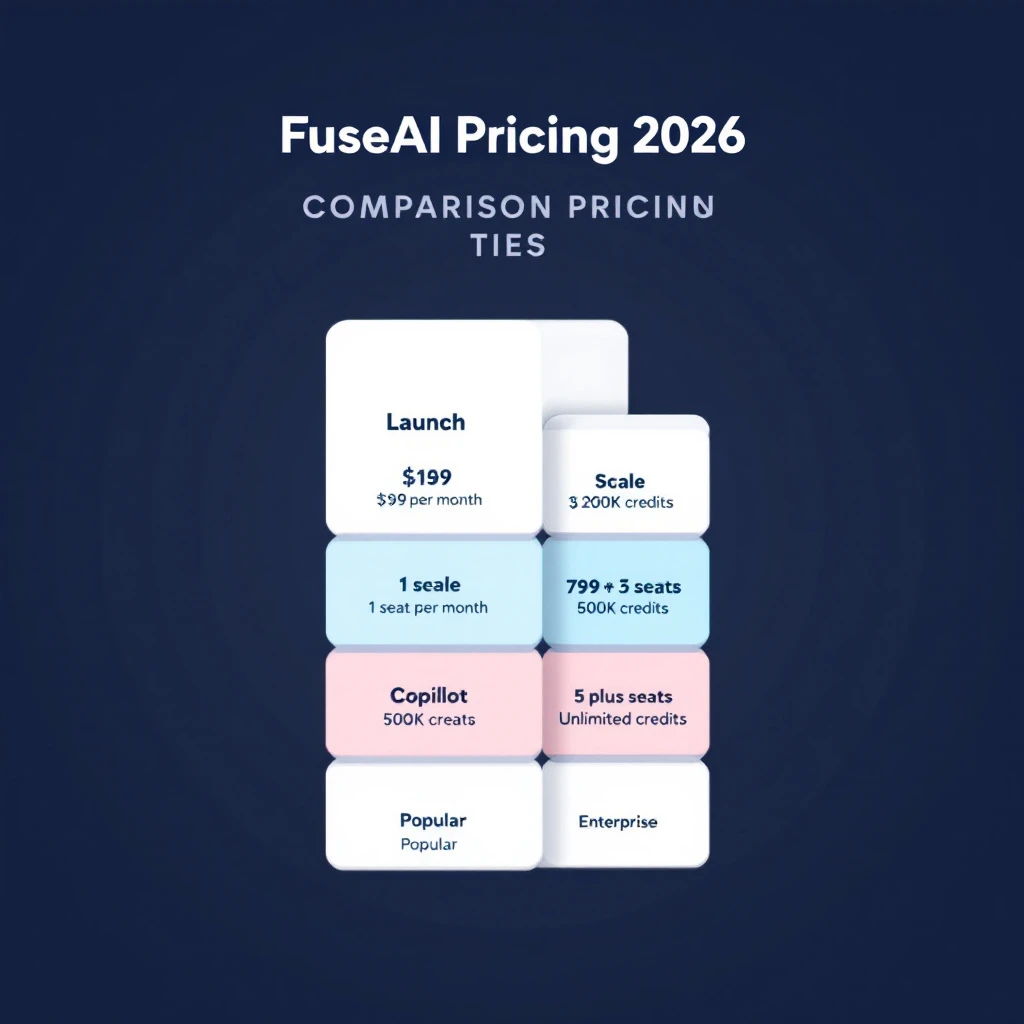
Pricing as of mid-2026 looks like this (per tryfuse.ai/pricing):
| Plan | Price | Seats | Credits / mo |
|---|---|---|---|
| Launch | $159/mo | 1 | 60,000 |
| Scale | $399/mo | 3 | 200,000 |
| Copilot | $799/mo | 5 | 500,000 |
| Enterprise | Custom | 5+ | Unlimited |
Public customer references on the site as of this writing: Blackfin Square Group, Vetnio, and Weave. No free trial advertised. No G2 footprint yet of any size — too early.
That is FuseAI. It is, genuinely, a well-built greenfield platform from a strong team with real funding. If you are a founder running solo outbound and want one tool that does most of the things, it deserves a demo.
Where FuseAI Is Genuinely Strong
Three things stand out:
1. Bundling is real. FuseAI's pitch is that you stop paying for Apollo + Smartlead + Clay + RB2B + a dialer + a CRM hack. At the Copilot tier ($799/mo, 5 seats), they include email infrastructure management — which alone can be $300–500/mo on its own. For a founder-led team running outbound today, the all-in-one math is appealing.
2. The agentic UX is the right bet. Instead of clicking through filters to build a list, you prompt: "Find me Series B SaaS companies in fintech that hired a Head of Sales in the last 60 days." That is the right interface for a 2026 sales tool. Whether their underlying data and execution stack is as good as the demo — that's a separate question, but the interface choice is correct.
3. The founders ship. Saurav and Imogen are operators, not first-time builders. The product cadence reflects that.
If you're a 1–3 person GTM team at a Series A startup with no existing stack and a single owner who will run all of it, FuseAI is a defensible default. We say that on the record.
Where MarketBetter Wins
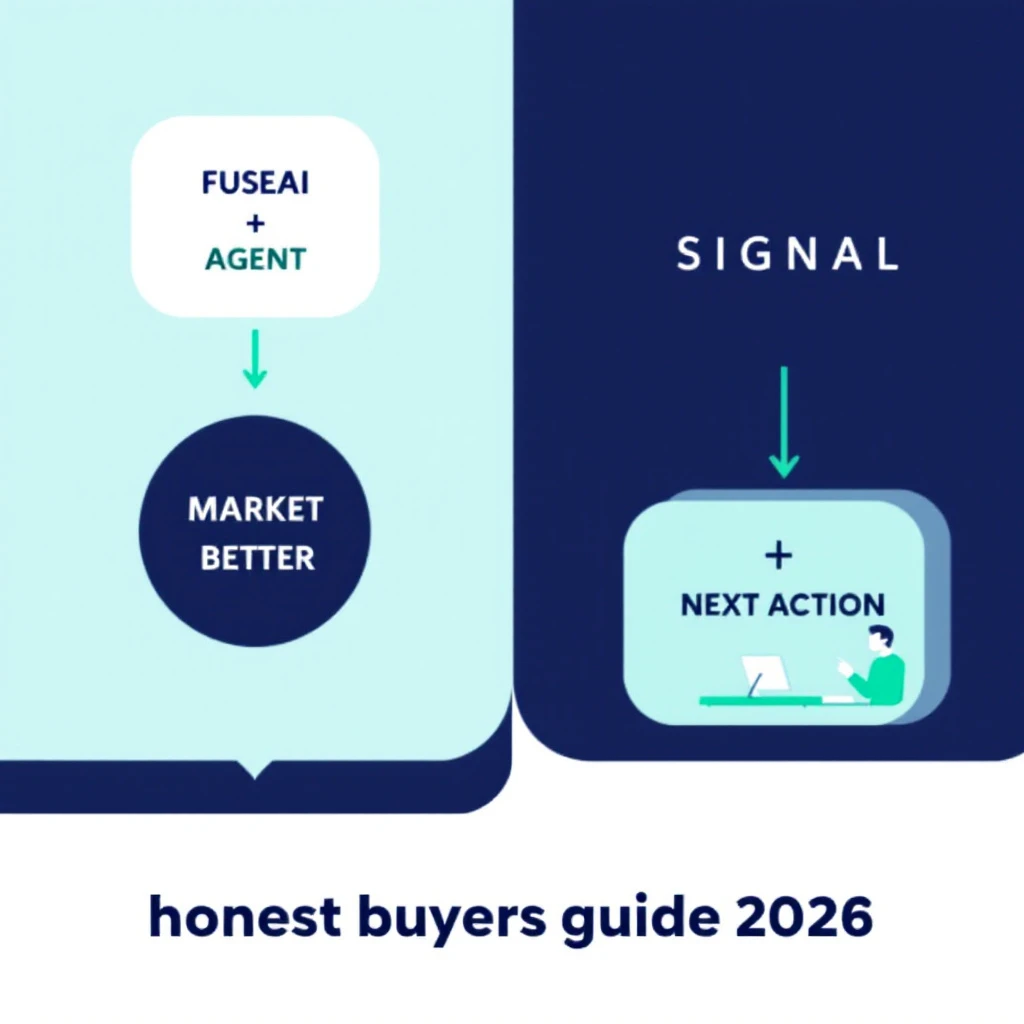
The line we keep coming back to: FuseAI tells you who. MarketBetter tells you who plus what to do.
That sounds like a marketing slogan, so let's unpack it with specifics.
Signals are not the differentiator anymore. Action is.
Every modern outbound platform — FuseAI, Clay, Apollo, Common Room, Warmly, 6sense and Bombora — claims to give you "real-time buying signals." They aggregate the same canonical inputs: website visits, job changes, hiring, funding, intent topics, LinkedIn activity. The interesting question in 2026 is not who sees a signal first. It's what your SDR does in the next 30 seconds when one fires.
MarketBetter is built around that. Signals enter the system, get classified by tier and intent strength using our signal triage rubric, and get routed into a specific play — a draft email, a LinkedIn touch, a call task, an account-routing change — with the source context attached so the rep doesn't have to go reconstruct why this signal matters. We wrote a detailed walkthrough of the workflow here: Signal to Booked Meeting in 24 Hours.
FuseAI's product, by their own description, is closer to "AI agents that act on signals." That's a different bet. Their version is the agent does it. Our version is the agent surfaces the right action and your rep executes — because in our experience, fully autonomous outbound looks great in demos and burns your domain reputation by month two. Buyers can tell.
This matters for adoption. The pattern we see in every signal-based selling rollout (covered in the 3-Layer Signal Stack) is that reps drown by week two and revert to working their old list. The fix isn't more signals; it's a system that hands them one obvious next step they trust.
Signal depth and freshness
FuseAI's signal stack, per their public marketing, covers website intent (deanonymization), job changes, and email/LinkedIn engagement. That's a solid baseline. MarketBetter adds Reddit and community signals, real-time LinkedIn activity tracking, plus a deeper champion-tracking layer — and we let teams toggle which signal types fire alerts per playbook so SDRs see only what their rubric actually qualifies. The full hierarchy of which signals actually predict closed-won is laid out in our Buying Signal Hierarchy piece.
If your team is in IoT, connectivity, SaaS, or other categories where buying committees form across communities (Reddit, Slack, niche forums) before they ever hit your website, that signal coverage gap is the deal.
Vertical depth vs greenfield generalism
MarketBetter has spent the last 18 months hardening verticals: IoT/telecom, connected hardware, SaaS, EdTech, EHS/compliance. We have customer references and playbooks in each. FuseAI is generalist — their own materials cite a managed telecom provider, a vet software company, and a developer tools company, which is a wide net for a team of 12. For a buyer in a specific vertical, that's a real difference: do you want a platform that has run the play in your category 50 times, or one that's running it for the first time with you?
This isn't a knock on FuseAI — every YC company starts horizontal and verticalizes later. It's just where they are today.
The "managed outbound" question
FuseAI's Copilot tier ($799/mo) includes "dedicated onboarding, priority support, intelligent AI recommendations, email infrastructure management." Their Enterprise tier adds "dedicated GTM engineer support" and "custom workflow setup."
MarketBetter customers get hands-on white-glove from Sunder (the founder) and the team during rollout — building playbooks, integrating signals, training reps. Different model. If you want a platform you log into and figure out, FuseAI is fine. If you want a partner who builds your signal-to-meeting workflow with you and is on Slack when an SDR has a question, that's us.
The Honest Risk With FuseAI
We promised honesty, so:
- They are 12 people and less than a year out of stealth. Some critical workflows you depend on may not exist yet. Some integrations you need may not exist yet. Roadmap risk is real for any company at this stage.
- Credits-based pricing is opaque until you scale. 60K credits/mo at the Launch tier sounds like a lot until you find out an enrichment + email send + LinkedIn touch + dialer call is N credits. Model your usage before signing.
- No published case studies with hard numbers. Three logos on the homepage and a "1,000%+ ROI" claim from somebody. That's normal for an early-stage company. It's also why you should pilot, not commit a year upfront.
- At least one independent review (Sera, 2026) flags "high-volume risk" — the platform can encourage mass outreach approaches that hurt deliverability with sophisticated buyers — and a "steep learning curve" for non-dedicated ops teams.
None of these are dealbreakers. They are the normal trade-offs of buying from a YC-stage company. Know them going in.
The Honest Risk With MarketBetter
Same deal, in our own house:
- We are not the cheapest. If your only criterion is "lowest monthly subscription," FuseAI's $159/mo Launch tier wins.
- We're opinionated about workflow. If you want a build-it-yourself toolkit (closer to Clay), we are the wrong pick. We ship a system, not a sandbox.
- Our vertical depth means we're stronger in some categories than others. If you're in B2C, ecom, or pure SMB, other tools may fit better.
The Decision Framework
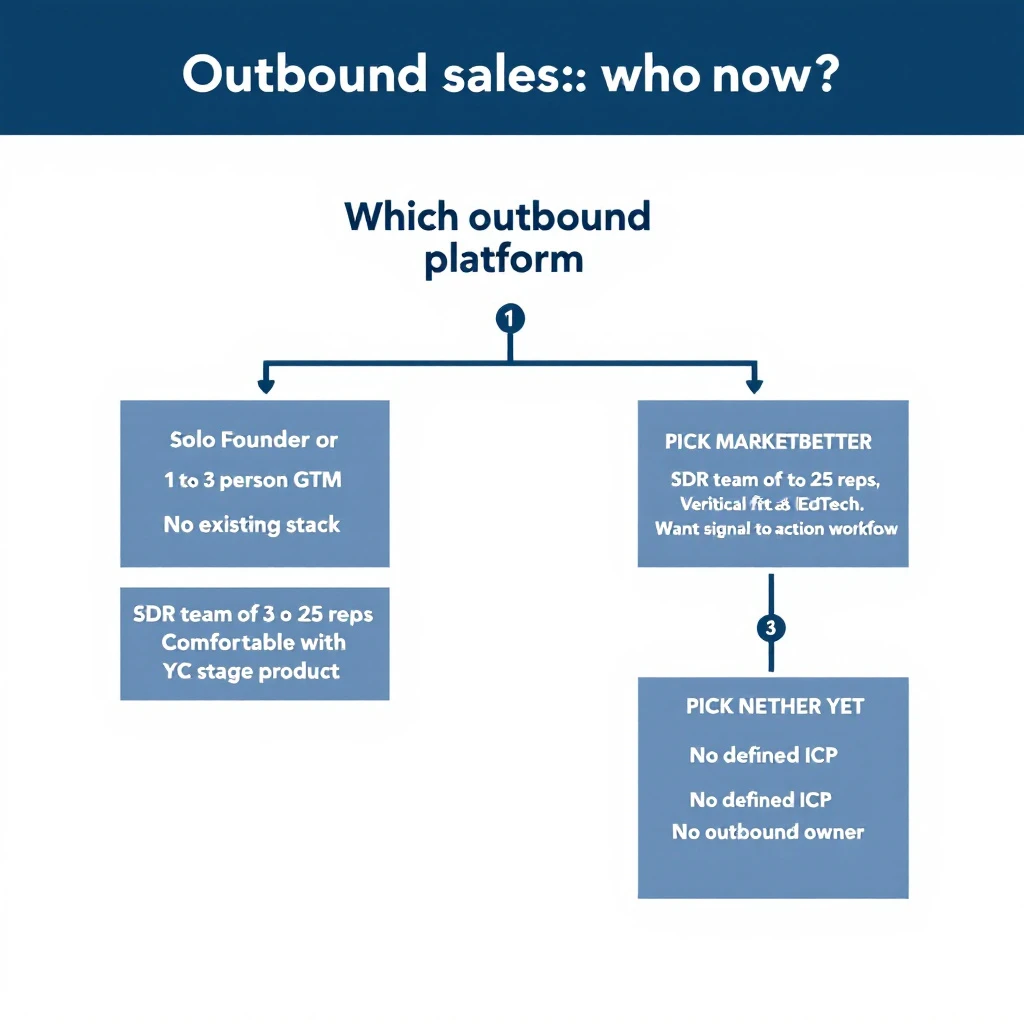
Pick FuseAI if:
- You're a 1–3 person GTM team at a Series A or earlier startup
- You have no existing outbound stack and want one platform to bundle everything
- You're comfortable being an early customer of a YC W25 company
- Your buyers respond to natural-language-prompted AI execution
- Your category is generalist (no strong vertical fit anywhere)
- $159–$799/mo for a single seat or small team is your budget ceiling
Pick MarketBetter if:
- You have an SDR/AE team of 3–25 reps and want them faster, not replaced
- You're in IoT, connectivity, SaaS, EdTech, healthcare IT, or another vertical we've built playbooks for
- You want signal → specific action, not signal → autonomous agent
- You need community, Reddit, and LinkedIn signal coverage beyond website visits
- You want a founder-led partner on Slack, not a self-serve dashboard
- You're tired of platforms that overwhelm reps with signals and underdeliver on action
Pick neither — yet — if:
- You're still hand-prospecting in spreadsheets and don't have a defined ICP. Fix that first. No platform fixes ICP confusion.
- You don't have anyone owning outbound full-time. Tooling won't save you.
For a wider scan of the category, our End-to-End AI Sales Platforms Buyer's Guide covers the full landscape, and our Clay alternatives roundup covers the enrichment-first side of the market.
The One Question That Matters
Forget feature matrices for a second. The real question for any 2026 outbound platform — FuseAI, MarketBetter, anyone — is this:
Will your reps still be using it in week six?
Every signal platform looks good in week one. The ones that die are the ones that bury reps in alerts they can't act on. The ones that survive give reps one obvious thing to do next, with the context attached, and get out of the way.
That is the bar. Hold every platform to it — including ours.
See the Difference Live
If you're evaluating outbound platforms this quarter and want to see what "signal plus next action" looks like in practice — with your actual ICP, your actual signals, your actual reps — book a demo. We'll show you the workflow, walk through the playbook, and tell you honestly if you should pick us or somebody else.
And if you end up picking FuseAI? We genuinely wish you well. The category is big enough for more than one good answer.
Have questions about how MarketBetter compares to a specific tool in your stack? Email the team — we keep these comparisons honest because that's the only kind worth writing.