
Your Website Visitors Are Having Conversations — With Nobody [2026]

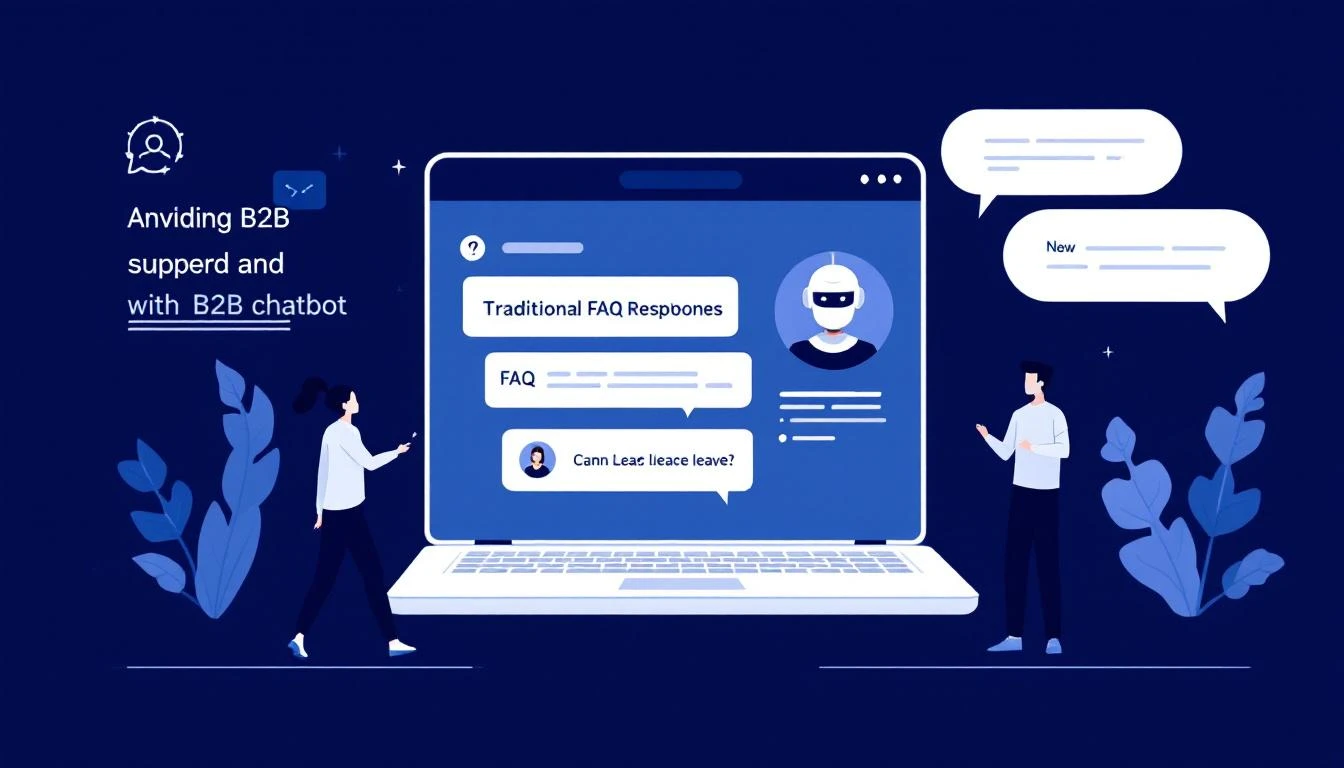
It's 11:47 PM on a Tuesday. A VP of Sales at a 200-person SaaS company lands on your website. She's been researching solutions for three weeks. She's read your case studies, compared you against two competitors, and she's ready to talk pricing.
She clicks the chat widget in the bottom-right corner.
"Hi! How can I help you today?"
She types: "I have a team of 12 SDRs. What does pricing look like for annual plans with CRM integration?"
The chatbot responds: "Thanks for reaching out! Here are some helpful resources about our pricing..." followed by three links she's already read.
She closes the tab. Your competitor had a real conversation with her the next morning. You lost the deal before your sales team even knew she existed.
This is happening on your website right now. And it's costing you more than you think.
The Chatbot Graveyard: $9.5 Billion Spent, Most of It Wasted
Here's the uncomfortable truth about B2B chatbots in 2026:
- 70% of B2B website visitors leave without converting — and most never come back
- The average B2B website converts at just 1.8% of visitors
- B2B bounce rates sit between 30% and 55%, meaning half your paid traffic disappears instantly
- Chatbot conversations that hit a dead end — where the visitor reaches a point with no clear next step — are the number one reason for abandonment
The chatbot market is worth $9.57 billion in 2025 and is projected to hit $11.8 billion by 2026. Companies are spending more than ever on conversational tools. But most B2B chatbots are doing what they've always done: serving up canned responses, routing people to knowledge base articles, and calling it "engagement."
It's like hiring a receptionist who can only read from a script. Sure, they're sitting at the front desk. But they're not actually helping anyone.
Why Traditional Chatbots Fail B2B Buyers
The problem isn't that chatbots exist. It's that most chatbots are built for deflection, not conversion.
Traditional B2B chatbots are designed to reduce support tickets. They match keywords to pre-written answers. They follow rigid decision trees. They can tell someone your office hours but can't explain why your product is different from the competitor they just evaluated.
Here's what that looks like in practice:
Visitor: "How does your visitor identification compare to Warmly?" Chatbot: "Great question! Here's a link to our features page."
Visitor: "I downloaded your whitepaper last week. Can someone walk me through implementation for a team our size?" Chatbot: "Would you like to book a demo? Here's our calendar link."
Visitor: "What's the ROI look like for a 10-person SDR team?" Chatbot: "Thanks for your interest! A team member will get back to you during business hours."
Every one of these is a missed conversion. The visitor had buying intent. They asked a real question. And they got a vending machine response.
Research backs this up: businesses using AI chatbots see conversion rates 3x higher than those using basic web forms. But that stat only applies to chatbots that can actually hold a conversation. The gap between a smart conversational AI and a keyword-matching FAQ bot is the difference between a 2% conversion rate and a 6%+ conversion rate.
The Voice Avatar Difference: From FAQ Bot to AI Sales Rep
What if your website could actually talk to visitors?
Not just display text responses. Not just route people through a decision tree. But actually speak — with a voice avatar that understands context, remembers previous interactions, answers nuanced questions, and takes action?
This is where voice-enabled AI changes the game for B2B websites. Instead of a text widget that visitors ignore after one disappointing interaction, you get an AI-powered sales rep that:
- Speaks naturally in real-time, creating the feel of a real conversation
- Understands context — what page they're on, what they've already looked at, and what stage of the buying journey they're in
- Answers real questions about pricing, features, competitive differences, and implementation
- Books meetings directly on your team's calendar without the "someone will get back to you" runaround
- Hands off to humans when the conversation needs a real person, with full context preserved
- Works 24/7 — including at 11:47 PM on a Tuesday when your best prospect is finally ready to engage
The difference isn't incremental. Organizations implementing voice AI in their sales process report 43% higher win rates and 37% faster sales cycles compared to those relying on traditional engagement tools.
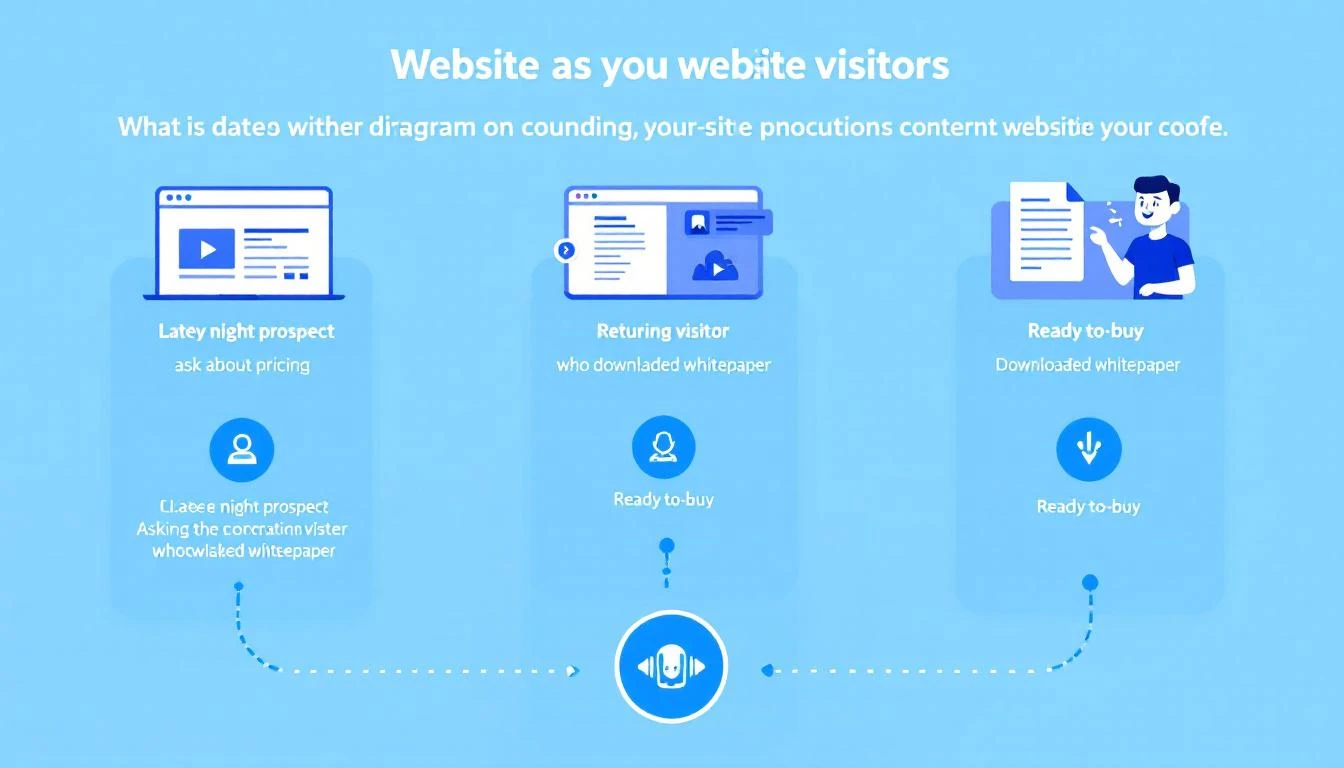
Three Scenarios Where Voice Beats Text (Every Time)
Let's walk through the exact scenarios where a voice-enabled AI avatar outperforms a traditional chatbot — and what the revenue impact looks like.
Scenario 1: The Late-Night Decision Maker
The situation: It's 11 PM Central Time. A Director of Revenue Operations at a mid-market SaaS company is on your pricing page. She's been evaluating three vendors this week. Her shortlist presentation to the VP of Sales is tomorrow at 9 AM.
What a traditional chatbot does: Shows an "away" message or offers to collect her email for follow-up. She fills out the form. Your SDR sees it at 9 AM the next morning — by which time she's already presented her shortlist. You weren't on it.
What a voice avatar does: Engages immediately. "Hey, I can see you're looking at our Enterprise plan. Happy to walk you through pricing for your team size — what's your SDR headcount?" She says "twelve." The avatar explains pricing tiers, compares relevant features against the competitors she mentioned, and books a 15-minute call with your AE for 8:30 AM — before her presentation. You make the shortlist.
Revenue impact: The difference between being on a shortlist and being forgotten. For a $40K ACV deal, that's a conversion worth protecting.
Scenario 2: The Returning Whitepaper Reader
The situation: Someone downloaded your "Complete Guide to B2B Intent Data" two weeks ago. Now they're back on your site, browsing the integrations page and checking out your visitor identification tools comparison.
What a traditional chatbot does: Treats them like a first-time visitor. "Hi! Welcome to our site. How can I help?" No memory. No context. The visitor has to re-explain everything from scratch — if they bother engaging at all.
What a voice avatar does: Recognizes the returning session. "Welcome back — last time you grabbed our intent data guide. Looks like you're checking out integrations now. Are you evaluating how this would fit into your current stack?" The conversation picks up where intent left off. The avatar can reference the content they've consumed and connect the dots between what they've researched and what they actually need.
Revenue impact: Returning visitors convert at 5x the rate of first-time visitors — but only if you treat them like returning visitors. Context-aware engagement is the difference.
Scenario 3: Tire-Kicker vs. Ready Buyer
The situation: Two visitors are on your site at the same time. Visitor A is a marketing intern researching tools for a blog post. Visitor B is a VP of Sales who just got budget approved and needs to make a decision this quarter.
What a traditional chatbot does: Gives both of them the same experience. Same generic welcome. Same canned responses. Same "book a demo" CTA. Your SDR team wastes 20 minutes on a discovery call with the intern before realizing it's not a real opportunity.
What a voice avatar does: Within 30 seconds of conversation, the AI classifies intent. The intern gets helpful responses and relevant content links — a good brand experience, but no calendar push. The VP gets the red carpet: pricing specifics, ROI calculations for their team size, competitive positioning, and a meeting booked directly with a senior AE. The avatar uses real-time intent classification, not keyword matching, to route each conversation appropriately.
Revenue impact: Your SDR team spends zero time on unqualified conversations. Every meeting booked is with a real buyer.
The Conversion Math: Why This Matters at Scale
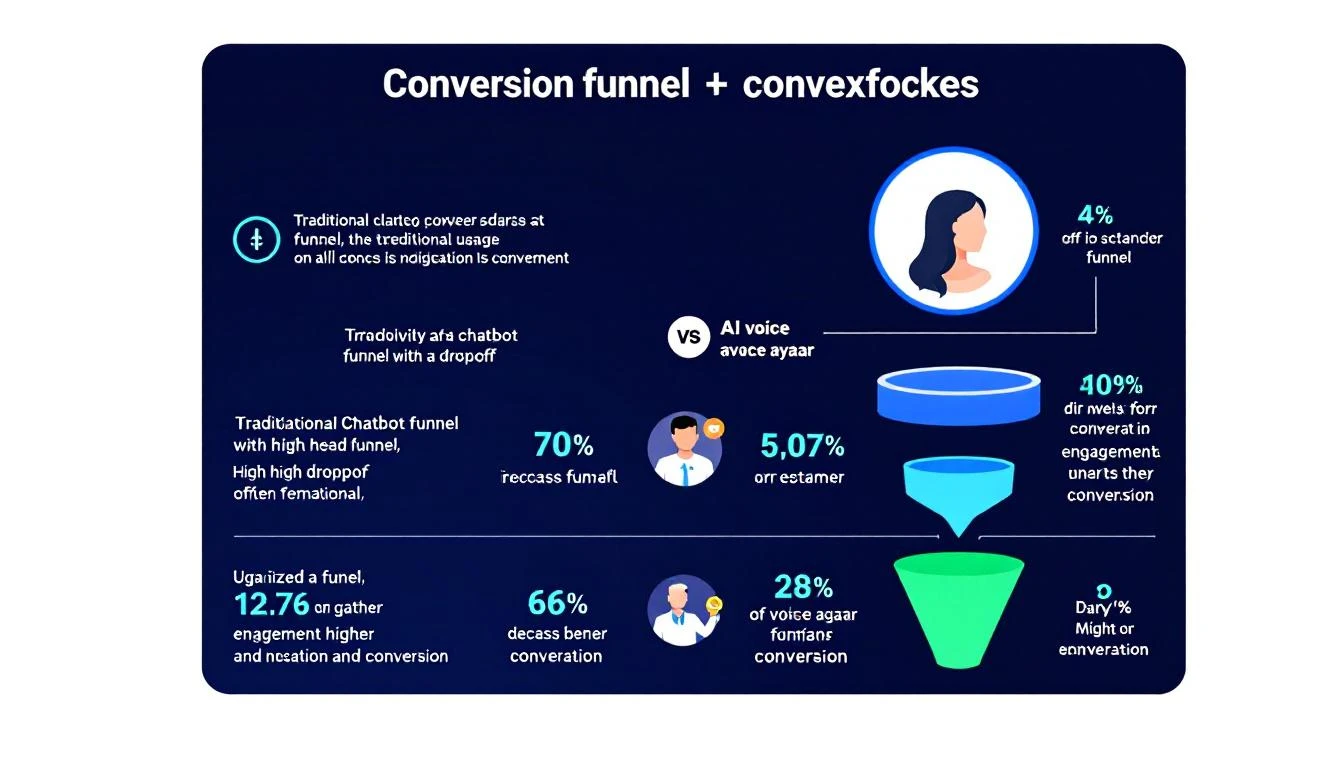
Let's run the numbers on a typical B2B website:
| Metric | Traditional Chatbot | Voice-Enabled AI Avatar |
|---|---|---|
| Monthly website visitors | 10,000 | 10,000 |
| Chat/voice engagement rate | 2-3% | 8-12% |
| Conversation completion rate | 25% | 70%+ |
| Meeting booking rate | 5% of conversations | 20%+ of conversations |
| Qualified meetings/month | 1-4 | 14-24 |
| After-hours coverage | ❌ Form only | ✅ Full AI voice |
That's the difference between 1-4 qualified meetings per month and 14-24. At a $30K average deal size and a 25% close rate, that's the difference between $7.5K-$30K in pipeline and $105K-$180K in pipeline — from the same traffic you're already paying for.
The traffic isn't the problem. The conversation is the problem.
Companies that use AI-powered chatbots already see 2.5x higher conversion into sales compared to traditional approaches. Add voice — with natural conversation, real-time context, and instant action — and that multiplier goes even higher.
What a Voice-Enabled Website Actually Looks Like
Here's what the experience looks like when it's done right:
Step 1: Visitor arrives on your site. The AI avatar appears — not as a jarring popup, but as a subtle, friendly presence. On high-intent pages (pricing, comparisons, case studies), it proactively offers to help.
Step 2: The conversation starts. The visitor can type or speak. The avatar responds in natural voice, creating an experience that feels like talking to a knowledgeable team member rather than navigating a phone tree.
Step 3: Context drives the conversation. The avatar knows what page they're on, what content they've consumed, whether they've visited before, and what their likely buying stage is. It asks smart follow-up questions, not generic qualifiers.
Step 4: Action happens in real-time. Need pricing? The avatar pulls relevant tier information and walks through it. Want to compare features? It presents a tailored comparison based on the specific competitor the visitor mentioned. Ready to talk to a human? The avatar checks your team's calendar and books a meeting — right then and there.
Step 5: Handoff is seamless. When a live rep takes over, they get the full conversation context: what the visitor asked, what they care about, what objections came up, and what stage they're in. No "so tell me about your business" restart.
Step 6: Even text interactions stay smart. Some visitors prefer typing over speaking. The avatar adapts — maintaining the same intelligence, context awareness, and ability to take action whether the visitor is using voice or text. It can even trigger interactive forms mid-conversation for things like team size, tech stack, or use case qualification.
Five Signs Your Website Needs a Voice Upgrade
If any of these sound familiar, your chatbot is leaving revenue on the table:
-
Your after-hours form submissions go cold. By the time your SDR follows up, the buyer has moved on. Speed-to-lead matters — response time directly correlates with conversion.
-
Visitors engage with chat once, get a canned answer, and never return. This is the classic chatbot graveyard. One bad experience kills future engagement.
-
Your SDR team wastes hours on unqualified discovery calls. Without intent classification, every meeting request looks the same. Your top reps spend time on conversations that were never going to close.
-
You can't differentiate returning visitors from first-timers. If your chatbot says "Hi! How can I help?" to someone who's visited 6 times and downloaded 3 pieces of content, you're actively degrading their experience. Visitor identification should inform every interaction.
-
Your website conversion rate is under 2%. The B2B average is 1.8%. If you're at or below average with decent traffic, the problem isn't your product or your content — it's that visitors can't get answers when they need them.
The Bigger Picture: Your Website as a Revenue Engine
The shift from text chatbot to voice-enabled AI avatar isn't just a UX upgrade. It's a fundamental change in how your website participates in the sales process.
Today, most B2B websites are passive. They display information and hope visitors self-serve their way to a demo form. The website is a brochure, not a team member.
A voice-enabled AI turns your website into an active participant in the sales process. It qualifies. It educates. It overcomes objections. It books meetings. It remembers. It works while your team sleeps.
This is where the AI SDR stack is heading. Not just automating outbound emails and LinkedIn messages, but creating intelligent, always-on engagement at every touchpoint — starting with the one place where buyers are already raising their hand: your website.
The companies that figure this out first will have a structural advantage. While competitors are still emailing "just checking in" follow-ups to cold form fills, you'll be having real conversations with ready buyers — at 2 AM, at 2 PM, whenever they show up.
How to Get Started
You don't need to rip and replace your entire tech stack. Start here:
-
Audit your current chatbot conversations. Pull the transcripts from the last 30 days. How many conversations ended with a canned response? How many visitors asked a real question and got a link dump? That's your baseline.
-
Identify your highest-intent pages. Pricing, comparisons, case studies, and integration pages are where buyers go when they're close to a decision. These are your priority pages for voice-enabled engagement.
-
Map your visitor segments. First-time vs. returning. Content consumer vs. pricing researcher. SMB vs. enterprise. Each segment should get a different conversation experience — just like they would if they called your office and talked to a real person.
-
Start with after-hours coverage. The fastest ROI comes from engaging visitors who currently hit an "away" message or a dead form. If 40% of your traffic comes outside business hours, that's 40% of potential conversations you're missing entirely.
-
Measure conversations, not just clicks. Traditional chatbot metrics — "chat initiated," "messages sent" — are vanity metrics. Track conversation completion rate, meeting booking rate, and speed-to-qualified-meeting. Those are the numbers that connect to revenue.
The AI sales chatbot landscape is evolving fast. The gap between FAQ bots and genuine conversational AI is widening every quarter. The question isn't whether voice-enabled AI will become the standard for B2B websites. It's whether you'll be early enough to capture the advantage.
Your website visitors are already trying to have conversations. The only question is whether anyone's listening.
See how MarketBetter turns website visitors into booked meetings →