4 posts tagged with "lead-routing"

View All Tags

Smart Scheduler: How AI Qualification Turns Every Inbound Lead Into a Booked Meeting

Β· 11 min read
MarketBetter Team
Content Team, marketbetter.ai

I've watched SDR teams lose winnable deals for a decade. And the number one killer isn't bad messaging, weak value props, or even the wrong ICP. It's time.

Specifically, it's the 47 minutes β€” on average β€” between when an inbound lead fills out a form and when a human being actually responds. In those 47 minutes, that lead has already opened three competitor tabs, re-read a G2 comparison, and started to forget why they were excited about you in the first place.

We all know the data. Harvard Business Review published the speed-to-lead research years ago: companies that respond within five minutes are 100x more likely to connect than those that wait 30. And yet, the average B2B company still takes over 40 minutes.

Why? Because between "lead fills out form" and "rep picks up phone," there's a broken chain of manual steps, routing logic, and round-robin roulette that nobody has fixed.

Until now.

AI-powered lead qualification workflow

The 40% Problem Nobody Talks About​

Here's a stat that should make every VP of Sales uncomfortable: roughly 40% of inbound leads never get a meaningful first response. Not "never close" β€” never get responded to properly.

Some get lost in CRM assignment queues. Some get routed to reps who are on PTO. Some hit a round-robin and land on a rep who already has 15 open opportunities and isn't checking their new lead notifications. Some arrive at 4:47 PM on a Friday and by Monday, they're ghosts.

This isn't a people problem. Your SDRs aren't lazy. Your ops team isn't incompetent. The system is broken.

Here's what the typical inbound flow looks like at most B2B companies:

  1. Lead fills out a form
  2. Marketing automation assigns a lead score (maybe)
  3. Lead gets pushed to CRM
  4. CRM assignment rules fire (round-robin, territory, whatever)
  5. Assigned rep gets a notification
  6. Rep checks their queue 2-3 hours later
  7. Rep researches the lead manually
  8. Rep tries to qualify via email or phone
  9. Maybe β€” maybe β€” a meeting gets booked

That's nine steps. Nine failure points. Nine places where a perfectly good lead can fall through the cracks.

The median time from step 1 to step 9? Three to five days, if you're being honest. And by then, the lead is cold, distracted, or has already talked to your competitor who got there first.

If you're still running legacy lead routing processes, you're fighting a battle that was lost before your reps even knew it started.

What If AI Could Collapse That Entire Chain?​

MarketBetter's Smart Scheduler does something deceptively simple: it compresses those nine steps into one continuous flow that takes seconds, not days.

Here's the waterfall:

Lead arrives β†’ AI qualifies in real-time β†’ CRM lookup matches company to existing owner β†’ Meeting books directly on the right rep's calendar

Let me break down why each piece matters.

Step 1: AI Qualification in Seconds​

The moment a lead submits any form β€” demo request, content download, chatbot interaction β€” AI evaluates the submission against your qualification criteria. Not a static lead score. Not a threshold number somebody set six months ago and forgot about. Actual, contextual qualification.

Does this person match your ICP? Is their company in your target segment? Is the signal strong enough to warrant immediate action?

This happens in seconds, not hours. No human queue. No waiting for an SDR to manually research the company on LinkedIn. The lead gets qualified while they're still looking at your thank-you page.

Step 2: CRM Owner Lookup β€” The Most Underrated Feature in Sales Tech​

Here's where Smart Scheduler does something that almost no other scheduling or routing tool gets right: CRM owner matching.

When a new inbound lead arrives, the system checks your CRM β€” whether that's HubSpot or Salesforce β€” to see if that lead's company already has an assigned owner. If Sarah owns the Acme Corp account because she's been working that deal for three months, the new lead from Acme Corp goes to Sarah. Period.

This sounds obvious. It is not.

Most round-robin systems treat every inbound lead as a net-new contact and distribute them randomly. That means a new contact from an account that already has an active opportunity might get assigned to a completely different rep. The new rep doesn't know the account history. The existing rep doesn't know someone else from their account just raised their hand. The prospect ends up confused, getting outreach from two different people at the same company.

I've seen this happen at companies doing $50M+ in revenue. It's more common than anyone admits.

CRM owner lookup eliminates this entirely. If the company exists in your CRM with an owner, the inbound lead goes to that owner. It's account-level routing, not contact-level routing. And it works across both HubSpot and Salesforce, which matters because CRM migration is messy and plenty of companies are running hybrid setups during transition periods.

Step 3: Intelligent Fallback for Unmatched Leads​

What about truly net-new leads β€” companies that don't exist in your CRM yet? That's where configurable routing rules take over.

Smart Scheduler doesn't just default to basic round-robin. You can configure routing based on:

  • Territory: Geographic or vertical-based assignment
  • Round-robin: Equal distribution across available reps
  • Capacity: Weighted by current pipeline load
  • Specialization: Route based on product interest, company size, or use case

The key word is configurable. Every sales org is different. Some have strict territory models. Some run pods. Some have different teams for inbound vs. outbound. Smart Scheduler adapts to your model rather than forcing you into a one-size-fits-all distribution.

Step 4: The Meeting Books Itself​

This is the part that changes everything. Once the lead is qualified and routed to the right rep, the meeting booking happens immediately. The lead sees the rep's calendar and can book a time β€” right then, while they're still engaged, while the intent is still hot.

No "someone will reach out within 24 hours." No "check your email for scheduling options." No five-email back-and-forth to find a time that works.

The lead goes from form fill to booked meeting in one unbroken flow. That's the speed-to-lead advantage that every sales org claims to want but almost none actually achieve.

The Round-Robin Problem Is Worse Than You Think​

Let me spend a minute on why traditional round-robin routing is so destructive, because most sales leaders underestimate this.

Round-robin assumes all leads are equal and all reps are interchangeable. Both assumptions are wrong.

Not all leads are equal. An inbound demo request from a VP at a 500-person company in your target vertical is worth dramatically more than a content download from a student. Treating them the same β€” distributing both through the same round-robin queue β€” means your best leads get the same treatment as your weakest ones.

Not all reps are interchangeable. Some reps specialize in enterprise. Some crush it in the mid-market. Some know a specific vertical cold. Round-robin ignores all of this. It's the scheduling equivalent of random assignment in a world where pattern matching drives conversion.

And then there's the account ownership problem I mentioned earlier. Round-robin actively works against account-based selling strategies. If you're investing in ABM, if you're building account plans, if you're trying to create unified experiences for buying committees β€” and then your inbound routing randomly assigns new contacts to different reps β€” you're undermining your own strategy.

Smart Scheduler's CRM owner matching is designed specifically to prevent this. It respects your existing account relationships and only falls back to configurable rules for genuinely new accounts.

Why This Matters More in 2026 Than Ever Before​

Three trends are converging to make intelligent inbound routing a necessity rather than a nice-to-have:

Buying Committees Are Bigger​

The average B2B deal now involves 11+ stakeholders. That means multiple people from the same company will hit your website and fill out forms at different times. If each one gets round-robined to a different rep, you're creating chaos instead of coherence. CRM owner matching ensures every touchpoint from the same account flows to the same rep β€” building a complete picture instead of fragmented conversations.

AI SDRs Are Raising the Bar​

Competitors are deploying AI chatbots and AI-powered qualification tools that respond instantly. If your competitors are booking meetings in 30 seconds and you're booking them in 30 hours, you're not competing. You're spectating. Smart Scheduler puts you at parity β€” or ahead β€” by automating the qualification-to-booking pipeline end to end.

Inbound Volume Is Increasing, But Quality Is Noisy​

With more content, more ads, and more channels driving traffic, SDR teams are dealing with higher inbound volume but more noise. AI qualification acts as a real-time filter, ensuring reps spend their time on leads that actually match your ICP rather than manually triaging a queue that's 60% unqualified.

The Real ROI Isn't Speed β€” It's Accuracy​

Most people focus on speed-to-lead when they think about scheduling automation. And speed matters β€” that 5-minute response window is real.

But the bigger ROI is accuracy. Getting the lead to the right rep, not just a fast rep.

When a lead gets routed to the rep who already owns that account, conversion rates jump β€” not by 10 or 20 percent, but often by 2-3x. Why? Because that rep already knows the company's pain points, their tech stack, their buying process, their internal champions. They don't need 20 minutes of discovery to get up to speed. They can have a relevant, intelligent conversation from minute one.

This is the difference between "I saw you filled out a demo request, tell me about your business" and "Hey, I've been working with your team on the deployment project β€” saw you wanted to discuss the new use case, let's dive in."

One of those sounds like a vendor. The other sounds like a partner. The difference is routing accuracy.

What About Leads That Don't Book?​

Not every lead will book a meeting immediately, even with a frictionless scheduling flow. Some people prefer email. Some want to do more research first. Some fill out forms on mobile and plan to follow up later.

Smart Scheduler accounts for this. Leads that are qualified but don't book in the initial flow get assigned to the matched rep (or the appropriate fallback rep) with full context about the lead's qualification profile. The rep can then follow up via email, phone, or personalized outreach β€” but they're following up with a warm, pre-qualified lead, not starting from scratch.

The system doesn't treat unboooked-but-qualified leads as failures. They're opportunities in motion, and the rep who gets them has all the context they need to convert.

The Waterfall, Visualized​

Here's how the complete flow works for every single inbound lead:

1. Lead Arrives Form submission, chatbot interaction, or scheduling request triggers the workflow.

2. AI Qualification Real-time evaluation against your ICP criteria, qualification rules, and engagement signals. Qualified leads proceed; unqualified leads get appropriate nurture treatment.

3. CRM Owner Lookup The system checks HubSpot or Salesforce for an existing company match. If the lead's company has a CRM owner, that owner is the routing target.

4. Owner Match β†’ Direct Booking Lead sees the account owner's calendar and can book immediately. No round-robin, no queue, no delay.

5. No Owner β†’ Configurable Routing For net-new companies, routing rules fire based on your configuration β€” territory, round-robin, capacity, specialization, or any combination.

6. Meeting Confirmed Calendar invite sent, CRM updated, rep notified with full lead context. The entire process completes in seconds.

Every step is automated. Every step happens in real-time. Every step is designed to ensure that no qualified lead ever waits in a queue wondering if anyone's going to call them back.

Stop Leaking Pipeline​

The hard truth is that most B2B companies are losing 30-40% of their inbound pipeline to slow response times and wrong rep assignment. That's not a marketing problem. That's not a demand gen problem. That's a plumbing problem.

Smart Scheduler fixes the plumbing.

If you want to see what your inbound conversion rates look like when every lead gets qualified in seconds, routed to the right rep, and given a frictionless path to booking β€” it's worth seeing it in action.

Because in the time it took you to read this post, someone at your company probably lost a lead.


Adam Grant leads GTM at MarketBetter, where he helps B2B sales teams turn inbound intent into booked meetings β€” without the manual triage that kills conversion rates.

Best Meeting Scheduling Software for Sales Teams [2026]: 12 Tools Compared

Β· 15 min read
sunder
Founder, marketbetter.ai

Best Meeting Scheduling Software for Sales Teams 2026

Every minute between a lead submitting a form and getting on a call with your rep is revenue leaking out of the funnel. Studies show responding within 5 minutes makes you 21x more likely to qualify a lead β€” yet the average B2B company takes 42 hours.

Meeting scheduling software for sales teams isn't about replacing your calendar app. It's about eliminating the back-and-forth that kills deals before they start. The right tool routes inbound leads to the correct rep, qualifies them before booking, and gets a meeting on the calendar in under 30 seconds.

But "meeting scheduling" now covers wildly different products. Calendly sends calendar links. Chili Piper routes leads from your website form. Default builds entire inbound workflows. And platforms like MarketBetter fold scheduling into a complete SDR operating system where the meeting is just one step in an automated pipeline.

We compared 12 tools across pricing, lead routing capabilities, CRM integration depth, and actual speed-to-lead impact.

Quick Comparison Table​

ToolBest ForStarting PriceLead RoutingCRM IntegrationSpeed-to-Lead
MarketBetterFull SDR workflow + scheduling$99/user/monthβœ… AI-poweredHubSpot, Salesforce< 30 seconds
Chili PiperInbound form-to-meeting$15/user/moβœ… AdvancedSalesforce, HubSpot< 1 minute
CalendlyGeneral scheduling + sales$10/user/moβœ… BasicSalesforce, HubSpotVaries
RevenueHeroInbound demo booking$25/user/moβœ… AdvancedSalesforce, HubSpot< 1 minute
DefaultFull inbound workflowCustom pricingβœ… AdvancedSalesforce, HubSpot< 1 minute
DemodeskVideo meetings + coaching$25/user/mo⚠️ BasicSalesforce, HubSpotVaries
KronologicAI auto-schedulingCustom pricingβœ… AI-poweredSalesforce< 30 seconds
LeadmonkSMB scheduling$12/user/moβœ… BasicHubSpot, Salesforce< 2 minutes
Drift/SalesloftChat-to-meeting$2,500/mo+βœ… AdvancedSalesforce< 1 minute
HubSpot MeetingsHubSpot ecosystemFree–$800/mo⚠️ BasicHubSpot nativeVaries
SavvyCalPersonalized scheduling$12/user/mo❌ZapierVaries
Reclaim.aiAI calendar management$8/user/mo❌Google CalendarN/A

What Actually Matters for Sales Scheduling​

Before diving into individual tools, here's what separates a sales scheduling tool from a generic calendar link:

1. Lead Routing (Not Just Scheduling)​

When a lead fills out your form, the tool should automatically determine which rep gets the meeting based on territory, account ownership, company size, round-robin rules, or custom logic. Without this, you're just sending a Calendly link and hoping.

2. Qualification Before Booking​

The best tools qualify leads before letting them book. If someone from a 5-person company requests a demo for your enterprise product, they should get a different experience than a VP from a 500-person company.

3. Speed-to-Lead​

The clock starts the moment a prospect hits submit. Tools that redirect instantly to a booking page (like Chili Piper's Concierge) beat tools that send a follow-up email with a link.

4. CRM Sync​

Every meeting booked should create or update a contact, associate an activity, and update the deal stage β€” automatically. If your reps are manually logging meetings, you've already lost.

5. No-Show Reduction​

Automated reminders, calendar holds, and confirmation workflows. The best tools cut no-show rates by 30-50%.


1. MarketBetter β€” The SDR Operating System​

Best for: Teams that want scheduling as part of a complete SDR workflow β€” not another standalone tool.

Pricing: starting at $99/user/month (Standard plan)

MarketBetter approaches meeting scheduling differently from every other tool on this list. Instead of being a standalone scheduler that you bolt onto your stack, meeting booking is integrated into an AI-powered SDR workflow.

Here's the difference: Chili Piper routes a form submission to a rep and books a meeting. MarketBetter identifies the prospect before they fill out a form (via website visitor identification), enriches them with company and contact data, scores them against your ICP, generates a personalized outreach sequence, and then books the meeting β€” all within a single platform.

What stands out:

  • Visitor identification + scheduling β€” Know who's on your site before they submit a form. Your SDR gets alerted while the prospect is still browsing.
  • AI-powered daily playbook β€” Reps don't just get meetings booked; they get a prioritized task list of who to call, email, and follow up with.
  • Smart dialer integration β€” When a meeting doesn't get booked, the prospect automatically enters a calling queue with context.
  • Email sequence automation β€” If a prospect doesn't book immediately, hyper-personalized follow-ups go out automatically.

Why it's different: Every other tool on this list does one thing β€” schedule meetings. MarketBetter does the work that happens before and after the meeting. When your scheduling tool is part of a broader SDR platform, you eliminate 4-5 point solutions.

Best for: B2B teams (50-500 employees) who want to consolidate their SDR stack, not add another tool to it.

Book a Demo β†’


2. Chili Piper β€” The Inbound Routing Specialist​

Best for: High-volume inbound teams that need instant form-to-meeting routing.

Pricing:

  • Instant Booker: $15/user/mo (billed annually)
  • Handoff: $25/user/mo
  • Concierge: $30/user/mo (form routing + qualification)
  • Distro: $30/user/mo (lead distribution)

Chili Piper is the category leader for inbound meeting scheduling. Their Concierge product embeds directly in your website forms β€” when a lead submits, they see available time slots immediately instead of waiting for a rep to email them back.

What makes it work:

  • Form routing β€” Leads are qualified and routed to the right rep in real-time based on Salesforce ownership, territory, round-robin, or custom rules.
  • Instant booking β€” No redirect. The calendar appears right on the form confirmation, reducing friction dramatically.
  • Salesforce-native β€” Deep bi-directional sync. Contacts, leads, and activities all update automatically.
  • Handoff β€” AEs can pass meeting links to SDRs (or vice versa) with one click, keeping CRM records clean.

The catch:

  • Product fragmentation β€” You need Concierge for forms, Handoff for rep-to-rep, Distro for lead distribution, and Instant Booker for calendar links. Each is a separate product at a separate price point. A 10-rep team using all four products pays $100/user/mo = $1,000/mo.
  • Salesforce-first β€” HubSpot integration exists but isn't as deep. HubSpot-native teams may find gaps.
  • No outbound workflow β€” Chili Piper only handles inbound. If a prospect doesn't fill out your form, you need a completely separate tool stack.

G2 rating: 4.6/5 (990+ reviews)


3. Calendly β€” The Universal Scheduler​

Best for: Individual reps and small teams that need reliable, simple scheduling.

Pricing:

  • Free: 1 event type, unlimited 1:1 meetings
  • Standard: $10/user/mo
  • Teams: $16/user/mo (round-robin, collective scheduling)
  • Enterprise: Custom pricing

Calendly is the default. Everyone knows it, everyone has used it, and it just works. For individual SDRs sharing a booking link via email or LinkedIn, it's hard to beat.

What works well:

  • Zero learning curve β€” Share a link, people book. That's it.
  • Routing Forms β€” Calendly's newer feature that qualifies and routes leads to the right rep based on form answers.
  • Team pages β€” Round-robin scheduling across a team with even distribution.
  • Massive integration ecosystem β€” Connects with Salesforce, HubSpot, Zoom, Teams, Stripe, PayPal, and hundreds of others.

Where it falls short for sales teams:

  • Routing is basic β€” Calendly's Routing Forms work but lack the sophistication of Chili Piper's territory-based routing or Salesforce ownership matching.
  • No form embedding β€” Calendly links redirect prospects to Calendly's hosted pages. Chili Piper and RevenueHero embed directly in your website.
  • Limited qualification β€” You can ask screening questions but can't dynamically change the booking experience based on CRM data.
  • No meeting handoffs β€” There's no built-in way for an SDR to schedule on behalf of an AE while keeping clean CRM records.

Bottom line: If your SDR team is under 5 people and your process is straightforward (link in email β†’ they book β†’ meeting happens), Calendly is the pragmatic choice. Once you need routing, qualification, or CRM automation, you'll outgrow it.

G2 rating: 4.7/5 (2,200+ reviews)


4. RevenueHero β€” The Inbound Challenger​

Best for: Mid-market inbound teams looking for a Chili Piper alternative at a lower price.

Pricing:

  • Starter: $25/user/mo
  • Growth: $37/user/mo
  • Enterprise: Custom

RevenueHero is built specifically for inbound lead-to-meeting conversion. Like Chili Piper, it qualifies and routes leads instantly from website forms. Unlike Chili Piper, you get most features in a single product instead of buying four separate ones.

Key differentiators:

  • Instant scheduling from forms β€” Same concept as Chili Piper Concierge but bundled into one product.
  • Account matching β€” Automatically matches inbound leads to existing accounts in your CRM before routing, preventing duplicate accounts and ensuring the right rep gets the meeting.
  • Meeting lifecycle tracking β€” Tracks the entire journey from form fill to meeting held (not just booked), giving you real conversion metrics.
  • Flexible routing β€” Territory, ownership, round-robin, weighted distribution, and custom rules.

Considerations:

  • Smaller ecosystem β€” Fewer integrations than Chili Piper or Calendly. Check that your specific CRM/marketing automation combo is supported.
  • Newer product β€” Less battle-tested with enterprise-scale routing rules. If you have complex territory hierarchies, verify before committing.
  • Limited brand recognition β€” Prospects may not trust a RevenueHero scheduling page as much as a Calendly link.

G2 rating: 4.8/5 (200+ reviews)


5. Default β€” The Full Inbound Workflow Builder​

Best for: RevOps teams that want to build custom inbound workflows beyond just scheduling.

Pricing: Custom (typically $1,000+/mo)

Default goes beyond meeting scheduling into full inbound workflow automation. You build multi-step workflows that qualify leads, route them, book meetings, enrich data, update your CRM, and trigger follow-up sequences β€” all from a visual builder.

What makes it interesting:

  • Visual workflow builder β€” Drag-and-drop workflow creation that connects forms, routing, enrichment, CRM updates, and scheduling into one flow.
  • Built-in enrichment β€” Enriches leads with firmographic data before routing, so routing decisions are based on real company data, not just what someone typed in a form.
  • Flexible routing engine β€” The most sophisticated routing available: ownership, territory, round-robin, weighted, account-based, and custom code.
  • Form-to-anything β€” Not just meetings. Workflows can trigger Slack alerts, update deal stages, add to sequences, or any combination.

Considerations:

  • Complexity β€” Default is powerful but requires RevOps expertise to set up properly. Not a "turn it on and go" tool.
  • Price point β€” Enterprise pricing puts it out of reach for smaller teams.
  • Meeting scheduling is just one feature β€” If you only need scheduling, Default is overkill.

6. Demodesk β€” Video Meetings + Coaching​

Best for: Teams that want scheduling + a better meeting experience with coaching.

Pricing: Starting at $25/user/mo

Demodesk combines scheduling with its own video meeting platform. Instead of booking a Zoom call, the meeting happens inside Demodesk where reps get real-time coaching, battle cards, and automated note-taking.

Standout features:

  • Virtual display β€” Screen sharing without sharing your actual screen (no messy desktop reveals).
  • Real-time playbooks β€” Reps see talking points, competitive battle cards, and objection handlers during the call.
  • Automated scheduling β€” Round-robin, lead routing, and CRM sync.
  • Call analytics β€” Talk-to-listen ratio, topic tracking, and coaching insights.

Considerations:

  • Primarily European market presence.
  • Requires prospects to join a Demodesk meeting (not Zoom/Teams), which adds friction.
  • Routing capabilities are less sophisticated than Chili Piper or RevenueHero.

7. Kronologic β€” AI Auto-Scheduling​

Best for: Outbound teams with high lead volume that need meetings booked without human effort.

Pricing: Custom (enterprise only)

Kronologic takes a different approach: instead of giving leads a link to book, it uses AI to propose specific times via email and books the meeting if the prospect agrees (or even if they don't explicitly decline within a window).

Key differentiator:

  • Proactive scheduling β€” Sends personalized time proposals based on both the rep's and prospect's likely availability.
  • Works for outbound β€” Unlike Chili Piper and RevenueHero (which are inbound-focused), Kronologic handles outbound scheduling at scale.
  • Intent-based timing β€” Can trigger scheduling attempts when intent signals fire (e.g., a website visit or an email open).

Considerations:

  • Aggressive auto-booking can annoy prospects if not configured carefully.
  • Enterprise pricing is opaque.
  • Works best with high-volume, lower-ticket sales motions.

8. Leadmonk β€” Budget-Friendly Scheduling​

Best for: SMBs and startups that need Chili Piper-like features without the enterprise price tag.

Pricing: Starting at $12/user/mo

Leadmonk offers form routing, round-robin scheduling, and CRM integration at a fraction of Chili Piper's cost. It's a newer entrant but gaining traction with cost-conscious teams.

What you get:

  • Form-to-meeting routing
  • Round-robin and weighted distribution
  • HubSpot and Salesforce integration
  • Team scheduling pages
  • Meeting reminders and no-show tracking

Considerations:

  • Fewer advanced routing options than Chili Piper.
  • Smaller company β€” evaluate for long-term viability.
  • Integration depth is shallower.

9. Drift (Now Part of Salesloft) β€” Chat-to-Meeting​

Best for: Teams that convert website chat conversations into scheduled meetings.

Pricing: Starting at $2,500/mo+

Drift (acquired by Salesloft) takes a chat-first approach. Instead of forms, prospects engage with a chatbot that qualifies them and books a meeting within the chat window.

The appeal:

  • Conversational scheduling β€” More engaging than a form. The chatbot asks qualifying questions and surfaces the calendar at the right moment.
  • Account-based targeting β€” Shows different chat experiences to different accounts based on CRM data and intent signals.
  • Video messaging β€” Reps can send async video messages that include scheduling links.

Reality check:

  • At $2,500+/mo, it's 10x more expensive than Chili Piper for scheduling alone.
  • The value proposition is broader (conversational marketing), but if you just need scheduling, it's overkill.
  • Being absorbed into Salesloft means the standalone product's future is unclear.

10. HubSpot Meetings β€” The Free Default​

Best for: Teams already all-in on HubSpot that don't need advanced routing.

Pricing: Free (included in HubSpot CRM), advanced features in Sales Hub ($45-$800/mo)

If you're a HubSpot shop, Meetings is already there. It syncs natively, creates contacts automatically, and requires zero additional spend.

What works:

  • Zero cost β€” Included in free HubSpot CRM.
  • Native CRM sync β€” Meetings create/update contacts and log activities without any integration setup.
  • Embedded forms β€” HubSpot forms can include meeting scheduling widgets.
  • Round-robin β€” Basic round-robin available in Sales Hub Professional.

What doesn't:

  • No real-time routing from forms β€” You can't instantly route a form submission to a rep's calendar the way Chili Piper does.
  • Limited qualification logic β€” No ability to show different booking experiences based on lead score or firmographic data.
  • Basic round-robin β€” No territory-based routing, weighted distribution, or ownership matching.

11. SavvyCal β€” The Anti-Calendly​

Best for: Individual reps who want a more personal scheduling experience.

Pricing: Starting at $12/user/mo

SavvyCal lets prospects overlay their calendar on top of your availability, reducing the friction of finding a mutual time. It's more personal than a standard time-slot grid.

Nice touches:

  • Calendar overlay (prospect sees their schedule next to yours)
  • Personalized scheduling links per prospect
  • Clean, modern interface

Not for sales teams if you need routing, qualification, or CRM automation. It's a personal scheduling tool, not a sales platform.


12. Reclaim.ai β€” AI Calendar Management​

Best for: Reps who need to protect focus time while staying bookable.

Pricing: Starting at $8/user/mo

Reclaim uses AI to manage your calendar β€” blocking focus time, scheduling 1:1s, and adjusting your availability dynamically. Not a sales scheduling tool per se, but useful for SDRs who struggle with calendar management.


How to Choose: Decision Framework​

If you're a solo SDR or small team (< 5 reps):​

Go with Calendly. It's simple, cheap, and universally trusted. Add HubSpot Meetings if you're already in HubSpot.

If you're an inbound-heavy team with 5-20 reps:​

Choose between Chili Piper and RevenueHero. Chili Piper if you need Salesforce-deep integration and can afford the multi-product pricing. RevenueHero if you want similar capabilities in a single product at a lower price.

If you need more than just scheduling:​

Look at MarketBetter or Default. MarketBetter if you want scheduling as part of a complete SDR platform (visitor ID, email sequences, smart dialer, daily playbook). Default if you want to build custom inbound workflows with a visual builder.

If your problem is outbound, not inbound:​

None of the scheduling-only tools help. You need a platform that identifies, qualifies, and engages prospects before trying to book a meeting. That's where MarketBetter's daily SDR playbook changes the game β€” your reps know who to call, why, and what to say before they ever send a calendar link.

Free Tool

Try our AI Lead Generator β€” find verified LinkedIn leads for any company instantly. No signup required.

The Real Problem With Standalone Scheduling Tools​

Here's what nobody talks about: the meeting is not the hard part.

The hard part is getting the right person to your website. Qualifying them before they waste your AE's time. Enriching their data so the meeting is actually productive. Following up when they don't show.

A standalone scheduling tool solves maybe 10% of the inbound conversion problem. The other 90% β€” visitor identification, lead scoring, personalized outreach, dialer integration, and pipeline management β€” requires a different kind of solution.

That's why teams are moving from scheduling tools to SDR platforms. Instead of stitching together Chili Piper + ZoomInfo + Outreach + a dialer + a CRM, they're choosing unified platforms that handle the entire workflow.

See how MarketBetter replaces 5 tools in your sales stack β†’


Last updated: February 2026. Pricing verified against vendor websites and G2 data where available.

How OpenClaw Replaces ChiliPiper: AI-Powered Lead Routing Without the $1,000/Month Platform Fee

Β· 14 min read
MarketBetter Team
Content Team, marketbetter.ai

Let's get one thing out of the way: ChiliPiper is a good product. It does exactly what it promises β€” qualify leads from web forms, route them to the right rep, and book meetings instantly. Thousands of B2B teams rely on it every day.

But here's the uncomfortable question nobody at ChiliPiper wants you to ask: why are you paying $1,000+ per month for what's essentially if/then routing logic?

Lead routing isn't rocket science. It's pattern matching. A lead comes in. You check a few fields β€” company size, industry, territory, existing account owner. You look up a rep's calendar. You send a calendar invite. You update the CRM. That's it.

ChiliPiper wraps this logic in a polished UI and charges you a per-seat fee plus a platform fee that scales with your lead volume. For a 10-person sales team processing 1,000+ leads per month, you're looking at $1,300 to $2,500 per month. That's $15,600 to $30,000 per year β€” for routing logic.

OpenClaw is an open-source AI agent platform that can replicate every core ChiliPiper workflow through automation. No per-seat fees. No platform fees. No lead volume tiers. Just an AI agent that talks to your CRM, your calendar, and your messaging tools.

This article breaks down exactly how β€” workflow by workflow.

AI agent automating lead routing and scheduling workflows

What ChiliPiper Actually Does (And What You're Paying For)​

Before we replace anything, let's understand what ChiliPiper's product suite includes:

  • Form Concierge β€” When a prospect fills out a form on your website, ChiliPiper instantly qualifies them, routes them to the right rep based on territory/account ownership, and shows available calendar slots. The prospect books a meeting before they leave the page.

  • Lead Routing β€” Round-robin distribution, account owner assignment, lead-to-account matching using CRM data. Ensures the right rep gets every lead.

  • Chat β€” AI-powered chat journeys on your website that qualify visitors and route them to live reps or booking pages.

  • Handoff β€” Automates the SDR-to-AE handoff. SDR books a discovery call, and ChiliPiper automatically finds AE availability and schedules the next meeting.

  • Concierge Live β€” Instant phone or video connection with qualified prospects the moment they fill out a form.

  • CRM Sync β€” Auto-logs all meetings, updates contact records, creates activities in Salesforce/HubSpot.

  • Enrichment β€” Auto-fills lead data from enrichment providers before routing decisions.

  • Spam Filtering β€” Filters out bot submissions and spam before they reach your team.

That's a solid product. But every single one of these capabilities is an API call, a calendar check, or a conditional rule. And that's exactly what AI agents are built to do.

ChiliPiper Pricing: What You're Actually Spending​

Let's break down the real cost of ChiliPiper for a mid-market sales team:

Per-seat costs:

  • Concierge: $30-45/user/month
  • Chat: $30-45/user/month
  • Handoff: $30-45/user/month

Platform fees (on top of per-seat):

  • Concierge: $150-$1,500/month (tiered by lead volume)
  • Chat: $1,000-$1,500/month platform fee
  • Handoff: Separate platform fee

Real-world example β€” 10-person sales team, 1,000+ leads/month:

  • 10 users Γ— $35/user = $350/month in seat fees
  • Platform fee at higher lead volume tier: $1,000-$1,500/month
  • Total: $1,350-$1,850/month ($16,200-$22,200/year)

If you add Chat or Handoff modules, that number climbs to $2,000-$2,500/month.

OpenClaw cost for the same functionality:

  • OpenClaw: Free (open source)
  • LLM API costs for routing logic: ~$5-15/month (most routing decisions are simple and cheap)
  • Calendar API: Free (Google/Microsoft)
  • CRM API: Already included in your Salesforce/HubSpot plan
  • Total: $5-15/month

That's a 99% cost reduction. Not a typo.

Workflow-by-Workflow Replacement Guide​

Here's how OpenClaw replaces each ChiliPiper capability with specific, practical workflows.

1. Form Concierge β†’ OpenClaw Form Handler​

What ChiliPiper does: Intercepts form submissions, qualifies the lead based on form fields, routes to the right rep, displays calendar availability.

How OpenClaw does it:

OpenClaw can monitor form submissions through webhooks or by polling your CRM for new contacts. When a new lead arrives, the agent:

  1. Reads the form data (company, title, email, use case)
  2. Runs qualification logic (minimum company size? right industry? not a competitor?)
  3. Checks CRM for existing account matches (lead-to-account matching)
  4. Determines the right rep based on territory rules, round-robin, or account ownership
  5. Queries the rep's Google/Outlook calendar via API for available slots
  6. Sends the prospect a booking link or calendar invite automatically

The qualification rules are just natural language instructions to the AI agent. No complex rule builders. No drag-and-drop workflow editors. You tell the agent: "If company size is under 50 employees, send them to the self-serve signup. If they're in EMEA, route to the EMEA team. If they match an existing account, route to the account owner."

The agent handles the rest.

For teams that want the instant in-page scheduling experience, you can pair OpenClaw with MarketBetter's AI chatbot to qualify visitors in real time and trigger booking workflows through OpenClaw.

2. Lead Routing β†’ OpenClaw CRM Logic​

What ChiliPiper does: Round-robin assignment, territory-based routing, lead-to-account matching, weighted distribution.

How OpenClaw does it:

Lead routing is the core value proposition of ChiliPiper, and it's also the simplest thing to replicate with an AI agent. Here's why: routing is just decision logic applied to CRM data.

OpenClaw connects directly to Salesforce or HubSpot via API. When a new lead enters the system, the agent:

  • Checks for existing accounts β€” Queries the CRM for matching company domain or name. If a match exists, routes to the account owner. This is lead-to-account matching, and it's a single API call.

  • Applies territory rules β€” Reads the lead's location, industry, or company size and matches it against your territory definitions. These can be as simple as a document the agent references.

  • Runs round-robin β€” Maintains a simple rotation counter. Rep A got the last lead, so Rep B gets this one. OpenClaw's memory system persists this state between sessions.

  • Handles weighted distribution β€” Senior reps get 40% of leads, junior reps get 20%. The agent tracks distribution and adjusts assignments accordingly.

The beauty of the AI agent approach is flexibility. With ChiliPiper, you're constrained by their routing rules engine. With OpenClaw, you can express any routing logic in plain English. "Route enterprise leads (500+ employees) to the enterprise team, but if the lead is a past customer, always route to the win-back specialist regardless of size." Try building that in a dropdown menu.

For a deeper dive on building intelligent routing, check out our guide on building an AI-powered lead routing system.

3. Chat Qualification β†’ OpenClaw + AI Chatbot​

What ChiliPiper does: Deploys an AI chat widget on your website that qualifies visitors through conversation, then routes qualified prospects to live reps or booking flows.

How OpenClaw does it:

This is where MarketBetter's AI chatbot and OpenClaw work together as a powerful combination. MarketBetter already provides an AI chatbot that engages website visitors, asks qualifying questions, and identifies high-intent prospects.

OpenClaw adds the automation layer:

  • When the chatbot identifies a qualified lead, it triggers an OpenClaw workflow
  • OpenClaw enriches the lead (company data, technographics, intent signals)
  • The agent routes the qualified lead to the right rep
  • If the rep is available, it facilitates a live handoff
  • If not, it books a meeting on the rep's calendar and confirms with the prospect

ChiliPiper charges $1,000-$99/user/month just for the platform fee on their Chat product. MarketBetter's chatbot with OpenClaw automation delivers the same outcome at a fraction of the cost.

4. SDRβ†’AE Handoff β†’ OpenClaw Meeting Scheduler​

What ChiliPiper does: When an SDR books a discovery call, Handoff automatically finds the assigned AE's availability and schedules the follow-up meeting. No back-and-forth emails.

How OpenClaw does it:

This is one of ChiliPiper's best features β€” and one of the easiest to replicate. The entire workflow is:

  1. SDR completes a discovery call and marks the deal as qualified in the CRM
  2. OpenClaw detects the stage change (via CRM polling or webhook)
  3. The agent determines the assigned AE (based on territory, round-robin, or account assignment)
  4. Queries the AE's calendar API for available slots in the next 3-5 business days
  5. Sends a calendar invite to both the AE and the prospect
  6. Updates the CRM deal record with the scheduled meeting
  7. Sends a Slack notification to the AE with meeting context

Total time from qualification to scheduled AE meeting: seconds. No manual coordination. No "Hey, when are you free?" messages. No scheduling ping-pong.

OpenClaw can even include context in the meeting invite β€” discovery call notes, key pain points mentioned, relevant case studies β€” so the AE walks into the meeting fully prepared. Try getting ChiliPiper to write custom meeting prep notes. That's the advantage of an AI agent over a rigid SaaS tool.

For more on automating the post-meeting workflow, see our guide on AI meeting follow-up automation.

5. CRM Auto-Logging β†’ OpenClaw CRM Writes​

What ChiliPiper does: Every meeting booked through ChiliPiper automatically creates/updates records in your CRM. Activities are logged, contact records are updated, deal stages advance.

How OpenClaw does it:

OpenClaw writes directly to your CRM via API. Every action the agent takes β€” routing a lead, booking a meeting, updating a contact β€” is logged in Salesforce or HubSpot automatically.

But here's where OpenClaw goes further: because it's an AI agent, it doesn't just log structured data. It can:

  • Write contextual notes on contact records based on form responses
  • Update custom fields with enrichment data
  • Create tasks and reminders for reps based on deal context
  • Generate meeting summaries and attach them to deal records

ChiliPiper logs that a meeting was booked. OpenClaw logs why the meeting was booked, what the prospect cares about, and what the rep should prepare. That's the difference between a logging tool and an intelligent assistant.

We covered this in depth in our OpenClaw + HubSpot CRM automation guide.

6. Lead Enrichment β†’ OpenClaw API Orchestration​

What ChiliPiper does: Auto-fills lead data from enrichment providers before routing decisions are made. Company size, industry, revenue β€” filled in before the rep sees the lead.

How OpenClaw does it:

OpenClaw can call any enrichment API β€” Clearbit, Apollo, ZoomInfo, or any of the best lead enrichment tools β€” as part of its routing workflow. When a new lead comes in:

  1. Agent receives the lead with basic info (name, email, company)
  2. Calls enrichment API to pull company data (size, industry, revenue, technographics)
  3. Updates the CRM record with enriched fields
  4. Uses the enriched data to make better routing decisions
  5. Includes relevant context in the rep notification

This isn't just replicating ChiliPiper's enrichment β€” it's improving on it. OpenClaw can call multiple enrichment sources and merge the results. It can cross-reference enrichment data with intent signals. It can even use the enriched data to pre-qualify leads before routing, saving your reps time on unqualified conversations.

7. Spam Filtering β†’ OpenClaw Intelligence Layer​

What ChiliPiper does: Filters bot submissions and obvious spam before they reach your sales team.

How OpenClaw does it:

An AI agent is actually better at spam detection than rule-based filters. OpenClaw can:

  • Analyze email domains (free email = lower priority, not spam)
  • Check company names against known spam patterns
  • Cross-reference against CRM for existing legitimate contacts
  • Use enrichment data to verify company existence
  • Apply intelligent heuristics that adapt over time

ChiliPiper uses static rules. OpenClaw uses AI judgment. For borderline cases β€” the ones that actually matter β€” AI wins every time.

When ChiliPiper Still Makes Sense​

We said this isn't a hit piece, and we meant it. Here's when ChiliPiper is the better choice:

You want zero setup. ChiliPiper is plug-and-play. Install the JavaScript snippet, configure your rules in the UI, and you're live. OpenClaw requires some configuration β€” defining workflows, connecting APIs, testing routing logic. If your team doesn't have anyone comfortable with basic API setup, ChiliPiper's purpose-built UI is genuinely easier.

You need enterprise reporting. ChiliPiper has built-in analytics β€” conversion rates by routing rule, time-to-book metrics, rep performance dashboards. OpenClaw can generate reports, but you'll need to build the reporting layer yourself or use your CRM's native analytics.

You're already deep in the ChiliPiper ecosystem. If your entire revenue operations workflow runs through ChiliPiper and your team is trained on it, switching costs are real. The savings need to justify the transition effort.

You process massive volume at enterprise scale. ChiliPiper has been battle-tested with companies routing tens of thousands of leads per month. They've handled the edge cases, the race conditions, the timezone nightmares. OpenClaw can handle high volume too, but you'll want to test thoroughly at your specific scale.

When OpenClaw Is the Clear Winner​

You're already using OpenClaw or MarketBetter. If you have OpenClaw running for other sales automation β€” pipeline monitoring, deal alerts, lead qualification β€” adding routing and scheduling is incremental. One more workflow for an agent that's already running. No new vendor, no new contract, no new per-seat fee.

You need custom logic. The moment your routing rules go beyond what ChiliPiper's UI supports, you're stuck. OpenClaw handles any routing logic you can describe in English. Seasonal rules, product-specific routing, multi-factor qualification, dynamic territory adjustments β€” it's all just instructions to an AI agent.

You're cost-conscious. Saving $15,000-$25,000 per year is material for most B2B teams. That budget can go toward reps, tools, or marketing spend that directly generates pipeline.

You want a unified platform. Instead of ChiliPiper for routing, a separate tool for enrichment, another for CRM automation, and another for deal alerts β€” OpenClaw does all of it. One agent, multiple workflows, zero additional vendors.

Getting Started: Replace ChiliPiper This Week​

Here's a practical roadmap for migrating from ChiliPiper to OpenClaw:

Day 1-2: Set up OpenClaw and connect your CRM. Follow our OpenClaw setup guide for GTM teams to get running. Connect your Salesforce or HubSpot API credentials.

Day 3: Build your routing logic. Define your territory rules, round-robin assignments, and lead-to-account matching logic. Start with your most common routing scenario and expand from there.

Day 4: Add calendar integration. Connect Google Calendar or Microsoft Outlook API. Test the booking flow end-to-end β€” new lead arrives, agent qualifies, checks calendar, sends invite.

Day 5: Run in parallel. Keep ChiliPiper active but run OpenClaw alongside it for a week. Compare routing decisions. Verify that OpenClaw routes leads the same way (or better).

Week 2: Go live. Once you're confident in the routing accuracy, turn off ChiliPiper and let OpenClaw handle the full workflow. Watch your SaaS bill drop by $1,000+ per month.

Free Tool

Try our AI Lead Generator β€” find verified LinkedIn leads for any company instantly. No signup required.

The Bigger Picture: SaaS Tools vs. AI Agents​

ChiliPiper vs. OpenClaw isn't just about lead routing. It's about a fundamental shift in how B2B teams think about software.

The SaaS model gave us purpose-built tools for every workflow. Lead routing? That's a $1,500/month tool. CRM enrichment? Another tool. Meeting scheduling? Another tool. Deal alerts? Another tool. Each one charges per-seat, each one has a platform fee, and each one does exactly one thing.

AI agents collapse this entire stack. One agent that can route leads, enrich contacts, schedule meetings, update your CRM, send alerts, and generate reports. Not because it's a Swiss Army knife of half-baked features, but because all of these workflows are fundamentally the same thing: reading data, applying logic, taking action.

ChiliPiper built a great business turning routing logic into a SaaS product. But the era of paying $1,000/month for if/then logic is ending. AI agents do it better, cheaper, and with more flexibility.

The question isn't whether AI agents will replace point solutions like ChiliPiper. It's whether your team will be early or late to the shift.

Ready to see how MarketBetter and OpenClaw can replace your entire lead routing stack? Book a demo and we'll show you the exact workflows your team needs β€” configured and running in under an hour.

Building a Sales Territory Bot with OpenAI Codex: Automated Lead Routing That Actually Works [2026]

Β· 8 min read
MarketBetter Team
Content Team, marketbetter.ai

The average lead sits unassigned for 2.5 hours after hitting your CRM.

In that time, your competitor has already responded, built rapport, and scheduled a demo. And 78% of buyers go with the vendor who responds first.

Territory management is the unglamorous backbone of sales operationsβ€”and it's broken at most companies. Manual assignment, outdated territory maps, capacity blindness, and constant rep complaints about "unfair" distribution.

GPT-5.3 Codex, released just last week, changes what's possible. Here's how to build an intelligent territory bot that routes leads instantly, balances workload automatically, and adapts to your business in real-time.

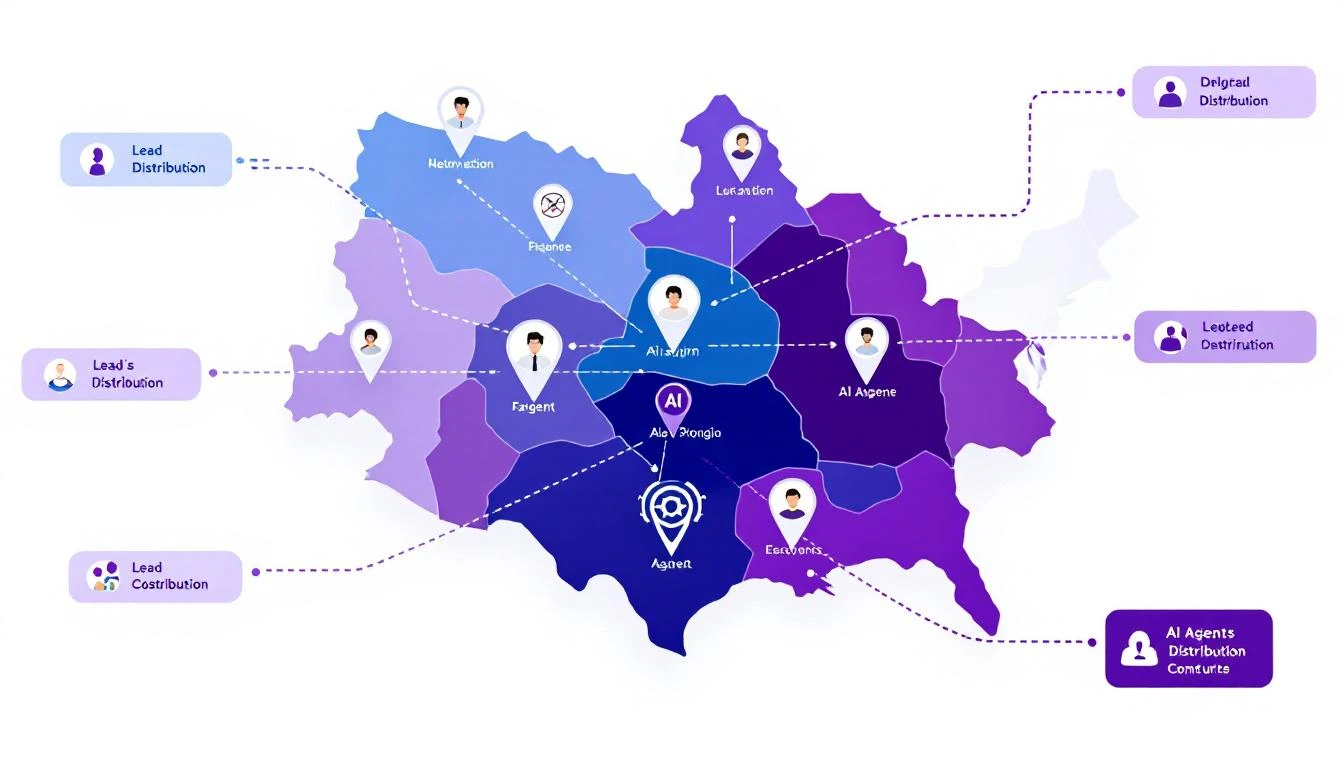
Sales territory architecture with AI agent icons, territory boundaries, and lead distribution arrows

Why Traditional Territory Management Fails​

Before building the solution, let's diagnose the problem:

The Manual Assignment Trap​

Most companies assign territories once a year, then spend the rest of the year fighting fires:

  • Rep leaves β†’ territory chaos for 2-4 weeks
  • New product launch β†’ existing territories don't match buyer profile
  • Geographic expansion β†’ manual carve-outs and reassignments
  • Lead volume spikes β†’ some reps drowning, others starving

The "Fair" Distribution Myth​

Equal territory size β‰  equal opportunity:

  • 1,000 accounts in enterprise segment β‰  1,000 accounts in SMB
  • West Coast tech hub β‰  Midwest manufacturing
  • Fortune 500 HQ territory β‰  field office territory

Your top performers end up subsidizing poor territory design.

The Response Time Problem​

When a hot lead comes in at 4:55 PM on a Friday:

  1. Round-robin assigns to rep who's OOO
  2. Lead sits until Monday
  3. Competitor responded Friday at 5:01 PM
  4. Deal lost before it started

The AI Territory Bot Architecture​

Here's what we're building:

Inbound Lead β†’ Territory Bot β†’ Intelligent Assignment β†’ Instant Response
↓
[Considers:]
- Territory rules
- Rep capacity
- Lead quality score
- Time zone/availability
- Historical performance
- Current workload

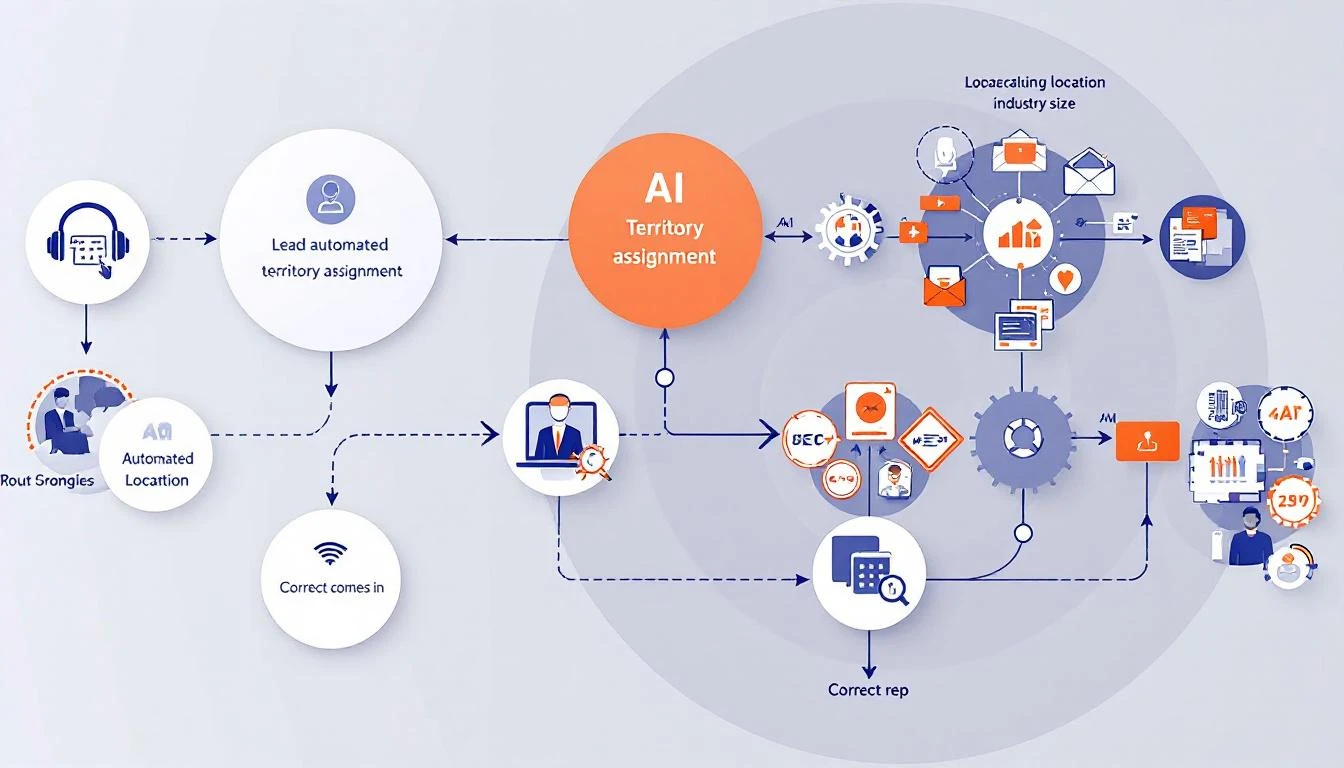
Automated territory assignment workflow showing lead intake, AI analysis, and routing to correct rep

Building with GPT-5.3 Codex​

The new Codex model brings three capabilities that make this project practical:

  1. 25% faster execution - Real-time routing at scale
  2. Mid-turn steering - Adjust logic while processing
  3. Multi-file context - Understands your entire territory structure

Step 1: Define Your Territory Logic​

First, codify your territory rules in a format Codex can understand:

const territoryRules = {
// Geographic territories
regions: {
west: {
states: ['CA', 'WA', 'OR', 'NV', 'AZ'],
reps: ['[email protected]', '[email protected]'],
capacity: { sarah: 50, mike: 45 } // max active opportunities
},
midwest: {
states: ['IL', 'OH', 'MI', 'IN', 'WI'],
reps: ['[email protected]'],
capacity: { john: 60 }
}
// ... more regions
},

// Segment overrides
segments: {
enterprise: {
minEmployees: 1000,
reps: ['[email protected]'],
override: true // takes precedence over geography
},
strategic: {
accounts: ['ACME Corp', 'Globex Inc', 'Initech'],
reps: ['[email protected]'],
override: true
}
},

// Industry specializations
industries: {
healthcare: {
reps: ['[email protected]'],
override: false // falls back to geography if at capacity
}
}
};

Step 2: Build the Assignment Logic​

Using Codex, generate the routing engine:

Build a lead routing function that:

1. Accepts a lead object with: company, state, employee_count, industry, source
2. Checks segment overrides first (enterprise, strategic accounts)
3. Falls back to industry specialization if applicable
4. Falls back to geographic territory
5. Within each territory, selects rep with:
- Lowest current workload (% of capacity)
- Best historical conversion rate for this lead type
- Availability (not OOO, within working hours)
6. If all reps at capacity, route to overflow queue with alert
7. Returns assigned rep + reasoning for the assignment

Handle edge cases:
- Lead matches multiple territories (use priority order)
- No reps available (queue + alert)
- Unknown state/region (default territory)

Codex generates production-ready code:

async function assignLead(lead) {
// Check strategic accounts first
if (territoryRules.segments.strategic.accounts
.includes(lead.company)) {
return assignToRep(
territoryRules.segments.strategic.reps[0],
lead,
'Strategic account override'
);
}

// Check enterprise segment
if (lead.employee_count >=
territoryRules.segments.enterprise.minEmployees) {
const rep = await findAvailableRep(
territoryRules.segments.enterprise.reps,
lead
);
if (rep) {
return assignToRep(rep, lead, 'Enterprise segment');
}
}

// Check industry specialization
if (lead.industry &&
territoryRules.industries[lead.industry]) {
const industryConfig = territoryRules.industries[lead.industry];
const rep = await findAvailableRep(industryConfig.reps, lead);
if (rep || industryConfig.override) {
return rep
? assignToRep(rep, lead, `${lead.industry} specialist`)
: queueLead(lead, 'Industry specialist at capacity');
}
}

// Geographic fallback
const region = findRegion(lead.state);
if (region) {
const rep = await findBestRep(region.reps, lead, region.capacity);
if (rep) {
return assignToRep(rep, lead, `Geographic: ${region.name}`);
}
}

// Overflow handling
return queueLead(lead, 'No available reps in territory');
}

Step 3: Add Intelligence Layer​

Here's where Codex shinesβ€”adding context-aware decisions:

Enhance the routing function to consider:

1. Lead quality signals:
- Visited pricing page β†’ higher priority
- Downloaded case study β†’ match to relevant industry rep
- Requested demo β†’ fastest responder

2. Rep performance matching:
- Small company leads β†’ reps with high SMB close rates
- Technical buyers β†’ reps with engineering backgrounds
- Fast-moving deals β†’ reps with shortest sales cycles

3. Timing optimization:
- Route to rep whose working hours start soonest
- Consider rep's meeting schedule from calendar
- Factor in typical response time by rep

4. Fair distribution:
- Track assignments over rolling 7-day window
- Balance quality scores, not just quantity
- Flag if any rep consistently gets lower-quality leads

Step 4: Implement Mid-Turn Steering​

GPT-5.3's killer featureβ€”adjust the bot while it's working:

// During lead processing, you can steer the decision
async function assignWithSteering(lead, steeringInput = null) {
const initialAssignment = await assignLead(lead);

if (steeringInput) {
// Manager can override mid-process
// "Actually, give this to Sarah - she has context"
return applySteeringOverride(initialAssignment, steeringInput);
}

return initialAssignment;
}

In practice, this means your sales ops team can:

  • Watch assignments in real-time
  • Inject context the bot doesn't have
  • Correct routing without stopping the system

Real-World Implementation​

Integration Points​

Connect your territory bot to:

CRM (HubSpot/Salesforce):

// Webhook triggered on new lead
app.post('/webhooks/new-lead', async (req, res) => {
const lead = req.body;
const assignment = await assignLead(lead);

// Update CRM
await crm.updateLead(lead.id, {
owner: assignment.rep,
assignment_reason: assignment.reason,
assigned_at: new Date()
});

// Notify rep
await slack.sendMessage(assignment.rep,
`New lead assigned: ${lead.company} - ${assignment.reason}`
);

res.json({ success: true, assignment });
});

Slack Notifications:

// Real-time assignment alerts
const formatAssignmentAlert = (assignment) => ({
blocks: [
{
type: 'header',
text: { type: 'plain_text', text: '🎯 New Lead Assigned' }
},
{
type: 'section',
fields: [
{ type: 'mrkdwn', text: `*Company:* ${assignment.lead.company}` },
{ type: 'mrkdwn', text: `*Assigned To:* ${assignment.rep}` },
{ type: 'mrkdwn', text: `*Reason:* ${assignment.reason}` },
{ type: 'mrkdwn', text: `*Quality Score:* ${assignment.lead.score}/100` }
]
},
{
type: 'actions',
elements: [
{ type: 'button', text: { type: 'plain_text', text: 'View in CRM' }, url: assignment.crmUrl },
{ type: 'button', text: { type: 'plain_text', text: 'Reassign' }, action_id: 'reassign_lead' }
]
}
]
});

Monitoring Dashboard​

Track your territory bot's performance:

MetricTargetAlert Threshold
Assignment time&lt; 30 seconds> 2 minutes
Rep capacity utilization70-85%&lt; 50% or > 95%
Lead distribution fairness&lt; 10% variance> 20% variance
Overflow queue size0> 5 leads
First response time&lt; 5 minutes> 30 minutes

Advanced Patterns​

Dynamic Territory Rebalancing​

Build a weekly territory rebalancing report that:

1. Analyzes lead distribution over past 30 days
2. Compares conversion rates by territory
3. Identifies reps consistently at capacity
4. Identifies reps consistently underutilized
5. Suggests boundary adjustments
6. Calculates impact of proposed changes

Output as executive summary + detailed recommendations.

Predictive Capacity Planning​

Using historical lead flow data, predict:

1. Expected leads per territory next week
2. Which reps will hit capacity and when
3. Recommended proactive reassignments
4. Hiring needs by territory

Factor in seasonality, marketing campaigns, and
industry trends.

Self-Healing Territories​

Build a system that automatically adjusts when:

1. Rep goes OOO β†’ redistribute to backup
2. Lead volume spikes β†’ activate overflow handling
3. New rep onboards β†’ gradual ramp-up schedule
4. Rep leaves β†’ immediate territory redistribution

Log all automatic adjustments and alert management.

Results to Expect​

Teams implementing AI territory bots typically see:

MetricBeforeAfterImpact
Lead response time2.5 hours4 minutes97% faster
Assignment errors15%2%87% reduction
Rep utilization variance40%12%70% fairer
Leads lost to slow response12%3%75% saved
Territory disputes/month8187% fewer

The biggest win isn't efficiencyβ€”it's predictability. When every lead routes correctly, your forecasting improves, your reps trust the system, and you stop firefighting.

Getting Started​

  1. Document your current territory rules - Even if they're in someone's head
  2. Identify the edge cases - What causes routing errors today?
  3. Define fair distribution - What does balanced actually mean?
  4. Start with manual review - Run the bot in shadow mode first
  5. Iterate on the logic - Use mid-turn steering to refine

Ready to build intelligent territory management? Book a demo to see how MarketBetter handles lead routing and territory optimization out of the box.

Related reading: