3 posts tagged with "data-driven"

View All Tags

We Analyzed 20+ Studies on AI in B2B Sales: Here's What's Actually Working in 2026

ยท 12 min read
sunder
Founder, marketbetter.ai

Everyone has an opinion about AI in sales. Vendors say it's magic. Skeptics say it's hype. SDR teams caught in the middle are just trying to figure out what to buy.

So we did something different. Instead of running another survey or publishing another vendor comparison, we analyzed 20+ independent studies, industry reports, and data sets from Salesforce, Deloitte, McKinsey, Gartner, Martal Group, MarketsandMarkets, SuperAGI, HubSpot, and others โ€” covering hundreds of thousands of data points across B2B sales organizations.

The goal: cut through the noise and answer three questions that actually matter.

  1. What's genuinely working?
  2. What's just vendor hype?
  3. Where should sales leaders invest next?

Here's what the data says.
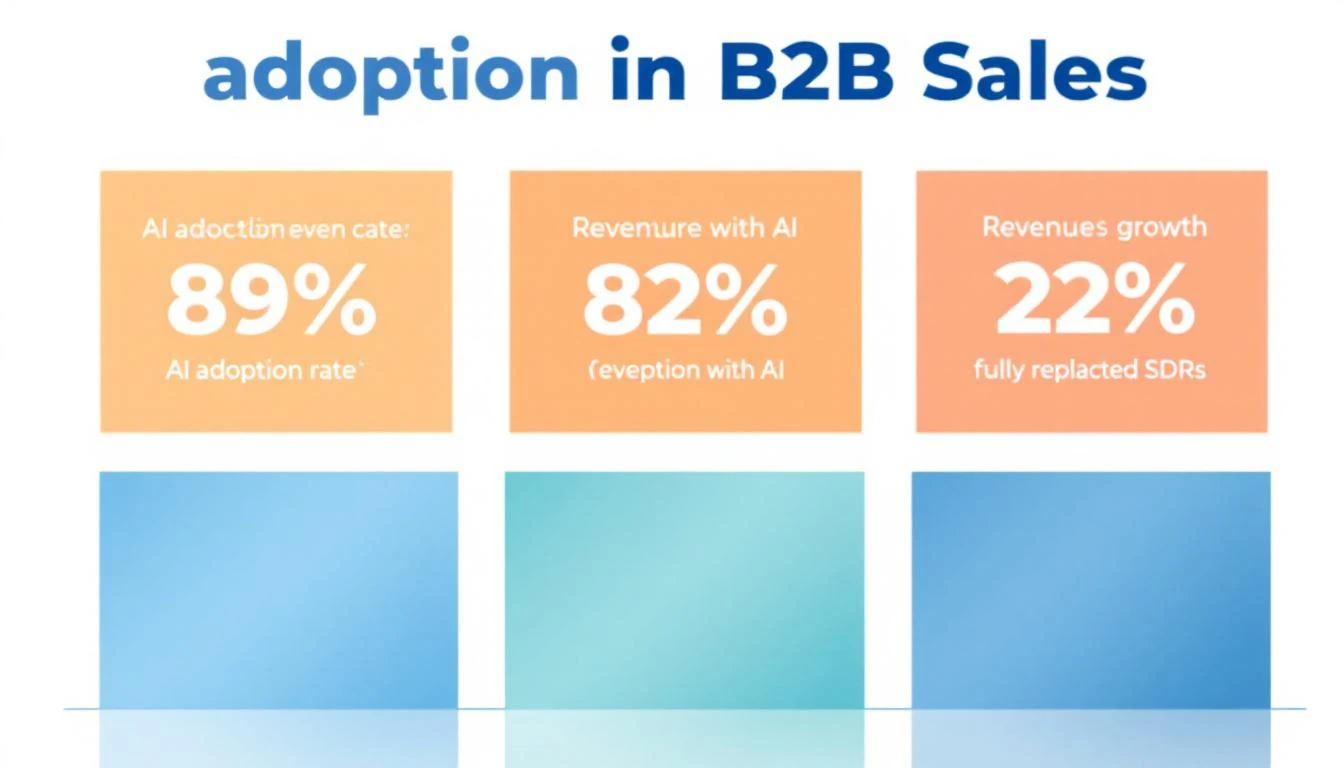
AI adoption statistics in B2B sales 2026

The State of AI Adoption: Near-Universal, Unevenly Appliedโ€‹

Let's start with the baseline. AI in B2B sales is no longer experimental โ€” it's mainstream. But "mainstream" doesn't mean "effective."

The headline numbers:

  • 89% of revenue organizations now use AI in some form โ€” up from 34% in 2023 (Martal Group, Forrester)
  • 88% of businesses report regular AI use in at least one function, up from 78% a year ago (Sopro)
  • 87% of sales organizations use AI for prospecting, forecasting, lead scoring, or drafting emails (Salesforce State of Sales 2026)
  • 92% of sales teams plan to increase AI investment in 2026 (HubSpot)

That looks like universal adoption. But dig deeper and you find a critical gap.

Deloitte Digital's February 2026 study of 1,060 B2B suppliers and buyers found that while 45% of suppliers say they use AI in sales, only 24% have touched agentic AI โ€” the autonomous, workflow-driving kind that actually replaces manual processes. Two-thirds of those not using agentic AI said they plan to. But planning isn't doing.

The data tells us: everyone has AI. Almost nobody has deployed it effectively.

The Performance Gap: AI-Enabled Teams Are Pulling Awayโ€‹

Here's the number that should keep every sales leader up at night.

83% of sales teams using AI saw revenue growth in the past year, versus 66% of teams without AI (Salesforce). That's a 17-percentage-point gap in revenue growth โ€” and it's widening.

More data points from across the studies:

MetricAI-Enabled TeamsNon-AI TeamsGap
Revenue growth83% saw growth66% saw growth+17 pts
Productivity improvementUp to 40%Baseline+40%
Sales cycle length25% shorterBaseline-25%
Revenue increase13-15%Baseline+13-15%
Sales ROI improvement10-20%Baseline+10-20%
ROI within first year86%N/Aโ€”

Sources: Salesforce State of Sales 2026, McKinsey, Sopro, MarketsandMarkets

Deloitte found an even starker divide. Digitally mature B2B suppliers exceeded annual sales growth targets by 110% more than low-maturity competitors. These mature organizations were five times more likely to use AI extensively and five times more likely to use agentic AI at all.

The takeaway: AI isn't a nice-to-have. It's creating a two-tier system in B2B sales. Teams with effective AI implementations are compounding their advantages while everyone else debates whether to adopt.

The AI SDR Paradox: Volume Up, Quality Downโ€‹

This is where the data gets uncomfortable for AI SDR vendors.

The AI SDR market is exploding โ€” projected to grow from $4.12 billion in 2025 to $15.01 billion by 2030 at a 29.5% CAGR (MarketsandMarkets). An estimated 22% of sales teams have fully replaced their human SDR function with AI. Another 55% are running AI-augmented workflows.

But here's the paradox the vendors won't tell you:

AI SDR tools churn at 50-70% annually โ€” roughly double the turnover rate of the human reps they replace (UserGems). And Gartner predicts over 40% of agentic AI projects will be abandoned by 2027.

The root cause? A quality gap:

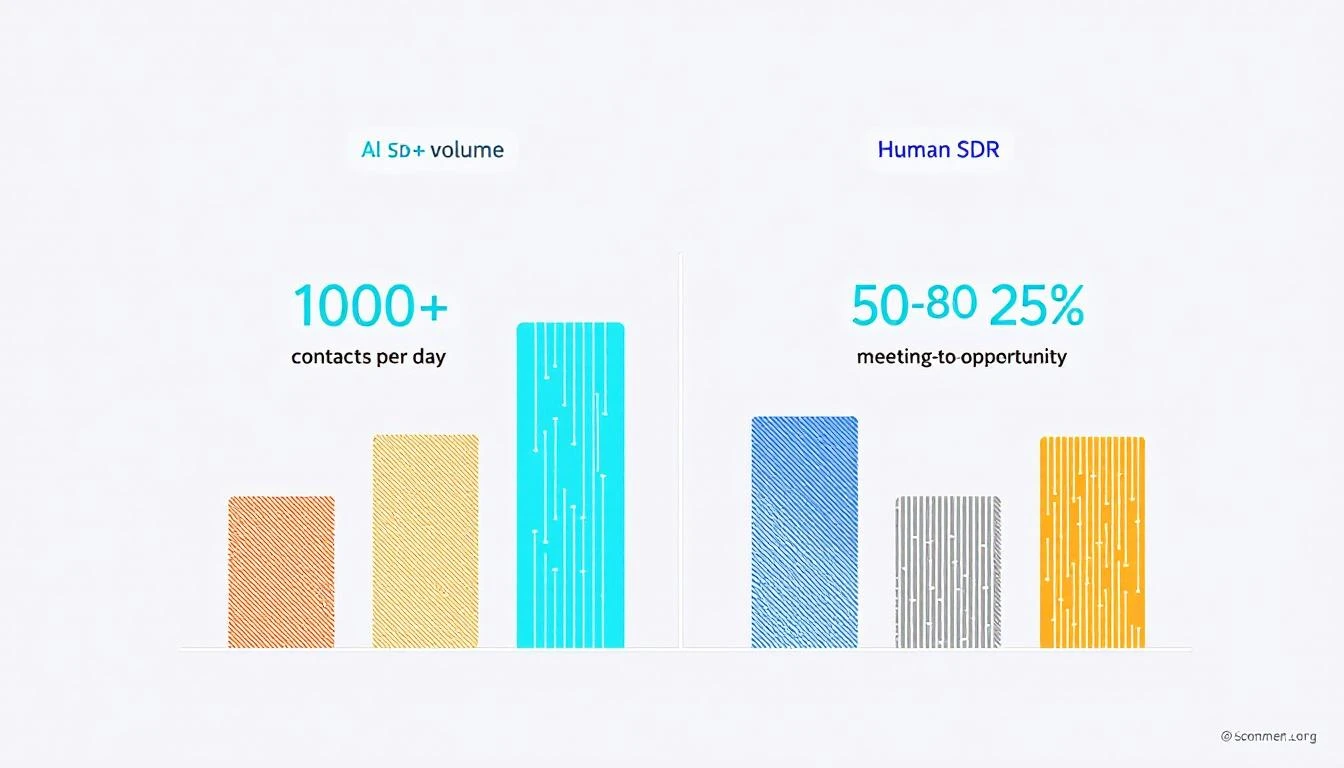
  • AI SDRs process 1,000+ contacts per day vs. 50-80 for a human rep (SuperAGI)
  • But AI SDRs convert meetings to opportunities at just 15% vs. 25% for human SDRs โ€” a 40% performance gap (SuperAGI)
  • Response to inbound: AI responds in seconds. First responder wins deals at 5x the rate of slower competitors
  • Follow-up: 44% of human reps give up after one attempt. AI never stops following up

So AI wins on volume and consistency but loses on conversion quality. The teams getting the best results? They're not choosing one or the other.
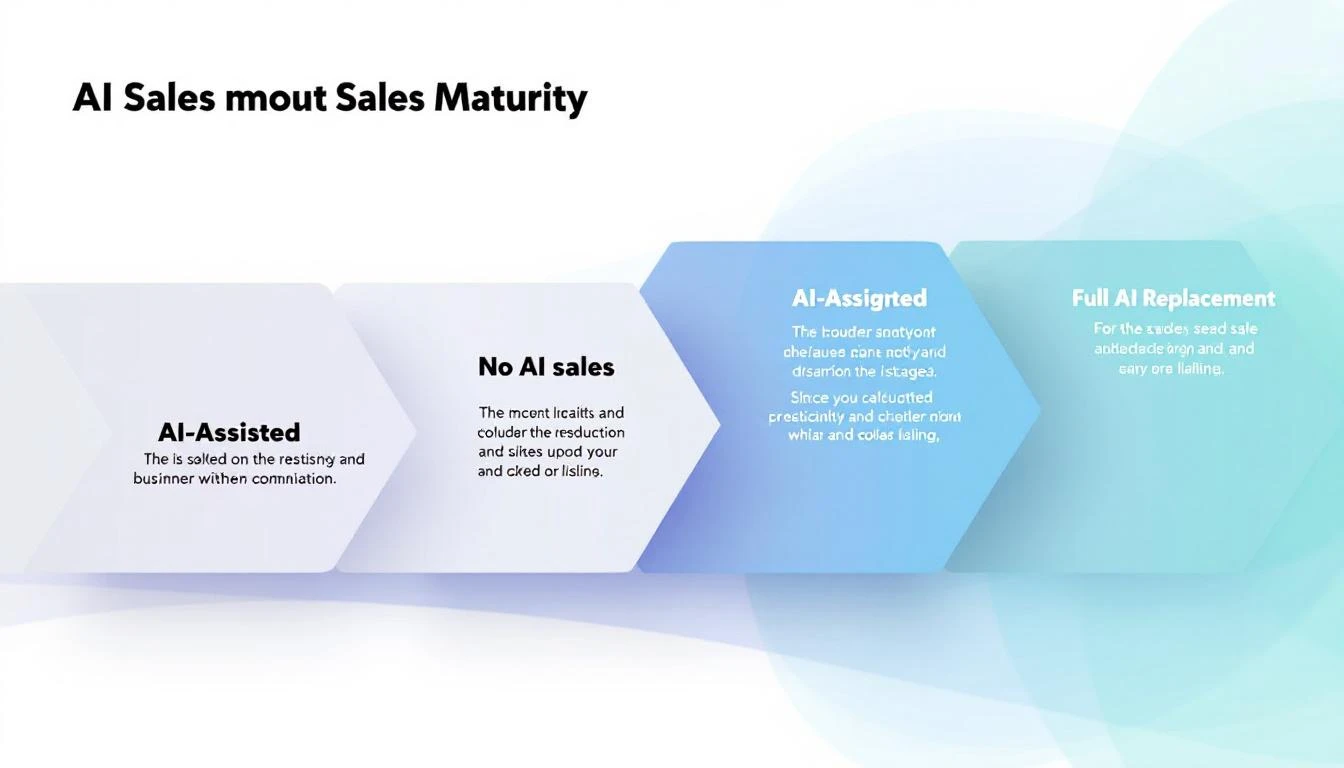
AI SDR maturity spectrum in 2026

The Winning Formula: Augmentation Beats Replacementโ€‹

Across every study we analyzed, one pattern emerges consistently: AI-augmented teams outperform both fully automated and fully manual teams.

The adoption spectrum breaks down like this:

Approach% of TeamsPerformance
Full AI replacement22%High volume, lower quality
AI-augmented (human + AI)~55%Highest overall performance
AI-assisted (copilot only)~15%Moderate improvement
No AI~8%Falling behind

Source: Autobound AI SDR Buying Guide 2026, cross-referenced with Salesforce and Topo.io data

The augmented model works because it pairs AI's strengths with human strengths:

Where AI excels (let it run):

  • Prospect identification and research (synthesizing SEC filings, hiring data, social activity in seconds vs. 30-60 minutes per prospect for humans)
  • Consistent follow-up cadences (AI never forgets, never has a bad day)
  • After-hours and surge inbound handling
  • Lead scoring and signal prioritization
  • Data enrichment and contact discovery

Where humans still win (keep them in the loop):

  • Complex objection handling
  • Relationship building and trust development
  • Nuanced multi-stakeholder negotiations
  • Creative problem-solving for unique prospect situations
  • Reading tone and emotional context

The SignalFire team put it perfectly after testing AI SDR tools in production: "The most successful sales organizations of the future won't be the ones that replace their SDRs with AI. They'll be the ones who empower them with it."

What's Actually Delivering ROI: The Signal-First Approachโ€‹

Here's where the data gets prescriptive. Not all AI sales investments deliver equal returns.

Tier 1: Proven ROI (Invest Now)โ€‹

Intent signals + lead prioritization

  • Conversion rates rise 20-30% when companies integrate predictive AI into their marketing and sales workflows (Sopro)
  • Only 24% of teams with intent data report exceptional ROI โ€” the difference is activation quality, not data quality (Autobound)
  • Signal-based prospecting generates 5.4x more pipeline with 33% fewer calls (from our prior signal quality analysis)

AI-powered research and personalization

  • AI research agents that surface job changes, funding events, and buying signals allow SDRs to write genuinely relevant outreach โ€” not template spam
  • This is where the highest-performing AI-augmented teams invest first: give humans better information, not better email templates

Chatbots for inbound qualification

  • The most straightforward and valuable use case according to multiple studies
  • Responds to every inbound lead instantly, qualifies, and books meetings 24/7
  • Some teams report 25-30% uplift in conversion just from better lead qualification and scoring

Tier 2: Promising But Conditional (Pilot Carefully)โ€‹

AI-generated email sequences

  • Volume is up. Deliverability is down. The inbox is a battleground.
  • Generic mass-personalized emails (name swap + company swap) get deleted immediately
  • What works: AI that researches THEN personalizes, not AI that templates at scale
  • Rule of thumb: if the AI writes the email AND sends it without human review, expect lower quality meetings

AI cold calling / voice agents

  • Latency and robotic feel remain issues
  • The winning pattern: AI makes the dial, AI qualifies interest, then transfers to a human immediately upon positive signal
  • Legal risks (TCPA, consent, autodialer definitions) remain significant

Tier 3: Overhyped (Proceed With Caution)โ€‹

Full SDR replacement

  • The 50-70% churn rate tells you everything
  • The 40% meeting-to-opportunity quality gap means you're trading SDR salary for lower-quality pipeline
  • Works only for very specific use cases: high-volume, low-ACV, simple sales motions

AI forecasting as a standalone tool

  • Garbage in, garbage out. AI forecasting is only as good as your CRM hygiene
  • Most teams don't have clean enough data to make AI forecasting meaningful
  • Better to fix pipeline stage definitions first, then add AI on top
AI vs human SDR performance comparison 2026

The ERP Problem Nobody Talks Aboutโ€‹

Deloitte's research surfaced a finding that most AI sales articles completely ignore.

87% of B2B suppliers are currently upgrading, preparing to begin, or planning ERP modernization within the next year. These projects are multi-million-dollar, multi-year initiatives that absorb the IT bandwidth that AI projects need.

As Deloitte's Paul do Forno noted: "They literally don't have the time. They need to get through the ERP running their business."

This means even when sales leaders want to deploy sophisticated AI, internal IT constraints are the real bottleneck โ€” not budget, not skepticism, not technology readiness. The suppliers pulling ahead are the ones who pair AI deployment with (not after) their ERP modernization, building tighter front-to-back integration.

For sales teams at mid-market companies: don't wait for IT to finish the ERP migration before starting your AI pilot. Choose tools that sit alongside your existing stack rather than requiring deep integration. Start with standalone signal tools and AI research assistants that don't need CRM integration to deliver value.

The Conversion Math Most Teams Get Wrongโ€‹

Here's a framework from the data that most sales leaders miss.

The median B2B conversion rate across all industries is 2.9%, with most falling between 2.0% and 5.0% (Martal Group). But the real bottleneck isn't top-of-funnel โ€” it's the middle.

MQL-to-SQL conversion: only ~15% of marketing-qualified leads convert to sales-qualified leads.

This means pouring more AI-generated leads into the top of your funnel without fixing the qualification gap just creates more waste. The highest-ROI AI investment for most teams isn't generating more leads โ€” it's better qualifying the leads you already have.

This is where signal-based selling changes the equation:

  1. Visitor identification tells you WHO is on your site
  2. Intent signals tell you WHAT they care about
  3. A daily playbook tells your SDR exactly WHAT TO DO about it

Most AI sales tools give you step 1 and maybe step 2. Very few connect the signal to the action. That connection is where the 20-30% conversion lift actually comes from.

What to Do Monday Morningโ€‹

Based on our meta-analysis, here's the priority stack for sales leaders who want to be on the winning side of the AI divide:

If you're spending nothing on AI sales tools:

  1. Start with an AI chatbot for your website (instant ROI, low risk)
  2. Add a signal/intent tool to prioritize your existing pipeline
  3. Use AI research tools to enrich prospect profiles before outreach

If you're already using AI but not seeing results:

  1. Stop measuring emails sent. Start measuring meetings booked and pipeline generated
  2. Move from full automation to human-in-the-loop augmentation
  3. Invest in signal quality over outreach volume
  4. Fix your MQL-to-SQL conversion gap before adding more top-of-funnel

If you're seeing good results and want to scale:

  1. Build a daily SDR playbook that converts signals into specific next actions
  2. Layer first-party intent (website visitors, chatbot conversations) with third-party signals
  3. Consolidate your tool stack โ€” the average SDR uses 7-12 tools, but the best teams use 3-4 integrated ones

The Bottom Lineโ€‹

AI in B2B sales isn't hype โ€” the 17-point revenue growth gap between AI-enabled and non-AI teams is real and widening. But how you deploy AI matters more than whether you deploy it.

The data is clear:

  • Augmentation beats replacement. Human + AI outperforms AI-only and human-only.
  • Signal quality beats outreach volume. Better leads beat more leads, every time.
  • Implementation quality is the variable. The technology works. The question is whether your team can operationalize it.
  • Start with signals, not sequences. Know who's buying before you decide what to send.

The teams winning in 2026 aren't the ones with the most sophisticated AI. They're the ones using AI to put the right signal in front of the right rep at the right time โ€” and then letting the human do what humans do best.


Want to see signal-based selling in action? MarketBetter turns intent signals into a daily SDR playbook that tells your team exactly who to contact, how to reach them, and what to say. Book a demo โ†’


Sourcesโ€‹

  1. Salesforce, State of Sales 2026
  2. Deloitte Digital, B2B Supplier Digital Maturity Study (Feb 2026)
  3. Martal Group, B2B Sales Statistics and Benchmarks 2026
  4. Sopro, 75 Statistics About AI in Sales and Marketing (2025)
  5. MarketsandMarkets, AI SDR Market Report (Aug 2025)
  6. Gartner, Strategic Predictions for 2026
  7. McKinsey, AI in Sales Performance (2025)
  8. HubSpot, State of AI in Sales (2025)
  9. SuperAGI, AI vs Traditional SDRs Performance Analysis
  10. Autobound, AI SDR Buying Guide 2026
  11. UserGems, Are AI SDRs Worth It? (2025)
  12. SignalFire, Expert Picks: AI SDR Tools (2026)
  13. Landbase, 35 B2B Sales Statistics (2026)
  14. Topo.io, AI SDR Adoption Survey (2025)
  15. Forrester, B2B Buyer Behavior (2026)
  16. Digital Commerce 360 / Deloitte Digital (Feb 2026)
  17. MarketsandMarkets / Fortune Business Insights projections
  18. Salesmate, AI Agent Adoption Statistics by Industry (2026)
  19. PwC, 2026 AI Business Predictions
  20. Netguru, AI Adoption Statistics (2025)

Is Outbound Dead in 2026? What 14 Studies and 170K+ Data Points Actually Say

ยท 10 min read
MarketBetter Team
Content Team, marketbetter.ai

Every quarter, someone on LinkedIn declares outbound dead. Again.

And every quarter, the same teams running signal-based outbound quietly book 15+ meetings a month while the "outbound is dead" crowd wonders why their inbound funnel can't keep up.

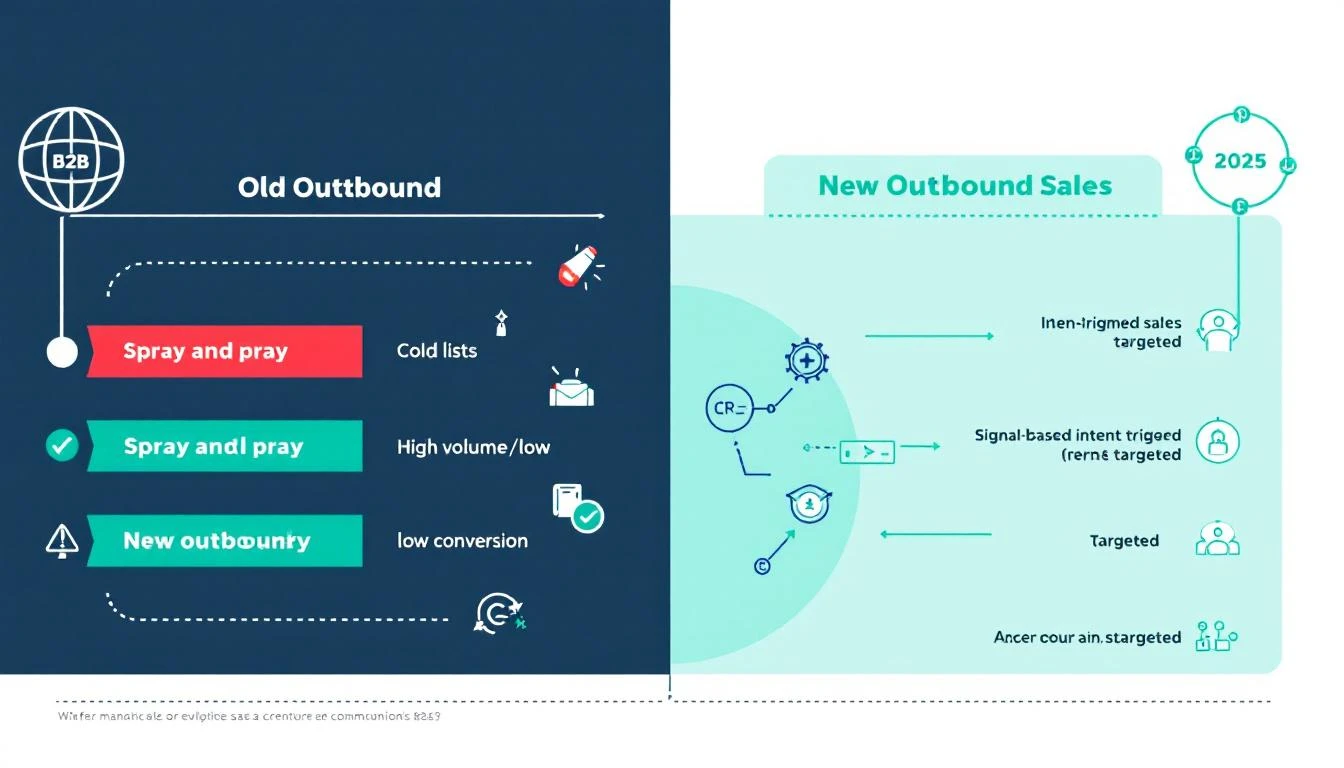
Here's the thing: they're both right. The old outbound โ€” spray-and-pray cold emails to purchased lists, generic sequences blasted at 5,000 contacts a week โ€” that outbound is dying. The numbers are brutal and getting worse.

But outbound itself? The motion of proactively reaching out to people who are likely to buy? That's never been more effective โ€” if you know who to reach, when to reach them, and what to say.

We pulled data from 14 major B2B sales studies published between 2024 and 2026, covering 170,000+ leads, 939 companies, and millions of sales activities. Here's what the numbers actually say.

The evolution of B2B outbound: spray-and-pray vs. signal-based selling

The Case Against Outbound (And Why It's Misleading)โ€‹

Let's start with the numbers that fuel the "outbound is dead" narrative. They're real, and they're ugly:

  • 91% of cold outreach emails get zero response (Backlinko, 2025)
  • Cold email reply rates hover at 1โ€“5% for most campaigns (SoPro, 2026; Mailshake, 2026)
  • Cold outreach conversion rates sit at 0.2โ€“2% from contact to customer (Martal Group, 2025)
  • 83.4% of SDRs fail to consistently hit quota (SalesSo, 2025)
  • 52% of outbound marketers say their efforts are "ineffective" (HubSpot, via SPOTIO 2026)

If you stopped here, you'd conclude outbound is a money pit. And for teams doing outbound the 2019 way โ€” buying lists, writing generic templates, and hoping for the best โ€” it absolutely is.

But the data tells a much more interesting story when you separate random outbound from signal-based outbound.

The Data That Proves Outbound Is Evolving, Not Dyingโ€‹

1. Buyers Still Want to Hear From Sellers (When It's Relevant)โ€‹

The loudest stat against outbound comes from buyer surveys. But the actual surveys tell the opposite story:

  • 82% of buyers accept meetings initiated through cold calls (RAIN Group, via Leads at Scale, 2026)
  • 81% of decision-makers engage with cold outreach when it's tailored to their company or context (SoPro Buyer Intelligence Report, 2026)
  • 79% of decision-makers reply to cold outreach when it's personalized and relevant (SoPro, 2026)

The pattern is clear. Buyers aren't rejecting outbound. They're rejecting irrelevant outbound. There's a massive difference.

2. Personalization Doubles Response Ratesโ€‹

Generic emails get generic results. The data shows exactly how much personalization matters:

  • Advanced personalization doubles cold email response rates โ€” 18% vs. 9% for generic (SoPro, 2026)
  • 89% of sales teams see positive ROI when using personalization in cold email campaigns (SoPro, 2026)
  • Emails referencing a specific trigger event (new hire, funding round, tech adoption) see 3x higher reply rates than standard personalization (name + company)

This isn't about {first_name} merge fields. It's about knowing that a prospect's company just visited your pricing page, that their competitor signed with you last month, or that they posted about the exact problem you solve.

3. Multichannel Outreach Crushes Single-Channel by 287%โ€‹

The single most important stat in modern outbound:

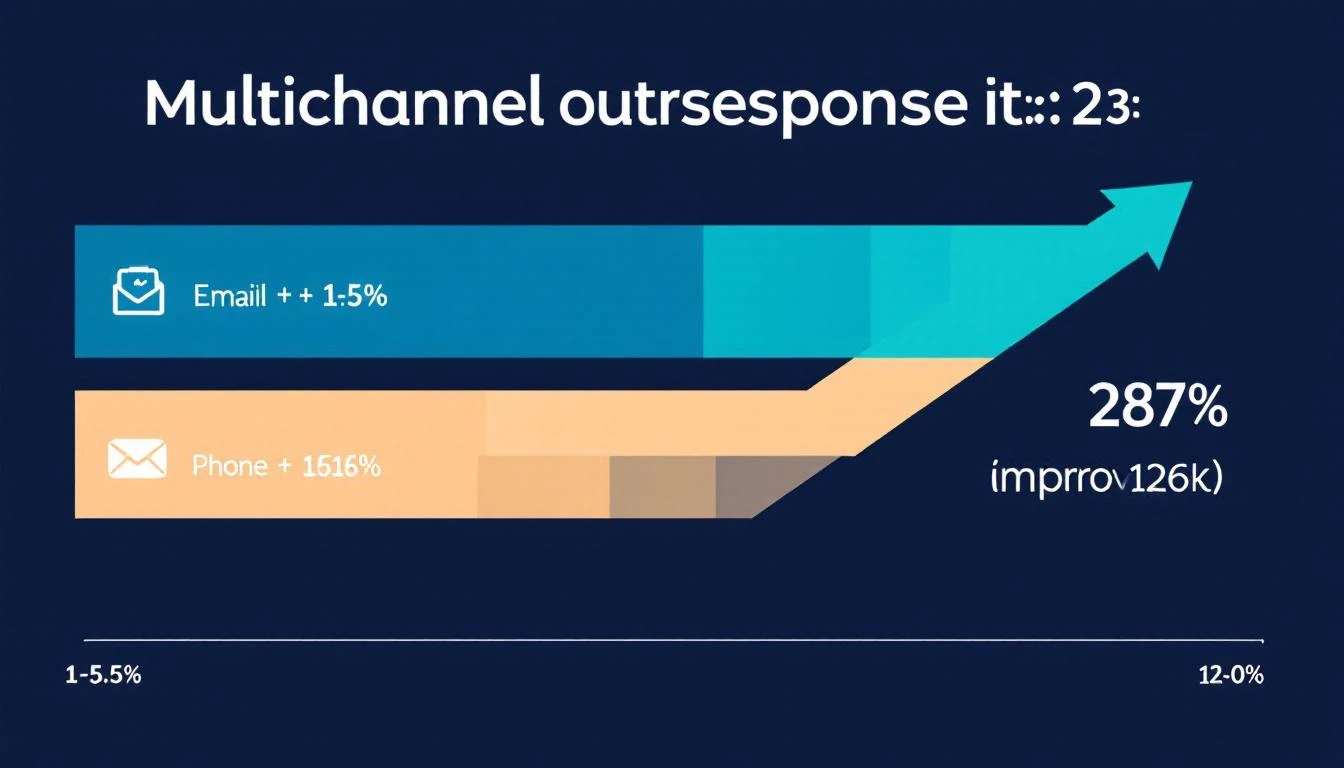
Outreach using email, phone, and LinkedIn together increases response rates by 287% compared to single-channel efforts. โ€” Martal Group, 2025

Multichannel outreach response rate comparison: single vs. multi-channel

Here's the breakdown from Optifai's study of 939 B2B SaaS companies:

ChannelConversion to Meeting
Cold call only2.0โ€“3.5%
Cold email only0.8โ€“2.0%
LinkedIn DM only2.0โ€“4.5%
Multi-touch sequence4.0โ€“7.0%

Multi-touch sequences convert at 2โ€“3x any single channel. Yet most SDR teams still run email-only or phone-only motions because their tools don't coordinate across channels.

4. Top SDRs Still Book 12โ€“15 Meetings Per Monthโ€‹

Despite the "outbound is dead" narrative, top-quartile SDRs consistently generate 12โ€“15 qualified meetings per month. The median sits at 8โ€“10. Elite performers (top 10%) hit 18+ meetings monthly (Optifai Pipeline Study, 2026; N=939).

The gap between top and bottom performers has never been wider:

Performance TierMonthly Meetings
Top 10% (elite)18+
Top 25%12โ€“15
Median8โ€“10
Bottom 25%4โ€“6

What separates them isn't effort. Bottom-quartile SDRs often make just as many calls. The difference is what they do before they pick up the phone: which accounts they target, what signals they act on, and how they sequence across channels.

5. Speed Still Wins โ€” But Almost Nobody Is Fast Enoughโ€‹

The data on speed-to-lead hasn't changed. What's changed is how few teams achieve it:

  • Responding within 5 minutes makes you 100x more likely to connect than waiting 30 minutes (InsideSales/XANT)
  • Average lead response time: 29+ hours (SalesSo, 2025)
  • 63% of leads never get a response at all (SalesSo, 2025)

The teams that respond fastest aren't doing it through heroic effort. They're using intent signals and automated triggers to surface the right leads the moment they show interest โ€” then routing them to reps with the context needed to have a real conversation.

What Actually Died: The Spray-and-Pray Modelโ€‹

The data points to a clear conclusion. Three things died:

1. Blind Cold Outreachโ€‹

Sending 5,000 emails to a purchased list with no intent data, no personalization beyond {company_name}, and no multi-channel follow-up. This approach now yields 0.2% conversion rates at best.

2. Volume-First Thinkingโ€‹

The old playbook: more dials = more meetings. But the data shows SDRs making 80+ calls/day with poor targeting often underperform those making 50 calls with better research (Optifai, 2026). Quality won the war against quantity.

3. Single-Channel Sequencesโ€‹

Email-only cadences. Phone-only blitzes. Any outreach strategy that doesn't coordinate across at least 2โ€“3 channels is leaving 287% response improvement on the table.

What Replaced It: Signal-Based Outboundโ€‹

The highest-performing SDR teams in 2026 share a common pattern. They don't start with a list. They start with a signal.

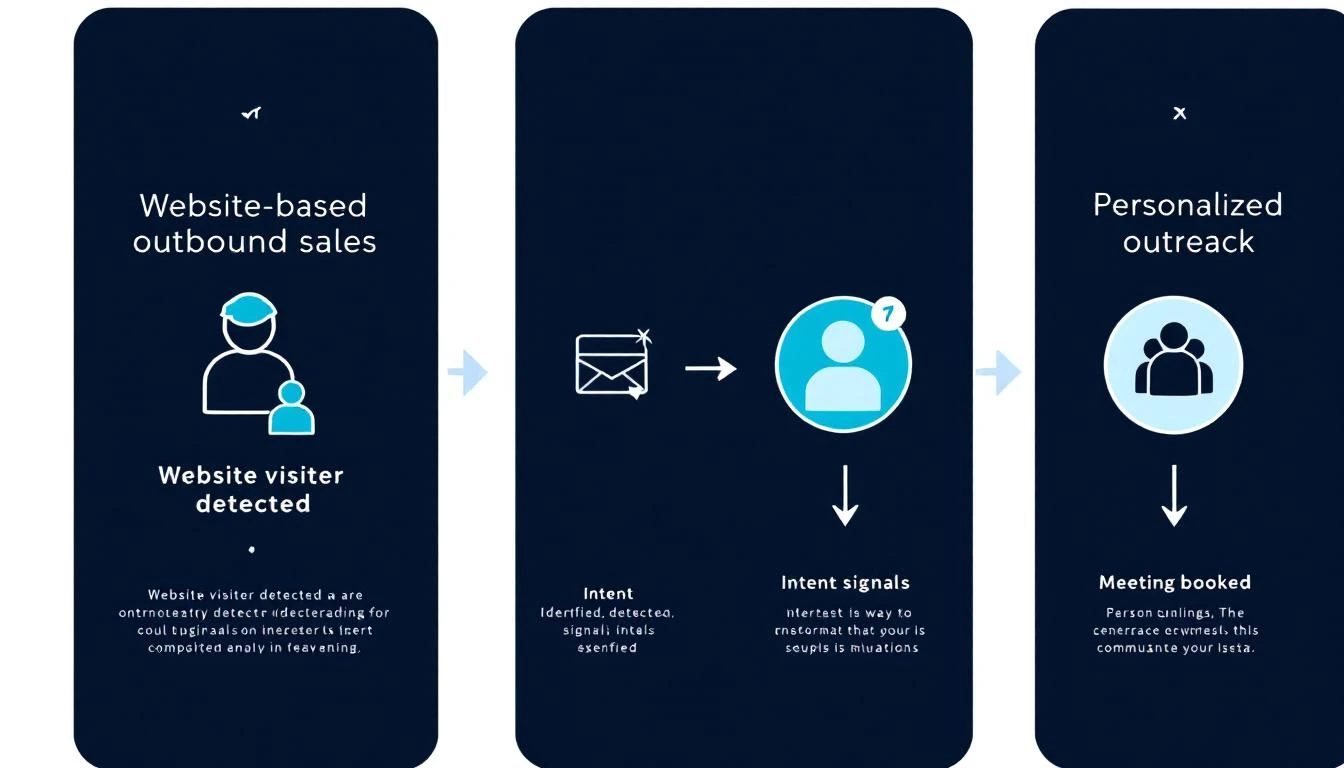
Signal-based outbound workflow: from detection to meeting

Here's the framework that the data supports:

Step 1: Detect the Signalโ€‹

Instead of cold lists, start with buying signals:

  • A target account visits your website (visitor identification)
  • A champion at a closed-lost account changes jobs
  • A prospect's company posts a role matching your use case
  • A competitor's customer complains on G2
  • A target account researches your category

Step 2: Enrich and Prioritizeโ€‹

Not all signals are equal. The teams booking 15+ meetings/month score and rank their signals:

  • Website visitor who hit the pricing page > homepage bounce
  • Return visitor (3rd visit this week) > first-time visitor
  • Decision-maker title > individual contributor
  • Signal from ICP company > outside-ICP company

Step 3: Orchestrate Multi-Channelโ€‹

Act on the signal within minutes across multiple channels:

  • Email personalized to the signal ("I noticed your team has been researching...")
  • Phone call with context (not a cold dial โ€” a warm call backed by data)
  • LinkedIn touch that references a relevant insight
  • AI chatbot that engages repeat visitors in real-time

Step 4: Let AI Handle the Repetition, Humans Handle the Conversationโ€‹

The data is clear: SDRs spend only 28โ€“39% of their time selling. The rest goes to research, CRM entry, and admin. The winning formula:

  • AI identifies and prioritizes signals automatically
  • AI drafts personalized outreach based on context
  • AI routes leads to the right rep with full context
  • Humans take the meetings, build relationships, and close

The Math: Why Signal-Based Outbound Is 4x More Efficientโ€‹

Let's run the numbers.

Traditional outbound (spray-and-pray):

  • 100 cold contacts per day
  • 2% reply rate = 2 replies
  • 20% of replies convert to meetings = 0.4 meetings/day
  • 20 working days = 8 meetings/month
  • Cost per meeting: $300โ€“$500 (factoring in fully loaded SDR costs)

Signal-based outbound:

  • 30 signal-triggered contacts per day (warm, intent-verified)
  • 8โ€“12% reply rate (personalized + multi-channel) = 3 replies
  • 40% of replies convert to meetings = 1.2 meetings/day
  • 20 working days = 24 meetings/month
  • Cost per meeting: $100โ€“$150

Same SDR. Same hours. 3x the meetings at 1/3 the cost. The difference is what happens before the outreach: signal detection, prioritization, and context.

The 5 Non-Negotiables for Outbound in 2026โ€‹

Based on the data across all 14 studies, here's what separates teams that are thriving from teams declaring outbound dead:

1. Visitor Identificationโ€‹

You can't respond to signals you can't see. Website visitor identification is no longer optional โ€” it's the foundation of modern outbound. Knowing which companies are researching you right now is the highest-intent signal available.

2. Multi-Channel Orchestrationโ€‹

Email + phone + LinkedIn in coordinated sequences. Not three separate efforts โ€” one orchestrated motion that adapts based on prospect engagement. The 287% improvement stat isn't theoretical. It's the baseline expectation.

3. Speed-to-Signal Responseโ€‹

Not just speed-to-lead. Speed-to-signal. When a target account hits your pricing page at 10:14 AM, the outreach should start by 10:20 AM. Manually? Impossible for most teams. Automated signal routing makes it systematic.

4. Daily Playbook (Not Just a Lead List)โ€‹

The SDR playbook isn't a static document anymore. It's a live, prioritized task list that updates throughout the day based on incoming signals. "Call these 15 accounts, in this order, because of these signals, saying these things." That's what eliminates the 60% of time SDRs waste on non-selling activities.

5. AI-Powered Personalization at Scaleโ€‹

Personalization doubles response rates, but doing it manually doesn't scale. AI SDR tools that draft contextual outreach based on real signals โ€” not just mail-merge tokens โ€” bridge the gap between personalization quality and outbound volume.

The Bottom Lineโ€‹

Outbound isn't dead. Lazy outbound is dead.

The data is unambiguous: buyers want to hear from sellers who understand their business, reference real context, and reach them through the right channel at the right time. That's not cold outreach โ€” that's signal-based selling.

The teams declaring outbound dead are the same teams still sending 5,000 generic emails a week and wondering why nobody replies. The teams quietly booking 15โ€“24 meetings a month are doing something fundamentally different: they're starting with signals, orchestrating across channels, and letting AI handle everything that isn't a human conversation.

The question isn't whether outbound works in 2026. The question is whether your outbound has evolved past 2019.


Ready to see what signal-based outbound looks like in practice? Book a demo โ†’ and we'll show you exactly which companies are visiting your site right now โ€” and what to do about it.

The SDR Productivity Crisis: 83% Miss Quota While Selling Just 2 Hours a Day [2026 Data]

ยท 11 min read
MarketBetter Team
Content Team, marketbetter.ai

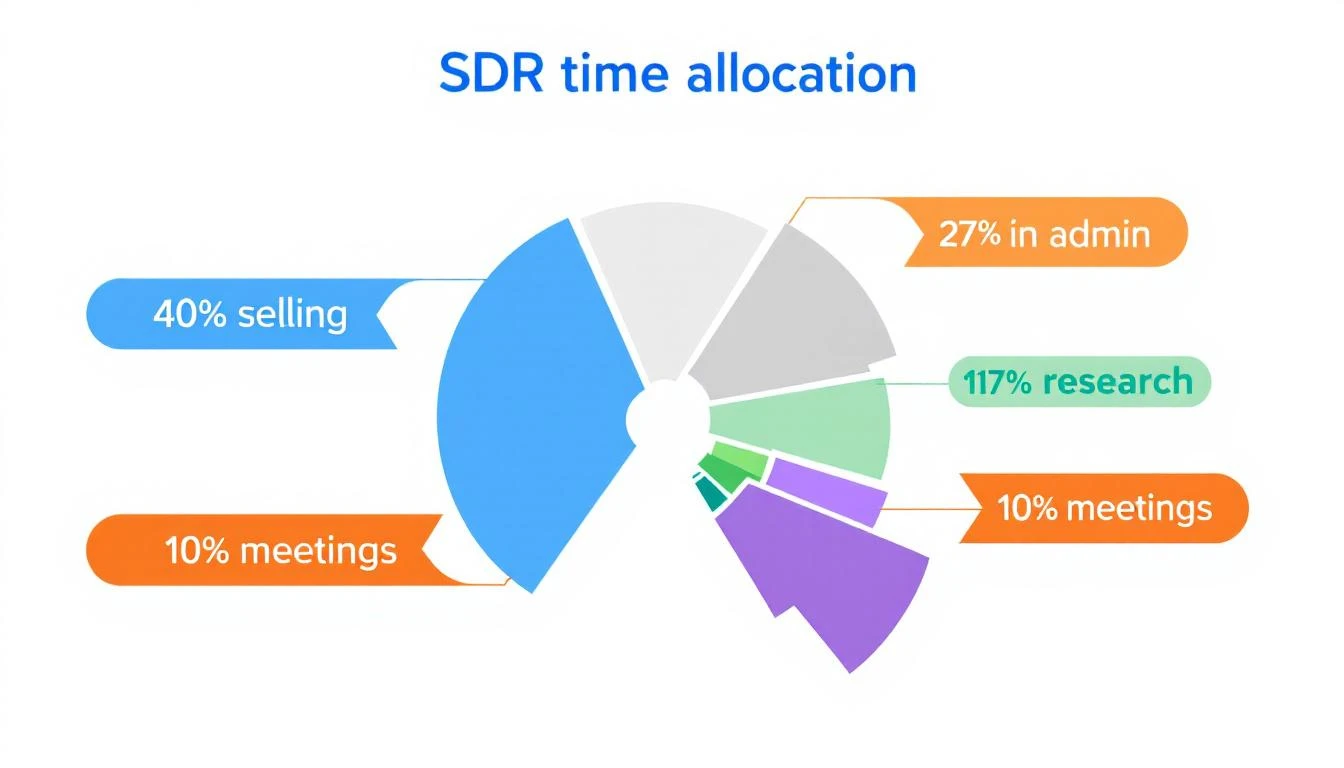
SDR time allocation breakdown showing only 40% spent on actual selling activities

Here's the number that should alarm every sales leader: 83.4% of SDRs fail to consistently hit quota. Not occasionally miss โ€” consistently fail.

That's not a talent problem. It's a systems problem.

We pulled data from seven major studies published in 2024โ€“2026 โ€” covering 170,000+ leads, 114 B2B companies, and millions of sales activities โ€” to understand why SDR productivity has gotten worse despite a decade of increasingly sophisticated sales technology. The findings reveal a structural crisis hiding in plain sight.

The average SDR sells for roughly two hours a day. The rest disappears into CRM entry, lead research, tool switching, internal meetings, and manual tasks that technology was supposed to eliminate. Meanwhile, the leads they do work sit unanswered for an average of 29 hours โ€” and 63% never get a response at all.

This isn't a collection of disconnected statistics. It's a picture of an industry-wide failure to solve the core SDR problem: too many tools, not enough direction.

The Data: Where SDR Time Actually Goesโ€‹

Salesforce's 2026 State of Sales report dropped the most sobering stat of the year: sales reps spend 60% of their time on non-selling tasks. That means in an 8-hour workday, your SDRs are actively selling for just over 3 hours.

But the reality may be worse. When you break down what "selling" means in practice โ€” and remove time spent on call prep, pre-call research, and post-call logging that most teams still count as "selling" โ€” the actual time spent in live conversations with prospects drops below 2 hours.

Here's how the average SDR day breaks down according to aggregated data from Salesforce, InsideSales, and Bridge Group reports:

Activity% of DayHours (8hr day)
Active selling (calls, emails, demos)40%3.2 hrs
CRM data entry and admin21%1.7 hrs
Lead research and preparation17%1.4 hrs
Internal meetings12%1.0 hrs
Tool switching and context changes10%0.8 hrs

The 10% lost to tool switching is particularly insidious because it's invisible. Nobody tracks how many times an SDR alt-tabs between their CRM, email tool, dialer, LinkedIn, enrichment platform, and sales engagement software. But research on context-switching costs suggests each switch carries a cognitive penalty of 15โ€“25 minutes to fully refocus.

If your SDRs use 7+ tools (the B2B average), they're paying that penalty dozens of times daily.

The Speed-to-Lead Collapseโ€‹

The data on lead response times tells a story of an industry moving backward.

Lead response time decay curve showing conversion probability dropping rapidly after 5 minutes

The Timeline of Declineโ€‹

StudyYearKey Finding
Harvard Business Review201142-hour average response time
Velocify2016Responding within 1 minute = 391% higher conversion
InsideSales2021Only 0.1% of companies respond within 5 minutes
RevenueHero202463% of companies never respond; 29+ hour average
Workato202599%+ fail the 5-minute test; 11h 54m average email

Read that timeline again. In 2011, the average response time was 42 hours. In 2024, it's 29 hours for the companies that respond at all โ€” but 63% don't respond at all. The non-response rate nearly tripled from 23% in 2011 to 63% in 2024.

More tools. More automation. Worse results.

Why It Matters: The Revenue Mathโ€‹

The conversion impact is not linear. It's a cliff.

  • Within 1 minute: 391% higher conversion (Velocify)
  • Within 5 minutes: 9x more likely to convert (InsideSales)
  • Within 1 hour: 7x higher qualification rate vs. waiting longer (HBR)
  • After 24 hours: You're cold-calling someone who's already moved on

And here's the stat that should end every debate about speed to lead: 78% of buyers purchase from the first company that responds. Not the best product. Not the cheapest option. The first one to show up.

When your average response time is 29 hours, you're not competing for the deal. You're already out of it.

The Hidden Bottleneck Nobody Blamesโ€‹

Here's what most teams miss. The Workato study broke response time into two components:

Lead Response Time = Lead Processing Time + Rep Response Time

Most companies blame slow reps. The data shows the opposite. The average SDR responds within minutes of seeing a lead in their queue. But the lead takes hours to get routed to them.

The processing pipeline โ€” enrichment, lead-to-account matching, territory assignment, routing rules, round-robin logic โ€” is where deals go to die. The average personalized email response takes 11 hours and 54 minutes (Workato), and most of that delay is processing, not rep laziness.

You can't coach your way out of a broken routing system.

The Quota Attainment Crisisโ€‹

The headline number โ€” 83.4% of SDRs miss quota โ€” becomes less surprising when you see the underlying metrics:

  • Average meetings booked per month: 15 (Bridge Group)
  • Dials to connect: 18+ attempts per connection
  • Call-back rate: Under 1%
  • Cold email response rate: 1โ€“2%
  • Quality conversations per day: 3.6

That means your average SDR has fewer than 4 real conversations per day. To book 15 meetings from ~72 monthly connects, they need a 21% connect-to-meeting conversion rate. That's achievable for veterans. It's brutal for the 60% of SDRs in their first 12 months.

And tenure compounds the problem. Average SDR tenure is 6โ€“23 months. Just as someone becomes proficient, they promote out or leave. The team is perpetually in ramp mode.

What Top Performers Do Differentlyโ€‹

The data reveals a clear pattern separating the 16.6% who consistently hit quota:

1. They qualify ruthlessly. Companies with thorough qualification processes saw closing ratios jump from 11% to 40% (InsideSales). Top SDRs don't work more leads โ€” they work the right leads.

2. They use signal-based prioritization. Instead of working leads alphabetically or by age, elite SDRs prioritize by intent signals โ€” who's on the website right now, who just changed jobs, who's researching competitors.

3. They batch their day. The "Golden Hours / Platinum Hours" framework separates prime prospecting time (calls and outreach) from admin work. Top reps protect their selling time aggressively.

4. They hit 14.5% meaningful conversation rates with decision-makers โ€” nearly 4x the average โ€” through better targeting and personalization, not more volume.

The $2.7 Billion Waste Problemโ€‹

Let's put a dollar figure on this crisis.

B2B marketers spend over $4.6 billion annually on advertising to generate leads. An estimated $2.7 billion of that is wasted due to slow or nonexistent follow-up (Credofy). You're paying to generate demand and then letting it rot.

At the individual company level, the math is just as ugly. Consider a mid-market B2B company:

MetricValue
Monthly inbound leads200
Average deal value$15,000
Conversion rate (fast response)3%
Conversion rate (slow response)0.15%
Revenue lost monthly$8,550
Revenue lost annually$102,600

That's $100K+ per year lost โ€” not to bad marketing, not to a weak product, but to slow response. For most B2B companies, that's 1โ€“2 SDR salaries that could be funded by simply responding faster.

The AI Inflection Pointโ€‹

The good news: the industry is finally addressing this structurally, not just incrementally.

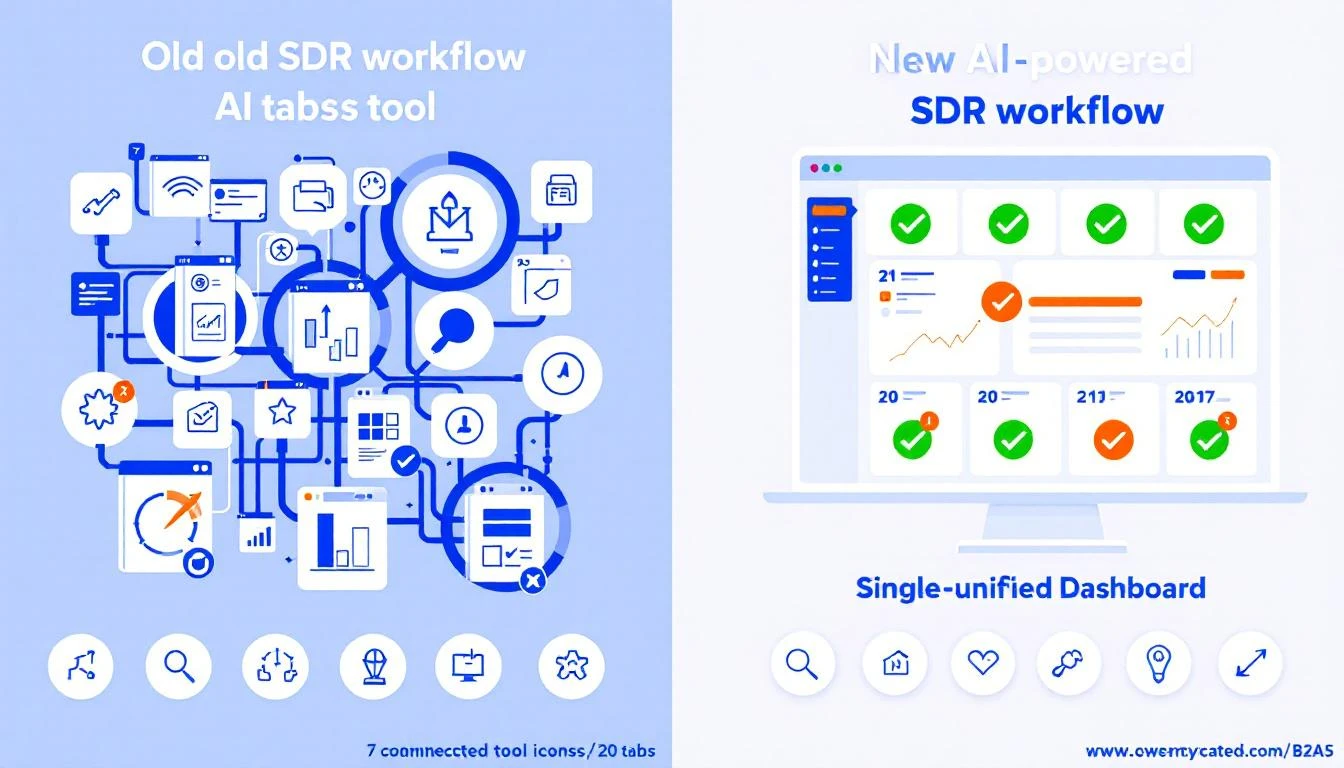
Comparison of the old SDR workflow with disconnected tools versus the new AI-powered unified workflow

AI adoption in sales has exploded from 39% to 81% in just two years (Salesforce). And the results are significant:

  • 46% productivity increase for teams using AI-powered sales tools
  • 20% increase in pipeline volume with AI implementation
  • 30% improvement in lead conversion rates
  • AI-powered personalization delivers 9.25% appointment rate โ€” better than most manual outreach

Salesforce reported that their own AI SDR agent created 3,200 opportunities in four months by working the low-score leads that human SDRs couldn't justify spending time on.

But here's the nuance the "AI will replace SDRs" crowd misses: AI doesn't replace selling. It replaces the 60% of the day that isn't selling.

The best implementations aren't replacing human SDRs with AI agents. They're using AI to:

  1. Eliminate processing delay โ€” Route, enrich, and prioritize leads in seconds, not hours
  2. Kill the research tax โ€” Pre-populate account context so reps don't spend 17% of their day Googling prospects
  3. Automate admin โ€” CRM updates, activity logging, and follow-up scheduling happen automatically
  4. Provide daily direction โ€” Instead of "here are your 200 leads, figure it out," AI tells the SDR exactly who to call, what to say, and why now

This is the difference between an AI that replaces the SDR and an AI that makes the SDR 3x more effective. The former is a race to commoditized outreach. The latter is how you win.

The Consolidation Imperativeโ€‹

The average B2B sales team uses 7โ€“12 tools across prospecting, enrichment, engagement, dialing, and analytics. At $1,500โ€“$4,000 per user per month, that's an enormous expense delivering a 40% selling rate and 29-hour response times.

The answer isn't another tool. It's fewer tools that do more.

Organizations with well-integrated enablement tech stacks are 42% more likely to boost sales productivity (Highspot). Integration isn't a nice-to-have. It's the difference between 3-hour and 6-hour selling days.

What does the right consolidated stack look like?

  • Signal layer: Website visitor identification, intent data, buying signals in one view
  • Enrichment layer: Contact data, company data, and champion tracking without manual lookups
  • Execution layer: Email, dialer, and multi-channel outreach from one interface
  • Intelligence layer: AI that tells the SDR what to do next โ€” not just shows data and makes them figure it out

This is what "from 20 tabs to one task list" actually means in practice.

What to Do About Itโ€‹

If you're a sales leader reading this data and recognizing your own team, here's the playbook:

1. Audit Your True Selling Timeโ€‹

Have each SDR log their actual activities for one week. Not what the CRM says โ€” what they actually did. You'll likely find selling time closer to 2 hours than the 3.2 you assumed.

2. Measure Lead Processing Time Separatelyโ€‹

Break your response time into processing (system) and rep response (human). Fix the system first โ€” it's usually the bigger bottleneck and doesn't require behavior change.

3. Cut Your Stack, Don't Add To Itโ€‹

Every tool you add increases context-switching cost. Before buying tool #8, ask: can tool #3 do this if I configured it properly? Tool consolidation is the highest-ROI move in sales ops right now.

4. Move From Data Dashboards to Daily Playbooksโ€‹

Your SDRs don't need more data. They need direction. A daily prioritized task list โ€” who to call, what to say, and why today โ€” eliminates the 17% research tax and dramatically improves response times.

5. Adopt AI for the Non-Selling 60%, Not the Selling 40%โ€‹

The highest-impact AI use cases in sales aren't automated email blasts. They're lead routing in seconds instead of hours, automatic enrichment, CRM auto-updates, and intelligent prioritization. Keep humans on the conversations. Let AI handle everything else.

The Bottom Lineโ€‹

The SDR productivity crisis isn't caused by lazy reps. It's caused by:

  • Tool sprawl that eats 10%+ of every day in context switching
  • Processing delays that turn hot leads cold before reps ever see them
  • Data overload without direction โ€” dashboards instead of playbooks
  • Constant ramp from 6โ€“23 month average tenure

The teams solving this aren't buying more tools. They're consolidating into platforms that combine signals, enrichment, and execution into a single daily SDR workflow โ€” and using AI to eliminate the 60% of the day that was never selling to begin with.

The data is clear: the gap between top-performing SDR teams and everyone else is no longer effort. It's architecture.


Want to see what an AI-powered SDR workflow looks like in practice? Book a demo โ†’


Sourcesโ€‹

  • Salesforce State of Sales Report, 2026
  • RevenueHero Lead Response Study, 2024 (1,000+ companies)
  • Workato Lead Response Time Study, 2024โ€“2025 (114 B2B companies)
  • InsideSales.com Lead Response Study, 2021 (55M activities, 5.7M leads)
  • Harvard Business Review (Oldroyd, McElheran, Elkington), 2011 (15K leads)
  • Velocify Lead Response Analysis, 2016 (millions of records)
  • Highspot State of Sales Enablement Report, 2025
  • Bridge Group SDR Metrics and Compensation Report
  • Credofy B2B Lead Response Framework