
MarketBetter vs Outreach/Salesloft: Email Compliance Built In, Not Bolted On

Every sales engagement platform will tell you they handle compliance. What they actually mean is they added a settings page where an admin can toggle on an unsubscribe link, and they trust that every rep on the team leaves it enabled. That is the compliance model at Outreach and Salesloft in 2026 — and it is the reason the FTC fined Verkada $2.95 million last year for doing exactly what most B2B sales teams do every day: sending mass commercial email without proper opt-out handling.
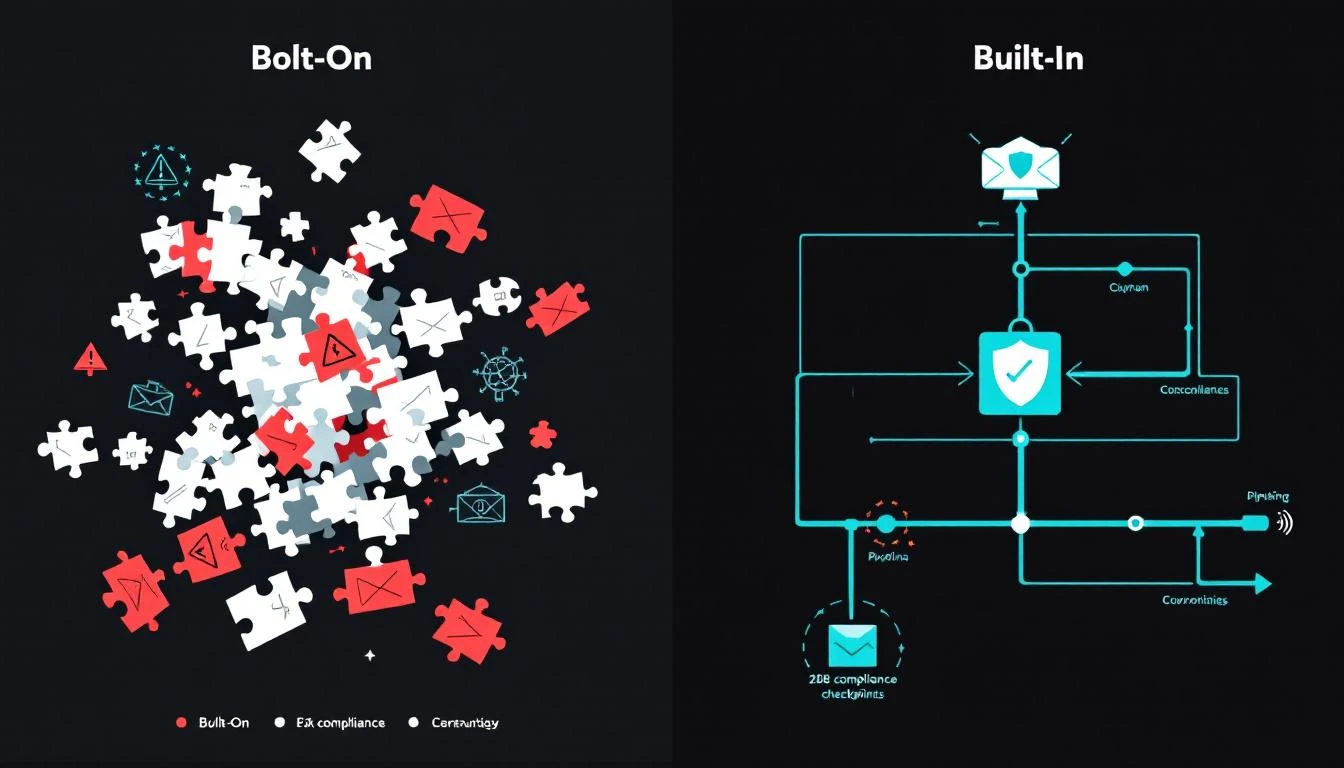
MarketBetter takes a different approach. Compliance is not a toggle. It is built into the sending pipeline itself.
The $53,088 Problem Nobody Talks About
The CAN-SPAM Act carries a penalty of $53,088 per non-compliant email as of January 2025 (FTC inflation-adjusted). Each individual email is a separate violation. A single sequence sent to 5,000 contacts without a compliant unsubscribe mechanism exposes your company to over $265 million in theoretical liability.
This is not hypothetical. The FTC's 2024 action against Verkada — a $2.95 million settlement — targeted a company that sent 30 million commercial emails over three years without functional unsubscribe links and ignored opt-out requests. The behavior pattern is indistinguishable from what happens when a sales team's compliance settings are misconfigured or when a rep bypasses the unsubscribe footer in a "quick one-off" email.
And CAN-SPAM makes no exception for B2B. The FTC's own compliance guide explicitly states the law covers business-to-business email equally.
How Outreach and Salesloft Handle Compliance
Both platforms offer compliance features. The problem is not that the features do not exist — it is that they require active configuration, ongoing vigilance, and manual cross-platform coordination.
Outreach ($110-$165/user/month)
- Global unsubscribe link auto-appended when enabled in Org Settings (not enabled by default for all use cases)
- Granular opt-out available: prospects can opt out of email while remaining callable
- Opted-out prospects blocked within Outreach only
- No native cross-platform suppression list — opt-outs tracked exclusively within Outreach, not synced to your CRM, marketing automation, or other sending tools
- No built-in email warm-up or domain health monitoring
- Unsubscribe links are "strongly recommended" in documentation but not enforced at the infrastructure level
Salesloft ($75-$165/user/month)
- Global opt-out link configurable in Communication Settings > Default Footer
- Admin chooses whether opt-out appears in all emails or only cadence emails (a decision that frequently goes wrong)
- One-click unsubscribe header support added for bulk senders
- No native email warm-up or domain health tools
- No built-in spam trap prevention or risky contact filtering
- No real-time DKIM/SPF/DMARC authentication monitoring
- No per-user spam rate analytics — problems flagged only after bounce rates exceed 2.8%
- Users report persistent issues with emails landing in spam due to automation patterns
The common thread: compliance is a configuration exercise. It works when someone sets it up correctly and nothing changes. The moment a new rep joins, an admin adjusts settings during a migration, or a prospect exists in multiple systems — gaps appear.
The Cross-Platform Suppression Problem
This is the biggest compliance gap in the sales engagement category, and neither Outreach nor Salesloft solves it natively.
When a prospect clicks "unsubscribe" in a Salesloft cadence, that opt-out is recorded in Salesloft. It is not automatically propagated to:
- Your CRM
- Your marketing automation platform (HubSpot, Marketo, Pardot)
- Your other sending tools (Outreach, direct Gmail, another ESP)
- Your event invitation system
- Any custom internal tools
The same prospect who unsubscribed from Salesloft can receive an email from your marketing team via HubSpot the next morning. That is a CAN-SPAM violation. And it happens constantly because suppression lists are siloed by default.
Building a centralized global suppression list requires custom integration work, third-party middleware, or discipline that breaks down at scale. It is the kind of problem that only surfaces when a complaint arrives — or when the FTC does.
What MarketBetter Does Differently
MarketBetter's compliance system operates at the infrastructure level, not the settings level. The difference matters in three specific areas.
1. Automatic Unsubscribe Link Injection
Every outbound email sent through MarketBetter includes a compliant unsubscribe link. This is not a toggle that an admin can disable or a rep can accidentally skip. The link injection happens in the sending pipeline itself, before the email reaches the mail server. If the link is not present, the email does not send.
This approach eliminates the most common compliance failure: emails going out without an opt-out mechanism because someone forgot to enable a setting or created a template that bypassed the footer.
2. Keyword-Based Auto-Unsubscribe
When a prospect replies with "stop," "unsubscribe," "remove me," or similar keywords, MarketBetter automatically processes the opt-out. The prospect is suppressed immediately — no waiting for a rep to notice the reply, no manual processing, no "I thought the system handled that" conversations.
Outreach and Salesloft both require the prospect to click the unsubscribe link in the email footer. If a prospect replies with "please stop emailing me" instead of clicking the link, the opt-out depends on a rep reading that reply and manually updating the record. Under CAN-SPAM, the law requires honoring opt-out requests regardless of format, and Gmail and Yahoo now mandate processing within 48 hours. A reply sitting in a rep's inbox over a long weekend is a violation waiting to happen.
3. Centralized Recipient Suppression
MarketBetter maintains a single suppression list that applies across all sending channels, sequences, and team members. When a prospect opts out — whether by clicking the link, replying with a keyword, or being manually suppressed by an admin — that suppression is enforced everywhere, immediately.
This is the architectural difference that matters most. There is no scenario where one part of your team can email a prospect that another part suppressed. The suppression list is not a sync job that runs overnight. It is a real-time enforcement layer in the sending infrastructure.
4. Compliance Management UI
Admins get a dedicated interface to review suppression states, audit opt-out history, and manage compliance across the organization. This is not buried in a settings submenu — it is a first-class feature with audit trails, bulk management, and visibility into why each prospect was suppressed (link click, keyword reply, manual action, or bounce).
When a compliance audit arrives — and in 2026, with the FTC using AI to identify violations at scale, they arrive more frequently — having a single pane of glass that shows your complete suppression history is the difference between a clean audit and a months-long investigation.
The Gmail and Yahoo Factor
Google moved to full enforcement of RFC 8058 one-click unsubscribe requirements in November 2025. Non-compliant bulk email is now permanently rejected — not delayed, not deprioritized, but bounced. Microsoft followed in May 2025 with similar rules for Outlook.com, Hotmail, and Live.com domains, returning a hard 550 5.7.515 error for non-compliant mail.
For sales teams, the threshold question is critical. "Bulk sender" status triggers at 5,000+ emails per day to personal email accounts, and that count aggregates across your entire domain — subdomains included. A team of 50 SDRs each sending 100 emails per day from the same corporate domain hits that threshold easily.
MarketBetter's email delivery architecture includes RFC 8058 compliant List-Unsubscribe and List-Unsubscribe-Post headers on every outbound message. These headers enable the one-click unsubscribe button that Gmail and Yahoo now require, and they are injected automatically — not as an optional configuration.
The Real Cost of "Good Enough" Compliance
The pricing comparison is straightforward. Outreach runs $110-$165 per user per month. Salesloft ranges from $75-$165 per user per month. Both require additional third-party tools to fill compliance gaps:
- Email warm-up tool: $30-$100/month
- Domain health monitoring: $50-$200/month
- Cross-platform suppression middleware: Custom build or $200-$500/month
- Deliverability auditing: $100-$300/month
Layer those on top of your base platform cost and you are paying a premium for cobbled-together compliance that still depends on manual processes and correct configuration.
MarketBetter includes all of these compliance capabilities natively. The sending pipeline handles link injection, keyword processing, suppression enforcement, header compliance, and audit logging without additional tools or integration work.
Who This Matters For
If your team sends fewer than 50 emails a day and operates in a single platform, the bolt-on approach might hold. The settings page works when one person owns it and nothing changes.
But if you are scaling outbound operations, running multi-channel campaigns across email and LinkedIn, or adding SDRs who need to be productive on day one without a compliance training session — you need compliance that does not depend on human memory.
The FTC is not going to ask whether your admin had the right toggle enabled. They are going to look at whether every email included a functional unsubscribe mechanism, whether every opt-out was honored within the required window, and whether your suppression practices prevented re-contact. Those are infrastructure questions, not configuration questions.
Moving From Outreach or Salesloft
If you are currently on Outreach or Salesloft and your compliance setup relies on manual processes or third-party integrations, the migration path is designed to preserve your existing sequences, templates, and prospect data while upgrading your compliance infrastructure.
The transition includes importing your existing suppression lists into MarketBetter's centralized system — so day one on the new platform starts with full opt-out coverage, not a blank slate.
Your email deliverability improves as a side effect. When compliance is handled at the infrastructure level, your domain reputation benefits from consistent unsubscribe handling, proper headers, and immediate suppression enforcement. Fewer spam complaints mean better inbox placement, which means your outreach actually gets read.
MarketBetter is the sales engagement platform where compliance is not a feature you enable — it is a guarantee that ships with every email. If your current stack requires you to trust that someone configured the settings correctly, that is not compliance. That is hope. See how it works →