13 posts tagged with "strategy"

View All Tags

Your Outbound Emails Are Generic. Here's How AI Context Changes Everything

ยท 11 min read
MarketBetter Team
Content Team, marketbetter.ai

I need to say something that's going to upset a lot of people who sell email tools: the personalization in your outbound emails isn't personalization. It's cosmetic.

You're swapping {first_name} and {company_name} into templates and calling it personal. You're adding a line about their recent LinkedIn post that your AI scraped from their profile. You're referencing their job title and pretending that counts as relevance.

It doesn't. And your prospects know it.

Here's how I know: I get 40-60 cold emails a day. Every single one mentions my company. Most mention my title. A few reference a blog post I wrote. None of them โ€” literally zero โ€” demonstrate any understanding of why their product matters to my specific business situation.

That's the gap. Not "did you personalize?" but "did you personalize with context that matters?"

And that gap is where most outbound campaigns go to die.

AI analyzing prospect business context for personalized outreach

The Personalization Lieโ€‹

Let me show you what I mean. Here are two emails. One is "personalized" the way most tools do it. The other uses actual business context.

Email A (Standard Personalization):

Hi Adam,

I noticed MarketBetter is growing fast โ€” congrats! As a GTM leader, you probably deal with challenges around scaling your outbound. We help companies like yours increase reply rates by 3x with our AI email platform.

Would you be open to a quick 15-minute chat?

Email B (Contextual Personalization):

Adam โ€” I saw MarketBetter is building AI qualification into inbound scheduling. That's smart, but it creates an interesting challenge: the better your inbound gets, the more your outbound needs to keep pace with accounts that don't come to you first.

Most SDR teams in the sales-tech vertical are hitting the same wall โ€” visitor intent data generates leads faster than reps can research them. Your SDR playbook approach solves the prioritization piece, but the messaging side still requires manual research at scale.

We've been working with similar B2B platforms on closing that gap. Worth 15 minutes?

Same ask. Completely different signal. Email A says "I found your name in a database." Email B says "I understand your business well enough to connect my solution to your actual problem."

The difference isn't effort โ€” no human wrote Email B by hand for each prospect. The difference is context. Email B was generated by AI that actually understands what MarketBetter does, what challenges companies in our space face, and why the sender's product might be relevant to those specific challenges.

That's what AI context means. Not variable insertion. Intelligence.

Why Your "Personalization" Doesn't Workโ€‹

The data on outbound email effectiveness tells a clear story: personalized emails outperform generic ones by 2-3x on open rates and 5-6x on reply rates. But here's what the data doesn't clarify: what kind of personalization drives those results.

Most sales teams optimize for surface personalization:

  • First name and company name (table stakes โ€” not even personalization anymore)
  • Job title references
  • Recent social media activity
  • Company news mentions
  • Tech stack callouts

This is better than nothing, but it's observational, not contextual. You're telling the prospect what you noticed about them, not demonstrating what you understand about their business.

B2B buyers in 2026 are drowning in outreach. The average decision-maker receives 120+ sales emails per month. They can spot a mail merge from the first line. The only emails that break through make the prospect think: "This person actually gets my problem."

That requires context. Not data โ€” context.

Data vs. Context: Why the Distinction Mattersโ€‹

Data is: "This company uses Salesforce, has 200 employees, and is in the SaaS vertical."

Context is: "This mid-market SaaS company recently expanded to 200 employees, which means their sales team is probably going through growing pains โ€” new reps, inconsistent processes, and likely a CRM that's getting messy as they scale past the founder-led sales phase."

Data tells you what. Context tells you why they should care.

Every enrichment tool on the market gives you data. Company size, industry, tech stack, funding round, hiring trends. These are useful inputs. But they're not the output that makes a prospect reply.

The output โ€” the thing that makes someone stop scrolling and actually read your email โ€” is a message that connects the dots between their situation and your value proposition in a way that feels genuinely relevant.

This is what MarketBetter's AI context engine does. It doesn't just enrich prospect profiles with firmographic data. It generates actual business intelligence about each prospect โ€” industry challenges, technology implications, relevant use cases, competitive pressures โ€” and feeds that intelligence directly into outbound messaging.

The result is emails that read like someone spent 20 minutes researching the prospect. Except nobody did. The AI did it in seconds, and it did it for every single prospect in your outbound sequence.

How AI Context Actually Worksโ€‹

Let me walk through the mechanics without getting too deep in the weeds, because the what matters more than the how.

Profile Enrichment Beyond Firmographicsโ€‹

When a prospect enters your outbound pipeline, the AI doesn't just pull their job title and company size. It builds a contextual profile that includes:

  • Industry-specific challenges: What are the common pain points in this prospect's vertical? What trends are shaping their market? What regulatory pressures or competitive dynamics are relevant?
  • Tech stack implications: Not just "they use Salesforce" but "they're running Salesforce alongside three other tools, which suggests integration complexity and potential data fragmentation."
  • Business stage signals: Are they in growth mode? Consolidating? Expanding into new markets? These signals completely change which value proposition resonates.
  • Relevant use cases: Based on similar companies in the same space, what specific outcomes would be most compelling to this prospect?

This isn't a keyword lookup. It's AI synthesizing multiple data points into a narrative understanding of the prospect's business context.

From Context to Messageโ€‹

Once the AI has built a contextual profile, it informs the outbound messaging at every level:

  • Subject lines that reference the prospect's actual business challenge, not generic hooks
  • Opening lines that demonstrate understanding, not observation
  • Value propositions tailored to the prospect's specific situation, not your generic pitch
  • CTAs framed around the prospect's likely priorities, not your sales cadence

Every email in the sequence draws from the same contextual profile, so follow-ups build on the initial thread rather than repeating the same pitch with slightly different wording.

The Visitor Intelligence Layerโ€‹

Here's where it gets particularly powerful: MarketBetter's website visitor identification feeds directly into the enrichment engine.

Think about what this means. Before you ever send a cold email, you might already know that someone from the prospect's company has been visiting your website. You know which pages they looked at. You know what problems they were researching.

That visitor intelligence becomes part of the contextual profile. So when the AI generates outbound messaging, it can reference challenges that the prospect's company is actively researching โ€” not hypothetical pain points, but demonstrated interest.

The difference between "I think you might have this problem" and "I know your team is researching solutions for this problem" is enormous. And the prospect never knows how you knew. It just feels like you did your homework.

Spray-and-Pray vs. Contextual Outreach: A Side-by-Sideโ€‹

Let me make this concrete with a comparison across a 1,000-prospect campaign:

The Spray-and-Pray Approachโ€‹

  • Prospect research: Zero. Firmographic filters only.
  • Message creation: One template with variable fields.
  • Personalization depth: Name, company, maybe title.
  • Time per prospect: ~0 seconds of human research.
  • Typical open rate: 15-25%.
  • Typical reply rate: 1-3%.
  • Meetings booked per 1,000: 5-15.
  • How it feels to prospects: Like every other sales email in their inbox.

The Contextual Outreach Approachโ€‹

  • Prospect research: AI-generated contextual profile per prospect.
  • Message creation: AI-generated messaging informed by business context.
  • Personalization depth: Industry challenges, tech implications, relevant use cases, visitor signals.
  • Time per prospect: ~0 seconds of human research (AI handles it).
  • Typical open rate: 35-50%.
  • Typical reply rate: 8-15%.
  • Meetings booked per 1,000: 40-75.
  • How it feels to prospects: Like someone who understands their business.

Same number of prospects. Same amount of human effort. Radically different results.

The unlock isn't working harder. It's giving your outbound engine the intelligence it needs to write messages that actually resonate.

The "Mail Merge With {company_name}" Trapโ€‹

Here's why I'm so emphatic about this: the entire outbound email industry has spent the last five years optimizing the wrong variable.

Tools got better at sending emails. Deliverability improved. Warmup protocols got smarter. Multi-inbox rotation reduced spam risk. Sending volume went up across the board.

But nobody fixed the message.

The result is that we can now deliver mediocre emails at massive scale with excellent inbox placement. We've perfected the art of being ignored efficiently.

The fix isn't sending more emails. It's sending better emails. And "better" means contextually intelligent.

What This Looks Like in Practiceโ€‹

Let me paint the picture for a typical day on a team using AI context:

8:00 AM: Your SDR opens their daily playbook. Fifty prospects are queued for outbound today.

8:01 AM: Every single prospect already has a contextual profile built by AI. The SDR doesn't need to Google the company, check LinkedIn, read their blog, or research their tech stack. That's all done.

8:05 AM: AI-generated email drafts are ready for each prospect. Not templates with variables โ€” actual messages that reference the prospect's industry challenges, their likely pain points based on their company profile, and relevant use cases from similar businesses.

8:10 AM: The SDR reviews, maybe tweaks a line or two, and sends. For 50 prospects, this takes 30 minutes instead of 4+ hours of manual research and writing.

By the end of the week, a single SDR has sent personalized, contextual outreach to 250 prospects. The quality of each message would take 15-20 minutes of manual research to match. That's 62+ hours of research compressed into zero human hours.

Scale that across a team of five, and you're talking about 300+ hours automated per week.

The Enrichment โ†’ Context โ†’ Message Pipelineโ€‹

What makes this possible is the integration between three capabilities that usually live in separate tools:

1. Visitor Intelligence โ†’ Know who's already showing interest before you reach out. Identify anonymous website visitors at the company level and feed that signal into your outbound targeting.

2. AI Enrichment โ†’ Transform raw firmographic data into genuine business intelligence. Not just "what company is this" but "what is this company dealing with right now."

3. Contextual Messaging โ†’ Use that intelligence to generate outreach that references the prospect's actual business situation, not generic pain points.

Most tools do one of these. Maybe two. The magic happens when all three feed into a single workflow, creating a complete prospect profile before the first touch.

Your prospect gets an email that feels like a warm introduction, not a cold outreach. They just know that someone finally sent them an email worth reading.

This Isn't About Replacing Your SDRsโ€‹

I want to be clear about something: AI context doesn't replace your sales reps. It makes them dramatically more effective.

Your best SDR โ€” the one who consistently outperforms the team โ€” already does contextual research intuitively. They Google the company. They read the prospect's LinkedIn posts. They check if the company was in the news recently. They look for trigger events. They craft messages that reference specific, relevant details.

The problem is that this takes time. A lot of time. Your best SDR can manually research maybe 15-20 prospects per day at that level of depth. AI context gives every rep on your team the research capability of your best performer โ€” at scale.

It's the difference between arming your team with muskets and arming them with precision rifles. Same soldiers. Same battlefield. Completely different outcomes.

The Bottom Lineโ€‹

Your outbound strategy is only as good as your message. And your message is only as good as your understanding of the prospect.

If your outbound emails could be sent to any prospect by swapping the company name, they're not personalized. They're templated. And your reply rates will reflect that.

AI context changes the equation. Every prospect gets a message that reflects genuine understanding of their business. Every email reads like a human spent 20 minutes researching the recipient. And your SDRs spend their time selling, not Googling.

The era of spray-and-pray is over. The era of contextual outreach is here. And the teams that figure this out first are going to eat everyone else's pipeline.

See how AI context transforms your outbound โ†’


Adam Grant leads GTM at MarketBetter, where he spends his time helping B2B sales teams send fewer, better emails โ€” and book more meetings because of it.
AI Pipeline Audits: What AI Gets Right About Sales Forecasting (and What It Misses)

ยท 11 min read
MarketBetter Team
Content Team, marketbetter.ai

Every quarter, the same ritual plays out in B2B sales organizations around the world.

The VP of Sales opens the CRM. Scrolls through the pipeline. Asks each rep to walk through their deals. Hears a lot of "this one's looking good" and "they said they'd get back to me next week" and "I think the champion is working it internally."

Then the forecast goes up to the board. And three months later, everyone discovers that half the pipeline was dead the whole time.

AI is supposed to fix this. And in some important ways, it does. But in other equally important ways, it creates a new set of problems that nobody's talking about yet.

I've spent the last several months studying how AI pipeline audit tools work โ€” from open source agent repos with "pipeline-health-check" modules to commercial products โ€” and I have a nuanced take. AI gets certain things genuinely right about pipeline management. It gets other things dangerously wrong. And the most effective approach is a middle ground that almost nobody is implementing well.

Let me walk you through all three.

What AI Gets Rightโ€‹

Let's start with the wins, because they're real.

1. Pattern Detection in Large Datasetsโ€‹

AI is superb at finding patterns across hundreds or thousands of deals that no human brain could track simultaneously.

A good AI pipeline audit can identify that your average enterprise deal closes in 67 days, but deals in the financial services vertical take 94 days โ€” and then flag the finserv deal that's been sitting at "discovery" stage for 45 days as potentially stalled, even though it's "only" halfway through a normal cycle.

It can detect that deals without a technical champion identified by day 20 close at 12% rates vs. 41% for deals where a champion is logged. It can notice that deals sourced by marketing convert 23% higher than outbound-sourced deals of the same size. It can spot that your team systematically overestimates close dates by an average of 18 days.

These are the kinds of insights that exist in CRM data but that no human โ€” not even an excellent VP of Sales โ€” can reliably extract through manual pipeline reviews.

2. Stale Deal Detectionโ€‹

This is table stakes, but AI does it better than any alternative.

Every CRM has deals that should be closed-lost but aren't. They sit there, inflating pipeline numbers, giving everyone false confidence. The rep hasn't sent an email in three weeks. There's no meeting on the calendar. The last note says "waiting on budget approval" โ€” from two months ago.

AI catches these instantly. It can apply multi-factor staleness detection: no activity in X days, no stakeholder engagement, no movement between stages, no new contacts added. And it can differentiate between "legitimately long sales cycle with quarterly check-ins" and "abandoned deal the rep forgot about."

3. Coverage Gap Analysisโ€‹

One of the most valuable pipeline audit capabilities is coverage analysis: do you have enough pipeline at each stage to hit your number, given historical conversion rates?

AI can calculate this dynamically. If your Stage 2 โ†’ Stage 3 conversion is 60%, and your Stage 3 โ†’ Closed Won is 40%, then you need $4.2M in Stage 2 to hit a $1M quarter. If you've got $2.8M, you have a $1.4M coverage gap โ€” and you need to know about it now, not during forecast week.

Good AI pipeline tools do this in real time, by segment, by rep, by territory. They don't just tell you "pipeline is light" โ€” they tell you exactly where the gap is and how much net-new pipeline you need to generate to close it.

4. Velocity Anomaly Detectionโ€‹

Every pipeline has a rhythm. Deals typically spend X days in each stage. When a deal spends significantly longer than average in a stage, something's wrong โ€” and AI is great at catching it.

More subtly, AI can detect velocity changes across the entire pipeline. If your average sales cycle just went from 52 days to 68 days over the last quarter, that's a leading indicator of a market shift, a competitive problem, or a messaging issue. By the time humans notice this in quarterly reviews, you've already lost a quarter of production.

5. Multi-Deal Correlationโ€‹

This is where AI gets genuinely creative. It can find correlations between deals that humans wouldn't naturally connect.

For example: three deals in the same industry, with the same competitor, all stalled at the same stage in the same month. That might be a coincidence. Or it might be that the competitor just released a new feature that's creating objections your team isn't equipped to handle. AI can surface this pattern. A human reviewing deals individually would miss it.

What AI Gets Wrongโ€‹

Now here's where things get interesting โ€” and where I diverge from the AI hype machine.

1. Relationship Contextโ€‹

The single biggest blind spot in AI pipeline analysis is relationship context.

AI reads CRM data. CRM data captures activities โ€” emails sent, calls logged, meetings held. What CRM data doesn't capture is the quality and depth of the relationship behind those activities.

A rep might have three logged calls with a prospect. AI sees "engagement: 3 calls, trending positive." What AI doesn't know is that the prospect's tone on the last call was hesitant, that they canceled the next meeting twice before rescheduling, or that the champion mentioned in passing that their CFO is "asking harder questions about new vendors."

These signals live in the rep's head. They're the difference between a deal at 70% probability and a deal at 30% probability. And no CRM logging protocol captures them, because they're qualitative, contextual, and often based on subconscious pattern matching that even the rep can't fully articulate.

2. Political Dynamicsโ€‹

Enterprise sales is political. Deals involve multiple stakeholders with competing agendas, budget battles, internal champions and detractors, reorgs that shift power, and executives who approve things for reasons that have nothing to do with ROI.

AI can see that you've engaged 4 of 6 stakeholders in a buying committee. It can't see that stakeholder #5 โ€” the one you haven't reached โ€” actively torpedoed the last three vendor selections and is politically aligned with a competitor's champion inside the organization.

Political dynamics are the #1 reason enterprise deals die, and they're almost entirely invisible to AI. They live in conversation subtext, LinkedIn relationship maps that require human interpretation, and institutional knowledge that only comes from years of selling into a specific industry.

3. Timing Judgmentโ€‹

AI can flag a deal as "stalled based on velocity metrics." But it can't judge whether the stall is a problem or a feature.

Some deals legitimately go quiet during budget season. Some deals pause because the champion is on parental leave and will come back energized. Some deals slow down because the prospect is going through a merger and all purchasing is frozen for 90 days โ€” but when it unfreezes, you're the frontrunner because you waited patiently instead of pushing.

Timing judgment requires understanding the prospect's business context, industry cycles, organizational rhythms, and personal circumstances. AI flags the anomaly. Humans judge its meaning.

4. Competitive Intelligenceโ€‹

AI can tell you that a competitor was mentioned in a call transcript. What it can't tell you is whether the prospect is using the competitor as leverage to negotiate a better price (good sign โ€” they want to buy from you) or genuinely evaluating an alternative (bad sign โ€” you might lose).

The distinction is often clear to an experienced rep who reads tone, asks follow-up questions, and understands the prospect's buying history. It's opaque to an AI analyzing text patterns.

5. The "Garbage In" Problemโ€‹

Every AI pipeline audit is only as good as the CRM data it analyzes. And let's be honest: CRM data quality in most B2B organizations is terrible.

Reps log calls inconsistently. Deal amounts are guesses. Stage definitions are subjective. Close dates are aspirational. Contact roles are wrong. Activity data is incomplete because reps use personal email and phone for key conversations.

AI analyzing bad data produces confident-sounding bad analysis. And confident-sounding bad analysis is more dangerous than no analysis at all, because it creates the illusion of precision where none exists.

The Middle Ground: AI Prioritizes, Humans Decideโ€‹

So where does that leave us? AI is great at the mechanical work of pipeline analysis โ€” pattern detection, anomaly flagging, coverage math, velocity tracking. AI is terrible at the judgment work โ€” relationship assessment, political navigation, timing calls, competitive positioning.

The winning model isn't AI-driven pipeline management. It's AI-augmented pipeline management. And the distinction matters.

Here's what the best implementations look like:

AI generates the daily playbook. Every morning, the AI surfaces the accounts and deals that need attention, ranked by urgency and opportunity. "Deal X has stalled for 12 days with no next step scheduled. Account Y showed a surge in website activity โ€” 4 visits in 2 days. Contact Z at a closed-lost account just changed jobs to a target company."

Humans make the judgment calls. The rep looks at the playbook and applies context. "Deal X is fine โ€” the champion is on vacation, I'll follow up Monday. Account Y is interesting โ€” let me research what they were looking at. Contact Z is a great lead โ€” I'll reach out with a personalized message."

AI handles the execution. Once the human decides what to do, AI assists with the doing โ€” drafting the personalized email, scheduling the follow-up sequence, generating the account research brief, updating the CRM with the new plan.

This is the model that platforms like MarketBetter implement โ€” an AI-powered daily playbook that surfaces the what, while the rep applies the why and the how. It's not fully autonomous AI replacing the rep's judgment. It's AI amplifying the rep's judgment by ensuring they spend their limited attention on the right accounts at the right moments.

Practical Implementation Guideโ€‹

If you're building or buying an AI pipeline audit capability, here's what to prioritize:

Start with data hygiene. AI on bad data is worse than no AI. Before you deploy any pipeline intelligence, invest in CRM hygiene: standardize stage definitions, enforce required fields, implement activity auto-capture (email and calendar sync), and create accountability for data quality. This isn't sexy, but it's foundational.

Deploy pattern detection first. The highest-ROI AI pipeline capability is simple pattern detection: stale deals, velocity anomalies, coverage gaps. These are mechanical analyses with clear data inputs and unambiguous outputs. Start here. Get value fast.

Add signal integration second. Once your pattern detection is solid, layer in external signals โ€” website visitor data, intent signals, job changes, funding events. This is where AI starts surfacing opportunities that reps wouldn't find on their own.

Build the daily playbook third. The playbook is the integration layer โ€” where pattern detection, signal intelligence, and deal context come together into a single prioritized list that a rep can act on every morning. This is the highest-leverage capability in the stack, and it requires everything else to work first.

Keep humans in the loop permanently. Don't try to automate judgment calls. The goal isn't autonomous AI forecasting. The goal is AI that makes human forecasting faster, more data-driven, and less prone to optimism bias โ€” while preserving the relationship context and political awareness that only humans bring.

The Forecast Problem Isn't Going Awayโ€‹

Here's my honest assessment: AI will make pipeline audits dramatically better and sales forecasts somewhat better.

"Dramatically better" because the mechanical work โ€” stale deal detection, coverage analysis, velocity tracking โ€” will go from quarterly manual exercises to real-time automated monitoring. This alone is transformative.

"Somewhat better" because the core challenge of forecasting โ€” predicting whether a human buying committee will make a subjective decision in a specific timeframe โ€” is fundamentally uncertain. Better data and better analysis reduce uncertainty. They don't eliminate it.

The companies that thrive will be the ones that use AI to ruthlessly eliminate pipeline fog โ€” the stale deals, the phantom opportunities, the wishful thinking โ€” while trusting their best reps to make the judgment calls that AI can't.

Not more AI. Not less AI. The right AI, in the right places, with humans making the calls that matter.


MarketBetter's AI-powered daily playbook surfaces the accounts that need attention โ€” based on real signals, deal velocity, and engagement patterns โ€” so reps can focus their judgment where it counts. See it in action at marketbetter.ai.

How to Build an AI-Powered Sales Prospecting Engine (Without Burning Your Domain)

ยท 11 min read
MarketBetter Team
Content Team, marketbetter.ai

I've got a prediction for you: by the end of 2026, there will be a graveyard of burned domains belonging to sales teams who got excited about AI-generated cold emails and didn't think about what happens after you hit send.

We're already seeing it. Teams discover AI can generate personalized cold emails at scale. They feed a prospect list into an LLM, get back 500 tailored emails in an hour, load them into their outbound tool, and blast them out. The first week feels amazing โ€” look at all this outreach volume!

By week three, their inbox placement rate has cratered. By week six, their primary domain is on a blocklist. By week ten, they're buying new domains and starting the warmup process from scratch while their pipeline generation flatlines.

I've watched this play out at at least a dozen companies in the last six months. The pattern is so consistent it's almost formulaic.

Here's the thing: the AI part works. The emails it writes are generally good โ€” personalized, relevant, well-structured. The problem isn't the content generation. The problem is the infrastructure โ€” or rather, the complete absence of it.

The Content-Infrastructure Inversionโ€‹

Most of the conversation about AI in sales prospecting focuses on the wrong thing. The discourse is dominated by prompts, templates, personalization techniques, and which LLM writes the best cold emails.

Meanwhile, the actual bottleneck in email-based prospecting hasn't changed in years: can your email reach the recipient's inbox?

Inbox placement rates for cold outbound have been declining steadily. Google's 2024 sender requirements made it harder. Microsoft's follow-up tightening in 2025 made it harder still. The major inbox providers are increasingly sophisticated at detecting mass outreach, and their tolerance for it is approaching zero.

In this environment, the ability to generate a great email is worth approximately nothing if the email lands in spam. You've optimized the wrong variable. It's like spending all your money on the world's best racing tires and then putting them on a car with no engine.

The infrastructure layer โ€” deliverability, sender reputation, domain health โ€” is now the primary constraint on outbound prospecting. And AI, as currently deployed by most teams, makes this constraint worse, not better.

How AI Makes Deliverability Worseโ€‹

This isn't intuitive, so let me spell it out.

Volume amplification. AI makes it trivially easy to generate large volumes of personalized email. Before AI, a rep might send 50-80 manual cold emails per day. With AI-assisted drafting, they can "personalize" 300-500 per day. But inbox providers judge sending behavior by volume patterns. A domain that goes from 50 emails/day to 500 emails/day in a week gets flagged. Instantly.

Template similarity. AI-generated emails, even when "personalized," share structural patterns. The same sentence structures. The same transition words. The same approach to inserting prospect-specific details into a common framework. Inbox providers use machine learning to detect templated email. AI-generated email, despite surface-level personalization, often triggers these detectors because the underlying structure is consistent.

Engagement ratio collapse. Deliverability algorithms heavily weight engagement โ€” replies, opens, click-throughs. When you 5x your send volume with AI, your absolute number of replies might stay flat (or even decrease, because you're emailing less targeted prospects to fill the volume). Your engagement ratio โ€” replies divided by emails sent โ€” drops. Low engagement ratio signals to inbox providers that recipients don't want your email. Your sender reputation degrades.

Link and content patterns. AI-generated emails often include similar CTAs, similar link structures, and similar content patterns across hundreds of sends. Inbox providers track these patterns across their entire user base. If 200 of your AI-generated emails hit Gmail mailboxes and they all share a structural pattern, Gmail's spam detection notices.

The net effect: AI enables you to send more email, faster, with less effort โ€” which is exactly the behavior pattern that modern inbox providers are designed to punish.

The Infrastructure That Actually Mattersโ€‹

So how do you build an AI-powered prospecting engine that doesn't torch your domain? The answer is infrastructure, and it's more complex than most people realize.

1. Domain Strategyโ€‹

Never, ever send cold outbound from your primary domain. This is rule zero. If marketbetter.com is your main website domain, your cold outbound should go from getmarketbetter.com or trymarketbetter.com or a similar variant.

But one sending domain isn't enough for any serious outbound operation. You need multiple sending domains, ideally 3-5, to distribute volume and isolate reputation risk. If one domain gets flagged, the others continue operating.

Each domain needs:

  • Proper DNS configuration (SPF, DKIM, DMARC)
  • Separate IP addresses (or at least separate sending pools within your ESP)
  • Independent warmup schedules
  • Monitoring for blacklists and reputation changes

2. Domain Warmupโ€‹

A new domain can't send 200 cold emails on day one. Inbox providers need to build a reputation profile for each sending domain, and that profile is built gradually through consistent, low-volume sending with high engagement.

A proper warmup schedule looks something like:

  • Week 1-2: 10-20 emails/day to engaged contacts (people who are likely to open and reply)
  • Week 3-4: 30-50 emails/day, mixing warm contacts with a small number of cold prospects
  • Week 5-6: 50-80 emails/day with increasing cold proportion
  • Week 7-8: 80-120 emails/day at target cold/warm ratio
  • Ongoing: Gradual increases with continuous monitoring

If at any point during warmup your open rates drop below 40% or your bounce rate exceeds 3%, you pull back volume and investigate.

Most AI-powered prospecting setups skip warmup entirely. They set up a new domain and start blasting within days. This is domain suicide.

3. Sender Rotationโ€‹

Even with multiple warmed domains, you need to rotate senders strategically:

  • Round-robin across domains to keep per-domain volume below detection thresholds
  • Multiple mailboxes per domain (3-5 per domain) to distribute volume further
  • Daily send limits per mailbox โ€” typically 30-50 emails for cold outbound
  • Time-zone-aware sending to mimic human behavior patterns
  • Send pattern randomization to avoid robotic consistency (don't send exactly 40 emails at exactly 9 AM every day)

4. List Hygieneโ€‹

AI makes it easy to generate large prospect lists. Large prospect lists contain invalid, risky, and low-quality email addresses. Sending to these addresses kills your deliverability.

Before any AI-generated email goes out, the target address needs:

  • Email verification โ€” real-time validation that the mailbox exists and accepts mail
  • Catch-all detection โ€” identifying domains that accept all email (these inflate your list but often don't have real recipients)
  • Risk scoring โ€” flagging addresses that are likely to bounce, mark as spam, or be honey traps
  • Duplicate detection โ€” preventing the same prospect from receiving the same sequence from multiple mailboxes or domains

A bounce rate above 2-3% on any given send will damage your domain reputation. List hygiene isn't optional.

5. Content Guardrailsโ€‹

This is where AI-generated email needs specific constraints:

  • Spam word detection โ€” LLMs love using words that trigger spam filters (free, guaranteed, act now, limited time). Your system needs a filter between the LLM and the send queue.
  • Link minimization โ€” Every link in a cold email is a spam risk signal. AI-generated emails should contain zero or one link maximum.
  • Image avoidance โ€” No images in first-touch cold emails. They're a spam signal.
  • Plain text preference โ€” HTML-rich cold emails get filtered more than plain text. Your AI should generate plain text emails.
  • Structural variation โ€” If every email follows the same structure (personalized opening โ†’ pain point โ†’ value prop โ†’ CTA), inbox providers will detect the pattern. Your AI needs to generate meaningfully different structures, not just different words in the same template.
  • Unsubscribe compliance โ€” Every cold email needs a proper unsubscribe mechanism. This isn't optional โ€” it's legally required and deliverability-impactful.

6. Throttling and Monitoringโ€‹

Your sending infrastructure needs real-time monitoring and automatic throttling:

  • Bounce rate monitoring โ€” automatic send pause if bounces exceed threshold
  • Spam complaint monitoring โ€” even a 0.1% complaint rate is concerning
  • Blacklist monitoring โ€” daily checks across major blacklists (Spamhaus, Barracuda, URIBL)
  • Inbox placement testing โ€” regular seed list tests to verify your emails are hitting inbox, not spam
  • Volume throttling โ€” automatic send slowdown if any reputation metric degrades
  • Daily and weekly sending caps โ€” hard limits that can't be overridden by enthusiastic reps or runaway AI

The Phone Channel: Your Deliverability Insuranceโ€‹

Here's something the pure email crowd misses: in an environment where email deliverability is getting harder every quarter, the phone becomes more valuable, not less.

A cold call doesn't have a spam filter. It doesn't have a warmup period. It doesn't care about your domain reputation. When email deliverability degrades, the phone is your insurance policy.

But phone prospecting has its own infrastructure requirements:

  • Local presence dialing โ€” calling from a number with the prospect's area code dramatically increases answer rates
  • Parallel dialing โ€” calling multiple prospects simultaneously and connecting the rep to whoever answers first
  • Voicemail drop โ€” pre-recorded voicemails that sound personal but don't require the rep to leave a live message every time
  • Call recording and transcription โ€” for coaching, compliance, and AI-powered analysis
  • CRM integration โ€” automatic activity logging so the call triggers the next step in the sequence

The best prospecting engines in 2026 are multi-channel by design: AI-personalized email through deliverability-safe infrastructure, plus phone through an integrated smart dialer. When email deliverability dips, phone volume increases. When an email gets a reply, the dialer queues the contact for a follow-up call. The channels work together, not independently.

This is the model MarketBetter uses โ€” smart dialer, deliverability-safe email sequencing, and AI personalization with built-in guardrails. The AI generates the content, the infrastructure ensures it lands, and the dialer provides the channel diversity that protects against email deliverability fluctuations.

The Prospecting Engine Architectureโ€‹

Putting it all together, here's what a production AI prospecting engine looks like:

Signal Layer (who to target)
โ†“
Enrichment Layer (contact data + context)
โ†“
AI Personalization Layer (content generation with guardrails)
โ†“
Quality Gate (content review, spam check, compliance)
โ†“
Infrastructure Layer (domain rotation, warmup, throttling)
โ†“
Multi-Channel Execution (email + phone + social)
โ†“
Monitoring Layer (deliverability metrics, engagement tracking)
โ†“
Feedback Loop (results โ†’ signal layer refinement)

Notice that AI personalization is one layer in an eight-layer stack. Important? Yes. Sufficient on its own? Not even close.

The open source GTM agent repos give you excellent tooling for the AI personalization layer. They give you nothing for the other seven layers. And those seven layers are where prospecting engines succeed or fail.

Practical Advice for Sales Leadersโ€‹

If you're implementing or upgrading an AI-powered prospecting engine, here's the priority order:

First: Fix your deliverability infrastructure. Set up multiple sending domains. Configure DNS authentication. Implement warmup protocols. Set up monitoring. This isn't exciting work, but it's the foundation everything else depends on.

Second: Implement list hygiene. Every email address gets verified before any sequence runs. Bounce rates stay below 2%. No exceptions, no matter how eager the rep is to "just send it."

Third: Add the AI personalization layer โ€” with guardrails. Use AI to draft personalized sequences. But run every email through content filters before it hits the send queue. Enforce structural variation. Limit links. Keep it plain text.

Fourth: Integrate the phone channel. If you don't have a smart dialer, get one. If you have one but it's not connected to your email sequences, connect it. Multi-channel prospecting isn't optional in 2026.

Fifth: Build the feedback loop. Track which emails land in inbox vs. spam. Track which subject lines get opens. Track which personalization approaches get replies. Feed all of it back into your AI prompts and your infrastructure settings.

The Bottom Lineโ€‹

AI didn't change the fundamentals of cold outbound prospecting. It amplified them. Teams with good infrastructure and good targeting got better. Teams with bad infrastructure and lazy targeting got worse, faster.

The difference between an AI prospecting engine that generates pipeline and one that burns domains comes down to one thing: respect for the infrastructure.

The content generation is the easy part. The infrastructure is the moat.

Build the moat first.


MarketBetter's AI prospecting engine combines smart dialer, deliverability-safe email sequences, and AI personalization with built-in guardrails โ€” so you scale outbound without burning your domain. See how it works at marketbetter.ai.

Intent Signal Orchestration: The Missing Piece in Every AI Sales Agent

ยท 11 min read
MarketBetter Team
Content Team, marketbetter.ai

I want to tell you about the hardest problem in B2B sales technology. It's not lead generation โ€” we solved that years ago (arguably too well, which is its own problem). It's not personalization โ€” LLMs made that almost trivially easy. It's not even multi-channel orchestration, although that's closer.

The hardest problem is intent signal orchestration: ingesting signals from dozens of sources, prioritizing them in real time, and activating the right response before the buying window closes.

Every serious GTM team talks about being "signal-based." Very few actually are. And the current crop of AI sales agents โ€” the open source repos making the rounds on GitHub and Twitter โ€” reveal exactly why.

What Intent Signal Orchestration Actually Meansโ€‹

Let me define the term precisely, because it gets thrown around loosely.

Intent signal orchestration is a three-stage process:

Stage 1: Ingestion. Capturing buying signals from every relevant source. This includes:

  • Website visitor behavior (page views, time on site, content consumed, pricing page visits)
  • CRM engagement history (email opens, link clicks, meeting bookings, deal stage changes)
  • Third-party intent data (research topics, content consumption patterns, review site activity)
  • Technographic signals (new tool adoptions, contract renewals, tech stack changes)
  • Job change signals (champions leaving, new decision-makers hired, team restructuring)
  • Social signals (LinkedIn engagement, conference attendance, content sharing)
  • Firmographic triggers (funding rounds, acquisitions, office expansions, hiring surges)

Stage 2: Prioritization. Not all signals are equal. A pricing page visit from a company that matches your ICP and has an open opportunity in your CRM is dramatically more valuable than a blog post view from a random domain. Prioritization requires:

  • Signal scoring based on historical conversion data
  • Account-level aggregation (combining multiple weak signals into a strong composite signal)
  • Temporal weighting (recent signals matter more than old ones)
  • Deduplication and noise filtering (bot traffic, internal visits, competitor research)
  • ICP matching and enrichment
  • Cross-referencing against existing pipeline to identify acceleration vs. net-new opportunities

Stage 3: Activation. Converting a prioritized signal into an action within the buying window. This means:

  • Routing the signal to the right rep or sequence based on territory, account ownership, or round-robin rules
  • Triggering the appropriate response (email, call, LinkedIn touch, content share) based on signal type and strength
  • Personalizing the outreach based on the specific signal and account context
  • Executing through deliverability-safe channels with proper throttling
  • Logging the action and creating a feedback loop for future signal scoring

This three-stage pipeline โ€” ingest, prioritize, activate โ€” is intent signal orchestration. Every stage is hard. Doing all three in real time, reliably, at scale? That's where almost everyone fails.

The Prompt-Based Orchestration Fallacyโ€‹

Here's where the current AI agent movement runs into a wall.

I recently examined a popular GTM agent repo โ€” 92 agents, 67 Claude Code plugins, covering the full GTM spectrum. It includes an agent called something like "intent-signal-orchestration." Sounds perfect, right?

Open it up. It's a prompt. A well-written prompt, but a prompt. It instructs an LLM to "analyze intent signals and prioritize accounts for outreach based on buying stage and signal strength."

Think about what's missing:

There's no actual signal data. The prompt assumes signals will be provided as input. But where do the signals come from? The agent doesn't have a JavaScript pixel on anyone's website. It doesn't have access to Bombora or G2 buyer intent feeds. It doesn't know who visited your pricing page at 2 AM. It doesn't track job changes on LinkedIn.

The prompt is an analytical engine with no fuel.

There's no real-time data pipeline. Intent signals are perishable. A pricing page visit from 3 hours ago is an urgent buying signal. The same visit from 3 weeks ago is a data point. Orchestration requires real-time (or near-real-time) data ingestion โ€” webhooks, streaming APIs, event-driven architectures. A prompt that runs when a human triggers it isn't real-time orchestration. It's batch analysis with extra steps.

There's no historical scoring model. Effective signal prioritization requires training on your own conversion data. Which signals in your business actually correlate with closed-won deals? A prompt can apply generic heuristics ("pricing page visits are high intent"), but it can't learn from your specific win/loss patterns unless it has access to your historical CRM data โ€” enriched with signal attribution.

There's no activation infrastructure. Even if the prompt perfectly prioritizes accounts, what happens next? Someone has to copy the output, switch to their sequencing tool, find the contacts, build a sequence, and hit send. The gap between "AI recommends" and "rep executes" is where urgency goes to die.

This is the prompt-based orchestration fallacy: the belief that intelligence alone can solve an infrastructure problem. It can't. Intelligence without data is guessing. Intelligence without infrastructure is advising. Neither is orchestrating.

Why Infrastructure Beats Intelligence (For Now)โ€‹

I realize this is a counterintuitive claim in the age of AI, so let me be specific.

Consider two hypothetical sales teams:

Team A has a brilliant AI agent that can analyze intent signals with PhD-level sophistication. But it only gets data when a rep manually exports their CRM and pastes it into a prompt. The agent has no access to website visitor data, no third-party intent feeds, and no way to execute outreach.

Team B has a relatively simple rules-based system (if pricing page visit + ICP match, trigger high-priority sequence). But it has real-time website visitor identification, direct CRM integration, automated sequence execution through deliverability-safe email infrastructure, and an integrated dialer.

Team B will outperform Team A every time. Not because their intelligence is better โ€” it's objectively worse. But because they can see the signal, act on the signal, and execute the response within the buying window.

Infrastructure creates the floor. Intelligence raises the ceiling. But you need the floor first.

The Three Types of Intent Signals (and Why Most Teams Only Capture One)โ€‹

There's a hierarchy of intent signals that most sales teams don't think about clearly:

First-Party Signals (Highest Value, Hardest to Capture)โ€‹

These come from your own properties: website visits, product usage, email engagement, chatbot conversations, content downloads, webinar attendance.

First-party signals are the most valuable because they represent direct engagement with your brand. When someone visits your pricing page, they're not doing generic research โ€” they're evaluating you specifically.

But capturing first-party signals requires infrastructure:

  • Website visitor identification technology that de-anonymizes traffic
  • Event tracking across your web properties
  • CRM integration that connects web behavior to account and contact records
  • Real-time processing that surfaces signals while they're still actionable

This is where platforms like MarketBetter differentiate โ€” they provide the actual visitor identification and behavioral data capture infrastructure that turns anonymous website traffic into actionable signals. No prompt can replicate this. It requires JavaScript pixels, IP resolution, cookie management, and data processing pipelines.

Second-Party Signals (High Value, Available via Partners)โ€‹

These come from platforms where your prospects engage: review sites (G2, TrustRadius), publisher networks, event platforms, communities. A prospect comparing you to a competitor on G2 is an extremely high-intent signal.

Second-party signals require data partnerships and API integrations. They're available as commercial products (Bombora, G2 Buyer Intent, TrustRadius Intent), but they're not free and they're not accessible to open source agents.

Third-Party Signals (Lower Value, Widely Available)โ€‹

These come from broader market data: hiring trends, funding announcements, technology adoptions, news mentions, social media activity. They indicate general market interest or company change, but don't necessarily signal intent to buy your product.

Third-party signals are the easiest to access โ€” many are available through public APIs. This is why most AI agent frameworks focus here. They can scrape LinkedIn for job changes and Crunchbase for funding rounds. But third-party signals alone are noisy. Without first-party signals to anchor them, you're guessing about intent rather than observing it.

The teams that win at signal-based selling capture all three layers and weight them appropriately. First-party signals trigger immediate action. Second-party signals accelerate existing pipeline. Third-party signals inform targeting and timing for net-new outbound.

Building a Real Signal Orchestration Stackโ€‹

If you're building (or buying) a signal orchestration capability, here's the architecture that actually works:

Layer 1: Signal Captureโ€‹

You need persistent, always-on infrastructure that captures signals without human intervention:

  • Website pixel that identifies companies and (where possible) individuals visiting your site
  • CRM webhooks that fire on deal stage changes, email engagement, and activity updates
  • Intent data feeds that deliver third-party signals via API or file transfer
  • Job change monitoring that tracks your champion network across companies
  • Enrichment on ingestion that appends firmographic, technographic, and contact data to every signal

Layer 2: Signal Processingโ€‹

Raw signals need to be cleaned, scored, and aggregated:

  • Deduplication to prevent the same signal from triggering multiple actions
  • Scoring based on signal type, source, recency, and historical conversion correlation
  • Account-level aggregation that combines multiple signals into a composite account score
  • ICP matching that filters out signals from companies that don't match your target profile
  • Pipeline awareness that distinguishes "new opportunity" signals from "existing deal acceleration" signals

This is where AI adds genuine value. An LLM can synthesize multiple weak signals into a nuanced account assessment that a rules-based system would miss. The key is that the AI needs structured, clean signal data as input โ€” not raw noise.

Layer 3: Signal Activationโ€‹

The scored, prioritized signals need to reach a human (or an automated workflow) fast enough to act:

  • Real-time routing to account owners or round-robin queues
  • Playbook generation that recommends specific actions based on signal type and strength
  • Sequence triggering that automatically enrolls high-priority signals into appropriate outreach sequences
  • Multi-channel execution that coordinates email, phone, and social touches
  • Feedback capture that records outcomes (reply, meeting booked, closed-won) and feeds back into the scoring model

Layer 4: Learning Loopโ€‹

The system gets smarter over time:

  • Attribution tracking that connects signals to pipeline and revenue outcomes
  • Scoring model updates based on which signals actually correlate with conversion
  • Sequence optimization based on which messaging and channel combinations work for each signal type
  • Threshold adjustment that tunes the sensitivity of signal detection based on false positive rates

Why This Matters Nowโ€‹

The timing of the GTM agent movement is significant. It's emerging at exactly the moment when:

  1. LLMs are good enough to handle the analytical layer of signal orchestration โ€” scoring, synthesis, personalization, recommendation.
  2. Intent data is more available than ever โ€” the number of signal sources and the richness of the data have exploded.
  3. Email deliverability is getting harder โ€” making signal-based targeting (reaching the right people at the right time) more important than ever.
  4. Buyer behavior has shifted โ€” prospects do 70%+ of their research before engaging sales, which means the signals they leave during that research phase are the most valuable asset in B2B selling.

The convergence creates both an enormous opportunity and a dangerous trap. The opportunity: teams that nail signal orchestration will have a structural advantage in pipeline generation and conversion. The trap: teams that confuse "AI agent that talks about signals" with "infrastructure that captures and activates signals" will waste time building on a foundation that doesn't exist.

The Uncomfortable Questionโ€‹

Here's the question every revenue leader should be asking right now:

When a high-intent prospect visits your website at 10 PM on a Tuesday, what happens?

If the answer is "nothing, until a rep notices tomorrow" โ€” you don't have signal orchestration. You have data collection with a 12-hour delay that kills half the buying windows you capture.

If the answer is "they're automatically identified, scored, enriched, and queued in a rep's morning playbook with personalized outreach recommendations" โ€” you're in the game.

If the answer is "we're going to build that with an open source AI agent" โ€” I'd love to know how you plan to identify the visitor.

Because that's the part no prompt can solve.


MarketBetter captures first-party intent signals โ€” real website visitors, real behavioral data โ€” and turns them into prioritized, actionable pipeline through an integrated daily playbook. See how signal orchestration actually works at marketbetter.ai.

The Rise of the GTM Agent Stack: From 10 Tools to One AI Workflow

ยท 9 min read
MarketBetter Team
Content Team, marketbetter.ai

Here's a quick experiment. Open your company's tech stack spreadsheet โ€” you know, the one finance keeps asking about. Count the tools your revenue team uses.

If you're a typical B2B company in 2026, the number is somewhere between 8 and 15. A CRM. An enrichment tool. A sequencing platform. An intent data provider. A dialer. An email warmup service. A LinkedIn automation tool. A conversation intelligence platform. Maybe a sales engagement layer on top. Maybe a data warehouse underneath.

Each tool does one thing. Each tool has its own login, its own billing, its own onboarding, its own integrations. Your ops person spends half their week maintaining the glue between them. Your reps spend 30 minutes a day just switching contexts between tabs.

This is the SaaS stack model. And it's dying.

What's Replacing Itโ€‹

Something interesting is happening in the open source AI community that most revenue leaders haven't noticed yet. It's a leading indicator of where the entire GTM technology market is headed.

Developers are building AI agent repositories โ€” not organized by tool category, but by workflow. Instead of "here's a dialer tool" and "here's an email tool" and "here's an enrichment tool," they're creating agents named things like cold-email-sequence, pipeline-health-check, account-research-brief, and intent-signal-orchestration.

See the difference? The organizing principle isn't the technology. It's the job to be done.

One of the most notable examples โ€” a repo with 92 AI agents and 67 Claude Code plugins โ€” maps the entire GTM function into workflow-based agents covering prospecting, pipeline management, content creation, ABM orchestration, churn prediction, and more. Each agent represents a complete workflow, not a feature.

This isn't just an open source trend. It's the blueprint for how the next generation of GTM platforms will be built.

Why the SaaS Stack Model Is Breakingโ€‹

The tool-per-function model made sense when each function was genuinely specialized and no single platform could do everything well. In 2018, you needed Outreach for sequences, ZoomInfo for data, 6sense for intent, and Gong for call recording because no one product was good at more than one of those things.

Three things have changed:

1. AI collapsed the intelligence layer. The hardest part of most sales tools was the analytical engine โ€” scoring leads, personalizing messages, detecting patterns, recommending next actions. LLMs now handle these tasks at a level that equals or exceeds purpose-built ML models. You don't need five specialized AI engines anymore. You need one good foundation model connected to the right data.

2. Integration tax became unbearable. Every tool in your stack requires bi-directional sync with your CRM. Every sync has lag, data loss, and edge cases. Every edge case creates bad data. Bad data creates bad decisions. The integration tax isn't just a technical cost โ€” it's a revenue cost. How many deals have stalled because a signal in one tool didn't flow to the platform where the rep would actually see it?

3. Context switching kills conversion. Reps who work in a single unified workflow convert at measurably higher rates than reps who bounce between tabs. The data on this is clear: every context switch adds cognitive load, and cognitive load kills the urgency and momentum that drive outbound success. When a rep has to leave their sequence tool to check intent data in a different tool, the moment is often lost.

The Agent Workflow Modelโ€‹

The emerging agent-based model flips the stack on its head. Instead of buying tools and wiring them together, you define workflows and let agents execute them end to end.

Here's what that looks like in practice:

Morning pipeline review. An agent scans your CRM, flags deals that have stalled for 14+ days, identifies accounts with recent activity spikes, and generates a prioritized list of the 10 accounts that need attention today โ€” with specific recommendations for each one. No rep had to open a dashboard, run a report, or cross-reference intent data. The workflow just runs.

Account research. A rep enters an account name. An agent pulls firmographic data, recent news, tech stack information, key stakeholders, and any existing engagement history from your CRM. It synthesizes all of it into a one-page brief with suggested talk tracks. What used to take 20 minutes of clicking through LinkedIn, Crunchbase, and your CRM now takes 30 seconds.

Cold outreach sequence. An agent takes a target list, enriches each contact, personalizes a multi-touch sequence based on the prospect's role, company context, and any available intent signals, and schedules the sequence across email and phone โ€” all with deliverability guardrails built in. The rep reviews and approves. The whole thing runs.

Deal coaching. An agent reviews call transcripts, email threads, and CRM notes for a specific opportunity. It identifies risk factors (competitor mentions, stakeholder gaps, timeline concerns), generates suggested next steps, and even drafts follow-up emails. A rep gets AI-powered deal strategy without hiring a $300/hour sales consultant.

Notice what's absent in all of these workflows: tool names. The rep doesn't care whether the enrichment came from Clearbit or Apollo or a proprietary database. They don't care whether the email sends through SendGrid or a custom SMTP relay. They care that the workflow worked.

What the Open Source Movement Gets Rightโ€‹

The AI agent repos flooding GitHub are onto something real, even if most of them aren't production-ready. What they get right:

Workflow-first architecture. Organizing by outcome rather than function is the correct design philosophy. A "pipeline-health-check" agent is more useful than a "dashboard tool" because it embeds the analytical work directly into the workflow.

Composability. Good agent frameworks let you chain agents together. The output of a research agent feeds the input of a personalization agent feeds the input of a sequence agent. This is how workflows actually work โ€” as chains, not as isolated tools.

Customizability. Every sales team sells differently. Open source agents let you tune prompts, adjust scoring criteria, modify templates, and add custom logic. You're not locked into some PM's idea of what "good outbound" looks like.

Transparency. With open source, you can see exactly what the agent is doing. No black box scoring. No mystery algorithms. If the agent is making bad recommendations, you can see why and fix it.

What the Open Source Movement Gets Wrongโ€‹

For all their architectural elegance, open source GTM agents have a fundamental problem: they're brains without bodies.

The agents can think โ€” analyze data, generate text, make recommendations. But they can't do โ€” send deliverability-safe emails, make phone calls through an integrated dialer, capture website visitor data, or sync activities back to a CRM in real time.

The doing requires infrastructure that doesn't exist in a GitHub repo:

  • Email sending infrastructure with warmup, rotation, and reputation management
  • Phone systems with local presence, parallel dialing, and recording
  • Website tracking with visitor identification and behavioral data capture
  • CRM integration that's bidirectional, real-time, and reliable
  • Compliance frameworks for GDPR, CAN-SPAM, and TCPA

This is the gap. And it's exactly the gap that the next generation of GTM platforms is rushing to fill.

The Unified Platform Playโ€‹

The winning architecture in 2026 isn't "open source agents" or "legacy SaaS stack." It's a unified platform that combines the workflow-first design philosophy of the agent movement with the execution infrastructure that only a purpose-built platform can provide.

MarketBetter is a good example of what this looks like in practice. Instead of selling separate tools for intent data, email sequences, visitor identification, and phone โ€” it orchestrates the entire workflow. A daily AI playbook surfaces the right accounts. An integrated chatbot qualifies inbound in real time. Email sequences execute with deliverability infrastructure baked in. A smart dialer handles the phone channel. Everything flows through one system.

The key insight: the AI layer and the infrastructure layer aren't separate products. They're the same product. The AI is only as good as the data it can access and the channels it can activate. The infrastructure is only as efficient as the intelligence directing it.

What to Look Forโ€‹

If you're evaluating your GTM stack in 2026, here's the framework I'd use:

Does the platform organize by workflow or by feature? If the sales page talks about "our dialer" and "our sequencer" and "our intent data" as separate value props, that's a legacy architecture wearing a modern UI. Look for platforms that talk about outcomes: "prioritized daily playbook," "AI-powered account research," "automated multi-channel sequences."

Can the AI access first-party data? The biggest limitation of generic AI agents is they don't have access to your data โ€” your website visitors, your CRM history, your engagement signals. A platform that combines AI with proprietary first-party data will always outperform a generic agent connected to public APIs.

Is the execution infrastructure integrated? If you still need a separate email warmup tool, a separate dialer, or a separate deliverability monitoring service, the platform isn't really unified. Execution infrastructure should be invisible โ€” it just works.

How fast is the feedback loop? The best AI workflows learn from results. When a sequence converts, the system should adjust future personalization. When a call connects, the system should update account scoring. Tight feedback loops are what separate "AI-assisted" from "AI-powered."

Can you customize the workflows? Every team is different. A good platform gives you default workflows that work out of the box, plus the ability to tune prompts, adjust scoring weights, modify sequence logic, and add custom steps. You want guardrails, not handcuffs.

The Consolidation Waveโ€‹

We're at the beginning of a massive consolidation wave in B2B sales technology. The 10-tool stack is collapsing into 2-3 platforms. CRM stays (Salesforce and HubSpot aren't going anywhere). A unified GTM execution platform replaces the rest.

The catalyst is AI. When a single intelligence layer can handle enrichment, personalization, scoring, and analysis โ€” the only differentiation left is data and infrastructure. And data and infrastructure favor consolidated platforms over fragmented point solutions.

The companies that figure this out in 2026 will have a structural advantage: lower tool costs, less integration overhead, faster rep ramp, and tighter feedback loops between execution and results.

The companies that don't will still be debugging Zapier integrations while their competitors book meetings.

Your move.


Ready to consolidate your GTM stack into one AI-powered workflow? MarketBetter combines visitor ID, intent signals, AI playbook, smart dialer, and deliverability-safe email โ€” no integration duct tape required.

Why Open Source GTM Agents Won't Replace Your SDR Platform

ยท 8 min read
MarketBetter Team
Content Team, marketbetter.ai

There's a new GitHub repo making the rounds on LinkedIn. Sixty-seven Claude Code plugins. Ninety-two AI agents. Covers everything from cold-email-sequence generation to churn prediction to ABM campaign orchestration. It's called GTM Agents, and if you read the README, you'd think the entire SDR function just got automated overnight.

I've spent the last week pulling apart repos like this โ€” and I have a contrarian take that's going to annoy a lot of the "AI will replace salespeople" crowd:

Open source GTM agents won't replace your SDR platform. Not this year. Probably not next year either.

Here's why.

The "100 Leads in 5 Minutes" Illusionโ€‹

Let me paint the picture these repos sell. You clone a repo, plug in your API keys, write a prompt like "find me 50 Series B fintech companies in the Midwest with 100-200 employees who recently hired a VP of Sales," and boom โ€” a list materializes. Maybe it even drafts personalized cold emails for each one.

Impressive demo. Terrible GTM motion.

Here's what that workflow is actually doing: it's querying an LLM with some structured prompts, maybe hitting a public API or two, and returning text. That's it. There's no verification that those companies exist as described. There's no signal that any of them are in-market right now. There's no check on whether the emails it generated will actually land in an inbox instead of a spam folder.

You've got a list. Congratulations. You also had a list when you bought a CSV from ZoomInfo in 2019. The list was never the hard part.

The Four Missing Layersโ€‹

When I audit these open source GTM agent repos โ€” and I've looked at several dozen at this point โ€” they all share the same blind spots. Every single one is missing at least four critical layers that separate "AI-generated list" from "revenue pipeline."

1. No Signal Layerโ€‹

The entire premise of modern outbound is timing. You reach out when someone is actively researching your category, not when your AI randomly decides they match an ICP filter.

Open source agents don't have access to intent signals. They can't tell you that a prospect visited your pricing page yesterday, or that their company just started evaluating competitors, or that a champion from a closed-lost deal just changed jobs to a new target account.

Without signals, you're back to spray-and-pray with better grammar. The AI writes a prettier email, but you're still guessing on timing.

2. No Visitor Identificationโ€‹

Here's a specific capability that matters enormously and doesn't exist in any prompt-based agent: identifying the anonymous visitors on your website.

When someone from Acme Corp lands on your product page, reads three case studies, and checks your pricing โ€” that's the highest-intent signal in B2B. But to capture it, you need pixel-level visitor identification infrastructure. JavaScript snippets. IP-to-company resolution. Cookie management. Privacy compliance frameworks.

No LLM prompt does this. No agent framework does this. This is infrastructure, not intelligence.

3. No Deliverability Infrastructureโ€‹

This is where the "generate 1,000 cold emails" repos get genuinely dangerous.

Email deliverability is a system. It involves domain warmup schedules, sender rotation across multiple domains, SPF/DKIM/DMARC authentication, bounce management, reputation monitoring, throttling to stay under ESP rate limits, and constant adjustment based on inbox placement rates.

An AI agent that generates emails without this infrastructure is like a race car engine without a chassis. You've got power with no way to use it. Worse โ€” if you actually send those AI-generated emails through a half-configured outbound setup, you'll burn your domain reputation in weeks. And once your domain is blacklisted, you're not getting it back easily.

4. No Dialerโ€‹

Phone is still the highest-conversion outbound channel in B2B. The data on this is unambiguous: multi-channel sequences that include phone connect at 2-3x the rate of email-only sequences.

Open source GTM agents are entirely text-based. No parallel dialing. No local presence numbers. No voicemail drop. No call recording, transcription, or AI-powered coaching. No integration with your CRM that logs the call, updates the contact record, and triggers the next sequence step.

The phone gap alone is disqualifying for any serious SDR operation.

The Real Problem: Execution Infrastructureโ€‹

Here's the deeper issue. These repos conflate intelligence with infrastructure.

An LLM is intelligence. It can analyze an ICP, draft messaging, score leads against criteria, even suggest which accounts to prioritize. That's valuable! I'm not saying the AI layer is useless.

But GTM execution requires infrastructure:

  • Data pipes that ingest signals from website visitors, CRM updates, job changes, technographic shifts, and funding events in real time
  • Orchestration engines that sequence multi-channel touches across email, phone, LinkedIn, and direct mail with proper cadence and rules
  • Deliverability systems that protect your sender reputation while maximizing reach
  • Analytics platforms that track attribution from first touch to closed-won revenue

Intelligence without infrastructure is a thought experiment. Infrastructure without intelligence is 2020-era sales tech. You need both.

Where the Agent Stack Actually Helpsโ€‹

I don't want to be purely negative. There are areas where these AI agent frameworks genuinely add value โ€” just not as standalone SDR replacements.

ICP refinement. Pointing an LLM at your closed-won data and asking it to find patterns is legitimately useful. It'll surface segments and firmographic patterns that humans miss.

Message testing. Generating 20 variations of a cold email and A/B testing them at scale is a great use of AI. Just make sure you've got the deliverability infrastructure to actually run those tests.

Pipeline analysis. The "pipeline-health-check" agents that review your CRM data and flag stale deals, coverage gaps, or velocity anomalies? Genuinely helpful. These are analytical tasks that LLMs handle well.

Content generation. Blog posts, case studies, competitive battle cards, objection handling guides โ€” AI is a force multiplier here. No infrastructure dependency, just raw intelligence applied to content.

The pattern: AI agents excel at thinking tasks and fail at doing tasks that require real-world infrastructure.

What Actually Works: Intelligence + Infrastructureโ€‹

The teams I see crushing outbound in 2026 aren't choosing between AI agents and SDR platforms. They're using platforms that bake intelligence into infrastructure.

That means a system where visitor identification happens automatically, intent signals flow into a prioritized daily playbook, AI drafts personalized outreach based on real behavioral data (not hallucinated firmographics), and the whole thing executes through deliverability-safe email infrastructure and an integrated dialer.

This is what platforms like MarketBetter are built around โ€” the full stack from signal capture to execution, with AI woven through every layer rather than bolted on top as a prompt.

The distinction matters because the value of AI in GTM isn't the AI itself. It's the AI applied to real data and connected to real execution channels. A brilliant AI with no data and no channels is a demo. A mediocre AI with great data and reliable channels is a pipeline machine.

The Uncomfortable Truth About "Free"โ€‹

One more thing worth addressing: the appeal of these repos is partly that they're free. Open source. Clone and go.

But "free" in GTM tooling is a misnomer. The costs are hidden:

  • API costs. Running 92 AI agents against production LLM APIs gets expensive fast. Claude, GPT-4, Gemini โ€” none of these are free at scale.
  • Data costs. The agents need data to query. Enrichment APIs, intent data feeds, contact databases โ€” all paid.
  • Engineering time. Someone has to integrate these agents into your actual workflow. Connect them to your CRM. Build the glue code. Maintain it when APIs change.
  • Opportunity cost. Every hour your team spends wiring together open source agents is an hour they're not selling.

When you add it all up, "free" open source agents often cost more than a purpose-built platform โ€” and deliver less, because you're building the infrastructure yourself.

The Bottom Lineโ€‹

Open source GTM agents are a fascinating development. They represent the bleeding edge of what's possible when you point large language models at sales and marketing workflows. I'm genuinely excited about the innovation happening in this space.

But excitement and production readiness are different things.

If you're a developer who wants to experiment with AI-driven prospecting, these repos are a playground. If you're a revenue leader who needs to hit quota, they're a distraction.

The future of GTM isn't AI agents OR infrastructure. It's AI agents WITH infrastructure. And right now, the infrastructure side is where the actual value โ€” and the actual competitive moat โ€” lives.

Stop chasing clever prompts. Start investing in the pipes that make those prompts useful.


Want to see what signal-based selling looks like when the AI layer and infrastructure layer work together? Check out MarketBetter โ€” real-time visitor ID, intent signals, AI playbook, smart dialer, and deliverability-safe email in one platform.

Is Outbound Dead in 2026? What 14 Studies and 170K+ Data Points Actually Say

ยท 10 min read
MarketBetter Team
Content Team, marketbetter.ai

Every quarter, someone on LinkedIn declares outbound dead. Again.

And every quarter, the same teams running signal-based outbound quietly book 15+ meetings a month while the "outbound is dead" crowd wonders why their inbound funnel can't keep up.

Here's the thing: they're both right. The old outbound โ€” spray-and-pray cold emails to purchased lists, generic sequences blasted at 5,000 contacts a week โ€” that outbound is dying. The numbers are brutal and getting worse.

But outbound itself? The motion of proactively reaching out to people who are likely to buy? That's never been more effective โ€” if you know who to reach, when to reach them, and what to say.

We pulled data from 14 major B2B sales studies published between 2024 and 2026, covering 170,000+ leads, 939 companies, and millions of sales activities. Here's what the numbers actually say.

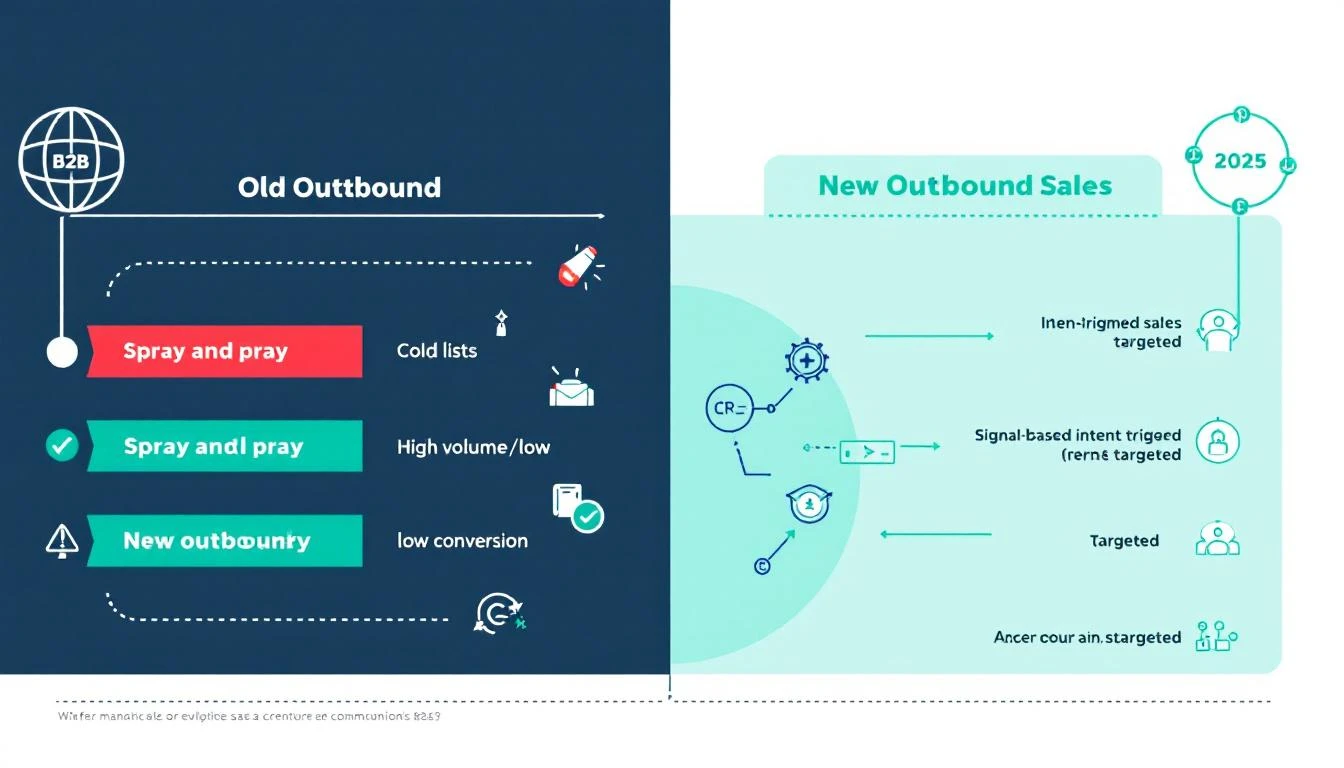
The evolution of B2B outbound: spray-and-pray vs. signal-based selling

The Case Against Outbound (And Why It's Misleading)โ€‹

Let's start with the numbers that fuel the "outbound is dead" narrative. They're real, and they're ugly:

  • 91% of cold outreach emails get zero response (Backlinko, 2025)
  • Cold email reply rates hover at 1โ€“5% for most campaigns (SoPro, 2026; Mailshake, 2026)
  • Cold outreach conversion rates sit at 0.2โ€“2% from contact to customer (Martal Group, 2025)
  • 83.4% of SDRs fail to consistently hit quota (SalesSo, 2025)
  • 52% of outbound marketers say their efforts are "ineffective" (HubSpot, via SPOTIO 2026)

If you stopped here, you'd conclude outbound is a money pit. And for teams doing outbound the 2019 way โ€” buying lists, writing generic templates, and hoping for the best โ€” it absolutely is.

But the data tells a much more interesting story when you separate random outbound from signal-based outbound.

The Data That Proves Outbound Is Evolving, Not Dyingโ€‹

1. Buyers Still Want to Hear From Sellers (When It's Relevant)โ€‹

The loudest stat against outbound comes from buyer surveys. But the actual surveys tell the opposite story:

  • 82% of buyers accept meetings initiated through cold calls (RAIN Group, via Leads at Scale, 2026)
  • 81% of decision-makers engage with cold outreach when it's tailored to their company or context (SoPro Buyer Intelligence Report, 2026)
  • 79% of decision-makers reply to cold outreach when it's personalized and relevant (SoPro, 2026)

The pattern is clear. Buyers aren't rejecting outbound. They're rejecting irrelevant outbound. There's a massive difference.

2. Personalization Doubles Response Ratesโ€‹

Generic emails get generic results. The data shows exactly how much personalization matters:

  • Advanced personalization doubles cold email response rates โ€” 18% vs. 9% for generic (SoPro, 2026)
  • 89% of sales teams see positive ROI when using personalization in cold email campaigns (SoPro, 2026)
  • Emails referencing a specific trigger event (new hire, funding round, tech adoption) see 3x higher reply rates than standard personalization (name + company)

This isn't about {first_name} merge fields. It's about knowing that a prospect's company just visited your pricing page, that their competitor signed with you last month, or that they posted about the exact problem you solve.

3. Multichannel Outreach Crushes Single-Channel by 287%โ€‹

The single most important stat in modern outbound:

Outreach using email, phone, and LinkedIn together increases response rates by 287% compared to single-channel efforts. โ€” Martal Group, 2025

Multichannel outreach response rate comparison: single vs. multi-channel

Here's the breakdown from Optifai's study of 939 B2B SaaS companies:

ChannelConversion to Meeting
Cold call only2.0โ€“3.5%
Cold email only0.8โ€“2.0%
LinkedIn DM only2.0โ€“4.5%
Multi-touch sequence4.0โ€“7.0%

Multi-touch sequences convert at 2โ€“3x any single channel. Yet most SDR teams still run email-only or phone-only motions because their tools don't coordinate across channels.

4. Top SDRs Still Book 12โ€“15 Meetings Per Monthโ€‹

Despite the "outbound is dead" narrative, top-quartile SDRs consistently generate 12โ€“15 qualified meetings per month. The median sits at 8โ€“10. Elite performers (top 10%) hit 18+ meetings monthly (Optifai Pipeline Study, 2026; N=939).

The gap between top and bottom performers has never been wider:

Performance TierMonthly Meetings
Top 10% (elite)18+
Top 25%12โ€“15
Median8โ€“10
Bottom 25%4โ€“6

What separates them isn't effort. Bottom-quartile SDRs often make just as many calls. The difference is what they do before they pick up the phone: which accounts they target, what signals they act on, and how they sequence across channels.

5. Speed Still Wins โ€” But Almost Nobody Is Fast Enoughโ€‹

The data on speed-to-lead hasn't changed. What's changed is how few teams achieve it:

  • Responding within 5 minutes makes you 100x more likely to connect than waiting 30 minutes (InsideSales/XANT)
  • Average lead response time: 29+ hours (SalesSo, 2025)
  • 63% of leads never get a response at all (SalesSo, 2025)

The teams that respond fastest aren't doing it through heroic effort. They're using intent signals and automated triggers to surface the right leads the moment they show interest โ€” then routing them to reps with the context needed to have a real conversation.

What Actually Died: The Spray-and-Pray Modelโ€‹

The data points to a clear conclusion. Three things died:

1. Blind Cold Outreachโ€‹

Sending 5,000 emails to a purchased list with no intent data, no personalization beyond {company_name}, and no multi-channel follow-up. This approach now yields 0.2% conversion rates at best.

2. Volume-First Thinkingโ€‹

The old playbook: more dials = more meetings. But the data shows SDRs making 80+ calls/day with poor targeting often underperform those making 50 calls with better research (Optifai, 2026). Quality won the war against quantity.

3. Single-Channel Sequencesโ€‹

Email-only cadences. Phone-only blitzes. Any outreach strategy that doesn't coordinate across at least 2โ€“3 channels is leaving 287% response improvement on the table.

What Replaced It: Signal-Based Outboundโ€‹

The highest-performing SDR teams in 2026 share a common pattern. They don't start with a list. They start with a signal.

Signal-based outbound workflow: from detection to meeting

Here's the framework that the data supports:

Step 1: Detect the Signalโ€‹

Instead of cold lists, start with buying signals:

  • A target account visits your website (visitor identification)
  • A champion at a closed-lost account changes jobs
  • A prospect's company posts a role matching your use case
  • A competitor's customer complains on G2
  • A target account researches your category

Step 2: Enrich and Prioritizeโ€‹

Not all signals are equal. The teams booking 15+ meetings/month score and rank their signals:

  • Website visitor who hit the pricing page > homepage bounce
  • Return visitor (3rd visit this week) > first-time visitor
  • Decision-maker title > individual contributor
  • Signal from ICP company > outside-ICP company

Step 3: Orchestrate Multi-Channelโ€‹

Act on the signal within minutes across multiple channels:

  • Email personalized to the signal ("I noticed your team has been researching...")
  • Phone call with context (not a cold dial โ€” a warm call backed by data)
  • LinkedIn touch that references a relevant insight
  • AI chatbot that engages repeat visitors in real-time

Step 4: Let AI Handle the Repetition, Humans Handle the Conversationโ€‹

The data is clear: SDRs spend only 28โ€“39% of their time selling. The rest goes to research, CRM entry, and admin. The winning formula:

  • AI identifies and prioritizes signals automatically
  • AI drafts personalized outreach based on context
  • AI routes leads to the right rep with full context
  • Humans take the meetings, build relationships, and close

The Math: Why Signal-Based Outbound Is 4x More Efficientโ€‹

Let's run the numbers.

Traditional outbound (spray-and-pray):

  • 100 cold contacts per day
  • 2% reply rate = 2 replies
  • 20% of replies convert to meetings = 0.4 meetings/day
  • 20 working days = 8 meetings/month
  • Cost per meeting: $300โ€“$500 (factoring in fully loaded SDR costs)

Signal-based outbound:

  • 30 signal-triggered contacts per day (warm, intent-verified)
  • 8โ€“12% reply rate (personalized + multi-channel) = 3 replies
  • 40% of replies convert to meetings = 1.2 meetings/day
  • 20 working days = 24 meetings/month
  • Cost per meeting: $100โ€“$150

Same SDR. Same hours. 3x the meetings at 1/3 the cost. The difference is what happens before the outreach: signal detection, prioritization, and context.

The 5 Non-Negotiables for Outbound in 2026โ€‹

Based on the data across all 14 studies, here's what separates teams that are thriving from teams declaring outbound dead:

1. Visitor Identificationโ€‹

You can't respond to signals you can't see. Website visitor identification is no longer optional โ€” it's the foundation of modern outbound. Knowing which companies are researching you right now is the highest-intent signal available.

2. Multi-Channel Orchestrationโ€‹

Email + phone + LinkedIn in coordinated sequences. Not three separate efforts โ€” one orchestrated motion that adapts based on prospect engagement. The 287% improvement stat isn't theoretical. It's the baseline expectation.

3. Speed-to-Signal Responseโ€‹

Not just speed-to-lead. Speed-to-signal. When a target account hits your pricing page at 10:14 AM, the outreach should start by 10:20 AM. Manually? Impossible for most teams. Automated signal routing makes it systematic.

4. Daily Playbook (Not Just a Lead List)โ€‹

The SDR playbook isn't a static document anymore. It's a live, prioritized task list that updates throughout the day based on incoming signals. "Call these 15 accounts, in this order, because of these signals, saying these things." That's what eliminates the 60% of time SDRs waste on non-selling activities.

5. AI-Powered Personalization at Scaleโ€‹

Personalization doubles response rates, but doing it manually doesn't scale. AI SDR tools that draft contextual outreach based on real signals โ€” not just mail-merge tokens โ€” bridge the gap between personalization quality and outbound volume.

The Bottom Lineโ€‹

Outbound isn't dead. Lazy outbound is dead.

The data is unambiguous: buyers want to hear from sellers who understand their business, reference real context, and reach them through the right channel at the right time. That's not cold outreach โ€” that's signal-based selling.

The teams declaring outbound dead are the same teams still sending 5,000 generic emails a week and wondering why nobody replies. The teams quietly booking 15โ€“24 meetings a month are doing something fundamentally different: they're starting with signals, orchestrating across channels, and letting AI handle everything that isn't a human conversation.

The question isn't whether outbound works in 2026. The question is whether your outbound has evolved past 2019.


Ready to see what signal-based outbound looks like in practice? Book a demo โ†’ and we'll show you exactly which companies are visiting your site right now โ€” and what to do about it.

Champion Tracking vs Website Visitor Intelligence: Which Drives More Pipeline?

ยท 9 min read
sunder
Founder, marketbetter.ai

B2B sales teams are flush with signal options in 2026. Two of the most talked-about categories are champion tracking (knowing when past buyers change jobs) and website visitor intelligence (identifying anonymous companies visiting your site). Both promise warm leads and faster pipeline โ€” but they work in fundamentally different ways and catch fundamentally different opportunities.

So which one drives more pipeline? Should you invest in one over the other? Or do you need both? In this article, we break down the mechanics, strengths, and limitations of each approach, and show you why the smartest teams in 2026 are combining them into a single unified strategy.

Job Change Alerts vs Intent Signals: The Smarter Way to Find Warm Leads

ยท 10 min read
sunder
Founder, marketbetter.ai

Every B2B sales team is chasing the same thing: warm leads. Prospects who are more likely to take a meeting, more likely to engage, and more likely to buy. Two of the most popular approaches to finding warm leads in 2026 are job change alerts and intent signals โ€” but they work on fundamentally different principles, and understanding those differences can make or break your pipeline strategy.

Job change alerts tell you when someone you know has moved to a new company. Intent signals tell you when someone you may not know is actively researching solutions like yours. One is a lagging indicator. The other is a leading indicator. And the smartest teams are using both.