12 posts tagged with "guide"

View All Tags

B2B Website Visitor Identification: The Complete Guide for Sales Teams [2026]
ยท 16 min read

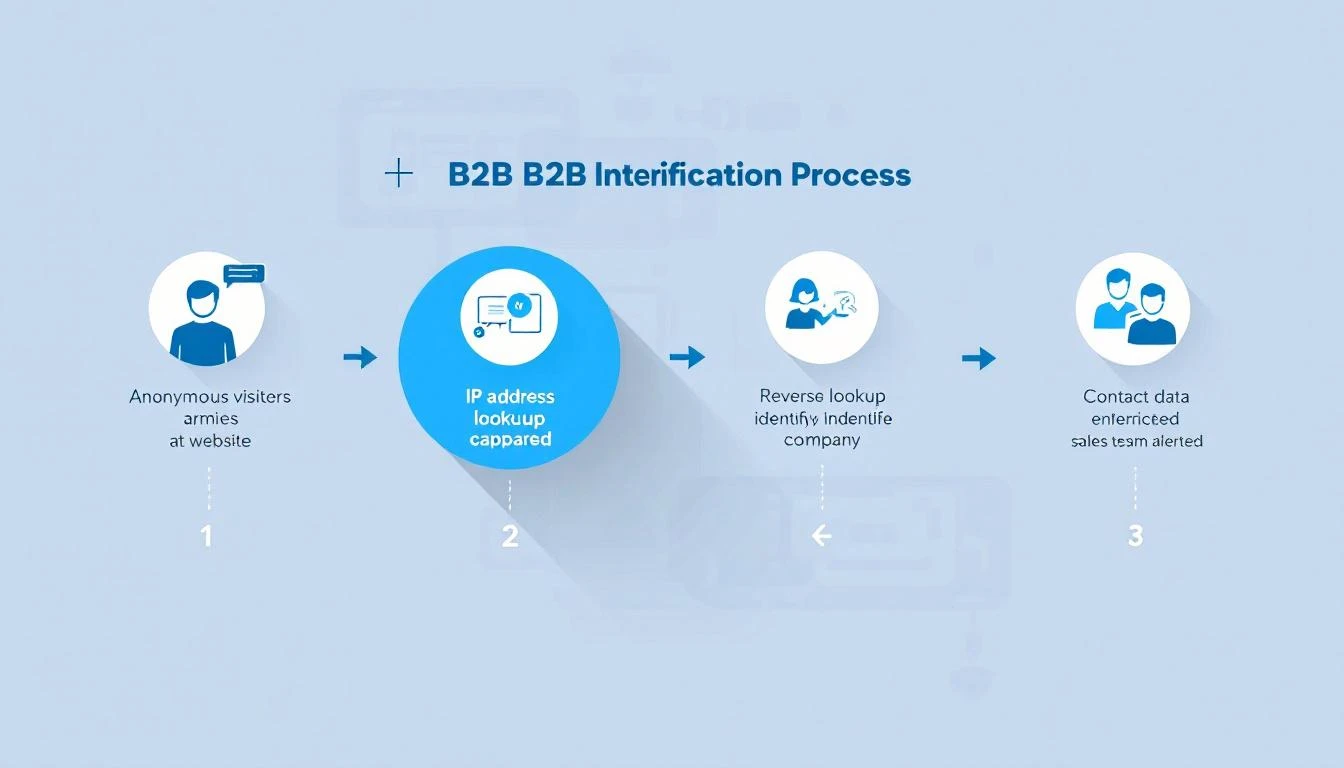
B2B website visitor identification process โ€” from anonymous traffic to identified accounts

98% of B2B website visitors leave without filling out a form. They read your pricing page, compare you to competitors, check your case studies โ€” then vanish.

You're spending thousands on Google Ads, SEO, and content to drive this traffic. And 98 out of every 100 visitors give you nothing in return. No name, no email, no company. Just another anonymous session in Google Analytics.

Website visitor identification changes that. It reveals which companies are visiting your site, what pages they're viewing, and in many cases, who the actual people are โ€” so your sales team can reach out while the buying intent is hot.

This guide covers everything: how the technology works, what match rates you can actually expect (hint: most vendors lie), how to evaluate tools, and how to turn identified visitors into pipeline. No fluff. No vendor spin.


What Is B2B Website Visitor Identification?โ€‹

B2B website visitor identification is the process of revealing the companies and individuals behind your anonymous website traffic. Instead of seeing "500 sessions from Austin, TX" in your analytics, you see "Hologram's VP of Sales visited your pricing page 3 times this week."

There are two levels of identification:

Company-Level Identificationโ€‹

The most common approach. When someone visits your website, their browser sends an IP address. Visitor identification tools match that IP against databases of known corporate IP ranges to identify which company the visitor works for.

How it works:

  1. A JavaScript snippet on your website captures the visitor's IP address
  2. The tool performs a reverse IP lookup (rDNS) against a database of millions of company IP ranges
  3. If there's a match, you see the company name, industry, size, and location
  4. You also see which pages they visited and for how long

Typical match rates: 20-40% of total traffic. This sounds low, but remember โ€” most consumer traffic (personal devices, mobile networks, VPNs) will never match. The 20-40% that does match is almost entirely B2B traffic, which is exactly what you want.

The catch: Company-level ID tells you which company is looking, but not who at the company. You know Salesforce visited your pricing page โ€” but was it an intern doing research or the VP of Revenue Operations evaluating tools?

Person-Level Identificationโ€‹

The newer, more powerful approach. Person-level identification goes beyond the company and attempts to identify the specific individual visiting your site.

How it works:

  1. Beyond IP matching, tools use a combination of first-party cookies, device fingerprinting, and cross-referencing identity graphs
  2. Some tools match against databases of known professional identities (built from opt-in data, public profiles, etc.)
  3. The result: you get a name, title, email, and LinkedIn profile โ€” not just a company name

Typical match rates: 5-15% of B2B traffic. Person-level is significantly harder than company-level. Any vendor claiming 40%+ person-level match rates is either misleading you or conflating company-level and person-level stats.

The privacy question: Person-level ID raises legitimate GDPR/CCPA concerns. The best tools build their identity graphs from opt-in sources and comply with privacy regulations. The worst ones scrape data without consent. Always ask your vendor where their data comes from.


How Does Website Visitor Identification Actually Work?โ€‹

Under the hood, visitor identification combines multiple data signals. Here's the technical reality without the marketing buzzwords.

1. Reverse IP Lookup (Foundation Layer)โ€‹

Every device connected to the internet has an IP address. Companies with office networks have static IP ranges registered to their organization. When an employee visits your website from the office, their request comes from one of these known IPs.

Reverse IP lookup (rDNS) cross-references the visitor's IP against databases of corporate IP ranges. These databases are maintained by data providers like:

  • Demandbase โ€” proprietary IP intelligence network
  • Clearbit (now Hubspot) โ€” company identification API
  • 6sense โ€” predictive intelligence platform
  • Bombora โ€” intent data + IP matching

Limitation: Remote work has eroded IP-based identification. When your target buyer works from home on a Comcast connection, their IP doesn't map to their employer. This is why pure IP-based tools have seen match rates decline since 2020.

2. First-Party Cookies + Device Fingerprinting (Enhancement Layer)โ€‹

To compensate for remote work, modern tools layer additional signals:

  • First-party cookies track returning visitors across sessions, building a behavioral profile even before identity resolution
  • Device fingerprinting uses browser attributes (screen resolution, timezone, installed fonts, WebGL renderer) to create a semi-unique identifier
  • Email pixel matching โ€” when a prospect clicks a link in your marketing email, the tool can link their known email to their website session

3. Identity Graphs (Resolution Layer)โ€‹

The most sophisticated tools maintain identity graphs โ€” massive databases that connect professional identities across multiple touchpoints. When a visitor arrives on your site, the tool checks:

  • Does this device/cookie match a known identity?
  • Has this IP been associated with previous known visitors?
  • Does the behavioral pattern (pages visited, time on site) match a known account?

The larger and more accurate the identity graph, the higher the match rate. This is why tools backed by large data networks (Demandbase, 6sense, ZoomInfo) often outperform standalone startups on raw identification volume.


What Match Rates Should You Actually Expect?โ€‹

This is where most vendors mislead you. Here's the truth.

The Match Rate Reality Checkโ€‹

Identification TypeClaimed RangeRealistic RangeWhat Drives It
Company-level"Up to 80%"20-40%IP database coverage, % of office vs. remote traffic
Person-level"Up to 50%"5-15%Identity graph size, cookie persistence, email matching
Combined (inflated)"70-90%"25-45%Vendors often blend both numbers to inflate stats

Why the gap? Vendors run match rate tests on their best-case scenarios โ€” enterprise companies with mostly in-office workers, lots of direct traffic, and established cookies. Your results will vary based on:

  • Your audience mix โ€” Enterprise companies with office networks match better than SMBs with remote teams
  • Traffic sources โ€” Direct and organic traffic matches better than paid (ad blockers, VPNs)
  • Geography โ€” US and EU corporate IP databases are more complete than emerging markets
  • Industry โ€” Tech companies match well; healthcare and government often don't

How to Run Your Own Match Rate Testโ€‹

Don't trust vendor demos. Run a blind test with your actual traffic:

  1. Install 2-3 tools on your website simultaneously (most offer free trials)
  2. Run for 30 days to get a statistically meaningful sample
  3. Compare identified visitors against known accounts in your CRM
  4. Calculate your real match rate: Identified visitors / Total unique B2B sessions
  5. Check accuracy: Are the identified companies actually relevant? Or is it mostly ISPs and universities?

The tool that identifies the most relevant accounts at the highest accuracy wins โ€” not the one with the biggest raw number.


Turning Identified Visitors Into Pipelineโ€‹

Identification alone doesn't close deals. The real value is in what your team does with the data. Here's where most companies waste their investment.

The Workflow Problemโ€‹

Most visitor identification tools stop at identification. They show you a dashboard of companies that visited your site. Then what?

Your SDR logs in, scrolls through a list of 50 companies, tries to figure out who to contact, opens LinkedIn to find the right person, switches to their CRM to check if there's an existing relationship, then goes to their email tool to write outreach.

That's 5 tools and 15 minutes per lead โ€” and they have 50 to get through. By the time they reach out, the buyer's intent has cooled.

What a Complete Visitor ID Workflow Looks Likeโ€‹

The best approach connects identification to action:

  1. Identify โ€” Visitor arrives, company and/or person identified
  2. Qualify โ€” Automatically check: does this company match your ICP? Are they in your CRM already? What's their revenue/employee count?
  3. Prioritize โ€” Rank by buying signals: pricing page visits > blog reads. Repeat visitors > first-timers. Decision makers > individual contributors.
  4. Enrich โ€” Pull in additional context: recent funding, job postings, tech stack, social media activity
  5. Route โ€” Assign to the right SDR based on territory, industry, or account ownership
  6. Act โ€” Present a daily playbook: "These 5 accounts visited your pricing page yesterday. Here's who to contact and what to say."

This is the difference between data and action. Tools that stop at step 1 create dashboards. Tools that go through step 6 create pipeline.

Measuring ROIโ€‹

The ROI formula for visitor identification is straightforward:

Monthly ROI = (Meetings booked from identified visitors ร— Average deal value ร— Win rate) - Tool cost

Example for a mid-market B2B company:

  • 1,000 unique B2B visitors/month
  • 30% company-level match rate = 300 identified companies
  • 10% are ICP-fit = 30 qualified accounts
  • SDR reaches out to all 30, books 5 meetings (17% meeting rate)
  • Average deal size: $30,000
  • Win rate: 25%
  • Monthly pipeline created: $37,500
  • Tool cost: $500-$2,000/month
  • ROI: 18-75x

Even conservative estimates show massive ROI โ€” because you're reaching prospects who already demonstrated buying intent by visiting your site.


Visitor identification operates in a gray area that's getting clearer (and stricter) every year. Here's what you need to know.

GDPR (EU/UK)โ€‹

  • Company-level identification is generally considered legitimate interest under GDPR โ€” you're identifying organizations, not individuals
  • Person-level identification requires more careful handling. The tool must source identity data from compliant, opt-in databases
  • Cookie consent is required. Your cookie banner must disclose analytics and identification tracking
  • Data processing agreements (DPAs) should be in place with your vendor

CCPA (California)โ€‹

  • Visitors can opt out of "sale" of personal information
  • Company-level data is generally exempt
  • Person-level data may fall under CCPA if it includes personal identifiers

SOC 2โ€‹

If you're selling to enterprise, they'll ask about your security posture. Choose a vendor that's SOC 2 certified โ€” it means they've been audited on data handling practices.

Best Practicesโ€‹

  1. Disclose tracking in your privacy policy โ€” mention website analytics and business identification
  2. Honor opt-outs โ€” if someone requests data deletion, your vendor should support it
  3. Use compliant data sources โ€” ask vendors: "Where does your identity graph data come from?"
  4. Keep data hygiene tight โ€” don't store identified visitor data indefinitely; set retention policies

How to Evaluate Website Visitor Identification Toolsโ€‹

When shopping for a visitor ID tool, here's what actually matters (and what doesn't).

What Mattersโ€‹

FactorWhy It MattersHow to Evaluate
Match rate on YOUR trafficVendor benchmarks are meaningless for your specific audienceRun a 30-day trial with your actual traffic
Accuracy40% match rate with 50% accuracy = 20% usable dataCross-reference identified companies against your CRM
Integration depthData that sits in a dashboard creates zero pipelineCheck CRM sync, Slack alerts, daily playbook features
Action layerIdentification without workflow = expensive analyticsDoes it tell SDRs what to DO, not just what happened?
Person-level capabilityCompany-level alone requires manual researchCan it surface the specific contact to reach out to?
Pricing transparencyHidden pricing usually means enterprise-onlyCan you see pricing before talking to sales?

What Doesn't Matter (Much)โ€‹

  • Size of the "contact database" โ€” 300M contacts means nothing if 90% are outdated
  • Number of integrations โ€” you need 3-4 deep integrations, not 100 shallow ones
  • AI buzzwords โ€” "AI-powered identification" is marketing. The data quality matters more.
  • Free tier generosity โ€” free tools with low match rates waste your time with bad data

Questions to Ask Vendorsโ€‹

  1. "What's my expected match rate based on my traffic profile?"
  2. "Is your identification company-level, person-level, or both?"
  3. "Where does your identity graph data come from? Is it opt-in?"
  4. "What happens when a visitor's company is identified โ€” what's the next step for my SDR?"
  5. "Are you SOC 2 certified? GDPR compliant?"
  6. "Can I see a breakdown of your match accuracy (not just match rate)?"

The Future of Visitor Identification (2026 and Beyond)โ€‹

Three trends are reshaping this space:

1. The Post-Cookie Worldโ€‹

Google is phasing out third-party cookies (slowly, painfully). Tools that rely heavily on third-party cookie matching will see declining match rates. First-party data and server-side tracking are becoming essential.

What this means for you: Choose tools investing in cookieless identification methods โ€” IP intelligence, first-party data enrichment, and authenticated traffic matching.

2. AI-Powered Intent Scoringโ€‹

Raw identification is becoming table stakes. The differentiator is what the tool does with the data. AI models that score buying intent based on page visit patterns, visit frequency, content consumed, and account-level behavior will separate useful tools from expensive dashboards.

3. From Identification to Orchestrationโ€‹

The market is moving from "tell me who visited" to "tell my SDR what to do about it." Daily playbooks, automated outreach triggers, and real-time alerts are becoming standard expectations, not premium features.


Getting Started: Your First 30 Daysโ€‹

Here's a practical roadmap for implementing visitor identification:

Week 1: Install and Configure

  • Install 2-3 tools for a head-to-head trial
  • Configure your ICP filters (industry, company size, geography)
  • Connect your CRM so identified accounts are automatically matched to existing opportunities

Week 2: Baseline Measurement

  • Track total identified visitors vs. total traffic
  • Note how many identified companies match your ICP
  • Measure how long it takes SDRs to action the identified accounts

Week 3: Optimize Workflow

  • Set up automated alerts for high-intent visits (pricing page, comparison pages, demo page)
  • Create SDR playbooks: "When Account X visits the pricing page, do Y"
  • Build daily dashboards showing SDRs their priority outreach list

Week 4: Measure and Decide

  • Calculate: meetings booked from identified visitors
  • Compare tool match rates and accuracy head-to-head
  • Make your vendor decision based on real data, not demos

Common Use Cases by Teamโ€‹

For SDR Teamsโ€‹

  • Warm outreach priority list: Instead of cold-calling from a static list, SDRs start each day with a list of accounts that visited your website in the last 24 hours. These aren't cold โ€” the prospect already knows you exist.
  • Personalized first touch: "I noticed your team was looking at our pricing page yesterday" is 3x more effective than a generic cold email. Visitor data gives SDRs the context to write outreach that feels relevant, not random.
  • Account progression tracking: See which accounts are moving from blog content to pricing pages to case studies โ€” that's a buying signal you can act on before the prospect fills out a form.

For Demand Gen Teamsโ€‹

  • Attribution clarity: Which campaigns drive the most identified, ICP-fit visitors? Visitor ID bridges the gap between "we got 500 clicks" and "we got visits from 12 target accounts."
  • Content optimization: See which blog posts attract target accounts and which attract irrelevant traffic. Double down on what works.
  • Retargeting fuel: Build retargeting audiences from identified accounts. Instead of broad display ads, target the specific companies who've already shown interest.

For Account Executivesโ€‹

  • Deal acceleration: When a prospect you're working goes quiet but keeps visiting your site, you know the deal isn't dead โ€” they're still evaluating. Time to re-engage.
  • Multi-threading alerts: If 3 different people from the same company visit your case studies page, your champion is building internal consensus. The AE should know.
  • Competitive intelligence: Prospect visiting your comparison pages? They're evaluating alternatives. Send them your win-loss analysis before they talk to the competitor.

Frequently Asked Questionsโ€‹

Company-level identification is legal in the US, EU, and most global markets. It uses publicly available corporate IP data and doesn't identify individuals. Person-level identification requires more careful compliance, especially under GDPR. Choose vendors that source data from opt-in, compliant databases and have clear privacy policies.

What's the difference between visitor identification and analytics?โ€‹

Google Analytics tells you "50 people from Austin visited your pricing page." Visitor identification tells you "Hologram, Datadog, and Cloudflare visited your pricing page." Analytics gives you aggregate patterns. Identification gives you accounts to call.

Do I need visitor identification if I already have a CRM?โ€‹

Yes. Your CRM only knows about prospects who've already identified themselves (form fills, email replies, demo requests). Visitor identification reveals the 98% who are researching you but haven't raised their hand yet. Think of it as the top-of-funnel radar your CRM can't provide.

How does remote work affect match rates?โ€‹

Remote work reduces IP-based match rates because home internet connections don't map to corporate IP ranges. The best tools compensate with first-party cookies, email pixel matching, and identity graphs. Expect 10-15% lower match rates compared to pre-2020, but the identified visitors are still highly valuable.

How many visitors do I need for this to be worth it?โ€‹

Most tools become cost-effective at 1,000+ unique monthly visitors. Below that, you won't identify enough accounts to justify the investment. Above 5,000 visitors, the ROI compounds quickly because each additional identified account is essentially free incremental pipeline.

Can I use visitor identification with ABM (Account-Based Marketing)?โ€‹

Absolutely โ€” this is one of the strongest use cases. Upload your target account list, and the tool alerts you the moment any of those accounts visit your site. Instead of waiting for them to fill out a form, you can trigger outreach immediately. Some tools even track which specific pages target accounts visit, giving your ABM campaigns real-time feedback on messaging effectiveness.


Bottom Lineโ€‹

Website visitor identification isn't magic โ€” it's infrastructure. The 98% of visitors who leave without converting aren't gone. They're just anonymous. The right tool makes them visible. The right workflow makes them reachable. And the right team turns them into customers.

The question isn't whether to invest in visitor identification. It's whether you can afford not to โ€” while your competitors are already reaching out to the same buyers who just left your site.

Ready to see who's visiting your website? Book a demo and see MarketBetter's visitor identification in action โ€” complete with daily SDR playbook, AI chatbot, and multi-channel outreach built in.


Have questions about B2B website visitor identification? Check our comparison of the 12 best visitor ID tools or see how MarketBetter compares to Warmly, Clearbit, and RB2B.


How to Replace Salesloft Without Losing Productivity

ยท 9 min read
MarketBetter Team
Content Team, marketbetter.ai

How to replace Salesloft without losing rep productivity

You've decided Salesloft isn't the right fit anymore. Maybe the cost is unsustainable. Maybe you need capabilities it doesn't offer. Maybe your team outgrew it โ€” or never grew into it.

Whatever the reason, the migration anxiety is real: how do you switch sales engagement platforms without your pipeline grinding to a halt?

Good news: we've helped teams make this transition, and it's more manageable than you think. Here's the complete playbook.

Phase 1: Pre-Migration Audit (Week 1โ€“2)โ€‹

Before you touch anything, understand what you're actually using.

Document Your Current Setupโ€‹

Cadences/Sequences:

  • How many active cadences do you run?
  • Which cadences drive the most meetings?
  • What's the step structure (email, call, LinkedIn, custom)?
  • Which email templates have the best reply rates?

CRM Integration:

  • What data syncs between Salesloft and your CRM?
  • Are there custom fields mapped?
  • How does activity logging work?
  • Any automation rules tied to Salesloft data?

Team Configuration:

  • How are teams/groups structured?
  • What permission levels exist?
  • Are there shared vs. personal cadences?
  • What governance rules are in place?

Integrations:

  • Which third-party tools connect to Salesloft?
  • Calendar sync (Google, Outlook)?
  • Dialer configuration?
  • Conversation intelligence recordings โ€” do you need to archive them?

Identify Your Top 10 Workflowsโ€‹

List the 10 things your SDRs do most often in Salesloft. For most teams, it's:

  1. Add prospects to cadences
  2. Send personalized emails from templates
  3. Make calls with the dialer
  4. Log activities to CRM
  5. Check daily to-do list
  6. Review email open/reply notifications
  7. Import prospects from CRM or CSV
  8. Share templates with teammates
  9. Review cadence performance reports
  10. Record/review calls

Your replacement platform needs to handle all 10 from day one. Anything missing means productivity loss during transition.

Export Everythingโ€‹

Before your contract ends, export:

  • Contact/prospect lists โ€” CSV with all custom fields
  • Cadence structures โ€” Document step types, timing, and content
  • Email templates โ€” Copy all templates to a doc (Salesloft doesn't always make bulk export easy)
  • Performance data โ€” Screenshot or export reports for baseline metrics
  • Call recordings โ€” Download any recordings you need to retain (conversation intelligence)
  • Team settings โ€” Document permission structures and automation rules

โš ๏ธ Important: Salesloft may restrict data export features during the wind-down period. Do this before you notify them of non-renewal.

Phase 2: Platform Selection (Week 2โ€“3)โ€‹

The Evaluation Checklistโ€‹

Rate each candidate platform on these criteria:

CriteriaWeightNotes
Multi-channel sequences (email + phone + LinkedIn)Must-haveCore functionality, non-negotiable
CRM integration (your specific CRM)Must-haveSalesforce, HubSpot, etc.
Dialer qualityHighIf your team relies on phone
Import/migration toolsHighCSV import, template import
Ramp timeHighHow fast can reps get productive?
Visitor identificationMedium-HighReplaces a separate tool
AI chatbotMediumReplaces a separate tool
Intent signals/daily playbookMediumReplaces manual prioritization
Conversation intelligenceMediumIf you use it actively
Price (total cost of ownership)HighInclude ALL tools needed
API/integration ecosystemMediumConnect your existing stack

Top Replacement Optionsโ€‹

For teams that want similar enterprise capability:

  • Outreach โ€” Closest Salesloft competitor, easy conceptual migration
  • HubSpot Sales Hub โ€” Great if you're already on HubSpot CRM

For teams that want to consolidate their stack:

  • MarketBetter โ€” Replaces Salesloft + visitor ID + chatbot + dialer in one platform
  • Apollo.io โ€” Replaces Salesloft + ZoomInfo at a lower cost

For teams that want simpler + cheaper:

  • Instantly.ai โ€” Email-focused, fraction of the cost
  • Lemlist โ€” Creative personalization at scale

Run a 2-Week Pilotโ€‹

Don't commit based on demos alone. Most platforms offer free trials or pilot periods.

Pilot structure:

  1. Pick 2โ€“3 of your best SDRs for the pilot
  2. Recreate your top 3 cadences in the new platform
  3. Run both platforms simultaneously for 2 weeks
  4. Compare: emails sent, calls made, replies received, meetings booked
  5. Get rep feedback on daily workflow experience

The pilot tells you what no demo can: how your team actually works in the tool.

Phase 3: Migration Execution (Week 3โ€“5)โ€‹

Step 1: Set Up the New Platformโ€‹

  • Configure CRM integration first โ€” this is foundational
  • Set up email accounts and verify sending domains
  • Configure dialer settings (if applicable)
  • Set up team structure, permissions, and shared settings

Step 2: Recreate Your Core Cadencesโ€‹

Don't migrate all 47 cadences. Start with your top 5 by meeting generation.

For each cadence:

  1. Recreate the step structure (email, call, LinkedIn, timing)
  2. Migrate email templates (copy, don't just import โ€” clean up as you go)
  3. Set up personalization tokens/variables
  4. Test the full sequence with internal email addresses
  5. Verify CRM activity logging works correctly

Step 3: Migrate Active Prospectsโ€‹

Do NOT move prospects mid-sequence. This causes:

  • Duplicate emails
  • Broken personalization
  • Lost engagement data
  • Angry prospects

Instead:

  • Let active sequences complete in Salesloft (or manually finish remaining steps)
  • New prospects go to the new platform starting on migration day
  • Completed/paused prospects can be imported as contacts for future sequences

Step 4: Parallel Running Period (2โ€“4 Weeks)โ€‹

Run both platforms simultaneously:

Salesloft (winding down)New Platform (ramping up)
Active sequences finish naturallyAll new prospects go here
No new prospects addedCore cadences live and running
Activity still syncs to CRMCRM integration verified
Reps check for replies/notificationsReps primary workspace

This overlap period prevents the "cold turkey" productivity drop. Your pipeline stays active while the new platform ramps.

Step 5: Trainingโ€‹

Keep training focused and practical:

Day 1 training (2 hours):

  • Account setup and login
  • Navigate the core interface
  • Add a prospect and enroll in a cadence
  • Make a call (if dialer is included)
  • Check daily to-do list

Day 3 follow-up (1 hour):

  • Answer questions from first 2 days of real usage
  • Cover reporting and analytics
  • Address CRM sync questions

Week 2 check-in (30 min):

  • Review adoption metrics
  • Address any workflow friction
  • Share tips and shortcuts discovered by early adopters

Pro tip: Assign one "platform champion" per team who gets deeper training and becomes the go-to resource. This scales better than training everyone to expert level.

Phase 4: Cutover and Optimization (Week 5โ€“8)โ€‹

Complete the Transitionโ€‹

  • Confirm all active Salesloft sequences have completed
  • Final data export from Salesloft (everything you need archived)
  • Notify Salesloft of non-renewal (watch for auto-renewal clauses)
  • Deactivate Salesloft accounts
  • Update any documentation, SOPs, and playbooks

Measure Successโ€‹

Compare these metrics, pre-migration vs. post-migration:

MetricWhat to Track
Emails sent/rep/dayShould be equal or higher
Calls made/rep/dayShould be equal or higher
Reply rateShould be stable (template quality matters)
Meetings booked/rep/weekThe ultimate metric โ€” should not decrease
Time to first touchHow fast reps engage new leads
Ramp time for new repsTime to first meeting for new hires
SDR satisfactionSurvey reps โ€” are they happier?

If meetings booked drops by more than 10% in the first month, investigate. It's usually:

  • Template quality degraded during migration (rewrite, don't just copy)
  • Reps haven't fully learned the new workflow (more training)
  • CRM sync issues causing lost data (fix integration)
  • Email deliverability needs warming up in the new platform

Quick Wins After Migrationโ€‹

Once you're live on the new platform, capture the value you switched for:

  1. If you gained visitor identification: Set up alerts for target account website visits. This alone can generate 3โ€“5 extra meetings per month.

  2. If you gained an AI chatbot: Configure it to engage visitors on high-intent pages (pricing, demo, case studies). After-hours chatbot engagement captures leads you were losing.

  3. If you gained a daily playbook: Train reps to start each day from their AI-prioritized task list instead of manually deciding who to contact.

  4. If you reduced cost: Reallocate savings to content, advertising, or additional SDR headcount.

Common Migration Mistakesโ€‹

โŒ Trying to Move Everything at Onceโ€‹

Don't migrate 50 cadences, 10,000 contacts, and 500 templates in one weekend. Start with core workflows, let the team stabilize, then expand.

โŒ Cutting Over Cold Turkeyโ€‹

The "Friday on Salesloft, Monday on NewTool" approach tanks productivity. Always run parallel for 2โ€“4 weeks.

โŒ Ignoring Email Deliverability Warm-Upโ€‹

New email sending infrastructure needs warming. Start with lower volumes and ramp up over 2 weeks. Don't send your full daily volume on day one โ€” you'll hit spam filters.

โŒ Skipping Rep Feedbackโ€‹

Your SDRs use this tool 8 hours a day. If they hate the new platform, adoption dies quietly. Survey them at day 3, week 1, and week 4.

โŒ Not Documenting the "Why"โ€‹

When reps ask "why are we switching?", have a clear, honest answer. "It costs too much for what we get" is fine. "Management decided" is not. Reps adopt faster when they understand the reasoning.

Timeline Summaryโ€‹

WeekPhaseKey Activities
1โ€“2AuditDocument workflows, export data, evaluate needs
2โ€“3SelectEvaluate platforms, run pilot with 2โ€“3 reps
3โ€“4MigrateSet up new platform, recreate core cadences
4โ€“6ParallelRun both platforms, new prospects to new tool
6โ€“7CutoverComplete Salesloft wind-down, full transition
7โ€“8OptimizeMeasure metrics, capture quick wins, iterate

Total time: 6โ€“8 weeks from decision to full transition. Most teams see productivity back to baseline within 2โ€“3 weeks of cutover.

Ready to explore your replacement options? See how MarketBetter simplifies the full SDR workflow โ†’


Salesloft vs Sales Engagement Platforms: The Complete Guide for 2026

ยท 8 min read
MarketBetter Team
Content Team, marketbetter.ai

Salesloft vs the new generation of sales engagement platforms

The sales engagement category has fragmented. What used to be a two-horse race between Salesloft and Outreach now includes dozens of platforms, each claiming to solve a different slice of the SDR workflow.

This guide maps the entire landscape, shows where Salesloft fits, and helps you pick the right category of tool โ€” not just the right product.

The Evolution of Sales Engagementโ€‹

Phase 1: Email Sequencing (2014โ€“2018)โ€‹

The original problem was simple: SDRs needed to send follow-up emails without forgetting. Salesloft, Outreach, Yesware, and ToutApp built multi-step email sequences. Pick contacts, put them in a cadence, and the tool sends emails on schedule.

Phase 2: Multi-Channel Cadences (2018โ€“2022)โ€‹

Email alone wasn't enough. Platforms added phone dialers, LinkedIn steps, and SMS. Salesloft and Outreach pulled ahead by offering the most comprehensive multi-channel capabilities. They also added conversation intelligence (call recording + AI analysis) and basic analytics.

Phase 3: Revenue Platforms (2022โ€“2025)โ€‹

Salesloft rebranded as a "Revenue Orchestration Platform." Outreach added deal management and forecasting. The goal: own the entire revenue workflow from first touch to closed deal. This is where the platforms got expensive and complex.

Phase 4: AI-Native SDR Platforms (2025โ€“Present)โ€‹

A new generation of tools doesn't just automate outreach โ€” they identify targets, prioritize actions, and generate intelligence. They ask a fundamentally different question: not "how do I send this sequence faster?" but "who should I be talking to right now?"

The Five Categories of Sales Engagementโ€‹

Category 1: Email-First Platformsโ€‹

What they do: High-volume email outreach with deliverability management.

PlatformStarting PriceBest For
Instantly.ai$30/user/moPure email volume
Lemlist$59/user/moCreative personalization
Woodpecker$49/user/moAgency outreach
Smartlead$39/user/moMulti-inbox email cannon

Strengths: Cheap, focused, high deliverability, unlimited email accounts. Weaknesses: No phone, no visitor data, no intelligence layer.

Salesloft comparison: Salesloft's email capabilities are more sophisticated (better CRM sync, team governance, analytics) but cost 3โ€“5x more. For teams that primarily do email outreach, these tools deliver 80% of the value at 20% of the price.

Category 2: All-in-One Prospecting + Engagementโ€‹

What they do: Combine prospect databases with outreach automation.

PlatformStarting PriceBest For
Apollo.io$49/user/moData + sequences
ZoomInfo + Engage$15K+/yearEnterprise data + engagement
Seamless.ai$147/user/moContact finding + outreach

Strengths: No separate data vendor needed, lower total cost, faster prospecting. Weaknesses: Data quality varies, engagement features are less mature.

Salesloft comparison: Salesloft requires a separate data provider (ZoomInfo, Apollo, etc.), adding $10Kโ€“30K/year. Apollo bundles data + sequences at a fraction of the combined cost. But Salesloft's cadence engine, conversation intelligence, and governance are more mature.

Category 3: Legacy Sales Engagement (Where Salesloft Lives)โ€‹

What they do: Comprehensive multi-channel outreach with call coaching, deal management, and forecasting.

PlatformStarting PriceBest For
Salesloft~$125/user/moRevenue orchestration
Outreach~$100/user/moSequence power + A/B testing
HubSpot Sales Hub$50/user/moHubSpot CRM ecosystems
Groove (Clari)~$75/user/moSalesforce-native engagement

Strengths: Mature, reliable, deep CRM integration, enterprise governance. Weaknesses: Expensive, require additional tools for data/intent/visitor ID, complex for small teams.

Key insight: This category solved the 2018 problem (automate multi-channel outreach) brilliantly. But in 2026, the problem has shifted. Teams don't just need to execute outreach faster โ€” they need to know who deserves outreach today.

Category 4: Signal-Based Platformsโ€‹

What they do: Identify buying signals (website visits, job changes, funding events) and route them to sellers.

PlatformStarting PriceBest For
Common RoomCustomPLG/community signals
Warmly$700/moWebsite visitor intelligence
6sense$25K+/yearEnterprise intent data
UnifyCustomSignal-to-action automation

Strengths: Answer "who should we contact?" with data-driven signals. Weaknesses: Most don't include outreach tools โ€” you still need Salesloft/Outreach on top.

Salesloft comparison: Salesloft's Rhythm feature ingests some signals, but it's limited to data already in your CRM and connected tools. These signal platforms capture earlier-stage buying behavior that Salesloft never sees.

Category 5: Full-Stack SDR Platforms (The New Category)โ€‹

What they do: Combine visitor intelligence, intent signals, AI chatbot, dialer, and outreach automation in one platform.

PlatformStarting PriceBest For
MarketBetter$99/user/monthFull SDR workflow
MonacoCustomStartup sales teams

Strengths: Replace 4โ€“5 tools with one platform, AI-native architecture, lower total cost. Weaknesses: Newer category, fewer integrations than legacy platforms.

Salesloft comparison: Where Salesloft automates execution, full-stack SDR platforms automate intelligence + execution. Instead of "run this cadence," they say "these 15 accounts showed intent today โ€” here's what to do about each one."

Where Salesloft Winsโ€‹

Enterprise-Scale Operationsโ€‹

If you have 50+ sales reps, dedicated sales ops, and a mature Salesforce instance, Salesloft's governance, admin controls, and team management features are genuinely best-in-class.

Conversation Intelligenceโ€‹

Salesloft's Conversations module is one of the best in the market for recording, transcribing, and analyzing sales calls. The coaching insights help managers scale best practices across large teams.

CRM Integration Depthโ€‹

The Salesforce and HubSpot integrations are deep and reliable. Activity logging, two-way sync, and custom field mapping work well after years of refinement.

Rhythm AIโ€‹

Salesloft's Rhythm is the closest thing in the legacy category to "here's what to do next." It ingests CRM signals, email engagement, and deal activity to create a prioritized action list. It's not as comprehensive as dedicated signal platforms, but it's a meaningful step forward.

Brand and Supportโ€‹

Salesloft has a large customer base, extensive documentation, a university with training courses, and responsive support. When things break, you have resources.

Where Salesloft Falls Shortโ€‹

The Swiss Army Knife Problemโ€‹

By trying to be everything โ€” cadences + conversations + deals + forecast + rhythm + AI agents โ€” Salesloft has become complex. Small and mid-market teams consistently report feature overload and long ramp times.

No First-Party Intent Dataโ€‹

Salesloft doesn't generate its own buying signals. It processes signals from other tools, but you need those other tools first. This creates a dependency chain:

ZoomInfo (data) โ†’ Bombora (intent) โ†’ Clearbit (visitor ID) โ†’ Salesloft (execution)

Each tool adds cost, integration maintenance, and potential data lag.

Price-to-Value for SMBโ€‹

At $125โ€“180/user/month before add-ons, the cost only makes sense when:

  • Deal sizes are large enough to justify the tooling cost
  • Team size is large enough to leverage governance features
  • The alternative (multiple cheaper tools) creates more friction than Salesloft solves

Innovation Paceโ€‹

Adding AI features to a decade-old architecture is harder than building AI-native from day one. Salesloft's AI additions (Rhythm, Smart Replies, AI Agents) are useful but incremental. They don't fundamentally change how SDRs work.

Decision Framework: Which Category Do You Need?โ€‹

Choose Email-First Platforms When:โ€‹

  • Email is 80%+ of your outreach
  • Budget is under $5K/year for tooling
  • You have data from other sources
  • Deliverability and volume are top priorities

Choose All-in-One Prospecting When:โ€‹

  • You don't have a separate data vendor
  • Speed-to-prospect matters most
  • Budget is $5Kโ€“15K/year
  • You value simplicity over depth

Choose Salesloft / Legacy Engagement When:โ€‹

  • You have 50+ reps
  • Enterprise Salesforce deployment
  • Need governance, compliance, audit trails
  • Budget allows $100K+ in annual tooling
  • Conversation intelligence for coaching is critical

Choose Signal-Based Platforms When:โ€‹

  • You already have execution tools (Salesloft, Outreach)
  • Need to identify in-market accounts
  • Have budget for both signal and execution tools
  • PLG or community-driven GTM

Choose Full-Stack SDR Platforms When:โ€‹

  • Team size is 2โ€“20 reps
  • You want one platform, not five
  • Visitor identification + chatbot + dialer matter
  • Budget is $6Kโ€“36K/year total
  • Speed-to-lead is your competitive advantage

The Convergence Trendโ€‹

Every category is moving toward the same destination: a single platform that identifies targets, prioritizes actions, and executes outreach.

Salesloft is approaching from the execution side (adding signals via Rhythm and Drift). Signal platforms are approaching from the intelligence side (adding outreach capabilities). Full-stack platforms started at the intersection.

The question isn't which approach is best in theory โ€” it's which is most complete today for your specific team size, budget, and workflow.

See how MarketBetter delivers the full SDR workflow in one platform โ†’


How to Create an AI Marketing Plan in 5 Minutes (Free Tool)

ยท 11 min read
sunder
Founder, marketbetter.ai

How to create an AI marketing plan in 5 minutes โ€” free tool

Creating a marketing plan has traditionally been a weeks-long ordeal. You gather data, research competitors, define personas, map channels, set budgets, build timelines, and create a 30-page document that โ€” let's be honest โ€” nobody reads after the first meeting.

What if you could generate a solid first draft in 5 minutes?

AI marketing plan generators have gone from gimmicky to genuinely useful in 2026. The best ones don't just fill in a template โ€” they research your company, analyze your market, and produce strategic recommendations that are surprisingly on-target.

This guide walks through how to create an AI marketing plan, compares the tools available, and shows you how to get a complete plan in minutes using MarketBetter's free Marketing Plan Generator.

What Is an AI Marketing Plan Generator?โ€‹

An AI marketing plan generator takes basic inputs about your business โ€” company name, industry, target audience, goals โ€” and produces a structured marketing plan with strategy, channels, tactics, and timelines.

The best tools do more than fill in a template. They:

  1. Research your company โ€” pulling data from your website, social media, and public sources
  2. Analyze your market โ€” identifying competitors, market trends, and opportunities
  3. Recommend channels โ€” suggesting the most effective marketing channels for your specific business
  4. Propose tactics โ€” offering concrete, actionable steps, not vague strategic platitudes
  5. Suggest budgets โ€” providing realistic budget allocations based on your company size and goals
  6. Set timelines โ€” creating a phased roadmap with milestones

Why Use AI to Generate a Marketing Plan?โ€‹

Speedโ€‹

A traditional marketing plan takes 2-4 weeks to research, write, and refine. An AI-generated first draft takes 5 minutes. Even if you spend 2-3 hours refining and customizing the AI output, you've saved 80%+ of the time.

Comprehensive Coverageโ€‹

Marketing plans often have blind spots. You focus on the channels you know and ignore ones you don't. AI tools consider all viable channels and tactics, reducing the risk of missing opportunities.

Data-Driven Recommendationsโ€‹

AI generators can pull from vast amounts of data about what works for similar businesses. A human marketer might have experience with 5-10 companies in your space. An AI has been trained on thousands.

Starting Point, Not Finished Productโ€‹

The best use of AI marketing plans isn't to replace human thinking โ€” it's to accelerate it. Having a structured first draft to react to is dramatically faster than starting from a blank page. You can agree, disagree, modify, and add your unique insights to an existing framework.

Accessibilityโ€‹

Not every company has a marketing team. Founders, solopreneurs, and small teams often skip marketing plans entirely because they're intimidating to create. AI generators make strategic marketing accessible to everyone.

How to Create an AI Marketing Plan (Step by Step)โ€‹

Step 1: Choose Your Toolโ€‹

Here's a quick comparison of the major options:

MarketBetter Marketing Plan Generator โ€” Free, no signup, AI-researched plan based on your company

  • Input: Company name or URL
  • Output: Full marketing plan with strategy, channels, tactics, and timelines
  • Unique value: AI researches your company, competitors, and market automatically
  • Cost: Free

Venngage AI Marketing Plan Generator โ€” Free, template-focused

  • Input: Business description, goals, audience
  • Output: Visual marketing plan using templates
  • Unique value: Beautiful visual output with editable templates
  • Cost: Free (limited), Pro from $10/month

Visme AI Marketing Plan Generator โ€” Free, design-centric

  • Input: Text prompts about your business
  • Output: Designed marketing plan presentation
  • Unique value: Polished presentation-ready output
  • Cost: Free (limited), Starter from $12.25/month

FounderPal Marketing Strategy Generator โ€” Free, solopreneur-focused

  • Input: Product description, target audience, goals
  • Output: Marketing strategy with positioning, channels, and tactics
  • Unique value: Built specifically for solopreneurs and indie founders
  • Cost: Free (basic), Pro from $49 one-time

Piktochart AI Marketing Plan Generator โ€” Free, infographic-style

  • Input: Content about your business
  • Output: Visual marketing plan
  • Unique value: Infographic-style output
  • Cost: Free (limited), Pro from $14/month

Easy-Peasy.AI Marketing Plan Generator โ€” Free, text-based

  • Input: Business name, industry, goals, audience
  • Output: Text-based marketing plan
  • Unique value: Simple, fast text output
  • Cost: Free (limited), Plus from $9.99/month

Taskade AI Marketing Plan โ€” Free, collaborative

  • Input: Prompts about your marketing needs
  • Output: Structured marketing plan in workspace format
  • Unique value: Team collaboration features
  • Cost: Free (limited), Pro from $8/user/month

Step 2: Provide Your Business Informationโ€‹

The quality of your AI marketing plan directly correlates with the quality of your inputs. Here's what to prepare:

Essential inputs:

  • Company name and website URL
  • Industry and sub-industry
  • Target audience (who are you trying to reach?)
  • Main product/service and key differentiators
  • Primary marketing goals (awareness, leads, sales, retention)
  • Current stage (startup, growth, established)

Optional but helpful:

  • Current marketing budget (even a rough range)
  • Existing channels that work
  • Main competitors
  • Specific challenges or constraints
  • Timeline (next quarter, next year)

Pro tip: With MarketBetter's Marketing Plan Generator, you only need your company name or URL. The AI researches everything else automatically from your website and public data.

Step 3: Generate and Reviewโ€‹

Once you submit your inputs, the AI generates a plan. Here's what a good AI marketing plan should include:

1. Executive Summary

  • Business overview
  • Key goals and objectives
  • Target market summary

2. Market Analysis

  • Industry overview and trends
  • Competitive landscape
  • Target audience personas
  • SWOT analysis

3. Marketing Strategy

  • Positioning statement
  • Key messages and value proposition
  • Brand voice and tone guidelines

4. Channel Strategy

  • Recommended channels (content marketing, paid ads, social media, email, SEO, events, partnerships)
  • Why each channel is recommended for your specific business
  • Effort/impact analysis for channel prioritization

5. Tactical Plan

  • Specific activities per channel
  • Content calendar outline
  • Campaign concepts
  • Key milestones

6. Budget Allocation

  • Recommended spend per channel
  • Tool and resource costs
  • Expected ROI by channel

7. Metrics and KPIs

  • Key metrics to track per channel
  • Reporting cadence
  • Success benchmarks

Step 4: Customize and Refineโ€‹

The AI output is your starting point. Here's how to refine it:

Add your institutional knowledge. AI doesn't know that your CEO hates TikTok, that your best customer came from a podcast appearance, or that you tried Google Ads last year and lost money. Layer in what you know.

Prioritize ruthlessly. An AI plan might recommend 8 channels. If you're a 3-person team, pick 2-3 and do them well. Add the others to a "future consideration" list.

Set realistic budgets. AI budget recommendations are based on industry averages. Adjust based on your actual resources. A $5K/month marketing budget requires different tactics than a $50K/month one.

Add timelines and owners. AI plans are often light on who-does-what-by-when. Assign specific team members and deadlines to each tactic.

Validate channel recommendations. If the AI recommends LinkedIn as your top channel, does that match where your audience actually spends time? Cross-reference with your sales team's experience and your analytics data.

What Makes MarketBetter's Generator Differentโ€‹

Most AI marketing plan generators are essentially prompt wrappers around ChatGPT. You fill in a form, it sends your inputs to an LLM with a template prompt, and you get generic output.

MarketBetter's Marketing Plan Generator works differently:

1. Automatic Company Researchโ€‹

Enter just your company name or URL. The AI scrapes and analyzes your website, identifies your products, understands your positioning, and pulls relevant market data โ€” before generating the plan. You don't have to describe your business; it figures it out.

2. Competitor-Aware Strategyโ€‹

The generator identifies your likely competitors and incorporates competitive positioning into its recommendations. Instead of generic channel suggestions, you get tactics that account for what your competitors are already doing.

3. Industry-Specific Recommendationsโ€‹

A SaaS company's marketing plan should look nothing like a local restaurant's. MarketBetter's generator tailors channel mix, tactics, content types, and budget allocation to your specific industry and business model.

4. Actionable Specificityโ€‹

Instead of "do content marketing," you get recommendations like "publish 2 long-form comparison articles per month targeting [specific keywords] and promote via LinkedIn organic posts." Specific enough to act on immediately.

5. Free, No Signupโ€‹

No account creation. No credit card. No "freemium" with the good parts locked behind a paywall. Generate as many plans as you want.

Real-World Example: Creating a Marketing Plan for a SaaS Startupโ€‹

Let's walk through a real example. Imagine you're the marketing lead at a Series A B2B SaaS company that sells project management software to construction companies.

Input: Company URL (let's say constructionpm.io)

AI-generated plan highlights:

Target Audience: Construction project managers, general contractors, and operations directors at mid-size construction firms (50-500 employees)

Positioning: "The only project management tool built specifically for construction workflows โ€” with field reporting, subcontractor tracking, and compliance documentation built in."

Recommended Channel Mix:

  1. SEO/Content Marketing (40% of budget) โ€” Target keywords like "construction project management software," "field reporting app for contractors," and "construction scheduling tool"
  2. LinkedIn (25% of budget) โ€” Sponsored content targeting construction industry titles + organic thought leadership
  3. Industry Events (20% of budget) โ€” Booth at ConExpo, World of Concrete, and regional construction tech events
  4. Google Ads (15% of budget) โ€” High-intent search campaigns for comparison keywords

Specific Tactics:

  • Publish weekly blog content on construction management best practices
  • Create comparison pages: "[Brand] vs Procore," "[Brand] vs Buildertrend"
  • Launch a "Construction PM of the Month" spotlight series on LinkedIn
  • Build a free construction project template library for lead generation
  • Partner with construction industry associations for co-branded webinars

Metrics:

  • Website traffic from organic search (target: 2x in 6 months)
  • Demo requests per month (target: 50/month by month 6)
  • Marketing-qualified leads (target: 150/month)
  • Customer acquisition cost (target: <$500)

Total time to generate: ~3 minutes

This plan isn't perfect out of the box โ€” you'd adjust based on your actual budget, team size, and what you know about your market. But it's a dramatically better starting point than a blank Google Doc.

When AI Marketing Plans Work Bestโ€‹

1. Early-Stage Companiesโ€‹

Startups and early-stage companies benefit most because they often lack marketing expertise on the team. An AI plan provides structure and direction when you're figuring things out.

2. Annual Planning Seasonโ€‹

When it's time to create next year's marketing plan, AI generates a solid first draft that your team can refine โ€” saving weeks of planning meetings.

3. New Market Entryโ€‹

Launching in a new vertical or geography? AI can quickly analyze the new market and suggest an initial marketing approach.

4. Board Presentationsโ€‹

Need to put together a marketing strategy slide for your board meeting by Friday? Generate a plan, pull the key points, and present with confidence.

5. Freelancer/Agency Onboardingโ€‹

If you're hiring a marketing agency or freelancer, generating an AI plan first ensures you have clear direction to share. It prevents the "we'll figure out strategy in month one" delay.

Limitations of AI Marketing Plansโ€‹

Be honest about what AI can't do:

  • No proprietary insights โ€” AI doesn't know your customer conversations, your sales team's feedback, or your unique competitive advantages that aren't public
  • Generic benchmarks โ€” Budget and KPI recommendations are industry averages, not tailored to your specific situation
  • No brand personality โ€” AI can suggest tone guidelines but can't capture your unique brand voice
  • Snapshot, not dynamic โ€” A plan generated today doesn't update as conditions change
  • Execution gap โ€” Even the best plan is worthless without execution. AI creates the plan; you still have to do the work

The best approach: AI generates the framework. Your team adds the insight, judgment, and execution.

Start Your Marketing Plan Nowโ€‹

Stop staring at a blank page. Stop scheduling "strategy brainstorm" meetings. Stop paying agencies $5K to tell you what an AI can tell you for free.

Generate your free AI marketing plan โ†’

Enter your company name or URL. Get a comprehensive, AI-researched marketing plan in minutes. No signup, no credit card, completely free.


Once your plan is ready, use our other free tools to execute: check your AI Brand Visibility to understand your current position, find Lookalike Companies for your target accounts, or use the AI Lead Generator to find buyer contacts at your target companies.

How to Check What AI Says About Your Brand (Free Tool)

ยท 8 min read
sunder
Founder, marketbetter.ai

How to check what AI says about your brand โ€” free AI brand visibility tool

Here's a question every marketer should be asking in 2026: What does ChatGPT say when someone asks about your company?

Not Google. Not Bing. ChatGPT. Gemini. Claude. Perplexity.

Over 400 million people use ChatGPT weekly as of early 2026. Millions more use Gemini, Claude, and Perplexity as their primary research tools. When a potential buyer asks an AI model "What's the best CRM for small businesses?" or "Who are the top B2B sales tools?" โ€” your brand either shows up in that answer, or it doesn't.

And unlike Google, where you can check your ranking by searching yourself, you can't easily monitor what AI models say about your brand. The responses change based on context, conversation history, and model updates. What ChatGPT said last month might be completely different from what it says today.

This is the new SEO. And most companies are flying blind.

Why AI Brand Visibility Mattersโ€‹

The Shift from Search to AI Answersโ€‹

Traditional SEO focused on ranking in Google's blue links. Then featured snippets changed the game. Now, AI-powered answer engines are changing it again.

When someone asks ChatGPT "What are the best project management tools?", they get a curated list with explanations โ€” not 10 blue links to click through. If your brand isn't in that AI-generated answer, you're invisible to a growing segment of your audience.

Key stats:

  • ChatGPT handles over 1 billion queries per week (OpenAI, January 2026)
  • 65% of ChatGPT users report using it to research products and services before buying (Forrester, 2025)
  • Perplexity processes 25M+ queries daily, up from 10M in early 2025
  • Google AI Overviews now appear on 30%+ of search results pages

What This Means for Your Businessโ€‹

  1. Lost discovery opportunities โ€” If AI models don't mention your brand when users ask relevant questions, you're losing potential customers to competitors who do appear.

  2. Reputation you can't control โ€” AI models may describe your company inaccurately, mention outdated information, or position you unfavorably compared to competitors. If you don't know what they're saying, you can't fix it.

  3. Competitive blind spots โ€” Your competitors might be showing up in AI answers for your core keywords while you're not. Traditional SEO rank tracking won't catch this.

  4. Content strategy gaps โ€” If AI models consistently recommend competitors for certain queries, it reveals gaps in your content and authority that you need to address.

How AI Models Decide What to Say About Your Brandโ€‹

Understanding how LLMs form opinions about brands helps you influence them. Here's what matters:

Training Dataโ€‹

AI models are trained on massive datasets of web content. If your brand appears frequently in authoritative sources โ€” industry publications, review sites, news articles, blog posts โ€” the model is more likely to mention you in relevant contexts.

Recency and Authorityโ€‹

Models like ChatGPT (with web browsing enabled), Perplexity, and Gemini pull from recent sources. Having fresh, authoritative content about your brand increases your chances of being mentioned.

Semantic Associationโ€‹

LLMs understand concepts, not just keywords. If your brand is consistently associated with specific solutions (e.g., "MarketBetter" + "sales intelligence" + "B2B"), the model builds that semantic connection and surfaces it in relevant queries.

Reviews and Third-Party Mentionsโ€‹

G2 reviews, Capterra listings, Reddit discussions, and industry analyst reports all contribute to how AI models perceive and describe your brand. First-party content alone isn't enough.

Structured Data and Content Architectureโ€‹

Well-structured content (schema markup, clear headings, definitive statements like "X is a platform that does Y") makes it easier for AI models to extract and cite information about your brand.

How to Check Your AI Brand Visibilityโ€‹

The Manual Method (Time-Consuming)โ€‹

You can manually check by:

  1. Opening ChatGPT, Gemini, Claude, and Perplexity
  2. Asking questions your target audience would ask (e.g., "What are the best [your category] tools?")
  3. Checking if your brand appears in the responses
  4. Documenting the results
  5. Repeating weekly to track changes

Problems with this approach:

  • AI responses vary by conversation context, so you might get different answers each time
  • Checking across 4+ AI platforms manually is tedious
  • No way to track trends over time
  • You'll inevitably miss important queries you should be monitoring

The Automated Method (What Tools Exist)โ€‹

Several paid tools have emerged to address this:

  • Otterly.ai โ€” Tracks brand visibility across ChatGPT, Perplexity, and Google AI Overviews. Starts at ~$29/month.
  • SE Ranking Visible โ€” ChatGPT visibility tracking integrated with their SEO platform. Plans from $65/month.
  • Profound โ€” AI search optimization platform with real-time visibility monitoring. Enterprise pricing.
  • Frase AI Visibility โ€” Multi-platform tracking for ChatGPT, Gemini, Perplexity, and Claude. Part of Frase's content platform.
  • GenRank โ€” Tracks brand mentions and citations in ChatGPT responses. Newer tool.
  • AIclicks โ€” AI search optimization and visibility tool for ChatGPT, Perplexity, and Gemini.

Most of these tools are aimed at enterprise SEO teams with monthly budgets of $100-$1,000+.

The Free Method: MarketBetter AI Brand Visibilityโ€‹

MarketBetter's AI Brand Visibility tool lets you check what AI models say about your brand โ€” completely free.

How it works:

  1. Enter your company name or brand
  2. The tool queries multiple AI models with the types of questions your target audience would ask
  3. You get a clear report showing:
    • Whether AI models mention your brand
    • How your brand is described and positioned
    • Which competitors appear alongside you
    • The sentiment and accuracy of mentions
    • Recommendations for improving your AI visibility

Why it's different from the paid alternatives:

  • Free โ€” no signup required, no credit card
  • Instant results โ€” see what AI says about your brand in seconds
  • Actionable insights โ€” not just raw data, but specific recommendations
  • Multi-model coverage โ€” checks across major AI platforms

How to Improve Your AI Brand Visibilityโ€‹

Once you know where you stand, here's how to improve:

1. Create Definitive, Authoritative Contentโ€‹

AI models prefer clear, authoritative statements. Instead of vague marketing copy, publish content that definitively describes what you do:

Weak: "We help companies grow with innovative solutions." Strong: "MarketBetter is a B2B sales intelligence platform that tracks job changes, identifies website visitors, and automates personalized outreach."

2. Get Listed on Review Sitesโ€‹

G2, Capterra, TrustRadius, and similar platforms are heavily referenced by AI models. If you have fewer than 10 reviews on major platforms, that's your biggest gap.

Action items:

  • Create profiles on G2, Capterra, and TrustRadius
  • Ask 10-20 customers to leave honest reviews
  • Respond to every review (positive and negative)
  • Keep your product descriptions current

3. Earn Third-Party Coverageโ€‹

AI models weight third-party mentions heavily. Being mentioned in:

  • Industry publications (TechCrunch, SaaStr, etc.)
  • Comparison articles on other blogs
  • Podcast transcripts
  • Reddit and community discussions

...all contribute to your brand's AI visibility.

4. Publish Comparison and "Best Of" Contentโ€‹

AI models frequently reference "best of" and comparison content. Publishing your own comparisons (honestly, including competitors) helps models understand where your brand fits in the landscape.

5. Use Schema Markup and Structured Dataโ€‹

Help AI models understand your brand by implementing:

  • Organization schema on your homepage
  • Product schema on feature pages
  • FAQ schema on relevant pages
  • Review/rating schema where applicable

6. Monitor and Iterateโ€‹

AI brand visibility isn't a one-time fix. Models update regularly, competitors publish new content, and the AI landscape evolves. Check your visibility monthly and adjust your strategy.

What Queries Should You Monitor?โ€‹

Focus on the queries your buyers actually ask:

Category Queriesโ€‹

  • "What are the best [your category] tools?"
  • "Top [your category] platforms in 2026"
  • "Best free [your category] tools"

Comparison Queriesโ€‹

  • "[Your brand] vs [competitor]"
  • "[Competitor] alternatives"
  • "Is [your brand] good?"

Solution Queriesโ€‹

  • "How to [solve the problem your product addresses]"
  • "Best way to [accomplish the task your product helps with]"
  • "Tools for [your use case]"

Brand Queriesโ€‹

  • "What is [your brand]?"
  • "What does [your brand] do?"
  • "[Your brand] pricing"
  • "[Your brand] reviews"

The Future of AI Brand Visibilityโ€‹

This space is evolving fast. Here's what's coming:

  • AI-powered ads โ€” OpenAI, Google, and others are experimenting with sponsored placements in AI responses. If you're not visible organically now, you'll be paying for visibility later.
  • Citation-based ranking โ€” As AI models add more citations to their responses, the quality and quantity of sources mentioning your brand becomes even more important.
  • Real-time brand monitoring โ€” Tools will evolve to alert you when AI model responses about your brand change, similar to Google Alerts but for AI.
  • AI SEO as a discipline โ€” Just as SEO became a core marketing function, "AI SEO" or "LLM optimization" is becoming its own discipline with dedicated roles and budgets.

Start Checking Your AI Brand Visibility Nowโ€‹

The first step is knowing where you stand. Most companies have never checked what AI models say about them โ€” and many are surprised (often unpleasantly) when they do.

Try MarketBetter's free AI Brand Visibility tool โ†’

Enter your brand name, see what AI thinks about you, and get actionable recommendations for improving your visibility. No signup required.


Want to take action on what you learn? Use our Tech Stack Detector to research competitors' technology, or generate a full AI Marketing Plan to improve your brand's online presence.

How to Find Lookalike Companies for Sales Targeting

ยท 10 min read
sunder
Founder, marketbetter.ai

How to find lookalike companies for sales targeting

Your best customer โ€” the one that closed fast, expanded twice, and has never complained โ€” is not unique. There are hundreds, maybe thousands of companies that look just like them: same industry, similar size, comparable tech stack, facing the same problems.

If you could find those companies systematically, you'd have the most productive prospect list in your entire pipeline.

That's the idea behind lookalike company finding: start with your best customers, identify what makes them great, and find more companies that match. It's how Facebook Ads (now Meta) revolutionized advertising โ€” and it works just as well for B2B sales prospecting.

Yet most B2B sales teams still build prospect lists the old way: filtering by industry and company size in a database, then hoping for the best. It's a blunt instrument. You end up with thousands of "technically-fit" companies, most of which will never buy.

This guide explains how lookalike modeling works for B2B sales, compares the tools available, and shows you how to find companies similar to your best customers โ€” starting for free.

What Is Lookalike Company Finding?โ€‹

Lookalike company finding is the process of identifying companies that share key characteristics with your existing customers โ€” particularly your best customers.

Instead of defining your ideal customer profile (ICP) from scratch using industry, size, and location filters, you let the data tell you what your best customers have in common. Then you find more companies that match those patterns.

How It Differs from Traditional Prospectingโ€‹

Traditional approach:

  1. Define ICP manually (e.g., "SaaS companies, 50-500 employees, US-based")
  2. Search a database with those filters
  3. Get 10,000+ results
  4. Manually sort through to find the good ones
  5. Discover that most don't respond because the targeting was too broad

Lookalike approach:

  1. Start with 10-20 of your best customers
  2. AI analyzes what they have in common (beyond obvious firmographics)
  3. Get a ranked list of companies that match, sorted by similarity score
  4. Focus outreach on the highest-similarity matches
  5. Get dramatically higher response and close rates

The difference is signal density. Traditional filters are binary (yes/no on each criteria). Lookalike models consider dozens of weighted attributes simultaneously, producing a similarity score that tells you exactly how closely a prospect resembles your best customers.

What Makes a Good Lookalike Model?โ€‹

Not all lookalike tools are created equal. The best ones consider these dimensions:

1. Firmographics (The Basics)โ€‹

  • Industry and sub-industry (NAICS/SIC codes)
  • Company size (employees, revenue)
  • Location (HQ, offices)
  • Founding year and growth stage

2. Technographics (What They Use)โ€‹

  • Technology stack (CRM, marketing automation, analytics)
  • Development frameworks and infrastructure
  • SaaS tools and integrations

3. Business Model Similarityโ€‹

  • Revenue model (SaaS, marketplace, services)
  • Customer type (B2B, B2C, B2B2C)
  • Sales motion (PLG, enterprise sales, channel)

4. Growth Signalsโ€‹

  • Hiring velocity (especially in relevant departments)
  • Funding history and stage
  • Recent news and expansions

5. Digital Presenceโ€‹

  • Website traffic and engagement
  • Content marketing activity
  • Social media presence

6. Buying Behavior Indicatorsโ€‹

  • Previous technology purchases
  • Conference attendance
  • Content consumption patterns

The more dimensions a tool considers, the more accurate the lookalike matches will be.

Tools for Finding Lookalike Companiesโ€‹

MarketBetter Lookalike Company Finder (Best Free Option)โ€‹

Website: tools.marketbetter.ai/lookalike-finder

How it works:

  1. Enter the name or URL of your best customer
  2. AI analyzes the company across multiple dimensions (industry, size, tech stack, business model, growth signals)
  3. Get a ranked list of similar companies with similarity scores
  4. Export results for outreach

Pricing: Completely free. No signup required.

Why it stands out:

  • Zero friction โ€” paste a company name or URL, get results instantly
  • AI-powered matching โ€” considers more than just industry and size
  • Similarity scoring โ€” ranked results so you know which prospects are closest to your ICP
  • Free and unlimited for individual lookups
  • Actionable output โ€” results you can immediately use for prospecting

Best for: Sales reps, founders, and small teams who want to quickly find companies similar to their best customers without paying for expensive data platforms.


Instantly (SuperSearch)โ€‹

Website: instantly.ai

Instantly's SuperSearch feature includes lookalike company discovery as part of their outreach platform.

How it works: Upload your best customer domains, set filters (industry, size, location), and get similar companies ranked by fit.

Pricing: Free trial available; paid plans from $30/month (outreach), data add-ons extra

Pros: Integrated with email outreach platform, verified contacts included, good UI Cons: Lookalike is part of a larger platform โ€” can't use it standalone, data credits have limits


La Growth Machineโ€‹

Website: lagrowthmachine.com

LGM's Lookalike Search lets you enter a company URL and get companies ranked by similarity score.

How it works: Enter a company URL, apply filters (industry, company size, location), browse results ranked by similarity.

Pricing: Plans from โ‚ฌ50/month (includes outreach features)

Pros: Similarity scoring, integrated with LinkedIn outreach, good European coverage Cons: Can't use lookalike search without the full platform, limited free usage


Surfeโ€‹

Website: surfe.com

Surfe offers company search with smart lookalikes, integrated into their CRM-LinkedIn bridge.

How it works: Search from a database of 350M+ companies, with lookalike matching based on firmographic attributes.

Pricing: Free tier available; paid plans from $39/month

Pros: Large database, LinkedIn integration, CRM sync Cons: Lookalike is one feature among many, limited free tier


Coresignalโ€‹

Website: coresignal.com

Data provider offering a "Find Similar Companies" tool based on multiple firmographic and growth attributes.

How it works: Enter a company, get similar companies based on employee data, growth patterns, and firmographic matching.

Pricing: Enterprise/API pricing (contact for quotes)

Pros: Deep data (based on 700M+ professional profiles), growth signals, investor-grade data Cons: Enterprise-focused and expensive, not designed for individual sales reps


Clayโ€‹

Website: clay.com

Clay's enrichment platform can build lookalike lists using multiple data sources.

How it works: Import your customer list, use Clay's 75+ enrichment sources to find patterns, then search for similar companies.

Pricing: Free tier (100 credits/month); paid plans from $134/month

Pros: Extremely flexible, combines multiple data sources, customizable scoring Cons: Requires setup and configuration, not a one-click solution, credits-based pricing adds up fast


Apollo.ioโ€‹

Website: apollo.io

Apollo's database of 275M+ contacts includes company search with advanced filters.

How it works: Search companies by industry, size, technology, and other attributes. No native "lookalike" feature, but you can replicate it by analyzing best customers and applying similar filters.

Pricing: Free tier (unlimited emails, limited features); paid from $49/user/month

Pros: Large database, includes contact data, integrated outreach Cons: No true lookalike search โ€” you're manually building equivalent filter sets

How to Build Your Lookalike Prospect List (Step by Step)โ€‹

Step 1: Identify Your Seed Companiesโ€‹

Start with 10-20 of your best customers. "Best" should mean:

  • Fastest time to close โ€” they bought without a long sales cycle
  • Highest lifetime value โ€” they expanded or renewed
  • Lowest churn risk โ€” they're actively using your product
  • Best advocacy โ€” they refer others or leave positive reviews

Don't include one-off wins or customers acquired through unusual channels (e.g., a personal connection). You want customers who bought because of genuine fit.

Step 2: Analyze What They Have in Commonโ€‹

Look beyond the obvious. Yes, they might all be "mid-market SaaS companies," but dig deeper:

  • What specific sub-industry? (e.g., not just "SaaS" but "vertical SaaS for healthcare")
  • What growth stage? (Series A? Series C? Bootstrapped?)
  • What tech stack? Use MarketBetter's Tech Stack Detector to check
  • What departments are growing? (Hiring SDRs? Building a marketing team?)
  • How do they sell? (PLG? Enterprise? Channel?)

Document the 5-10 attributes that your best customers share. This is your real ICP โ€” not the one your VP of Sales wrote on a whiteboard, but the one validated by actual buying behavior.

Enter your seed companies into MarketBetter's Lookalike Company Finder. Review the results, paying attention to:

  • Similarity scores โ€” higher is better, but don't ignore medium-similarity companies entirely
  • Companies you recognize โ€” if the tool surfaces companies you already know are good fits but haven't prospected, that's validation the model is working
  • Surprises โ€” companies you wouldn't have found through traditional filtering are where the real value lives

Step 4: Enrich and Qualifyโ€‹

For your top lookalike matches, add additional qualifying data:

  • Contacts: Use the AI Lead Generator to find buyer contacts
  • Tech stack: Verify technology fit with the Tech Stack Detector
  • Recent signals: Check for hiring, funding, product launches, or conference attendance

Step 5: Prioritize and Sequenceโ€‹

Rank your final list by:

  1. Similarity score (highest first)
  2. Timing signals (recently raised funding, hiring relevant roles)
  3. Accessibility (do you have a warm connection? Are they in your territory?)

Then build your outreach sequences โ€” starting with the highest-priority accounts.

Why Lookalike Prospecting Outperforms Traditional Targetingโ€‹

The numbers speak for themselves:

  • 2-3x higher response rates compared to broadly-filtered cold outreach (Instantly customer data, 2025)
  • 40% shorter sales cycles when prospects closely match your ICP (Gong Labs research)
  • 30% higher win rates on ICP-matched deals (TOPO/Gartner research)

This makes intuitive sense: if your best customer is a Series B vertical SaaS company with 100-300 employees using HubSpot and Intercom, and you find another company with those exact characteristics, your pitch is already battle-tested. You know the pain points, the objections, and the value proposition that works.

Common Mistakes in Lookalike Prospectingโ€‹

1. Using Too Few Seed Companiesโ€‹

With only 2-3 seeds, the model can't identify meaningful patterns. Use 10-20 for reliable results.

2. Including Bad Customers as Seedsโ€‹

That enterprise customer who churned after 3 months? Don't use them as a seed. You want to find more companies like your best customers, not your worst ones.

3. Ignoring the Similarity Scoresโ€‹

Not all lookalikes are equal. A company with 95% similarity is fundamentally different from one with 60% similarity. Prioritize accordingly.

4. Skipping Enrichmentโ€‹

Lookalike data tells you which companies to target. You still need to find the right people at those companies, understand their current situation, and personalize your outreach.

5. Set-and-Forget Mentalityโ€‹

Your ICP evolves as you close more deals and learn what works. Re-run your lookalike analysis quarterly with updated seed lists.

Get Started: Find Your Lookalike Companiesโ€‹

The fastest way to build a high-quality prospect list is to start with what's already working and find more of it.

Try MarketBetter's free Lookalike Company Finder โ†’

Enter your best customer's name or URL, and get a ranked list of similar companies in seconds. No signup required, completely free.


Found companies you want to prospect? Use our AI Lead Generator to find buyer contacts, or check their Tech Stack to qualify by technology fit. Need help with outreach? The GiftDM Copilot creates personalized gifts and LinkedIn messages for your top prospects.

How to Scrape Conference Exhibitor Lists for Sales Prospecting

ยท 9 min read
sunder
Founder, marketbetter.ai

How to scrape conference exhibitor lists for sales prospecting

It's Tuesday morning. Your sales team is prepping for the biggest trade show of the year. You need a list of every exhibitor, speaker, and sponsor โ€” with company names, booth numbers, descriptions, and ideally contact info โ€” so you can prioritize who to visit and who to prospect before the event.

You go to the conference website. The exhibitor list is there: 400+ companies spread across an interactive floor plan with infinite scroll, lazy-loaded cards, and no export button.

So you start copying and pasting.

Company name. Tab. Description. Tab. Website. Tab. Next company. Repeat 400 times.

This is the reality for thousands of SDRs, AEs, and marketing teams every year. Conference and trade show websites are designed for attendees to browse โ€” not for sales teams to extract. The data is right there, but getting it into a usable format (a spreadsheet, a CSV, your CRM) is absurdly painful.

There's a better way.

Why Conference Lists Are Gold for Sales Teamsโ€‹

Conference exhibitor, speaker, and sponsor lists are among the highest-quality prospecting sources available:

1. Pre-Qualified by Budgetโ€‹

Companies that pay $5,000-$50,000+ for a booth at a trade show have budget. They're investing in growth. That's a buying signal you can't get from a cold database.

2. Industry-Specific Targetingโ€‹

A cybersecurity conference exhibitor list is a curated list of cybersecurity companies. A SaaS conference speaker list is a roster of SaaS leaders. No filtering required โ€” the conference organizer already did it for you.

3. Timely and Relevantโ€‹

Conference lists are current. These companies are actively participating in industry events right now, which means they're engaged, investing, and accessible.

4. Multi-Stakeholder Dataโ€‹

Speaker lists give you names of decision-makers. Exhibitor lists give you company profiles. Sponsor lists tell you who has the biggest budgets. Combined, it's a complete prospecting package.

5. Pre-Event Outreach Advantageโ€‹

The most successful conference prospecting happens before the event. If you can email or LinkedIn-message an exhibitor before the show with "I saw you're exhibiting at [event] โ€” I'll be at Booth 342, would love to connect," your meeting rate goes through the roof.

The Pain of Manual Conference Data Extractionโ€‹

Let's be honest about what manual extraction looks like:

Time cost: A typical conference with 300 exhibitors takes 4-6 hours to manually copy into a spreadsheet. That's nearly a full working day.

Error rate: Copy-paste errors are inevitable. Company names get truncated, URLs get mangled, descriptions get partially captured.

Format inconsistency: Different conferences structure their data differently. Some have separate pages per exhibitor. Others use interactive maps. Others use accordion-style lists. Each requires a different manual approach.

Dynamic content problems: Many conference sites use JavaScript-heavy frameworks (React, Angular) that render exhibitor data dynamically. You can't even "View Source" to find the data โ€” it's loaded asynchronously.

Repetitive across events: If your team attends 10+ events per year, you're burning 40-60 hours annually just copying exhibitor data. That's a full work week of pure drudgery.

Methods for Extracting Conference Dataโ€‹

Method 1: Manual Copy-Paste (The Hard Way)โ€‹

Process: Open the conference website, manually select each exhibitor's name, description, and details, paste into a spreadsheet.

Pros: No tools required, works on any site Cons: Extremely time-consuming, error-prone, soul-crushing

Time per event: 4-8 hours for 300 exhibitors

Method 2: Browser Extensions (Semi-Automated)โ€‹

Tools like Instant Data Scraper (Chrome extension) can detect tables on web pages and export them.

Process: Install the extension, navigate to the exhibitor page, click the extension, hope it detects the right data, export to CSV.

Pros: Free, fast when it works Cons: Only works on simple HTML tables. Fails completely on dynamically-loaded content, interactive maps, and paginated lists. Captures lots of irrelevant data. Requires manual cleanup.

Success rate: Works on maybe 20% of conference websites. Most modern event sites use dynamic rendering that breaks these extensions.

Method 3: Custom Python Scripts (Technical)โ€‹

For developers, writing a custom scraper using libraries like Scrapy, BeautifulSoup, or Playwright is an option.

Process: Inspect the conference website's HTML structure, write a Python script to extract the relevant elements, handle pagination and dynamic loading, export to CSV.

# Example: Scraping a simple exhibitor list with BeautifulSoup
import requests
from bs4 import BeautifulSoup

url = "https://example-conference.com/exhibitors"
response = requests.get(url)
soup = BeautifulSoup(response.text, 'html.parser')

exhibitors = []
for card in soup.find_all('div', class_='exhibitor-card'):
name = card.find('h3').text.strip()
desc = card.find('p', class_='description').text.strip()
exhibitors.append({'name': name, 'description': desc})

Pros: Highly customizable, handles complex sites, can be reused Cons: Requires programming skills, breaks when site structure changes, needs to be rebuilt for each conference site, can take hours to debug JavaScript-rendered content

Time investment: 2-4 hours to write and debug per conference site

Method 4: Apify Actors (Platform-Dependent)โ€‹

Apify offers pre-built scrapers ("Actors") for specific conference platforms like Map Your Show, 10times, and Xporience.

Process: Find the right Actor for your conference platform, input the URL, run the scraper, download results.

Pros: Pre-built for specific platforms, handles dynamic content, outputs structured data Cons: Only works for supported platforms (many conference sites aren't covered), requires an Apify account, costs credits for large runs, doesn't work for custom-built conference websites

Pricing: Free tier includes some usage; paid plans from $49/month

Method 5: Web Scraping Services (Expensive)โ€‹

Companies like WebScrapingExpert and ScrapeHero offer custom scraping as a service.

Process: Submit the conference URL, they build a custom scraper, deliver results in 24-48 hours.

Pros: Hands-off, handles any site Cons: Expensive ($50-$500+ per project), slow turnaround, not practical for frequent use

Method 6: MarketBetter Conference Scraper (Free, Any Site)โ€‹

MarketBetter's Conference Scraper takes a completely different approach: paste any conference URL and get structured CSVs of speakers, exhibitors, and sponsors.

How it works:

  1. Paste the conference website URL
  2. The AI-powered scraper analyzes the site structure, navigates through exhibitor directories, speaker pages, and sponsor lists
  3. You get downloadable CSVs with structured data: company names, descriptions, booth numbers, speaker names, titles, and topics

Why it's different:

  • Works on any conference website โ€” not limited to specific platforms like Map Your Show or Eventbrite
  • AI-powered navigation โ€” handles dynamic content, infinite scroll, paginated lists, and JavaScript-rendered pages
  • Multiple data types โ€” extracts speakers, exhibitors, AND sponsors in one pass
  • Structured output โ€” clean CSVs ready for import into your CRM or outreach tool
  • Completely free โ€” no account, no credits, no per-use charges

Time per event: 2-5 minutes (versus 4-8 hours manually)

The Conference Prospecting Workflowโ€‹

Here's the complete workflow for turning conference data into booked meetings:

Step 1: Extract the Dataโ€‹

Use MarketBetter's Conference Scraper to pull exhibitor, speaker, and sponsor lists from your target conference.

Step 2: Enrich with Contact Dataโ€‹

Conference lists give you company names, but you need individual contacts. Use tools like:

  • MarketBetter AI Lead Generator โ€” find buyer contacts at each company on LinkedIn
  • Apollo.io โ€” search for contacts by company and title
  • LinkedIn Sales Navigator โ€” find decision-makers at target companies

Step 3: Prioritize by Fitโ€‹

Not every exhibitor is a good prospect. Score your list by:

  • Company size โ€” do they fit your ICP?
  • Industry fit โ€” are they in your target vertical?
  • Technology fit โ€” use our Tech Stack Detector to check if they use compatible/competitive technology
  • Sponsor level โ€” Platinum sponsors have bigger budgets than basic exhibitors

Step 4: Pre-Event Outreachโ€‹

Reach out 2-4 weeks before the event:

Email template:

Hi [Name],

I noticed [Company] is exhibiting at [Conference] โ€” we'll be there too.

[One sentence about what you do and why it's relevant to them]

Would love to grab 15 minutes at the event. Are you available on [day]?

LinkedIn message template:

Hey [Name], saw you're speaking at [Conference] on [topic]. Really looking forward to your session.

We work with companies like [similar company] on [relevant problem]. Would be great to connect while we're both there.

Step 5: At-Event Meetingsโ€‹

With pre-scheduled meetings, your conference ROI multiplies. Instead of wandering the floor hoping for productive conversations, you arrive with a full calendar.

Step 6: Post-Event Follow-Upโ€‹

Within 48 hours of the event, follow up with everyone you met and everyone who didn't respond to pre-event outreach:

Great connecting at [Conference], [Name]. As discussed, [reference specific conversation point].

Here's [the resource/demo/proposal] I mentioned. Would [date] work for a follow-up call?

Real-World Example: SaaStr Annualโ€‹

Let's say your team is attending SaaStr Annual, one of the largest SaaS conferences with 300+ exhibitors and 200+ speakers.

Manual approach:

  • Time to extract exhibitor list: ~6 hours
  • Time to extract speaker list: ~3 hours
  • Total data extraction: 9+ hours
  • Result: One messy spreadsheet with inconsistent formatting

MarketBetter Conference Scraper approach:

  • Paste the SaaStr exhibitor page URL
  • Wait 3-5 minutes
  • Download clean CSVs of exhibitors, speakers, and sponsors
  • Total data extraction: 5 minutes
  • Result: Three clean, structured CSVs ready for CRM import

Time saved: 8+ hours per event. Multiply that by 10 events per year, and you've reclaimed 80+ hours of productive selling time.

Tips for Effective Conference Prospectingโ€‹

Start Earlyโ€‹

The best conference prospecting starts 4-6 weeks before the event. Exhibitor lists are usually published 2-3 months in advance. Don't wait until the week before.

Focus on Speakersโ€‹

Conference speakers are typically senior leaders (VP+) who are active in the industry and open to networking. They're often higher-quality prospects than random booth visitors.

Layer Multiple Data Sourcesโ€‹

Combine conference data with:

Track Your Metricsโ€‹

Measure conference prospecting ROI:

  • Pre-event emails sent
  • Meetings booked before the event
  • Meetings held at the event
  • Deals generated from conference contacts
  • Revenue attributed to conference prospecting

Get Startedโ€‹

Stop manually copying exhibitor data from conference websites. Paste any conference URL into MarketBetter's free Conference Scraper and get structured CSVs of speakers, exhibitors, and sponsors in minutes.

Try the Conference Scraper free โ†’


Once you have your conference list, use our AI Lead Generator to find buyer contacts at each company, or try the GiftDM Copilot to personalize outreach gifts for your top prospects.

How to Personalize Sales Gifts That Actually Book Meetings

ยท 10 min read
sunder
Founder, marketbetter.ai

How to personalize sales gifts that actually book meetings

Your prospect's inbox has 127 unread emails. Your cold call went to voicemail. Your LinkedIn connection request is sitting in a queue of 40+ pending invitations.

Then a package arrives at their desk. A book they've been meaning to read โ€” one that's eerily relevant to a challenge they mentioned in a recent LinkedIn post. With a handwritten note that references their keynote at last month's conference.

They respond within the hour.

This is the power of personalized sales gifting. Not swag. Not branded mugs with your logo. Not generic gift cards sent to a list of 500 people. Genuinely personalized gifts that demonstrate you've done your homework and care about the person, not just the deal.

It works because of a principle as old as human psychology: reciprocity.

The Psychology of Why Gifting Works in Salesโ€‹

The Reciprocity Principleโ€‹

Robert Cialdini's research on influence identified reciprocity as one of the six fundamental principles of persuasion. When someone gives us something โ€” especially something thoughtful and unexpected โ€” we feel a deep, almost unconscious obligation to reciprocate.

In sales, this translates directly:

  • Reachdesk data shows that personalized gifts like champagne or cupcakes can boost close rates by 19% and generate up to 447% more opportunities
  • eGifts (coffee cards, lunch vouchers) increase booked meetings and can boost response rates by 212% (Reachdesk, 2025)
  • Sendoso reports that corporate gifts can accelerate the sales cycle by 50%

The key word is personalized. A $10 Starbucks gift card sent to 500 people triggers no meaningful reciprocity. A $15 book that directly relates to something the prospect cares about creates a genuine connection.

The Endowment Effectโ€‹

Once someone receives a physical gift, they own it. The endowment effect means people value things they possess more than identical things they don't. A prospect who has your thoughtful gift on their desk feels a connection to you that a 100-word email can never create.

Pattern Interruptionโ€‹

In a world of digital-only outreach, a physical gift breaks the pattern. It's unexpected. It demands attention in a way that email #47 from another sales rep doesn't. Your prospect has to physically interact with it โ€” open the package, read the note, decide what to do with the gift.

That moment of attention is worth more than 50 cold emails.

When to Send Gifts in the Sales Cycleโ€‹

Timing matters more than budget. Here's when gifting creates the most leverage:

1. Pre-Meeting (Highest ROI)โ€‹

Goal: Get the meeting booked.

Send a small, personalized gift before asking for time. This is the highest-ROI use of gifting because it transforms a cold outreach into a warm one.

What works:

  • $10-$25 value range
  • eGift cards (coffee, lunch) tied to a personal message
  • A relevant book with a note explaining why you chose it
  • Something related to their hobby or interest (visible from LinkedIn)

Example:

Hi Sarah, I noticed from your LinkedIn that you're a runner training for the Austin Marathon โ€” that's awesome. Sent you a $15 credit for [running nutrition brand]. Thought of you when I saw it.

Separately โ€” I work with VPs of Marketing at companies like [similar company] who are struggling with [specific problem]. Would love to share what we're seeing. 15 minutes this week?

2. Post-Demo Follow-Upโ€‹

Goal: Stay top-of-mind during the evaluation period.

After a good demo or discovery call, a gift reinforces the positive experience and keeps you memorable during the decision process.

What works:

  • $25-$50 value range
  • Something tied to a personal detail from the conversation
  • A "thank you for your time" framing (not transactional)

3. Re-Engagement (Stalled Deals)โ€‹

Goal: Restart a conversation that's gone quiet.

When a prospect ghosts after seeming interested, a gift provides a natural reason to re-engage without being pushy.

What works:

  • $15-$30 value range
  • Light, no-pressure framing
  • "Thought of you when I saw this" positioning

4. Celebration Momentsโ€‹

Goal: Build relationship equity.

Job promotions, company milestones, work anniversaries, and birthdays are natural gifting moments that build goodwill without any sales pressure.

What works:

  • $20-$50 value range
  • Congratulatory framing
  • No sales ask โ€” pure relationship building

How to Personalize Gifts That Resonateโ€‹

Generic gifts fail. Personalized gifts work. Here's how to personalize at scale:

Step 1: Research the Prospectโ€‹

Before choosing a gift, spend 5-10 minutes on research:

LinkedIn profile:

  • Recent posts and articles (what topics do they care about?)
  • Activity (what have they liked or commented on?)
  • About section (personal interests, values)
  • Volunteer experience (causes they care about)
  • Education (alma mater, continuing education)

Twitter/X:

  • Tweets and retweets (interests, opinions, humor style)
  • Bio (hobbies, roles, identities)

Company news:

  • Recent funding, product launches, awards
  • Blog posts they've written
  • Podcast appearances

Step 2: Match Gift to Personโ€‹

Based on your research, choose a gift that connects to something personal:

SignalGift IdeaCost
Posts about running/fitnessRunning nutrition, race entry, fitness book$15-$40
Coffee enthusiast (mentions, photos)Specialty coffee subscription (1 month)$15-$25
Recent book recommendationThe book they mentioned wanting to read$15-$30
Dog owner (photos on social)Premium dog treats or toy$15-$25
Foodie (restaurant posts)Gift card to a highly-rated local restaurant$25-$50
Tech/gadget enthusiastInteresting tech accessory$20-$40
Parent (mentions kids)Fun family experience gift card$25-$50
Sustainability advocateEco-friendly brand gift card$15-$30
Just got promotedCongratulatory book on leadership$15-$25
Mentioned a specific challengeBook that addresses that challenge$15-$20

Step 3: Write the Noteโ€‹

The note matters more than the gift. It should:

  1. Reference something specific (not "I saw your LinkedIn" but "your post about the challenges of scaling a content team really resonated")
  2. Explain why you chose this gift ("thought of you when I saw this because...")
  3. Be genuinely warm (not corporate, not transactional)
  4. Include a soft CTA (not "let's schedule a demo" but "would love to hear your perspective on [topic]")

Good note example:

Sarah โ€” Loved your post about the challenges of building a marketing attribution model from scratch. Reminded me of this book (Chris Mercer's "Digital Marketing Measurement") that completely changed how we think about attribution. Hope you enjoy it as much as I did. Would love to pick your brain on how you're approaching it at [Company]. โ€” [Your name]

Bad note example:

Hi Sarah, I'm reaching out from [Company]. We help businesses like yours improve marketing performance. I'd love to schedule a demo. Enjoy this gift card. โ€” [Your name]

How to Scale Personalized Giftingโ€‹

"This sounds great, but I can't research every prospect for 10 minutes and hand-pick a gift."

Fair. Here's how to scale:

Tier Your Accountsโ€‹

Not every prospect gets the same treatment:

  • Tier 1 (Top 10-20 accounts): Fully personalized research + custom gift + handwritten note. Spend 15-20 minutes per prospect.
  • Tier 2 (Next 50-100 accounts): Personalized from LinkedIn data + curated gift options + personalized digital note. Spend 5 minutes per prospect.
  • Tier 3 (100+ accounts): AI-personalized recommendations + eGift + templated-but-customized message. Spend 2 minutes per prospect.

Use AI to Speed Up Researchโ€‹

This is where MarketBetter's GiftDM Copilot transforms the workflow.

How GiftDM Copilot works:

  1. Enter a prospect's name, company, or LinkedIn URL
  2. AI researches the prospect โ€” analyzing LinkedIn activity, company context, and public information
  3. Get AI-generated gift recommendations personalized to that specific prospect
  4. Get draft LinkedIn DMs tailored to their interests and role
  5. Send the gift and message with confidence that it'll resonate

What would take 15 minutes of manual research takes 30 seconds with AI.

Gift Fulfillment Platformsโ€‹

Once you know what to send, you need a way to send it:

  • Sendoso โ€” Largest gifting platform with warehouse fulfillment. Integrates with Salesforce, HubSpot, Outreach. Enterprise pricing ($$$).
  • Reachdesk โ€” European-focused gifting with good personalization features. From ~$3/gift.
  • Postal.io โ€” Direct mail and gifting platform with marketplace. Plans from $49/month.
  • Tremendous โ€” Digital rewards and gift cards at scale. Low per-gift costs.
  • Amazon directly โ€” For books and specific items, send directly via Amazon wish list or gift shipment. No platform cost.

For most SDR teams, starting with Amazon + a handwritten note or digital gift cards + a personalized LinkedIn DM is enough. You don't need a $10K/year gifting platform to get started.

Gift Ideas That Work (Organized by Budget)โ€‹

Under $15โ€‹

  • Coffee gift card ($10 Starbucks/local shop) โ€” universal, safe
  • eBook โ€” Kindle gift of a relevant book
  • DoorDash/UberEats credit ($10-$15) โ€” "lunch is on me"
  • Charity donation in their name (for prospects who value social impact)

$15-$30โ€‹

  • Physical book โ€” always wins when well-chosen
  • Specialty coffee/tea โ€” a step up from Starbucks
  • Desk plant (small succulent) โ€” memorable and lasting
  • Quality notebook (Moleskine, Leuchtturm) โ€” practical and appreciated

$30-$50โ€‹

  • Experience gift โ€” cooking class, wine tasting (via platforms like Tinggly)
  • Premium food gift โ€” artisanal chocolate, local bakery delivery
  • Personalized item โ€” custom bookmark, engraved pen
  • Restaurant gift card to a place near their office

$50+ (Executive/Tier 1 only)โ€‹

  • Premium wine or spirits โ€” for celebrating milestones
  • Masterclass subscription โ€” educational and personal
  • High-quality tech accessory โ€” noise-canceling earbuds, wireless charger
  • Curated gift box โ€” themed around their interests

Measuring Gifting ROIโ€‹

Track these metrics to prove gifting works:

Response Rate Liftโ€‹

Compare response rates on gifted vs. non-gifted outreach sequences. Expect a 2-5x improvement.

Meeting Booking Rateโ€‹

Track meetings booked per gift sent. Good targets:

  • eGifts ($10-$15): 10-20% meeting rate
  • Physical gifts ($25-$50): 20-35% meeting rate
  • Premium gifts ($50+): 30-50% meeting rate

Pipeline Attributionโ€‹

Tag deals in your CRM that started with a gift touchpoint. Track:

  • Pipeline generated from gifting
  • Win rate on gift-sourced deals vs. non-gift deals
  • Average deal size comparison
  • Sales cycle length comparison

Cost Per Meetingโ€‹

Calculate: Total gifting spend รท meetings booked. If you spend $500 on 25 gifts at $20 each and book 5 meetings, your cost per meeting is $100 โ€” likely cheaper than most paid channels.

Common Mistakes to Avoidโ€‹

1. Leading with the Gift, Not the Personโ€‹

The gift should feel like a natural extension of a genuine interest in the person. If it feels transactional ("here's a gift card, now take my meeting"), it backfires.

2. Over-Spendingโ€‹

A $100 gift to a stranger can feel uncomfortable or even ethically questionable. Keep initial gifts in the $10-$30 range. Save bigger gifts for established relationships.

3. Generic Swagโ€‹

Company-branded merchandise is fine for customers and event attendees. For cold prospects, it screams "I'm trying to sell you something" and goes straight in the trash.

4. No Follow-Upโ€‹

A gift without a conversation is wasted. Always follow up within 2-3 days of delivery with a low-pressure message referencing the gift.

5. Ignoring Company Gifting Policiesโ€‹

Many enterprises have policies about accepting gifts from vendors. Keep values modest and position gifts as "a book recommendation" or "coffee on us" rather than formal corporate gifts to avoid policy friction.

Get Started: Personalize Your First Gift in 60 Secondsโ€‹

Pick your most important prospect right now. The one you've been trying to reach for weeks.

Open MarketBetter's GiftDM Copilot โ†’

Enter their name and company. In seconds, you'll get:

  • AI-researched insights about the prospect
  • Personalized gift recommendations
  • Draft LinkedIn DMs ready to send

No signup required. Free to use.


Build your complete prospecting workflow: find target companies with our Lookalike Finder, identify buyer contacts with the AI Lead Generator, and personalize your outreach with GiftDM Copilot. All free.

AI SDR Market is Exploding: How to Pick the Right Tool in 2026

ยท 6 min read
MarketBetter Team
Content Team, marketbetter.ai

It's February 2026, and the AI SDR market is on fire.

This week alone, Monaco launched with $35M from Founders Fund. 11x is sitting on $74M from a16z. Artisan raised $12M. Clay raised $46M. And dozens of smaller players are entering the space every month.

VCs have poured hundreds of millions of dollars into AI tools that promise to transform sales development. The category is growing so fast that it's becoming nearly impossible to evaluate every option.

But you still need to choose. Here's a framework for cutting through the noise and picking the right AI SDR tool for your team.

The AI SDR Landscape in 2026โ€‹

Let's map the landscape by approach:

Full Replacement (AI does everything)โ€‹

  • 11x.ai ($74M) โ€” "Alice" AI SDR, autonomous outbound
  • Artisan ($12M) โ€” "Ava" AI sales agent
  • 1mind โ€” AI sales agent for inbound and outbound

Human-Guided (AI + expert oversight)โ€‹

  • Monaco ($35M) โ€” AI platform with embedded human sales experts

SDR Augmentation (AI empowers your team)โ€‹

  • MarketBetter โ€” Complete SDR command center
  • Apollo.io โ€” Data + outreach
  • Clay ($46M) โ€” Data enrichment + automation

CRM-Centric (AI inside the CRM)โ€‹

  • HubSpot โ€” AI features within Sales Hub
  • Salesforce โ€” Einstein AI
  • Attio โ€” AI-native CRM

Each approach has trade-offs. Let's figure out which one fits you.

Step 1: Define Your Philosophyโ€‹

Before evaluating features, answer this:

Do you want AI to replace your SDRs, or make them better?

If Replace:โ€‹

You're looking at 11x or Artisan. These tools run autonomously with minimal human involvement. Good for teams that want to scale outbound without hiring. Risk: quality control, brand risk, limited channels.

If Augment:โ€‹

You're looking at MarketBetter, Monaco, or Clay. These tools keep humans in the loop โ€” AI handles data, research, and drafting while humans handle judgment and conversations. Lower risk, higher quality, but requires human SDRs.

Our recommendation: Augment. The data consistently shows that human-in-the-loop platforms produce better results and higher customer satisfaction.

Step 2: Map Your Must-Have Capabilitiesโ€‹

Not every team needs every feature. But here are the capabilities to evaluate:

Tier 1: Must-Haves for Most Teamsโ€‹

CapabilityWhy It Matters
Email automationFoundation of outbound โ€” personalized sequences at scale
CRM integrationEverything must sync to your system of record
Contact dataNeed accurate emails and phones to reach prospects
AI personalizationGeneric outreach doesn't work in 2026

Tier 2: High-Value Differentiatorsโ€‹

CapabilityWhy It Matters
Website visitor identificationSurfaces your warmest leads โ€” people already on your site
Smart dialerPhone is still one of the most effective channels
AI chatbotCaptures inbound leads 24/7, even when you're offline
Daily SDR playbookStructures your team's day for maximum productivity

Tier 3: Nice-to-Havesโ€‹

CapabilityWhy It Matters
Meeting notetakerConvenient, but plenty of standalone options exist
Built-in CRMNice if you have no CRM; unnecessary if you do
LinkedIn automationUseful but carries platform risk

Map your must-haves, then compare platforms:

CapabilityMarketBetterMonaco11xArtisanApolloClay
Email automationโœ…โœ…โœ…โœ…โœ…โœ…
CRM integrationโœ…โœ… Built-inโœ…โœ…โœ…โœ…
Contact dataโœ…โœ…โœ…โœ…โœ…โœ…
AI personalizationโœ…โœ…โœ…โœ…Basicโœ…
Visitor IDโœ…โŒโŒโŒโŒโŒ
Smart dialerโœ…โŒโœ…โŒโŒโŒ
AI chatbotโœ…โŒโŒโŒโŒโŒ
Daily playbookโœ…โŒโŒโŒโŒโŒ
Meeting notesโŒโœ…โŒโŒโŒโŒ
Built-in CRMโŒโœ…โŒโŒBasicโŒ

Step 3: Evaluate Trust Signalsโ€‹

In a market this hot, every startup makes big promises. Look for trust signals:

Customer Reviewsโ€‹

PlatformG2 RatingReview Count
MarketBetter4.97/5โœ… Real reviews
Apollo4.8/5โœ… Many reviews
Clay4.9/5โœ… Growing
HubSpot4.4/5โœ… Thousands
11x~3.5/5โš ๏ธ Mixed
Artisan~4.0/5โš ๏ธ Limited
MonacoN/AโŒ Too new

Track Recordโ€‹

  • MarketBetter: Customers include CallRail, Hologram, GXC โ€” documented results
  • Apollo: Widely used, established in the market
  • Monaco: Public beta, no public case studies yet
  • 11x: Growing but mixed reviews suggest quality inconsistency

Pricing Transparencyโ€‹

PlatformPricingNotes
MarketBetterโœ… PublishedFree trial available
Apolloโœ… PublishedFree tier available
Clayโœ… PublishedFrom $149/month
HubSpotโœ… PublishedFree tier
11xโŒ Hidden$40-60K+/year
Artisanโœ… PublishedFrom $799/month
MonacoโŒ HiddenFlat fee, undisclosed

Step 4: Consider Total Cost of Ownershipโ€‹

Don't just compare platform fees. Consider the full cost:

Platform fee + Additional tools needed + Implementation time + Training cost + Switching cost if it doesn't work

Example:

Monaco approach:

  • Monaco: Unknown flat fee
  • Need to add: Dialer ($300/user/mo), chatbot ($1,000/mo), visitor ID ($99/user/month)
  • Total: Unknown + ~$1,800/mo in supplements

MarketBetter approach:

  • MarketBetter: Published pricing (includes visitor ID, dialer, chatbot, playbook)
  • Additional tools: None for core SDR workflow
  • Total: One predictable cost

Step 5: Test Before You Buyโ€‹

The best way to evaluate: try it.

  • MarketBetter: Free trial available โ€” no credit card, full platform
  • Apollo: Free tier available
  • Clay: Free tier available
  • HubSpot: Free CRM
  • Monaco: Public beta access (talk to sales)
  • 11x: Enterprise demo (talk to sales)

Don't commit to an annual contract based on a demo. Use free trials to test with real data and real workflows.

The Decision Matrixโ€‹

Based on our analysis, here's the quick guide:

If you need...Choose...
Complete AI SDR platformMarketBetter
All-in-one for brand-new startupMonaco (with caveats)
Best prospect databaseApollo
Maximum data customizationClay
Fully autonomous outbound11x (with caveats)
Safest established platformHubSpot

The Bottom Lineโ€‹

The AI SDR market is exploding โ€” but that doesn't mean every tool is right for your team. Use this framework:

  1. Decide your philosophy (replace vs. augment)
  2. Map your must-have capabilities
  3. Check trust signals (reviews, track record, pricing)
  4. Calculate total cost of ownership
  5. Test before you buy

For most B2B teams in 2026, MarketBetter offers the most complete AI SDR platform โ€” the only one with visitor identification, multichannel outreach, AI chatbot, and daily playbook in one product, with transparent pricing and proven results.

Start Your Free Trial

Don't just read about it โ€” try it. MarketBetter offers a free trial with the full platform. Book a demo or sign up and start driving pipeline today.

Free Tool

Try our AI Lead Generator โ€” find verified LinkedIn leads for any company instantly. No signup required.

Best AI Sales Platforms for Startups in 2026

ยท 6 min read
MarketBetter Team
Content Team, marketbetter.ai

The landscape for AI sales platforms has exploded. In 2025-2026 alone, billions of dollars have poured into startups promising to transform how teams sell โ€” from AI SDRs and AI-native CRMs to intelligent prospecting databases and autonomous outreach agents.

For startup founders and early-stage sales leaders, the question isn't whether to use AI for sales. It's which platform to choose.

This guide covers the best AI sales platforms for startups in 2026 โ€” with honest assessments, feature comparisons, and recommendations based on your stage, budget, and needs.

What Startups Need From an AI Sales Platformโ€‹

Before evaluating tools, let's define what matters most for startup sales teams:

  1. Speed to value โ€” Can you start generating pipeline this week?
  2. Multichannel reach โ€” Email alone isn't enough in 2026
  3. Lead intelligence โ€” Who's interested? Who should you contact first?
  4. Automation โ€” Reduce manual work without losing personalization
  5. Affordable pricing โ€” You're pre-revenue or early-revenue
  6. Simplicity โ€” Your team is small; no one has time for complex setup
  7. Scalability โ€” Will this tool grow with you?

The Best AI Sales Platforms for Startupsโ€‹

1. MarketBetter โ€” Best Complete AI SDR Platformโ€‹

What it does: MarketBetter is an AI-powered SDR command center that identifies website visitors, automates multichannel outreach (email + phone + chat), and provides a daily prioritized playbook for every rep.

Why it's great for startups:

  • Website visitor identification reveals who's already interested โ€” the warmest leads possible
  • AI Chatbot (FloBot) captures inbound leads 24/7, even when you're sleeping
  • Smart Dialer makes phone outreach efficient, not painful
  • Daily SDR Playbook tells your small team exactly what to do each morning
  • Transparent pricing with a free trial โ€” no surprises
  • Scales from startup to mid-market โ€” you won't outgrow it

Track record: 4.97/5 on G2, trusted by CallRail, Hologram, GXC, and hundreds of B2B teams.

Pricing: Published pricing, free trial.

Book a demo โ†’


2. Monaco โ€” Best for Zero-Tool Startupsโ€‹

What it does: Monaco is an AI-native all-in-one platform combining CRM, prospect database, email outbound, and meeting notes โ€” designed specifically for seed and Series A startups.

Why it's interesting for startups:

  • Built from scratch for AI โ€” not legacy software
  • Embedded human salespeople guide the AI
  • All-in-one means fewer tools to manage
  • Founded by an impressive team (ex-Brex, Apollo, Clari, Founders Fund)
  • $35M in funding from Founders Fund

Limitations:

  • No website visitor identification
  • No smart dialer or phone capabilities
  • No AI chatbot for inbound
  • No daily SDR playbook
  • Pricing not published
  • Public beta โ€” no reviews yet (launched February 2026)

Pricing: Flat fee (undisclosed).

Best for: Brand-new startups with no existing sales tools that want everything in one platform.


3. HubSpot Sales Hub โ€” Best Established Platformโ€‹

What it does: The dominant mid-market CRM with sales, marketing, and service hubs. Email sequences, meeting scheduling, pipeline management, and a massive ecosystem.

Why it works for startups:

  • Free CRM tier to start
  • Enormous community and resources
  • Integrates with everything
  • Well-documented, easy to learn

Limitations:

  • Not AI-native โ€” AI features feel bolted on
  • Gets expensive fast as you grow
  • Complexity increases with add-ons
  • No person-level visitor identification

Pricing: Free tier; paid from $50/month to $1,200+/month.


4. Apollo.io โ€” Best for Data-Driven Outboundโ€‹

What it does: Prospect database with 270M+ contacts, email sequencing, and Chrome extension for LinkedIn prospecting.

Why it works for startups:

  • Generous free tier
  • Excellent contact data quality
  • Simple outbound workflow
  • Affordable paid plans

Limitations:

  • AI features are basic
  • No visitor identification
  • No chatbot
  • Not a complete SDR platform

Pricing: Free tier; paid from $49/user/month.


5. Clay โ€” Best for Technical GTM Teamsโ€‹

What it does: Data enrichment and workflow automation platform with 100+ data provider integrations.

Why it works for startups:

  • Most powerful enrichment platform available
  • Highly customizable workflows
  • AI-powered data processing

Limitations:

  • Steep learning curve
  • Requires technical setup
  • Not a complete sales platform โ€” more of a data tool
  • No outreach, no dialer, no chatbot

Pricing: From $149/month.


6. Attio โ€” Best Modern CRMโ€‹

What it does: AI-forward CRM with flexible data model, deal insights, and clean UX โ€” designed for modern startups.

Why it works for startups:

  • Beautiful, intuitive product
  • Flexible data model (not rigid like Salesforce)
  • AI-powered insights
  • Free for small teams

Limitations:

  • CRM only โ€” no outbound, no dialer, no chatbot
  • No visitor identification
  • You'll need additional tools for the full sales motion

Pricing: Free for small teams; paid from $34/user/month.


7. 11x.ai โ€” Best Fully Autonomous AI SDRโ€‹

What it does: "Alice" AI SDR handles autonomous outbound โ€” email, LinkedIn, and phone โ€” with minimal human involvement.

Why it's notable:

  • Most autonomous AI SDR available
  • Multi-channel (email + phone + LinkedIn)
  • Backed by $74M from a16z and Benchmark

Limitations:

  • Enterprise pricing ($40-60K+/year) โ€” not startup-friendly
  • Limited human oversight
  • No visitor identification or inbound capture
  • Mixed G2 reviews (~3.5/5)

Pricing: $40,000-60,000+/year.


Comparison Matrixโ€‹

FeatureMarketBetterMonacoHubSpotApolloClayAttio11x
Visitor IDโœ…โŒโŒโŒโŒโŒโŒ
Email automationโœ…โœ…โœ…โœ…โœ…โŒโœ…
Smart dialerโœ…โŒAdd-onโŒโŒโŒโœ…
AI chatbotโœ…โŒBasicโŒโŒโŒโŒ
Daily playbookโœ…โŒโŒโŒโŒโŒโŒ
CRMIntegratesโœ…โœ…BasicโŒโœ…โŒ
Prospect dataโœ…โœ…โŒโœ…โœ…โŒโœ…
Startup pricingโœ…โœ…โœ…โœ…โœ…โœ…โŒ
G2 rating4.97N/A4.44.84.94.83.5
Free Tool

Try our AI Lead Generator โ€” find verified LinkedIn leads for any company instantly. No signup required.

Our Recommendationโ€‹

For most startups in 2026, MarketBetter is the best AI sales platform. It's the only one that combines visitor identification, multichannel outreach, AI chatbot, and daily SDR playbook โ€” all at transparent pricing with a free trial.

If you're a brand-new startup with zero sales tools, Monaco is worth evaluating for its all-in-one approach โ€” but be aware of the feature gaps and beta-stage risks.

If you want the safest, most established option, HubSpot's free CRM tier gets you started โ€” though you'll eventually pay significantly more as you scale.

Start Free

MarketBetter offers a free trial โ€” no credit card required. Book a demo or sign up and see how the complete AI SDR platform drives pipeline for your startup.