29 posts tagged with "crm"

View All Tags

Your CRM Has 3 Records for the Same Company β€” And Your Reps Are Fighting Over Them [2026]

Β· 3 min read
MarketBetter Team
Content Team, marketbetter.ai

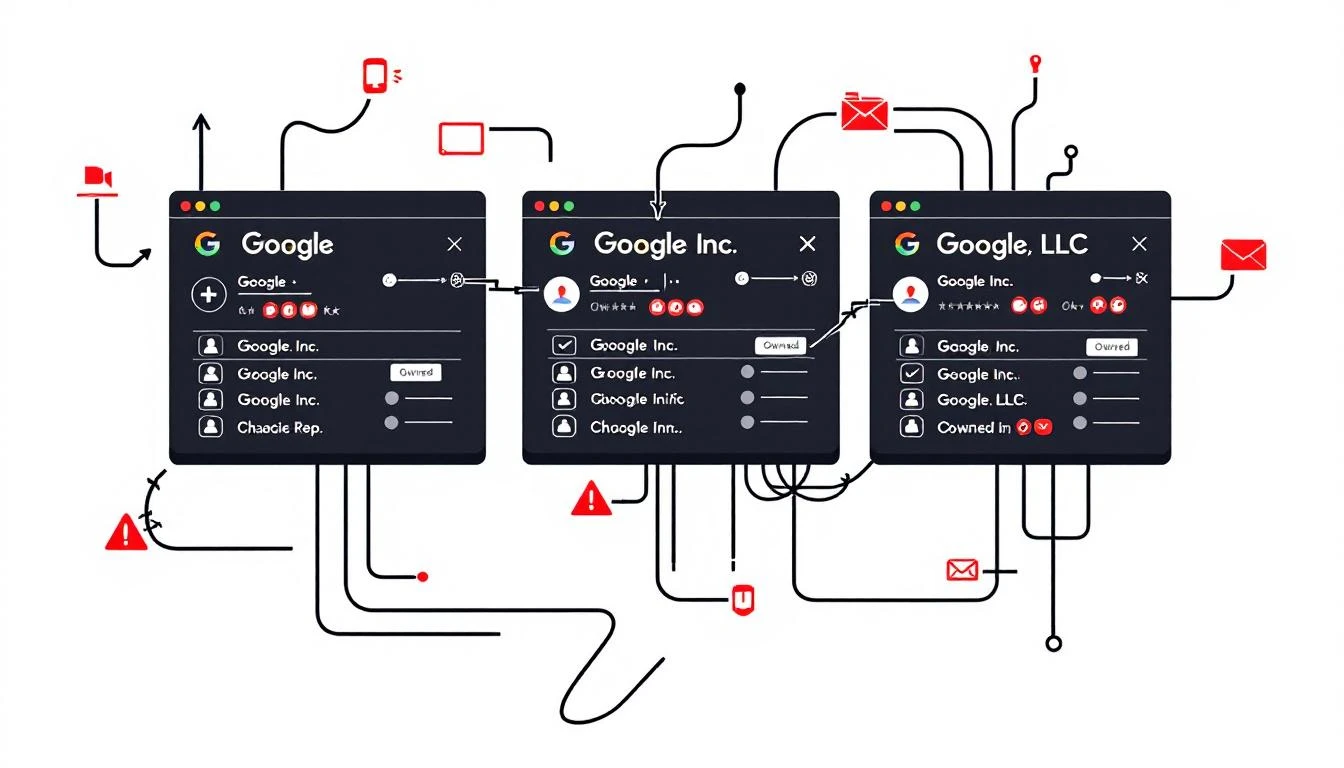
Chaotic CRM duplicates

Imagine this: Rep A calls the VP of Sales at "Google". Rep B calls the same VP at "Google Inc.". Both log activities. One enriches the contact with LinkedIn data. Then someone merges "Google LLC" into the mixβ€”wiping the enrichment.

Your Salesforce (or HubSpot, etc.) now has fragmented histories across three records. Reporting shows "Google" as three separate accounts. Pipeline velocity tanks. Reps waste hours deduping instead of selling.

This isn't hypothetical. It's your CRM right now. And it's costing you.

The Scale of the Problem: Hard Data​

CRM data decays at 30% per year on average (DataScienceCentral). In tech? 35-45% (SparkDBI 2026 guide).

Duplicates are the silent killer. Salesforce's own docs highlight running duplicate jobs across orgs because they're that common. Trailhead modules teach admins how to fight themβ€”implying everyone's losing.

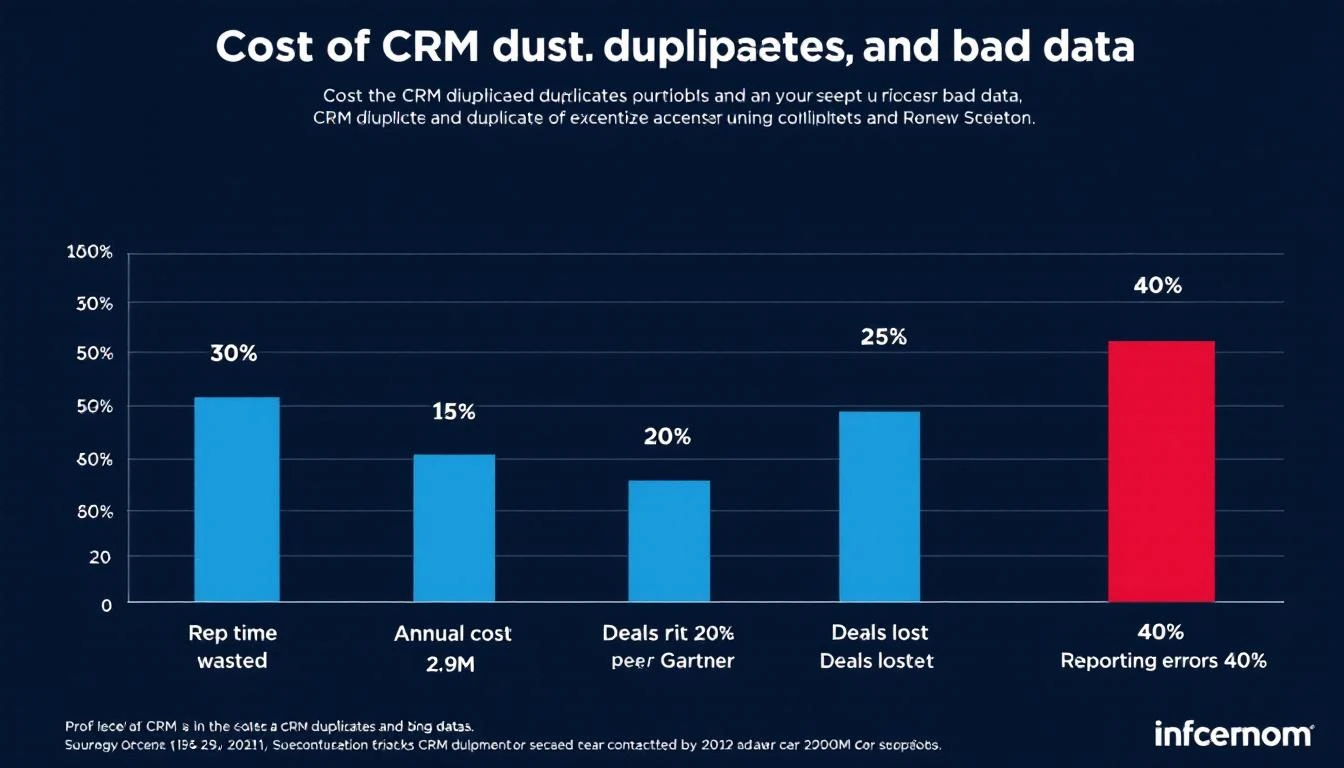
Gartner: Poor data quality costs orgs $12.9M annually. (Cited across RevOps802, CambridgeSpark, Plauti). That's not pocket change.

Quantified Costs​

  • Rep Time Wasted: 30% of selling time chasing ghosts (our analysis + industry benchmarks).
  • Deals Lost: Conflicting outreach kills 20% of pipeline (ZoomInfo Pipeline).
  • Reporting Errors: 40% inaccuracy from dupes skews forecasts.

CRM costs chart

For a 50-person sales team ($100k/rep ACV):

  • $1.2M/year rep time lost.
  • 15 deals tanked quarterly from double-calls.
  • $500k pipeline invisibility.

See our related posts:

Why Native CRM Tools Fail​

Salesforce Duplicate Rules? They warn post-entry. Merging? Discards fields arbitrarily.

Result: Enriched data (tech stack, funding) vanishes. Activities split.

Smart Deduplication: Prevention + Preservation​

Fix it upstream:

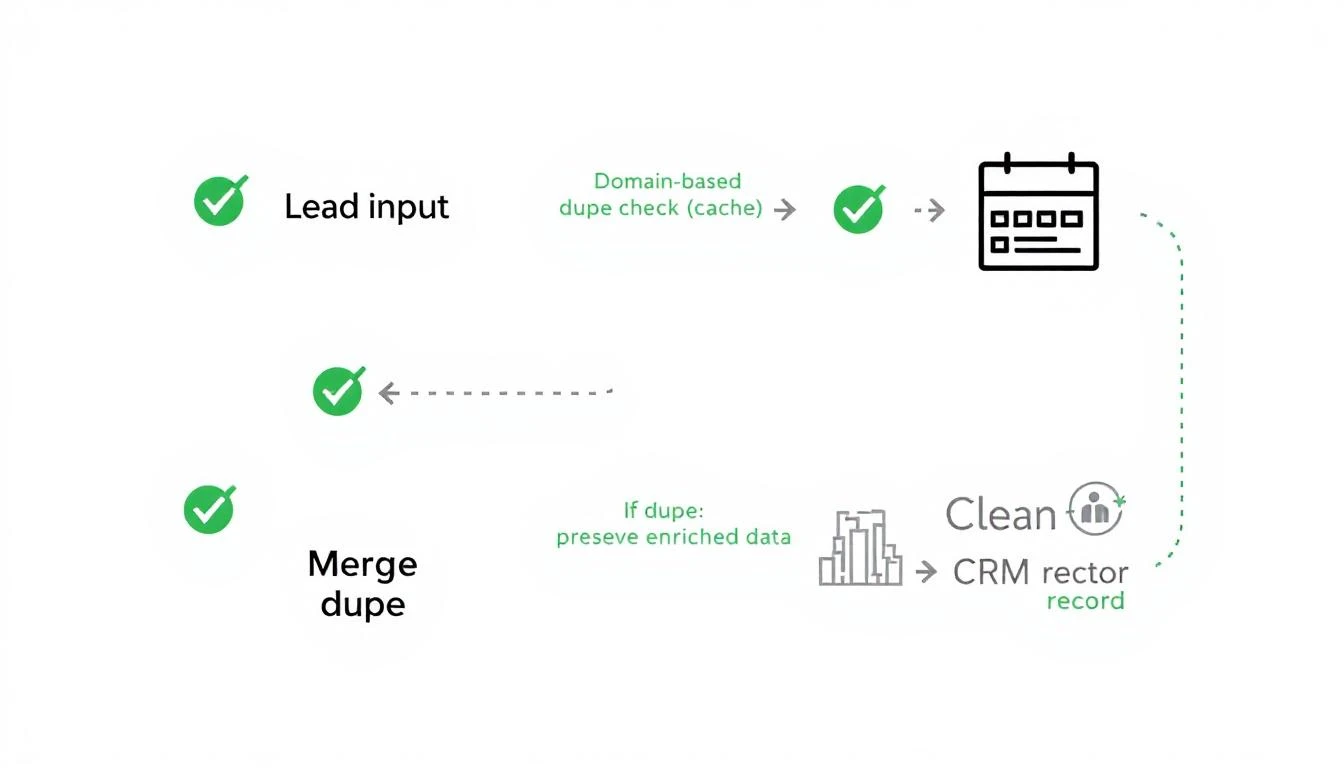
  1. Domain-Based Pre-Entry Check: Cache domains. "google.com"? Route to existing.
  2. Preserve Best Data on Merge: Keep enriched fields, latest activity.
  3. Handle Locks Gracefully: No contention crashes.

Smart dedup workflow

MarketBetter implements this natively. Leads hit our system β†’ dupe scan β†’ single clean record in your CRM.

No more triple-Googles. Reps aligned. Reporting accurate.

Real-World Impact​

Teams using proactive dedup see:

  • 27% faster pipeline velocity.
  • 18% higher close rates (internal benchmarks).
  • Zero manual merges.

Book a demo to see it prevent dupes live.


Sources: SparkDBI, Gartner via multiple studies, Salesforce Docs, ZoomInfo, DataLadder.

Attio CRM Pricing Breakdown 2026: Free to Enterprise (Real Costs)

Β· 6 min read

Attio publishes pricing on their website β€” already refreshing in a market where "contact sales" is the norm. But the per-user numbers on the pricing page don't tell the full story.

Here's what Attio actually costs for real sales teams, including the features you need, the ones locked behind higher tiers, and the total stack cost when you add the tools Attio doesn't include.

Attio Pricing Plans (February 2026)​

Free Plan β€” $0/month​

FeatureIncluded
SeatsUp to 3
Contact syncingReal-time
Data enrichmentAutomatic
Custom objectsLimited
Email syncBasic
SupportCommunity/docs

Who it's for: Solopreneurs and tiny teams testing whether Attio's data model fits their business. The 3-seat cap makes this impractical for any real sales team, but it's a genuine free tier β€” not a 14-day trial disguised as "free."

What's missing: Private lists, enhanced email sending, no seat limits, advanced automation. You'll hit the ceiling quickly if you're doing real outbound.

Plus Plan β€” $36/user/month (or $29/user billed annually)​

FeatureIncluded
SeatsUnlimited
Private listsβœ…
Enhanced email sendingβœ…
Custom objectsMore flexibility
AutomationsBasic workflows
SupportStandard email

Annual cost for 5 users: $1,740/year ($145/month) Monthly cost for 5 users: $2,160/year ($180/month)

Who it's for: Small sales teams (3-10 people) that need collaboration features without enterprise complexity. The jump from Free to Plus is mainly about removing the seat limit and adding email features.

What's missing: Call intelligence, sequences, advanced permissions, priority support. If your SDRs need to make calls through the CRM or run multi-step outreach sequences, you need Pro.

Pro Plan β€” $86/user/month (or $69/user billed annually)​

FeatureIncluded
Everything in Plusβœ…
Call intelligenceβœ…
Sequencesβœ…
Advanced permissionsβœ…
Priority supportβœ…
Advanced automationsConditional triggers

Annual cost for 5 users: $4,140/year ($345/month) Monthly cost for 5 users: $5,160/year ($430/month)

Who it's for: Growing sales teams that need call tracking, sequencing, and team permissions. This is where Attio becomes a real sales tool rather than just a contact database.

What's missing: Unlimited custom objects, SSO, dedicated support, advanced security features. Enterprise compliance requirements push you to the next tier.

Enterprise Plan β€” Custom pricing​

FeatureIncluded
Everything in Proβœ…
Unlimited objectsβœ…
Unlimited teamsβœ…
SSO/SAMLβœ…
Advanced securityβœ…
Dedicated supportβœ…

Estimated cost: Based on market reports, expect $100-150+/user/month for teams of 20+. Attio doesn't publish Enterprise pricing, so you'll need to contact their sales team.

Who it's for: Companies with 50+ users that need enterprise security, compliance (SOC 2, SSO), and unlimited data modeling flexibility.

Real Cost for a 10-Person Sales Team​

Let's calculate what a 10-person SDR team actually pays:

PlanMonthly (billed monthly)Monthly (billed annually)Annual Total
Free$0 (3 seats max)$0 (3 seats max)$0
Plus$360/mo$290/mo$3,480/yr
Pro$860/mo$690/mo$8,280/yr
EnterpriseCustomCustom~$15,000-18,000/yr (est.)

The Hidden Costs: What Attio Doesn't Include​

Attio is a CRM. A great one. But SDR teams need more than a CRM. Here's what you'll spend on top of Attio:

Tool Stack You'll Need Alongside Attio​

Tool CategoryExamplesMonthly Cost
Website visitor IDWarmly, Clearbit, RB2B$300-1,500/mo
Outbound sequencesOutreach, SalesLoft, Instantly$300-2,000/mo
DialerNooks, Orum, Aircall$250-500/mo
Data enrichmentClay, Apollo, ZoomInfo$200-1,000/mo
Email deliverabilityWarmup tools, verification$50-200/mo
Total additional tools$1,100-5,200/mo

So your real SDR stack cost with Attio Pro:

  • Attio: $690/mo (10 users, annual)
  • Additional tools: $1,100-5,200/mo
  • Total: $1,790-5,890/month

That's $21,480-70,680 per year β€” and you're managing 4-6 separate vendor relationships, data syncs, and billing cycles.

The Alternative: All-in-One SDR Platforms​

Platforms like MarketBetter bundle visitor identification, email automation, smart dialer, AI chatbot, and daily SDR playbook into a single platform. The TCO comparison:

  • Attio + tool stack: $1,790-5,890/month for 10 SDRs
  • MarketBetter (all-in-one): Significantly lower when you factor in tool consolidation

You still might want a CRM alongside MarketBetter for deal management and forecasting β€” but you won't need 4-5 additional point solutions.

Attio vs. Other CRM Pricing​

CRMStarting Price10-User Annual CostSDR Features Built In?
Attio Free$0$0 (3 seats max)❌
Attio Plus$29/user/mo$3,480❌
Attio Pro$69/user/mo$8,280Basic (sequences, calls)
HubSpot Starter$20/user/mo$2,400Some (email, basic sequences)
HubSpot Professional$100/user/mo$12,000More (but expensive)
Pipedrive Advanced$28/user/mo$3,360Basic (email, calls)
Salesforce Professional$80/user/mo$9,600❌ (needs Sales Cloud add-ons)
Close CRM$29/user/mo$3,480βœ… (calling + email built in)

Attio is competitively priced as a CRM. It's cheaper than HubSpot Professional and Salesforce while offering more flexibility. The value question isn't Attio's price β€” it's the total stack cost when you add the SDR tools it doesn't include.

When Attio's Pricing Makes Sense​

Great value if you:

  • Need a modern, flexible CRM and already have your SDR tool stack figured out
  • Are a startup under 10 people where the Free or Plus plan covers your needs
  • Use Attio for non-sales functions (VC deal flow, partnerships, recruiting)
  • Want to replace a bloated Salesforce instance with something faster and cheaper

Less value if you:

  • Are building an SDR team from scratch and need to buy 5 tools on top of Attio
  • Need visitor identification, AI email sequences, and a dialer (none included)
  • Want one platform that tells SDRs what to do, not just where to store contacts

Bottom Line​

Attio's pricing is honest and competitive. The free tier is real. The paid tiers are reasonable. The product is excellent.

The question isn't whether Attio is too expensive β€” it's whether your total SDR stack (Attio + outbound + visitor ID + dialer + enrichment) is more expensive and complex than an all-in-one alternative.

Want to see how an all-in-one SDR platform compares? Book a demo with MarketBetter β†’


Pricing sourced from attio.com, hackceleration.com, and salesforge.ai as of February 2026. All prices in USD unless noted. Attio uses EUR on their European pricing page β€” we converted at current rates where applicable.

Attio CRM Review 2026: The Flexible CRM That's Missing One Thing

Β· 7 min read

Attio is the CRM that makes you wonder why Salesforce is still a $30 billion company.

Custom objects you can create in minutes. Sub-50ms queries on massive datasets. A Notion-like interface that your team will actually enjoy using. Automatic contact enrichment. Real-time email and calendar sync.

It's genuinely impressive. 4.7 out of 5 on G2. Backed by Point Nine and Balderton Capital. Used by thousands of companies from early-stage startups to scaling enterprises.

But after evaluating Attio for SDR team workflows specifically, we found one critical gap: Attio tells you where your contacts are in the pipeline. It doesn't tell your SDRs who to contact next or why.

Here's our full review.

What Attio Gets Right​

Custom Objects: The Killer Feature​

Most CRMs force your business into pre-built categories: Contacts, Companies, Deals. Attio lets you create any object type β€” Investors, Portfolio Companies, Partnerships, Vendors, whatever your business model requires.

One reviewer on hackceleration.com built a custom pipeline with 8 specific objects and complex relationships between them. That's the kind of flexibility that makes Salesforce admins cry.

Why it matters for sales: You can model your exact sales process. Territory assignments, deal stages, product lines, partner channels β€” all customizable without calling an admin or hiring a consultant.

Performance That Actually Scales​

Attio claims sub-50ms latency on millions of records. Independent reviewers tested with 50,000+ contacts and confirmed no slowdown in filtering or sorting. That's not marketing fluff β€” that's real engineering.

For comparison, many Salesforce instances start lagging with complex views over 10,000 records. HubSpot handles large lists well but gets slow with complex custom properties.

The Best CRM UX on the Market​

Every Attio review mentions the interface. It looks like Notion met a CRM and they had a beautiful child. List views are intuitive. Filters are instant. Kanban boards are clean.

G2 reviewers consistently say things like:

  • "Strikes the perfect balance between power and simplicity"
  • "Fully customizable β€” feels like a CRM truly built for our business"
  • "So fast and easy to work with"

This isn't subjective fluff. Good UX drives adoption. CRMs that reps hate using don't get data entered. Attio solves the "nobody uses the CRM" problem better than almost anything on the market.

Honest, Transparent Pricing​

Free tier with real features (not a trial). Plus at $29-36/user/month. Pro at $69-86/user/month. Published on their website. No "contact sales for pricing" games.

In a market where competitors hide behind custom quotes to maximize extraction, Attio's transparent pricing is refreshing.

AI Features (Ask Attio)​

Attio recently launched "Ask Attio" β€” an AI layer that lets you search, create, and interact with your CRM data using natural language. They also support MCP (Model Context Protocol) for connecting external AI tools.

It's early, but the direction is right. AI-native CRM features will separate winners from losers in the next 2-3 years.

What Attio Gets Wrong (Or Just Doesn't Do)​

No Website Visitor Identification​

Your CRM tracks contacts you already know about. But 98% of website visitors never fill out a form. They browse your pricing page, read your case studies, and leave.

Attio can't tell you those visitors exist. Tools like MarketBetter identify anonymous visitors at the company and contact level β€” turning invisible traffic into actionable leads.

This is the biggest gap for SDR teams: the contacts you DON'T have are more valuable than the ones you do.

No Daily SDR Playbook​

Attio shows you pipeline views, list views, and board views. But it doesn't tell your SDRs: "Here are the 15 people you should contact today, ranked by signal strength, with suggested messaging for each."

That's the difference between a record system and an action system. SDR managers using Attio still need to manually assign tasks, build call lists, and prioritize outreach. MarketBetter's daily playbook automates all of this.

Limited Outbound Execution​

Attio Pro added sequences and call intelligence, which is a step in the right direction. But it's basic compared to dedicated outbound tools:

  • Email sequences exist but lack AI personalization at scale
  • No smart dialer β€” you can log calls, but there's no power dialing or click-to-call flow optimized for high-volume SDR work
  • No AI chatbot to engage website visitors in real-time
  • No multi-channel orchestration β€” coordinating email, phone, LinkedIn, and chat touchpoints requires separate tools

Reporting Gaps for Sales Managers​

G2 reviewers flagged this repeatedly: "Reporting by sales rep isn't built in β€” I have to do a lot of workarounds."

For SDR managers who need to track activity metrics (calls made, emails sent, meetings booked, conversion rates by rep), Attio's reporting is still catching up to HubSpot and Salesforce.

Integration Ecosystem Is Still Growing​

Attio connects to Gmail, Outlook, Slack, Zapier, and Mailchimp. But compared to HubSpot's 1,500+ integrations or Salesforce's AppExchange, the native integration library is limited.

Reviewers note: "Connecting with other tools isn't the easiest thing right now" and "the number of apps and native integrations could be improved."

If your SDR stack involves 5-6 specialized tools, you'll be relying heavily on Zapier or custom API work.

Support Response Times​

Standard support responds in 12-24 hours via email. No live chat on lower tiers. Priority support on Pro gets faster responses, but it's not instant.

For comparison, MarketBetter offers direct support with faster response times, and HubSpot provides phone support on higher tiers. If your team hits a blocking issue during a busy prospecting day, waiting 12-24 hours isn't ideal.

Who Should Use Attio​

Attio is excellent for:

  • Startups (seed to Series B) that need a modern CRM without Salesforce complexity
  • VC and PE firms tracking deal flow across multiple fund objects
  • Agencies managing client relationships with custom data models
  • Sales teams that already have separate outbound/dialer/visitor ID tools and just need a flexible CRM
  • RevOps leaders who want to build custom data models without hiring Salesforce admins

Attio is NOT the right fit for:

  • SDR teams that need visitor identification, daily task prioritization, and multi-channel outreach in one tool
  • Companies looking to consolidate their sales tech stack (Attio is a CRM, not an all-in-one)
  • Enterprise orgs with heavy compliance, audit, and governance requirements (enterprise features are newer)
  • Teams that need deep native integrations with specialized sales tools

Attio vs. Alternatives​

CRMBest ForStarting PriceSDR-Specific Features
AttioFlexible data modelingFree / $29/userBasic (sequences on Pro)
HubSpotAll-in-one marketing + salesFree / $20/userGood (but expensive at scale)
PipedriveSimple deal tracking$14/userBasic calling + email
CloseInside sales teams$29/userBuilt-in calling + email
SalesforceEnterprise complexity$25/userExtensive (with add-ons)
MarketBetterSDR workflow + pipeline genContact for pricingβœ… Full SDR OS

The Bottom Line​

Attio rating: 4.5/5 β€” one of the best CRMs launched in the last 5 years.

It excels at what a CRM should do: store, organize, and surface relationship data with beautiful UX and genuine flexibility.

Where it falls short is where most CRMs fall short β€” turning that data into SDR action. Knowing that a contact exists in your pipeline doesn't tell your rep whether to call them today or next week, what to reference in the email, or that their company just visited your pricing page three times.

If you need a CRM: Attio is a top-3 choice. Especially for startups and scaling teams.

If you need an SDR platform: Look at tools that include visitor ID, daily playbook, smart dialer, and AI email β€” like MarketBetter.

Best setup: Use both. Attio for relationship management and deal tracking. MarketBetter for SDR execution and pipeline generation. They solve different problems.


Review based on Attio's publicly available features, pricing, G2 reviews (4.7/5), hackceleration.com independent testing, and Capterra/Product Hunt user feedback. Last updated February 2026.

7 Best Attio Alternatives for Sales Teams in 2026 (With Pricing)

Β· 8 min read

Attio is one of the best modern CRMs β€” flexible custom objects, beautiful UX, transparent pricing. But it's not the right fit for every team.

Maybe you need more SDR-specific features (visitor ID, smart dialer, daily playbook). Maybe you want deeper integrations. Maybe you need enterprise compliance that Attio's still building out. Or maybe you just want to see what else is out there before committing.

Here are 7 Attio alternatives worth evaluating, with real pricing and honest assessments of who each one is actually built for.

1. MarketBetter β€” Best for SDR Teams That Need More Than a CRM​

Starting at: ~$99/user/month
G2 Rating: 4.97/5
Best for: SDR teams that need pipeline generation, not just pipeline tracking

While Attio excels as a flexible CRM, MarketBetter is a complete SDR operating system. It doesn't just store contacts β€” it identifies anonymous website visitors, builds daily prioritized task lists, automates multi-channel outreach, and includes a smart dialer.

Why choose over Attio:

  • Website visitor identification (Attio doesn't have this)
  • AI-powered daily SDR playbook β€” tells reps exactly who to contact and why
  • Smart dialer built for warm outbound
  • AI chatbot that engages every visitor
  • Champion tracking for job change alerts
  • Multi-channel orchestration (email + phone + LinkedIn + chat)

Why Attio might be better:

  • More flexible data modeling (custom objects for any business function)
  • Better for non-sales use cases (VC deal flow, recruiting, partnerships)
  • Lower starting price for basic CRM needs

The verdict: If your problem is "my SDRs don't know who to call today," MarketBetter solves it directly. If your problem is "we need a flexible database for all our business relationships," Attio is the better fit.

See MarketBetter in action β†’

2. HubSpot Sales Hub β€” Best for Marketing + Sales Alignment​

Starting at: Free / $20/user/month (Starter) / $100/user/month (Professional)
G2 Rating: 4.4/5
Best for: Companies that want CRM + marketing automation in one ecosystem

HubSpot is the 800-pound gorilla. Its CRM is free. Its marketing tools are industry-leading. Its sales features are solid (if expensive at scale).

Why choose over Attio:

  • 1,500+ native integrations vs. Attio's growing but smaller library
  • Marketing automation built in (email campaigns, landing pages, forms)
  • Deeper reporting and analytics out of the box
  • Massive support ecosystem (phone support, HubSpot Academy, community)
  • Proven at enterprise scale

Why Attio might be better:

  • Far more flexible data modeling β€” HubSpot's custom objects are clunky by comparison
  • Significantly cheaper for teams that don't need marketing tools
  • Faster, cleaner UX β€” HubSpot's interface can feel bloated
  • No feature gating β€” HubSpot locks key features behind expensive tiers

The verdict: If you need CRM + marketing automation and don't mind paying $100+/user at scale, HubSpot is the safe choice. If you want a lean, modern CRM without the marketing bloat, Attio wins.

3. Pipedrive β€” Best for Simple Pipeline Management​

Starting at: $14/user/month
G2 Rating: 4.3/5
Best for: Small sales teams that want simplicity over flexibility

Pipedrive does one thing well: visual deal pipelines. It's the CRM for teams that hate CRMs. Drag-and-drop deals, simple automation, minimal setup.

Why choose over Attio:

  • Simpler to set up β€” less flexibility but also less complexity
  • Built-in calling and email on all paid plans
  • Larger integration marketplace
  • More mature mobile app
  • Lower starting price ($14 vs $29/user)

Why Attio might be better:

  • Custom objects give you far more modeling flexibility
  • Better performance on large datasets
  • More modern, faster interface
  • AI features (Ask Attio) are more advanced
  • Better for growing teams that will outgrow Pipedrive's simplicity

The verdict: Pipedrive is great for teams under 10 that want to start simple. Attio is better for teams that want flexibility now and room to grow.

4. Close β€” Best for Inside Sales Teams​

Starting at: $29/user/month
G2 Rating: 4.7/5
Best for: Inside sales teams that live on the phone

Close is the CRM that was built for calling. Built-in power dialer, SMS, call recording, voicemail drop β€” all native, not bolted on. If your SDRs make 50+ calls per day, Close is worth serious consideration.

Why choose over Attio:

  • Built-in power dialer (Attio's calling is basic)
  • Native SMS messaging
  • Call recording and coaching features
  • Email sequences with A/B testing
  • Better for high-volume SDR activity tracking

Why Attio might be better:

  • More flexible data modeling for complex business processes
  • Better UX for non-calling workflows
  • Stronger enrichment features
  • More modern architecture and API
  • Better for teams that do more than inside sales

The verdict: If your SDR team is phone-first, Close beats Attio. If you need flexibility beyond calling, Attio is more adaptable.

5. Salesforce β€” Best for Enterprise Complexity​

Starting at: $25/user/month (Essentials) / $80/user (Professional) / $165/user (Enterprise)
G2 Rating: 4.4/5
Best for: Large enterprises with complex sales processes and compliance requirements

Salesforce is still the CRM standard for enterprises. Not because it's the best UX (it isn't), but because it handles complexity that younger tools can't: territory management, CPQ, advanced forecasting, AppExchange ecosystem, SOC 2, HIPAA, FedRAMP.

Why choose over Attio:

  • Handles enterprise-grade complexity (CPQ, territory management, advanced forecasting)
  • 5,000+ AppExchange integrations
  • Mature compliance certifications
  • Proven at 10,000+ user deployments
  • Revenue intelligence and AI (Einstein) at scale

Why Attio might be better:

  • 10x faster to set up and customize
  • Modern UX vs. Salesforce's dated interface
  • 80% cheaper for small-mid teams
  • No Salesforce admin required
  • Custom objects are easier to create and maintain

The verdict: If you're 500+ employees with complex RevOps, Salesforce remains the safe choice. If you're under 200 and want something modern, Attio is better in almost every way.

6. Folk CRM β€” Best for Relationship-First Teams​

Starting at: $20/user/month
G2 Rating: 4.5/5
Best for: Agencies, consultants, and network-driven businesses

Folk is Attio's closest philosophical sibling β€” both are modern, flexible, and designed for teams that hate traditional CRMs. Folk leans even more toward relationship management with features like contact enrichment from LinkedIn, shared contact views, and mail merge.

Why choose over Attio:

  • Stronger LinkedIn integration for prospecting
  • Built-in mail merge for batch outreach
  • More affordable for small teams ($20 vs $29/user)
  • Chrome extension for capturing contacts from anywhere
  • Simpler setup for basic use cases

Why Attio might be better:

  • More powerful custom objects and data modeling
  • Better performance at scale (sub-50ms on large datasets)
  • Stronger API and webhook ecosystem
  • More advanced automation capabilities
  • Better suited for complex, growing organizations

The verdict: Folk is ideal for agencies and consultants managing hundreds of relationships. Attio is better for scaling companies with complex data models.

7. Monday Sales CRM β€” Best for Project + Sales Combo​

Starting at: $12/seat/month
G2 Rating: 4.6/5
Best for: Teams that blend project management with sales tracking

Monday CRM is built on Monday.com's work management platform. It's uniquely good for teams where sales involves project components β€” implementation tracking, onboarding workflows, cross-functional handoffs.

Why choose over Attio:

  • Project management + CRM in one platform
  • Visual boards for cross-functional workflows
  • Built-in time tracking, docs, and dashboards
  • 200+ native integrations
  • Lower starting price ($12/seat)

Why Attio might be better:

  • Purpose-built for CRM (Monday CRM is a CRM layer on a project tool)
  • Faster for pure sales workflows
  • Better contact enrichment
  • More flexible data modeling
  • Cleaner interface for sales-focused teams

The verdict: If your sales team also manages implementations or projects, Monday CRM's hybrid approach is unique. For pure CRM, Attio is more polished.

Which Alternative Is Right for You?​

If you need...Choose...Why
SDR execution platformMarketBetterVisitor ID, playbook, dialer, chatbot
CRM + marketing automationHubSpotLargest ecosystem, marketing tools built in
Simple pipeline trackingPipedriveLowest complexity, visual pipeline
Phone-heavy inside salesCloseBest built-in dialer and calling
Enterprise complexitySalesforceHandles any process at any scale
Relationship managementFolkLinkedIn-first, great for agencies
Sales + project managementMonday CRMHybrid work management + CRM

The Real Question​

Most teams evaluating Attio alternatives fall into two camps:

  1. "I need a better CRM" β†’ Look at HubSpot, Pipedrive, Close, or Folk depending on your specific needs.

  2. "I need my sales team to generate more pipeline" β†’ You don't need a different CRM. You need an SDR platform like MarketBetter that tells reps who to contact, automates outreach, and identifies visitors you don't even know about.

A CRM alone won't fix pipeline generation. The best CRM in the world is useless if your SDRs don't know who to call.


Pricing verified from official websites as of February 2026. G2 ratings from g2.com. All prices reflect annual billing unless noted.

10 Best Salesforce Sales Cloud Alternatives in 2026 (For SDR Teams That Need More)

Β· 8 min read

Salesforce Sales Cloud is the default CRM. But "default" doesn't mean "right for everyone."

If you're an SDR manager paying $175-550/user/month for Salesforce Enterprise and still cobbling together separate tools for email sequences, dialers, visitor ID, and prospecting β€” you're solving the wrong problem with the wrong tool.

Here are 10 alternatives that either replace Salesforce entirely or handle the SDR workflow gap that Salesforce leaves wide open.

Why Teams Leave Salesforce Sales Cloud​

Based on G2 reviews (25,000+ reviews, so the patterns are real):

  1. Cost escalation β€” Base license is just the beginning. Add-ons, admin costs, and implementation push real costs 2-3x higher than the sticker price.
  2. Complexity overkill β€” Most SDR teams use 15% of Salesforce's features but pay for 100%.
  3. SDR workflow gaps β€” No built-in visitor ID, no native smart dialer, no daily playbook. SDRs juggle 5+ tools daily.
  4. Admin dependency β€” Every workflow change requires a Salesforce admin ($100K+/year salary) or consultant ($150-250/hr).
  5. Slow time-to-value β€” Implementation takes 3-6 months. Most alternatives launch in days.

The 10 Best Alternatives​

1. MarketBetter β€” Best for SDR Teams That Need an All-in-One Platform​

Pricing: $99/user/month (Standard plan) | G2 Rating: 4.97/5 | Best for: B2B SDR teams (3-15 reps)

MarketBetter isn't a CRM β€” it's the SDR operating system that sits on top of your CRM. While Salesforce tracks where deals are, MarketBetter tells SDRs what to do next.

What you get that Salesforce doesn't include:

  • Daily SDR Playbook with AI-prioritized tasks
  • Website visitor identification (company + person-level)
  • Built-in smart dialer
  • AI chatbot for website visitors
  • Hyper-personalized email sequences
  • Intent signal aggregation

Why teams switch: SDRs go from toggling between 5-7 tools to one screen. 70% less manual work. 2x faster speed-to-lead.

Best pairing: Use with Salesforce (or any CRM) as the system of record. MarketBetter handles prospecting; Salesforce handles pipeline.

2. HubSpot Sales Hub β€” Best Full CRM Replacement for Mid-Market​

Pricing: Free - $150/user/month | G2 Rating: 4.4/5 (12,000+ reviews) | Best for: Mid-market companies wanting CRM + marketing alignment

HubSpot is the most common Salesforce replacement, especially for companies that want marketing and sales on one platform.

Pros over Salesforce:

  • Free tier is genuinely useful (not 2-user limited)
  • Native email sequences included at Professional tier
  • Much simpler admin β€” no dedicated admin needed
  • Built-in calling at Sales Hub Professional
  • Marketing Hub integration is seamless

Cons vs Salesforce:

  • Reporting less powerful at enterprise scale
  • Customization ceiling is lower
  • AppExchange ecosystem is smaller
  • Enterprise features (predictive AI, advanced forecasting) lag behind

Price comparison: HubSpot Sales Hub Professional at $90/user/month vs Salesforce Enterprise at $175/user/month β€” nearly half the price with sequences and calling included.

3. Pipedrive β€” Best for Small Teams That Want Simplicity​

Pricing: $14-99/user/month | G2 Rating: 4.3/5 (2,000+ reviews) | Best for: Small sales teams (2-10 reps) who find Salesforce overwhelming

Pipedrive was built around a visual pipeline β€” drag deals through stages, and the CRM tells you what to work on next.

Pros over Salesforce:

  • Visual pipeline that SDRs actually enjoy using
  • $14/month starting price vs $25/month Salesforce Starter
  • Built-in email automation at Professional tier ($49/user)
  • AI sales assistant at all paid tiers
  • Setup in hours, not months

Cons vs Salesforce:

  • Not built for complex enterprise sales processes
  • Limited reporting compared to Salesforce
  • Fewer integrations (400+ vs 7,000+)
  • No built-in visitor ID or smart dialer

4. Apollo.io β€” Best for Outbound Prospecting at Scale​

Pricing: Free - $149/user/month | G2 Rating: 4.7/5 (8,000+ reviews) | Best for: SDR teams focused on cold outbound with a large prospect database

Apollo combines a B2B contact database (275M+ contacts) with sequencing and a basic CRM β€” making it the go-to for teams whose primary job is cold outreach.

Pros over Salesforce:

  • 275M+ contact database included (Salesforce has zero built-in data)
  • Email sequences included at all paid tiers
  • LinkedIn integration for social selling
  • $49/user/month for Professional vs $175+ for Salesforce
  • Built-in intent signals

Cons vs Salesforce:

  • CRM functionality is basic
  • Data accuracy varies (60-70% in some segments)
  • No visitor ID or smart dialer
  • Not enterprise-grade for pipeline management

5. Freshsales (by Freshworks) β€” Best Budget CRM with AI​

Pricing: Free - $69/user/month | G2 Rating: 4.5/5 (1,200+ reviews) | Best for: SMBs wanting a CRM with built-in phone and email

Freshsales includes a built-in phone, email, chat, and AI scoring β€” features Salesforce charges extra for.

Pros over Salesforce:

  • Built-in phone at all paid tiers (no third-party dialer needed)
  • AI lead scoring at Growth tier ($9/user/month!)
  • Email sequences included
  • Chat/messenger integration native
  • 90% cheaper than Salesforce Enterprise

Cons vs Salesforce:

  • Scaling beyond 50 users gets limiting
  • Reporting is basic compared to Salesforce
  • Smaller integration ecosystem
  • Less customizable

6. Outreach β€” Best for Enterprise SDR Sequence Management​

Pricing: Custom (~$100-130/user/month) | G2 Rating: 4.3/5 (3,500+ reviews) | Best for: Enterprise SDR teams (20+ reps) running high-volume sequences

Outreach is the gold standard for sales engagement β€” multi-step sequences, A/B testing, and rep coaching. It's what many Salesforce shops add on top of their CRM.

Pros over Salesforce:

  • Best-in-class email sequencing and A/B testing
  • Built-in dialer with call recording
  • Rep coaching and performance analytics
  • Designed for SDR workflow (not adapted from CRM)

Cons vs Salesforce:

  • Not a CRM replacement β€” sits on top of Salesforce
  • Expensive for small teams (custom pricing, typically $100+/user)
  • Complex setup for advanced features
  • No visitor ID or chatbot

7. Close CRM β€” Best for Inside Sales Teams​

Pricing: $29-139/user/month | G2 Rating: 4.7/5 (900+ reviews) | Best for: Inside sales teams (5-25 reps) doing primarily phone + email

Close was built specifically for inside sales β€” with calling, email, and SMS built directly into the CRM. No add-ons needed.

Pros over Salesforce:

  • Built-in power dialer, predictive dialer, and SMS
  • Email sequences native at all tiers
  • Call coaching and recording included
  • Fraction of the cost ($59/user for Startup vs $175 Salesforce)
  • Setup in a day, not months

Cons vs Salesforce:

  • Not built for enterprise or complex deal management
  • Reporting is functional but basic
  • Fewer integrations
  • No visitor ID or intent signals

8. Instantly.ai β€” Best for High-Volume Cold Email at Minimum Cost​

Pricing: $30-77.6/month (not per user) | G2 Rating: 4.8/5 (3,500+ reviews) | Best for: Startups and solopreneurs doing cold email at scale

Instantly is the opposite of Salesforce β€” a single-purpose tool that sends cold emails at massive scale with inbox rotation and warmup.

Pros over Salesforce:

  • $30/month for unlimited email accounts (not per user!)
  • Email warmup and deliverability tools built-in
  • B2B lead database (160M+ contacts)
  • Dead simple β€” 15-minute setup

Cons vs Salesforce:

  • Not a CRM at all β€” email only
  • No pipeline management, forecasting, or deal tracking
  • No phone, no multi-channel
  • Deliverability can be risky at very high volume

9. Monday Sales CRM β€” Best for Teams Already Using Monday.com​

Pricing: $12-28/user/month | G2 Rating: 4.6/5 (800+ reviews) | Best for: Teams using Monday.com for project management who want sales tracking in the same tool

Monday Sales CRM turns Monday's project management interface into a visual sales pipeline with email integration, automations, and dashboards.

Pros over Salesforce:

  • $12/user/month starting price
  • Familiar Monday.com interface (minimal training)
  • Visual deal tracking with custom automations
  • Email integration and activity tracking
  • Reasonable reporting for the price

Cons vs Salesforce:

  • Not a true sales-first CRM
  • No built-in dialer or sequences
  • Limited for complex B2B sales cycles
  • Automation limits on lower tiers

10. Clari β€” Best for Revenue Intelligence (Forecasting Focus)​

Pricing: Custom (~$50-100/user/month estimated) | G2 Rating: 4.5/5 (1,800+ reviews) | Best for: Revenue ops teams that need forecasting accuracy above all else

Clari doesn't replace Salesforce's CRM β€” it replaces Salesforce's forecasting. It pulls data from email, calendar, and CRM to predict revenue with AI accuracy that Salesforce's native forecasting can't match.

Pros over Salesforce (for forecasting):

  • AI-powered revenue forecasting that actually works
  • Activity capture without manual logging
  • Pipeline inspection with deal health scores
  • Board-ready revenue reports

Cons:

  • Requires Salesforce (or another CRM) underneath
  • Expensive for small teams
  • Narrow focus β€” forecasting, not prospecting

Quick Comparison Table​

ToolMonthly Cost (5 users)CRMSequencesDialerVisitor IDPlaybook
Salesforce Enterprise$875+ add-onsβœ…Add-onAdd-onAdd-on❌
MarketBetter$99/user/monthBasicβœ…βœ…βœ…βœ…
HubSpot Sales Pro$450βœ…βœ…βœ…Add-on❌
Pipedrive Pro$245βœ…βœ…Add-on❌❌
Apollo Pro$245Basicβœ…βŒβŒβŒ
Freshsales Growth$45βœ…βœ…βœ…βŒβŒ
Outreach~$500-650βŒβœ…βœ…βŒβŒ
Close Startup$295βœ…βœ…βœ…βŒβŒ
Instantly Growth$77.6βŒβœ…βŒβŒβŒ

The Decision Framework​

If you need a CRM replacement: HubSpot, Pipedrive, Freshsales, or Close β€” depending on team size and complexity.

If you need better SDR workflows ON TOP of Salesforce: MarketBetter or Outreach β€” they complement your CRM, not replace it.

If you need cheaper outbound tools: Apollo, Instantly, or Smartlead β€” focused tools at 10-20% of Salesforce's cost.

If you need everything in one platform: MarketBetter β€” the only tool on this list with visitor ID, dialer, chatbot, email sequences, AND daily playbook in one flat-rate package.

Ready to simplify your SDR stack? Book a demo β†’


MarketBetter vs Attio: AI SDR Platform vs Next-Gen CRM [2026]

Β· 8 min read

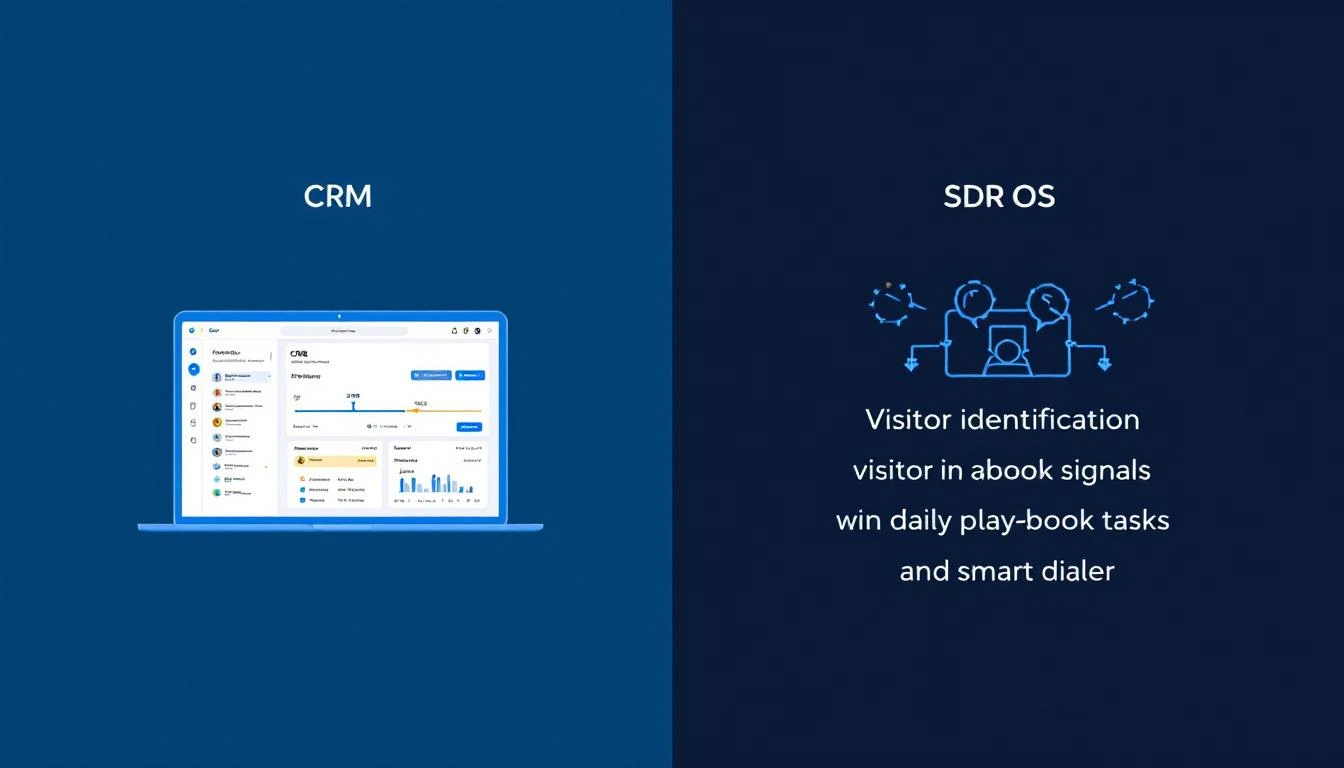
MarketBetter vs Attio comparison for B2B sales teams in 2026

Attio is one of the most impressive CRMs to launch in years. Flexible custom objects, sub-50ms performance on millions of records, Notion-like UX β€” it's the CRM that Salesforce should have built a decade ago.

But here's the disconnect: your SDR team doesn't just need a better place to store contacts. They need to know which contacts to call right now, what to say, and which anonymous website visitors are checking your pricing page at this moment.

Attio solves the CRM problem beautifully. MarketBetter solves the SDR workflow problem β€” the part that actually generates pipeline.

The bottom line: Most growing sales teams need both a CRM and an SDR execution layer. The question isn't Attio or MarketBetter β€” it's whether you need Attio plus MarketBetter, or whether MarketBetter's built-in pipeline management is enough.

What Each Platform Actually Does​

Attio: The Flexible CRM​

Attio is a next-generation CRM built for teams that outgrew spreadsheets but find Salesforce too rigid. Founded in London, it's backed by Point Nine and Balderton Capital, with a 4.7/5 rating on G2.

Core strengths:

  • Custom objects β€” model any business relationship (deals, partnerships, investors, whatever)
  • Real-time data syncing across Gmail, Outlook, and calendar
  • Automatic contact enrichment on every record
  • Sub-50ms query performance even on 50K+ contact databases
  • Workflow automation with conditional triggers
  • Clean, Notion-like interface that non-technical teams actually enjoy using

What Attio is NOT: An outbound sales execution platform. It doesn't identify anonymous website visitors, build daily SDR task lists, automate email sequences with AI personalization, or provide a smart dialer. It's a record system, not an action system.

MarketBetter: The SDR Operating System​

MarketBetter is a complete SDR platform that turns intent signals into pipeline. Instead of storing contacts and hoping your reps figure out what to do, it tells them exactly who to contact, how to reach them, and what to say.

Core strengths:

  • Website visitor identification β€” see which companies are on your site right now
  • Daily SDR Playbook β€” prioritized task list based on signals, not guesswork
  • AI email automation with hyper-personalization
  • Smart dialer built for warm outbound
  • AI chatbot that engages every visitor
  • Champion tracking when contacts change jobs
  • Multi-channel orchestration (email + phone + LinkedIn + chat)

What MarketBetter is NOT: A general-purpose CRM for managing every business relationship. It's purpose-built for sales development β€” finding, engaging, and converting prospects into pipeline.

Feature-by-Feature Comparison​

FeatureMarketBetterAttio
Contact ManagementSales-focused with enrichmentFully customizable objects
Pipeline ManagementSDR pipeline with playbookCustom pipeline views
Website Visitor IDβœ… Built-in❌ Not available
Daily SDR Playbookβœ… AI-prioritized task list❌ Not available
Email Sequencesβœ… AI-personalized automation❌ Basic email sync only
Smart Dialerβœ… Built-in❌ No calling features
AI Chatbotβœ… Engages visitors 24/7❌ Not available
Data Enrichmentβœ… Multi-source (Fiber, EnrichLayer)βœ… Automatic enrichment
Champion Trackingβœ… Job change alerts❌ Not available
Custom ObjectsBasic deal/contact modelβœ… Unlimited custom objects
ReportingSDR performance dashboardsβœ… Flexible custom reports
Workflow AutomationSales-focused automationsβœ… Advanced conditional triggers
IntegrationsHubSpot, Salesforce, SlackGmail, Outlook, Zapier, Slack
AI FeaturesSDR copilot, email writer, chatbotAsk Attio (AI search), MCP
Mobile AppWeb-basediOS/Android
APIREST APIREST + GraphQL API

Pricing Comparison​

Attio Pricing (2026)​

PlanMonthlyAnnual (per user/mo)Key Features
Free$0$03 seats, contact sync, basic enrichment
Plus$36$29No seat limits, private lists, enhanced email
Pro$86$69Call intelligence, sequences, advanced permissions
EnterpriseCustomCustomUnlimited objects, SSO, dedicated support

For a 5-person sales team on Pro: ~$345-430/month

MarketBetter Pricing (2026)​

MarketBetter uses a per-user model with included feature bundles:

  • Starting at ~$99/user/month with visitor identification, email automation, and daily playbook
  • Smart dialer, chatbot, and advanced signals included in higher tiers
  • No hidden per-seat CRM fees β€” the pipeline management is built in

For a 5-person SDR team: Contact for exact pricing at marketbetter.ai/book-demo

Total Cost of Ownership​

Here's the real math most teams miss:

Attio-based SDR stack (5 users):

  • Attio Pro: $345-430/mo
  • Outbound email tool (Outreach/SalesLoft): $500-2,000/mo
  • Visitor ID tool (Warmly/Clearbit): $99/user/month
  • Dialer (Nooks/Orum): $250-500/mo
  • Enrichment (Clay/Apollo): $200-500/mo
  • Total: $1,795-4,930/month

MarketBetter-based SDR stack (5 users):

  • MarketBetter (all features included): ~$99/user/month
  • CRM (HubSpot free or existing): $0-800/mo
  • Total: $500-2,300/month

Attio is affordable as a standalone CRM. But the SDR tool stack you need alongside it can cost 3-5x more than Attio itself.

Where Attio Wins (And We're Honest About It)​

1. Custom data modeling. If your business has complex relationship structures β€” investors, portfolio companies, partnership hierarchies β€” Attio's custom objects are genuinely best-in-class. MarketBetter's data model is optimized for sales development, not general-purpose relationship tracking.

2. CRM flexibility. Attio adapts to how your business works. MarketBetter prescribes a workflow (daily playbook β†’ prioritized outreach β†’ multi-channel execution). That prescription is its strength for SDR teams, but it's more opinionated.

3. Performance at scale. Sub-50ms queries on millions of records is impressive engineering. Attio handles large datasets gracefully.

4. Non-sales use cases. VC deal flow, recruiting pipelines, partnership tracking β€” Attio handles all of these. MarketBetter is purpose-built for sales development.

5. Design and UX. Attio's Notion-like interface is genuinely beautiful. Every G2 reviewer mentions it. It's one of the best-designed B2B tools on the market.

Where MarketBetter Wins​

1. Knowing WHO to contact. Attio stores contacts you already have. MarketBetter identifies anonymous website visitors and surfaces buying signals from companies you've never spoken to. That's the difference between a database and a pipeline engine.

2. Knowing WHAT to do. Attio shows you a pipeline view. MarketBetter gives your SDRs a prioritized daily playbook: "Call this person first because they visited your pricing page twice yesterday and their company just raised funding." Context + action, not just data.

3. Multi-channel execution. Attio syncs emails and has basic calling on Pro. MarketBetter orchestrates AI-personalized email sequences, a smart dialer with call scripts, LinkedIn touches, and an AI chatbot β€” all coordinated so prospects don't get hit from every channel simultaneously.

4. Speed to lead. When a target account visits your website, MarketBetter can alert your SDR within minutes and suggest the right message. With Attio, you'd need to integrate a separate visitor ID tool, build a Zapier workflow, and manually write the outreach.

5. SDR accountability. MarketBetter tracks SDR activity, shows which reps are executing, and measures conversion from signal to meeting. Attio tracks deal stages but doesn't measure the SDR behaviors that create pipeline.

What G2 Reviewers Say About Attio​

Attio has a 4.7/5 on G2 with consistently positive feedback. The most common themes:

What users love:

  • "Strikes the perfect balance between power and simplicity"
  • "Fully customizable β€” feels like a CRM truly built for our business"
  • Real-time syncing that actually works
  • Clean, fast interface with Notion-like flexibility

What users complain about:

  • "Reporting by sales rep isn't built in β€” I have to do a lot of workarounds"
  • Limited native integrations compared to HubSpot or Salesforce
  • "No way to rename system object attributes"
  • Complex onboarding for advanced customization features
  • Support response times of 12-24 hours on paid plans (no live chat on lower tiers)
  • Growing but still small ecosystem compared to established CRMs

When to Choose Attio​

Choose Attio if:

  • You need a flexible CRM for multiple business functions (sales + partnerships + investors)
  • Your team already has separate tools for outbound, visitor ID, and dialing
  • You're a startup under 20 employees that needs an affordable, modern CRM
  • You prioritize data modeling flexibility over prescribed sales workflows
  • You're replacing spreadsheets or outgrowing a basic CRM like Pipedrive

When to Choose MarketBetter​

Choose MarketBetter if:

  • Your primary goal is generating more pipeline from SDR activity
  • You want visitor identification, email automation, and dialing in one platform
  • You need an AI-powered daily playbook that tells SDRs exactly what to do
  • You're tired of stitching together 5-6 separate tools for your SDR stack
  • You want to reduce manual SDR work by 70% and increase speed-to-lead
  • You're a B2B company with 50-500 employees scaling outbound

Can You Use Both?​

Yes β€” and many teams should. The ideal setup for a scaling sales org:

  1. MarketBetter for SDR workflow β€” visitor ID, daily playbook, email sequences, smart dialer, chatbot
  2. Attio (or HubSpot/Salesforce) for CRM β€” long-term relationship management, deal tracking, forecasting, cross-functional data

MarketBetter integrates with major CRMs. Your SDRs work in MarketBetter for prospecting and outreach. Qualified opportunities flow to your CRM for AE management and forecasting.

The worst setup? Using Attio alone for SDR work. It's like using a Swiss Army knife to build a house β€” technically possible, painfully slow.

The Verdict​

Attio is the best next-gen CRM on the market. Beautiful design, flexible data model, excellent performance. If you need a CRM, it's hard to beat.

But a CRM isn't an SDR platform. Attio doesn't tell your reps who to call, what to say, or which website visitors to prioritize. It stores the data. MarketBetter acts on it.

If you're building an SDR team and need to generate pipeline fast, see how MarketBetter's daily playbook works β†’


Pricing verified from attio.com and hackceleration.com as of February 2026. G2 ratings and review quotes sourced from G2.com. MarketBetter is our product β€” we're transparent about that.

MarketBetter vs Salesforce Sales Cloud: AI SDR Platform vs CRM Giant [2026]

Β· 8 min read

MarketBetter vs Salesforce Sales Cloud comparison for SDR teams

Let's get the obvious out of the way: Salesforce Sales Cloud is the world's #1 CRM. Over 150,000 companies use it. It has 25,000+ G2 reviews. It's the system of record for virtually every enterprise sales org on the planet.

So why would anyone compare MarketBetter to Salesforce?

Because Salesforce tells your SDRs where deals are. MarketBetter tells them what to do next.

These aren't competing products β€” they're different layers of the sales stack. But if you're an SDR manager choosing between investing $175/user/month in Salesforce Enterprise or $99/user/month in MarketBetter for your entire SDR team, the ROI calculation might surprise you.

Here's the honest breakdown.

What Each Product Actually Does​

Salesforce Sales Cloud​

Salesforce Sales Cloud is a customer relationship management (CRM) platform. It's the system of record for accounts, contacts, leads, and opportunities. You track deals through pipeline stages, forecast revenue, and generate reports.

What it does well:

  • Pipeline management and forecasting
  • Account and contact management
  • Opportunity tracking and deal stages
  • Reporting and analytics dashboards
  • Workflow automation (Flow Builder)
  • Massive AppExchange ecosystem (7,000+ integrations)
  • Agentforce AI (new β€” Einstein SDR Agent for lead engagement)

What it doesn't do:

  • Identify anonymous website visitors
  • Tell SDRs who to call first and what to say
  • Provide a daily action playbook
  • Run outbound email sequences natively (requires add-ons)
  • Include a built-in smart dialer
  • Offer AI chatbot for website visitors

MarketBetter​

MarketBetter is an AI-powered SDR platform β€” the daily operating system for sales development reps. It sits on top of your CRM (often Salesforce) and handles everything an SDR does in the first 90 minutes of their day: figuring out who to contact, how to reach them, and what to say.

What it does well:

  • Daily SDR Playbook β€” prioritized task list, not a database
  • Website visitor identification (company + person-level)
  • Multi-channel outbound (email, phone, LinkedIn)
  • Smart Dialer with AI coaching
  • AI Chatbot for real-time visitor engagement
  • Intent signal aggregation (website visits, email opens, content downloads)
  • Hyper-personalized email sequences

Head-to-Head Feature Comparison​

CapabilityMarketBetterSalesforce Sales Cloud
Daily SDR Playbookβœ… AI-prioritized daily task list❌ Manual task creation
Website Visitor IDβœ… Built-in (company + person)❌ Requires third-party add-on
Smart Dialerβœ… Included❌ Requires add-on ($50-150/user/mo)
AI Chatbotβœ… Included❌ Requires add-on or third-party
Email Sequencesβœ… Built-in with personalization❌ Sales Engagement add-on ($75/user/mo)
Pipeline ManagementBasicβœ… Industry-leading
ForecastingBasicβœ… Advanced with AI
Reporting/DashboardsBasicβœ… Enterprise-grade
AppExchange/IntegrationsGrowingβœ… 7,000+ apps
Conversation Intelligenceβœ… IncludedEnterprise+ only ($350/user/mo)
Intent Signalsβœ… Aggregated and prioritized❌ Manual or third-party
Agentforce AI SDRN/Aβœ… New AI agent ($2/conversation or Flex Credits)

Pricing: The Math SDR Managers Need​

Salesforce Sales Cloud Pricing (2026)​

Salesforce uses a per-user, per-month model billed annually:

PlanPrice/User/MoSDR-Relevant Features
Free Suite$02 users max, basic lead management
Starter Suite$25Lead routing, basic email
Pro Suite$100Forecasting, quoting, AppExchange
Enterprise$175Pipeline management, Agentforce
Unlimited$350Sales Engagement, Conversation Intelligence
Agentforce 1 Sales$550Everything + unlimited AI agents

The hidden cost problem: For SDR teams, the features that actually matter β€” Sales Engagement (email sequences), Conversation Intelligence (call recording), and Agentforce (AI SDR) β€” only come at $350/user/month or require separate add-on purchases.

Real cost for a 5-SDR team on Salesforce:

  • Enterprise licenses: 5 Γ— $175 = $875/mo
  • Sales Engagement add-on: ~$375/mo
  • Dialer add-on (third-party): $99/user/month
  • Visitor ID add-on (third-party): ~$400/mo
  • Total: ~$2,150/month (and you still don't have a daily playbook)

MarketBetter Pricing​

MarketBetter uses flat-rate monthly pricing that includes SDRs, visitor ID, dialer, chatbot, and email sequences in one package. A typical growth plan runs $99/user/month for up to 5 SDR seats β€” with everything included.

No per-user math. No add-on tax. No surprise bills.

The Real Difference: CRM vs SDR Operating System​

Here's the fundamental gap most comparison articles miss:

Salesforce answers: "Where is this deal in the pipeline?"

MarketBetter answers: "What should your SDR do RIGHT NOW to move the pipeline?"

An SDR's day with Salesforce looks like:

  1. Open Salesforce β†’ stare at a list of 200 leads
  2. Check a third-party intent tool β†’ cross-reference with CRM
  3. Open a separate dialer β†’ make calls
  4. Switch to email tool β†’ send sequences
  5. Log everything manually back into Salesforce
  6. Repeat with 5+ browser tabs open

An SDR's day with MarketBetter:

  1. Open the Daily Playbook β†’ see 15 prioritized actions
  2. Click to call, email, or message β€” all in one screen
  3. AI suggests what to say based on visitor behavior
  4. Activity logs automatically

70% less manual work. One tab instead of 20.

Salesforce Agentforce SDR: Closing the Gap?​

Salesforce launched Agentforce in late 2024 β€” their answer to the AI SDR wave. The Einstein SDR Agent can:

  • Autonomously engage inbound leads via email
  • Qualify prospects based on CRM data
  • Book meetings on behalf of reps
  • Operate 24/7 across languages

The pricing problem: Agentforce originally launched at $2/conversation, which caused immediate confusion (what counts as a "conversation"?). By 2026, Salesforce shifted to a credit-based model with "Flex Credits" β€” but costs are still opaque and usage-dependent. The top-tier Agentforce 1 Sales edition at $550/user/month includes unlimited AI agent usage, but that's a steep price tag for SMBs.

The ecosystem lock-in problem: Agentforce only works within the Salesforce ecosystem. No website visitor ID. No independent dialer. No cross-platform intent signals. It's an AI layer on top of CRM data β€” not a standalone SDR tool.

Where Salesforce Wins (And We'll Be Honest)​

  1. Enterprise CRM β€” If you need Fortune 500-grade pipeline management, forecasting, and reporting, Salesforce is unmatched. Period.
  2. Ecosystem β€” 7,000+ AppExchange integrations mean Salesforce connects to everything.
  3. Scale β€” Salesforce handles orgs with 500+ sales reps without breaking a sweat.
  4. Brand trust β€” "Nobody gets fired for buying Salesforce" is still true in many boardrooms.
  5. Customization β€” Flow Builder, Apex, Lightning components β€” you can build almost anything.

Where MarketBetter Wins​

  1. SDR productivity β€” Purpose-built for the daily SDR workflow, not adapted from a CRM.
  2. All-in-one pricing β€” No add-on tax. Dialer, visitor ID, chatbot, email sequences all included.
  3. Time-to-value β€” Set up in days, not months. No Salesforce admin required.
  4. Website visitor identification β€” Built-in, not a third-party add-on.
  5. Daily Playbook β€” The "what to do next" layer that Salesforce doesn't have.
  6. Price efficiency β€” $99/user/month vs. $175/user/month+ for equivalent Salesforce stack.

When to Choose Which​

Choose Salesforce Sales Cloud if:

  • You're an enterprise (500+ employees) that needs a CRM system of record
  • You already have Salesforce and need to optimize it
  • Your sales team is mostly AEs managing complex, multi-stage deals
  • You need deep customization and have dedicated Salesforce admins
  • Budget isn't the primary concern

Choose MarketBetter if:

  • You have a B2B SDR team (3-15 reps) focused on outbound prospecting
  • You want one tool instead of 5 different sales point solutions
  • Speed-to-lead and daily SDR productivity are your priorities
  • You need website visitor identification as a core feature
  • You want transparent, flat-rate pricing without per-user add-on costs

Choose both if:

  • You use Salesforce as your CRM but want to supercharge SDR productivity
  • MarketBetter integrates with Salesforce and feeds enriched data back into your CRM
  • Your AEs use Salesforce for deals while SDRs use MarketBetter for prospecting

The Bottom Line​

Salesforce Sales Cloud is the world's best CRM. MarketBetter is the world's best SDR operating system. They solve different problems.

If your SDRs spend their mornings toggling between Salesforce, a dialer, an email tool, a visitor ID tool, and a spreadsheet β€” that's the problem MarketBetter was built to solve. If your pipeline management, forecasting, and enterprise reporting need work β€” that's Salesforce's domain.

For most B2B SDR teams in 2026, the real answer isn't either/or β€” it's understanding that a CRM is not an SDR tool, no matter how many features Salesforce bolts on.

Ready to see what a purpose-built SDR platform looks like? Book a demo β†’


Salesforce Sales Cloud Pricing Breakdown 2026: What It Actually Costs for SDR Teams

Β· 7 min read

Salesforce's pricing page shows six clean tiers from $0 to $550/user/month. Simple, right?

Not even close.

The listed price is where the spending starts, not where it ends. Between add-on modules, implementation costs, admin salaries, and the features that only unlock at higher tiers, a Salesforce deployment for a 5-person SDR team can cost anywhere from $1,250 to $8,000+ per month.

We broke down every tier, calculated the real costs for SDR teams specifically, and compared the total cost of ownership to purpose-built alternatives.

Salesforce Sales Cloud Pricing Tiers (2026)​

All prices are per user, per month, billed annually (except Starter Suite which offers monthly billing).

Free Suite β€” $0/user/month​

  • Max users: 2
  • What you get: Lead, account, contact, and opportunity management; Slack integration; basic email marketing
  • What's missing: Everything an SDR team needs β€” no automation, no forecasting, no API access
  • Best for: Solo founders testing CRM basics

Starter Suite β€” $25/user/month​

  • Billing: Monthly or annual
  • What you get: Unlimited users, sales flows, lead routing, AI email sync, dynamic email marketing
  • What's missing: Customization, AppExchange access, forecasting, automation rules
  • Best for: Very small teams who just need contact tracking

Pro Suite β€” $100/user/month​

  • Billing: Annual only
  • What you get: Everything in Starter plus customization, automation, quoting, forecasting, AppExchange access
  • What's missing: Advanced pipeline management, conversation intelligence, Agentforce
  • Best for: Growing teams that need basic sales automation

Enterprise β€” $175/user/month​

  • Billing: Annual only
  • What you get: Everything in Pro plus advanced pipeline management, deal insights, Agentforce (available as add-on)
  • What's missing: Sales Engagement, Conversation Intelligence, full AI suite, sandbox
  • Best for: Mid-market companies with dedicated sales ops

Unlimited β€” $350/user/month​

  • Billing: Annual only
  • What you get: Everything in Enterprise plus predictive AI, Sales Engagement, Conversation Intelligence, full sandbox, Premier Success Plan
  • What's missing: Unmetered Agentforce, Spiff, Sales Planning, Tableau
  • Best for: Enterprise teams that need the full feature set

Agentforce 1 Sales β€” $550/user/month​

  • Billing: Annual only
  • What you get: Everything in Unlimited plus unmetered Agentforce AI, Salesforce Spiff (commissions), Sales Planning, Sales Programs, Salesforce Maps, Tableau Next, Slack Enterprise+, 1M Flex Credits
  • Best for: Large enterprises going all-in on AI-powered sales

The Add-On Tax: What SDR Teams Actually Need​

Here's where Salesforce pricing gets complicated. Many features SDR teams need aren't included in the base tiers β€” they're add-ons or only available at higher price points.

Essential SDR Features by Tier​

SDR NeedWhere It's IncludedAdd-On Cost
Email Sequences (Sales Engagement)Unlimited ($350)~$75/user/mo on Enterprise
Conversation IntelligenceUnlimited ($350)~$50/user/mo on Enterprise
Agentforce AI SDRAgentforce 1 ($550)$2/conversation or Flex Credits on Enterprise
Premier SupportUnlimited ($350)~20% of license cost on lower tiers
Full SandboxUnlimited ($350)~$50/mo on Enterprise
Pardot/MCAE (Marketing Automation)Separate productStarts at $1,250/mo
Data CloudAgentforce 1 ($550)Add-on on other tiers

The "Feature Wall" Problem​

If you start on Pro Suite at $100/user, you'll quickly discover you need:

  • Sales Engagement for email sequences β†’ +$75/user
  • A dialer β†’ third-party, $50-150/user
  • Conversation Intelligence β†’ +$50/user
  • Website visitor ID β†’ third-party, $200-500/month

You're now at $275-375/user/month β€” and you still don't have a daily SDR playbook.

Real-World Cost Calculations​

Scenario 1: 3-SDR Team on Enterprise​

Line ItemMonthly Cost
Enterprise licenses (3 Γ— $175)$525
Sales Engagement add-on (3 Γ— $75)$225
Third-party dialer (e.g., Dialpad, 3 Γ— $80)$240
Third-party visitor ID (e.g., Clearbit)$300
Salesforce admin (fractional, 10 hrs/mo Γ— $75)$750
Monthly total$2,040
Annual total$24,480

Scenario 2: 5-SDR Team on Unlimited​

Line ItemMonthly Cost
Unlimited licenses (5 Γ— $350)$1,750
Third-party dialer (5 Γ— $80)$400
Third-party visitor ID$400
Salesforce admin (20 hrs/mo Γ— $75)$1,500
Monthly total$4,050
Annual total$48,600

Scenario 3: 10-SDR Team on Agentforce 1​

Line ItemMonthly Cost
Agentforce 1 licenses (10 Γ— $550)$5,500
Third-party visitor ID$500
Full-time Salesforce admin$7,000
Agentforce customization/maintenance$500
Monthly total$13,500
Annual total$162,000

Implementation Costs (The First-Year Surprise)​

Salesforce is famous for being powerful but complex. Most organizations need professional implementation:

Cost CategoryRange
Basic implementation (Starter/Pro)$5,000 - $15,000
Mid-market implementation (Enterprise)$25,000 - $75,000
Enterprise implementation (Unlimited+)$75,000 - $300,000+
Data migration$5,000 - $25,000
Training$2,000 - $10,000
Ongoing optimization (annual)$10,000 - $50,000

A common complaint in G2 reviews: "The platform is incredibly powerful but requires constant administration. We spend more on consultants than on the license itself."

Agentforce Pricing: The AI Wild Card​

Salesforce's AI agent platform has gone through multiple pricing changes since its 2024 launch:

  • Original (2024): $2 per conversation β€” caused confusion over what counts as a "conversation"
  • 2025 revision: Flex Credits model β€” usage-based, more flexible but harder to predict
  • 2026 (current): Included unmetered in Agentforce 1 Sales ($550/user/mo), or available as add-on with Flex Credits on Enterprise/Unlimited

The unpredictability problem: Usage-based AI pricing makes budgeting difficult. If your SDR Agent sends 10,000 emails per month, your costs could spike unpredictably. Salesforce's pricing page itself notes: "Contact a sales representative for detailed pricing information" β€” never a good sign.

How Salesforce Compares on Price​

Solution5-SDR Team Monthly CostWhat's Included
Salesforce Enterprise + Add-ons~$2,000-3,500CRM, email sequences, no dialer/visitor ID
Salesforce Unlimited~$4,000-5,000CRM, engagement, intelligence, no visitor ID
MarketBetter$99/user/monthSDR playbook, visitor ID, dialer, chatbot, email
Apollo.io~$500-1,500Prospect database, sequencing, no visitor ID
HubSpot Sales Hub Pro~$2,250+ (5 seats)CRM, sequences, calling, no visitor ID

Discount Strategies (If You're Committed to Salesforce)​

  1. Multi-year contracts: 15-25% discount for 2-3 year commitments
  2. Volume licensing: Discounts kick in at 25+ users
  3. Nonprofit/education: Up to 10 free licenses through Salesforce.org
  4. End-of-quarter deals: Salesforce reps have quarterly quotas β€” negotiate at quarter-end (March, June, September, December)
  5. Bundle negotiation: Buy Sales + Service Cloud together for better per-product pricing
  6. Start lower, upgrade: Begin on Pro Suite and upgrade as you prove ROI

The Real Question: Are You Paying for a CRM or an SDR Tool?​

Here's what Salesforce Sales Cloud pricing reveals about the product: it's priced as a CRM, not as an SDR tool.

The features SDR teams need most β€” email sequences, dialers, visitor ID, daily playbooks β€” are either add-ons, locked behind the highest tiers, or simply don't exist in Salesforce.

If your primary need is CRM (pipeline management, forecasting, reporting for AEs), Salesforce delivers exceptional value even at $175/user.

If your primary need is SDR productivity (prospecting, outreach, visitor engagement), you're paying CRM prices for an SDR workflow that doesn't exist natively β€” and spending more on add-ons than on a purpose-built alternative.

Want to see what $99/user/month gets you in an all-in-one SDR platform? Book a demo β†’


Salesforce Sales Cloud Review 2026: The Honest Take From an SDR Team Perspective

Β· 8 min read

Salesforce Sales Cloud is the most reviewed B2B software product on the planet. 25,415 G2 reviews. 4.4/5 stars. G2's #1 Best Software Product in 2025. Those numbers don't happen by accident.

But aggregate ratings hide the nuance. A CRM that's perfect for a 500-person AE team managing $10M in enterprise pipeline might be terrible for a 5-person SDR team doing outbound prospecting.

This review looks at Salesforce Sales Cloud specifically through the lens of SDR teams and sales development β€” the people who need to prospect, dial, email, and book meetings, not manage complex deal cycles.

Quick Verdict​

CategoryScoreNotes
CRM & Pipeline9.5/10Industry-leading, unmatched
SDR Workflow4/10Not built for outbound prospecting
Pricing Value5/10Expensive when you add what SDRs need
Ease of Use5/10Powerful but steep learning curve
AI Features7/10Agentforce is promising but early
Integration Ecosystem10/10Nothing compares
Overall for SDR Teams5.5/10Great CRM, mediocre SDR tool

What Salesforce Sales Cloud Does Exceptionally Well​

1. Pipeline Management Is Unmatched​

This is Salesforce's home turf. No other CRM gives you this level of pipeline visibility:

  • Opportunity stages with customizable sales processes
  • Forecast categories with collaborative forecasting
  • Einstein Deal Insights that predict which deals will close
  • Path guidance that shows reps what to do at each stage
  • Kanban and list views with inline editing

If your sales org's primary challenge is "we don't know where our deals are," Salesforce solves it completely. Every enterprise AE team we've talked to says the same thing: pipeline management is where Salesforce earns its price tag.

2. The Ecosystem Is Unbeatable​

7,000+ apps on AppExchange. Native integrations with virtually every business tool. A developer community measured in millions.

This matters because even when Salesforce doesn't do something natively, someone has built an app for it. Need visitor ID? There's an app. Need a dialer? There's an app. Need email sequences? There's an app.

The trade-off: you end up with a stack of add-ons that each cost $50-200/user/month, turning your $175 CRM into a $400+ platform. But the ecosystem exists.

3. Customization Depth Is Unrivaled​

Flow Builder for no-code automation. Apex for custom code. Lightning components for custom UI. Custom objects, fields, and page layouts for literally anything.

One Gartner reviewer noted: "Salesforce is infinitely customizable, which is both its greatest strength and biggest weakness."

If you have a dedicated Salesforce admin (or team), you can build almost any sales process imaginable. If you don't have an admin, you'll spend months frustrated by things that seem like they should be simple.

4. Reporting and Analytics Are Enterprise-Grade​

Salesforce reports and dashboards are genuinely powerful:

  • Custom report types with cross-object relationships
  • Real-time dashboards with drill-down
  • Einstein Analytics for AI-powered insights
  • Joined reports for complex analysis
  • Scheduled report delivery

For CROs and VPs of Sales who need board-ready revenue reports, Salesforce delivers. Nothing in the market comes close for enterprise reporting depth.

Where Salesforce Falls Short for SDR Teams​

1. No Daily Playbook​

This is the biggest gap. SDRs don't need a database of leads β€” they need someone to tell them: "Call these 5 people first, here's what to say, and here's why they're hot right now."

Salesforce gives you list views and task queues. That's like giving a chef a warehouse of ingredients instead of a recipe. The data is there, but the prioritization and action guidance isn't.

SDRs using Salesforce spend 30-45 minutes every morning figuring out what to do. Purpose-built SDR tools automate this entirely.

2. No Website Visitor Identification​

98% of website visitors leave without converting. Identifying them is one of the highest-ROI activities in B2B sales. Salesforce doesn't do this β€” at all.

You need a third-party tool (Clearbit, 6sense, Warmly, or MarketBetter) to identify anonymous visitors. That's an additional $200-1,000/month that Salesforce's pricing page never mentions.

3. Email Sequences Are Locked Behind Expensive Tiers​

Sales Engagement (email sequences, cadences, A/B testing) is only included at the Unlimited tier ($350/user/month) or as an add-on on Enterprise. For SDR teams, email sequences aren't a nice-to-have β€” they're the core workflow.

Compare this to tools like Apollo ($49/user), Instantly ($30/month), or MarketBetter (included) that bundle sequences at a fraction of the cost.

4. No Built-in Smart Dialer​

Salesforce includes basic click-to-call at higher tiers but no native power dialer, parallel dialer, or AI coaching. Most SDR teams buy separate dialers:

  • Dialpad: ~$80/user/month
  • RingCentral: ~$45/user/month
  • Nooks: ~$400/user/month
  • Orum: ~$200/user/month

These aren't Salesforce's fault β€” dialing isn't their product. But it means your "Salesforce stack" for SDRs is always Salesforce + dialer + sequencer + visitor ID = 4+ contracts.

5. Complexity Tax on Small Teams​

From Capterra reviews:

"Our organization had required data points for us to fill daily, some of which were not as helpful for meaningful sales progress as others."

This is the Salesforce paradox: the customization that makes it powerful also makes it overwhelming. Small SDR teams (3-10 reps) don't need custom objects, Apex triggers, and Flow automations. They need a tool that works out of the box.

Setting up Salesforce properly for an SDR team takes:

  • 2-4 weeks with a dedicated admin
  • $10,000-25,000 with a consultant
  • Ongoing maintenance and optimization

Compare to tools like Close CRM (setup in a day), Pipedrive (hours), or MarketBetter (days).

Agentforce: Salesforce's AI Bet​

Salesforce's Agentforce platform launched in late 2024, including an Einstein SDR Agent that can:

  • Autonomously engage inbound leads
  • Send personalized emails based on CRM data
  • Qualify prospects through conversation
  • Book meetings on behalf of reps
  • Work 24/7 across languages

Our take: Agentforce is impressive technology with a pricing problem. The per-conversation model caused confusion in 2024-2025, and the current credit-based system is still opaque. At $550/user/month for unlimited AI usage, it's priced for enterprise β€” not for the 5-person SDR team that would benefit most from AI automation.

The bigger issue: Agentforce operates within Salesforce's data. It can't identify anonymous website visitors, can't pull intent signals from outside the CRM, and can't orchestrate multi-channel outbound across email, phone, and LinkedIn in one workflow. It's an AI layer on top of CRM data β€” powerful, but narrow.

G2 Review Patterns (What 25,000+ Reviews Tell Us)​

Most common positives:

  • "Centralized all our customer data in one place"
  • "Pipeline visibility transformed our forecasting"
  • "The ecosystem and integrations are unmatched"
  • "Highly customizable to our specific process"

Most common negatives:

  • "Expensive when you add everything you actually need"
  • "Steep learning curve β€” takes months to feel comfortable"
  • "Requires a dedicated admin to maintain"
  • "The mobile app is clunky compared to competitors"
  • "Too complex for our small team's needs"

The pattern: Reviews from enterprise AE teams (50+ reps) skew very positive. Reviews from small SDR teams (5-15 reps) skew mixed-to-negative, usually citing cost and complexity.

Who Should Use Salesforce Sales Cloud​

Ideal customers:

  • Enterprise companies (200+ employees) with dedicated sales ops
  • AE teams managing complex, multi-stage deal cycles
  • Organizations that need Salesforce's ecosystem integrations
  • Companies with Salesforce admins already on staff
  • Teams that need enterprise-grade reporting and forecasting

Who should look elsewhere:

  • Small SDR teams (3-15 reps) focused on outbound prospecting
  • Teams without a dedicated Salesforce admin
  • Companies where cost predictability matters more than customization
  • Organizations that want visitor ID, dialer, and sequences in one tool
  • Startups that need to be productive in days, not months

The Bottom Line​

Salesforce Sales Cloud earns its 25,000+ reviews and industry dominance because it's an exceptional CRM. For pipeline management, enterprise reporting, and ecosystem breadth, nothing beats it.

But a CRM is not an SDR tool. If your team's daily job is prospecting, dialing, emailing, and booking meetings β€” Salesforce gives you a database when you need a playbook. You'll spend $175-550/user/month on the CRM, then $200-500/user/month more on the tools your SDRs actually use every day.

For SDR teams, the question isn't "is Salesforce good?" (it is) β€” it's "is it the right tool for what my SDRs do?"

Looking for a purpose-built SDR platform that works with (or without) Salesforce? Book a demo β†’


10 Best Close CRM Alternatives in 2026: For Every Sales Team and Budget

Β· 8 min read
sunder
Founder, marketbetter.ai

Close CRM is excellent at what it does β€” phone-based selling with a clean, fast CRM. But teams leave Close for three consistent reasons:

  1. Per-user pricing gets expensive as teams scale past 10 reps ($99-139/user/month adds up)
  2. No visitor identification or AI lead scoring β€” Close tells you how to call, not who to call
  3. Single-channel limitation β€” great at phone + email, missing LinkedIn, chatbot, and multi-channel orchestration

Whatever's driving your search, here are 10 alternatives that solve what Close doesn't.


Quick Comparison​

ToolStarting PriceBest ForWhat It Does That Close Doesn't
MarketBetter$99/user/monthSDR teams needing full executionVisitor ID + AI playbook + chatbot
HubSpot Sales Hub$20/user/moMarketing-led sales teamsDeep reporting + marketing alignment
Freshsales$9/user/moBudget-conscious teamsAI lead scoring at $39/user
Apollo$49/user/moData-driven prospecting275M+ contact database
Salesforce$25/user/moEnterprise teamsUnlimited customization
Pipedrive$14/user/moPipeline-focused teamsBetter pipeline visualization
Outreach~$100/user/moMulti-channel outboundEnterprise sequence engine
Nooks~$5K/user/yrParallel dialing teamsVirtual salesfloor + AI dialer
Zoho CRM$14/user/moBudget maximizersMore features per dollar
Instantly$30/moCold email specialistsUnlimited email accounts

1. MarketBetter β€” Best for Complete SDR Execution​

Price: $99/user/month (Standard plan) | G2 Rating: 4.97/5

Close answers "how do we make more calls?" MarketBetter answers "who should we contact, why, and through which channel?"

MarketBetter is a complete SDR operating system: website visitor identification reveals who's browsing your site, the daily AI playbook prioritizes who to reach out to, AI-personalized email sequences warm leads automatically, a smart dialer handles phone outreach, and an AI chatbot engages visitors in real-time.

Switch from Close when: Your team's problem isn't call volume β€” it's knowing who to call. If SDRs spend 30+ minutes daily figuring out their call list, MarketBetter eliminates that.

What you gain:

  • Website visitor identification (Close: ❌)
  • AI-prioritized daily playbook (Close: manual Smart Views)
  • AI chatbot for website engagement (Close: ❌)
  • Flat pricing β€” no per-user scaling (Close: $99-139/user)
  • Multi-channel orchestration (Close: phone + email only)

What you trade: Close's Power/Predictive Dialer is more sophisticated for raw call volume. MarketBetter's smart dialer prioritizes intelligence over speed.

Book a demo β†’


2. HubSpot Sales Hub β€” Best for Marketing Alignment​

Price: Free / $20 / $100 / $150 per user/month | G2 Rating: 4.4/5

The natural upgrade for teams that need CRM + marketing in one ecosystem. HubSpot's reporting is dramatically better than Close's β€” custom dashboards, pipeline analytics, multi-touch attribution, and revenue forecasting. Plus a marketplace with 1,500+ integrations.

Switch from Close when: Marketing generates a significant portion of your leads and you need seamless MQL-to-SQL handoff with attribution tracking.

What you gain: Superior reporting, marketing automation, massive integration ecosystem, content management.

What you trade: Calling features are basic compared to Close. No Power Dialer or Predictive Dialer. Per-user pricing is similar ($100/user for Sales Pro).


3. Freshsales β€” Best Budget CRM with Phone​

Price: Free / $9 / $39 / $59 per user/month | G2 Rating: 4.5/5

Freshsales offers a built-in phone at a fraction of Close's price. At $39/user/month (Pro), you get AI lead scoring (Freddy AI), sales sequences, multiple pipelines, and custom reports. That's 60% cheaper than Close's Standard plan.

Switch from Close when: Close's per-user pricing is too high and you don't need Power/Predictive Dialing. Freshsales Pro at $39/user covers most CRM + calling needs.

What you gain: AI lead scoring (Close lacks this entirely), lower pricing, Freshworks ecosystem integration.

What you trade: Dialer quality β€” Freshsales' built-in phone is click-to-call only, no Power or Predictive Dialer.


4. Apollo β€” Best for Data + Outbound Combined​

Price: Free / $49 / $79 / $119 per user/month | G2 Rating: 4.7/5

Apollo combines a 275M+ contact database with email sequences, a basic dialer, and CRM functionality. If you're using Close + a separate data provider (ZoomInfo, Lusha), Apollo consolidates both.

Switch from Close when: You're paying separately for lead data and want prospecting + CRM in one tool.

What you gain: Massive prospect database, enrichment, intent signals, LinkedIn integration.

What you trade: Apollo's CRM is basic compared to Close's. Dialer exists but isn't Power/Predictive level.


5. Salesforce Sales Cloud β€” Best for Enterprise Scale​

Price: $25 / $100 / $165 / $330 per user/month | G2 Rating: 4.4/5

If you're outgrowing Close because of customization limits, integration needs, or enterprise compliance requirements, Salesforce is the platform that scales infinitely.

Switch from Close when: You have 50+ users, complex multi-product sales processes, and need a platform your RevOps team can customize without limits.

What you gain: Unlimited customization, AppExchange (thousands of integrations), enterprise security, Einstein AI.

What you trade: Implementation takes weeks to months. Requires dedicated admin. Much more expensive at full feature set.


6. Pipedrive β€” Best for Pipeline Visualization​

Price: $14 / $24 / $49 / $59 / $79 per user/month | G2 Rating: 4.3/5

Pipedrive has the best pipeline visualization in the CRM market. The drag-and-drop kanban view, activity-based selling methodology, and visual deal tracking make it intuitive for teams that want to see their pipeline at a glance.

Switch from Close when: You want a simpler, cheaper CRM with better pipeline UX and a larger integration marketplace.

What you gain: Superior pipeline visualization, 400+ integrations, activity-based selling framework, AI assistant.

What you trade: No built-in phone (requires add-on). Less sophisticated calling features than Close.


7. Outreach β€” Best for Enterprise Multi-Channel Sequences​

Price: ~$100/user/month (contact sales) | G2 Rating: 4.3/5

Outreach is the enterprise standard for sales engagement. Multi-channel sequences (email + call + LinkedIn + SMS), A/B testing, AI-powered send-time optimization, and sophisticated analytics go far beyond Close's email sequences.

Switch from Close when: Your outbound motion is multi-channel and you need enterprise-grade sequence management with detailed analytics.

What you gain: Multi-channel sequences, conversation intelligence, enterprise analytics, AI optimization.

What you trade: Outreach isn't a CRM β€” you'll need another tool for pipeline management. Pricing is enterprise-level ($100+/user).


8. Nooks β€” Best for Parallel Dialing at Scale​

Price: ~$5,000/user/year | G2 Rating: 4.8/5

If you love Close's calling focus but want next-generation dialing, Nooks is the upgrade. AI-powered parallel dialer, virtual salesfloor for team collaboration, and real-time coaching make it the most advanced calling platform available.

Switch from Close when: You want Close's calling philosophy taken to the extreme β€” AI-powered parallel dialing with team collaboration and coaching built-in.

What you gain: AI parallel dialer (faster than Close's Predictive), virtual salesfloor, real-time coaching, battlecard delivery.

What you trade: Nooks is a dialer, not a CRM. At ~$5K/user/year, it's expensive. You'll need a separate CRM.


9. Zoho CRM β€” Best Value Per Dollar​

Price: Free / $14 / $23 / $40 / $52 per user/month | G2 Rating: 4.1/5

Zoho CRM packs more features per dollar than any competitor. At $40/user/month (Enterprise), you get workflow automation, AI assistant (Zia), web forms, inventory management, custom modules, and multi-channel communication β€” features that require Close's Scale plan ($139/user) or don't exist in Close at all.

Switch from Close when: Budget is your primary constraint and you need more features at a lower per-user cost.

What you gain: AI lead scoring (Zia), broader feature set, 40+ Zoho ecosystem apps, lower pricing.

What you trade: Less polished UI. Calling features are basic compared to Close. Can feel overwhelming with too many options.


10. Instantly β€” Best for Cold Email at Scale​

Price: $30 / $77.6 / $286.3 per month | G2 Rating: 4.8/5

Instantly is the opposite of Close's approach: instead of phone-first, it's email-first. Unlimited email accounts, automatic warmup, inbox rotation, and cold email templates designed for deliverability.

Switch from Close when: Your outbound motion is primarily cold email and you need to send personalized emails at scale with high deliverability.

What you gain: Unlimited email accounts, email warmup, inbox rotation, deliverability optimization.

What you trade: No CRM, no phone dialer, no pipeline management. Instantly is a pure cold email tool β€” you'd need Close (or another CRM) alongside it.


Decision Framework​

If Your Priority Is...Choose
Complete SDR execution (visitor ID + playbook + all channels)MarketBetter
Better reporting + marketing alignmentHubSpot
Same features, lower priceFreshsales or Zoho
Prospect data + outbound in one toolApollo
Enterprise-grade customizationSalesforce
Better pipeline visualizationPipedrive
Multi-channel sequences at enterprise scaleOutreach
Next-gen parallel dialingNooks
Cold email volume at scaleInstantly

The deeper question: Are you leaving Close because you need a better CRM (HubSpot, Pipedrive, Freshsales) or because you need a better SDR execution platform (MarketBetter, Outreach, Apollo)? The answer determines which category to shop in.

Close is a great CRM with a great dialer. If your problem is beyond CRM β€” generating pipeline, identifying intent, multi-channel execution β€” you need a platform built for that. MarketBetter is where most Close users land when they realize they need an SDR OS, not just a CRM upgrade.