
Signal to Meeting in 24 Hours: The SDR Playbook [2026]

Here's the uncomfortable truth about intent data in 2026: most teams that buy it don't use it well.
They have visitor identification. They have intent signals. They have enrichment tools. And they still take 48+ hours to follow up—if they follow up at all.
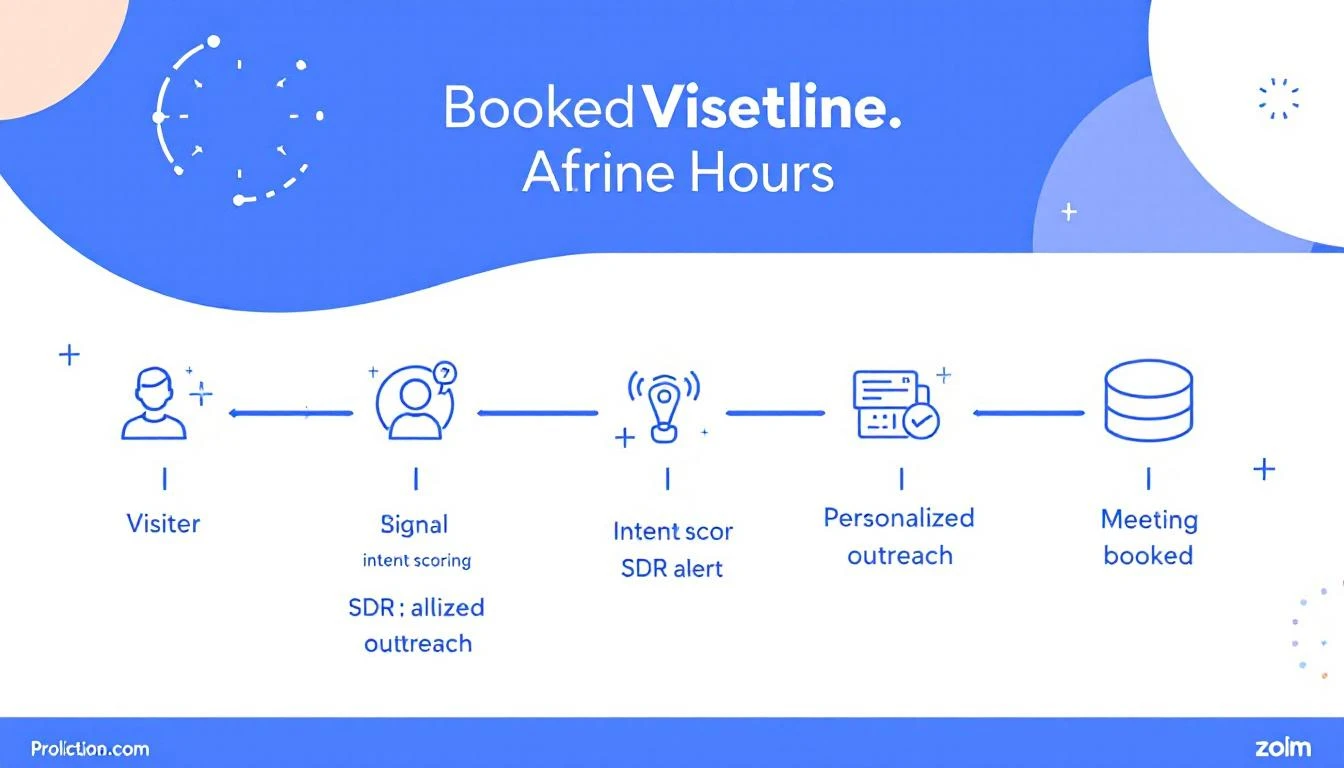
Meanwhile, the teams booking 3-5x more meetings from the same traffic aren't using better data. They're using better workflows. Specifically, they've built a system that moves from signal detection to a booked meeting in under 24 hours.
This post breaks down exactly how they do it.
Why Speed Kills (Your Competition)
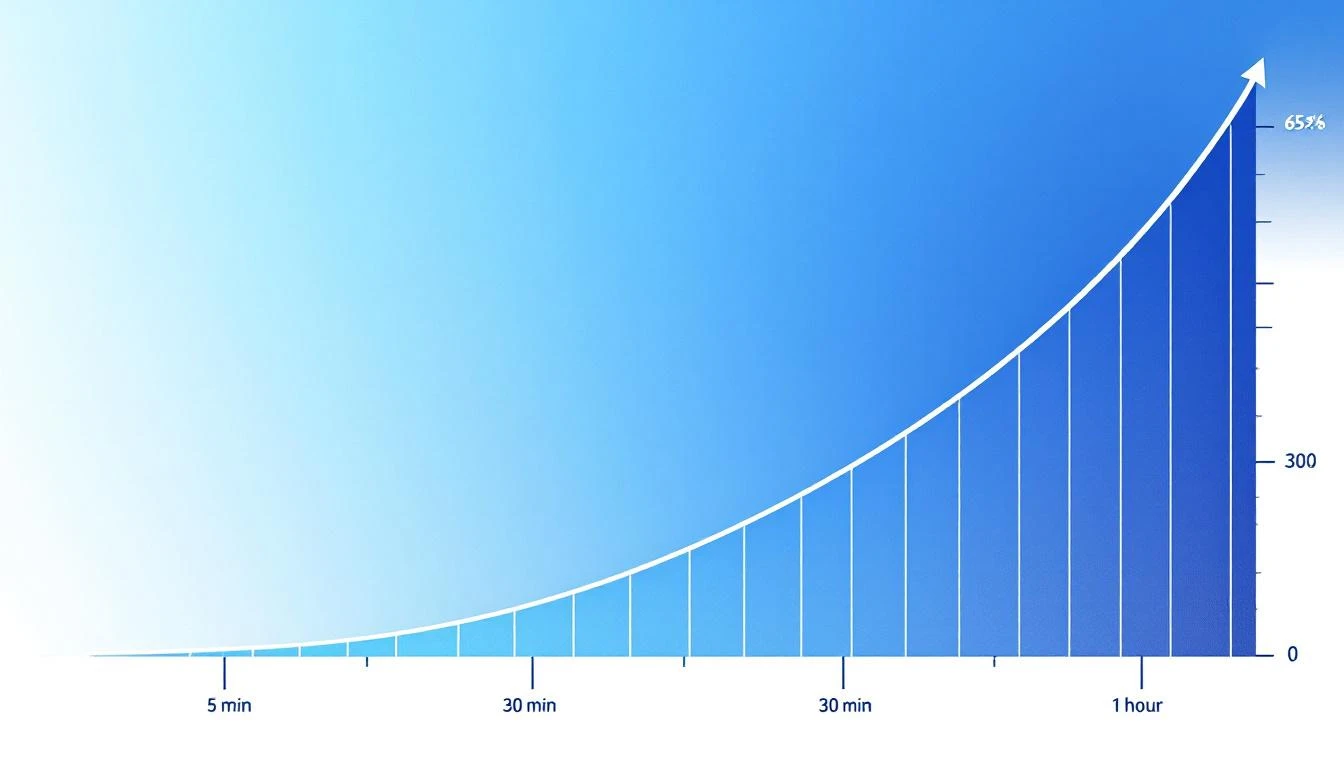
The data on speed-to-lead is brutal and well-documented:
- Responding within 5 minutes makes you 21x more likely to qualify a lead than responding after 30 minutes (InsideSales/XANT research)
- 78% of B2B buyers purchase from the vendor that responds first (Drift/Salesloft)
- After 1 hour, your odds of meaningful contact drop by 10x
- After 24 hours, most buying intent has cooled significantly—the prospect has moved on, talked to a competitor, or deprioritized the evaluation
Yet the average B2B company takes 42 hours to respond to an inbound lead. For anonymous visitor signals (which aren't even "leads" in the traditional sense), most companies never respond at all.
That's the gap. And it's where pipeline lives.
The 24-Hour Signal-to-Meeting Framework
The best SDR teams we've studied follow a remarkably similar pattern. Here's the framework broken into four phases:
Phase 1: Signal Detection (0-1 Hours)
This is where most teams already have the tools but lack the filtering logic. You don't need to act on every visitor—you need to act on the right visitors immediately.
What "right" looks like:
| Signal Type | Priority | Response Window |
|---|---|---|
| Pricing page visit + ICP match | 🔴 Critical | Under 1 hour |
| Multiple page visits in one session | 🟠 High | Under 4 hours |
| Return visitor (2nd+ visit this week) | 🟠 High | Under 4 hours |
| Blog/resource visit + ICP match | 🟡 Medium | Same day |
| Single page bounce | ⚪ Low | Nurture sequence |
The mistake most teams make: treating all signals equally. A pricing page visit from a VP of Sales at a 200-person SaaS company is not the same as a blog reader from a university. Your system needs to know the difference instantly.
How to set this up:
- Configure visitor identification with firmographic filtering—company size, industry, and job title should be immediately visible
- Set up real-time alerts for critical signals (pricing page + ICP match should trigger a Slack/Teams notification within minutes)
- Auto-enrich identified visitors with company data, recent news, tech stack, and funding info before the SDR even sees the alert
The goal: when your SDR gets the notification, they should have everything they need to personalize outreach in the alert itself. Zero research required.
Phase 2: Prioritized Outreach (1-4 Hours)
This is where workflows beat willpower.
The SDR who "checks the dashboard when they get around to it" will always lose to the SDR who has a structured morning routine built around intent signals.
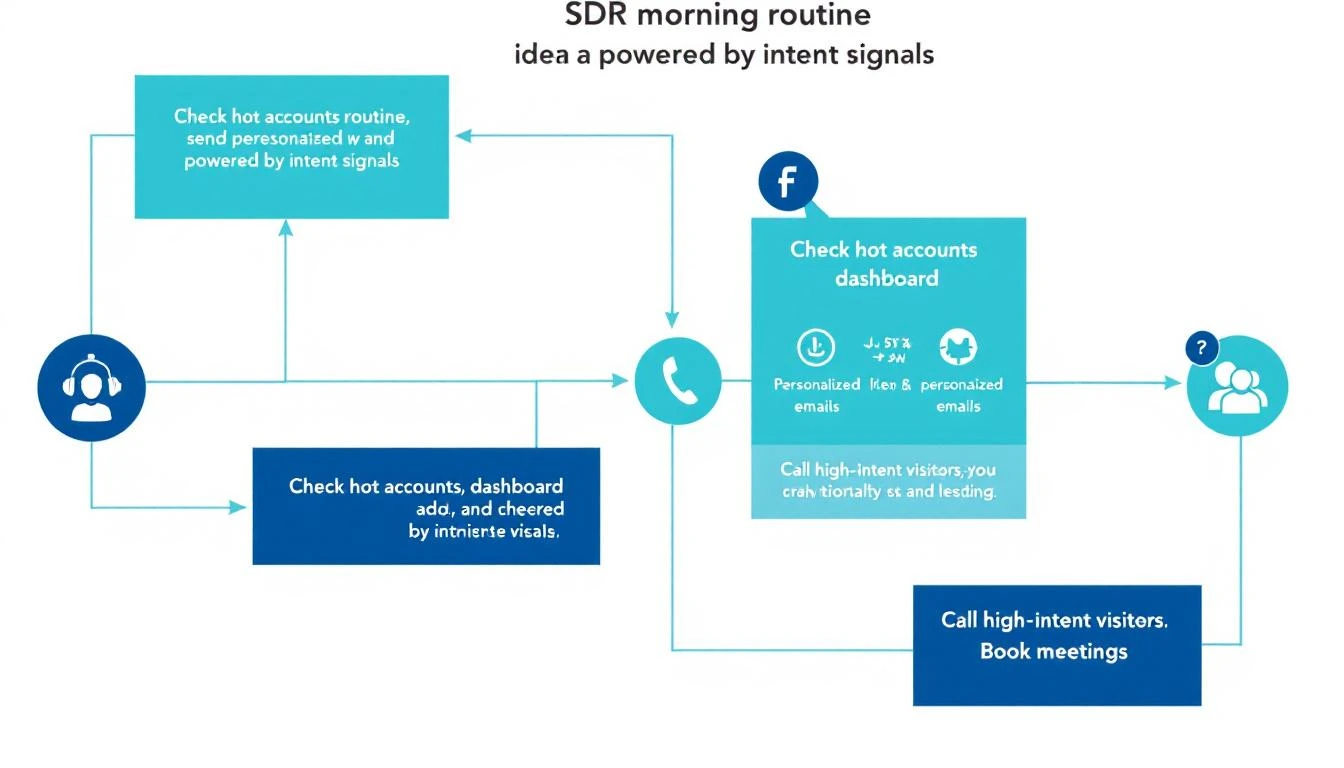
The SDR's First 30 Minutes (Daily Routine):
- Open your prioritized queue — not a raw dashboard, but a filtered, ranked list of yesterday's and overnight's high-intent visitors
- Review the top 5 accounts — each should show: company name, visitor pages viewed, time on site, firmographic match score, and a suggested talk track
- Send personalized outreach to the top 3 — email or LinkedIn, referencing what they were researching (without being creepy about it)
- Queue calls for the top 2 — phone is still the fastest path to a meeting for hot signals
- Move remaining accounts to automated sequences based on their signal tier
The personalization formula that works:
"Hi {first_name}, I noticed {company_name} has been evaluating {category} solutions. A lot of {industry} teams we work with were dealing with {common pain point}—is that on your radar too?"
Notice what this doesn't say: "I saw you visited our pricing page at 2:47 PM." That's surveillance, not sales. Reference the category and pain point, not the specific behavior.
Phase 3: Multi-Touch Acceleration (4-12 Hours)
One email isn't a strategy. The teams converting at the highest rates run a multi-touch sequence within the first 12 hours for critical signals:
Hour 0-1: Personalized email (referencing their research area)
Hour 2-3: LinkedIn connection request with a note (keep it short—compliment something specific about their work)
Hour 4-6: Phone call attempt #1 (leave a voicemail that references the email)
Hour 8-12: Follow-up email with a specific resource relevant to what they were researching
Why multi-touch matters:
- Email alone has a 2-5% reply rate
- Email + LinkedIn bumps it to 8-12%
- Email + LinkedIn + phone pushes it to 15-25% for ICP-matched, high-intent signals
The key insight: each additional channel doesn't just add impressions—it signals seriousness and competence. When a prospect sees your name in their inbox, on LinkedIn, and hears your voice on a voicemail within the same day, you're establishing that you're responsive, professional, and everywhere they need you to be.
Phase 4: Meeting Conversion (12-24 Hours)
By hour 12, you should know which prospects are engaging (opened emails, accepted LinkedIn, visited again) and which went cold.
For engaged prospects:
- Send a calendar link with 2-3 specific time slots (not an open calendar—too much friction)
- Reference their engagement: "Saw you checked out our case study on {topic}—happy to walk you through how {similar company} got {specific result}. Does Thursday at 2 PM CT work?"
- If they visited again after your outreach, call immediately—they're actively evaluating
For cold prospects (no engagement after 12 hours):
- Move to a 7-day nurture sequence with value-first content
- Set a reminder to re-engage if they visit again (this is where automation earns its keep)
- Don't force it—not every signal converts, and that's fine
The math that makes this work:
Let's say your site gets 1,000 B2B visitors per month. With visitor identification at a 20% match rate, that's 200 identified companies. Of those, maybe 40 match your ICP. With the 24-hour framework:
- 40 ICP-matched signals per month
- 60% outreach rate (24 contacted per month)
- 15% meeting conversion rate
- = 3-4 new meetings per month from existing traffic alone
That's pipeline from visitors who would have otherwise bounced forever. No ad spend. No cold lists. Just faster execution on signals you're already generating.
The 5 Mistakes That Kill Signal-to-Meeting Velocity
1. Treating Your Dashboard Like a To-Do List
Dashboards are for reporting, not for action. If your SDRs start their day by opening a dashboard and scrolling, you've already lost. They need a prioritized queue that tells them exactly who to contact and in what order.
2. Requiring Manual Research
Every minute an SDR spends researching a prospect is a minute they're not reaching out. Auto-enrichment should deliver company info, recent news, tech stack, funding status, and a suggested talk track before the SDR sees the lead.
3. Waiting for "Marketing Qualified" Status
MQL gates kill speed. If a VP of Sales at a 300-person SaaS company visits your pricing page, that's a signal worth acting on now—not after marketing scores it, nurtures it, and eventually passes it over in next week's pipeline meeting.
4. One-Channel Outreach
Email-only follow-up is leaving meetings on the table. The data consistently shows that multi-channel sequences (email + LinkedIn + phone) convert 3-5x better than single-channel approaches.
5. No Feedback Loop
If your SDRs don't report back which signals converted and which didn't, your system never improves. Build a simple closed-loop: signal → outreach → outcome → adjust scoring. Over time, your system gets smarter about which signals actually predict meetings.
How to Measure Your Signal-to-Meeting Pipeline
Track these four metrics weekly:
1. Signal-to-First-Touch Time How long between a high-intent signal firing and the SDR's first outreach? Target: under 4 hours for critical signals.
2. Multi-Touch Completion Rate What percentage of high-priority signals receive the full multi-touch sequence (email + LinkedIn + phone)? Target: 80%+.
3. Signal-to-Meeting Conversion Rate Of all high-intent signals, how many result in a booked meeting within 7 days? Target: 10-15% for ICP-matched visitors.
4. Pipeline from Signals (Attribution) How much pipeline can you directly attribute to visitor signals vs. cold outbound vs. inbound forms? This is your ROI metric.
The Bottom Line
The gap between teams that struggle with intent data and teams that print pipeline from it isn't the data quality or the tools—it's the workflow.
Speed, prioritization, multi-channel execution, and a closed feedback loop. That's the formula.
The companies winning in 2026 don't have more data. They have faster systems for turning that data into conversations.
Your website visitors are already telling you who's interested. The question is whether your team can get to them before your competitor does.
Ready to turn your anonymous visitors into booked meetings? See how MarketBetter's signal-to-action playbook works →
Related reading: