
Your Competitors Are Closing Deals From LinkedIn Comments — Are You Even Watching? [2026]

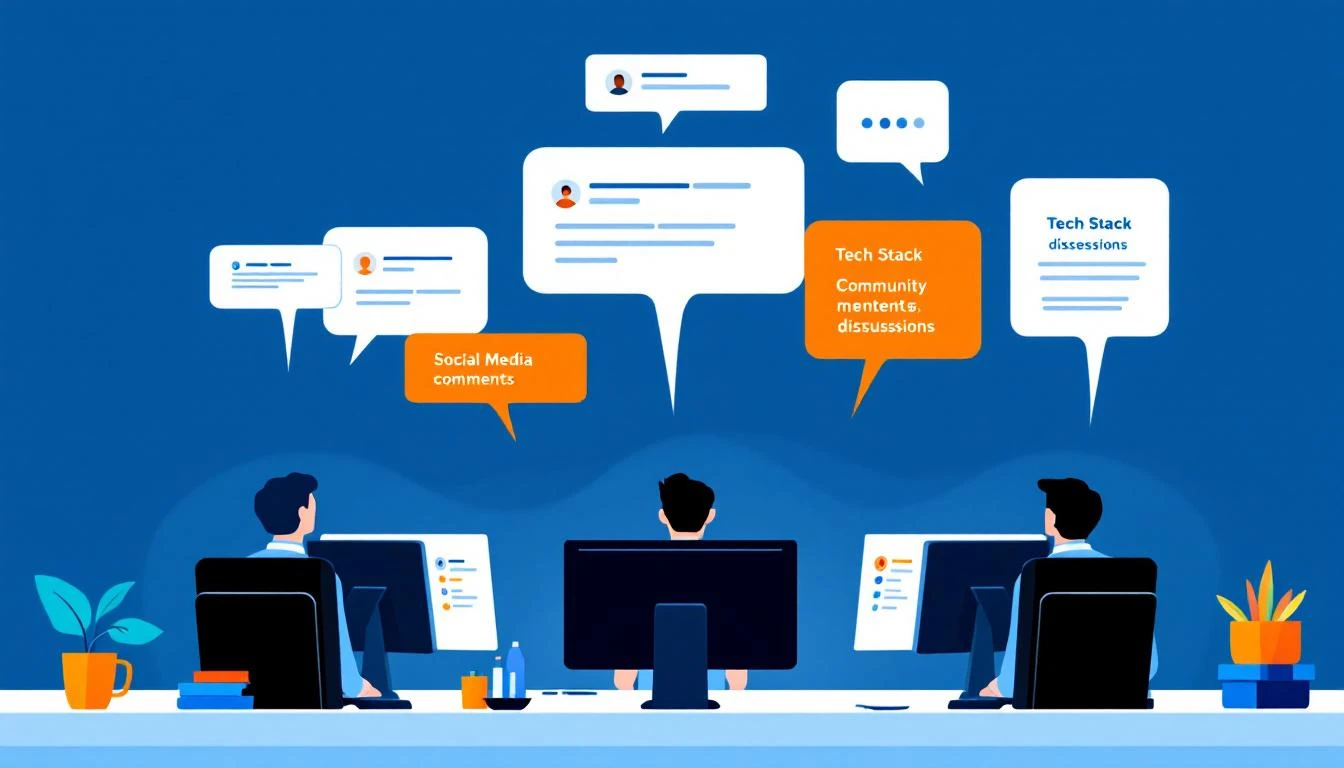
Right now, someone in your ICP just commented on a LinkedIn post about exactly the problem you solve. A prospect posted in a Slack community asking for recommendations in your category. A target account's VP of Sales just shared a screenshot of their tech stack evaluation spreadsheet.
These are buying signals hiding in plain sight — and your team is ignoring every single one of them.
Not because they don't care. Because these signals are buried in social feeds nobody monitors, community channels nobody checks, and dark social conversations nobody can see.
Meanwhile, your competitor's SDR already liked that LinkedIn comment, sent a personalized connection request, and booked a meeting. All before your team's morning standup.
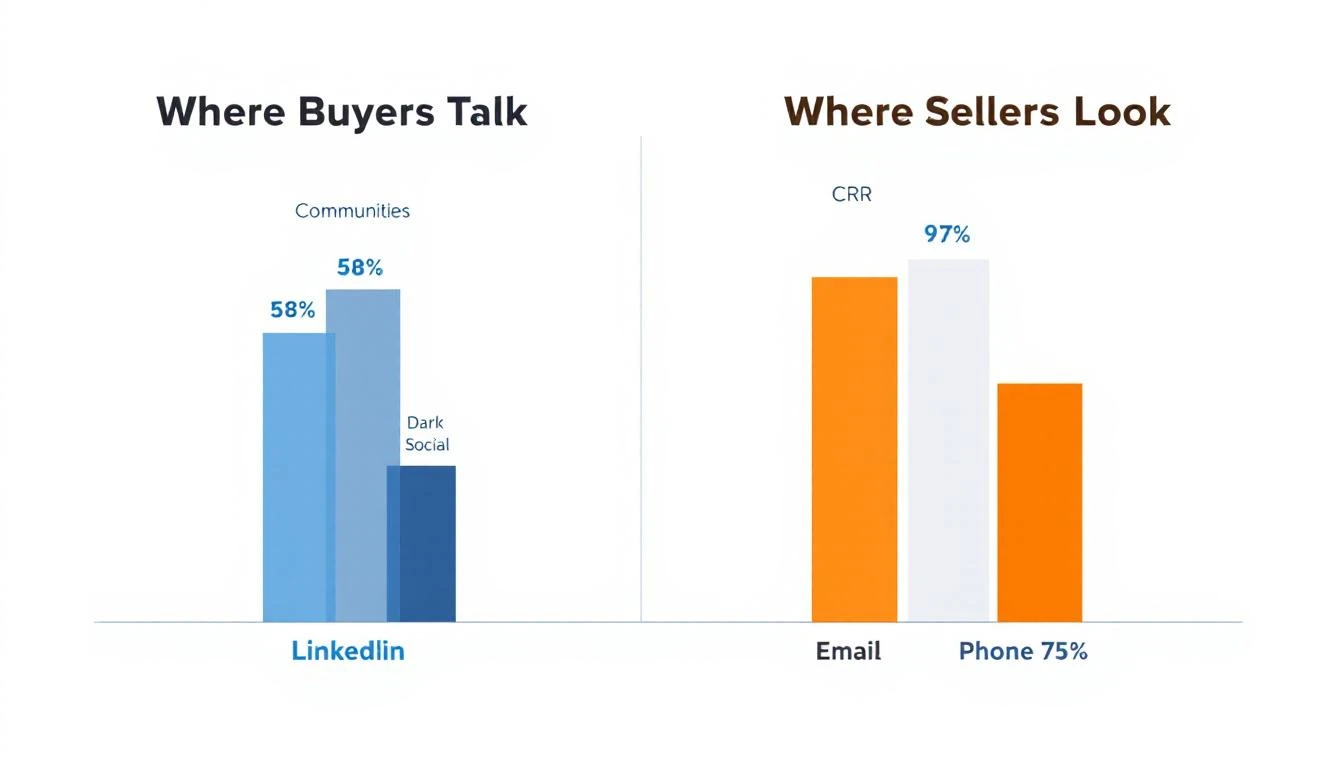
The Data: Where Buyers Talk vs. Where Sellers Look
Here's the fundamental disconnect killing your pipeline:
Where B2B buyers are making decisions:
- 80% of all B2B social leads flow through LinkedIn (LinkedIn Marketing Solutions)
- 58% of tech B2B purchases are influenced by community forums (Common Room)
- 70% of B2B content sharing happens in dark social — private Slack channels, WhatsApp groups, LinkedIn DMs (Demand Gen Report)
- 81% of buyers initiate first contact with sellers, not the other way around
Where most sales teams are looking:
- CRM dashboards
- Email open rates
- Phone connect rates
See the gap?
Your buyers are having real conversations about their problems in LinkedIn comments, Reddit threads, and Slack communities. They're asking peers for vendor recommendations. They're publicly sharing their evaluation criteria. And your sales team is refreshing their CRM waiting for an inbound form fill that's never coming.
84% of Deals Are Decided Before You Even Know About Them
6sense's research found that 84% of B2B deals are decided upon first buyer contact. By the time a prospect fills out your demo form, they've already built a shortlist — and if you weren't part of the conversation that shaped it, you're already losing.
The buying journey looks like this:
- Awareness — Buyer sees a LinkedIn post about a problem they're experiencing
- Research — They comment on that post, engage with replies, save related content
- Evaluation — They ask for recommendations in a Slack community or LinkedIn DM group
- Shortlist — They visit vendor websites, read comparison posts, check G2 reviews
- Decision — They reach out to 2-3 vendors for demos
Steps 1 through 3 are happening entirely in social channels. And most sales teams don't pick up the signal until step 5 — if they're lucky.
Intent data is supposed to solve this, but traditional intent signals (website visits, content downloads, Bombora topics) miss the social layer entirely. They tell you someone at Acme Corp visited your pricing page. They don't tell you that Acme's VP of Sales just commented "We're evaluating exactly this kind of tool right now" on a LinkedIn post about SDR workflow automation.
Which signal would you rather have?
The Social Signal Blindspot: Real Examples
Let's make this concrete. Here are the types of signals your team is missing every single day:
1. LinkedIn Comment Intent
A Director of Revenue Operations at a target account comments on a post: "We tried [Competitor X] but the implementation was painful. Looking at alternatives."
That's not engagement. That's a buying signal with competitive displacement intent. If you're not monitoring for mentions of your competitors in LinkedIn conversations, you're leaving pipeline on the table.
2. Community Mentions
Someone posts in a RevOps community: "Anyone using a tool that combines visitor ID with SDR task management? We're drowning in tabs."
This person just described your product. They're actively looking. And they're asking their peers — meaning they trust community recommendations more than your marketing. 73% of decision-makers find thought leadership more trustworthy than traditional marketing materials.
3. Tech Stack Evaluation Posts
A VP of Sales shares: "Building out our 2026 tech stack. Currently evaluating intent data providers and SDR platforms. Open to recommendations."
This is an open invitation to sell. But if your SDRs aren't watching for these posts, they'll never see it. And your competitor — the one whose SDR happens to follow this person — will.
4. Job Change Signals + Social Activity
A former champion just moved to a new company and immediately started engaging with content about the exact problem you solve. Job change signals are powerful on their own. Combined with social engagement data? That's a warm reactivation opportunity most teams completely miss.
Why SDR Teams Ignore Social Signals (Even When They Know Better)
The problem isn't awareness. Most sales leaders know LinkedIn matters. 78% of salespeople who use social selling outperform peers who don't (LinkedIn). Reps with a strong Social Selling Index see 45% more opportunities.
So why aren't teams doing it?
Signal Fatigue Is Real
When you tell an SDR to "monitor LinkedIn for buying signals," what actually happens is: they scroll their feed for 5 minutes, see nothing actionable, and go back to their cold call list.
The volume of social content is overwhelming. Without filtering, prioritization, and routing, social signals are just noise. Research shows that reps ignore alerts when they've experienced too many false positives — and unfiltered social feeds are the ultimate false positive machine.
No Workflow Integration
Even when an SDR spots a signal, there's no system to act on it. They screenshot it, maybe paste it in Slack, and it dies there. There's no:
- Automatic scoring of signal strength
- Routing to the right rep based on territory or account ownership
- Context enrichment (who is this person? Are they ICP? What's their company's tech stack?)
- Task creation with suggested next action
Without workflow integration, social signals are interesting observations, not actionable pipeline.
The "That's Marketing's Job" Problem
Most SDR teams have been trained to work from lists, sequences, and cadences. Social selling feels like marketing's territory. But the data says otherwise: social media outreach generates a 42% response rate compared to 26% for email and 23% for phone.
The reps who figure this out are the ones hitting quota. The rest are wondering why their cold emails get ignored.
What Capturing Social Signals Actually Looks Like
Here's the workflow that separates the companies closing deals from LinkedIn comments and the ones still wondering where their pipeline went:
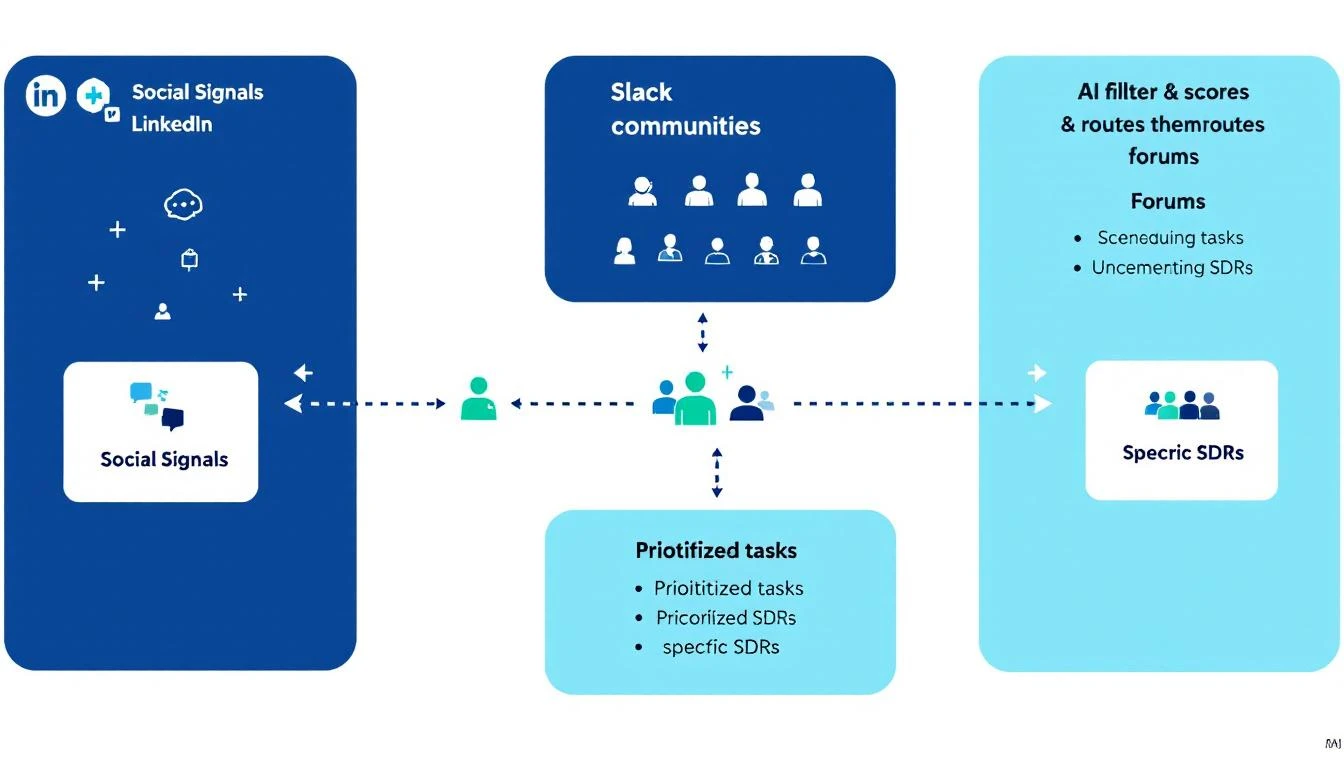
Step 1: Monitor at Scale
You can't manually watch every LinkedIn post, community thread, and social mention. You need automated monitoring of:
- LinkedIn engagement on posts related to your category keywords
- Community mentions in Slack groups, Discord servers, Reddit threads, and industry forums
- Competitor mentions across all social channels
- ICP account activity — when people at target accounts engage with relevant content
Step 2: Score and Filter With AI
Not every LinkedIn comment is a buying signal. "Great post!" is not intent. "We're evaluating tools like this" absolutely is.
AI-powered signal scoring evaluates:
- Fit: Does this person match your ICP? What's their role, company size, industry?
- Intent: Is the content they're engaging with related to problems you solve?
- Timing: Are there multiple signals from the same account? That's a buying committee forming.
- Competitive context: Are they mentioning competitors? That's displacement opportunity.
Step 3: Route to the Right Rep
A social signal from a healthcare company in the Northeast shouldn't land on the desk of your West Coast tech SDR. Signal routing means:
- Territory-based assignment
- Account owner gets priority
- Round-robin for unowned accounts
- Escalation for high-fit, high-intent signals
Step 4: Deliver as an Actionable Task
The SDR shouldn't have to figure out what to do with a social signal. The task should arrive with:
- Who: Full profile enrichment — name, title, company, ICP fit score
- What: The specific signal — what they said, where they said it, why it matters
- Why: AI reasoning on why this is a qualified opportunity
- How: Suggested next action — connect on LinkedIn, reference their comment, share relevant content
This is the difference between "here's a LinkedIn alert" and "here's a qualified prospect who just expressed intent — here's exactly what to say to them."
The Numbers: Social Signal Selling vs. Traditional Outbound
Let's compare approaches with real data:
| Metric | Traditional Cold Outbound | Signal-Based Social Selling |
|---|---|---|
| Response rate | 2-5% (cold email) | 42% (social outreach) |
| Opportunities created | Baseline | +45% (LinkedIn SSI data) |
| Quota attainment | 47% of reps hit quota | 78% of social sellers hit quota |
| Deal close rate | 42% (sales-led, 90-day) | 72% (community-led, 90-day) |
| Buyer trust level | 27% trust sales outreach | 73% trust thought leadership |
| Time to first meeting | Days to weeks | Hours (real-time signals) |
The data is overwhelming. Community-driven deals close at 72% within 90 days compared to 42% for traditional sales-led deals. Social sellers create 45% more opportunities. And the trust gap between cold outreach and warm, signal-based engagement is massive.
Yet most B2B sales teams are still running the 2019 playbook: buy a list, load it into a sequence tool, blast emails, pray for replies.
How MarketBetter Captures Social Signals and Turns Them Into SDR Tasks
This is exactly the problem we built MarketBetter to solve. Our platform doesn't just identify who is on your website — it captures signals from across the social landscape and turns them into prioritized, actionable tasks for your SDRs.
Here's how it works:
Community Mention Detection: MarketBetter monitors community channels for mentions related to your product category, competitors, and solution keywords. When someone in an ICP-matching profile mentions a relevant topic, the signal gets captured automatically.
AI Fit Scoring: Every social signal runs through AI that evaluates ICP fit, intent strength, and timing. Not every mention becomes a task — only the ones with real buying potential. The AI provides reasoning for why each signal matters, so your SDR knows exactly why they're reaching out.
Persona-Based Routing: Signals get routed to the right SDR based on territory, account ownership, and persona match. Your enterprise AE gets the VP-level signals. Your mid-market SDR gets the manager-level ones. No one wastes time on signals outside their zone.
Task-Level Actions: Instead of dumping a list of LinkedIn alerts on your team, MarketBetter delivers each signal as a specific task: "Connect with [Name] on LinkedIn. They commented about [topic] in [community]. Reference their interest in [specific problem]. Here's a suggested message."
Your SDRs don't need to become social selling experts. They just need to follow the playbook.
The Competitive Reality
Here's what makes this urgent: your competitors are doing this. Not all of them, but the ones winning deals right now.
Companies like Common Room have built entire businesses around community signal capture. Tools like UserGems track job changes as buying triggers. Apollo and 6sense are adding social intent layers.
The difference is that most of these tools give you data. MarketBetter gives you tasks. We don't just tell your SDR that someone at Acme Corp engaged with a relevant LinkedIn post. We tell them exactly who it was, why it matters, what to say, and when to say it.
That's the gap between a signal-based selling platform and a data dashboard you'll check once and forget about.
Getting Started: Three Things You Can Do This Week
You don't need to overhaul your entire sales process to start capturing social signals. Start here:
1. Audit Your Signal Coverage
Ask your team: Where are our target buyers having conversations? Map the LinkedIn groups, Slack communities, Reddit threads, and industry forums where your ICP hangs out. If the answer is "we don't know," that's your first problem to solve.
2. Set Up Basic Monitoring
At minimum, set LinkedIn alerts for your company name, competitor names, and category keywords. Have one person on your team spend 15 minutes daily scanning these for buying signals. Track what they find. You'll be shocked how much intent is sitting there uncaptured.
3. Build a Signal-to-Task Workflow
When someone spots a social signal, what happens next? Define the process: who gets notified, how fast they need to respond, what the outreach should look like. Then ask yourself whether doing this manually is sustainable — or whether you need a platform that does it automatically.
If you're serious about capturing the buying signals your competitors are already acting on, book a demo and see how MarketBetter turns social signals into booked meetings.
The Bottom Line
B2B buying has fundamentally shifted. 70% of the buying journey happens before a prospect talks to sales. Most of that journey is happening in social channels — LinkedIn comments, community threads, peer conversations in dark social.
Your CRM can't see these signals. Your intent data provider probably can't either. And your SDRs definitely aren't monitoring them manually at scale.
The companies that figure out how to capture, score, and route social signals to the right rep at the right time are going to dominate their categories. The ones that keep waiting for inbound form fills are going to wonder where all the deals went.
Your competitors are already closing deals from LinkedIn comments.
The question isn't whether social signals matter. It's whether you're watching.
Ready to stop missing social buying signals? Book a demo → and see how MarketBetter captures community mentions, scores them with AI, and routes them as actionable SDR tasks.