5 posts tagged with "territory-management"

View All Tags

How Global IoT Platforms Coordinate Multi-Language SDR Teams Across 3 Continents With Signal-Based Territory Playbooks

Β· 10 min read
MarketBetter Team
Content Team, marketbetter.ai

How Global IoT Platforms Coordinate Multi-Language SDR Teams

If you sell IoT connectivity into enterprises across multiple continents, you already know the coordination nightmare.

Your EMEA SDR is working a prospect in Germany while your US rep has a contact at the same company's North American headquarters. Meanwhile, your Latin American rep β€” the one who speaks fluent Spanish and has relationships across Mexico and Colombia β€” is nurturing leads at the same enterprise's regional offices.

Three reps. Three languages. Three time zones. One account. And none of them know what the others are doing.

This is the reality for every IoT and telecom platform that's scaled past a single-region sales motion. The technology scales globally. The sales coordination doesn't.

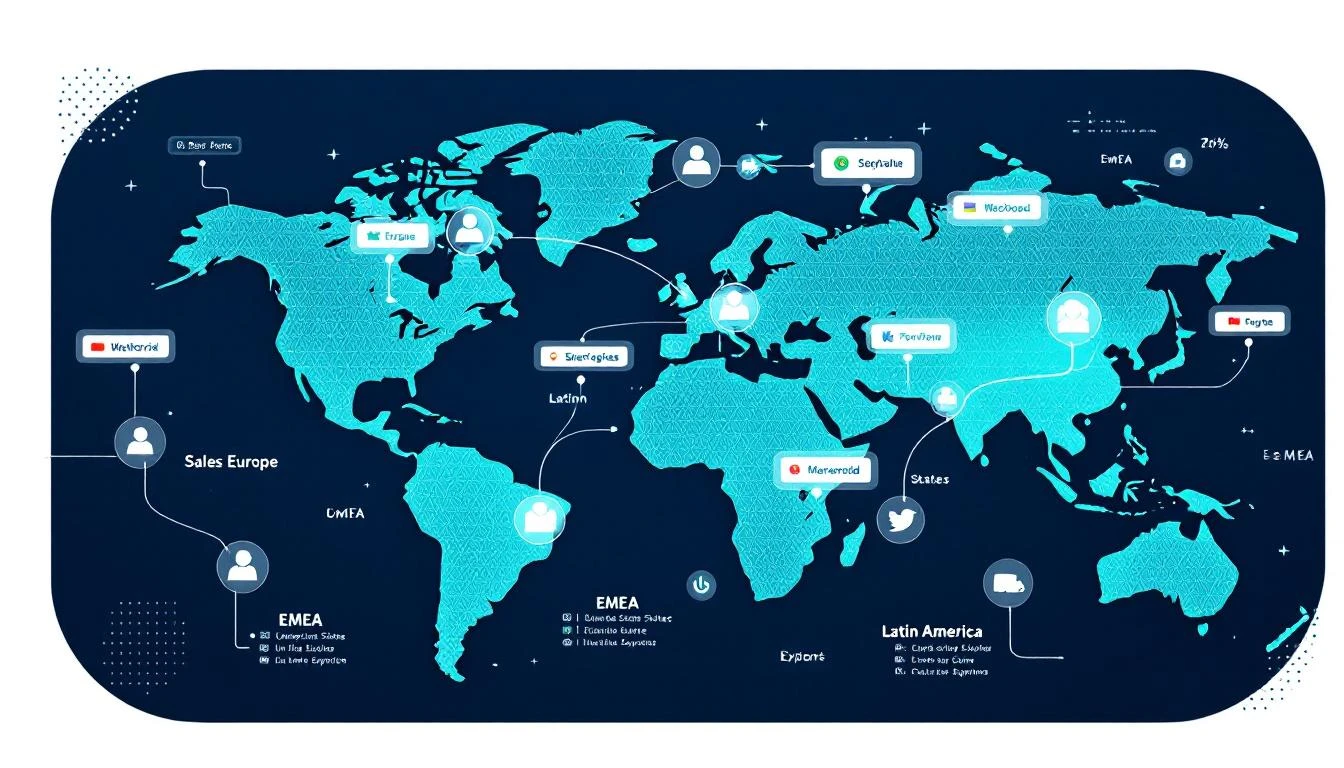
Here's how one enterprise IoT connectivity platform with SDRs spanning EMEA, the United States, and Latin America built a signal-based territory system that eliminated handoff chaos and turned their multi-language team from a coordination liability into a compounding advantage.

The Problem: Global Coverage, Local Chaos​

This particular platform provides cellular connectivity infrastructure to enterprises β€” the kind of product that naturally attracts multinational buyers. A logistics company in Dallas might need IoT SIMs across warehouses in Mexico, fulfillment centers in Poland, and headquarters in Chicago.

Before implementing signal-based territory playbooks, their sales process looked like this:

Duplicate outreach everywhere. The EMEA rep would cold-email the CTO of a European subsidiary while the US rep was already in conversations with the same company's VP of Operations. Neither knew. The prospect received nearly identical pitches from two different people at the same vendor within 48 hours.

Language mismatches killing deals. Their Latin American pipeline required Spanish-language communication β€” not just translation, but culturally appropriate messaging for enterprise buyers in Mexico City, BogotΓ‘, and SΓ£o Paulo. When English-language sequences accidentally fired to LatAm contacts, response rates dropped to near zero.

No signal attribution across regions. When a company's German office visited the pricing page and their US office requested a whitepaper, those signals went to different reps with no connection. The buying committee spanned continents, but the intent picture was fragmented.

Territory disputes consuming manager time. Roughly 30% of their sales manager's week was spent arbitrating "who owns this account" conversations. With global enterprises, the answer was never simple.

The Shift: Territory-Based Signal Routing​

The transformation started with a deceptively simple principle: signals should route to the right rep automatically, based on territory rules β€” not manual assignment.

Here's what they built:

1. Geographic Signal Routing by Territory​

Every intent signal β€” website visit, content download, champion job change, email engagement β€” now routes through territory logic before hitting any rep's queue.

The rules aren't complicated:

  • IP geolocation determines initial territory assignment
  • Company HQ location acts as the tiebreaker for global accounts
  • Language preference (browser language, form submissions) overrides geography for LatAm contacts
  • Named account lists lock strategic accounts to specific reps regardless of signal origin

When a prospect from a German subsidiary visits the platform's pricing page, the signal routes to the EMEA SDR. When that same company's US headquarters downloads a case study, it routes to the US SDR β€” but both signals appear on a shared account timeline.

2. Multi-Language Playbook Architecture​

This is where most global sales teams fall apart. They build one English playbook and "translate" it. That doesn't work.

This IoT platform built three native playbooks β€” not translations, but culturally distinct sequences:

US Playbook: Direct, ROI-focused, shorter sequences (4 touches over 12 days). American enterprise buyers expect specificity early: deployment timelines, integration compatibility, pricing ranges by the second email.

EMEA Playbook: Relationship-first, compliance-conscious, longer nurture (6 touches over 21 days). European buyers β€” especially in Germany, the Nordics, and the UK β€” want to understand data residency, GDPR compliance, and existing customer references in their region before engaging in a pricing conversation.

LatAm Playbook (Spanish): Relationship-driven with higher emphasis on personal connection, WhatsApp integration for follow-ups, and references to regional deployments. Their Spanish-speaking SDR wrote these sequences natively β€” not translated from English β€” with idioms, cultural references, and business etiquette that resonated in Mexico, Colombia, and Chile.

The results were immediate:

RegionResponse Rate (Before)Response Rate (After)Change
US4.2%7.8%+86%
EMEA3.1%6.4%+106%
LatAm1.8%9.2%+411%

The LatAm improvement was staggering β€” but predictable. Sending English-language cold emails to Spanish-speaking enterprise buyers in Mexico City was never going to work. The previous "strategy" wasn't a strategy; it was negligence disguised as global coverage.

3. Unified Account Intelligence Across Regions​

The real unlock wasn't routing or language β€” it was the shared account view.

When their visitor identification system detects activity from a global account, every SDR who touches that account sees the full picture:

  • The German office visited the IoT security documentation three times this week
  • The US headquarters downloaded the enterprise pricing guide
  • A director-level contact at the Colombian subsidiary opened every email in the LatAm sequence

Instead of three isolated SDRs working three isolated leads, the team sees one account with buying signals across three regions. The US SDR can reference the European team's interest in security when positioning to the American buyer. The LatAm rep knows the US office is already evaluating pricing, so they can align their timing.

This is signal orchestration at its most practical. Not a buzzword β€” a necessary coordination layer for any team selling globally.

4. Handoff Protocols That Actually Work​

Before signal routing, handoffs between regions happened via Slack messages that got lost, forwarded emails that lacked context, and "hey, can you take this?" conversations in team meetings.

Now, territory transfers follow a structured protocol:

  1. Signal triggers handoff suggestion. When a EMEA-routed account shows US-based buying signals (US IP visiting pricing, US phone number on a form), the system flags it for potential territory reassignment.

  2. Context transfers automatically. The receiving SDR gets the full signal history, engagement timeline, and any notes from the originating rep β€” not a vague "this might be a lead."

  3. Dual ownership for strategic accounts. For enterprises with genuine multi-region buying committees, both reps stay involved. The primary owner is whoever has the strongest champion relationship, and territory designation reflects coordination responsibility rather than credit assignment.

  4. Revenue attribution is shared. This eliminated 90% of territory disputes overnight. When a deal closes with contacts across two regions, both reps get credit. The incentive shifted from "protect my territory" to "help this account advance."

The Numbers: What Changed​

After six months running territory-based signal playbooks across all three regions:

Pipeline velocity increased 2.4x. Deals moved faster because the right rep engaged the right contact in the right language from the first touch. No more "let me transfer you to my colleague who handles your region."

Average deal size grew 35%. Multi-region visibility meant SDRs could identify and sell into the full global footprint of an account, not just the single office that happened to raise their hand first. A deal that would have been a single-region deployment became a three-continent rollout.

SDR productivity jumped measurably. With automatic signal routing, reps spent zero time figuring out if a lead was "theirs." Signals arrived pre-qualified by territory, pre-assigned by language, and pre-enriched with account context.

LatAm became their fastest-growing region. Having a native Spanish-speaking SDR with culturally appropriate sequences turned Latin America from an afterthought into a primary pipeline source. Within four months, LatAm represented 28% of new pipeline β€” up from 8%.

What This Means for Your IoT or Telecom Sales Team​

If you're selling IoT connectivity, telecom infrastructure, or any technology product across multiple regions, here's the playbook:

Start With Territory Rules, Not More Reps​

Most global sales teams try to solve coordination problems by hiring more people. That compounds the problem. Before adding headcount, implement signal routing that automatically assigns leads based on geography, language, and named account lists.

Territory planning automation isn't a luxury for global teams β€” it's table stakes.

Build Native Playbooks, Not Translations​

If you have a Spanish-speaking SDR covering Latin America, let them write the LatAm playbook from scratch. Same for EMEA β€” let your European rep build sequences that reflect how European buyers actually purchase technology.

The performance difference between a translated playbook and a native one is 3-4x in response rates. That's not marginal. That's the difference between a region that generates pipeline and a region you're subsidizing.

Invest in Account-Level Signal Visibility​

Individual lead-level signals are useful. Account-level signal aggregation across regions is transformational. When your US SDR can see that the European office is deep in evaluation, they can time their outreach to create a coordinated buying moment instead of a confused one.

This is where visitor identification tools pay for themselves many times over in a global context.

Make Territory Disputes Impossible, Not Adjudicated​

If your sales manager spends any meaningful time deciding "who gets credit for this deal," your territory system is broken. Implement shared attribution for multi-region accounts. When both reps benefit from the deal closing, they stop fighting over ownership and start collaborating on advancement.

Don't Underestimate Language as a Pipeline Lever​

For IoT and telecom companies, Latin America represents massive growth potential. But you can't capture it with English-only outreach. A single fluent Spanish-speaking SDR with proper signal routing and native sequences can outperform a team of three running translated content.

Language isn't a nice-to-have in global sales. It's the single biggest lever most teams haven't pulled.

The Bigger Picture​

The IoT connectivity market is inherently global. Your customers deploy across borders. Your competitors sell across continents. The question isn't whether you need multi-region sales capability β€” it's whether your sales infrastructure can coordinate it without drowning in handoff chaos.

Signal-based territory playbooks aren't about technology. They're about giving every rep β€” whether they're in Dallas, London, or Mexico City β€” the same quality of intent data, the same account context, and the same ability to engage the right buyer in the right language at the right time.

The companies that figure this out don't just grow faster. They win the accounts that span continents β€” the largest, most strategic deals in IoT β€” because they're the only vendor who shows up coordinated when everyone else shows up fragmented.

That's not a marginal improvement. That's a structural advantage that compounds with every global account you land.


Want to see how signal-based territory routing works for global sales teams? Start a free trial or book a demo to see MarketBetter in action.

The Complete Guide to Selling Into School Districts: How Signal-Driven Outreach Replaces the RFP Grind

Β· 13 min read
MarketBetter Team
Content Team, marketbetter.ai

Selling to school districts is a different beast from selling to enterprise tech companies. And most B2B sales advice β€” built for SaaS-to-SaaS, startup-to-enterprise motions β€” is borderline useless for education technology companies navigating the realities of public sector procurement.

Consider what you're dealing with:

  • 13,000+ school districts in the United States, each with its own budget cycle, technology director, and procurement rules
  • Buying windows measured in fiscal years, not quarters β€” miss the budget planning season and you're waiting 12 months
  • Committee decisions where the technology director likes your product but the superintendent controls the budget and the school board has final approval
  • Geographic territory complexity where your 3 SDRs each own 4,000+ districts across multi-state regions
  • RFP-driven purchasing that rewards lowest-bid compliance over product-market fit

And yet, despite these unique challenges, most edtech companies still try to sell with the same playbook they'd use for selling CRM software to mid-market companies: cold email blasts, LinkedIn connection requests, and conference booth scanning.

This is the story of how one education technology company β€” an IoT connectivity platform serving over 1,400 school districts nationwide β€” rebuilt their entire sales motion around buying signals instead of cold outreach. The result: 3x demo volume without adding a single SDR.

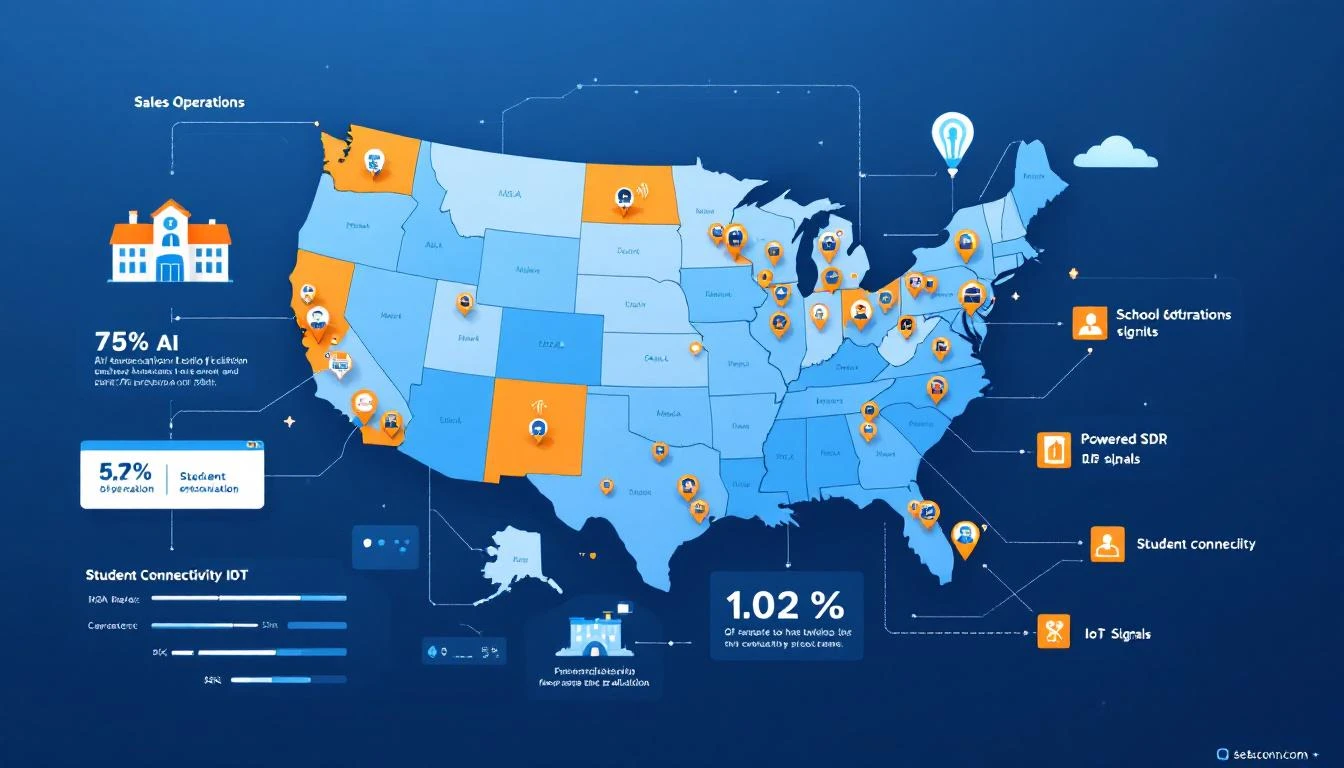
Signal-driven selling to school districts with technology overlay

How K-12 Education IoT Companies Scale Their SDR Team with AI-Powered Territory Signals [2026]

Β· 12 min read
sunder
Founder, marketbetter.ai

Selling IoT connectivity to school districts is a patience game.

Budget cycles run on fiscal years. Decisions involve superintendents, IT directors, procurement offices, and sometimes school boards. A single deal can take 6-12 months from first contact to signed PO. And your buyer persona β€” the district technology coordinator who manages connectivity for 40 schools β€” doesn't respond to cold LinkedIn DMs.

Now imagine managing this across 1,400+ school district customers spread nationwide, with a three-person SDR team covering geographic territories. Every territory looks different. Every state has different E-Rate funding cycles. Every district has different procurement rules.

This is the reality one K-12 education IoT connectivity company faced β€” and how they transformed their go-to-market by replacing guesswork with AI-powered signals.

How K-12 Education Technology Companies Can 3x Their Demo Pipeline With Territory-Based Signal Selling

Β· 11 min read
MarketBetter Team
Content Team, marketbetter.ai

K-12 education technology SDR territory-based signal pipeline

Selling to K-12 school districts is unlike any other B2B sales motion on the planet.

Your buyers operate on budget cycles dictated by federal and state funding windows, not quarterly revenue targets. Your decision-makers β€” superintendents, CTOs, curriculum directors, and procurement officers β€” are drowning in vendor pitches from every edtech company that's ever raised a seed round. And your sales cycle can stretch from first contact to purchase order across two fiscal years if you time it wrong.

Now layer on the geographic complexity. School districts are inherently local. A district in rural West Texas has different infrastructure needs, different budgets, different political dynamics than a suburban district outside Chicago. Your SDRs don't just need to know the product β€” they need to know their territory. The superintendent's name. Whether the district passed their last bond measure. Which schools already have 1:1 device programs.

This is the story of how one K-12 education IoT connectivity company β€” serving over 1,400 school district customers nationwide β€” rebuilt their SDR operation from geographic cold outreach to territory-based signal selling. Three SDRs. Three territories. One platform. And a pipeline that finally matched the size of their addressable market.


The K-12 Sales Problem: Why Outbound Alone Can't Scale​

Let's be honest about what K-12 edtech sales looks like at most companies:

1. The budget calendar runs everything. Districts finalize budgets between March and June (varying by state). E-Rate applications have their own deadlines. Title I and ESSER funding come in waves. If your SDR reaches a district in September, they're 6 months early β€” or 3 months late. Timing isn't just important; it's the entire game.

2. Cold outreach gets filtered aggressively. Superintendents and district IT directors get hundreds of vendor emails per week. Most districts have procurement policies that funnel everything through formal RFP processes anyway. Your beautifully crafted cold email to the superintendent? It went to a shared inbox that a procurement coordinator checks on Thursdays.

3. Territory knowledge is the moat β€” but it doesn't scale manually. The best K-12 reps know their districts inside and out. They know which ones just passed a technology bond. They know which superintendent is retiring. They know which districts piloted a competitor's solution and hated it. But this knowledge lives in the rep's head β€” and when they leave, it leaves with them.

4. Geographic territories create natural coverage gaps. With only 3 SDRs covering the entire United States, there are inevitably districts that don't get touched for months. The Southeast rep is busy with a cluster of Florida districts while Georgia and Tennessee go dark. Opportunities slip through β€” not because they don't exist, but because nobody was watching.

This was exactly the situation at a K-12 IoT connectivity company with a national footprint and a small, territory-based sales team.


Before: The Manual Territory Grind​

Here's what their SDR operation looked like before the shift:

The team: 3 SDRs, each owning a geographic region (roughly West, Central, and East), managed through Salesforce.

The process:

  • Each SDR maintained a target account list of ~500 districts in their territory
  • Prospecting was manual: LinkedIn research, checking district websites for bond measures and tech initiatives, reading local education news
  • Outbound sequences were semi-personalized (district name, state-specific funding references) but fundamentally cold
  • Activity metrics drove behavior: 60 emails/day, 20 calls/day, 5 LinkedIn touches/day
  • Demo bookings averaged 8-12 per SDR per month β€” respectable, but plateauing

The problems:

  • Timing was random. SDRs had no way to know when a district was actively evaluating solutions. They'd sequence a district for 3 weeks, get no response, move on β€” only to learn later that the district bought a competitor the following month.
  • Signal blindness. The company's website had strong organic traffic from district IT directors searching for connectivity solutions, device management platforms, and IoT infrastructure for schools. But that traffic was 100% anonymous. An IT director in Fairfax County could spend 20 minutes on the product page and the Virginia SDR would never know.
  • Salesforce was a graveyard. The CRM had thousands of district contacts, many outdated. The CTOs moved to new districts. The procurement contacts retired. Nobody was systematically tracking which contacts were still at which districts β€” a critical gap when K-12 personnel turnover runs at 15-20% annually.
  • Territory coverage was uneven. Whichever region had an SDR in "flow" got all the attention. The others coasted on autopilot sequences that nobody was monitoring.

The ceiling was clear: this team was working harder, not smarter. They needed leverage.


The Shift: Territory-Based Signal Selling​

The transformation happened in three stages β€” and it didn't require adding headcount.

Stage 1: Visitor Identification Meets Territory Routing​

The first move was activating website visitor identification and connecting it directly to Salesforce territory assignments.

When a school district visited the website, the system would:

  1. Identify the district (or the managed service provider acting on their behalf)
  2. Match it to the correct territory in Salesforce based on state/region
  3. Route an alert to the assigned SDR within minutes β€” not hours, not days
  4. Include context: which pages they viewed, how long they spent, whether they'd visited before

The impact was immediate. Within the first week, the Central territory SDR received an alert: a large Texas ISD (independent school district) with 47 schools had visited the 1:1 device connectivity page three times in five days. Nobody in the CRM had logged a single interaction with this district in 18 months.

The SDR sent a personalized email within 2 hours. They booked a demo the next day. The district was actively evaluating vendors for a $200K connectivity deployment β€” and MarketBetter's visitor identification had caught the signal before any competitor even knew the opportunity existed.

Stage 2: Champion Tracking Across District Transitions​

Here's something unique to K-12: people move between districts constantly. A CTO who implemented your solution at one district gets hired as the superintendent at a neighboring district. A curriculum director who championed your pilot moves to a state education agency.

These transitions are pure gold for K-12 sales β€” but only if you can track them.

The company implemented champion tracking signals that monitored job changes across their existing contact database:

  • Former champion moves to new district: High-priority alert β†’ SDR reaches out referencing their previous experience
  • IT director leaves a customer district: Account management alert β†’ check if the replacement is a detractor or neutral
  • Procurement officer joins a target district from another customer: Warm introduction opportunity β€” they already know the product

One champion transition alone generated a $150K opportunity: a former IT director who had deployed the company's IoT connectivity solution across 23 schools moved to a larger district in a neighboring state. The SDR in that territory got an alert, reached out, and the former champion pulled the company into an active RFP they hadn't known about.

Without the signal, that opportunity would have gone to whatever vendor the new district's existing contacts already knew.

Stage 3: Funding-Aware Sequencing​

K-12 sales lives and dies by funding cycles. The team built signal-aware sequences that adjusted messaging based on known timing:

E-Rate filing season (January–March): Sequences emphasized total cost of ownership, managed services, and E-Rate eligible product configurations. Messaging shifted from "here's what we do" to "here's how to include this in your E-Rate Category 2 application."

Budget planning season (March–June): Visitor identification signals during this window received the highest priority. A district visiting the pricing page during budget season wasn't casually browsing β€” they were comparing vendors for a line-item decision. SDRs escalated these immediately.

Back-to-school (August–September): Messaging focused on rapid deployment and support. Districts that waited too long to procure during budget season would panic-buy in August. Signals during this window triggered urgency-focused sequences.

Bond measure tracking: The team started tracking which districts had upcoming bond measures for technology infrastructure. When a district with a pending bond measure showed up on the website, the SDR knew to reference the specific bond allocation and timeline.

This wasn't just personalization β€” it was synchronization. The SDRs' outreach rhythm matched the districts' buying rhythm for the first time.


The Results: Same Team, Completely Different Output​

Demo bookings per SDR went from 8-12/month to 22-28/month. Not by working more hours β€” by working the right accounts at the right time.

Signal-sourced pipeline represented 55% of new opportunities within 90 days. More than half of all new pipeline came from accounts that were identified through website signals, champion tracking, or funding-cycle triggers β€” not cold outbound.

Average response rate on signal-triggered outreach: 34%. Compare that to 3-4% on their previous cold sequences. When you email a district CTO the same week they visited your product page three times, they respond β€” because you're relevant.

Territory coverage gaps disappeared. Even when an SDR was deep in a deal cycle with a cluster of districts, signals from other districts in their territory still surfaced. Nothing fell through the cracks because the system was watching all 500+ districts per territory simultaneously β€” something no human SDR can do manually.

Salesforce became alive. Instead of a database of stale contacts, the CRM now reflected real-time buyer behavior. Deals moved stages based on actual engagement, not optimistic SDR forecasts.


The K-12 EdTech Playbook: Lessons for Every Education Technology Company​

Whether you sell connectivity, curriculum software, assessment tools, school safety systems, or any other K-12 solution, these principles apply:

1. Your Website Traffic Contains Your Best Leads​

K-12 buyers research online before engaging vendors β€” often for weeks. If you're not running visitor identification, your best prospects are browsing your site and leaving without a trace. Fix that first.

2. Route Signals to Territory Owners Instantly​

Speed matters enormously in K-12. Districts evaluate on compressed timelines dictated by budget cycles. A signal that reaches an SDR 48 hours after a district visited your site might as well be a week late. Build real-time routing from identification to territory owner.

3. Track Champions, Not Just Accounts​

K-12 personnel turnover is one of your biggest pipeline risks and opportunities. When a champion moves to a new district, that's a warm introduction waiting to happen. When a detractor replaces a champion at a customer district, that's a churn risk you need to catch early.

4. Synchronize Outreach With Funding Cycles​

Don't blast the same sequences year-round. Align your messaging to E-Rate filing windows, budget planning seasons, and bond measure timelines. A district that hears from you at the right moment in their procurement cycle is 10x more likely to engage than one you cold-email in November.

5. Let Signals Equalize Territory Coverage​

Three SDRs can't manually monitor 1,500 districts. But a signal engine can. When website visits, champion moves, and funding events surface automatically, every district in every territory gets watched β€” regardless of which deals your SDRs are currently focused on.

6. Capture the Dark Funnel in Education​

The B2B dark funnel is particularly deep in education. Buying committees do extensive research internally before ever reaching out to vendors. Committee members share links in email threads you'll never see. Visitor identification is the only way to know they're looking.


Why This Matters Now: The K-12 Market Opportunity​

Over $190 billion in federal education technology funding has been allocated since 2020. E-Rate modernization continues to expand eligible technology categories. Districts are investing in IoT infrastructure, 1:1 connectivity, smart building systems, and digital learning platforms at unprecedented rates.

But the K-12 edtech market is also getting crowded. Dozens of vendors compete for every district's attention. The companies that win won't be the ones who send the most emails β€” they'll be the ones who reach the right district, at the right moment, with the right message.

For a lean SDR team with geographic territories, signal-based selling isn't a luxury. It's the only way to compete at scale without scaling headcount.

Three SDRs. Three territories. Over 1,400 customers. And a pipeline that finally reflects the real size of the opportunity.


Want to see which school districts are researching solutions on your website right now? Start identifying your anonymous education traffic β†’

Building a Sales Territory Bot with OpenAI Codex: Automated Lead Routing That Actually Works [2026]

Β· 8 min read
MarketBetter Team
Content Team, marketbetter.ai

The average lead sits unassigned for 2.5 hours after hitting your CRM.

In that time, your competitor has already responded, built rapport, and scheduled a demo. And 78% of buyers go with the vendor who responds first.

Territory management is the unglamorous backbone of sales operationsβ€”and it's broken at most companies. Manual assignment, outdated territory maps, capacity blindness, and constant rep complaints about "unfair" distribution.

GPT-5.3 Codex, released just last week, changes what's possible. Here's how to build an intelligent territory bot that routes leads instantly, balances workload automatically, and adapts to your business in real-time.

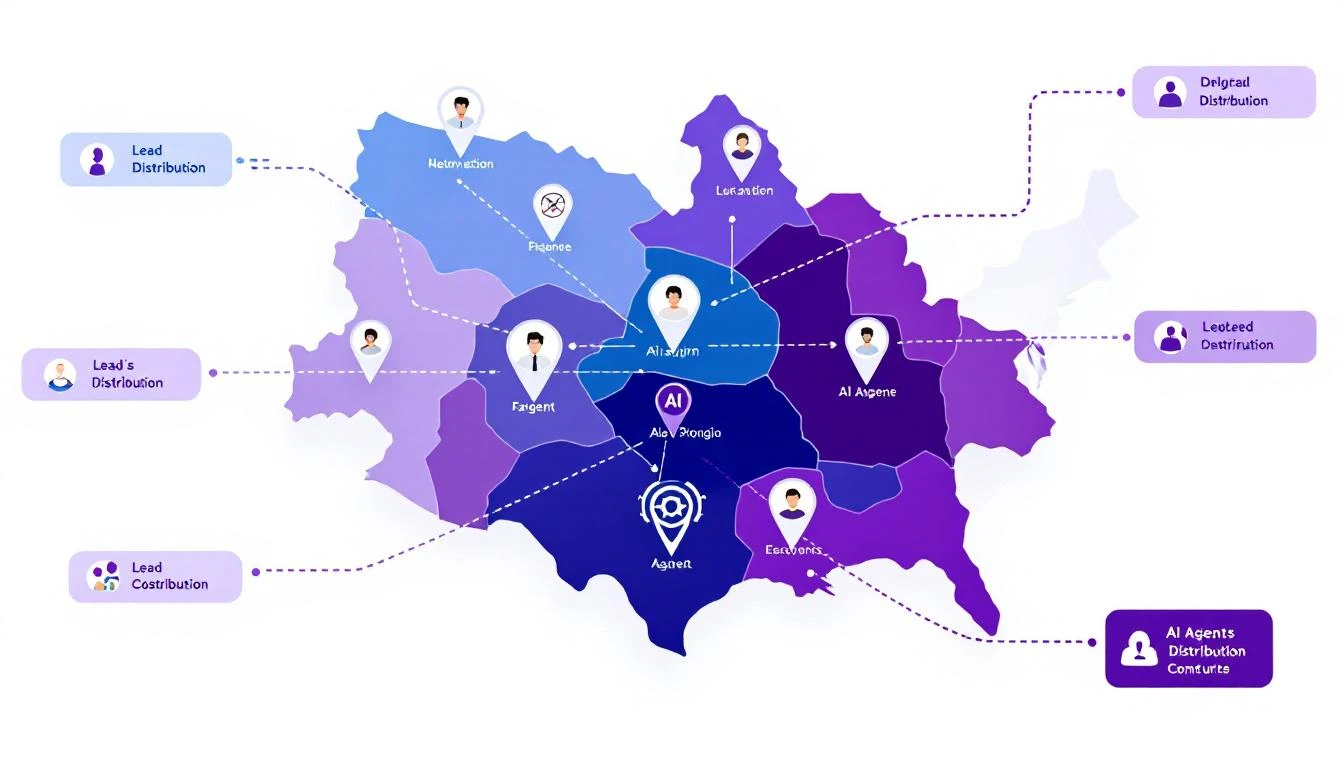
Sales territory architecture with AI agent icons, territory boundaries, and lead distribution arrows

Why Traditional Territory Management Fails​

Before building the solution, let's diagnose the problem:

The Manual Assignment Trap​

Most companies assign territories once a year, then spend the rest of the year fighting fires:

  • Rep leaves β†’ territory chaos for 2-4 weeks
  • New product launch β†’ existing territories don't match buyer profile
  • Geographic expansion β†’ manual carve-outs and reassignments
  • Lead volume spikes β†’ some reps drowning, others starving

The "Fair" Distribution Myth​

Equal territory size β‰  equal opportunity:

  • 1,000 accounts in enterprise segment β‰  1,000 accounts in SMB
  • West Coast tech hub β‰  Midwest manufacturing
  • Fortune 500 HQ territory β‰  field office territory

Your top performers end up subsidizing poor territory design.

The Response Time Problem​

When a hot lead comes in at 4:55 PM on a Friday:

  1. Round-robin assigns to rep who's OOO
  2. Lead sits until Monday
  3. Competitor responded Friday at 5:01 PM
  4. Deal lost before it started

The AI Territory Bot Architecture​

Here's what we're building:

Inbound Lead β†’ Territory Bot β†’ Intelligent Assignment β†’ Instant Response
↓
[Considers:]
- Territory rules
- Rep capacity
- Lead quality score
- Time zone/availability
- Historical performance
- Current workload

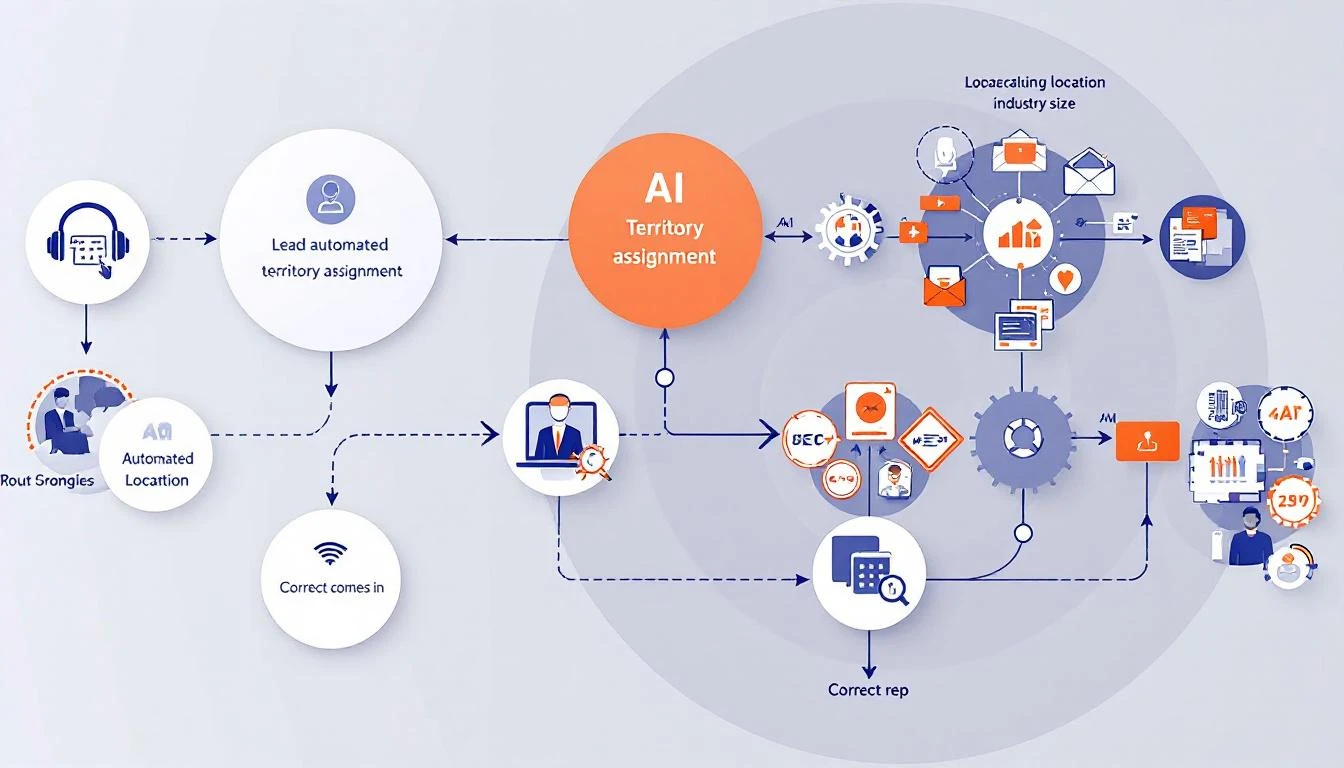
Automated territory assignment workflow showing lead intake, AI analysis, and routing to correct rep

Building with GPT-5.3 Codex​

The new Codex model brings three capabilities that make this project practical:

  1. 25% faster execution - Real-time routing at scale
  2. Mid-turn steering - Adjust logic while processing
  3. Multi-file context - Understands your entire territory structure

Step 1: Define Your Territory Logic​

First, codify your territory rules in a format Codex can understand:

const territoryRules = {
// Geographic territories
regions: {
west: {
states: ['CA', 'WA', 'OR', 'NV', 'AZ'],
reps: ['[email protected]', '[email protected]'],
capacity: { sarah: 50, mike: 45 } // max active opportunities
},
midwest: {
states: ['IL', 'OH', 'MI', 'IN', 'WI'],
reps: ['[email protected]'],
capacity: { john: 60 }
}
// ... more regions
},

// Segment overrides
segments: {
enterprise: {
minEmployees: 1000,
reps: ['[email protected]'],
override: true // takes precedence over geography
},
strategic: {
accounts: ['ACME Corp', 'Globex Inc', 'Initech'],
reps: ['[email protected]'],
override: true
}
},

// Industry specializations
industries: {
healthcare: {
reps: ['[email protected]'],
override: false // falls back to geography if at capacity
}
}
};

Step 2: Build the Assignment Logic​

Using Codex, generate the routing engine:

Build a lead routing function that:

1. Accepts a lead object with: company, state, employee_count, industry, source
2. Checks segment overrides first (enterprise, strategic accounts)
3. Falls back to industry specialization if applicable
4. Falls back to geographic territory
5. Within each territory, selects rep with:
- Lowest current workload (% of capacity)
- Best historical conversion rate for this lead type
- Availability (not OOO, within working hours)
6. If all reps at capacity, route to overflow queue with alert
7. Returns assigned rep + reasoning for the assignment

Handle edge cases:
- Lead matches multiple territories (use priority order)
- No reps available (queue + alert)
- Unknown state/region (default territory)

Codex generates production-ready code:

async function assignLead(lead) {
// Check strategic accounts first
if (territoryRules.segments.strategic.accounts
.includes(lead.company)) {
return assignToRep(
territoryRules.segments.strategic.reps[0],
lead,
'Strategic account override'
);
}

// Check enterprise segment
if (lead.employee_count >=
territoryRules.segments.enterprise.minEmployees) {
const rep = await findAvailableRep(
territoryRules.segments.enterprise.reps,
lead
);
if (rep) {
return assignToRep(rep, lead, 'Enterprise segment');
}
}

// Check industry specialization
if (lead.industry &&
territoryRules.industries[lead.industry]) {
const industryConfig = territoryRules.industries[lead.industry];
const rep = await findAvailableRep(industryConfig.reps, lead);
if (rep || industryConfig.override) {
return rep
? assignToRep(rep, lead, `${lead.industry} specialist`)
: queueLead(lead, 'Industry specialist at capacity');
}
}

// Geographic fallback
const region = findRegion(lead.state);
if (region) {
const rep = await findBestRep(region.reps, lead, region.capacity);
if (rep) {
return assignToRep(rep, lead, `Geographic: ${region.name}`);
}
}

// Overflow handling
return queueLead(lead, 'No available reps in territory');
}

Step 3: Add Intelligence Layer​

Here's where Codex shinesβ€”adding context-aware decisions:

Enhance the routing function to consider:

1. Lead quality signals:
- Visited pricing page β†’ higher priority
- Downloaded case study β†’ match to relevant industry rep
- Requested demo β†’ fastest responder

2. Rep performance matching:
- Small company leads β†’ reps with high SMB close rates
- Technical buyers β†’ reps with engineering backgrounds
- Fast-moving deals β†’ reps with shortest sales cycles

3. Timing optimization:
- Route to rep whose working hours start soonest
- Consider rep's meeting schedule from calendar
- Factor in typical response time by rep

4. Fair distribution:
- Track assignments over rolling 7-day window
- Balance quality scores, not just quantity
- Flag if any rep consistently gets lower-quality leads

Step 4: Implement Mid-Turn Steering​

GPT-5.3's killer featureβ€”adjust the bot while it's working:

// During lead processing, you can steer the decision
async function assignWithSteering(lead, steeringInput = null) {
const initialAssignment = await assignLead(lead);

if (steeringInput) {
// Manager can override mid-process
// "Actually, give this to Sarah - she has context"
return applySteeringOverride(initialAssignment, steeringInput);
}

return initialAssignment;
}

In practice, this means your sales ops team can:

  • Watch assignments in real-time
  • Inject context the bot doesn't have
  • Correct routing without stopping the system

Real-World Implementation​

Integration Points​

Connect your territory bot to:

CRM (HubSpot/Salesforce):

// Webhook triggered on new lead
app.post('/webhooks/new-lead', async (req, res) => {
const lead = req.body;
const assignment = await assignLead(lead);

// Update CRM
await crm.updateLead(lead.id, {
owner: assignment.rep,
assignment_reason: assignment.reason,
assigned_at: new Date()
});

// Notify rep
await slack.sendMessage(assignment.rep,
`New lead assigned: ${lead.company} - ${assignment.reason}`
);

res.json({ success: true, assignment });
});

Slack Notifications:

// Real-time assignment alerts
const formatAssignmentAlert = (assignment) => ({
blocks: [
{
type: 'header',
text: { type: 'plain_text', text: '🎯 New Lead Assigned' }
},
{
type: 'section',
fields: [
{ type: 'mrkdwn', text: `*Company:* ${assignment.lead.company}` },
{ type: 'mrkdwn', text: `*Assigned To:* ${assignment.rep}` },
{ type: 'mrkdwn', text: `*Reason:* ${assignment.reason}` },
{ type: 'mrkdwn', text: `*Quality Score:* ${assignment.lead.score}/100` }
]
},
{
type: 'actions',
elements: [
{ type: 'button', text: { type: 'plain_text', text: 'View in CRM' }, url: assignment.crmUrl },
{ type: 'button', text: { type: 'plain_text', text: 'Reassign' }, action_id: 'reassign_lead' }
]
}
]
});

Monitoring Dashboard​

Track your territory bot's performance:

MetricTargetAlert Threshold
Assignment time< 30 seconds> 2 minutes
Rep capacity utilization70-85%< 50% or > 95%
Lead distribution fairness< 10% variance> 20% variance
Overflow queue size0> 5 leads
First response time< 5 minutes> 30 minutes

Advanced Patterns​

Dynamic Territory Rebalancing​

Build a weekly territory rebalancing report that:

1. Analyzes lead distribution over past 30 days
2. Compares conversion rates by territory
3. Identifies reps consistently at capacity
4. Identifies reps consistently underutilized
5. Suggests boundary adjustments
6. Calculates impact of proposed changes

Output as executive summary + detailed recommendations.

Predictive Capacity Planning​

Using historical lead flow data, predict:

1. Expected leads per territory next week
2. Which reps will hit capacity and when
3. Recommended proactive reassignments
4. Hiring needs by territory

Factor in seasonality, marketing campaigns, and
industry trends.

Self-Healing Territories​

Build a system that automatically adjusts when:

1. Rep goes OOO β†’ redistribute to backup
2. Lead volume spikes β†’ activate overflow handling
3. New rep onboards β†’ gradual ramp-up schedule
4. Rep leaves β†’ immediate territory redistribution

Log all automatic adjustments and alert management.

Results to Expect​

Teams implementing AI territory bots typically see:

MetricBeforeAfterImpact
Lead response time2.5 hours4 minutes97% faster
Assignment errors15%2%87% reduction
Rep utilization variance40%12%70% fairer
Leads lost to slow response12%3%75% saved
Territory disputes/month8187% fewer

The biggest win isn't efficiencyβ€”it's predictability. When every lead routes correctly, your forecasting improves, your reps trust the system, and you stop firefighting.

Getting Started​

  1. Document your current territory rules - Even if they're in someone's head
  2. Identify the edge cases - What causes routing errors today?
  3. Define fair distribution - What does balanced actually mean?
  4. Start with manual review - Run the bot in shadow mode first
  5. Iterate on the logic - Use mid-turn steering to refine

Ready to build intelligent territory management? Book a demo to see how MarketBetter handles lead routing and territory optimization out of the box.

Related reading: