10 Actionable Omnichannel Marketing Examples to Inspire You in 2026
Omnichannel is not just a marketing trend; it is the new standard for customer engagement. It represents the art and science of creating a single, unified experience for customers across every touchpoint, from their first social media interaction to an in-store purchase and post-sale support. The core challenge is moving from theory to reality. Success requires a fundamental shift: stop thinking in siloed channels and start building a cohesive ecosystem where digital and physical worlds merge seamlessly.
This article provides the blueprint. We will dissect 10 powerful omnichannel marketing examples from industry leaders like Nike, Sephora, and Starbucks. Instead of offering surface-level descriptions, we will break down the specific strategies, tactics, and technologies behind their success. You will gain actionable insights into how they orchestrate customer journeys that are both context-aware and deeply personal.
For each example, we will provide a comprehensive analysis covering:
- The Strategic Goal: What specific business problem were they trying to solve?
- Channel Integration: How did they connect digital and physical touchpoints?
- Execution Details: A look at the specific tactics and tools used.
- Performance Metrics: The tangible results and ROI of their approach.
- Actionable Takeaways: Replicable methods you can adapt for your own business.
We will also explore how an AI-powered platform like marketbetter.ai can help you orchestrate these complex journeys, transforming your customer engagement from fragmented to fluid. This deep dive moves beyond the buzzword to give you a clear, strategic framework for building a truly connected and profitable customer experience.
1. Starbucks Mobile App & In-Store Integration
Starbucks stands as a premier example of omnichannel marketing, masterfully blending its digital and physical customer experiences. The core of its strategy is the seamless integration between its mobile app and its brick-and-mortar stores. This creates a cohesive journey where customers can browse, order, pay, and earn rewards across channels without friction. A user can start their order on the mobile app while commuting, pay digitally using a stored card or rewards points, and then walk into the store to pick up their beverage, often bypassing the main queue entirely. This convenience is a powerful differentiator.
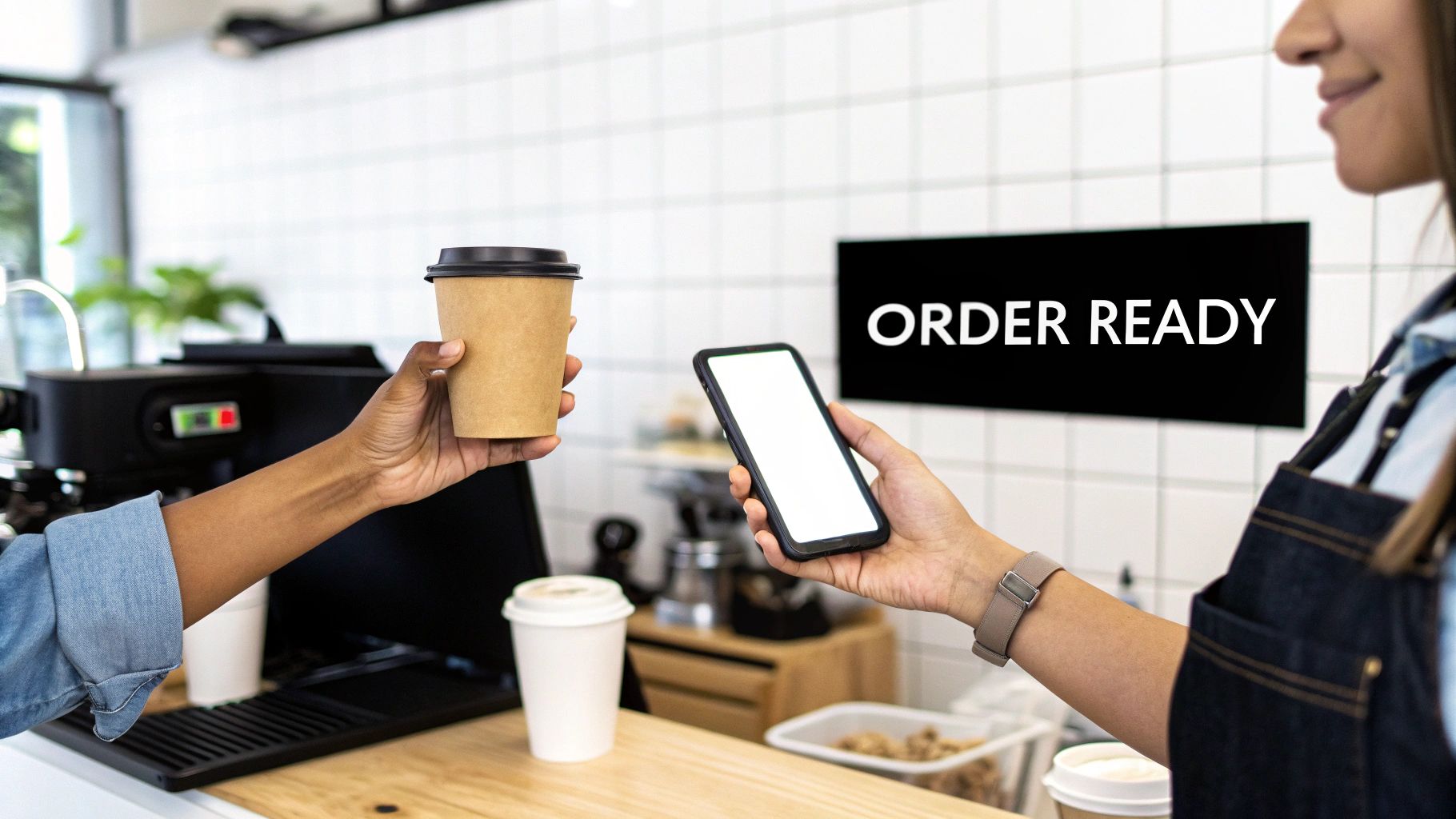
Comparative Edge: Unlike many retailers whose apps are merely digital storefronts, Starbucks transforms its app into a central hub for the entire customer relationship. The app's Order & Pay feature now accounts for over 25% of all transactions, a testament to its successful adoption and deep integration into the daily habits of its customers.
Strategic Breakdown
The brilliance of this omnichannel marketing example lies in its data-driven personalization. Every transaction, whether in-app or in-store via the app, feeds into a unified customer profile. This allows Starbucks to deliver hyper-personalized offers, such as "double star" days on a customer's favorite drink or suggesting a new pastry based on their purchase history.
Key Insight: The Starbucks model proves that a successful omnichannel strategy isn't just about being present on multiple channels; it's about making those channels communicate in real-time to enhance the customer experience and drive business intelligence.
Actionable Takeaways for Your Business
- Unify Customer Data: Invest in a CRM or CDP that can sync customer data from all touchpoints, including your app, website, and physical POS systems. This is the foundation for personalization.
- Prioritize Convenience: Identify friction points in your customer journey. Can a mobile pre-order system reduce wait times? Can digital payments speed up checkout?
- Incentivize Channel Integration: Use your loyalty program to encourage customers to connect their in-store and online activities, just as Starbucks Rewards links every purchase to a single account.
2. Nike's Digital-First Retail Strategy
Nike has redefined athletic retail by fusing its powerful digital ecosystem with its physical stores, creating an immersive, high-touch shopping journey. The strategy revolves around the Nike app, which acts as a remote control for the in-store experience, effectively erasing the line between online browsing and in-person shopping. Customers can use the app to check real-time inventory, reserve products for pickup, and even unlock exclusive rewards or content simply by walking into a store. This transforms a simple shopping trip into a personalized, interactive event.
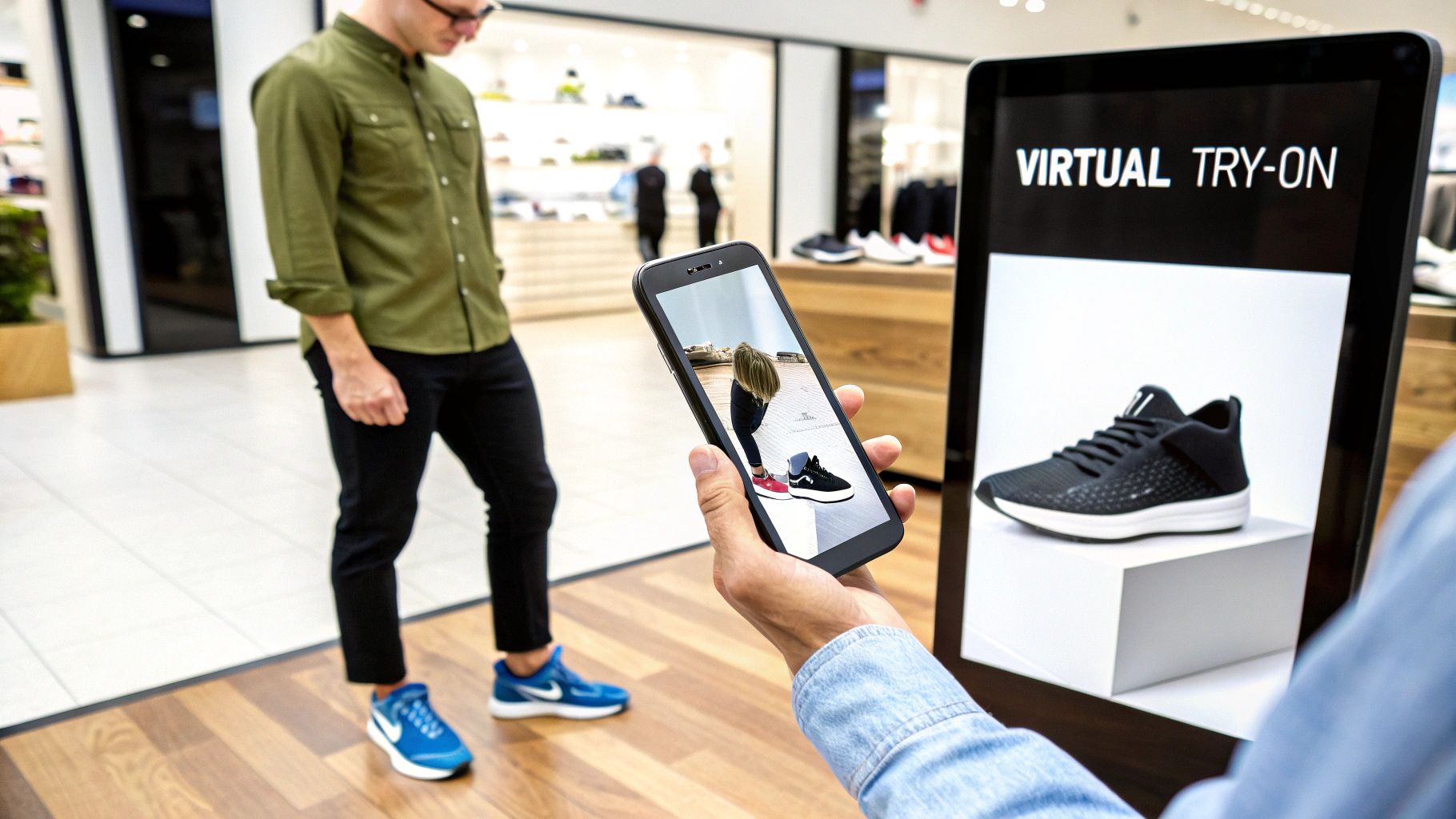
This digital integration empowers both the customer and the store associates. Shoppers can use features like AR-powered virtual shoe try-ons, while employees are equipped with mobile devices to provide on-the-spot service, check stock, and process sales anywhere on the floor. The success is evident in apps like SNKRS, which boasts over 100 million downloads, turning product drops into major cultural moments.
Strategic Breakdown
Comparative Edge: Nike’s approach is a masterclass in using technology to add value, not just to facilitate transactions. While many retailers focus on "buy online, pick up in-store," Nike goes further by making its app an indispensable in-store companion. This creates a data feedback loop where online behavior informs the physical experience, and vice versa, allowing for deeply personalized member benefits and product recommendations.
Key Insight: A truly effective omnichannel strategy uses technology to enhance the physical environment, creating unique, engaging experiences that cannot be replicated online-only. Nike proves that retail stores can be powerful hubs for brand engagement, not just sales.
Actionable Takeaways for Your Business
- Empower In-Store Staff: Equip your retail teams with mobile tools that provide access to customer profiles, inventory data, and a mobile POS. This untethers them from the cash register and turns them into versatile consultants.
- Bridge Digital and Physical with Value: Develop app features that are specifically designed for in-store use. Think product scanning for reviews, access to exclusive in-store content, or easy booking for appointments or events.
- Pilot and Iterate: Start with high-traffic flagship locations to test new technologies like AR or mobile checkout. Gather customer feedback and refine the experience before a wider rollout.
3. Sephora's Beauty Insider Program & Cross-Channel Experience
Sephora sets the gold standard for omnichannel marketing in the beauty industry by building its entire customer experience around the wildly successful Beauty Insider loyalty program. The strategy masterfully erases the lines between its mobile app, website, and physical stores, creating a single, unified ecosystem. A customer can use the app's Virtual Artist feature to try on lipstick shades, add their favorite to a wish list, and later receive a notification about an in-store event where they can get a sample, all while their purchase history and preferences sync across every touchpoint.
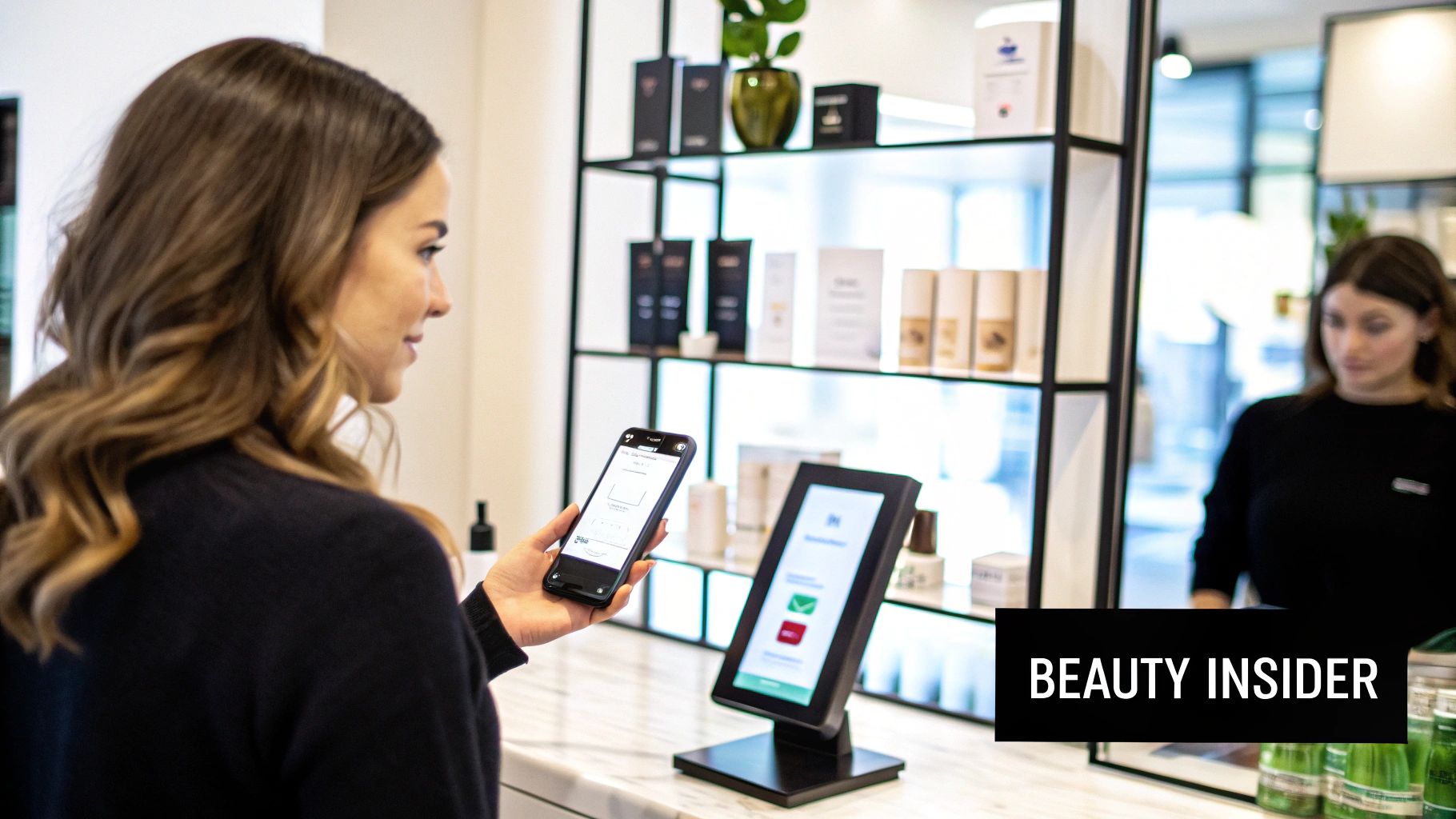
Comparative Edge: Unlike competitors whose loyalty programs are simple point-collection systems, Sephora's Beauty Insider program, with its 25 million-plus members, acts as a personalized beauty passport. The app allows customers to book in-store makeovers, scan products for reviews and information, and access exclusive tutorials, making it an indispensable tool both at home and in the aisle.
Strategic Breakdown
The power of Sephora's omnichannel marketing example is how it uses technology not as a gimmick, but as a genuine utility to enhance the shopping experience. The Beauty Insider program is the data backbone, capturing every interaction to fuel hyper-personalization. For instance, in-store associates can access a customer's online purchase history and wish lists to provide tailored recommendations, bridging the digital-physical gap effectively. This deep integration makes every channel smarter and more responsive to the individual shopper's needs.
Key Insight: Sephora proves that a loyalty program should be more than a transaction ledger; it should be the central thread that connects all channels, enriching the customer journey with data-driven value at every step.
Actionable Takeaways for Your Business
- Elevate Your Loyalty Program: Transform your rewards program into a multi-channel hub. Integrate features that are useful both online and in-store, like appointment booking, product scanning, and exclusive content.
- Arm Associates with Data: Equip your front-line staff with tools (like tablets) that provide access to a customer's unified profile. This allows them to offer a level of service that feels personal and informed.
- Leverage Technology for Utility: Use AI and AR not just for novelty but to solve real customer problems, like Sephora’s Virtual Artist helps with shade matching. Explore more about how technology drives these kinds of marketing personalization strategies.
4. Target's Buy Online, Pick Up In Store (BOPIS)
Target has become a dominant force in retail by perfecting the "Buy Online, Pick Up In Store" (BOPIS) model, effectively transforming its physical stores into hyper-local fulfillment centers. The strategy flawlessly merges the convenience of e-commerce browsing with the immediacy of in-person shopping. Customers can purchase from a massive online inventory and, often within a couple of hours, pick up their order via in-store pickup or its popular Drive Up service without ever leaving their car. This approach directly addresses the consumer demand for speed and flexibility.
Comparative Edge: While many retailers offer BOPIS, Target has made it a core, highly efficient component of its business model, not just a tacked-on feature. In fact, over 95% of Target's digital and physical sales are fulfilled by its stores. This deep integration of inventory, digital interfaces, and in-store operations sets a high standard for operational excellence that few can match.
Strategic Breakdown
The genius of Target's BOPIS strategy lies in its operational excellence and how it leverages existing assets: its physical stores. Instead of building expensive, dedicated e-commerce warehouses, Target activated its entire network of nearly 2,000 stores as last-mile distribution hubs. This decentralized model reduces shipping costs and times significantly. The system relies on real-time inventory tracking, efficient in-store picking processes for employees, and a seamless customer notification system via the app and email.
Key Insight: Target proves that a successful omnichannel strategy can transform a potential liability (large physical store footprints) into a powerful competitive advantage by using them to solve the last-mile delivery challenge more efficiently than pure-play e-commerce rivals.
Actionable Takeaways for Your Business
- Integrate Inventory Systems: Your first step must be to ensure your website's inventory syncs perfectly with your physical store's stock levels. Inaccurate data is the fastest way to create a frustrating BOPIS experience.
- Optimize In-Store Fulfillment: Designate specific areas and train staff for efficient order picking and packing. This minimizes disruption to in-store shoppers and speeds up order readiness. To streamline these notifications and inventory updates, businesses can implement powerful e-commerce marketing automation.
- Communicate Proactively: Use automated alerts to inform customers the moment their order is received, being processed, and ready for pickup. Clear communication manages expectations and enhances satisfaction.
5. Amazon's Seamless Online-to-Offline Integration
Amazon has evolved from an e-commerce giant into the quintessential example of a complete omnichannel ecosystem. The company masterfully connects its online marketplace with physical retail locations like Amazon Go and Whole Foods, creating a unified customer journey. A customer can add an item to their cart online, see related product recommendations based on a past Whole Foods purchase, and choose from multiple fulfillment options like Prime delivery or in-store pickup, all within a single, consistent account. This strategy turns every touchpoint into a cohesive part of the larger Amazon experience.
Comparative Edge: Unlike competitors who might treat their online and physical stores as separate business units, Amazon uses them to reinforce each other. Prime members, for example, receive exclusive discounts at Whole Foods, which not only drives foot traffic but also deepens loyalty to the Prime subscription service. This flywheel effect, where each channel strengthens the others, is a hallmark of their sophisticated omnichannel marketing that is difficult for siloed companies to replicate.
Strategic Breakdown
The genius of Amazon's approach is its relentless focus on building a proprietary, data-rich ecosystem. By owning the technology stack from the "Just Walk Out" tech in Amazon Go stores to the complex logistics of Prime Now, Amazon captures unparalleled data at every interaction. This data then fuels its powerful recommendation engine, personalizing the experience whether a customer is browsing online, shopping at Whole Foods, or using an Alexa device.
Key Insight: Amazon proves that a true omnichannel strategy is about building an inescapable ecosystem. By connecting disparate services through a unified account and a compelling membership program (Prime), they make it more convenient for customers to stay within their network than to leave.
Actionable Takeaways for Your Business
- Create Ecosystem Effects: Connect your different products or services. If you have a subscription service, offer exclusive benefits at your physical locations or on your e-commerce site to incentivize cross-channel engagement.
- Invest in a Unified Customer ID: Ensure that a customer is recognized as the same person whether they are on your app, website, or in your store. This is the technical foundation for any true omnichannel personalization.
- Leverage Physical Data Online: Use insights from in-store purchases to inform online marketing. If a customer frequently buys a certain brand in-store, feature it prominently for them on your website and in email campaigns.
6. Adidas's Digital-First Brand Experience
Adidas has masterfully pivoted from a traditional product company to a digital-first brand, creating an integrated ecosystem that blurs the lines between online and offline commerce. Their strategy focuses on building a direct-to-consumer relationship through a network of interconnected digital platforms, including their mobile apps, e-commerce site, social channels, and technologically enhanced physical stores. This creates a cohesive brand world where a customer can discover a new shoe in an Instagram story, enter a raffle for it on the CONFIRMED app, and then try on a related apparel item in-store using a digitally connected fitting room.
Comparative Edge: Unlike competitors who may treat their app as just another sales channel, Adidas uses apps like CONFIRMED to cultivate a community around its most sought-after products. By offering exclusive content, raffles for limited-edition sneakers, and behind-the-scenes stories, Adidas transforms a simple transaction into a high-engagement brand experience, driving both loyalty and incredible demand.
Strategic Breakdown
The core of this powerful omnichannel marketing example is its use of exclusivity and community to drive channel adoption. Instead of just asking customers to download an app, Adidas gives them compelling, can't-get-anywhere-else reasons to do so. This data is then used to personalize the experience across all touchpoints, from targeted push notifications about an upcoming drop to in-store recommendations based on app activity. It’s a symbiotic loop where digital engagement enhances the physical experience and vice-versa.
Key Insight: Adidas proves that an omnichannel strategy thrives when it creates unique value propositions for each channel that work together. Exclusivity on one channel (the app) can drive traffic and excitement across the entire ecosystem.
Actionable Takeaways for Your Business
- Create Channel-Exclusive Value: Don't just replicate your website on your app. Offer app-only products, early access, or exclusive content to incentivize downloads and create a "fear of missing out" (FOMO).
- Bridge Digital and Physical Worlds: Use in-store technology like QR codes or NFC tags to connect physical products to rich digital content, reviews, or related items in your app.
- Leverage Social for Commerce and Community: Move beyond simple promotions on social media. Host live shopping events, run interactive polls, and use influencer partnerships to create authentic conversations that naturally lead to commerce.
7. Walmart's Omnichannel Logistics and Fulfillment Network
Walmart transformed its massive physical footprint into a powerful, decentralized fulfillment network, creating one of the most effective omnichannel marketing examples in retail. Instead of treating its e-commerce and brick-and-mortar operations as separate entities, Walmart leverages its 4,700+ stores as mini-distribution centers. This integration allows for a seamless flow of inventory and services, supporting options like Buy Online, Pick Up In-Store (BOPIS), curbside pickup, and ship-from-store. A customer can order groceries online for same-day delivery fulfilled by their local store, or purchase a non-grocery item online and pick it up within hours.
Comparative Edge: This strategy directly competes with Amazon's centralized warehouse model by using existing infrastructure to offer unparalleled speed and convenience for local customers. The Walmart+ subscription service, with over 20 million members, bundles these fulfillment benefits with other perks, creating a sticky ecosystem that blends digital convenience with physical accessibility.
Strategic Breakdown
The genius of Walmart’s approach is turning a potential liability, its vast network of expensive physical stores, into its greatest omnichannel asset. By empowering local store associates with mobile devices and real-time inventory data, each location becomes a node in a dynamic logistics web. This allows Walmart to fulfill online orders faster and more cost-effectively than shipping from a distant warehouse, meeting modern consumer expectations for speed.
Key Insight: A successful omnichannel strategy can be built by re-imagining the role of existing physical assets. Walmart proved that stores aren't just for in-person shopping; they can be the backbone of a sophisticated, hyper-local e-commerce fulfillment operation.
Actionable Takeaways for Your Business
- Leverage Physical Locations: If you have physical stores, view them as fulfillment centers. Implement ship-from-store and BOPIS options to reduce shipping times and costs while driving foot traffic.
- Empower Frontline Staff: Equip your store associates with the technology (like handheld scanners and mobile apps) and training needed to accurately and efficiently pick, pack, and manage online orders.
- Integrate Inventory Systems: Your website's inventory must sync in real-time with each store's stock. A customer should never be able to order an item for pickup that is out of stock at their chosen location.
8. Ulta Beauty's Integrated Services and Digital Ecosystem
Ulta Beauty has redefined the retail experience by seamlessly merging its physical services with a powerful digital ecosystem. The core of its strategy is the symbiotic relationship between its in-store beauty services like salons and skin bars, and its e-commerce platform and mobile app. This creates a holistic journey where a customer can discover a service online, book an appointment through the app, receive personalized product recommendations during their visit, and then easily repurchase those products later online. This fusion of service and retail is a prime omnichannel marketing example that builds deep, lasting customer loyalty.
Comparative Edge: Unlike competitors who might treat services as a separate business unit, Ulta integrates them directly into the retail journey. The mobile app features GLAMlab, an AI-powered virtual try-on tool, and a skin analysis feature that provides tailored suggestions, bridging the gap between digital exploration and physical purchase in a way that product-only retailers cannot.
Strategic Breakdown
The genius of Ulta's omnichannel strategy lies in its use of services as a powerful data collection and sales conversion tool. An in-store haircut or facial is not just a transaction; it is an opportunity for a trained professional to understand a customer's needs and recommend specific products. This information feeds into the customer's unified profile, allowing the app and website to provide hyper-relevant product suggestions and content long after the appointment ends. The Ultamate Rewards program further connects every touchpoint, rewarding customers for both product purchases and service appointments.
Key Insight: Ulta's model demonstrates that integrating high-touch physical services with a data-rich digital platform creates a powerful "stickiness." Services drive store traffic and create personalized consultations, while the digital ecosystem captures those insights to drive ongoing e-commerce sales.
Actionable Takeaways for Your Business
- Link Services to Sales: If you offer services, ensure they are not siloed from your retail operations. Equip service professionals with tools to access customer purchase history and make data-informed product recommendations.
- Digitize Service Booking: Implement a seamless online and in-app booking system for any appointments or consultations you offer. Use appointment confirmations and reminders as opportunities for upselling or cross-selling relevant products.
- Create a Unified Loyalty Program: Design a rewards program that recognizes and incentivizes all forms of customer engagement, including both service appointments and product purchases, across all channels.
9. Uniqlo's Data-Driven Omnichannel Personalization
Japanese apparel brand Uniqlo provides a powerful omnichannel marketing example by placing data at the core of its customer experience. The company excels at unifying customer behavior across its mobile app, website, and physical stores to create a deeply personalized and efficient shopping journey. This data-driven approach allows Uniqlo to connect online browsing habits with in-store purchases, fueling everything from product recommendations to localized inventory management. A customer might scan a product barcode in-store to check online stock, which then informs the personalized offers they see in the app later that day.
Comparative Edge: Unlike competitors that often treat their digital and physical channels as separate entities, Uniqlo sees them as two sides of the same coin. With its app boasting over 50 million downloads, the brand has created a massive, connected ecosystem. In-store digital terminals allow shoppers to access the full online inventory, order out-of-stock items for home delivery, and view exclusive content, effectively erasing the line between brick-and-mortar and e-commerce.
Strategic Breakdown
Uniqlo’s strategic brilliance lies in its ability to translate a unified customer view into tangible operational advantages and a better shopping experience. By analyzing data from all touchpoints, Uniqlo can accurately predict demand for specific styles in particular locations, optimizing inventory to reduce stockouts and markdowns. This means a store in a colder climate is more likely to be stocked with HEATTECH items, based not on guesswork, but on the aggregated purchase and browsing data of local customers.
Key Insight: A truly effective omnichannel strategy uses unified customer data not just for marketing personalization, but to drive core business operations like inventory, logistics, and product development, creating a virtuous cycle of customer satisfaction and efficiency.
Actionable Takeaways for Your Business
- Build a Data Foundation: Your first step is to centralize customer information. Investing in a robust system is crucial for collecting and syncing data from your app, website, and physical stores. Learn more about customer data platform integration to get started.
- Empower In-Store Teams: Equip your physical stores with technology that connects to your digital ecosystem. In-store terminals or tablets that allow customers and staff to access online inventory can prevent lost sales and improve service.
- Personalize at Scale: Use customer data to tailor marketing beyond just using a first name. Segment your audience based on cross-channel purchase history to send relevant product recommendations and offers that reflect their genuine preferences.
10. ASOS's Social Commerce and Digital Community Integration
ASOS has pioneered a digital-first approach to omnichannel marketing, focusing on the seamless integration of social media, e-commerce, and community engagement. The brand treats its social channels not just as marketing outlets but as core components of the shopping experience itself. This strategy allows customers to discover, engage, and purchase products directly within the platforms where they spend most of their time, creating a frictionless path from inspiration to checkout. A user might see a style on an Instagram Reel, click the tagged product, and complete the purchase without ever leaving the app.
and collaborating with a diverse range of influencers. This creates a powerful sense of authenticity and social proof that resonates deeply with its Gen Z audience. Unlike traditional retailers that rely on polished, top-down campaigns, ASOS builds its brand from the ground up, letting its community dictate trends and styles.
Strategic Breakdown
The genius of ASOS's strategy is its ability to use social channels as a two-way street for data and engagement. By monitoring trends and conversations on platforms like TikTok and Instagram, the company gains real-time insights into what consumers want, allowing it to rapidly adapt its product offerings and marketing messages. This feedback loop ensures that ASOS remains culturally relevant and that its inventory aligns with fast-moving fashion cycles. Their integration of virtual try-on tools further bridges the digital-physical gap, reducing purchase anxiety and improving conversion rates.
Key Insight: The ASOS model demonstrates that in a digital-first world, the most effective omnichannel strategy is one that builds a community, not just a customer base. Integrating commerce directly into social platforms transforms passive browsing into active purchasing.
Actionable Takeaways for Your Business
- Embed Commerce in Content: Utilize features like Instagram Shopping, TikTok Shop, and Pinterest Product Pins to make your social content instantly shoppable. Reduce the number of clicks needed to get from discovery to purchase.
- Champion User-Generated Content: Actively encourage and feature customer photos and videos. Create branded hashtags and run contests to build a library of authentic content that serves as powerful social proof.
- Leverage Social Listening: Use social media monitoring tools to understand emerging trends, customer sentiment, and competitor activity. Let these insights inform your product development and marketing campaigns.
10-Brand Omnichannel Marketing Comparison
| Example | Implementation Complexity 🔄 | Resource Requirements 💡 | Speed / Efficiency ⚡ | Expected Outcomes ⭐📊 | Ideal Use Cases |
|---|---|---|---|---|---|
| Starbucks Mobile App & In-Store Integration | High — POS + real-time backend integration; staff workflows | Significant: backend systems, POS integration, training, data/privacy controls | High — order-ahead and digital payments reduce wait times | Increased repeat purchases; digital ≈25%+ of sales; 13% comp growth (2019) | QSR/coffee chains and high-frequency retail with loyalty focus |
| Nike's Digital-First Retail Strategy | High — AR, inventory sync, mobile POS across stores | High: AR tech, app development, in-store devices, trained staff | Medium–High — AR reduces returns; mobile POS speeds checkout | Strong DTC growth ($9B digital revenue 2023); higher conversion and personalization | Apparel/footwear brands targeting tech-savvy customers and flagship pilots |
| Sephora Beauty Insider & Cross-Channel | High — loyalty, AR try-on, service booking integration | High: loyalty platform, AR, in-store service systems, data integration | Medium — virtual try-on speeds decisions; bookings require scheduling | Large loyalty base (25M+); members drive 80%+ in-store transactions; higher CLV | Beauty and premium retailers combining services and product sales |
| Target BOPIS (Buy Online, Pick Up In Store) | Medium — inventory & fulfillment workflow changes; pickup ops | Moderate: inventory integration, fulfillment staffing, app notifications | High — same‑day pickup and curbside reduce delivery time/cost | Higher online-to-store conversion; increased add-on sales; BOPIS high conversion rates | Big-box and mass retailers with wide assortments and physical footprints |
| Amazon Online-to-Offline Ecosystem | Very High — unified accounts, logistics, cashierless stores | Massive: proprietary tech, logistics network, retail real estate, data systems | Very High — Prime, cashierless, same-day options minimize friction | Ecosystem drives loyalty; $575B revenue (2023); Prime members spend ~2.5x | Large marketplaces seeking end-to-end control and scale across channels |
| Adidas Digital-First Brand Experience | High — live commerce, exclusive drops, social integrations | High: app features, social/live production, supply chain readiness | Medium — live drops create urgency; fulfillment must scale quickly | Notable e‑commerce growth (32% in 2022); strong engagement from youth | Lifestyle and limited-release brands focused on community and drops |
| Walmart Omnichannel Logistics & Fulfillment | High — store-as-fulfillment, ship-from-store orchestration | Significant: associate tools, store layout changes, inventory systems | High — same‑day delivery and BOPIS scale via store network | Improved delivery costs/times; same‑day services growth; e‑commerce ↑7% (2023) | Large-format retailers leveraging dense store networks for local fulfillment |
| Ulta Beauty Integrated Services & Digital Ecosystem | Medium–High — booking systems + inventory and service integration | Moderate–High: trained professionals, booking platform, AI recommendations | Medium — bookings drive scheduled traffic; app eases conversion | Comparable sales ↑13%; services >15% of store sales; higher basket value | Beauty retailers blending in-store services with product retail |
| Uniqlo Data-Driven Omnichannel Personalization | High — unified customer data platform, dynamic allocation | High: CDP, analytics, inventory optimization systems | Medium — optimized inventory reduces markdowns; in-store terminals speed discovery | Revenue ↑11% (2023); digital ≈40%+ of sales; better assortment fit by location | Apparel retailers optimizing assortments and local merchandising via data |
| ASOS Social Commerce & Digital Community | Medium — social shoppable integrations, UGC and virtual try-on | Moderate: social commerce tooling, content creation, influencer programs | High — social commerce enables impulse buys and fast acquisition | High social engagement (35%+ Instagram); social channels drive new-customer acquisition | Digital-first fashion brands targeting Gen Z and social-native shoppers |
Try our Marketing Plan Generator — generate a complete AI-powered marketing plan in minutes. No signup required.
Your Next Move: Building Your Own Omnichannel Engine
Throughout this deep dive into premier omnichannel marketing examples, a powerful, unifying thread has emerged. The strategies employed by giants like Nike, Starbucks, and Sephora are not random acts of multichannel presence; they are meticulously engineered ecosystems designed around a single, immovable center: the customer. They prove that true omnichannel excellence isn't about being everywhere, but about being cohesive, convenient, and contextually relevant wherever your customer chooses to engage.
From Sephora's Beauty Insider program that turns every interaction into a loyalty-building moment to Target's mastery of BOPIS logistics that erases the line between digital cart and physical store, the lesson is clear. The goal is to make the transition between your app, website, social media, and physical locations so fluid that the customer doesn't even notice the channel switch. They only experience one unified, helpful, and personalized brand journey.
Deconstructing Success: Core Principles to Apply Now
While the scale of Amazon's fulfillment network or Nike's global digital footprint might seem out of reach, the core principles are universally applicable. Distilling these diverse omnichannel marketing examples down to their essence reveals a replicable blueprint for success:
- Data as the Foundation: Every standout example, from Uniqlo's AI-powered recommendations to Starbucks' personalized offers, is built on a foundation of unified customer data. They don't just collect data; they centralize it to create a single, dynamic customer profile that informs every marketing action.
- Friction is the Enemy: The most successful strategies are born from an obsession with removing customer friction. Adidas makes it easy to check in-store stock from its app, and Walmart’s multiple fulfillment options cater to the customer's immediate need for convenience. Your first step should be to map your own customer journey and ruthlessly identify and eliminate these pain points.
- Value Exchange is Paramount: Customers willingly share data and engage across channels when they receive tangible value in return. This could be the convenience of a pre-ordered coffee (Starbucks), the exclusive access and rewards of a loyalty program (Ulta Beauty), or the hyper-personalized shopping experience that makes them feel understood (ASOS).
Your Actionable Roadmap to an Omnichannel Future
Moving from inspiration to implementation is the most critical step. Don't try to replicate these complex systems overnight. Instead, adopt a phased, strategic approach focused on high-impact integrations.
- Start Small, Integrate Smart: Begin by connecting your two most critical channels. This might be integrating your e-commerce inventory with your physical store's point-of-sale system or linking your CRM data to your email marketing platform to personalize campaigns based on purchase history.
- Prioritize a Single Customer View: Your immediate priority should be breaking down data silos. A platform that can unify data from your website, mobile app, and in-store transactions is no longer a luxury; it's a foundational requirement for modern marketing. This unified view is what powers the personalization and consistency seen in our top examples.
- Leverage Technology as a Force Multiplier: This is where a platform like marketbetter.ai becomes your strategic partner. Instead of manually trying to connect disparate systems, our AI-powered engine is designed to unify customer data, automate the creation of personalized content across your key channels, and continuously optimize campaigns for maximum impact. It allows you to execute a sophisticated omnichannel strategy without requiring an enterprise-level budget or a massive data science team.
The landscape is constantly evolving, driven by new technologies and shifting consumer expectations. To truly future-proof your omnichannel engine and find inspiration for tomorrow's market, explore these 7 key omnichannel retail trends for 2025 to stay ahead of the curve.
Ultimately, the journey to omnichannel mastery is an investment in customer-centricity. It's a commitment to understanding and serving your audience on their terms, creating experiences that are not only seamless but also memorable and loyalty-inspiring. The examples we’ve explored prove that when done right, an omnichannel strategy is the most powerful engine for sustainable growth and lasting brand affinity.
Ready to stop just admiring great omnichannel marketing and start building your own? marketbetter.ai provides the unified data platform and AI-powered tools you need to connect your channels, personalize every interaction, and drive measurable results. See how our platform can turn the strategies from these examples into your reality at marketbetter.ai.