Inbound Lead Generation in 2026: The Full-Funnel System That Books 10+ Demos/Month
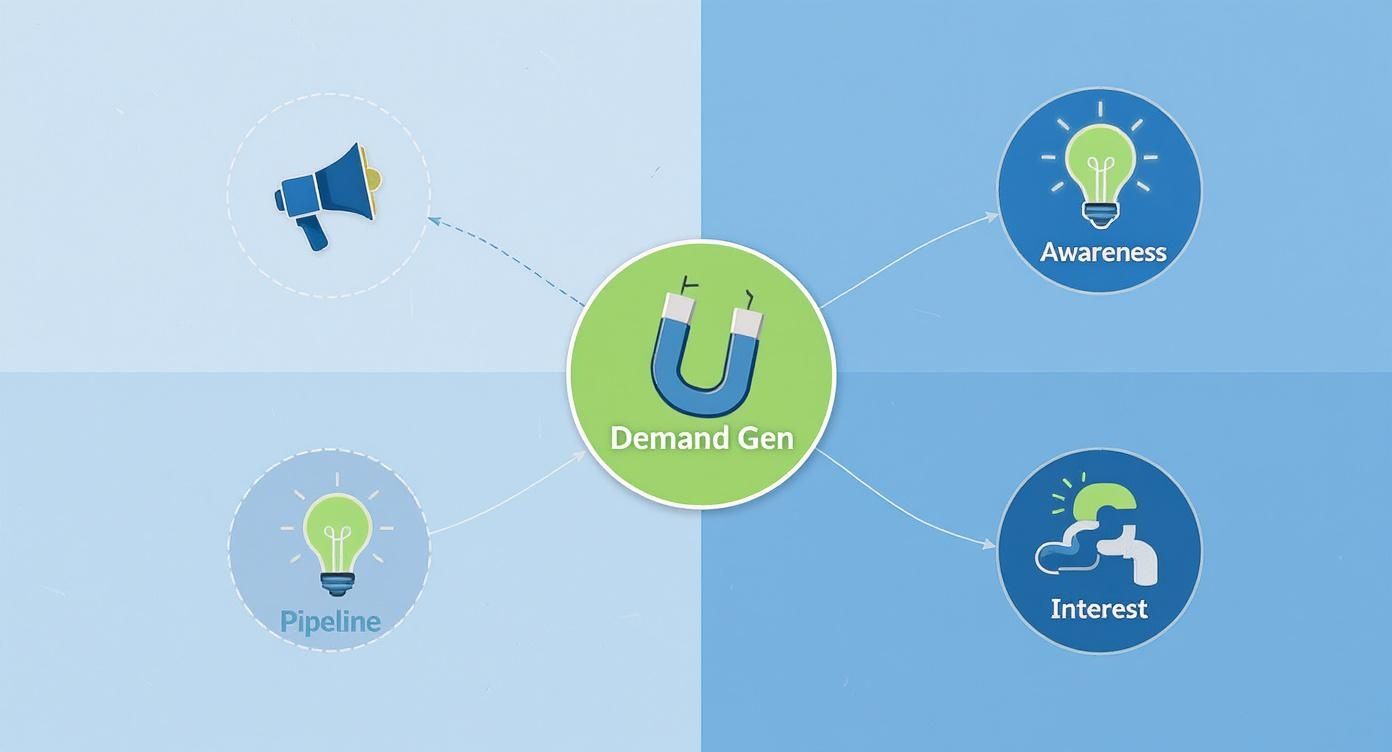
Forget the megaphone. Think of your business as a powerful magnet.
That’s the simplest way to understand inbound lead generation. Instead of blasting your message at anyone who might be listening, you create valuable experiences that pull people in—specifically, the people already looking for what you offer. This guide provides actionable steps and clear comparisons to help you build a lead generation machine that works.
What Is Inbound Lead Generation?
Inbound lead generation is a marketing mindset built on a simple idea: earn attention, don't buy it. It's about attracting prospects by giving them something useful, whether that's a helpful blog post, an insightful guide, or a tool that solves a small problem for them. This is the complete opposite of old-school outbound tactics like cold calls or generic email blasts that just interrupt people's day.
Instead of shoving a sales pitch in someone's face, you become the go-to resource. You answer questions, solve problems, and build a relationship before you ever ask for the sale. Over time, this builds the trust you need to turn your website into a 24/7 lead-generating machine that fuels real, sustainable growth.
The Core Difference: Inbound vs. Outbound
The big distinction comes down to who starts the conversation. Outbound marketing is seller-driven; you decide who to contact and when. Inbound marketing flips that script, putting the buyer in the driver's seat and letting them engage on their own terms. This comparison makes the contrast clear:
| Aspect | Inbound Marketing (Magnet) | Outbound Marketing (Megaphone) |
|---|---|---|
| Initiator | The customer initiates contact by finding your content. | The seller initiates contact by reaching out. |
| Approach | Pulls customers in with valuable, helpful content. | Pushes messages out to a broad audience. |
| Communication | Two-way conversation (blogs, social media, comments). | One-way broadcast (TV ads, cold calls, email blasts). |
| Goal | To educate, build trust, and become a resource. | To make a direct sale as quickly as possible. |
| Example | A prospect finds your guide on "How to Improve Project Workflow" and downloads it. | A sales rep cold-calls a list of project managers. |
Actionable Tip: To shift from outbound to inbound, start by identifying the top 10 questions your customers ask. Turn the answers into detailed blog posts. This simple action transforms your website from a brochure into a valuable resource that attracts motivated buyers.
This shift is more than just a preference; it’s a necessity. Today's buyers are in control. They do their own homework. In fact, research shows a huge percentage of the buyer's journey is already over before they ever pick up the phone to talk to a sales rep. They're out there reading reviews, comparing options, and educating themselves. Inbound meets them right where they are, with the right answer at just the right moment.
Why This Customer-Centric Approach Wins
Switching to an inbound strategy isn't just a feel-good move; it drives serious business results. When you're attracting people who already have a problem you can solve, the leads you generate are naturally higher quality and way more likely to become customers.
Think about the advantages:
- Builds Trust and Authority: When you consistently publish helpful content, you stop being just another vendor and start being seen as an expert.
- Higher Quality Leads: Inbound leads have already raised their hand. They sought you out, which means they have a genuine interest and are far less likely to be a bad fit.
- Cost-Effective and Scalable: A single great blog post or guide can work for you around the clock, generating leads for months or even years after you hit "publish."
- Aligns with Modern Buyer Behavior: It respects that people are smart and want to educate themselves. This creates a much better first impression and a positive brand experience right from the start.
Navigating The Inbound Marketing Funnel
Great inbound marketing doesn't just happen by accident. The journey someone takes from being a total stranger to your biggest fan follows a clear, repeatable path—the inbound marketing funnel. If you want to master inbound leads generation, you need to understand this framework inside and out. It’s your roadmap.
Think of it as building a relationship. You wouldn't ask someone to marry you on the first date, right? Instead, you guide potential customers through four distinct stages. Each step has a specific goal, moving them logically and helpfully toward a decision without being pushy. It’s all about adding value and building trust along the way.
This infographic breaks down how providing real value from the get-go creates the trust needed to pull people into your world.
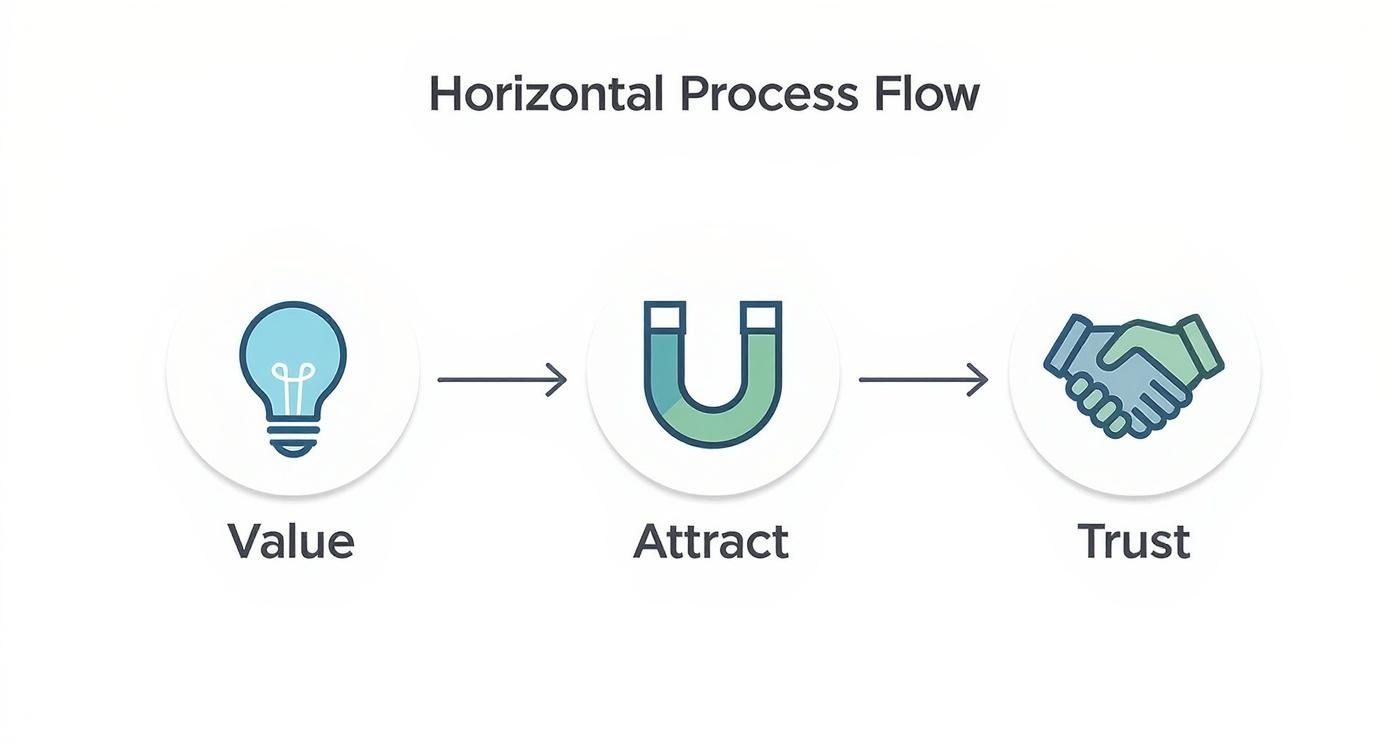
As you can see, it's not just about getting traffic. It's about earning attention and trust from the very first click.
Stage 1: The Attract Stage
First things first, you have to Attract the right people. The goal isn't just to get any traffic; it's to draw in the specific individuals who are a perfect fit for what you offer. These are your ideal customers, and they’re already out there searching for solutions to problems you can solve.
So, how do you get on their radar? With valuable content and smart SEO.
- Content Marketing: This is your magnet. You create genuinely helpful blog posts, deep-dive guides, or engaging videos that answer your audience's burning questions.
- Search Engine Optimization (SEO): This makes sure your content actually gets found. By optimizing your site, you show up in Google right when people need you most.
- Actionable Step: Brainstorm five problems your ideal customer faces. Create a detailed blog post for each one, using keywords they would search for. For example, instead of a loud ad that screams, "Buy our software!" you publish an article like, "Five Project Management Mistakes Costing You Money."
Stage 2: The Convert Stage
Okay, you've got visitors. Now what? The next step is to Convert them into actual leads. An anonymous person browsing your site is a ghost—you need a way to start a conversation. This is where you offer them something valuable in exchange for their contact info.
This trade is a critical moment. You're asking for permission to enter their inbox, so the offer has to be compelling. This is where calls-to-action (CTAs), landing pages, and forms shine.
- Calls-to-Action (CTAs): These are the buttons or links that prompt action, like "Download the Free Checklist" or "Save Your Seat for the Webinar."
- Landing Pages: A simple, dedicated page with one job: convincing the visitor to take that action. It highlights the value and presents the form.
- Forms: This is the finish line. They fill in their details to get the goods, and voilà, you have a new lead.
- Actionable Step: Create a simple checklist that complements one of your most popular blog posts. Offer it as a free download behind a form on that page. This is called a "content upgrade" and it's highly effective.
Stage 3: The Close Stage
You have a lead. Now it's time to Close the deal by nurturing that relationship and turning them into a customer. Most people aren't ready to buy the second they download an ebook. This is where you gently guide them toward a decision.
This isn’t about spamming them with sales pitches. It’s about delivering the right information at the right time.
Actionable Tip: Set up a simple 3-email welcome series for new leads. Email 1 delivers the resource they requested. Email 2 offers a related article or case study. Email 3 asks if they have any questions. This builds trust without being aggressive.
You can set up automated email workflows that send helpful follow-ups based on what a lead has shown interest in. Someone who downloaded a beginner’s guide gets a different set of emails than someone who viewed your pricing page. That level of personalization shows you're paying attention and you’re there to help.
Stage 4: The Delight Stage
The work isn't over when the sale is made. The final stage, Delight, is all about turning customers into enthusiastic promoters of your brand. It costs way less to keep a customer than to find a new one, and happy customers become your best marketing channel through word-of-mouth.
- Actionable Step: A month after a customer makes a purchase, send them a personalized email asking for feedback and offering a helpful tip for getting more value out of your product or service. This shows you care beyond the initial sale.
This ongoing engagement makes them feel valued, turns them into loyal advocates, and fuels a powerful, self-sustaining cycle of inbound growth through referrals and glowing reviews.
Proven Strategies To Attract And Convert Leads

Getting leads is more than just putting up a website and hoping for the best. It takes a real, multi-channel strategy. I like to think of it as a three-legged stool: Content Marketing, Search Engine Optimization (SEO), and Social Media. Sure, each leg can stand on its own, but when they work together, they create a rock-solid foundation for a steady stream of inbound leads.
Content is your fuel, SEO is the engine that gets you found, and social media is how you get it in front of people. If one leg is wobbly, the whole thing can fall apart. For example, writing a brilliant article without thinking about SEO is like hiding a masterpiece in your desk drawer—no one’s ever going to see it.
On the flip side, perfect SEO for thin, useless content might get you clicks, but it won't build an ounce of trust. The real magic happens when these three pillars work in lockstep to pull in, engage, and ultimately convert the right kind of audience.
The Power Of Value-Driven Content Marketing
Content is the absolute heart of any good inbound strategy. It's how you answer your audience's questions, solve their problems, and prove you know your stuff long before they ever think about buying from you. The trick is to create content that speaks directly to the headaches your ideal customers are dealing with.
To get started, map out their pain points. What’s keeping them up at night? What are they frantically typing into Google? Knowing this is the key to creating something they'll actually want to read. Digging into different customer segmentation strategies can help you dial in your messaging for specific groups.
Once you know their problems, you can pick the right format to deliver the solution. This isn't just a nice-to-have anymore; it's central to modern marketing. About 50% of marketers see lead generation as a top priority, and in the B2B world, a staggering 85% of marketers use content specifically for that purpose. The most popular formats right now for attracting prospects are podcasts (77%), blog posts (76%), and videos (59%).
Making Your Content Discoverable With SEO
Search Engine Optimization (SEO) is what makes sure your amazing content actually shows up when people are looking for answers. It's the difference between hoping customers stumble upon you and meeting them exactly where they are.
Think of SEO and content as partners. Your content delivers the value, and SEO delivers the eyeballs. Without SEO, even the best blog post on the planet is invisible to search engines and, by extension, your future customers.
There are two sides to the SEO coin: on-page and off-page. Here's a quick comparison of what to focus on for each.
| Strategy Aspect | On-Page SEO (Your Website) | Off-Page SEO (The Wider Internet) |
|---|---|---|
| Primary Focus | Optimizing elements on your website, like content, keywords, and HTML tags. | Building your site's authority through external signals, like backlinks from other sites. |
| Key Actions | - Keyword research and integration - Writing compelling meta descriptions - Optimizing page load speed | - Earning backlinks from reputable sites - Guest blogging - Social media mentions |
| Main Goal | To make it crystal clear to search engines and users what your content is about. | To prove to search engines that your content is trustworthy and authoritative. |
| Actionable First Step | For every blog post, ensure your target keyword is in the title, the first paragraph, and at least one subheading. | Find one relevant industry blog and offer to write a guest post in exchange for a link back to your site. |
Building Community With Social Media
Social media is where you distribute your content, chat with your audience, and build a real community around your brand. It’s your chance to give your content a human voice and connect with prospects in a more relaxed setting.
While SEO grabs people with an immediate problem, social media helps you build relationships with those who might not be ready to buy today but will be down the road. It's a long game that fosters loyalty and keeps your brand top-of-mind.
Your goal on social media isn't just to shout about your content. It's to start conversations, listen to what people are saying, and provide value right there on the platform. When the time is right, you can then guide that targeted traffic back to your site.
Here are a few practical ways to use social media for lead generation:
- Promote Gated Content: Share links to landing pages where people can download your ebooks, whitepapers, or case studies in exchange for their contact info.
- Host Live Events: Use platforms like LinkedIn Live or Facebook Live for webinars or Q&A sessions, and collect registrations to capture lead information.
- Engage in Relevant Groups: Jump into industry-specific groups on LinkedIn or Facebook. Share your expertise, be helpful, and subtly point people toward your resources.
Ultimately, to really nail inbound lead generation, you need to understand how all these pieces fit together, from creating great content to mastering email list building. Each pillar—Content, SEO, and Social Media—plays a crucial, interconnected role in building a machine that consistently generates high-quality leads.
Turning Leads Into Customers With Smart Nurturing
Capturing a lead is like getting a phone number at a party. It's the start of a conversation, not a signed deal. A new contact in your CRM is a good sign, but let's be real—most people aren't ready to buy the second they download your ebook. This is where smart lead nurturing comes in, turning that initial flicker of interest into actual purchase intent.
Lead nurturing is all about building a relationship. Instead of slamming new contacts with a sales pitch, you deliver a steady stream of valuable, relevant information that speaks to their problems. It’s the difference between being a pushy salesperson and a trusted guide. You're gently steering them toward your solution by being genuinely helpful.
This approach keeps your brand top of mind, so when they are finally ready to pull the trigger, you're the first one they think of. And the data backs this up. Companies that nail automated nurturing can see a 10% revenue increase in as little as six months. Inbound tactics are proving to be up to 10 times more effective at converting leads than old-school outbound methods. If you're curious about the numbers, you can review these inbound marketing statistics and trends.
From Generic Blasts to Personalized Journeys
The days of the one-size-fits-all email blast are long gone. Effective nurturing is built on personalization and segmentation. You wouldn't give a rookie and a seasoned pro the same advice, so why would you send them the same marketing content?
Segmentation means grouping your leads based on who they are and what they've done—their industry, job title, or the specific content they've clicked on. This lets you build targeted email workflows that feel like they were written just for them, making your communication a whole lot more effective.
The goal is to make every lead feel like you're speaking directly to them. A great nurturing campaign feels less like marketing automation and more like a personal, one-on-one conversation that anticipates their next question.
Think about it: a lead who downloaded a "Beginner's Guide to SEO" needs a completely different set of emails than someone who just requested a pricing demo. The beginner needs foundational content to build trust. The demo requester is much further down the funnel and needs case studies, testimonials, and feature comparisons to seal the deal. This is how you build real rapport.
You can take this even further by using our guide on how to use AI for lead scoring to get even sharper at identifying who needs what content, and when.
Comparing Nurturing Approaches
Not all nurturing strategies are created equal. The right one for you depends on your resources, how complex your sales cycle is, and what your audience responds to. Let's break down two of the most common methods to help you choose where to start.
| Nurturing Approach | Drip Campaigns (Time-Based) | Behavioral Workflows (Trigger-Based) |
|---|---|---|
| How It Works | Sends a pre-set sequence of emails at fixed intervals (e.g., Day 1, Day 4, Day 7). | Sends emails based on what a lead actually does (e.g., visits your pricing page, watches a webinar). |
| Best For | Welcoming new subscribers, simple onboarding, or general brand awareness. | Nurturing high-intent leads, re-engaging cold contacts, and navigating complex sales cycles. |
| Pros | Easy to set up and manage. Ensures consistent communication. | Highly personalized and timely. Leads to much higher conversion rates and is more efficient. |
| Cons | Can feel generic and disconnected from a lead's actual readiness to buy. | Requires more sophisticated automation tools and a solid strategic plan. |
| Actionable Takeaway | Start with a simple 3-part drip campaign for new blog subscribers. Once you master that, build one behavioral workflow for leads who visit your pricing page but don't convert. |
While drip campaigns are a fine place to start, the real magic happens with behavior-triggered workflows. By reacting to a lead's real-time actions, you ensure every message hits the mark, dramatically boosting your chances of turning that conversation into a customer.
Measuring The ROI Of Your Inbound Marketing
Creating fantastic content and building relationships is the heart of inbound, but how do you actually prove it’s working? Let’s be honest: without hard numbers, your marketing efforts are just shots in the dark. Measuring your return on investment (ROI) is what turns your strategy from an art into a science, giving you the data you need to justify your budget and make smarter decisions.
Think of it like a fitness tracker for your marketing. You wouldn’t just guess if your workouts are paying off—you’d track your steps, your heart rate, and your progress. It’s the same with inbound leads generation. You track key performance indicators (KPIs) to see what’s working, what’s not, and where to double down for the best results.
Core Metrics You Must Track
To get a real sense of your inbound success, you have to look past vanity metrics like website traffic. The real story is in the numbers that connect your marketing activities directly to lead quality and, most importantly, to revenue.
Here are the non-negotiables:
- Visitor-to-Lead Rate: What percentage of people visiting your site actually become leads by filling out a form? A low rate here could mean your content isn't hitting the mark or your calls-to-action are too weak.
- Cost Per Lead (CPL): How much are you spending to get one single lead? This is a critical gut-check for the financial efficiency of your campaigns and helps you compare which channels are pulling their weight.
- Lead-to-Customer Conversion Rate: This is the money metric. It shows how many of your qualified leads turn into paying customers and reveals the true health of your entire inbound funnel, from that first blog post to the final sale.
These numbers don't live in a vacuum—they tell a story together. A sky-high visitor-to-lead rate is great, but not if your CPL is through the roof or none of those leads ever buy anything. The goal is to find a healthy, sustainable balance across the board.
Key Metrics For Inbound Lead Generation Success
Tracking metrics can feel overwhelming, so this table breaks down the essentials for each funnel stage. Think of it as your cheat sheet for knowing what to measure and what action to take based on the data.
| Funnel Stage | Key Metric | What It Measures | Actionable Question to Ask |
|---|---|---|---|
| Attract | Visitor-to-Lead Rate | The effectiveness of your content and CTAs in capturing initial interest. | Is our offer compelling enough? Are our forms too long? |
| Convert | Cost Per Lead (CPL) | The financial efficiency of your lead acquisition efforts across different channels. | Which channels give us the lowest CPL? Can we shift budget there? |
| Close | Lead-to-Customer Rate | The overall health and effectiveness of your sales and nurturing process. | Are we nurturing leads effectively? Is there a leak between marketing and sales? |
| Delight | Customer Lifetime Value (CLV) | The total revenue a customer brings in over their entire relationship with your company. | How can we increase repeat purchases or upsell existing customers? |
By keeping an eye on these KPIs, you get a clear, data-backed view of your entire inbound engine, helping you spot leaks and opportunities at every step.
Calculating Your Inbound Success
Putting these metrics into practice is easier than you think. A few simple formulas are all you need to start turning raw data into powerful insights.
1. Visitor-to-Lead Rate This shows you how well your website converts eyeballs into actual leads.
- Formula: (Number of New Leads / Total Website Visitors) x 100
- Example: You generated 50 leads from 2,000 website visitors last month. Your visitor-to-lead rate is 2.5%. If that number suddenly drops, it’s a red flag telling you to look at your landing pages and offers.
2. Cost Per Lead (CPL) This reveals the efficiency of your marketing spend.
- Formula: Total Marketing Spend / Number of New Leads
- Example: You spent $5,000 on marketing and got 50 leads. Your CPL is $100. When you compare that to the average lifetime value of a customer, you know right away if your spending is sustainable. For a deeper dive, check out our guide on how to calculate marketing ROI.
3. Lead-to-Customer Rate This is the metric that connects your marketing efforts directly to the bottom line.
- Formula: (Number of New Customers / Total Leads) x 100
- Example: If those 50 leads resulted in 5 new customers, your lead-to-customer rate is 10%.
By tracking these numbers, you create a powerful feedback loop. You can test new content, adjust your ad spend, or refine your nurturing process and see the direct impact on your bottom line.
Understanding these benchmarks is key. Industry data suggests the average cost per lead is around $198.44, with an average lead-to-customer conversion rate of 2.9%. On top of that, effective lead nurturing can boost purchase rates by a massive 47%, proving just how vital that follow-up is. For those interested in how this applies to newer tech, there's a great piece on Measuring the ROI of your WhatsApp Chatbot that offers some specific examples.
Try our AI Lead Generator — find verified LinkedIn leads for any company instantly. No signup required.
Common Questions About Inbound Lead Generation
Jumping into a full-on inbound lead generation strategy can feel like a big leap, especially if your team is used to the old-school playbook. It’s totally normal to have questions about how it all works, what the timeline looks like, and what you should really expect. Let's clear up a few of the most common ones.
How Long Does It Take To See Results?
Look, inbound is a long game. This isn't about flipping a switch and watching leads pour in tomorrow. While you might see some early green shoots in 3-6 months—a bump in traffic, a few interesting downloads—it really takes 6-12 months to build the kind of authority and organic momentum that delivers a steady, predictable stream of leads.
Here's a comparison of inbound vs. outbound timelines:
- Outbound (e.g., Paid Ads): You see results (clicks, impressions) almost immediately. However, when you stop paying, the results stop instantly. It's like renting an audience.
- Inbound (e.g., SEO & Content): It's a slow build. Your first blog posts might feel like they're shouting into the void. But over time, they start to rank on Google and become assets that generate leads 24/7 without continuous ad spend. It's like owning your audience.
- Actionable Advice: Don't get discouraged in month two. Commit to publishing consistently for at least six months before evaluating the strategy's success.
What Is The Difference Between MQL and SQL?
Getting this distinction right is one of the biggest levers for making your sales and marketing teams work together instead of against each other. It stops sales from chasing people who are just kicking tires and makes sure marketing is actually nurturing the right leads.
Here’s a clear comparison to help define the handover process:
| Lead Type | Marketing Qualified Lead (MQL) | Sales Qualified Lead (SQL) |
|---|---|---|
| Definition | A lead who fits your ideal customer profile and has shown interest by engaging with marketing content. | An MQL who has taken a high-intent action indicating they are ready for a sales conversation. |
| Example Actions | - Downloads a whitepaper - Subscribes to your blog - Attends a webinar | - Requests a demo - Asks for a price quote - Fills out a "Contact Sales" form |
| Next Step | Nurture with more targeted content to educate them and build trust. | Hand off to the sales team for a direct, one-on-one follow-up. |
| Who Owns It? | Marketing Team | Sales Team |
Actionable Tip: Sit down with your sales team and create a "lead scoring" system. Assign points to different actions (e.g., 5 points for an ebook download, 20 points for a pricing page visit). Agree that any lead who reaches a certain score (e.g., 50 points) automatically becomes an SQL and gets passed to sales. This eliminates guesswork.
Ready to transform your marketing with an integrated AI platform that drives real results? marketbetter.ai helps you create better content faster, optimize campaigns with predictive analytics, and deliver personalized customer journeys at scale. Learn more and book your demo today.