
2 posts tagged with "marketing campaigns"

View All Tags

7 Best Omnichannel Marketing Example Breakdowns for 2025

· 21 min read

Omnichannel marketing isn't just about being on multiple channels; it's about creating a unified, seamless customer conversation across all of them. A multichannel strategy simply offers various ways to engage, but a true omnichannel approach integrates them. The customer's cart follows them from their phone to their laptop, a store associate knows their online wishlist, and support tickets are resolved without repeating information. To make it look this easy requires a complex, data-driven strategy.

This article moves beyond theory to dissect 7 powerful omnichannel marketing example breakdowns from leading brands and platforms. We will analyze their specific strategies, compare their approaches, and provide actionable takeaways you can use to build your own cohesive customer journeys. Each breakdown will show you exactly how these companies connect disparate touchpoints and what you can do to replicate their success.

To understand the technical aspects that enable a truly seamless customer journey, exploring specific platform omnichannel features is essential. Get ready to see what a truly integrated customer experience looks like in practice and learn how to replicate these successes in your own marketing efforts.

1. Amazon: A Deep Dive into Omnichannel Case Studies

When searching for a detailed omnichannel marketing example, starting with foundational knowledge is crucial. Amazon serves as the world's largest digital bookstore, offering an unparalleled collection of books, case studies, and strategic guides dedicated to this very topic. While other platforms offer articles, Amazon provides access to comprehensive, long-form content from marketing experts, academics, and industry veterans.

Unlike a standard Google search that returns a mix of blog posts and ads, Amazon’s platform is structured to help you evaluate and select in-depth resources. You can instantly compare frameworks, check author credentials, and read peer reviews from other marketing professionals. This curated experience is ideal for anyone looking to move beyond surface-level definitions and into actionable, strategic analysis.

Why It Excels for Finding Examples

Amazon’s primary advantage is its sheer volume and user-driven filtering system. The platform allows for a more targeted research process than general search engines.

  • Massive Selection: Access thousands of titles, from academic textbooks to practical handbooks filled with real-world case studies of omnichannel success.
  • User-Generated Vetting: Leverage thousands of reader ratings and detailed reviews to gauge a book's quality and relevance before purchasing. This is a significant advantage over single-author blogs.
  • "Look Inside" Feature: Preview chapters, tables of contents, and indexes to confirm a book contains the specific examples and strategic breakdowns you need.

Actionable Tips for Using Amazon

To maximize your search for a powerful omnichannel marketing example, use the platform strategically.

  1. Use Specific Search Queries: Instead of "omnichannel marketing," try "omnichannel retail case studies," "B2B omnichannel strategy," or "omnichannel customer journey examples." This will surface more targeted and useful content.
  2. Filter by Publication Date: Ensure the examples are current by filtering your search results to show books published in the last 1-2 years. Omnichannel tactics evolve quickly.
  3. Check Kindle Samples: Download free Kindle samples to your phone or desktop to get a substantial preview of the content before committing to a purchase.
Feature ComparisonAmazonGeneral Blog Search
Content DepthHigh (full books, case studies)Variable (often surface-level)
VettingStrong (reviews, ratings)Weak (author bias is common)
StructureOrganized (chapters, index)Unstructured
CostVaries (free samples, affordable eBooks)Free

While some books may present dated information, the ability to sort by publication date and read recent reviews mitigates this risk. For professionals seeking vetted, in-depth examples to model their strategies after, Amazon remains the most comprehensive and reliable starting point.

Website: https://www.amazon.com

2. Coursera: Structured Learning with Real-World Applications

For those seeking a more academic and structured approach to finding an omnichannel marketing example, Coursera offers a powerful alternative. The platform hosts university-backed courses, such as the Wharton School's Omnichannel Retail Strategy Specialization, which moves beyond theory and into guided application. This specialization is designed to teach professionals how to apply omnichannel concepts using detailed case studies from brands like Disney and Starbucks.
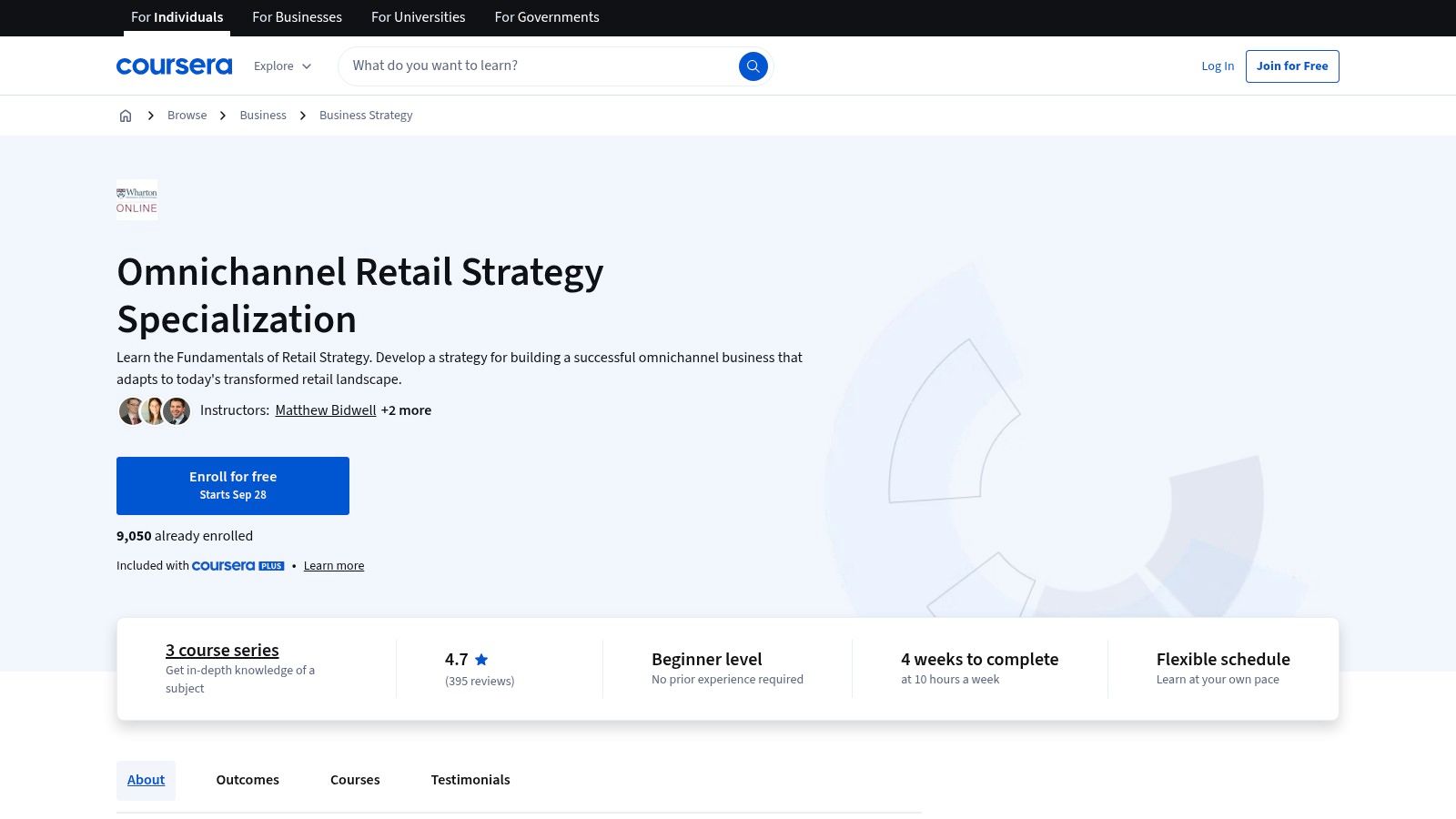
Coursera

Unlike passively reading a blog post, Coursera provides a hands-on learning environment. The platform’s courses include video lectures, readings, and graded assignments that require you to analyze and deconstruct successful strategies. This structured format is ideal for marketing professionals who want not only to see examples but also to build the analytical skills needed to implement similar tactics in their own organizations.

Why It Excels for Finding Examples

Coursera's primary strength is its rigorous, curriculum-based approach combined with flexible, self-paced learning. It offers a clear path from understanding concepts to applying them.

  • University-Vetted Content: Courses are developed by top institutions like the Wharton School, ensuring the examples and frameworks are credible and academically sound.
  • Project-Based Learning: The specializations often culminate in a hands-on project where you apply omnichannel principles to a real-world business problem.
  • Expert-Led Instruction: Learn directly from professors and industry experts who break down complex case studies into digestible lessons.
  • Professional Certification: Earn a shareable certificate upon completion to showcase your expertise in omnichannel strategy to employers and professional networks.

Actionable Tips for Using Coursera

To get the most value from Coursera for finding an omnichannel marketing example, approach it like a professional development tool.

  1. Audit Courses First: Many courses, including the Wharton specialization, allow you to audit the content for free. This lets you access the video lectures and readings to see the examples before committing to the paid certificate track.
  2. Focus on Specializations: Look for multi-course "Specializations" instead of individual courses for a more comprehensive and in-depth exploration of the topic.
  3. Engage with Discussion Forums: Use the student forums to ask questions and discuss case studies with peers and instructors, gaining different perspectives on the strategies presented.
Feature ComparisonCoursera SpecializationGeneral Marketing Blog
Content DepthHigh (structured curriculum, projects)Variable (often single-focus articles)
VettingStrong (university-backed)Weak (author opinion, sponsored content)
StructureOrganized (modules, graded tasks)Unstructured
CostSubscription-based (free audit option)Free

While some case studies may use simulated data rather than live metrics, the platform's academic rigor ensures the strategic principles are sound. For marketers seeking a guided, educational experience that translates directly into applicable skills, Coursera provides an unmatched learning environment.

Website: https://www.coursera.org/specializations/wharton-retail-strategy

3. HubSpot: Your Hub for Actionable Omnichannel Frameworks

For those seeking a practical omnichannel marketing example without the commitment of purchasing a book, HubSpot is an indispensable resource. It offers a rich library of free articles, templates, webinars, and tools focused on omnichannel implementation. This makes it an ideal destination for marketers who need to quickly translate theory into action.

Unlike platforms that only provide theoretical discussions, HubSpot equips you with tangible assets. Their content often breaks down how well-known brands like Disney and Sephora orchestrate their customer experiences. More importantly, it provides downloadable templates for mapping out your own customer journeys, turning abstract concepts into concrete project plans. This blend of inspiration and application is what sets HubSpot apart as a go-to educational hub.

Why It Excels for Finding Examples

HubSpot's strength lies in its ability to bridge the gap between examples and execution. The platform is designed to not only show you what good omnichannel looks like but also give you the tools to build it yourself.

  • Curated Brand Breakdowns: Access detailed analyses of successful omnichannel strategies from leading consumer brands, updated regularly for relevance.
  • Free Journey Mapping Templates: Download ready-to-use templates to visually orchestrate your own omnichannel customer journeys, saving significant time.
  • On-Demand Webinars: Watch expert-led sessions that dive deep into the tactics and technologies behind effective omnichannel campaigns.

Actionable Tips for Using HubSpot

To get the most value from HubSpot, focus on its practical tools rather than just reading articles.

  1. Download and Customize Templates: Don't just read about customer journeys; actively map your own using their free templates as a starting point. This is the first step to making the strategy real for your business.
  2. Filter by Content Type: Use the blog's search functionality to find "templates," "webinars," or "guides" specifically related to omnichannel to access the most actionable assets.
  3. Analyze Their Use Cases: Pay attention to how HubSpot positions its own software as a solution. These case studies provide insight into how a CRM can enable person-level identification and seamless cross-channel experiences. You can learn more about HubSpot's approach to identity resolution and its impact on omnichannel strategies.
Feature ComparisonHubSpotGeneral Marketing Blogs
Content DepthMedium-High (templates, webinars)Variable (often surface-level)
VettingStrong (in-house expert content)Weak (author bias is common)
ActionabilityHigh (downloadable tools)Low (mostly theoretical)
CostFree (some content is gated)Free

While some of the best resources require an email signup, the value provided in return is substantial. For marketing professionals and teams needing to quickly build and deploy an omnichannel strategy, HubSpot offers the most direct path from learning to doing.

Website: https://blog.hubspot.com/service/omni-channel-experience

4. Shopify: From Inspiration to Omnichannel Implementation

For businesses seeking a practical omnichannel marketing example, Shopify offers a unique combination of inspiration and execution. The platform showcases real-world brand case studies that detail how retailers unified their online stores, physical point-of-sale (POS), and social commerce channels. Unlike purely informational blogs, Shopify connects these success stories directly to the tools that made them possible.

This approach transitions the concept of omnichannel from an abstract strategy to a tangible business model. Users can read about a brand's success with curbside pickup and then immediately explore the Shopify POS features and app integrations required to implement it. This dual focus on "how they did it" and "how you can do it" makes it an invaluable resource for entrepreneurs and marketing professionals ready to take action.
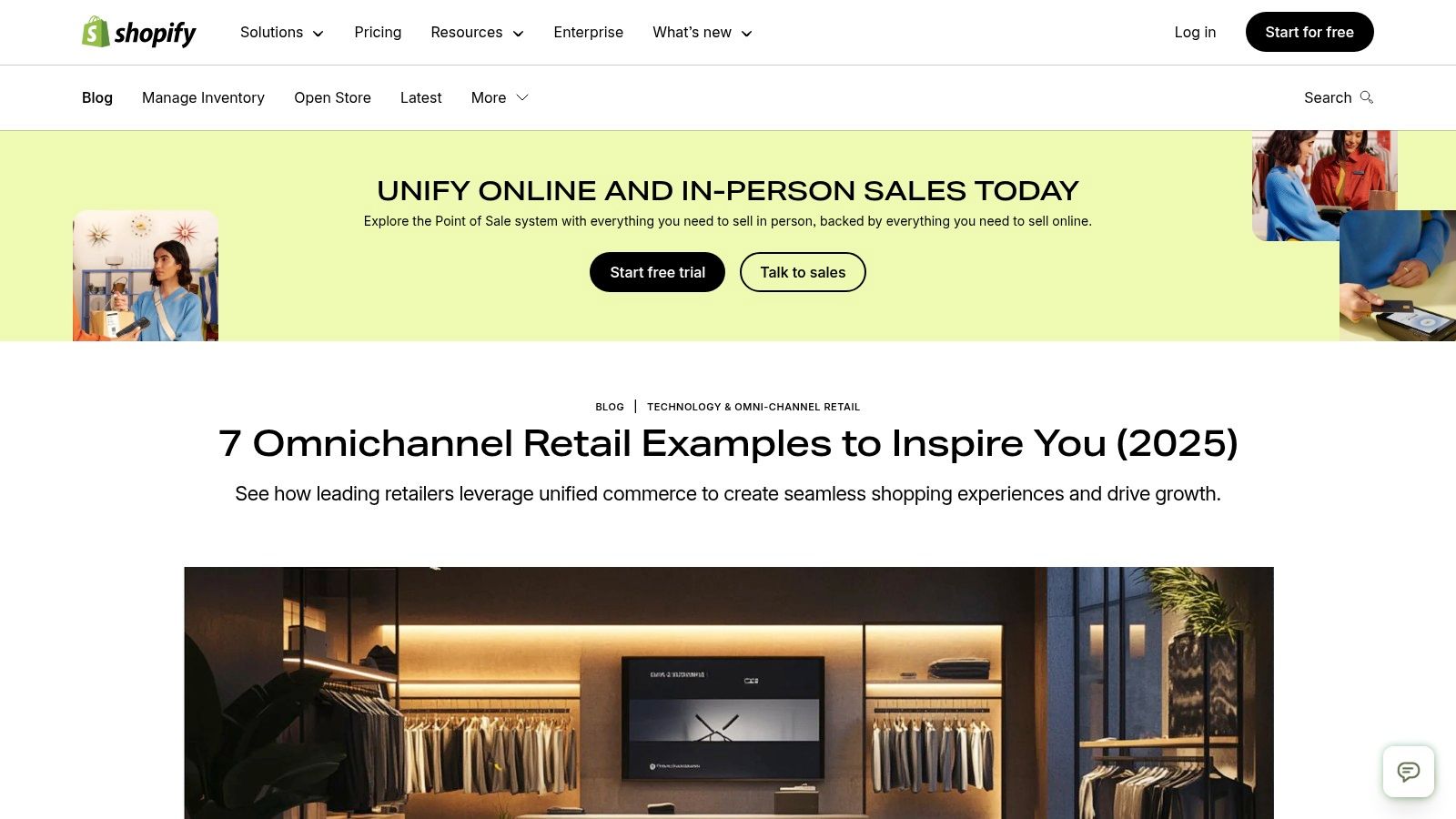
Shopify

Why It Excels for Finding Examples

Shopify’s strength lies in demonstrating achievable omnichannel strategies powered by its own ecosystem. The platform provides a clear pathway from case study to implementation, which is a distinct advantage over theoretical articles.

  • Actionable Case Studies: Each example is a brand actively using Shopify, providing a transparent look at how features like unified inventory and social selling work in practice.
  • Integrated Toolset: It presents a native POS system, extensive app marketplace, and logistics support (BOPIS/BOPAC), showing exactly what's needed to build a similar experience.
  • Unified Commerce Focus: The examples emphasize a seamless customer journey, from an Instagram ad to an in-store purchase, all tracked within a single system.

Actionable Tips for Using Shopify

To get the most out of Shopify’s resources, focus on both the strategic narrative and the underlying technology.

  1. Deconstruct the Customer Journey: As you read a case study, map out the customer's path. Note every touchpoint, from social media discovery to the final sale, and identify the Shopify feature enabling it.
  2. Explore the App Ecosystem: If a case study mentions a specific function (like loyalty programs or advanced inventory), search the Shopify App Store to find the exact tools they used. This turns inspiration into a concrete shopping list.
  3. Use Case Studies for Your Business Case: Leverage these real-world examples to justify technology investments to stakeholders, showing proven ROI from other merchants. You can learn more about how successful brands leverage platforms like Shopify.
Feature ComparisonShopify ExamplesMarketing Blogs
Content FocusPlatform-driven implementationBroad strategic theory
ActionabilityHigh (linked tools and apps)Low (often lacks specific tools)
PerspectiveMerchant-centric (real results)Analyst-centric (observations)
CostFree (for case studies)Free

While the examples are inherently platform-centric, they offer an unparalleled, replicable blueprint for building an omnichannel strategy. For businesses wanting to see how theory translates into sales, Shopify provides the most direct and actionable examples available.

Website: https://www.shopify.com/retail/omnichannel-retail-examples

5. Salesforce Service Cloud: Bridging Marketing and Service

To truly understand an omnichannel marketing example, one must look beyond campaigns and into the technology that powers seamless customer interactions. Salesforce Service Cloud provides the operational backbone for connecting marketing efforts with real-time customer service. It enables businesses to manage and route customer queries from any channel, ensuring the conversation continues fluidly whether it started on social media, email, or a phone call.
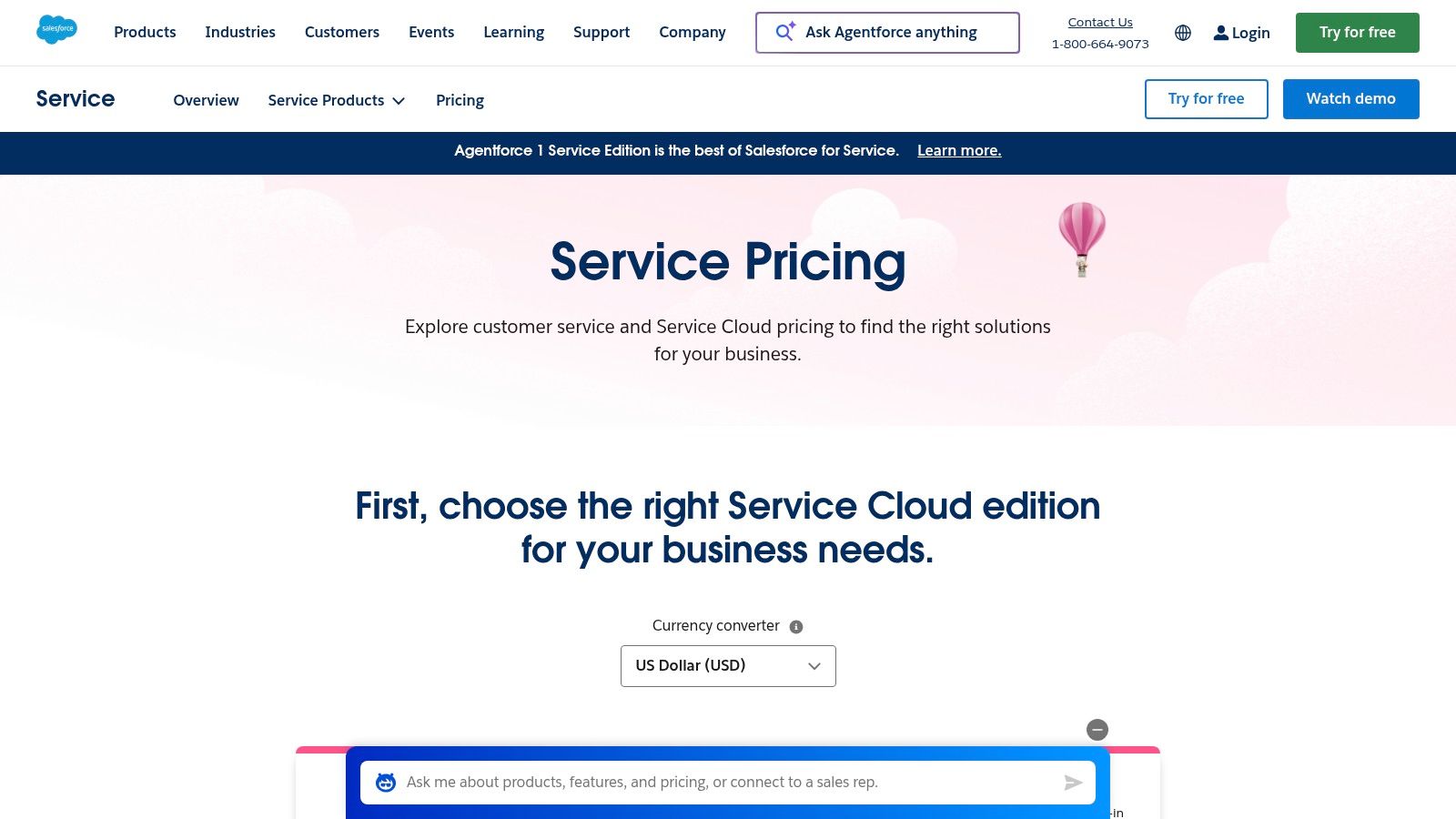
Salesforce Service Cloud

Unlike platforms focused solely on marketing automation, Service Cloud integrates support touchpoints directly into the customer profile. This gives both marketing and service teams a unified view of every interaction, preventing disjointed experiences where a customer has to repeat information. For professionals mapping out a true end-to-end omnichannel strategy, exploring how a tool like Service Cloud handles post-conversion engagement is essential.

Why It Excels for Omnichannel Execution

Salesforce Service Cloud's strength lies in its robust, enterprise-grade routing and workload management, which ensures marketing promises are met with exceptional service. It transforms support from a cost center into a core part of the customer journey.

  • Unified Agent Experience: Consolidates interactions from voice, messaging, and digital channels into a single console, giving agents full context on a customer's marketing history.
  • Intelligent Omni-Channel Routing: Automatically directs cases to the right agent based on skill, availability, and workload, ensuring prompt and effective resolutions.
  • Comprehensive Analytics: Provides dashboards that track service metrics across all channels, allowing marketers to see how support interactions impact customer loyalty and lifetime value.

Actionable Tips for Using Salesforce Service Cloud

To leverage this platform for a holistic omnichannel strategy, focus on integrating its capabilities with your marketing goals.

  1. Map Customer Service Journeys: Use its tools to outline how inquiries initiated from marketing campaigns (e.g., a chatbot on a landing page) are routed and resolved. This connects marketing actions to service outcomes.
  2. Explore the AppExchange: Look for integrations that connect your specific marketing automation tools (like Pardot or Marketo) directly with Service Cloud to create a seamless data flow.
  3. Analyze Pricing Tiers: Carefully review the different pricing editions to identify which one includes the necessary "Omni-Channel" features for your specific use case, as these are critical for execution.
Feature ComparisonSalesforce Service CloudStandard Help Desk Software
Channel IntegrationNative (voice, chat, social, email)Often siloed or requires add-ons
Routing LogicAdvanced (skills-based, workload)Basic (round-robin or manual)
Marketing IntegrationDeep (part of unified CRM)Limited (basic data sync)
CostHigher (per-user, tiered plans)Lower (often simpler pricing)

While the platform’s implementation can be complex and its pricing is at a premium, its ability to unify marketing and service is unmatched for enterprises. For teams looking to build a resilient omnichannel experience that extends beyond the initial sale, Salesforce Service Cloud offers the foundational technology. You can explore a detailed case study to see how TWNEX achieved this synergy.

Website: https://www.salesforce.com/service/pricing/

6. Adobe Journey Optimizer: Orchestrating the Enterprise Omnichannel Experience

When an omnichannel marketing example needs to be executed at an enterprise scale, the conversation shifts from individual tools to unified orchestration platforms. Adobe Journey Optimizer is an industry-leading solution built for large organizations that need to manage complex, real-time customer journeys across a vast array of digital and physical touchpoints. It moves beyond simple campaign management to offer a centralized hub for data, decisioning, and delivery.
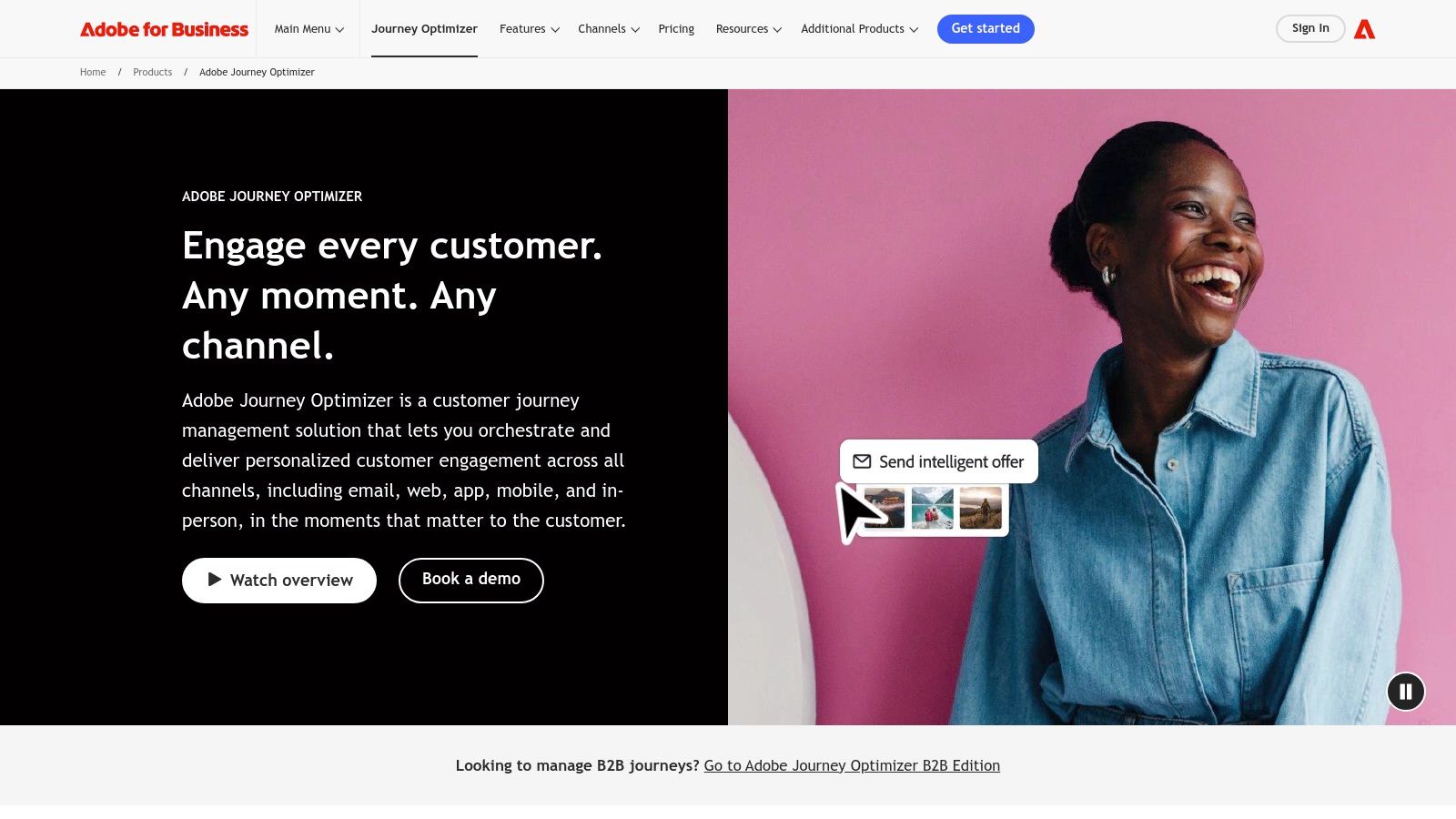
Adobe Journey Optimizer

Unlike point solutions that handle a single channel like email or SMS, Adobe Journey Optimizer is engineered to unify customer profiles from disparate sources and use that data to trigger personalized interactions at the exact right moment. Its visual journey canvas allows marketers to design, test, and deploy sophisticated workflows that adapt to customer behavior in real time, making it a powerful engine for building a truly connected experience.

Why It Excels for Omnichannel Execution

Adobe’s strength lies in its deep integration with the Adobe Experience Cloud and its ability to handle immense volumes of data and customer interactions. This makes it an ideal platform for enterprises aiming to deliver hyper-personalized experiences.

  • Real-Time Unified Profile: It consolidates data from CRM, analytics, and other sources into a single, continuously updated customer profile.
  • AI-Powered Decisioning: The platform uses artificial intelligence to determine the next best action or offer for each individual, optimizing for business goals.
  • Native Cross-Channel Support: Seamlessly orchestrate messages across email, SMS, push notifications, in-app messages, and web channels from one interface.

Actionable Tips for Using Adobe Journey Optimizer

To effectively leverage this powerful platform, teams must focus on data strategy and iterative testing.

  1. Start with Data Unification: Prioritize connecting your key customer data sources to build a robust unified profile. A journey is only as good as the data powering it. This is your foundational action item.
  2. Map a Core Customer Journey: Instead of trying to orchestrate everything at once, select one high-impact journey (e.g., cart abandonment or new user onboarding) to build and optimize first.
  3. Utilize AI Experimentation: Use the built-in AI tools to A/B test different paths, messages, and timing within your journeys to continuously improve performance.
Feature ComparisonAdobe Journey OptimizerStandard Marketing Automation
Data IntegrationDeep (real-time, unified profile)Basic (list-based, often siloed)
Personalization1:1, AI-drivenSegment-based
Channel ScopeNative cross-channel orchestrationPrimarily email-focused with add-ons
Cost & ComplexityHigh (quote-based, requires resources)Low to Medium (SaaS pricing)

The primary drawbacks are the significant cost and implementation complexity, which place it out of reach for most small to mid-sized businesses. However, for large enterprises seeking a scalable, governed, and intelligent platform to build a true omnichannel marketing example from the ground up, Adobe Journey Optimizer is a top-tier choice.

Website: https://business.adobe.com/products/journey-optimizer/adobe-journey-optimizer.html

7. Harvard Business Review Store

When you need an omnichannel marketing example backed by rigorous academic research and strategic business analysis, the Harvard Business Review (HBR) Store is an indispensable resource. It shifts the focus from purely tactical descriptions to high-level strategic frameworks, profitability models, and leadership perspectives. HBR provides access to concise, data-driven articles, case studies, and reports authored by leading academics and industry consultants.
Harvard Business Review Store

Unlike general marketing blogs that may offer anecdotal evidence, HBR delivers content grounded in quantitative and qualitative research. This makes it a go-to source for CMOs, VPs, and strategists who need authoritative material to build a business case, inform executive-level decisions, or train their teams. The platform is designed for professionals seeking citable, credible insights rather than just inspiration.

Why It Excels for Finding Examples

HBR’s strength lies in its credibility and focus on the "why" behind an omnichannel strategy, not just the "how." It connects omnichannel execution directly to financial outcomes and competitive advantage.

  • Data-Backed Insights: Articles are based on extensive research, providing reliable data and frameworks for analyzing omnichannel profitability and customer lifetime value.
  • Leadership Perspective: Content is tailored for senior leaders, focusing on the organizational changes, investment decisions, and strategic shifts required for successful implementation.
  • Curated Learning Paths: HBR often suggests related reading, helping you build a comprehensive understanding of a topic by connecting articles on customer experience, retail innovation, and digital transformation.

Actionable Tips for Using HBR Store

To extract maximum value, approach the HBR Store with a strategic mindset.

  1. Search for "Topic + Case Study": Use queries like "omnichannel retail case study" or "customer journey integration" to find specific, in-depth analyses.
  2. Utilize Preview Options: Read the article abstracts and executive summaries to quickly assess relevance before purchasing the full PDF. This is a crucial cost-saving step.
  3. Explore Related Content: When you find a relevant article, check the "Related" section for complementary pieces that provide a more holistic view of the strategy.
Feature ComparisonHarvard Business Review StoreIndustry Blogs
Content DepthHigh (research-based, strategic)Variable (often tactical, anecdotal)
VettingVery Strong (peer-reviewed)Weak (author or brand bias)
StructureOrganized (abstract, key findings)Often unstructured, list-based
CostPaid (per article/subscription)Free

While individual articles carry a price tag, their value as authoritative, citable resources for building internal strategy presentations is unparalleled. For leaders needing to justify significant omnichannel investments, the data-driven examples found on the HBR Store are a critical tool.

Website: https://store.hbr.org/product/how-to-make-the-most-of-omnichannel-retailing/F1607A

Omnichannel Marketing Examples Comparison

PlatformImplementation Complexity 🔄Resource Requirements ⚡Expected Outcomes 📊Ideal Use Cases 💡Key Advantages ⭐
AmazonLow – simple search and purchase processMinimal – requires internet and deviceQuick access to diverse examples and user reviewsFinding broad, practical omnichannel marketing examplesVast catalog with fast delivery and ratings
CourseraMedium – structured courses with projectsModerate – time investment, course feesDeep, academic understanding with certificationLearners seeking structured, university-backed contentRigorous, real-world case studies and projects
HubSpotLow – mostly free resources, some signupsLow – free content, some lead-gen gatingPractical templates and brand example accessMarketers needing free, ready-to-use materialsFrequent content updates and downloadable tools
ShopifyMedium – platform and app ecosystem setupModerate to high – platform fees and appsUnified commerce execution and retail case insightsMerchants wanting integrated POS and social commerceClear case narratives with practical tools
Salesforce Service CloudHigh – complex platform and integrationsHigh – licensing, setup, and trainingRobust omni-channel service and marketing integrationEnterprises requiring advanced customer support workflowsEnterprise-grade features and analytics
Adobe Journey OptimizerVery High – enterprise-level orchestrationVery high – dedicated setup and servicesScalable, personalized omnichannel campaign managementLarge brands needing AI-driven personalizationStrong AI and governance capabilities
Harvard Business ReviewLow – easy digital access or print purchaseLow to medium – purchase cost per articleResearch-backed insights and strategic recommendationsExecutives seeking credible, data-driven analysisAuthoritative content for leadership use

From Inspiration to Implementation: Your Next Steps

We've explored a range of powerful omnichannel marketing example showcases, from Amazon's integrated retail ecosystem to HubSpot's seamless educational journey. The common thread weaving through each success story is a relentless focus on the customer, powered by a unified data strategy and the right technology stack. They prove that omnichannel isn't just a buzzword; it's a fundamental shift in how businesses build relationships.

The core lesson is clear: true omnichannel excellence begins with breaking down internal silos. Whether it's connecting sales data from Salesforce Service Cloud with marketing campaigns in Adobe Journey Optimizer, or integrating your Shopify store with your support channels, the goal is to create a single, coherent view of each customer. This unified profile is the bedrock upon which personalized, context-aware experiences are built.

Turning Examples into Actionable Strategy

Studying a great omnichannel marketing example is one thing, but replicating its success requires a strategic approach. Here are the actionable next steps to bridge that gap:

  • Map Critical Customer Journeys: Don't try to boil the ocean. Identify the 2-3 most critical paths your customers take, such as the journey from initial awareness to first purchase, or from active user to loyal advocate. Focus your initial efforts here.
  • Audit Your Data and Tech Stack: Analyze where your customer data currently lives. Is it fragmented across different platforms? For many, the first step is investing in a solution that can unify this information. This might mean better integrating your existing tools or adopting a centralized platform.
  • Prioritize a Single Source of Truth: The success of brands like Coursera and HBR relies on knowing a user's history across all touchpoints. Your CRM, CDP, or marketing automation platform should serve as the central hub for all customer interactions, ensuring every channel has access to the same up-to-date information.
  • Operationalize Your Vision: Building the strategy is crucial, but execution is what delivers results. For businesses looking to operationalize a truly seamless marketing and sales experience, exploring a guide to leveraging outsourced ecommerce solutions can provide actionable insights for streamlining operations and scaling efforts effectively.

Ultimately, the best approach is iterative. Start small, prove the value with one key customer journey, and then scale your omnichannel efforts across the organization. The examples in this article demonstrate that a consistent, customer-centric experience isn't just a competitive advantage; it's the new standard.


Ready to move from studying examples to building your own best-in-class omnichannel experience? marketbetter.ai unifies your customer data, automates personalization across channels, and provides the predictive analytics needed to turn insights into revenue. See how our platform can help you orchestrate seamless customer journeys by visiting marketbetter.ai to learn more.


7 B2B Lead Generation Campaign Examples to Replicate in 2025

· 24 min read

Generating a consistent flow of high-quality leads is the lifeblood of any B2B organization, yet cutting through the market noise to capture attention feels more challenging than ever. True success isn't found in a single magic-bullet tactic, but in a well-executed portfolio of strategies tailored to your audience. This article moves beyond theory to deconstruct seven proven lead generation campaign examples, offering a strategic blueprint that marketing and sales teams can adapt and implement immediately.

We won't just describe what these companies did. Instead, we'll dive deep into the specific tactics, replicable methods, and critical metrics behind their success. For marketers seeking a comprehensive overview of foundational tactics, understanding various effective B2B lead generation strategies can provide essential context for the specific examples we are about to explore.

Each example in this listicle includes:

  • A direct comparison against an alternative approach.
  • An actionable "How to Replicate" guide.
  • Key performance indicators to track your own campaign's success.

This breakdown is designed to equip you with the practical insights needed to build, launch, and optimize your own high-converting lead generation engine. Let's get started.

1. HubSpot’s Website Grader: The Ultimate Top-of-Funnel Tool

One of the most enduring and effective B2B lead generation campaign examples comes from HubSpot. Instead of a temporary campaign, they built a perpetual lead generation engine: the Website Grader. Launched in 2006, this free tool analyzes a website's performance in areas like SEO, mobile-friendliness, and security, then provides an instant, detailed report.

The brilliance of this strategy lies in its value-first approach. It doesn't ask for a sale; it offers a solution to a pressing question every business has: "How effective is my website?" By providing immediate, personalized, and actionable insights, HubSpot establishes itself as an authority and builds trust from the very first interaction.

Strategic Breakdown

The Website Grader is a masterclass in inbound marketing. It perfectly aligns with HubSpot’s core product offering-marketing automation and CRM software. A user who discovers their website has performance issues is instantly a warm lead for the very tools HubSpot sells to fix those problems.

The tool acts as a powerful qualifier. A user who takes the time to grade their site is demonstrating a clear interest in improving their digital marketing, making them a high-quality lead for sales and marketing teams to nurture. This approach is far more effective than a generic "Download our Free Ebook" form, as the interactive tool provides personalized value, making the lead more qualified and the follow-up conversation more relevant. The initial conversation is framed around the user's specific pain points, not a cold sales pitch.

Key Insight: The most powerful lead magnets solve a tangible problem for your target audience before they ever become a customer. This exchange of value for contact information creates a foundation of trust and positions your brand as a helpful expert.

How to Replicate This Strategy

While building a complex software tool might be out of reach for some, the core principle is highly adaptable. Your action plan is to create a simpler, yet equally effective, lead generation asset.

  • Step 1: Identify a Key Calculation or Diagnosis. Brainstorm a frequent, quantifiable question your ideal customer has.
  • Step 2: Choose Your Format. Select a simple, interactive format based on that question. Examples include:
    • A Niche Calculator: Create an interactive calculator that helps prospects estimate ROI, project costs, or potential savings. For example, a logistics company could offer a "Freight Shipping Cost Calculator."
    • A Diagnostic Quiz: Build a short quiz that helps users diagnose a problem. A cybersecurity firm might offer a "Cyber Risk Assessment Quiz" that provides a score and recommended next steps.
    • A Template Generator: Provide a tool that generates a customized document. A legal tech company could offer a "Basic Non-Disclosure Agreement Generator."
  • Step 3: Build & Gate. Use a no-code tool like Outgrow or a simple form builder to create the tool. Gate the final results behind an email capture form.
  • Step 4: Promote. Feature the tool prominently on your homepage, blog sidebars, and in relevant articles to drive traffic.

The goal is to create a resource so valuable that your target audience is happy to exchange their email address for access. This makes your lead generation feel less like a transaction and more like the start of a helpful partnership.

2. OptinMonster’s Exit-Intent Pop-ups: The Last-Chance Lead Capture

One of the most effective, behavior-triggered lead generation campaign examples is the exit-intent pop-up. Popularized by tools like OptinMonster, this strategy works by tracking a user's mouse movements and displaying a targeted offer the moment they show an intention to leave the page, such as moving their cursor toward the back button or to close the tab.

Exit-Intent Pop-up Campaigns

This tactic is powerful because it's a final, highly relevant attempt to engage a visitor who would otherwise be lost forever. In contrast to a time-delayed pop-up that can interrupt a user's reading experience, an exit-intent pop-up is less intrusive because it appears only at the precise moment of disengagement, offering a compelling reason to stay. For example, e-commerce sites use it to offer a last-minute discount code, while B2B companies might present a free e-book or a trial offer to capture an email.

Strategic Breakdown

Exit-intent campaigns are a masterclass in behavioral marketing. They transform a moment of potential abandonment into a lead generation opportunity. The core principle is simple: you have the visitor's attention for a fleeting second, so the offer must be immediately valuable and highly relevant to their original interest on that page.

This strategy acts as a safety net for your conversion funnel. Many visitors browse without converting on their first visit. An exit-intent pop-up gives you a second chance to capture their contact information for future nurturing. It's far more effective than a static sidebar form because it leverages urgency and pattern interruption to grab attention when it matters most.

Key Insight: Don't let interested visitors leave empty-handed. By presenting a high-value, low-commitment offer just as they're about to depart, you can convert otherwise lost traffic into valuable leads for your sales and marketing pipeline.

How to Replicate This Strategy

Implementing an exit-intent pop-up is accessible for businesses of all sizes using widely available tools. Your action plan should focus on matching the offer to the user's context.

  • Step 1: Choose Your Tool. Select a pop-up tool like OptinMonster, Sumo, or HubSpot's built-in features.
  • Step 2: Segment Your Audience. Don't show the same pop-up to everyone. Create different offers for different pages (e.g., pricing page vs. blog page).
  • Step 3: Craft a Compelling Offer. The key to success lies in the value of the offer, not the complexity of the technology. Choose one:
    • Offer an Irresistible Discount: For e-commerce, a simple "10% off your first order" in exchange for an email is a proven winner.
    • Provide a Content Upgrade: If a visitor is leaving a blog post, offer a related checklist, template, or e-book. For example, on a post about SEO, offer a "Free SEO Audit Checklist."
    • Launch a Free Trial or Demo: For SaaS, present a no-obligation free trial or a quick demo sign-up to move them from awareness into consideration.
  • Step 4: A/B Test Your Copy. Test different headlines and calls-to-action to see what resonates most with your audience and maximizes conversion rates.

The goal is to make the offer a "no-brainer." It should be so relevant and valuable that the visitor feels they are getting a great deal by simply providing their email address, turning a potential bounce into a new lead.

3. Social Media Contest Lead Generation

Social media contests are one of the most direct and engaging lead generation campaign examples for B2C and even some B2B brands. This strategy combines the viral potential of social sharing with a clear value exchange: participants provide their contact information in exchange for a chance to win a desirable prize. The result is a rapid influx of new leads and a significant boost in brand visibility.

Unlike evergreen lead magnets that generate a slow, steady stream of leads, contests are high-impact, time-sensitive campaigns designed for quick list growth and maximum brand exposure in a short period. For instance, beauty brand Glossier famously ran Instagram photo contests that generated over 40,000 email signups by asking users to share content. This approach taps into the audience's creativity and desire for recognition, turning them into active brand promoters.

Social Media Contest Lead Generation

Strategic Breakdown

The core of a successful social media contest is the alignment between the prize and the ideal customer profile. Offering a generic prize like a gift card attracts a wide, unqualified audience, but offering a specific prize like a year's supply of your product or a premium subscription exclusively attracts people genuinely interested in your offering.

Platforms like Gleam.io and Rafflecopter have popularized this by creating simple entry mechanisms. Users can gain entries by following a social profile, signing up for a newsletter, or referring a friend. Each action is a micro-conversion that deepens engagement while capturing valuable lead data, turning passive followers into active prospects for nurturing campaigns.

Key Insight: A well-designed social media contest isn’t about getting the most leads; it's about getting the right leads. The prize you offer acts as a filter, ensuring the list you build is full of potential customers, not just freebie seekers.

How to Replicate This Strategy

You don’t need a massive budget to run an effective contest. The key is creativity and strategic alignment with your marketing goals. Here is your action plan to launch one.

  • Step 1: Define a Clear Goal. Is your primary objective email sign-ups, social follows, or user-generated content? This will shape your contest rules.
  • Step 2: Choose a Relevant Prize. Select a prize that your ideal customer would love but that a general audience might not. Examples:
    • A "Product Stack" Giveaway: Partner with complementary, non-competing brands to offer a bundle of products or services.
    • A User-Generated Content (UGC) Contest: Encourage your audience to submit photos or videos using your product. The prize could be a feature on your website or a product bundle.
    • A Referral-Based Contest: Use a tool like KingSumo to reward participants with more entries for each friend they refer. This is ideal for rapid list growth.
  • Step 3: Set Up the Mechanics. Use a contest platform like Gleam.io or ShortStack to manage entries, track actions, and select a winner fairly.
  • Step 4: Promote Heavily. Announce the contest across all your channels—email list, social media, and website banners—for a set period (e.g., 7-14 days) to create urgency.

The goal is to create a win-win scenario. Your audience gets a chance to win something they truly want, and you generate a highly targeted list of leads who have already shown interest in what you offer. This makes the follow-up process much warmer and more effective.

4. LinkedIn’s Personalized Outreach: The Modern Cold Call

In the B2B world, LinkedIn has evolved from a simple networking site into a primary channel for high-value lead generation. Unlike broad, impersonal email blast campaigns that often land in spam folders, a well-executed LinkedIn outreach campaign is a surgical tool, allowing teams to connect directly with specific decision-makers in a professional and contextual environment.

The power of this strategy comes from its blend of data-driven targeting and human-to-human interaction. Instead of blasting a generic message, top performers use LinkedIn to research prospects, understand their challenges, and initiate conversations built on genuine value and relevance. This transforms the "cold call" into a warm, contextual introduction.

Strategic Breakdown

Effective LinkedIn outreach is a multi-step process, not a one-time message. It begins with leveraging Sales Navigator to build hyper-targeted prospect lists based on industry, company size, role, and even recent activity. The goal is to identify individuals who are most likely to benefit from your solution right now.

The next step is personalized connection and messaging. Successful campaigns often see connection acceptance rates of 40-50% by moving beyond the generic template. Mentioning a shared connection, a recent post they published, or a specific company achievement shows you’ve done your homework. This approach positions you as a thoughtful peer, not just another salesperson, and paves the way for a meaningful conversation.

Key Insight: The most successful LinkedIn outreach campaigns prioritize relationship-building over immediate sales. By providing value upfront through shared content, insights, or helpful comments, you earn the right to ask for a prospect's time later in the funnel.

How to Replicate This Strategy

This is one of the most accessible lead generation campaign examples to implement, as it requires more strategy than budget. Here is your actionable plan.

  • Step 1: Define Your Ideal Customer Profile (ICP). Before sending a single message, clearly define who you are targeting. Use LinkedIn Sales Navigator's filters to build precise lists that match your ICP criteria.
  • Step 2: Craft a Value-First Sequence. Develop a multi-touchpoint messaging sequence that spans 2-3 weeks.
    • Touch 1: Personalized connection request (e.g., "Hi [Name], I saw your recent post on [Topic] and was impressed. Would love to connect.").
    • Touch 2 (3 days later): Follow up with a valuable resource (like a relevant article or case study), not a sales pitch.
    • Touch 3 (7 days later): Ask a relevant question to start a conversation, then pivot to your ask for a meeting.
  • Step 3: Engage Beyond the Inbox. Don't just live in the DMs. Actively engage with your target prospects' content by leaving thoughtful comments on their posts. This builds familiarity and credibility, making your eventual outreach message feel much warmer.
  • Step 4: Track and Optimize. Monitor your connection acceptance rate and reply rate. Test different message templates to see what performs best.

To master the nuances of this approach, you can explore detailed guides on LinkedIn prospecting automation to build a scalable and effective system.

5. Salesforce’s Trailhead Webinars: Scaling Education for Lead Generation

Webinars represent one of the most powerful B2B lead generation campaign examples because they offer a direct, high-value exchange: an hour of an expert's time for a prospect's contact information and attention. Salesforce masterfully employs this with its Trailhead educational webinars, turning product education into a scalable lead generation and user adoption engine.

Compared to pre-recorded video demos, which are static and one-directional, live webinars create an interactive, high-engagement environment that fosters trust and allows for real-time objection handling. Salesforce provides live and on-demand sessions that teach users how to solve real-world business problems using its platform. This approach attracts highly qualified individuals who are actively looking to either adopt Salesforce or deepen their existing usage, creating a pipeline of engaged, educated leads.

Strategic Breakdown

Salesforce’s webinar strategy is a masterclass in combining top-of-funnel attraction with bottom-of-funnel conversion. By addressing specific pain points-like "How to Automate Sales Processes"-they attract new users who are problem-aware. For existing customers, advanced topics encourage deeper product adoption and upsell opportunities, contributing to customer retention and expansion.

This live, interactive format creates a sense of urgency and community that a static blog post cannot replicate. The Q&A portion allows Salesforce to overcome objections and gather direct feedback from the market at scale. Each registration is a high-intent signal, providing the sales team with warm leads who have already been educated on the platform's value proposition, significantly shortening the sales cycle.

Key Insight: High-touch, educational experiences like webinars are invaluable for complex B2B products. They bridge the gap between awareness and consideration by demonstrating value and building a direct relationship with potential customers long before a sales call ever happens.

How to Replicate This Strategy

You don't need a massive platform like Salesforce to leverage the power of webinars. Your action plan should focus on sharing expertise to attract the right audience.

  • Step 1: Choose a High-Pain Point Topic. Identify a single, painful problem your target audience faces and dedicate a 45-minute webinar to solving it. Frame it as a "how-to" workshop, not a sales pitch.
  • Step 2: Select Your Format.
    • Problem/Solution Workshop: A tactical session, e.g., "How to Run Your First Agile Sprint."
    • Live "Ask Me Anything" (AMA): Position a company leader as an expert for a live Q&A session.
    • Product Demo Day: Host a monthly group demo that walks through your product's core features to qualify leads efficiently.
  • Step 3: Promote for Registrations. Use all channels: email signature banners, social media posts, and paid ads. Promote for at least two weeks leading up to the event.
  • Step 4: Execute a Robust Follow-up. Send the recording to all registrants. Segment attendees from no-shows and send tailored follow-up sequences.

The key is consistent promotion and a robust follow-up process. A well-executed webinar can generate leads for months, and with the right strategy, you can learn more about crafting the perfect webinar follow-up sequence.

6. CoSchedule's Headline Analyzer: The Content Marketer's Secret Weapon

Another prime example of a powerful lead generation campaign comes from CoSchedule, a marketing calendar software company. Their free Headline Analyzer tool has become a go-to resource for content creators, helping them craft more compelling and clickable headlines. Users simply enter a headline, and the tool provides an instant score based on word balance, length, sentiment, and other key factors.

The strategy's success is rooted in its highly targeted utility. This approach is more potent than offering a generic content marketing checklist because the interactive tool provides immediate, personalized feedback that helps a user with their daily workflow, creating a stronger sense of value and dependency on the brand. By offering a valuable solution that improves a daily task, CoSchedule builds immediate brand affinity and captures high-intent leads.

Strategic Breakdown

The Headline Analyzer is a perfect top-of-funnel asset that seamlessly guides users toward CoSchedule's paid products. Someone using the tool to optimize headlines is almost certainly managing a content calendar, the very problem CoSchedule's software solves. This creates a natural and logical next step in the customer journey.

Unlike a static PDF guide, this interactive tool provides instant, personalized feedback, making the value exchange feel substantial. CoSchedule initially offered the tool for free, later gating more advanced features behind an email signup. This "freemium" approach allowed them to build a massive user base and SEO authority first, then convert that traffic into a consistent stream of qualified leads for their marketing automation sequences.

Key Insight: The best lead generation tools address a small, frequent pain point within a larger workflow that your core product solves. This positions your tool as an indispensable daily utility and your product as the logical upgrade.

How to Replicate This Strategy

You don't need a massive development budget to create a valuable interactive tool. Your action plan is to identify a micro-problem your audience faces and build a simple solution.

  • Step 1: Identify a Repetitive Task. What is a small, frequent calculation, diagnosis, or creative task your ideal customer performs?
  • Step 2: Design a Simple Solution. Choose a format that delivers quick value:
    • ROI Calculator: A financial services firm could offer a "Compound Interest Calculator" to demonstrate potential growth.
    • Grading or Scoring Tool: An HR software company might build a "Company Culture Health Grader" quiz that provides a score and a downloadable report.
    • Simple Generator: A social media agency could create a "Hashtag Generator" for specific industries.
  • Step 3: Build & Launch. Use low-code platforms or simple scripts to create the tool. Offer the basic version for free and gate the detailed results or extra features behind an email form.
  • Step 4: Integrate into Your Content. Embed the tool in relevant blog posts and promote it as a standalone resource to build backlinks and drive traffic.

The goal is to move beyond passive content like ebooks. By creating an interactive resource that delivers immediate, personalized results, you provide a far more memorable and valuable experience, making prospects eager to provide their contact information.

7. Email Signature Lead Generation: The Untapped Daily Opportunity

Not all lead generation campaigns need a dedicated budget or a massive launch. One of the most powerful, yet often overlooked, strategies transforms a routine activity into a constant source of leads: the employee email signature. By embedding a strategic call-to-action (CTA) into every email sent, companies turn their daily communications into a scalable marketing channel.

While a dedicated email marketing campaign requires building a list and crafting specific broadcasts, an email signature campaign leverages the thousands of one-to-one emails your team already sends daily, acting as a passive but persistent lead generation channel with zero additional outreach effort. It capitalizes on the existing trust and context of an email conversation, presenting a relevant offer at a moment of high engagement.

Strategic Breakdown

Email signature lead generation is a masterclass in passive, high-volume marketing. Unlike a cold outreach campaign, the CTA in an email signature is delivered within a warm context, making the recipient more receptive. It allows you to segment offers by department; for instance, the sales team’s signatures can promote a demo, while the customer support team’s can link to a new feature tutorial or a case study.

This tactic seamlessly integrates marketing efforts into sales and operational workflows without adding extra work for employees. Tools like WiseStamp or HubSpot’s free generator allow for centralized management, ensuring every signature is on-brand and promotes the current campaign. This turns your entire organization into a lead generation engine, amplifying your marketing reach with every single email sent.

Key Insight: Your team's daily outbound emails are a high-trust, high-volume marketing channel. Activating it with a strategic signature CTA transforms an operational necessity into a consistent and cost-effective lead generation asset.

How to Replicate This Strategy

Implementing this strategy is straightforward and highly effective for nearly any business. Here is a simple action plan.

  • Step 1: Define a Single, Clear Offer. Choose one primary CTA for the entire company or for each department. It should be a high-value offer. Examples:
    • High-Value Content Offer: "Download our 2024 Industry Trends Report."
    • Webinar or Event Registrations: "Register for our free webinar on AI in Marketing."
    • Free Tool or Trial: "Try our 14-Day Free Trial" or "Use our Free ROI Calculator."
  • Step 2: Design a Simple Banner. Create a clean, clickable banner (e.g., 600x100 pixels) with a clear CTA. Use your brand colors and keep the text minimal.
  • Step 3: Use a Management Tool. Implement a tool like WiseStamp or Newoldstamp to centrally manage and deploy signatures across your entire team. This ensures consistency and allows you to update campaigns instantly.
  • Step 4: Track Your Clicks. Use UTM parameters in the banner's link to track clicks and conversions in your analytics platform, so you can measure the campaign's effectiveness.

The key is to treat the signature like a mini-advertisement that provides value. Start by defining a clear, compelling offer and creating a simple, clickable banner to deploy across your organization.

7 Lead Generation Campaigns Comparison

StrategyImplementation Complexity 🔄Resource Requirements ⚡Expected Outcomes 📊Ideal Use Cases 💡Key Advantages ⭐
Content Gating StrategyMedium to High (content creation + optimization)Moderate to High (content & marketing tools)High-quality leads; 15-25% conversion rateB2B, SaaS, professional servicesHigh-value leads; builds credibility; cost-effective
Exit-Intent Pop-up CampaignsLow to Medium (setup with existing tools)Low to Moderate (tool subscriptions)2-4% conversion of exit traffic; lead recoveryE-commerce, SaaS, websites needing last-chance captureEasy implementation; urgent offer triggers; recovers abandoning visitors
Social Media Contest Lead GenMedium (campaign coordination + legal compliance)Moderate (prizes and promotion)Rapid lead growth; 300-500% increase in social reachBrands focused on awareness and viral reachViral reach; rapid list growth; community engagement
LinkedIn Outreach CampaignsHigh (personalization + ongoing messaging)Moderate to High (time + premium tools)15-25% response rate; high-quality B2B leadsB2B sales, professional servicesDirect access to decision-makers; high-quality leads; professional trust
Webinar Marketing CampaignsHigh (preparation, promotion, tech setup)High (presenters, platform, promotion)20-40% attendee conversion; 40-50% attendanceEducational, SaaS, thought leadershipThought leadership; direct engagement; repurposable content
Free Tool/Calculator MagnetsHigh (development + maintenance)High (technical development + upkeep)25-40% conversion for valuable toolsIndustries with complex problems; inbound lead focusHigh perceived value; repeated use; viral potential
Email Signature Lead GenLow (simple design + integration)Low (design and tracking tools)1-3% CTR on signature links; passive lead genAll industries; internal teams with high email volumePassive, consistent exposure; low cost; easy maintenance

From Examples to Execution: Building Your Lead Generation Engine

We've explored a diverse set of powerful lead generation campaign examples, from the high-value exchange of a gated content strategy to the direct, personalized approach of a LinkedIn outreach campaign. Each example showcases a unique method for capturing interest and converting prospects. However, the true power doesn't lie in executing these tactics in isolation; it lies in understanding them as interconnected components of a comprehensive, multi-channel lead generation engine.

The key is to move from inspiration to implementation. The most successful marketing teams don't just copy what works for others; they adapt these frameworks to their specific audience and goals. They understand that a free tool might be perfect for capturing top-of-funnel interest, while a targeted webinar is ideal for nurturing middle-of-funnel leads who are actively evaluating solutions.

Matching the Campaign to Your Funnel

To build a truly effective engine, you must align each tactic with the appropriate stage of the buyer's journey. Thinking strategically about where each campaign fits will prevent wasted effort and ensure you're delivering the right message at the right time. Here’s a simple framework to help you map these examples to your own marketing funnel:

Campaign TypePrimary Funnel StageKey Goal & Objective
Social Media ContestsTop of Funnel (ToFu)Awareness & Reach: Rapidly expand audience and generate a high volume of initial contacts.
Free Tool/CalculatorTop/Middle of Funnel (ToFu/MoFu)Value & Engagement: Attract problem-aware prospects by offering an immediate, tangible solution.
Content Gating StrategyMiddle of Funnel (MoFu)Education & Qualification: Nurture interested leads by providing in-depth knowledge in exchange for contact info.
Exit-Intent Pop-upsMiddle of Funnel (MoFu)Opportunity Capture: Convert abandoning visitors who have already shown interest in your content or product.
Webinar MarketingMiddle/Bottom of Funnel (MoFu/BoFu)Consideration & Trust: Engage qualified leads with expert insights and demonstrate product value in real-time.
LinkedIn OutreachBottom of Funnel (BoFu)Decision & Conversion: Directly engage high-intent, decision-making prospects with personalized, solution-focused messaging.
Email Signature BannersAll StagesPassive Nurturing: Consistently promote relevant assets and offers to your entire network with every email sent.

Your Actionable Next Steps

The common thread weaving through all these successful lead generation campaign examples is the principle of providing undeniable value upfront. Whether it’s an insightful ebook, a useful calculator, or an educational webinar, you earn the right to ask for a prospect's information by giving them something meaningful first.

As you begin to build or refine your strategy, focus on integration and efficiency. Consider how a lead captured from a free tool can be nurtured through a targeted email sequence that invites them to a webinar. When your engine is running, efficiency becomes critical, and exploring methods for automating lead generation processes can significantly boost your output without sacrificing quality. The ultimate goal is to create a seamless journey that guides a prospect from initial awareness to a final purchasing decision.


Ready to turn these examples into your own success story? marketbetter.ai is the AI-powered platform designed to help you execute these campaigns at scale, from generating high-converting copy for your gated assets to crafting personalized outreach messages for your next LinkedIn campaign. Stop guessing and start building your lead generation engine by visiting marketbetter.ai today.