Snov.io is a solid email prospecting tool, but it's not the right fit for every team. Maybe you're hitting credit limits every month. Maybe you need LinkedIn automation without paying $69/month extra. Maybe you've outgrown email-only outreach and need a multi-channel platform.
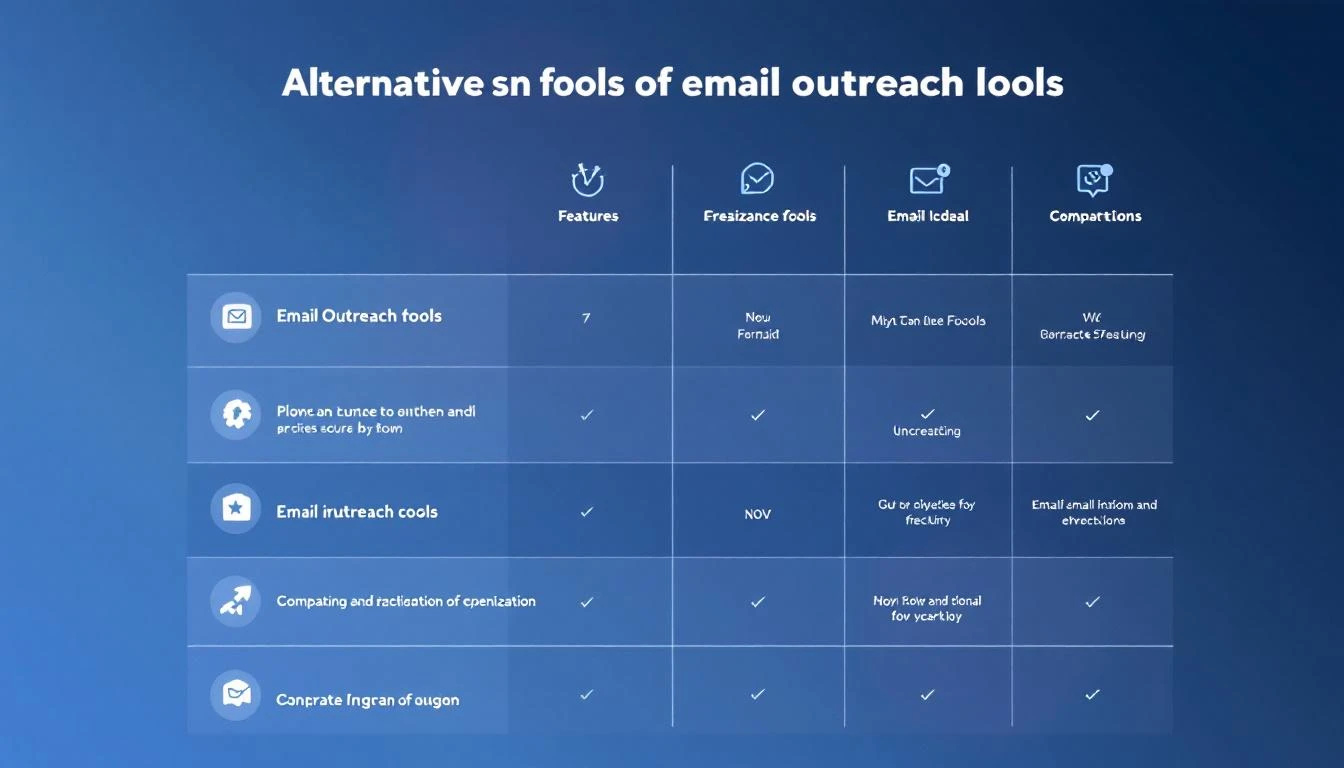
Here are 7 alternatives worth evaluating, from budget-friendly email tools to complete SDR platforms.
If you're outgrowing Snov.io because you need more than email prospecting, MarketBetter is the logical next step. It replaces Snov.io + your dialer + your visitor ID tool + your chatbot with one platform.
Snov.io finds emails and sends sequences. MarketBetter does that plus tells you who's actually interested based on website visits and intent signals. Your reps stop guessing and start selling to people who are already researching solutions.
Best for: SDR teams (3+ reps) ready to move beyond cold email into signal-driven multi-channel outreach.
Apollo is Snov.io's most direct competitor — email finding, verification, and sequences — but with a significantly larger contact database and more outreach channels.
Lemlist is a multi-channel outreach platform with email, LinkedIn, and phone steps built into a single sequence. Its standout feature is personalized image and video in cold emails.
Hunter.io is the most focused alternative — it does email finding and verification, and it does them well. No sequences, no CRM bells and whistles (though they've added basic campaigns).
Teams that want AI helping write and optimize outreach across multiple channels, with a built-in dialer.
7. Woodpecker — Best for Deliverability-First Teams
Price: $29/month (base)
Woodpecker is a cold email tool laser-focused on deliverability. It doesn't have email finding — you bring your own contacts — but it ensures your emails actually reach the inbox.
Snov.io is a capable email prospecting tool at an accessible price. But if you're reading this, you've probably hit one of its limits — credit caps, missing channels, LinkedIn add-on costs, or the need for a dialer.
The right alternative depends on what you're missing. If it's just a bigger database, try Apollo. If it's LinkedIn automation, try Lemlist. If it's everything — calling, visitor ID, playbooks, and email — in one platform, book a MarketBetter demo.
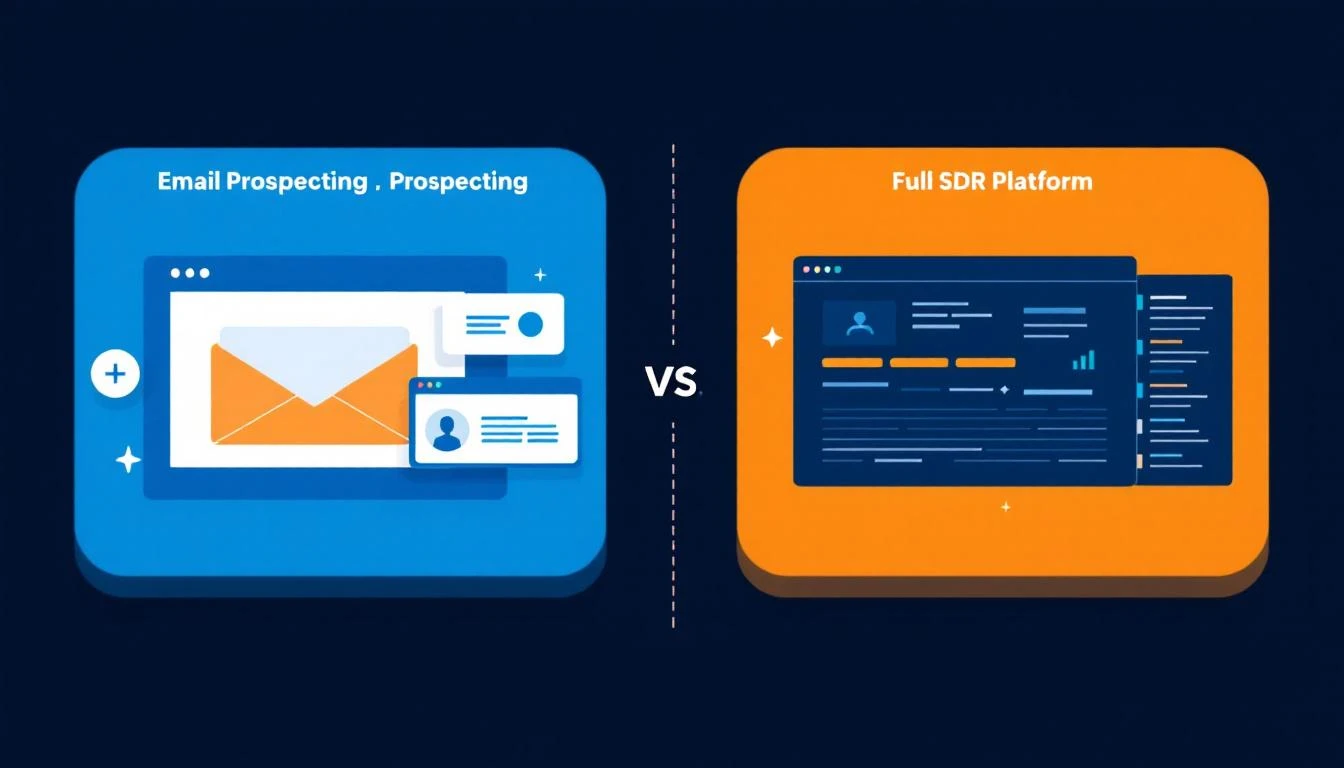
Snov.io and MarketBetter both help sales teams reach prospects. But they solve the problem at completely different levels.
Snov.io is an email prospecting and cold outreach tool. It finds email addresses, verifies them, sends drip sequences, and includes a lightweight CRM. Think of it as a lead generation toolkit built around email.
MarketBetter is a full SDR operating system. It identifies website visitors, scores intent signals, automates multi-channel outreach (email + phone + chat), and gives SDRs a daily playbook that tells them exactly what to do.
The difference: Snov.io helps you find and email prospects. MarketBetter tells you who is ready to buy and how to reach them across every channel.
Snov.io: This is Snov.io's bread and butter. The email finder searches by domain, company, or person. The verification tool checks deliverability. The Chrome extension pulls contacts from LinkedIn profiles. It's solid — Snov.io has been doing this since 2017.
MarketBetter: Includes enrichment credits powered by Fiber for prospect discovery, email, and phone enrichment. Not as deep as Snov.io's dedicated finder, but integrated into the workflow so enriched contacts flow directly into outreach sequences.
Winner: Snov.io for pure email finding volume. MarketBetter for enrichment-to-action workflow.
Snov.io: Drip campaigns with basic personalization, A/B testing, and scheduling. Works well for straightforward cold email sequences. Deliverability tools include email warm-up (limited on lower plans) and tracking.
MarketBetter: AI-personalized email sequences that pull from intent signals, visitor behavior, and enriched data. The emails aren't just templated drips — they're contextual outreach triggered by actual buying signals.
Winner: MarketBetter for intelligence-driven outreach. Snov.io for simple, high-volume cold email campaigns.
This is where the comparison breaks down. Snov.io is email-centric. MarketBetter is multi-channel.
Capability
MarketBetter
Snov.io
Website visitor identification
✅ Know who's on your site
❌
Smart dialer
✅ Call directly from playbook
❌
AI chatbot
✅ Engages visitors 24/7
❌
Daily SDR playbook
✅ Prioritized task list
❌
Intent signals
✅ Behavioral + firmographic
❌
LinkedIn automation
✅ Coming soon
⚠️ $69/mo add-on
Snov.io positions itself as "all-in-one," but it's really all-in-one for email prospecting. For actual SDR workflow automation, you'll need additional tools.
Snov.io: Includes a free CRM with deal tracking, pipeline visualization, and basic lead management. It's functional for small teams but limited compared to HubSpot or Salesforce.
MarketBetter: Integrates with HubSpot and Salesforce rather than building a separate CRM. Your data flows into the CRM your team already uses.
Snov.io is a capable email prospecting tool at an accessible price point. If your entire outbound motion is cold email and you need to find addresses + send sequences on a budget, it's a solid option.
But if you're building or scaling an SDR team and need more than email — visitor identification, smart dialing, AI chat, daily playbooks — Snov.io is one piece of a 4-5 tool stack that MarketBetter replaces entirely.
Start with the question: Is your bottleneck finding emails, or is it knowing who to contact, when, and across which channel?
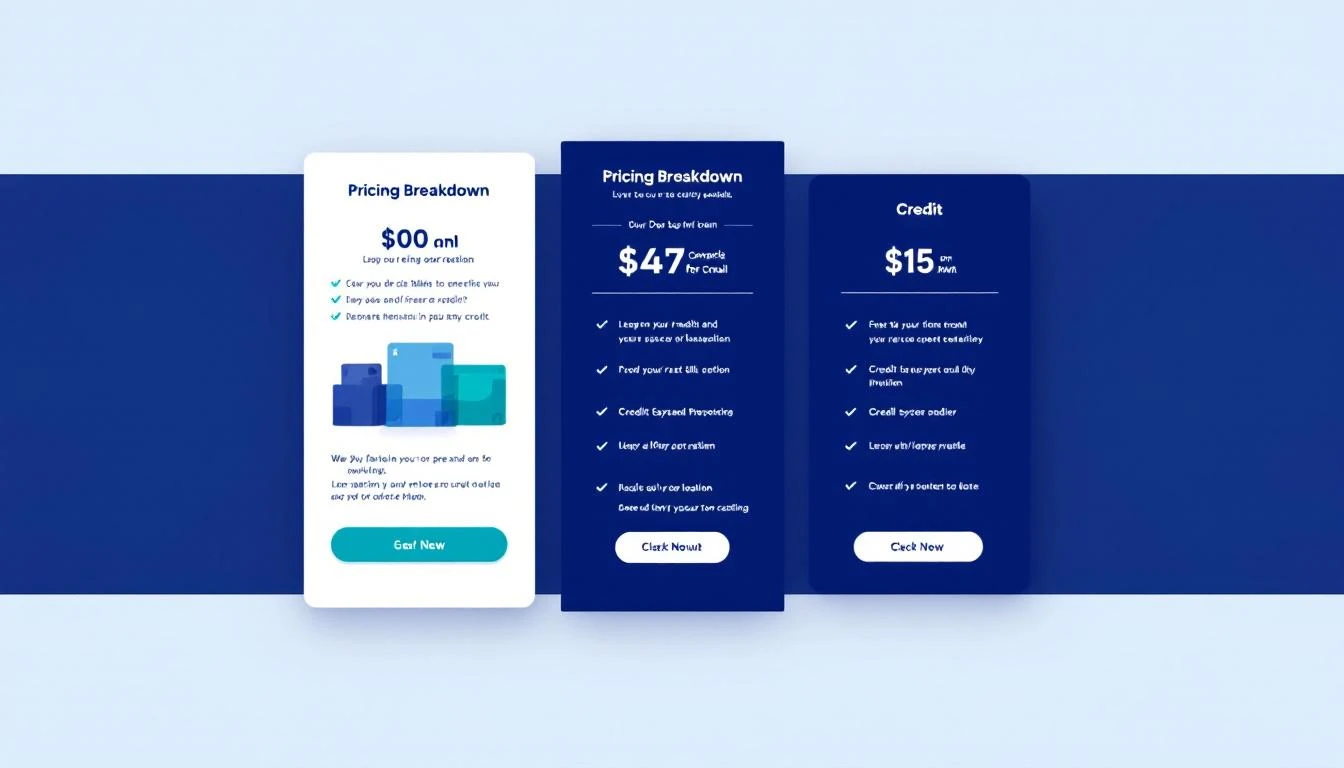
Snov.io's pricing looks simple on the surface: plans from $30 to $277/month. But when you factor in credit burn rates, LinkedIn add-ons, and the tools you'll still need alongside it, the real cost is different from the sticker price.
So on the Starter plan (1,000 credits), if you find 500 emails and verify them separately, you've used your entire monthly allocation. That's not a lot for serious outbound.
The Pro tier is where Snov.io becomes usable for teams:
Unlimited warm-up — critical for deliverability at scale
A/B testing for email campaigns
Advanced analytics
Full API access
Team collaboration features
The jump from Starter to Pro 5K ($30 → $75) is worth it for the unlimited warm-up alone.
Pro 5K ($75/mo): Good for 1-2 SDRs doing moderate prospecting Pro 20K ($142/mo): The sweet spot for most 3-5 person teams Pro 50K ($277/mo): High-volume teams with aggressive prospecting needs
Snov.io's LinkedIn automation (profile visits, connection requests, messages) is not included in any plan. It's a separate $69/month add-on per LinkedIn slot.
If your outreach includes LinkedIn (and in 2026, it should), add $69-207/month to your Snov.io bill:
The shared credit pool means every email find, verification, and save counts against the same bucket. Teams frequently upgrade mid-cycle when credits run dry.
On the Pro 5K plan ($75/month), 5,000 credits supports roughly 2,500 prospects (find + verify). For a 3-person SDR team contacting 30 prospects/day each, that's about 28 days of credits. You'll hit the limit almost every month.
Unused credits expire at the end of each billing cycle. If you don't use your 20,000 credits in a month, they're gone. No banking for high-volume months.
Total Cost of Ownership: Snov.io Stack vs All-in-One
For a 3-person SDR team doing multi-channel outbound:
Snov.io is competitively priced for email prospecting. The Starter plan at $30/month is one of the cheapest ways to start cold email outreach.
But the credit system, LinkedIn add-on pricing, and missing channels (no dialer, no visitor ID, no chat) mean the total cost of doing real multi-channel SDR work with Snov.io is often $1,000-3,000+/month — the same range as platforms that include everything out of the box.
Before choosing a plan, calculate your actual credit burn rate and list every tool you'll need alongside Snov.io. The sticker price is only part of the story.
Snov.io has been around since 2017, quietly building one of the most affordable email prospecting platforms in the market. With plans starting at $30/month, it's positioned as the entry-level choice for cold email outreach.
We analyzed reviews from G2, Capterra, Trustpilot, and user forums to give you the real picture of what works, what doesn't, and who Snov.io is actually built for in 2026.
The most common praise across every review platform is the price-to-value ratio. At $30-75/month, Snov.io undercuts Apollo ($49+), Lemlist ($59+), and most competitors while offering a comparable feature set for email prospecting.
Instead of using separate tools for finding, verifying, and emailing prospects, Snov.io handles the entire workflow in one place. For email-only outreach, this is genuinely convenient:
Every plan includes a basic CRM with deal tracking, pipeline visualization, and lead management. It's not Salesforce, but for small teams that don't have a CRM yet, it's functional and free.
The LinkedIn Chrome extension is reliable for pulling prospect information from profiles. Users report it as one of the smoother implementations compared to competitors.
The platform works, but it's not the most polished experience. Some features require multiple clicks to reach. Navigation between the email finder, campaigns, and CRM feels disjointed at times.
The LinkedIn automation isn't included in any plan. At $69/month per slot, it significantly increases the cost for teams that need multi-channel outreach. Users who expected "all-in-one" are surprised by this extra charge.
Snov.io has no dialer, no website visitor identification, no AI chatbot, and no intent signals. For teams evolving beyond cold email into multi-channel SDR workflows, Snov.io becomes just one piece of a larger stack.
Consistently strong ratings across all platforms. The scores reflect genuine satisfaction for what Snov.io is — an affordable email prospecting tool — not what it isn't (a full SDR platform).
Snov.io is one of the best values in email prospecting. At $30-75/month, you get email finding, verification, drip campaigns, and a CRM. The support is excellent. The Chrome extension works well.
But it's an email tool — not an SDR platform. Once your team needs calling, visitor identification, intent signals, or multi-channel playbooks, Snov.io becomes one of 4-5 tools you're managing. At that point, the "cheap" tool isn't cheap anymore.
Rating: 4.0/5 — Excellent for budget email prospecting, limited as a standalone SDR solution.
For teams ready to move beyond email-only outreach, MarketBetter combines everything Snov.io does (and more) into a single platform.
In B2B sales, the first email is just the beginning. The real pipeline is built in the follow-up, yet most sales reps are stuck sending generic 'just checking in' messages that get instantly deleted. These low-effort emails don’t just fail to get a response; they actively damage your credibility and kill potential deals before they even start.
This guide moves beyond generic advice and provides a playbook of 8 specific, scenario-based follow up email templates for sales designed for high-converting outbound motions. We'll go beyond just the copy and paste text. For each template, you'll get a comparative analysis of when to use it versus other options, actionable tips for deep personalization, and clear instructions for integrating them into your existing SDR workflows within CRMs like Salesforce or HubSpot.
You'll learn how to transform silence into meaningful conversations and add genuine value at every touchpoint. This isn't just a list of templates; it's a strategic framework for turning follow-ups from an afterthought into your most powerful pipeline-building tool. Let's dive into the specific templates that will help you re-engage cold prospects and close more deals.
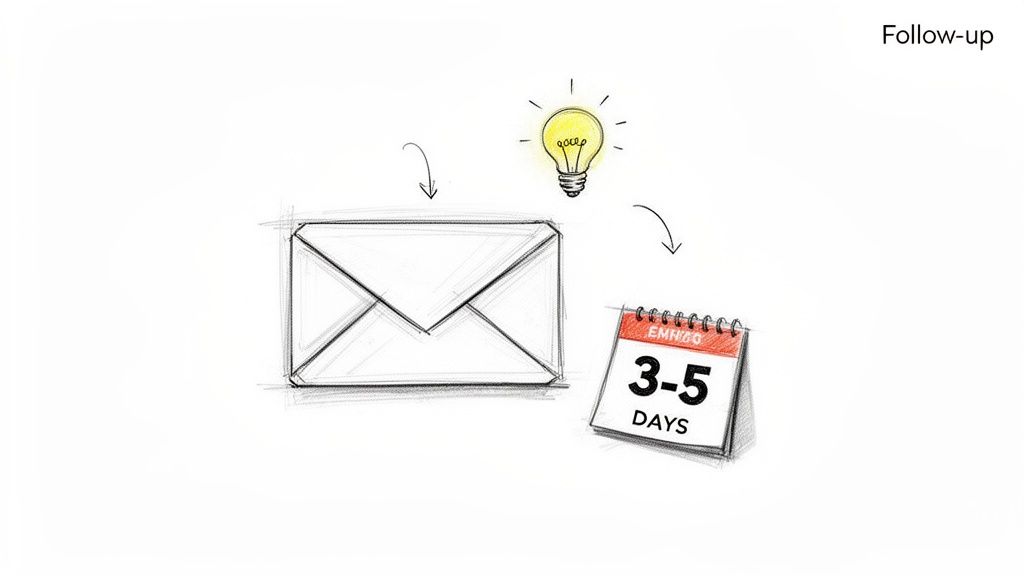
This is the most fundamental of all follow up email templates for sales: the gentle nudge after your initial cold outreach gets zero engagement. Triggered 3-5 business days after your first email, this template's goal is to re-engage a prospect who may have missed your message or wasn't immediately compelled to reply. Instead of simply "bumping" the original email, a successful follow-up provides a fresh, concise angle of value.
It assumes the prospect is busy, not uninterested. The key is to avoid sounding desperate or repetitive. Reference a new insight, a different pain point, or a recent company trigger event to make the message feel timely and relevant. This approach positions you as a persistent, helpful resource rather than just another salesperson.
Data consistently shows that persistence pays off. Amplemarket's research reveals that the second email in a sequence, sent 3-5 days later, often outperforms the first by 15-25%. Similarly, Outreach.io customers report a 20-30% lift in responses on follow-ups within a well-structured sequence.
Comparison: This template is your workhorse. While a Trigger Event Follow-Up is more powerful, it's situational. The No-Response Follow-Up is your default second step for any prospect who goes silent, making it universally applicable. It's less aggressive than a Breakup Email and serves as the foundation before introducing stronger plays like social proof.
Actionable Step: Open your CRM and create an automated task to trigger this follow-up four business days after an initial email gets no reply. This ensures consistency.
Vary the Value Proposition: If your first email focused on cost savings, pivot this one to operational efficiency or a specific competitor advantage.
Use a Micro-Commitment CTA: Instead of a vague "let's connect," suggest a specific, low-friction next step. Action: Change your CTA from "Let me know your thoughts" to "Is this worth a 15-minute chat next Tuesday to explore?"
Keep Subject Lines Short and New: Avoid using "Re:" on this first follow-up. A fresh, compelling subject line under 50 characters works best. Try "Quick question about [Company Name]'s X" or "[Prospect Name], thought you'd find this interesting."
Integrate CRM and Sales Tools: Log all non-opens in your CRM (like Salesforce or HubSpot) to track sequence effectiveness. For more advanced strategies, you can check out our guide on the best practices for email campaigns.
2. The Social Proof / Third-Party Validation Follow-Up
This powerful follow-up is deployed after your first or second no-response touch. Its purpose is to build immediate credibility and reduce perceived risk by showcasing that similar companies are already benefiting from your solution. Instead of you telling the prospect why your product is great, you let the success of their peers do the talking. This shifts the message from a speculative "we think you need this" to a compelling "companies like yours are already succeeding with this."
This template is especially effective for prospects who match your ideal customer profile (ICP) but have gone silent. It leverages the psychological principle of social proof, making the decision to engage feel safer and more validated. By introducing a customer logo, a specific case study result, or relevant industry recognition, you anchor your value proposition in tangible, real-world success.
Social proof is a potent motivator in B2B sales. Analysis from Gong reveals that mentioning a peer or competitor in follow-up calls and emails can improve response rates by over 30%. Similarly, case studies from LinkedIn Sales Solutions report that prospects who see relevant customer logos in an email are twice as likely to engage.
Comparison: Use this template when your No-Response Follow-Up fails to get a reply. It's more persuasive than a simple nudge because it introduces external validation. Compared to a Value-Add Content Follow-Up, which offers general advice, this is a direct and targeted proof point that says "your competitors are already winning with this."
Actionable Step: Build a simple spreadsheet or CRM dashboard mapping your top 5 case studies to specific industries and company sizes. When a prospect goes cold, consult this map for the most relevant proof point.
Segment Your Proof Points: Don't use a one-size-fits-all testimonial. A CFO will care about ROI metrics, while a VP of Sales wants to see pipeline growth.
Use Anonymous Results When Needed: If you can't name-drop a customer, use an anonymized but specific result. For example, "A leading CPG brand in your sector increased market share by 5% in six months using this strategy."
Pair Proof with a Trigger Event: Reference a recent company event like a funding round or a new executive hire alongside your social proof. For example, "Saw you're hiring more SDRs. Our client [Competitor Name] cut their ramp time by 40% with our platform."
Focus on a Single, Strong CTA: The goal isn't just to share a case study; it's to start a conversation. Pair your social proof with a direct, low-friction call to action like, “Worth a 15-minute chat to see how we did it?” For more strategies on getting your messages seen, check out our guide on how to improve email open rates.
This is one of the most powerful follow up email templates for sales because it’s activated by a specific, relevant buyer signal. Triggered within 24-48 hours of an event like a funding announcement, job change, significant website visit (like the pricing page), or product launch, this template capitalizes on moments when prospects are most receptive. The goal is to move beyond generic outreach by connecting your value proposition directly to their immediate context, making your email feel intuitive, not intrusive.
This approach assumes the prospect is actively considering change or facing new challenges due to the trigger event. Your follow-up becomes a timely solution rather than an unsolicited pitch. By referencing the specific event, you demonstrate you've done your research and understand their current situation, which immediately sets you apart from generic, automated sequences.
Relevance drives response rates. Data from platforms like Salesloft and Outreach.io show that signal-triggered follow-ups can generate over 50% higher engagement. Similarly, LinkedIn research indicates that outreach tied to a recent job change has a 45% higher positive response rate compared to standard cold outreach.
Comparison: This is your highest-impact template, but it's opportunistic. Unlike the scheduled cadence of a No-Response Follow-Up, this template should interrupt your sequence the moment a signal is detected. It provides a more compelling reason to reach out than a generic Value-Add email because it ties directly to the prospect's immediate priorities.
Actionable Step: Set up Google Alerts for your top 10 target accounts and keywords like "funding," "acquisition," or "new partnership." This creates a real-time feed of trigger events you can act on immediately.
Build a Signal Hierarchy: Not all triggers are equal. Rank them for your ICP. For a product-led company, a pricing page visit might be a top-tier signal, while for an enterprise solution, a funding announcement is more critical.
Automate Signal Detection and Drafting: Use tools with intent integration to auto-generate draft follow-ups when a signal is detected. Set up workflows to create an urgent task for your SDR in Salesforce or HubSpot within two hours of the event.
Add Deep Context to Job Changes: Don't just say "Congrats on the new role." Research the new company and the role’s likely priorities. For example, "Saw you just moved to [New Company] as VP of Sales; scaling the SDR team is often a key priority in that role, which is where we help."
Track Conversion by Signal Type: Monitor your CRM analytics to see which triggers (e.g., funding, new hire, competitor mention) lead to the most meetings. Double down on what works and allocate prospecting time accordingly.
This is one of the most powerful follow up email templates for sales, deployed after a prospect engages but raises a concern. Instead of a generic rebuttal, this template directly addresses the stated or implied objection (e.g., "no budget," "happy with current provider") and skillfully reframes it as the very reason to continue the conversation. It transforms a potential dead-end into a compelling new angle for engagement.
This template requires a thoughtful, consultative approach. It acknowledges the prospect's concern, validates their perspective, and then pivots to an alternative viewpoint. For example, a "no budget" objection is reframed into a conversation about ROI and long-term cost savings. This positions the sales rep as a strategic partner who understands their challenges, not just a vendor pushing a product.
Addressing objections head-on builds credibility and trust. Gong’s research shows that reps who directly tackle prospect concerns in follow-ups achieve three times higher close rates. Furthermore, data from Salesloft customers indicates that objection-specific follow-ups can improve conversion lift by 25-35%.
Comparison: This template is reactive, unlike the proactive nature of most others. It should only be used after a prospect has responded with a specific concern. Trying to pre-emptively address objections in a cold follow-up (like the No-Response template) can create problems that don't exist. It's a scalpel, not a hammer.
Actionable Step: Create a shared document (e.g., a Google Doc) for your team titled "Objection Handling Library." For the top 5 objections, collaboratively write and refine a 2-3 sentence email response based on this template.
Maintain a Curious, Not Defensive Tone: Use phrases like “I understand your point, and it’s a common one. I wonder if you’ve considered…” This opens a dialogue rather than starting an argument.
Leverage Customer Stories: Pair your objection reframe with a relevant, one-sentence case study. For example, “Another client in your space felt the same way until they saw a 40% reduction in X.”
Integrate Call and Email Data: Use tools to pull objections mentioned in prior calls and reference them in your email. This creates seamless continuity and shows you've been paying close attention to every detail of the sales process. You can enhance this process by learning how to qualify sales leads more effectively.
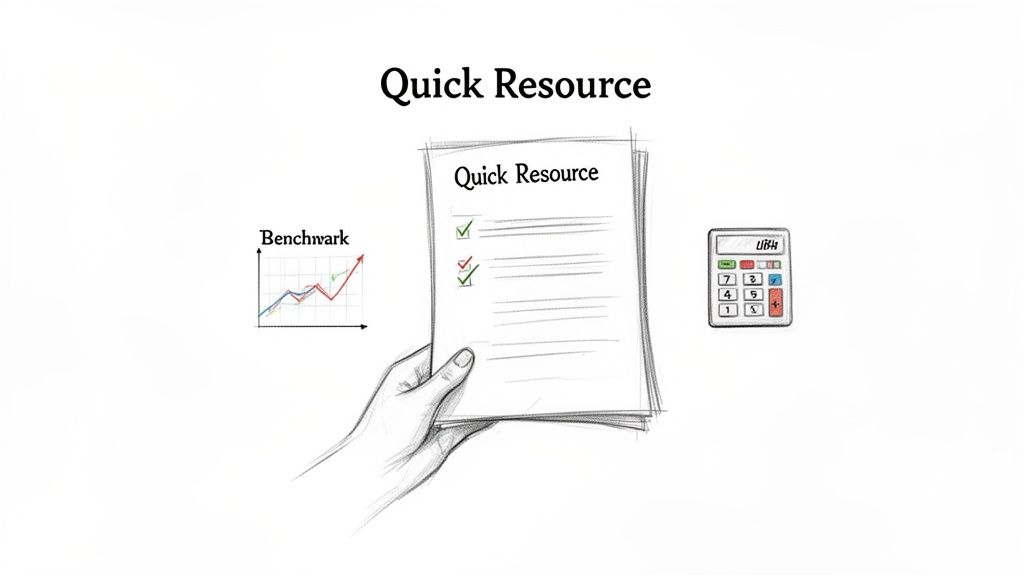
When a prospect ignores your first one or two attempts, it's time to shift from asking to giving. This follow up email template for sales changes the dynamic entirely by delivering genuine, no-strings-attached value. Instead of requesting a meeting, you offer a relevant research report, an ROI calculator, a competitor analysis, or insightful benchmark data. This approach is triggered after initial follow-ups fail, aiming to re-engage a cold prospect by positioning you as a helpful industry expert, not just a salesperson.
The goal is to build trust and credibility by providing something useful. By sharing content that helps prospects do their job better or understand their challenges more clearly, you earn their attention and demonstrate your expertise. This non-salesy touchpoint aligns with modern buyer behavior, where prospects prefer to self-educate before engaging with sales.
This method is effective because it mirrors how B2B buyers operate. Research from Forrester and Gartner shows that B2B buyers consume 3-5 pieces of content before they are ready to speak with a sales rep. Data from HubSpot's 2023 sales trend report further validates this, revealing that value-add follow-ups outperform standard "time to connect" emails by up to 40% in open rates.
Comparison: This is a softer play than the Social Proof follow-up. While social proof directly promotes your solution via a customer story, the value-add template provides broader educational content that is not explicitly about your product. Use this for longer sales cycles or for prospects who seem early in their buying journey and are not yet ready for a product-focused message.
Actionable Step: Have your marketing team provide a list of the top 3 content assets (e.g., whitepaper, webinar, ROI calculator) for each key buyer persona. Store these links in a shared repository for your sales team to easily access.
Tailor Content by Persona: Don't send generic content. A CMO will value a marketing ROI report, while a CTO is more interested in a technical comparison or an integration guide. Match the asset to the recipient's role and responsibilities.
Preview the Value: Instead of just linking to a report, pull out a compelling stat or finding directly in the email. For example, “I thought you'd find this interesting: our report shows companies like yours see a 25% lift in X after implementing Y.”
Test Your Subject Lines: Compare personalized versus generic subject lines. "A resource for [Company Name]'s growth" will almost always outperform "Free whitepaper." Track which approach resonates best with your audience.
Track Engagement, Not Just Opens: Use your sales tools to monitor who clicks, downloads, or spends time with the content. This engagement is a strong buying signal, indicating it's the right time to re-engage with a more direct call to action in your next touchpoint.
This advanced strategy moves beyond a single point of contact. When your initial outreach to a primary contact goes unanswered, a multi-threaded follow-up email targets other relevant stakeholders within the same company. This isn't about spamming an organization; it's about strategically engaging multiple personas (e.g., the economic buyer, the end-user, an influencer) with tailored messaging that speaks to their specific roles and pain points.
The goal is to build consensus and create internal buzz from different directions. By personalizing outreach to each stakeholder, you create parallel conversations that significantly increase the odds of a collective response. This method acknowledges that modern B2B buying decisions are rarely made by one person, positioning you as a thorough partner who understands the organizational landscape.
Multi-threading transforms your outreach from a single shot into a coordinated campaign. According to Salesloft, sequences that thread outreach to three or more stakeholders outperform single-contact sequences by 40%. Similarly, an Outreach customer case study showed that multi-threading on larger deals boosted reply rates from 8% to an impressive 18%.
Comparison: This is a high-effort, high-reward strategy best reserved for high-value accounts. It's far more complex than a standard No-Response follow-up. Use this approach for mid-market and enterprise deals where you know a buying committee is involved. For smaller, transactional deals, stick to single-threaded sequences to maintain efficiency.
Actionable Step: For your next top-tier account, use LinkedIn Sales Navigator to map out three key contacts: a likely champion (user), an economic buyer (decision-maker), and an influencer (related department head). Draft a unique opening line for each before adding them to a sequence.
Build a Stakeholder Map: Before sending, identify the primary contact, economic buyer, end-user, and potential champion.
Tailor the Value Prop for Each Role: Don't send the same email to everyone. The CFO cares about ROI, the IT Director cares about integration and security, and the end-user cares about ease of use. Customize your message accordingly.
Stagger Your Sends: Avoid sending all emails at the exact same moment, which can feel automated and spammy. Stagger your outreach to different contacts by 1-2 business days to create a more organic feel.
Coordinate Within Your CRM: Log all multi-threaded interactions under the same Account record in Salesforce or HubSpot, not as separate Lead records. This provides a unified view of engagement and prevents your team from working in silos.
Reference Other Stakeholders: To connect the threads naturally, mention your other outreach. A simple line like, "I also reached out to [Peer Name] on the operations side to get their perspective," shows coordination and transparency.
This is the final, often counterintuitive, follow-up in a multi-touch sequence. Sent after 4-6 genuine attempts with no response, its purpose is to respectfully close the loop. Instead of another aggressive pitch, this email grants the prospect an easy way out, which paradoxically often prompts them to re-engage. It's an honest, human approach that cleans your pipeline and preserves the relationship for future opportunities.
The core principle is permission-based selling. You acknowledge their silence, restate your belief in the value you offer one last time, and then ask for permission to stop contacting them. This pattern interrupt stands out in a crowded inbox filled with endless "just checking in" messages and repositions you as a respectful professional, not a persistent pest. It's a powerful tool in your arsenal of follow up email templates for sales.
This method leverages psychological principles like reciprocity and the fear of missing out (FOMO). By offering to walk away, you shift the power dynamic. Gong's analysis shows breakup emails that explicitly say "I'll stop reaching out" have a reply rate over 25%, compared to just 2-3% for a typical sixth touchpoint.
Comparison: This is your last resort before marking a lead as cold. It serves the opposite function of every other template, which is to continue the conversation. The goal here is to get a definitive "no" or an unexpected "yes," but either way, it provides closure. Never use this early in a sequence; it's the final step that cleans your pipeline.
Actionable Step: In your sales engagement platform (e.g., Outreach, Salesloft), set up your main outbound sequence to automatically send this email as the final step (e.g., touchpoint #7) to any contact who has not responded.
Earn the Right to Break Up: Only send this after 4-6 varied and value-driven touches. Sending it after two identical emails just looks lazy and manipulative.
Offer Clear, Simple Choices: Frame the call-to-action with distinct options. For example: A) "Yes, I'm interested, let's chat." B) "No, this isn't a priority, please close the loop." C) "Now isn't right, check back in a few months."
Restate Your Value Hypothesis: Briefly and specifically mention the core problem you believe you can solve for them. For instance, "I reached out because I saw you were hiring more SDRs and thought our training platform could cut their ramp time in half."
Test and Refine Your Tone: Before deploying this to your entire unengaged list, test the template with a small cohort of 10-20 prospects. Track reply sentiment and adjust the language to ensure it sounds genuine, not passive-aggressive.
8. The Call-to-Email Follow-Up (Post-Voicemail / Missed Call)
This template serves as a critical bridge between a phone call and your digital sales process. It’s designed for the moments immediately following a missed call, a voicemail, or even a brief conversation where next steps weren't cemented. This email reinforces your reason for calling, provides tangible context, and gives the prospect an easy, asynchronous way to respond. Instead of letting a call attempt fade into memory, this follow-up creates a documented touchpoint that keeps the conversation alive.
The core purpose is to transition from a synchronous (live call) to an asynchronous (email) channel smoothly. It respects the prospect's time by summarizing key points or the call's purpose, ensuring your effort isn't lost. This transforms a simple phone call into a multi-channel engagement, demonstrating professionalism and persistence without being intrusive.
Bridging the call-email gap significantly boosts engagement. Gong data reveals that sales reps who send a follow-up email within four hours of a call see 45% higher meeting confirmation rates. Similarly, HubSpot research shows that sales emails sent after a phone conversation are opened 50% more frequently than cold emails.
Comparison: This template is a multi-channel connector, unlike the others which are primarily email-native. Its purpose is not to introduce a new idea but to reinforce a previous touchpoint from a different channel. It's a tactical tool for improving follow-through, whereas templates like Social Proof or Value-Add are strategic tools for building interest.
Actionable Step: Create this as a pre-built template in your email client or CRM. After every call that goes to voicemail, immediately send this template with one personalized sentence about why you called. Make this a non-negotiable part of your calling block.
Act with Urgency: Set a team-wide standard to send this follow-up email within four hours of any call attempt. This immediacy connects the two touchpoints in the prospect's mind.
Reference Specifics from the Call: To prove the email isn’t automated, mention a specific detail. For example, “Following up on my voicemail about your team’s [mention specific challenge]” or “Great chatting about [prospect’s company initiative].”
Provide a Clear, Singular Next Step: Avoid vague requests. Propose a concrete action, like, “Does Thursday at 2 PM work for a 15-minute chat to elaborate? You can also book a time directly here,” and include your calendar link.
Log Both Activities in Your CRM: Ensure the call and the follow-up email are logged together on the contact’s record in Salesforce or HubSpot. This gives you a complete, unified view of your engagement history.
Test Your Subject Lines: Track the performance of different subject lines to see what resonates. Compare “Quick follow-up from our call” against a more value-driven option like “Next steps for [solving prospect’s problem].”
The collection of follow up email templates for sales detailed in this guide provides a powerful arsenal for any BDR or sales team. We've moved beyond generic check-ins, exploring situational templates designed for specific moments in the buyer's journey, from the critical "No-Response Follow-Up" to the strategic "Multi-Threaded / Stakeholder" play. Each template serves a distinct purpose, whether it's re-engaging a cold lead with a "Value-Add" piece of content or gracefully closing a loop with a "Breakup Email."
However, the true power of these templates is not in copy-pasting. It's in their strategic adaptation and integration. A template is a blueprint, not a finished product. The most successful sales professionals treat these frameworks as starting points for hyper-personalized, relevant communication that resonates with a prospect's immediate challenges and priorities.
The difference between a good and a great sales development team often comes down to operational efficiency. Simply having access to templates is not enough; you must build a system around them. Here is a clear action plan to turn these insights into a predictable pipeline.
Prioritize and Implement: Don't try to implement all eight templates at once. Start by identifying the two or three that address your team's biggest pipeline gaps. Is it the initial follow-up after no response, or is it getting traction across multiple stakeholders? Choose your focus.
Integrate into Your CRM: Manually managing follow-up tasks is a recipe for missed opportunities. Build these templates directly into your sequences or cadences in Salesforce or HubSpot. Set up automated task reminders for reps to personalize and send the appropriate follow-up based on timing and prospect engagement. This ensures consistency and scalability.
Measure and A/B Test: Data is your best friend. Track key metrics for each template: open rates, reply rates, and meeting booked rates. Don't be afraid to test variations. For the "Social Proof" template, compare the performance of a case study link versus a direct quote from a client. For subject lines, test a direct approach against a more curiosity-driven one.
Coach and Refine: Use these templates as coaching tools. Review your team's sent emails and compare their personalization efforts against the original template. This process uncovers what messaging truly connects with your ideal customer profile, allowing you to refine your master templates over time. For those seeking even more variety and proven examples, exploring other collections of high-response sales follow-up email templates can provide additional inspiration for your A/B tests.
Mastering the art of the follow-up is a continuous process of testing, learning, and adapting. By transforming these follow up email templates for sales from static documents into dynamic components of your sales process, you create a scalable engine that consistently engages prospects and converts interest into qualified meetings.
Ready to eliminate the manual work of drafting, personalizing, and logging your follow-ups? marketbetter.ai integrates directly with your workflow to turn these templates into AI-powered actions, freeing up your reps to focus on selling. See how you can build a smarter, faster follow-up engine at marketbetter.ai.