
A Practical Guide to AI Driven Content Creation
So, what exactly is AI driven content creation? It's not about robots taking over your keyboard. Think of it as a super-powered creative partner—like giving your best writer the research skills of a data analyst and the speed of a supercomputer. The goal is to scale your marketing in ways that weren’t possible before by making your team faster, smarter, and more strategic.
What Is AI Driven Content Creation?

At its heart, AI driven content creation means using smart algorithms to generate and optimize content far more efficiently than any human could alone. This isn't a magic button that spits out a perfect, finished article. Instead, it’s a genuine collaboration where the tech does the heavy lifting—research, outlining, drafting—freeing up your team to focus on what humans do best: strategy, creativity, and adding that final, essential polish.
Let's make it actionable. Imagine you need a deep-dive blog post on a tricky subject.
- The Old Way: Hours of keyword research, sifting through competitor articles, and sketching out an outline before you even type the first sentence. A multi-day process.
- The AI-Driven Way: An AI tool can crush that entire process down to minutes. It analyzes search data to find what people are actually looking for, spots content gaps your competitors missed, and builds a solid, data-backed outline for you to start with.
The engine behind all this is a combination of generative AI and Natural Language Processing (NLP). These models have been trained on mind-boggling amounts of data, which is why they can grasp context, adopt different writing styles, and produce text that feels surprisingly human.
Traditional vs AI Driven Content Creation At a Glance
The difference between a manual process and an AI-assisted workflow is night and day. One is slow and linear; the other is fast, dynamic, and built for modern marketing demands.
Here’s a quick breakdown of how they stack up.
| Aspect | Traditional Content Creation | AI Driven Content Creation |
|---|---|---|
| Speed | Slow and methodical, often taking days or weeks for a single asset. | Rapid ideation and drafting, reducing timelines from weeks to hours. |
| Scale | Limited by individual or team capacity, making it difficult to produce high volumes. | Nearly unlimited, enabling the production of hundreds of content pieces at once. |
| Data Use | Relies on manual research and intuition for topic selection and SEO. | Uses real-time data to identify trends, keywords, and user intent for optimization. |
| Personalization | Broadly targeted content; one-to-one personalization is nearly impossible. | Enables hyper-personalization, tailoring messages to specific audience segments. |
As you can see, the shift isn't just about doing the same things faster—it's about unlocking entirely new capabilities.
The goal isn't to replace human creators but to amplify their abilities. AI handles the repetitive, data-intensive tasks, allowing marketers to focus on the strategic and creative elements that AI cannot replicate.
This isn't just a passing trend; it's a massive market shift. The global AI content creation market was valued at USD 2.15 billion in 2024 and is expected to explode to USD 10.59 billion by 2033. That kind of growth shows just how foundational AI is becoming for content strategy.
If you're looking to understand how this plays out in the real world, our guide on how to use AI in marketing is a great next step. It’s clear that businesses are no longer asking if they should use AI, but how they can integrate it to get ahead.
Why AI Is a Strategic Move for Your Business

Using AI driven content creation isn't a futuristic "what if" anymore. It’s a practical, right-now decision that hits your bottom line. Smart businesses now see AI as the tool that turns content from a cost center into a genuine growth engine. The core idea is simple: AI collapses the time, effort, and money it takes to produce high-value content.
Think about the old way. A single, well-researched blog post could take weeks to get from idea to live. AI compresses that entire timeline, turning weeks into days, or even hours. This isn't just about being faster; it's a massive competitive edge that lets you jump on market trends and own niche topics before your competitors have even finished their keyword research.
Radically Reduce Content Production Costs
The numbers here are impossible to ignore. By automating the most grinding parts of content creation—like initial research, outlining, and first drafts—you free up a serious amount of cash and time. The most immediate win? Less reliance on freelancers or the need to hire more writers just to keep up.
Let's compare the time investment for a single blog post:
| Task | Traditional Manual Approach | AI-Assisted Approach |
|---|---|---|
| Research & Outlining | 4-6 hours of a strategist's time | 30 minutes of prompt refinement |
| First Draft Writing | 6-8 hours from a skilled writer | 1 hour for generation and initial review |
| SEO Optimization | 2-3 hours of manual keyword work | 45 minutes for AI-driven analysis & edits |
| Total Estimated Time | 12-17 hours | ~2.25 hours |
The math is brutal. Tools for AI driven content creation can slash production time by over 85%. For any marketing team, that reclaimed time is gold. It lets them stop focusing on the manual grind and start thinking about high-level strategy, creative direction, and what’s actually moving the needle.
Unlock Hidden Revenue Opportunities
This is about more than just saving money. AI opens up growth opportunities that were just too difficult or expensive to chase before. For instance, AI-powered SEO tools can chew through enormous amounts of search data to find profitable, low-competition keywords your team would almost certainly miss with manual research.
Actionable Tip: Use an AI tool to analyze your top 10 competitor websites. Ask it to identify the keywords they rank for that you don't. This five-minute task can reveal dozens of high-intent content ideas to directly feed your sales pipeline.
Adopting AI isn't just about operational efficiency. It's about empowering your team to make smarter, faster decisions that drive tangible revenue growth and build a more resilient content engine for the future.
This is exactly why the market is exploding. Between 2024 and 2029, the market for AI content creation tools is projected to grow by an incredible USD 60.47 billion. That growth is happening because businesses are seeing a clear ROI. You can learn more about the market forces driving AI adoption on Technavio.com.
Scale Personalization and Boost Engagement
Finally, AI gives you the power to personalize content at a scale that's just not humanly possible. Instead of one generic message for your entire audience, you can instantly spin up dozens of variations tailored for different segments, industries, or stages in the buyer's journey.
The impact is immediate:
- Increased Lead Quality: Content that nails a prospect's specific pain point is far more likely to convert.
- Better Engagement Metrics: Personalized emails see higher open rates and click-through rates.
- Stronger Brand Loyalty: Customers feel seen when you deliver content that’s actually relevant to them.
By making your content creation faster, cheaper, and smarter, AI gives you a direct path to a healthier bottom line.
Choosing the Right AI Content Creation Tools
Jumping into AI content creation feels like walking into a massive hardware store for the first time. There are tools for everything, each promising to change the game. The secret isn't finding one magic tool—it's about building a smart toolkit that actually fits your business needs.
If you choose wisely, you’ll build a powerful, efficient content engine. If you don’t, you’ll end up with expensive software nobody uses. The first step is understanding the different types of tools available.
The Three Flavors of AI Content Tools
Not all AI is built the same. Some tools are specialists, designed to do one thing exceptionally well. Others are more like a Swiss Army knife. Your job is to figure out which problems you actually need to solve.
- The Wordsmiths (Text Generators): Think of these as your workhorse writers. Tools like Jasper are masters at churning out high-quality drafts for blogs, ad copy, and emails. They're perfect for teams that need to scale up written content without losing their brand voice.
- The Visualizers (Image & Video Creators): Let's face it, visuals grab attention. AI tools like Midjourney or Synthesia make creating custom images or entire videos from a simple text prompt ridiculously easy. If you need compelling visuals but don't have a big design team, these are for you. You can find great comparisons of AI video generator tools that break down the options.
- The Command Centers (All-in-One Suites): This is where platforms like our own marketbetter.ai or HubSpot's AI tools come in. They don't just create content; they plug it directly into your marketing machine, combining text generation with campaign management, analytics, and personalization.
Feature Comparison of Leading AI Content Tools
To help you cut through the noise, here’s a quick breakdown of how these different tool categories stack up. A flashy feature is only useful if it solves a real problem for your team.
| Tool Category | Example Tools | Primary Use Case | Key Strengths | Ideal For |
|---|---|---|---|---|
| Text Generators | Jasper, Copy.ai | Scaling written content like blogs, emails, and ad copy. | High-quality text output, brand voice consistency, speed. | Content marketing teams needing high-volume written assets. |
| Visual Creators | Midjourney, Synthesia | Creating custom images and videos from text prompts. | Fast visual asset production, creative ideation, cost-effective. | Social media managers and creative teams on a budget. |
| All-in-One Suites | marketbetter.ai, HubSpot | Integrating content creation with full marketing campaigns. | Unified workflow, data-driven insights, personalization at scale. | B2B marketing departments focused on ROI and lead generation. |
The best strategy usually involves a mix-and-match approach. You might use a specialized text generator to draft blog posts, then plug that content into an all-in-one suite to run the email campaign that promotes it. The goal is synergy, not a single silver bullet.
A No-Nonsense Checklist for Picking Your Tools
Before you pull out the company card, run every potential tool through this simple checklist. It’ll help you get past the marketing hype and focus on what matters.
- What’s the Real Problem? Be honest. Is your bottleneck writing blog posts fast enough? Is it the cost of video production? Or is it that your email campaigns feel generic? Pinpoint your single biggest pain point and find a tool that crushes it.
- Will Your Team Actually Use It? A powerful tool with a clunky interface is just expensive shelfware. Is it intuitive? Look for a free trial and have your team members test it on a real project.
- How Good Is the Output? Run some real-world tests. Give it prompts your team would actually use. Does the output sound like your brand? Critically, how much editing does it need? The best tools let you refine output to meet your standards. For a deeper look, check out our guide on the top social media content creation tools.
- Does It Play Well with Others? Your new AI tool must fit into your existing tech stack. Does it integrate with WordPress? Your marketing automation platform? If it doesn’t, you’re just creating more manual work.
- What’s the Real Cost? Don't just look at the monthly price tag. Dig into the usage limits—word counts, video minutes, seats. A plan that looks cheap can get expensive fast if you keep hitting the limits.
Your Step-By-Step AI Implementation Plan
Let's get practical. Talking about AI-driven content creation is one thing, but actually wiring it into your daily operations is where the real wins happen. A smart rollout is a phased approach that builds confidence, proves value, and scales without breaking your existing workflow. The key is to start small with tasks that have a clear, immediate payoff. This gets the team on board and gives you tangible results to justify going further.
Phase 1: Start with Low-Risk, High-Reward Tasks
Your first dip into the AI pool should focus on speed and efficiency gains. The goal is to use AI as a smart assistant to slash the time spent on tedious prep work. It’s the safest, fastest way to show your team how this tech makes their jobs easier.
Actionable First Steps:
- Topic Ideation: Prompt an AI with: "Analyze the top 5 articles for the keyword '[your target keyword]'. Identify common themes and suggest 10 new blog titles that cover a unique angle."
- Outline Generation: Feed a chosen title back to the AI: "Create a detailed, SEO-friendly blog post outline for the title '[your new title]'. Include H2s, H3s, and bullet points covering key topics."
- Social Media Snippets: Once a post is written, ask the AI: "Write 5 promotional tweets and 2 LinkedIn posts for this article. Make the tone [witty/professional/etc.] and include relevant hashtags."
By starting here, you prove the concept internally. Your team sees firsthand that AI is great at handling the grunt work, freeing them up to focus on strategy and creativity.
The first phase isn't about replacing writers; it's about supercharging your researchers. Focus on using AI to gather and structure information faster than any human ever could. Turn hours of manual labor into minutes of smart prompting.
This simple framework can help you categorize, compare, and select the right tools for these initial jobs.
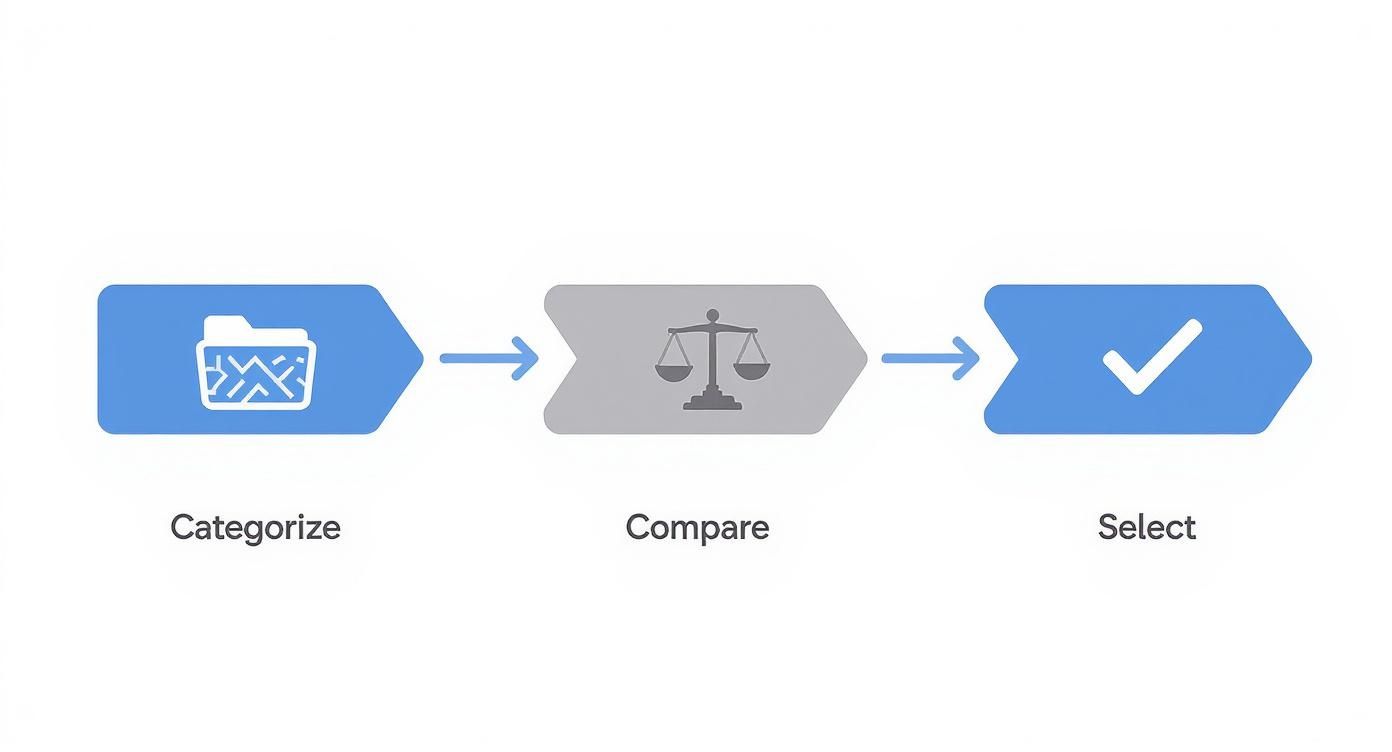
Breaking down the selection process makes it much easier to pick a tool that solves a specific, nagging problem in your current workflow.
Phase 2: Move on to Drafts and Personalization
Once the team is comfortable using AI for research, it's time to level up. In this phase, AI graduates from research assistant to drafting partner. The focus shifts to generating complete first drafts and creating personalized content at scale. A human-in-the-loop process becomes non-negotiable. The AI generates the initial draft, but a human editor must always review, refine, and add the final layer of brand voice, nuance, and strategic insight.
Here’s a quick look at how the workflow changes:
| Workflow Stage | The Old Manual Way | The New AI-Assisted Way |
|---|---|---|
| First Draft Creation | A writer spends 6-8 hours staring at a blank page, crafting a draft. | An AI tool produces a solid first draft in less than 30 minutes. |
| Editing & Refinement | An editor spends 3-4 hours on structural edits and polishing. | An editor spends 2-3 hours enhancing the AI draft with expertise. |
| The Result | A process that eats up a full day, maybe more. | A workflow that's 60-70% faster, letting you publish more, faster. |
Phase 3: Lock in Governance and Scale Up
The final phase is all about formalizing your process so you can scale your AI-driven content creation without sacrificing quality. This means creating clear guardrails and quality control checkpoints that everyone on the team understands.
Actionable Step: Create an AI Brand Guideline document. It should include:
- Tone & Voice Prompts: Give the AI specific, copy-pasteable examples of your brand's voice (e.g., "Write in a helpful, expert tone like a friendly mentor. Use analogies but avoid clichés.").
- Formatting Rules: Detail exactly how you want headlines, lists, and other elements structured.
- Fact-Checking Protocol: Make it a rule that any statistic, data point, or claim from the AI must be verified against a primary source.
This governance structure is what turns AI from a cool new toy into a core, scalable part of your content engine.
How to Maintain Quality and Ethical Standards

Simply cranking out content faster isn't the point. The real challenge of AI-driven content creation is scaling up your output without torching the quality, accuracy, and trust you’ve worked so hard to build. Without a strong governance framework, AI can quickly dilute your brand and erode your credibility.
The content creation market is projected to hit USD 66.8 billion by 2030. Unchecked automation in this booming space can seriously degrade the quality of information online, a huge problem for brands that rely on expertise to win customers. You can dig into the numbers in this market forecast on Mordor Intelligence.
Adopting a responsible approach is the only way to make sure AI becomes a sustainable asset, not a ticking time bomb.
Building Your AI Governance Checklist
Think of AI governance as the quality control system for your content engine. It's a set of non-negotiable rules and processes ensuring every piece of content meets your standards.
Here’s a practical checklist to get you started:
- Mandatory Fact-Checking: Treat every statistic from an AI as a placeholder. It's not real until a human has checked it against a primary source. This is the most critical firewall for maintaining trust.
- Originality Audits: Run every AI-generated draft through a reliable plagiarism checker. While these tools aim to create original text, weird overlaps can happen. It’s your job to catch them.
- Brand Voice Refinement: An AI can mimic your tone, but it can’t replicate your brand’s soul. Your human editors are there to inject nuance, storytelling, and the kind of strategic messaging that is uniquely yours. An AI content analysis can pinpoint where the AI's output is drifting away from your core voice.
The Rise of the AI Editor
The most important piece of any responsible AI workflow is the human-in-the-loop. This has created a new, vital role on content teams: the AI Editor. This person is more than a proofreader; they're a strategist who guides, refines, and validates what the AI produces.
| Traditional Editor Role | Modern AI Editor Role |
|---|---|
| Focuses on grammar, style, and flow of human-written drafts. | Guides AI with expert prompts to generate high-quality first drafts. |
| Spends significant time on structural and developmental edits. | Spends more time on fact-checking, adding expertise, and brand alignment. |
| Works linearly on one piece of content at a time. | Oversees and quality-controls multiple AI-generated assets simultaneously. |
This role shifts the team's focus from manual creation to strategic curation. The AI Editor ensures technology speeds up the process without ever compromising the integrity of the final product.
Adopting AI responsibly means you never fully outsource your thinking. The technology is a powerful assistant for the "how," but your human team must always own the "why" and the "what."
Navigating Ethical Transparency
Finally, using AI ethically is also about how you talk to your audience. The question of whether to disclose AI usage is getting bigger. While there’s no single law on the books yet, transparency is almost always the right call for building long-term trust.
Actionable Tip: Consider adding a simple disclosure at the end of articles where AI played a big role in drafting or research. It shows respect for your readers and signals that you're confident in your quality control. And beyond the content itself, sticking to legal frameworks is crucial; a practical guide to AI GDPR compliance is a good starting point for navigating these complex rules.
Try our Marketing Plan Generator — generate a complete AI-powered marketing plan in minutes. No signup required.
Burning Questions About AI Content
Stepping into AI-driven content always brings up a few big questions. Everyone wants to know about search engine penalties, brand voice, and where to start without breaking the bank. Let's tackle these head-on.
Will Google Punish Me for Using AI Content?
No. Google doesn't care how content is made; they care if it's helpful and high-quality. Their entire E-E-A-T framework (Experience, Expertise, Authoritativeness, Trustworthiness) is the only yardstick that matters.
- Bad AI Content: AI used to churn out spammy, keyword-stuffed articles. This will be punished.
- Good AI Content: AI used as an assistant to draft, research, and outline, with a human expert reviewing, editing, and adding real insight. This content can rank very well.
The takeaway: Value beats origin, every time. Focus on creating helpful, human-polished content, and you’ll be perfectly aligned with what search engines want to see.
How Can I Keep My Brand Voice from Sounding Like a Robot?
This is a huge concern, and rightly so. The key is to give the AI specific marching orders. Don't just ask it to "write a blog post." Instead, feed it a detailed brand style guide using custom instructions.
Actionable Tip: Create a "Master Brand Prompt" that you can use every time. Include details on your:
- Tone: "Write in a witty but professional tone for tech executives."
- Style: "Use short, punchy sentences and avoid industry jargon."
- Audience: "Our audience is marketing VPs who are short on time and need actionable advice."
But the single most important step? A human must always have the final say. An editor needs to review and refine every piece of AI-generated output, weaving in the strategic messaging and unique personality that makes your brand yours.
What's the Smartest Way to Start If I'm on a Tight Budget?
You do not need a massive budget to get started. The best approach is to start small and prove the value. Many leading AI tools have free or low-cost plans that are surprisingly powerful.
Don't try to boil the ocean. Instead, pick one or two repetitive, time-sucking tasks you're already doing and see if AI can help.
Actionable Ideas for a Small Budget:
- Brainstorming: Use a free tool to generate a month's worth of blog titles and outlines in minutes.
- Repurposing: Turn a single blog post into a week's worth of social media updates.
- Meta Descriptions: Have an AI write compelling, SEO-friendly meta descriptions for your top 20 pages.
Track the time you save. That simple number—"we saved 8 hours this month"—is all you need to build a rock-solid business case for a bigger investment down the road.
Ready to integrate a powerful, all-in-one AI solution into your marketing strategy? marketbetter.ai combines content creation, campaign optimization, and deep analytics to drive measurable growth. Explore the platform today.