
Signal Quality vs. Speed to Lead: Why Calling First Doesn't Mean Closing First [2026]

Every sales leader has heard the stat: 78% of customers buy from the first company that responds.
It's cited in every speed-to-lead article, every sales enablement deck, and every cold calling training. It's become gospel.
But here's the problem with gospel — nobody questions it.
What if I told you that the obsession with speed-to-lead is creating a generation of SDR teams that are fast but blind? Teams that respond in under 5 minutes to every lead — including the ones that were never going to buy?
The real data tells a more nuanced story. Speed matters, but only when paired with signal quality. And most teams have the equation backwards.
The Speed-to-Lead Data Everyone Cites (And What It Actually Means)
Let's start with what we know from the research:
- 78% of customers buy from the first responder (MIT/InsideSales.com Lead Response Management Study)
- Responding within 5 minutes = 21x more likely to qualify vs. 30 minutes (Harvard Business Review)
- 391% more conversions when you respond within 1 minute vs. waiting (Velocify)
- Average B2B response time: 42 hours (Drift/InsideSales.com)
- 55% of companies take 5+ days to respond (Drift Lead Response Report)
- 30% of leads never get contacted at all (Voiso)
These stats are real, well-sourced, and important. The speed-to-lead gap is massive — most companies are embarrassingly slow.
But they're missing context. Here's what the same research doesn't tell you:
What was the signal quality of those leads?
The MIT study measured response time against inbound demo requests — leads who explicitly raised their hand. Of course speed matters when someone says "I want to talk to you right now." That's peak intent.
But what about the lead who downloaded a whitepaper three weeks ago? The contact who visited your pricing page once at 2 AM? The MQL that marketing auto-scored because they opened two emails?
When you treat all leads the same — and race to respond to every single one in under 5 minutes — you create a different problem entirely.
The Hidden Cost of Speed Without Signals
Here's what the speed-to-lead orthodoxy produces in practice:
The SDR Productivity Crisis
According to Salesforce's State of Sales report and multiple industry benchmarks:
- SDRs spend only 18-30% of their time actually selling (Salesforce)
- 70% of rep time goes to administrative tasks, data entry, research, and internal meetings (Gartner)
- 43% of reps report administrative work consuming 10-20 hours per week (HubSpot, 2024 Sales Trends)
- 83.4% of SDRs fail to consistently hit quota (SaleSo SDR Productivity Report, 2025)
- Only 57% of reps reached targets in 2024 — the lowest in five years (SaleSo)
The median SDR books 15 meetings per month. Top 25% hit 12-15 meetings/month, while the median sits at 8-10 (Optifai Pipeline Study, 2026, N=939 companies).
That means your average SDR is making 50-80 calls per day, sending 30-50 emails, and booking less than one meeting every two days.
The question isn't "how do we make them faster?" It's "how do we make them smarter about who they spend time on?"
The Signal Quality Framework: What Actually Predicts Close
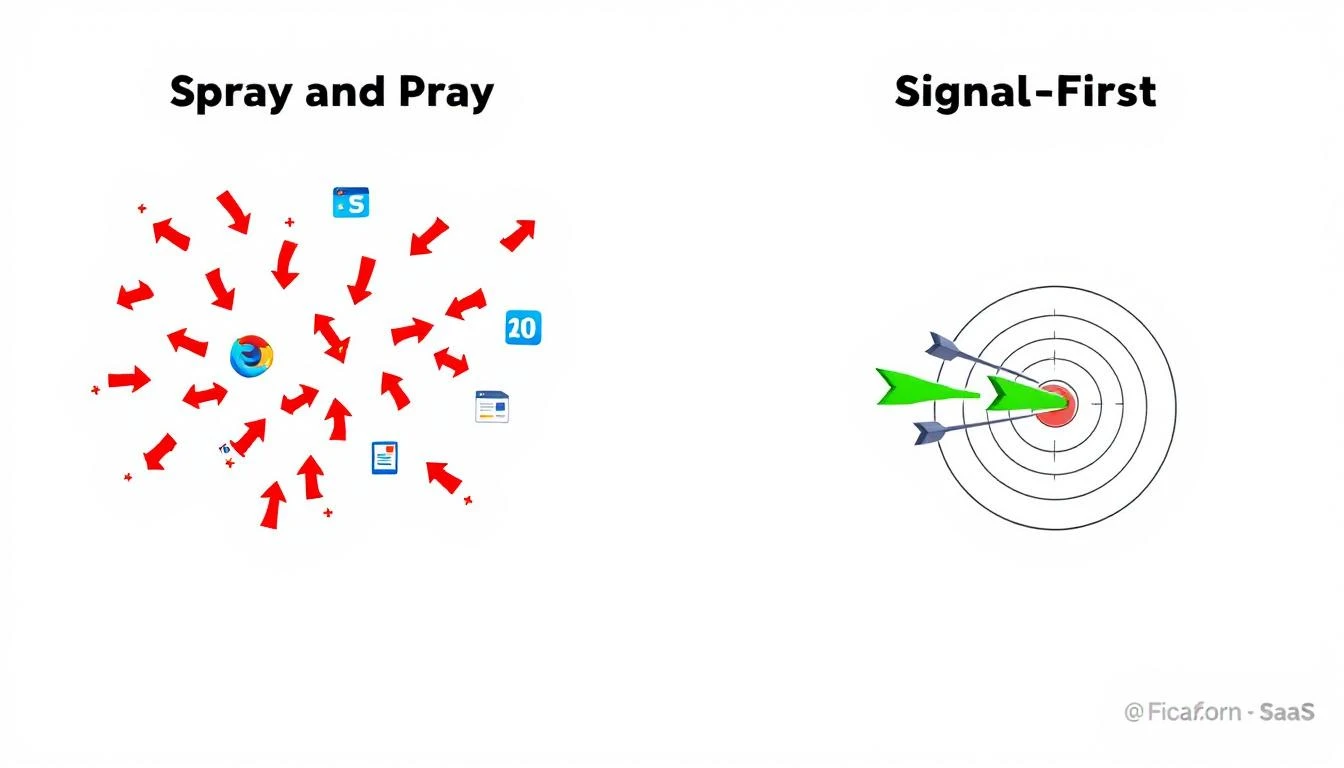
Speed to lead measures how fast you respond. Signal quality measures who you respond to and why. The best teams optimize for both.
Here's a framework based on how high-performing SDR teams (the ones consistently in the top 25%) actually prioritize their day:
Tier 1: Active Buying Signals (Respond in Under 5 Minutes)
These are the leads where speed genuinely determines the outcome:
- Demo requests and pricing inquiries — Someone explicitly asking to talk
- Multiple stakeholders from the same account visiting your site in the same week
- Champion job changes — A former customer just started at a new company
- Return visitors hitting pricing + product pages in the same session
- Chatbot conversations where the prospect asks about implementation or pricing
For Tier 1 signals, the 5-minute rule absolutely applies. These buyers are in active evaluation mode. Every minute of delay is a gift to your competitor.
Benchmark: Tier 1 signals should convert to meetings at 40-60% when contacted within 5 minutes.
Tier 2: Warm Intent Signals (Respond Within 1 Hour)
These prospects are researching but haven't declared intent:
- Repeat website visits over 2+ weeks (visitor identification data)
- Email engagement spikes — opening 3+ emails in a sequence within 24 hours
- Content consumption patterns — downloading case studies, ROI calculators, comparison guides
- Social engagement — commenting on, sharing, or saving your posts
- Technology evaluation signals — visiting integration pages, API docs, or security/compliance pages
For Tier 2, speed still matters but signal richness matters more. An SDR who calls within 30 minutes but references the specific case study the prospect downloaded will outperform one who calls in 2 minutes with a generic pitch.
Benchmark: Tier 2 signals should convert to meetings at 15-25% with personalized outreach within 1 hour.
Tier 3: Passive Signals (Next Business Day, Sequenced)
These are early-stage awareness signals that most platforms incorrectly score as high-priority:
- Single website visit with no return
- One email open without a click
- Downloaded a generic whitepaper (often just for the content, not for buying)
- Liked a LinkedIn post once
- Visited your blog from an organic search (researching the topic, not necessarily your product)
Chasing Tier 3 signals with immediate phone calls is where most SDR teams waste the majority of their day. These prospects aren't ready for a sales conversation. A multi-touch nurture sequence is the correct play.
Benchmark: Tier 3 signals convert to meetings at 2-5% regardless of speed. Don't burn your best reps here.
Tier 4: Noise (Don't Contact)
Some "leads" in your CRM aren't leads at all:
- Bot traffic triggering visitor identification
- Competitors researching your product
- Job seekers looking at your careers page
- Students downloading content for research papers
- Recycled leads that have been contacted 5+ times with no response
Filtering noise before it reaches your SDRs is one of the highest-leverage investments a sales team can make. Every minute spent on a non-lead is a minute stolen from a Tier 1 signal.
The Math That Changes Everything
Let's model two SDR teams with identical resources — 5 reps, 40 hours/week each.
Team A: Speed-First (Typical Approach)
- Responds to every lead in under 5 minutes
- Makes 60 calls/day per rep (industry average)
- No signal prioritization — first in, first out
- Connect rate: 8% (industry average for cold/warm blend)
- Meeting conversion: 10% of connects
Monthly output: 5 reps × 60 calls × 20 days × 8% connect × 10% convert = 48 meetings
But wait — those 48 meetings include Tier 3 and Tier 4 leads. When you factor in meeting quality:
- 40% are qualified (fit ICP and have budget/authority) = 19 qualified meetings
- Pipeline from qualified meetings at $25K ACV × 30% close rate = $142,500/month
Team B: Signal-First (Prioritized Approach)
- Responds to Tier 1 signals in under 5 minutes (20% of volume)
- Responds to Tier 2 within 1 hour (30% of volume)
- Sequences Tier 3 via automation (40% of volume)
- Filters out Tier 4 entirely (10% of volume)
- Makes 40 calls/day per rep (fewer calls, but targeted)
- Connect rate: 18% (higher because prospects are warmer)
- Meeting conversion: 22% of connects (higher because signal context enables personalization)
Monthly output: 5 reps × 40 calls × 20 days × 18% connect × 22% convert = 158 meetings
With better targeting, meeting quality jumps:
- 65% are qualified = 103 qualified meetings
- Pipeline: $25K ACV × 30% close rate = $772,500/month
Team B generates 5.4x more pipeline with 33% fewer calls. The difference isn't speed. It's signal intelligence.
Why the MQL-to-SQL Gap Is Actually a Signal Quality Problem
Remember the stat from the Martal Group benchmarks: only 15% of MQLs convert to SQLs. This is the single largest drop-off point in the B2B sales funnel.
Most teams diagnose this as a "qualification criteria" problem. They tighten lead scoring rules, adjust point thresholds, or add more demographic filters.
But the real issue is simpler: most MQLs are Tier 3 and Tier 4 signals being treated as Tier 1.
When a prospect downloads a whitepaper (Tier 3), marketing scores them as an MQL. The SDR calls within 5 minutes. The prospect is confused — they were just reading an article. The call goes nowhere. The MQL gets dispositioned as "not qualified."
The MQL wasn't bad. The prioritization was.
A signal-first approach would have:
- Noted the whitepaper download as a Tier 3 signal
- Added the prospect to a nurture sequence
- Waited for a Tier 2 signal (return visit, email engagement spike)
- Triggered SDR outreach only when the prospect showed genuine evaluation behavior
This single change — routing based on signal tier instead of lead score — can push MQL-to-SQL conversion from 15% to 30%+ by simply matching the right outreach to the right buyer stage.
Building a Signal-First SDR Operation
If you're convinced that signal quality matters more than raw speed, here's how to operationalize it:
Step 1: Audit Your Current Signal Stack
Map every signal source your team uses today:
| Signal Source | Signal Type | Current Priority | Should Be |
|---|---|---|---|
| Demo form | Tier 1 | High ✅ | High ✅ |
| Whitepaper download | Tier 3 | High ❌ | Low (sequence) |
| Website visit (1x) | Tier 3 | Medium ❌ | Low (sequence) |
| Pricing page + product page same session | Tier 1 | Medium ❌ | High ✅ |
| Multi-stakeholder visits from same account | Tier 1 | Not tracked ❌ | Highest ✅ |
| Champion job change | Tier 1 | Not tracked ❌ | High ✅ |
| Email 3+ opens in 24h | Tier 2 | Not tracked ❌ | Medium ✅ |
| Competitor page visit | Tier 2 | Not tracked ❌ | Medium ✅ |
Most teams will find that their highest-value signals aren't being tracked at all, while their lowest-value signals are generating the most SDR activity.
Step 2: Build Your Daily Playbook Around Signal Tiers
Instead of a chronological call list, structure each SDR's day around signal priority:
First 2 hours: Tier 1 signals only — these are your money calls. Prepare personalization (30 seconds per call to review signal context), then dial immediately.
Next 2 hours: Tier 2 signals — slower, more consultative outreach. Reference their specific browsing behavior or content engagement. Send hyper-personalized emails that prove you know what they're evaluating.
Afternoon: Review and iterate — check which Tier 3 sequences are generating Tier 2 signals. Refine messaging based on morning conversations. Update your signal audit.
Automation handles: All Tier 3 nurture sequences and Tier 4 filtering — no human time spent.
Step 3: Measure Signal-Adjusted Metrics
Stop measuring raw speed-to-lead as a single number. Break it down by signal tier:
| Metric | Tier 1 Target | Tier 2 Target | Tier 3 Target |
|---|---|---|---|
| Response time | <5 min | <1 hour | Automated (same day) |
| Connect rate | 25%+ | 15%+ | N/A (sequenced) |
| Meeting rate | 40%+ | 15%+ | 3-5% (from sequence) |
| Qualified rate | 60%+ | 40%+ | 20%+ |
| Pipeline/meeting | $30K+ | $20K+ | $15K+ |
This gives you a clear picture of where your pipeline actually comes from — and it's almost always Tier 1 and Tier 2 signals driving 80%+ of qualified revenue.
Step 4: Invest in Signal Infrastructure, Not More Reps
The typical response to "we need more pipeline" is "hire more SDRs." But the data shows that adding reps to a broken prioritization system just multiplies the waste.
Instead, invest in the signal stack:
- Website visitor identification — Know which companies are on your site and what pages they're viewing
- Multi-stakeholder tracking — Detect when multiple people from the same company are researching you (this is the strongest buying signal in B2B)
- Champion tracking — Get alerts when former customers or engaged contacts change jobs
- Email intent analysis — Move beyond open rates to engagement pattern detection
- AI-powered signal routing — Automatically tier signals and surface the right leads to the right reps at the right time
A single platform that handles signal detection, prioritization, and SDR workflows eliminates the biggest productivity drain: context switching between 7+ tools just to figure out who to call next.
The Bottom Line: Speed Is Table Stakes. Signal Intelligence Is the Advantage.
The speed-to-lead research isn't wrong — it's incomplete.
Yes, you should respond to high-intent signals in under 5 minutes. Absolutely. The data on that is ironclad.
But treating all leads as equally urgent — blasting through a chronological call list as fast as possible — is the reason 83% of SDRs miss quota, 70% of their day is wasted on non-selling activities, and the average MQL-to-SQL conversion sits at a miserable 15%.
The teams that win in 2026 aren't just fast. They're intelligently fast. They use signal quality to decide who gets immediate attention and who goes into a nurture sequence. They build their daily playbook around buyer behavior, not lead score thresholds.
The shift from speed-first to signal-first isn't incremental. It's the difference between 19 qualified meetings a month and 103.
The first responder doesn't always win. The first informed responder does.
See Signal-First Selling in Action
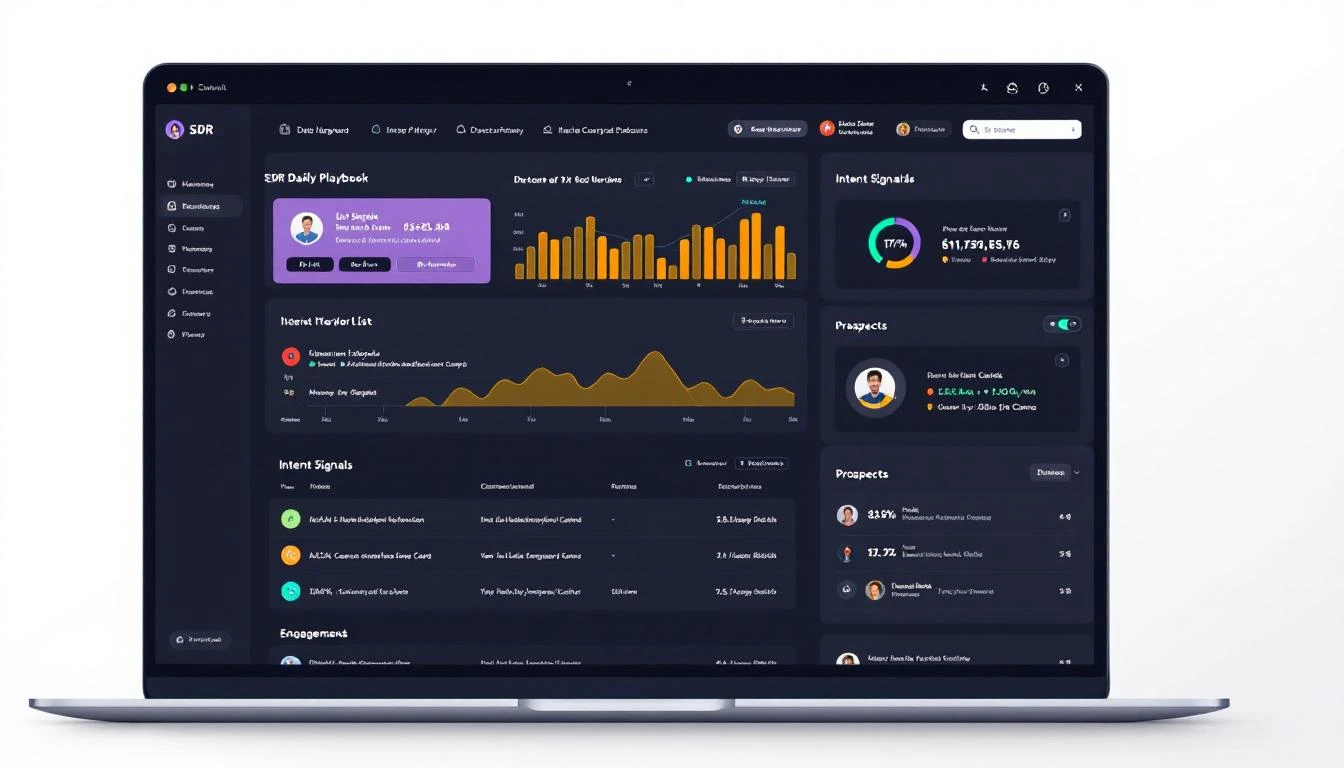
MarketBetter's Daily SDR Playbook automatically tiers your signals, surfaces your highest-priority prospects, and tells your reps exactly what to do next — before they open 20 browser tabs.
Sources
- MIT/InsideSales.com Lead Response Management Study (Dr. James Oldroyd)
- Harvard Business Review, "The Short Life of Online Sales Leads"
- Velocify Lead Response Research
- Drift/InsideSales.com Lead Response Report
- Salesforce State of Sales Report
- Gartner Sales Productivity Research
- HubSpot 2024 Sales Trends Report
- SaleSo SDR Productivity Report, 2025
- Optifai Pipeline Study, 2026 (N=939 companies)
- Martal Group B2B Sales Benchmarks, 2026
- Voiso Lead Response Time Research