Best Sales Forecasting Tools for B2B Teams in 2026 [14 Platforms Compared]

Your VP of Sales asks for a forecast every Monday. You open your CRM, stare at the pipeline, and do what every sales leader does — guess.
You know the deal marked "80% likely" has gone silent for two weeks. The one at "50%" just had three stakeholders visit your pricing page. But your CRM doesn't know that. So your forecast is based on rep optimism, not buyer behavior.
That's the gap sales forecasting tools are supposed to close. But most of them just repackage CRM data into prettier charts. The best ones actually layer in intent signals, deal activity patterns, and AI to tell you which deals will close — and which are already dead.
We evaluated 14 sales forecasting platforms across pricing, AI capabilities, CRM integration depth, and how well they work for growing B2B teams (not just enterprise).
What Makes a Great Sales Forecasting Tool in 2026
Before we compare platforms, here's what separates a useful forecasting tool from an expensive dashboard:
Signal-based predictions, not stage-based. Traditional forecasting assigns a probability based on pipeline stage (Discovery = 20%, Proposal = 60%). That's fiction. Modern tools analyze engagement signals — email opens, website visits, meeting frequency, stakeholder involvement — to predict close likelihood.
Multi-model forecasting. No single model works for every deal type. The best tools run multiple forecasting approaches simultaneously and weight results based on your historical patterns.
CRM-native integration. If it doesn't sync seamlessly with your CRM, your reps won't use it. And if reps don't use it, your forecast is garbage in, garbage out.
Actionable alerts, not just predictions. Knowing a deal is at risk isn't helpful unless the tool tells you why and what to do about it. The best platforms flag specific risks (champion went silent, competitor entered the deal) and suggest next actions.
Pipeline coverage analysis. Forecast accuracy depends on having enough pipeline. Great tools don't just predict revenue — they tell you whether you have enough pipeline coverage to hit your number, factoring in historical win rates and deal velocity.
The 14 Best Sales Forecasting Tools Compared
1. MarketBetter
Best for: B2B teams that want forecasting powered by first-party intent signals, not just CRM data.
Most forecasting tools look backward — they analyze historical deals and CRM fields to predict what'll close. MarketBetter approaches it differently by combining website visitor identification, email engagement tracking, and SDR activity data into a unified signal layer that feeds your pipeline intelligence.
When a target account's decision-maker visits your pricing page three times in a week, that shows up as a buying signal in your SDR dashboard. When multiple stakeholders from the same company engage with your emails, the platform flags it as multi-threaded interest. This first-party behavioral data is the most accurate predictor of close likelihood — far more reliable than a rep's stage assessment.
The Daily SDR Playbook turns these signals into prioritized actions, so your team knows exactly which deals to push and which to deprioritize. Combined with the AI chatbot that captures intent from website visitors in real-time, you get a forecasting input layer that most standalone tools simply can't replicate.
Key forecasting capabilities:
- Website visitor identification surfaces active pipeline accounts
- Multi-stakeholder engagement tracking across email and web
- Daily Playbook prioritizes deals based on real buyer activity
- AI chatbot captures buying intent from anonymous visitors
- Smart dialer integrates call outcomes into pipeline signals
Pricing: $99/user/month - one plan with everything included. Visitor ID, email automation, smart dialer, AI chatbot, daily SDR playbook, 5M AI credits + 500 enrichment credits per seat. No contracts.
Best for teams that: Want their forecasting data to come from actual buyer behavior, not rep self-reporting.
2. Clari
Best for: Enterprise revenue teams that need board-level forecasting accuracy.
Clari is the heavyweight in revenue intelligence and forecasting. Their platform ingests data from CRM, email, calendar, and conversation intelligence to create an AI-generated forecast that's independent of what reps submit. The "Clari Score" predicts deal outcomes based on engagement patterns, and their revenue cadence framework helps managers run consistent forecast reviews.
Where Clari shines is at the executive level — CROs and CFOs use it to create board-ready revenue predictions. The gap analysis feature shows exactly where pipeline is short and which deals need to move to hit the number.
Key features:
- AI-generated forecast independent of rep input
- Deal inspection with engagement-based scoring
- Revenue cadence framework for forecast reviews
- Gap-to-quota analysis across teams and segments
- Mutual action plans to track buyer milestones
Pricing: Custom pricing, typically $50-80/user/month for enterprise contracts. Most deployments start at $30K+/year.
Limitations: Overkill for teams under 30 reps. Requires significant CRM data history for AI to be accurate. Long implementation cycles (8-12 weeks typical).
3. Gong Forecast (formerly Gong Revenue Intelligence)
Best for: Teams already using Gong for conversation intelligence who want forecasting built on call data.
Gong's forecasting module leverages their massive conversation intelligence dataset — analyzing what's said on calls, how deals progress through stages, and which talk patterns correlate with closed-won outcomes. Their "Reality vs. Submitted" view shows the gap between what reps say will close and what the AI predicts based on actual engagement.
The power of Gong's approach is that it captures signals most forecasting tools miss: sentiment shifts during calls, competitor mentions, budget confirmation language, and multi-threading evidence across stakeholder conversations.
Key features:
- Conversation-based deal scoring
- Reality-based forecast vs. rep-submitted forecast
- Pipeline risk alerts based on call analysis
- Deal board with AI-generated next steps
- Historical pattern matching across won/lost deals
Pricing: Gong pricing is notoriously opaque. Expect $100-150/user/month for the full platform. Forecast module may be bundled or add-on depending on contract.
Limitations: Primarily useful for teams with high call volume. If your sales motion is mostly email/chat-driven, you're paying for capabilities you won't fully leverage.
4. Forecastio
Best for: HubSpot-centric teams that need purpose-built forecasting without switching CRMs.
Forecastio is a dedicated forecasting platform that goes deep on HubSpot integration. Rather than trying to be an all-in-one revenue platform, they focus exclusively on making HubSpot's pipeline data more predictable. Their multi-model approach runs several forecasting algorithms simultaneously and surfaces the one that best fits your pipeline structure.
What sets Forecastio apart is their focus on pacing — not just whether you'll hit your number, but whether you're on track relative to where you should be at this point in the quarter. Their waterfall analysis shows exactly where deals entered, exited, and moved through your pipeline.
Key features:
- Multi-model AI forecasting optimized for HubSpot
- Pipeline pacing and coverage analysis
- Waterfall view of pipeline changes over time
- Scenario modeling (best/worst/likely cases)
- Rep-level performance tracking and coaching insights
Pricing: Starts around $149/month for small teams. Scales based on pipeline volume and users.
Limitations: HubSpot only — no Salesforce or other CRM support. Relatively new player, so less proven at enterprise scale.
5. Salesforce Einstein Forecasting
Best for: Salesforce-native teams that want AI forecasting without adding another vendor.
Einstein Forecasting is built into Salesforce and uses your historical CRM data to generate AI-powered predictions. The advantage is obvious: zero integration friction. It reads every field, every activity, and every stage change in your Salesforce org to build predictions.
The Forecast Hierarchy feature lets you roll up forecasts from rep → manager → VP → CRO with adjustments at each level. Pipeline Inspection combines deal scoring with AI-generated insights about which deals are trending up or down.
Key features:
- Native Salesforce integration (no data sync required)
- AI-generated forecast with confidence scores
- Forecast hierarchy with multi-level adjustments
- Pipeline Inspection for deal-level AI insights
- Einstein Activity Capture for automatic activity logging
Pricing: Included with Salesforce Sales Cloud Einstein ($75/user/month add-on to Sales Cloud). Many enterprises already have this in their Salesforce contract.
Limitations: Only as good as your Salesforce data hygiene. If reps don't update opportunities, Einstein's predictions are meaningless. Also limited to Salesforce ecosystem — no multi-CRM support.
6. BoostUp
Best for: Revenue teams that want forecasting + deal inspection in one platform with strong multi-signal analysis.
BoostUp combines conversation intelligence, email analysis, and CRM data to create a comprehensive forecast. Their "Forecast IQ" uses machine learning to predict outcomes based on buyer engagement patterns, not just pipeline stages. The platform also includes deal rooms and mutual action plans.
What makes BoostUp interesting is their focus on forecast accuracy metrics — they track how accurate your forecast was historically and show which reps and managers consistently over- or under-forecast. This accountability layer drives behavioral change.
Key features:
- Multi-signal deal scoring (email, calls, CRM)
- Forecast accuracy tracking by rep and manager
- Deal rooms with buyer engagement analytics
- Risk alerts for stalled or regressing deals
- Integration with 150+ sales tools
Pricing: Custom pricing. Typically $40-60/user/month for mid-market teams.
Limitations: Newer platform, still building out some enterprise features. Conversation intelligence not as deep as Gong's.
7. Aviso
Best for: Large enterprise teams that need AI forecasting with predictive analytics for complex, long-cycle B2B deals.
Aviso uses deep learning (not just machine learning) to analyze over 100+ deal signals and predict outcomes. Their WinScore AI independently assesses each deal's probability of closing, and their time-series forecasting models account for seasonality, market shifts, and historical patterns.
The platform is designed for complex sales environments with long cycles (6+ months), multiple stakeholders, and large deal sizes. Their scenario planning tools let you model "what if" situations across your entire pipeline.
Key features:
- Deep learning WinScore for individual deal prediction
- Time-series forecasting with seasonality adjustments
- Scenario planning across pipeline segments
- Nudge engine suggests specific actions for at-risk deals
- Revenue leak detection identifies where pipeline is dropping
Pricing: Enterprise-only. Expect $60-100/user/month with annual contracts starting at $50K+.
Limitations: Not designed for SMB or mid-market. Implementation requires dedicated data science support. Overkill for transactional sales motions.
8. InsightSquared
Best for: Revenue operations teams that need pipeline analytics and forecasting combined with historical benchmarking.
InsightSquared started as a BI tool for sales and evolved into a full revenue intelligence platform. Their forecasting module is built on deep CRM analytics — pipeline conversion rates, stage duration benchmarks, and historical win rate analysis by segment, rep, and deal size.
Their strength is in diagnostic analytics — not just telling you the forecast number, but explaining why the pipeline looks the way it does and what's changed compared to previous quarters.
Key features:
- Pipeline analytics with historical benchmarking
- Forecasting based on conversion rate analysis
- Activity-based reporting tied to pipeline outcomes
- Board-ready dashboards and executive views
- Integration with Salesforce and HubSpot
Pricing: Custom pricing. Typically starts at $65/user/month.
Limitations: Less AI-driven than newer platforms. Strong on analytics but lighter on prescriptive recommendations.
9. HubSpot Forecasting
Best for: SMB and mid-market teams already on HubSpot who want basic forecasting without another tool.
HubSpot's native forecasting tool is included in Sales Hub Professional and Enterprise. It lets you set revenue goals, track progress, and roll up forecasts across teams. The forecasting workspace shows pipeline by category (commit, best case, pipeline) and tracks changes over time.
For many growing teams, HubSpot's built-in forecasting is "good enough" — especially if your pipeline is straightforward and your team is under 20 reps.
Key features:
- Native HubSpot integration
- Forecast categories (commit, best case, pipeline)
- Goal tracking by team and individual
- Pipeline waterfall analysis
- Deal-level insights in forecast view
Pricing: Included with HubSpot Sales Hub Professional ($100/user/month) and Enterprise ($150/user/month).
Limitations: Basic compared to dedicated forecasting tools. No AI-powered predictions in Professional tier. Limited customization for complex sales processes.
10. Salesflare
Best for: Small B2B teams that want CRM + forecasting in one lightweight platform with automatic data entry.
Salesflare is a CRM built for small sales teams that automatically logs emails, meetings, and calls. Their forecasting is based on pipeline value, weighted by stage probability, with visual pipeline views that make it easy to see where deals stand.
The differentiator is zero manual data entry — Salesflare pulls data from your email, calendar, and LinkedIn to keep deals updated automatically. This solves the "reps don't update CRM" problem that kills forecast accuracy.
Key features:
- Automatic activity logging (email, calendar, calls)
- Visual pipeline with weighted forecasting
- Email tracking integrated with deal progression
- Team pipeline views with filtering
- Revenue reporting by period, team, and source
Pricing: $49/user/month (Growth), $79/user/month (Pro), $99/user/month (Enterprise).
Limitations: Designed for small teams (under 20 reps). Forecasting is basic — no AI predictions or multi-model analysis.
11. Pipedrive
Best for: Small to mid-size sales teams that want a visual, intuitive CRM with built-in revenue forecasting.
Pipedrive's forecasting view shows expected revenue based on deal values, close dates, and pipeline stages. Their visual approach makes it easy for managers to spot gaps and bottlenecks. The Revenue Forecast report projects future revenue based on current pipeline and historical conversion rates.
Key features:
- Visual pipeline management with drag-and-drop
- Revenue forecast report with filtering
- Deal probability based on stage and activity
- Goal tracking with progress visualization
- AI sales assistant suggests next actions
Pricing: $49/user/month (Professional) for forecasting features, $69/user/month (Power), $79/user/month (Enterprise).
Limitations: Forecasting is stage-based, not signal-based. Limited AI capabilities compared to dedicated tools. Better for transactional sales than complex B2B.
12. Weflow
Best for: Revenue teams that want to improve forecast accuracy by solving the "reps don't update Salesforce" problem.
Weflow focuses on pipeline hygiene — making it dead-simple for reps to update deals in Salesforce through a spreadsheet-like interface. Their forecasting is built on the premise that better data = better predictions. The platform includes revenue forecasting, pipeline analytics, and deal inspection.
Key features:
- Spreadsheet-like Salesforce update interface
- Automated deal updates based on activity
- Forecast submissions with pipeline snapshots
- Deal inspection with risk scoring
- Activity intelligence for engagement tracking
Pricing: $39/user/month (Starter), $59/user/month (Growth).
Limitations: Salesforce-only. More focused on pipeline hygiene than advanced AI forecasting.
13. Discern
Best for: Revenue leaders who want AI forecasting that blends machine predictions with rep insights.
Discern's approach is collaborative — their AI generates a forecast based on deal signals, then reps and managers can adjust with explanations that are tracked over time. This creates accountability while still leveraging human judgment for context the AI might miss.
Key features:
- AI + human collaborative forecasting
- Explanation tracking for manual forecast adjustments
- Deal health scoring based on engagement signals
- Win/loss analysis with pattern detection
- Pipeline gap identification and coverage tracking
Pricing: Custom pricing. Contact for quotes.
Limitations: Relatively new entrant. Smaller customer base means less proven at scale.
14. Mediafly (Revenue360)
Best for: Enterprise teams that want content engagement data integrated into their forecasting models.
Mediafly's Revenue360 platform combines sales content analytics with pipeline forecasting. The unique angle: they track how prospects engage with your sales collateral (proposals, decks, case studies) and use that engagement data as a forecasting signal. If a prospect shared your ROI calculator with their CFO, that's a strong buying signal.
Key features:
- Content engagement tracking as forecasting signal
- AI-powered revenue intelligence
- Buyer engagement scoring
- Sales content management and analytics
- Integration with major CRMs
Pricing: Custom enterprise pricing. Expect $50-80/user/month.
Limitations: Full value requires using their content management platform. If you already have a content tool, you're paying for overlap.
Sales Forecasting Tools Comparison Table
| Platform | Best For | AI Forecasting | CRM Support | Starting Price |
|---|---|---|---|---|
| MarketBetter | Signal-driven pipeline intelligence | Intent signals + engagement | HubSpot, Salesforce | $99/user/month |
| Clari | Enterprise revenue teams | Deep learning, multi-model | Salesforce, HubSpot | ~$30K/yr |
| Gong Forecast | Call-heavy sales teams | Conversation AI | Salesforce, HubSpot | ~$100/user/mo |
| Forecastio | HubSpot-first teams | Multi-model AI | HubSpot only | $149/mo |
| Einstein | Salesforce-native teams | Native AI | Salesforce only | $75/user/mo add-on |
| BoostUp | Mid-market revenue ops | Multi-signal ML | Salesforce, HubSpot | ~$40/user/mo |
| Aviso | Enterprise, long-cycle deals | Deep learning | Salesforce | ~$60/user/mo |
| InsightSquared | RevOps analytics | Historical benchmarking | Salesforce, HubSpot | ~$65/user/mo |
| HubSpot | SMB already on HubSpot | Basic (Enterprise only) | HubSpot only | Included |
| Salesflare | Small teams, auto data entry | Basic weighted | Native CRM | $49/user/mo |
| Pipedrive | Visual pipeline teams | Basic AI assistant | Native CRM | $49/user/mo |
| Weflow | Pipeline hygiene focus | Activity-based | Salesforce only | $39/user/mo |
| Discern | Human + AI collaboration | Collaborative AI | Salesforce, HubSpot | Custom |
| Mediafly | Content-driven selling | Content engagement AI | Salesforce, HubSpot | Custom |
How to Choose the Right Forecasting Tool
By Team Size
Under 10 reps: HubSpot native, Salesflare, or Pipedrive. Don't over-invest in forecasting tools when you can still manage pipeline in your CRM. Focus on data hygiene first.
10-50 reps: MarketBetter (for signal-driven approach), Forecastio (for HubSpot teams), BoostUp, or Weflow. You need AI assistance but not enterprise complexity.
50+ reps: Clari, Gong, Aviso, or Einstein. At this scale, the cost of inaccurate forecasting justifies premium tools.
By Sales Motion
High-velocity (SMB sales, short cycles): MarketBetter, Pipedrive, or HubSpot native. Speed matters more than complex deal analysis.
Mid-market (3-6 month cycles): MarketBetter, BoostUp, or Forecastio. Balance between signal intelligence and deal management.
Enterprise (6+ month cycles): Clari, Gong, or Aviso. Complex multi-stakeholder deals need deep engagement analysis.
By CRM
HubSpot: MarketBetter, Forecastio, or HubSpot native Salesforce: Einstein (native), Clari, Gong, Weflow Multi-CRM or CRM-agnostic: BoostUp, InsightSquared
The Real Problem with Sales Forecasting
Here's what no forecasting tool vendor tells you: the forecast is only as good as the inputs.
If your reps aren't logging activities, your CRM data is stale, and you have no visibility into what buyers are actually doing on your website, even the most sophisticated AI will produce garbage.
The teams that forecast accurately in 2026 don't just pick a tool — they build a signal infrastructure that captures buyer behavior automatically. Website visits, email engagement, content downloads, chatbot conversations, call outcomes — all flowing into a unified view of pipeline health.
That's why the most forward-thinking revenue teams are investing in intent signal platforms first and layering forecasting tools on top. When your pipeline data reflects real buyer behavior instead of rep opinions, every forecasting tool works better.
Related Resources
If you're building out your revenue tech stack alongside forecasting, these guides cover adjacent categories:
- Best Sales Pipeline Management Software 2026 — Pipeline tools that feed your forecasting models
- Best Revenue Intelligence Platforms 2026 — The analytics layer that powers AI forecasting
- Best Sales Prospecting Tools 2026 — Fill the pipeline that your forecast depends on
- Best Intent Data Providers 2026 — Signal sources for signal-driven forecasting
- Best RevOps Tools 2026 — Operational infrastructure for revenue teams
- Best B2B Demand Generation Tools 2026 — Pipeline creation tools that impact forecast inputs
Try our AI Lead Generator — find verified LinkedIn leads for any company instantly. No signup required.
Getting Started
If you're still forecasting from a spreadsheet or basic CRM reports, start here:
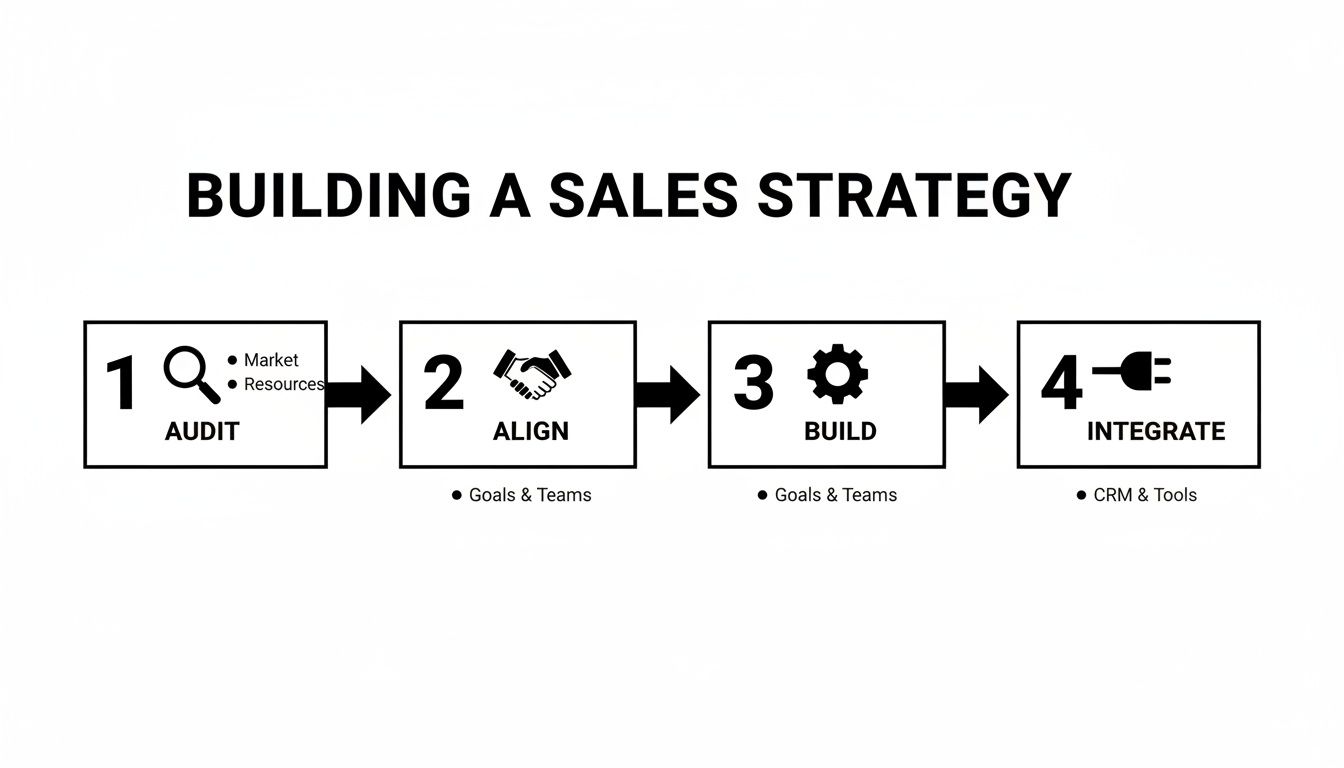
- Audit your data. What buyer signals are you capturing today? What's missing?
- Fix the inputs. Implement visitor identification, email tracking, and activity logging before investing in a forecasting tool.
- Pick the right tier. Don't buy Clari when Forecastio will do. Match the tool to your team size and complexity.
- Measure forecast accuracy. Track your forecast vs. actuals every quarter. If accuracy isn't improving, it's a data problem, not a tool problem.
Want to see how first-party intent signals can transform your pipeline intelligence? Book a MarketBetter demo →