We Priced Out Every B2B Sales Stack in 2026 — Here's What Teams Actually Pay

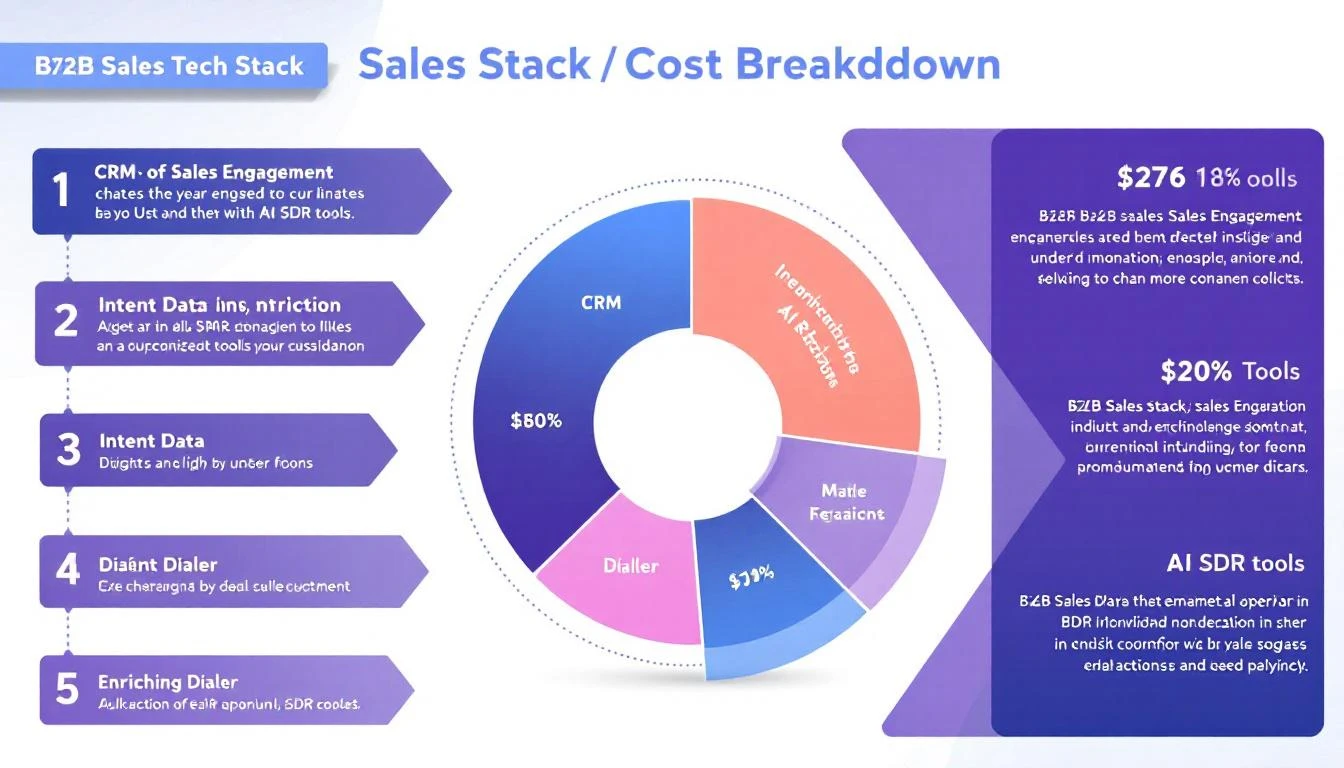
The average B2B SDR uses 4 to 10 different tools every day (Source: UpLead, 2025). That's 4–10 logins, 4–10 tabs, 4–10 invoices.
But here's the number nobody talks about: what does all of that actually cost?
Not the "starting at $49/mo" from landing pages. The real number — after annual commitments, per-seat fees, credit overages, add-ons, and the enterprise pricing wall that shows up the moment you ask for a demo.
We did the math. We pulled real pricing data from 15+ sales tools across six categories — CRM, sales engagement, intent data, enrichment, dialers, and AI SDR platforms — and calculated the true total cost of ownership (TCO) for SDR teams of different sizes.
The results aren't pretty.
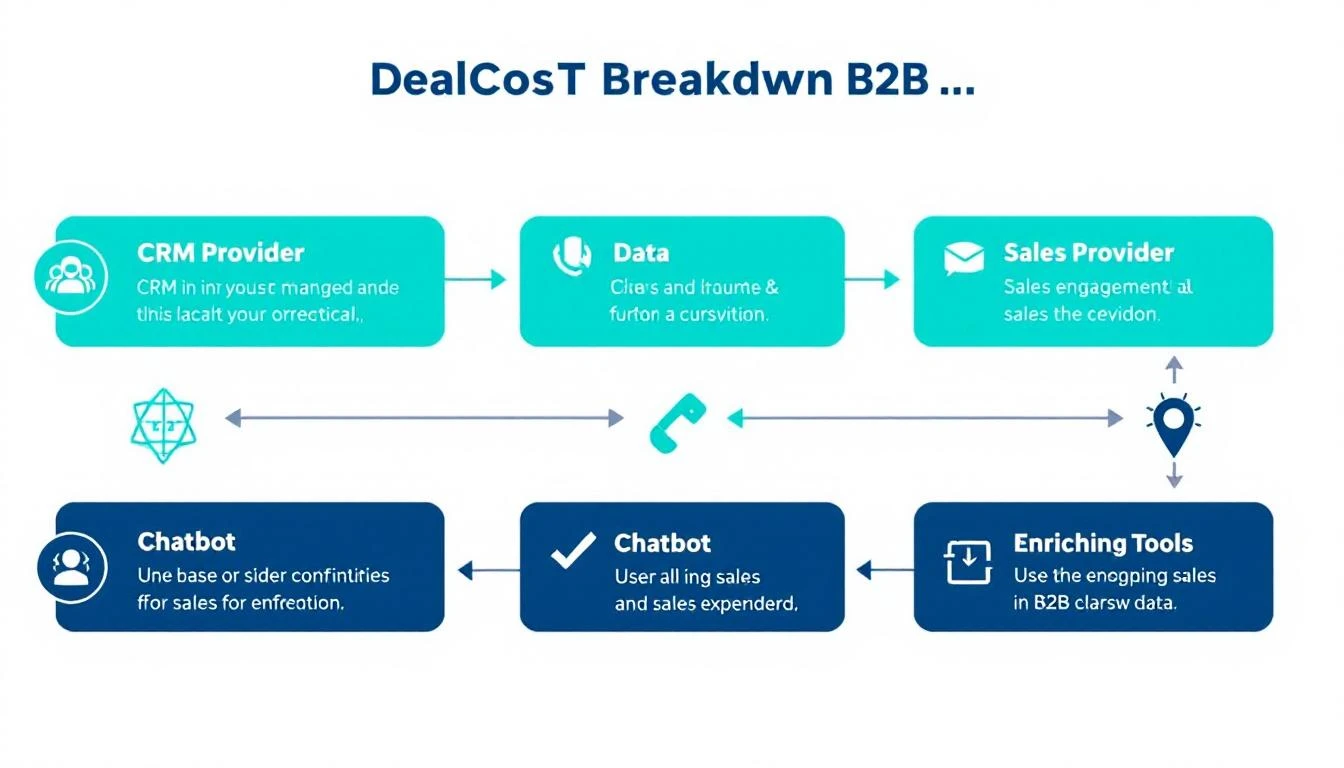
The Six Categories Every SDR Stack Needs
Before we get into the numbers, here's what a modern B2B sales development stack typically includes:
- CRM — Where deals live (HubSpot, Salesforce, Pipedrive)
- Sales Engagement — Sequence automation, email cadences (Outreach, SalesLoft, Apollo)
- Intent Data / Signals — Who's in-market right now (6sense, Bombora, MarketBetter)
- Data Enrichment — Contact info, firmographics (ZoomInfo, Cognism, Clearbit)
- Dialer — Calling at scale (Orum, Nooks, MarketBetter Smart Dialer)
- AI SDR / Automation — AI-assisted prospecting and outreach (11x, Artisan, MarketBetter AI)
Most teams cobble together one tool from each category. Some use two. A few brave souls try to use all-in-ones.
Let's price out each layer.
Layer 1: CRM — The Foundation You Can't Skip
| Tool | Starting Price | Mid-Market (5 Seats) | Notes |
|---|---|---|---|
| HubSpot Sales Hub | $20/user/mo (Starter) | $500/mo (Professional) | Professional tier required for sequences, automation |
| Salesforce Sales Cloud | $25/user/mo (Essentials) | $825/mo (Professional) | Most teams need Professional at $165/user/mo |
| Pipedrive | $14/user/mo | $250/mo (Professional) | Good value, but limited enterprise features |
| Close | $49/user/mo | $495/mo (Professional) | Built-in calling — reduces dialer need |
Realistic CRM cost for a 5-SDR team: $250–$825/mo
The gotcha with CRM pricing is that the "Starter" tier almost never has the features SDR teams need. Sequences, workflow automation, reporting dashboards — all gated behind Professional or Enterprise tiers. HubSpot's jump from $20/user to $100/user at Professional is the most dramatic.
Layer 2: Sales Engagement — Where the Bills Start Climbing
This is where most SDR budgets blow up. Sales engagement platforms handle email sequences, call tasks, and multi-touch cadences.
| Tool | Per Seat/Month | 5-Seat Annual Cost | Our Deep Dive |
|---|---|---|---|
| Outreach | $100–$150/user/mo | $6,000–$9,000/yr | Full pricing breakdown → |
| SalesLoft | $83–$125/user/mo | $5,000–$7,500/yr | Full pricing breakdown → |
| Apollo | $49–$79/user/mo | $2,940–$4,740/yr | Full pricing breakdown → |
| Instantly | $30–$78/user/mo | $1,800–$4,680/yr | Full pricing breakdown → |
| Lemlist | $32–$79/user/mo | $1,920–$4,740/yr | Full pricing breakdown → |
| SmartLead | $39–$94/user/mo | $2,340–$5,640/yr | Full pricing breakdown → |
Realistic sales engagement cost for a 5-SDR team: $250–$750/mo
The hidden cost here isn't the seat price — it's the annual commitment. Outreach and SalesLoft don't offer monthly contracts. You're signing a 12-month deal on day one, and renewal increases of 10–20% are standard.
Apollo is the budget-friendly option, but once you need advanced features (AI scoring, dialer, advanced analytics), you're back to $79/user/mo — which puts it on par with the "expensive" platforms.
Layer 3: Intent Data — The Most Expensive Layer Nobody Budgets For
Intent data is where the sticker shock hits. These platforms tell you which accounts are actively researching solutions like yours. The problem? They price like it.
| Tool | Starting Price | Mid-Market Annual | Our Deep Dive |
|---|---|---|---|
| 6sense | $25,000+/yr | $40,000–$100,000/yr | Full pricing breakdown → |
| Bombora | $25,000+/yr | $36,000–$60,000/yr | Enterprise-only, no self-serve |
| ZoomInfo + Intent | $15,000+/yr (base) | $30,000–$60,000/yr | Full pricing breakdown → |
| Common Room | Custom pricing | $24,000–$48,000/yr | Full pricing breakdown → |
| Warmly | $700/mo | $8,400–$15,000/yr | Full pricing breakdown → |
| MarketBetter | $500/mo | $6,000–$18,000/yr | Book a demo → |
Realistic intent data cost for a 5-SDR team: $700–$5,000+/mo
Here's the uncomfortable truth about intent data pricing: you're paying for the signal, not the seat. 6sense and Bombora don't scale with your team size — they scale with your TAM size, data volume, and integration requirements. A 5-person SDR team at a mid-market company easily spends $40K–$60K/year on intent data alone.
This is also the category with the most buyer's remorse. According to G2 reviews, the #1 complaint about 6sense and Bombora is "hard to prove ROI." You're paying enterprise prices for data that your SDRs may or may not act on.
The consolidation opportunity is massive here. Tools like MarketBetter bundle visitor identification, intent signals, AND the SDR playbook that tells reps what to do with those signals — starting at a fraction of the standalone intent data cost. Learn more in our Complete Guide to B2B Intent Data.
Layer 4: Data Enrichment — The Credit Trap
Enrichment tools provide contact details (emails, phone numbers, firmographics). They all look affordable until you run out of credits.
| Tool | Starting Price | Real Cost (5 SDRs) | Our Deep Dive |
|---|---|---|---|
| ZoomInfo | $15,000/yr (3 seats) | $30,000–$60,000/yr | Full pricing breakdown → |
| Cognism | Custom (est. $15K+/yr) | $20,000–$40,000/yr | MarketBetter vs Cognism → |
| Clearbit (now Breeze) | Bundled with HubSpot | $0 (if HubSpot) or $12K+/yr standalone | MarketBetter vs Clearbit → |
| Apollo | Included in platform | $2,940–$4,740/yr | Credits-based, overages common |
| Clay | $149–$800/mo | $1,788–$9,600/yr | Full pricing breakdown → |
Realistic enrichment cost for a 5-SDR team: $250–$2,500/mo
ZoomInfo is the gorilla here. At $15K minimum (annual-only contracts), it's often the single most expensive tool in an SDR's stack. And that's the starting price — real-world costs typically land between $30K and $60K once you factor in credit overages and add-ons.
The credit model is designed to upsell. You start with 5,000 credits, burn through them in month two, and suddenly you're negotiating a mid-contract upgrade. Every enrichment vendor does this.
Layer 5: Dialer — Calling Isn't Dead, But It's Expensive
SDR teams that do phone outreach (and the data says you should — cold calls convert at 2.0–3.5%) need a dedicated dialer.
| Tool | Per Seat/Month | 5-Seat Annual | Notes |
|---|---|---|---|
| Orum | $200–$300/user/mo | $12,000–$18,000/yr | AI parallel dialer, premium tier |
| Nooks | $150–$250/user/mo | $9,000–$15,000/yr | Virtual sales floor + dialer |
| PhoneBurner | $127–$152/user/mo | $7,620–$9,120/yr | Power dialer, lower-end |
| Close (built-in) | $0 extra | Included with CRM | Basic power dialer |
| MarketBetter Smart Dialer | Included | $0 extra | Included in platform → |
Realistic dialer cost for a 5-SDR team: $0–$1,500/mo
Dialers are the category where consolidation pays off the most. If your CRM or sales engagement platform includes one, you save $9K–$18K/year. If you're paying for a standalone parallel dialer like Orum on top of Outreach on top of ZoomInfo... your per-SDR tooling cost is going to be eye-watering.
Check out our Best Sales Dialers for SDR Teams for a deeper comparison.
Layer 6: AI SDR Platforms — The New (Expensive) Category
AI SDR tools promise to automate prospecting, personalization, and outreach. They're also the most aggressively priced category in 2026.
| Tool | Starting Price | 5-SDR Equivalent | Our Deep Dive |
|---|---|---|---|
| 11x (Alice) | $50,000+/yr | $50,000+/yr | Full pricing breakdown → |
| Artisan (Ava) | $750+/mo | $9,000+/yr | Full pricing breakdown → |
| Monaco | Custom | Est. $24,000+/yr | MarketBetter vs Monaco → |
| Unify | Custom | Est. $18,000+/yr | MarketBetter vs Unify → |
| MarketBetter | $500/mo | $6,000/yr | Book a demo → |
Realistic AI SDR cost: $500–$4,000+/mo
The AI SDR category is the Wild West of pricing. 11x charges $50K+ per year for a single AI agent — roughly the cost of a junior human SDR. Artisan is more accessible but still commands $9K+ annually. Most of these tools are so new that pricing changes quarter to quarter.
The key question isn't "can AI replace my SDRs?" — it's "does the AI tool integrate with my existing stack, or is it yet another silo?" More on this in our Best AI SDR Tools comparison.
The Total: Three Real-World GTM Stacks, Priced Out
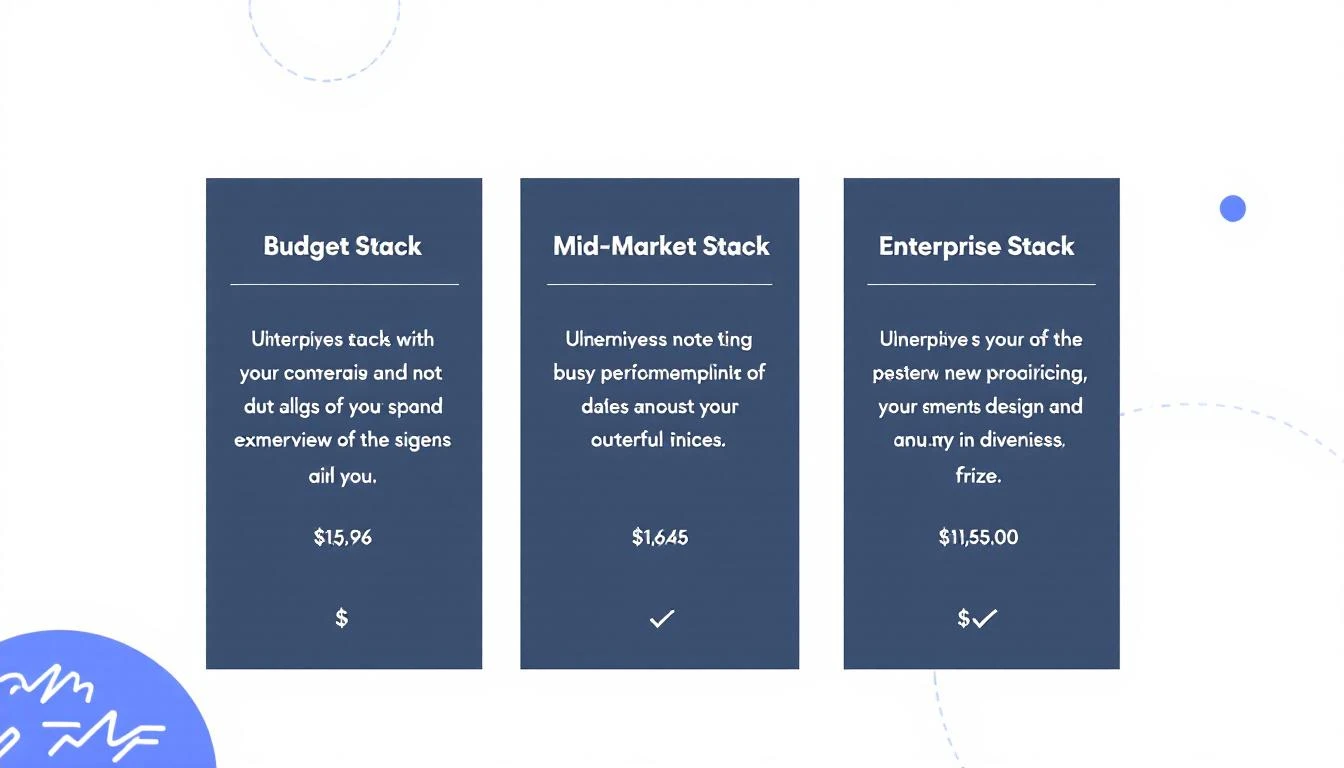
Here's what it actually costs to equip a 5-SDR team in 2026, across three common configurations:
Stack A: "Bootstrap Budget" — $1,200–$2,400/mo
| Category | Tool | Monthly Cost |
|---|---|---|
| CRM | HubSpot Starter or Pipedrive | $100–$250 |
| Sales Engagement | Apollo or Instantly | $200–$400 |
| Intent Data | MarketBetter (includes visitor ID + signals) | $500 |
| Enrichment | Apollo (included) or Clay Starter | $0–$150 |
| Dialer | Included with MarketBetter | $0 |
| AI Automation | MarketBetter (included) | $0 |
| Total | $800–$1,300/mo | |
| Per SDR | $160–$260/mo |
This stack works for seed-stage and early Series A companies. The trade-off: you're running lean, which means your SDRs are doing more manual work — but your tooling cost per rep is under $260/mo.
Stack B: "Mid-Market Standard" — $3,500–$5,500/mo
| Category | Tool | Monthly Cost |
|---|---|---|
| CRM | HubSpot Professional or Salesforce | $500–$825 |
| Sales Engagement | Outreach or SalesLoft | $500–$750 |
| Intent Data | Warmly or MarketBetter Growth | $700–$1,500 |
| Enrichment | ZoomInfo (basic) or Cognism | $1,250–$2,000 |
| Dialer | Included with Outreach or standalone | $0–$500 |
| AI Automation | None or basic | $0 |
| Total | $2,950–$5,575/mo | |
| Per SDR | $590–$1,115/mo |
This is where most Series B and established mid-market companies land. The jump from Stack A is dramatic — enrichment alone can add $15K–$25K annually. And notice: no AI SDR automation. Most companies at this tier can't afford to layer AI on top of their existing stack.
Stack C: "Enterprise Full-Send" — $8,500–$15,000+/mo
| Category | Tool | Monthly Cost |
|---|---|---|
| CRM | Salesforce Enterprise | $1,650+ |
| Sales Engagement | Outreach + Gong | $1,500–$2,500 |
| Intent Data | 6sense or Bombora | $2,000–$5,000 |
| Enrichment | ZoomInfo Advanced | $2,500–$5,000 |
| Dialer | Orum or Nooks | $1,000–$1,500 |
| AI Automation | 11x or custom | $1,000–$4,000 |
| Total | $9,650–$19,000/mo | |
| Per SDR | $1,930–$3,800/mo |
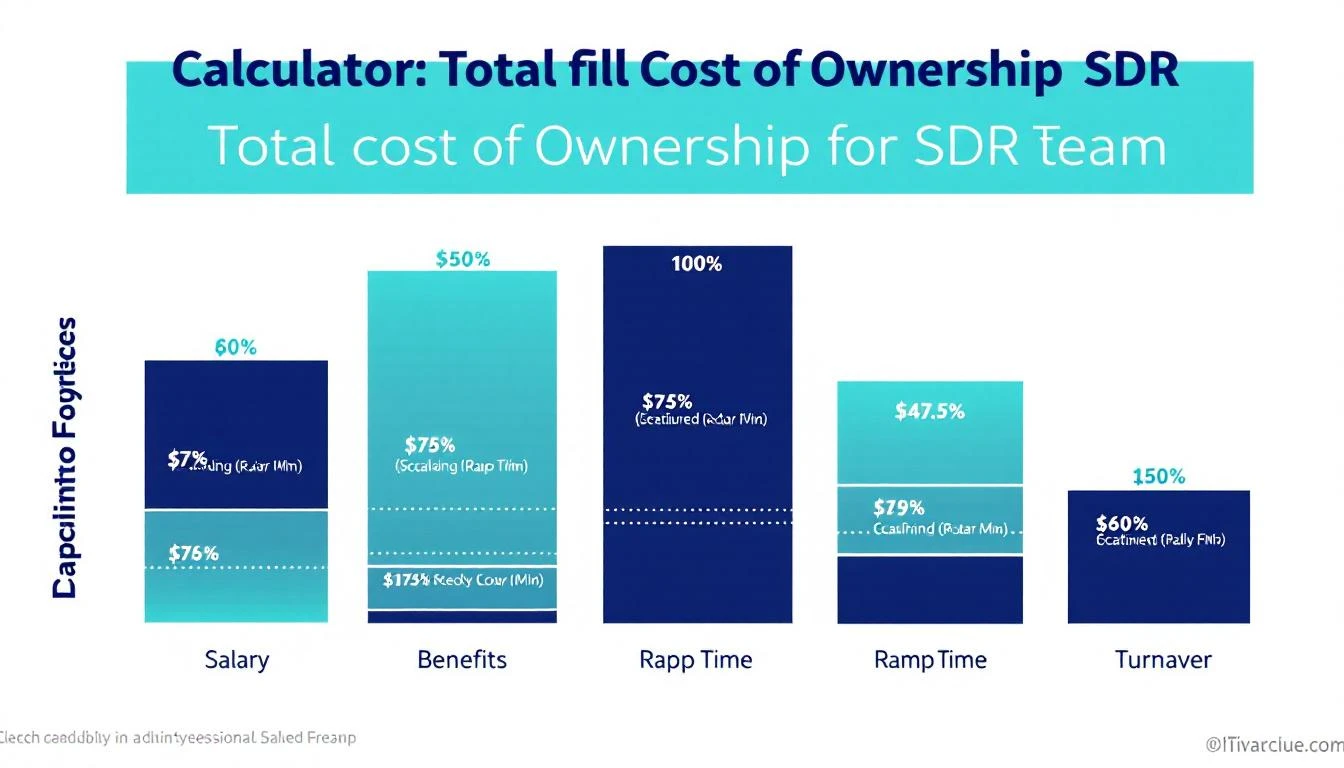
Enterprise stacks routinely hit $100K–$200K+ per year for a 5-person SDR team. That's before headcount. A fully-loaded SDR (salary + tools + management overhead) at this tier costs the company $150K–$200K annually.
Read our outbound sales strategy guide for how to actually make this investment pay off.
The Tool Sprawl Tax: What Nobody Measures

Beyond the dollar cost, there's a productivity cost that's almost impossible to measure:
Context switching. Every time an SDR Alt-Tabs between ZoomInfo, Outreach, Salesforce, and Gong, they lose focus. Research from the American Psychological Association estimates that task-switching can consume up to 40% of productive time.
At the Optifai benchmark of 8–10 qualified meetings per month for a median SDR, that means 3–4 meetings per month are lost to tool friction alone.
Here's what that looks like in practice:
- Step 1: Check intent signals in 6sense (Tab 1)
- Step 2: Enrich the contact in ZoomInfo (Tab 2)
- Step 3: Build a sequence in Outreach (Tab 3)
- Step 4: Log the activity in Salesforce (Tab 4)
- Step 5: Review the last call recording in Gong (Tab 5)
- Step 6: Update the deal stage in your CRM (back to Tab 4)
Six steps, four tools, zero flow state.
This is why the industry is moving toward consolidation. Platforms that combine signals + engagement + dialer into one workflow — like what we've built at MarketBetter — eliminate the tab-switching tax and let SDRs stay in one place.
Our SDR Playbook Template Guide shows exactly how a consolidated workflow operates.
The Consolidation Math: Where the Real Savings Are
Here's the financial case for stack consolidation, using real numbers:
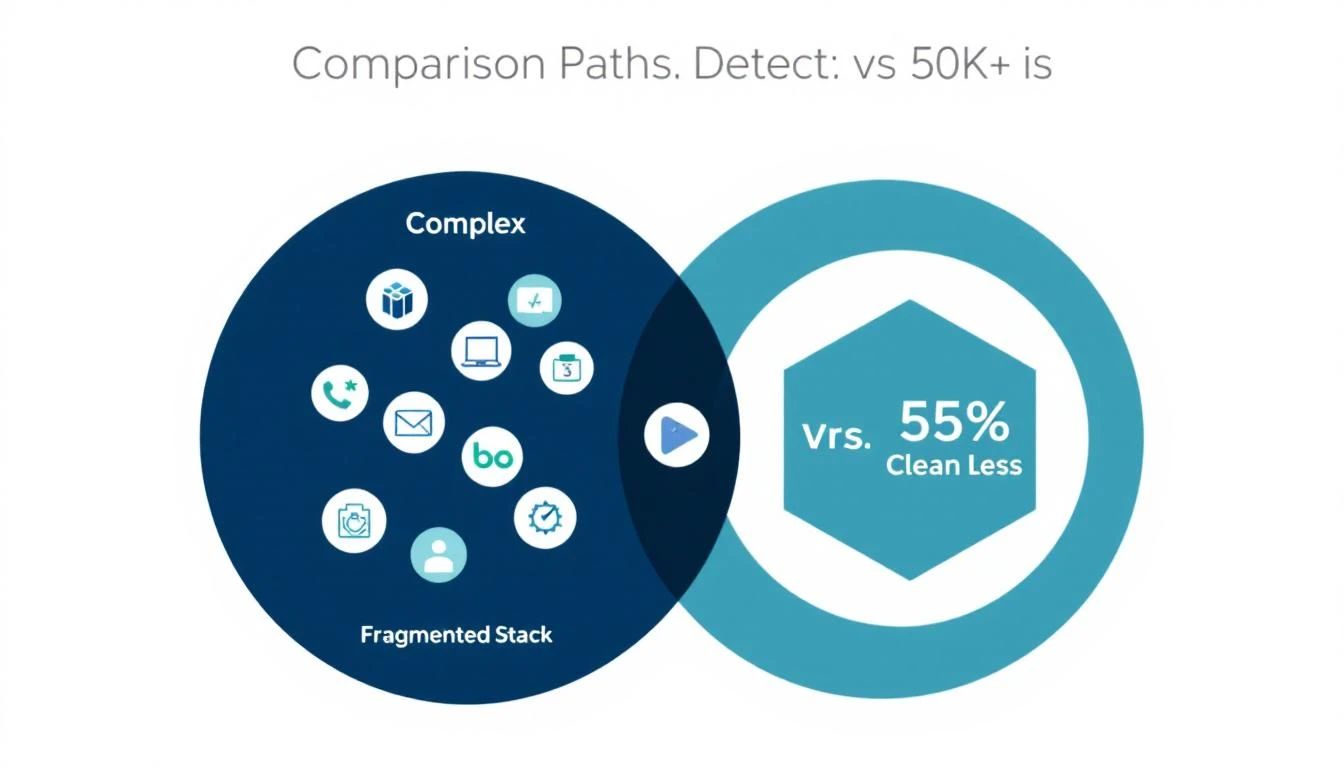
Fragmented stack (Mid-Market Standard):
- 5 tools × 5 SDRs = 25 licenses to manage
- Annual cost: $35,000–$67,000
- Admin overhead: 1 RevOps person managing integrations (~$80K/yr fully loaded)
- Total annual cost: $115K–$147K
Consolidated platform approach:
- 1-2 tools × 5 SDRs = 5–10 licenses
- Annual cost: $10,000–$25,000
- Admin overhead: Minimal (one platform, native integrations)
- Total annual cost: $10K–$25K
Annual savings: $90K–$120K — enough to hire another SDR.
This isn't theoretical. Only 19% of companies increased SDR headcount in 2025 (Source: SaaStr), the lowest growth rate across all sales functions. Teams are consolidating tools and doing more with less.
The question isn't "which is the best tool in each category?" It's "which platform eliminates the most categories?"
Our Take: The Stack That Wins in 2026
Based on our analysis of pricing across 15+ tools, here's what we'd recommend for a 5-SDR team targeting $500K–$5M ACV deals:
The essentials (pick your approach):
- CRM: HubSpot Professional ($500/mo) or Salesforce Professional ($825/mo) — you need a CRM, period
- Everything else: A consolidated platform that combines signals + engagement + dialer + AI
Why "everything else" should be one platform:
- Intent data as a standalone category is dying. Bombora's third-party intent data is being questioned by the very teams that buy it
- Sales engagement platforms (Outreach, SalesLoft) are adding AI features, but they don't have their own intent signals
- Enrichment providers (ZoomInfo) are adding engagement features, but they're bolted on, not native
- The winner is whoever combines signal detection + recommended action + execution in a single workflow
This is exactly what MarketBetter's Daily SDR Playbook does: identifies who's on your site, enriches the contact, surfaces the intent signal, and tells your SDR exactly what to do next — all in one screen. No tab-switching. No context loss. No $60K ZoomInfo invoice.
Start with our Best Sales Prospecting Tools guide to see how we compare across every category.
Methodology
This analysis used pricing data from the following sources:
- Official pricing pages (accessed February–March 2026)
- Vendr marketplace data for enterprise negotiated rates
- G2 and Capterra reviews mentioning specific price points
- Reddit r/sales threads with real user-reported costs
- Our own published pricing breakdowns (linked throughout)
All prices are in USD. "Per seat" pricing assumes annual billing unless noted. Enterprise quotes are estimated ranges based on multiple sources — actual quotes vary by company size, use case, and negotiation leverage.
For tool-specific deep dives, visit our pricing breakdown series:
- ZoomInfo Pricing →
- 6sense Pricing →
- Apollo Pricing →
- Outreach Pricing →
- SalesLoft Pricing →
- Gong Pricing →
- Warmly Pricing →
- Common Room Pricing →
- Clay Pricing →
- 11x Pricing →
- Artisan Pricing →
- SmartLead Pricing →
- Instantly Pricing →
- Lemlist Pricing →
Ready to Simplify Your Stack?
If your SDR team is drowning in tools and your per-rep tooling cost is north of $1,000/mo, there's a better way.
MarketBetter combines visitor identification, intent signals, the daily SDR playbook, smart dialer, AI chatbot, and email automation — starting at $500/mo. One platform. One login. One invoice.