
Best Account-Based Marketing (ABM) Tools for B2B Teams [2026]
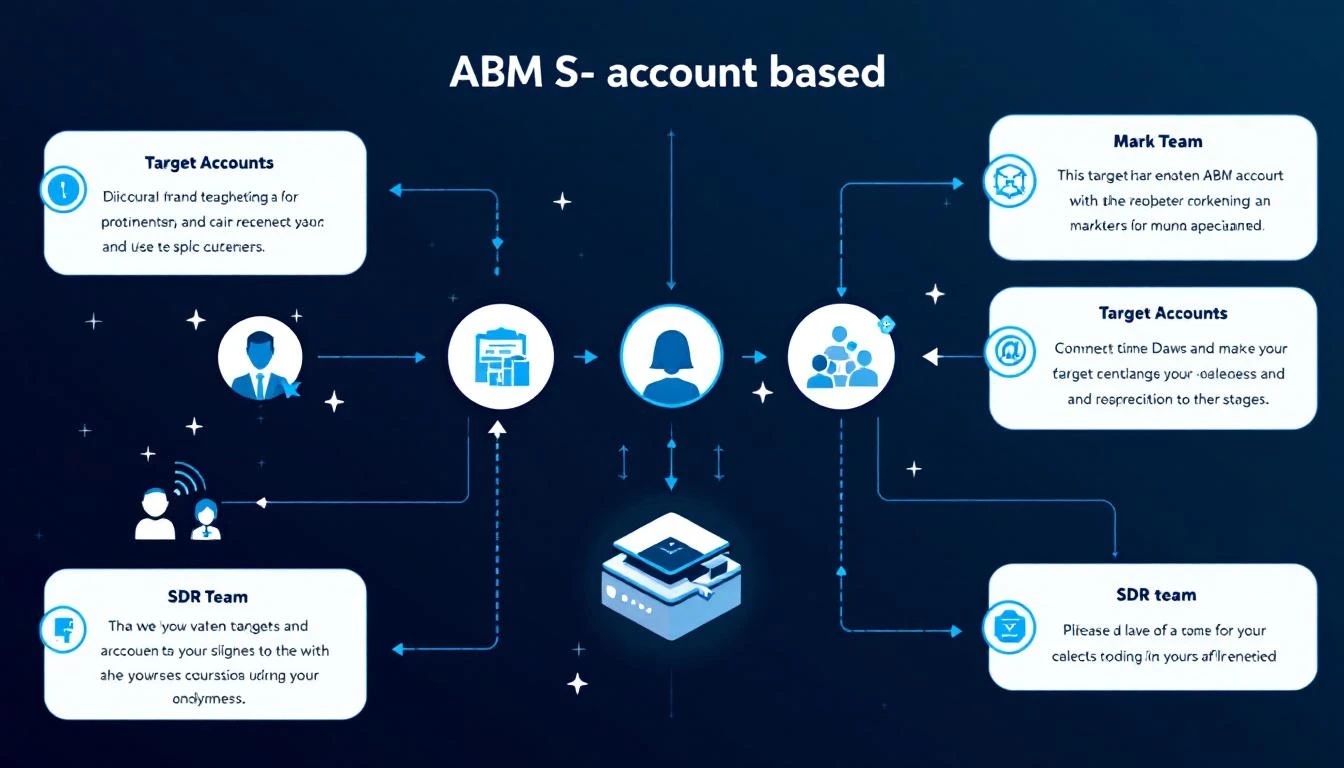
Account-based marketing sounds sophisticated. In practice, it means stop wasting money on leads that will never buy and focus on accounts that actually match your ideal customer profile.
The problem is that most ABM platforms were built for enterprise teams with $100K+ budgets and dedicated ABM managers. If you're a mid-market B2B company trying to run account-based selling without a six-figure tech stack, your options have been limited — until now.
We tested 14 ABM tools across five categories — all-in-one platforms, intent data providers, visitor identification, orchestration engines, and AI-native alternatives — to help you find the right fit for your team size, budget, and ABM maturity level.
Quick Comparison: ABM Tools at a Glance
| Tool | Best For | Starting Price | G2 Rating | Free Trial |
|---|---|---|---|---|
| MarketBetter | Signal-to-action ABM for SDR teams | $99/user/month | 4.97/5 | Yes |
| Demandbase One | Enterprise ABM orchestration | ~$18K/yr (200 employees) | 4.3/5 | Demo only |
| 6sense | AI-powered buying stage prediction | Custom (~$30K+/yr) | 4.3/5 | Free tier available |
| Terminus | ABM advertising and chat | Custom (~$2K+/mo) | 4.4/5 | Demo only |
| RollWorks | Mid-market ABM advertising | ~$1K/mo | 4.3/5 | Demo only |
| ZoomInfo | Contact data and intent enrichment | Custom (~$15K+/yr) | 4.4/5 | Demo only |
| Bombora | Third-party intent data | Custom (~$25K+/yr) | 4.4/5 | Demo only |
| Apollo.io | Affordable ABM prospecting | Free / $49/mo | 4.8/5 | Free tier |
| HubSpot Marketing Hub | Integrated ABM in existing CRM | $800/mo | 4.4/5 | Free tools |
| Warmly | Website visitor deanonymization | $499/mo | 4.7/5 | Free tier |
| Common Room | Signal aggregation from communities | Custom | 4.5/5 | Free tier |
| Clearbit (HubSpot) | Real-time data enrichment | Included with HubSpot | 4.4/5 | Free tier |
| Leadfeeder (Dealfront) | European website visitor tracking | $99/mo | 4.3/5 | Free tier |
| TechTarget Priority Engine | Tech buyer intent data | Custom | 4.1/5 | Demo only |
What Makes ABM Software Different from Regular Marketing Tools
Standard marketing automation (Marketo, HubSpot, Pardot) works on a lead-by-lead basis: capture an email, score it, nurture it, pass it to sales. Account-based marketing flips that model entirely.
ABM starts with accounts, not leads. You identify 50-500 target companies, then run coordinated campaigns across every contact at those companies simultaneously. The buying committee at a B2B company typically includes 6-10 decision-makers. Standard lead-based marketing only reaches one of them.
That means ABM tools need to solve fundamentally different problems:
- Account identification: Which companies should you target?
- Buying group mapping: Who are the decision-makers at each account?
- Intent signals: Which target accounts are actively researching solutions?
- Orchestration: How do you coordinate email, ads, content, and sales outreach across an entire buying committee?
- Attribution: Did the campaign influence the account, or did they just happen to buy?
The tools below tackle these problems from different angles. Some do everything. Some do one thing exceptionally well. Your choice depends on where your ABM program stands today.
Tier 1: All-in-One ABM Platforms
1. MarketBetter — Best for Signal-to-Action ABM
starting at $99/user/month | 4.97/5 on G2
Most ABM tools tell you WHICH accounts are showing interest. MarketBetter tells your SDRs exactly WHAT TO DO about it.
The platform combines website visitor identification, intent signal aggregation, and AI-powered email automation into a daily SDR playbook. Instead of logging into a dashboard and interpreting data, your team gets a prioritized action list every morning: who to call, what to email, and what messaging to use — based on real-time buying signals.
What sets it apart for ABM:
- Daily SDR Playbook: Converts intent signals into specific, actionable tasks for each rep. No dashboard interpretation required.
- Website visitor identification: Identifies companies visiting your site and maps them against your target account list automatically.
- AI-powered email sequences: Generates hyper-personalized outreach based on the prospect's actual behavior, not generic templates.
- Smart Dialer: Built-in calling with AI-suggested talking points based on intent signals and engagement history.
- AI Chatbot: Engages target account visitors in real-time, qualifying and routing based on your ABM tier definitions.
Pricing:
- Standard: $99/user/month — All products included (Daily SDR Playbook, Website Visitor ID, AI Chatbot, Email Automation, Smart Dialer add-on). 5M AI credits + 500 enrichment credits per seat.
- Enterprise: Custom pricing — Everything in Standard + custom integrations and volume discounts.
Best for: B2B teams running ABM without dedicated ABM managers. If your SDRs need to execute account-based plays without interpreting complex dashboards, MarketBetter turns signals into actions automatically.
See how MarketBetter compares →
2. Demandbase One — Best for Enterprise ABM Orchestration
Custom pricing (~$18K-$108K/yr depending on company size) | 4.3/5 on G2
Demandbase is the category leader for a reason. After acquiring Engagio (account-based orchestration) and InsideView (intent data), they built the most comprehensive ABM platform on the market. If you have budget, headcount, and ABM maturity, Demandbase is the gold standard.
Core capabilities:
- Account Intelligence: Proprietary intent data + IP-based company identification + technographic data. Covers ~1.5M companies.
- ABM advertising: Programmatic display ads targeted to specific accounts. Reporting at the account level, not just impression level.
- Orchestration: Multi-channel campaign coordination across email, ads, web personalization, and sales alerts.
- Sales Intelligence: Account insights delivered directly in Salesforce or HubSpot. Reps see intent surges, engagement scores, and recommended actions.
The real cost breakdown: Demandbase doesn't publish pricing, but based on Vendr and G2 data:
- 200-employee company: $18,100-$31,700/year
- 500-employee company: $35,000-$65,000/year
- 1,000+ employees: $58,500-$108,600/year
- Enterprise (full platform): Up to $300,000/year
Additional costs include per-user fees ($1,200-$3,000/year), ad spend (separate), and implementation services.
Best for: Enterprise marketing teams with $50K+ ABM budgets and dedicated ABM managers who need full-stack orchestration.
Not ideal for: Mid-market teams under 200 employees or companies without existing ABM processes. The platform's power is wasted without the team to operate it.
3. 6sense Revenue AI — Best for Predictive Account Targeting
Custom pricing (~$30K+/yr) | 4.3/5 on G2
6sense's core pitch is predicting which accounts will buy before they ever fill out a form. Their AI analyzes billions of intent signals to predict where each account sits in the buying journey — from awareness to decision stage.
What makes it different:
- Predictive buying stages: AI categorizes accounts into 6 stages (Target → Awareness → Consideration → Decision → Purchase → Loyalty). Your team focuses effort on accounts in active buying stages.
- Dark funnel visibility: 6sense claims to capture intent signals from the "dark funnel" — anonymous research that happens before prospects engage with your brand.
- Audience building: Create targeted audiences based on predicted buying stage, then push to LinkedIn, Google, and display ad platforms.
- Revenue AI for Sales: Gives individual reps account-level intelligence inside their CRM, including predicted close dates and recommended contacts.
Pricing reality: 6sense offers a free tier (Revenue AI for Marketing, up to 50 credits/month), but production use typically starts at $30K-$60K/year. Enterprise contracts regularly exceed $100K/year.
Best for: Marketing teams that want AI-driven account prioritization and are willing to invest in predictive analytics. Works best with 12+ months of historical CRM data for model training.
Watch out for: 6sense's value compounds over time. First-quarter results can be underwhelming while the AI learns your patterns.
Tier 2: ABM Advertising and Engagement
4. Terminus — Best for ABM Advertising
Custom pricing (~$2K+/mo) | 4.4/5 on G2
Terminus started as a pure ABM advertising platform and has expanded into a broader engagement hub. Their display advertising capabilities remain best-in-class for account-level targeting — you're buying impressions against specific companies, not broad audience segments.
Key features:
- Account-level display advertising across 30K+ publisher sites
- LinkedIn integration for sponsored content targeting
- Chat Experiences: web chat that identifies and routes target account visitors
- Email Experiences: dynamic email signatures and banner ads
- Measurement Studio: multi-touch attribution at the account level
Pricing: Not public, but typically starts around $2,000/month for the base platform. Ad spend is separate and typically $3,000-$10,000/month for meaningful coverage.
Best for: Teams where advertising is the primary ABM channel and you need account-level ad reporting that goes beyond impression counts.
5. RollWorks (NextRoll) — Best Mid-Market ABM Advertising
Custom pricing (~$1K/mo) | 4.3/5 on G2
RollWorks is Terminus for teams that don't have Terminus budgets. Built on NextRoll's advertising infrastructure, it provides account-based display advertising, retargeting, and basic ABM orchestration at a more accessible price point.
Key features:
- Account-level display and social advertising
- Account scoring and prioritization
- Lead-to-account matching
- Journey analytics and attribution
- Integration with Salesforce and HubSpot
Pricing: Typically starts just under $1,000/month. More accessible than Demandbase or Terminus, but still requires meaningful ad spend on top.
Best for: Mid-market companies (50-500 employees) running their first ABM advertising programs. Lower barrier to entry than enterprise platforms.
Tier 3: Intent Data and Enrichment
6. ZoomInfo — Best Contact Database for ABM
Custom pricing (~$15K+/yr) | 4.4/5 on G2
ZoomInfo isn't an ABM platform per se, but it's the backbone of most ABM programs. Their B2B contact database is the largest on the market, with 600M+ professional profiles and 135M+ verified phone numbers.
ABM-relevant features:
- Intent data (powered by Bombora integration)
- Website visitor identification
- Contact discovery across target account buying committees
- Workflows for automated outreach when intent surges
- FormComplete for enriching form submissions in real-time
Pricing: ZoomInfo starts around $15,000/year for the basic SalesOS plan. Intent data, website visitor ID, and advanced features push costs to $25K-$50K+/year. Contracts are annual.
Best for: Teams that need to build out contact lists within target accounts. If you know WHICH accounts to target but can't find the right PEOPLE, ZoomInfo fills that gap.
7. Bombora — Best Third-Party Intent Data
Custom pricing (~$25K+/yr) | 4.4/5 on G2
Bombora is the largest B2B intent data co-op, aggregating research behavior from 5,000+ B2B media publishers. Their Company Surge® data tells you when accounts are researching topics related to your product at rates above normal baseline.
How it works: Bombora tracks when employees at a company consume content about specific topics (e.g., "sales automation," "visitor identification," "ABM software") at volumes significantly higher than their historical average. A "surge" indicates the company may be in an active buying cycle.
ABM application: Layer Bombora intent data on top of your target account list. Instead of pursuing all 500 target accounts equally, focus on the 50-75 currently showing research surges. Most ABM and sales platforms (Demandbase, 6sense, ZoomInfo, Salesforce) integrate with Bombora directly.
Best for: Adding intent signals to an existing ABM stack. Bombora is a data layer, not a platform — you'll still need tools for activation.
8. Clearbit (Now Part of HubSpot) — Best for Real-Time Enrichment
Included with HubSpot / Free tier available | 4.4/5 on G2
HubSpot acquired Clearbit in late 2023, and the enrichment capabilities are now baked into HubSpot's platform. Clearbit provides real-time firmographic and technographic data on companies and contacts: employee count, revenue, technology stack, funding stage, and more.
ABM use cases:
- Enrich form submissions instantly (turn an email into a full company profile)
- Score and route leads based on firmographic fit
- Identify anonymous website visitors at the company level
- Dynamic audience building based on technographic data
Best for: HubSpot users who need enrichment built into their existing workflow without adding another vendor.
Tier 4: Visitor Identification for ABM
9. Warmly — Best for Website Visitor Deanonymization
Free tier / $499/mo | 4.7/5 on G2
Warmly identifies companies and individuals visiting your website, then orchestrates outreach through email and LinkedIn. Their approach is closer to "warm outbound" than traditional ABM — catching accounts while they're actively on your site.
Key features:
- Individual-level visitor identification (not just company level)
- Automated LinkedIn and email outreach when target accounts visit
- AI chat for real-time engagement
- CRM sync with engagement scoring
Pricing:
- Free: Basic identification features
- Business: $499/month
- Enterprise: Custom pricing
Best for: Teams focused on converting website visitors from target accounts. If your ABM strategy centers on "strike while the iron is hot," Warmly catches accounts at peak intent.
Limitation: Warmly identifies visitors reactively. It doesn't help you build target account lists or run proactive advertising. It's an ABM activation tool, not a planning tool.
10. Leadfeeder (Dealfront) — Best for European Market ABM
Free tier / $99/mo | 4.3/5 on G2
Leadfeeder identifies companies visiting your website using reverse-IP lookup and matches them against their database. After merging with Echobot to form Dealfront, they've become the strongest option for B2B visitor identification in European markets.
ABM application:
- Identify target accounts visiting your site
- Filter by industry, size, and geography
- Feed account visits into CRM as activity triggers
- GDPR-compliant data processing (important for EU-focused ABM)
Best for: B2B companies with European target accounts. Dealfront's data quality in DACH, Nordics, and UK markets is stronger than most US-centric competitors.
Tier 5: AI-Native ABM Alternatives
11. Apollo.io — Best Affordable ABM Starting Point
Free tier / $49/mo per user | 4.8/5 on G2
Apollo isn't marketed as an ABM tool, but its combination of a 275M+ contact database, intent data, and email sequencing makes it a practical ABM execution platform for teams that can't afford Demandbase.
ABM-relevant features:
- Build target account lists by industry, size, technology, and intent signals
- Find buying committee members across those accounts
- Create multi-step email sequences personalized per account
- Intent data to prioritize accounts (included in paid plans)
- LinkedIn integration for social selling
Pricing:
- Free: 10K credits, basic search
- Basic: $49/user/month (unlimited credits, email sequencing)
- Professional: $79/user/month (advanced filters, call recording)
- Organization: $149/user/month (intent data, custom reports)
Best for: Early-stage ABM teams that need to identify, research, and contact target accounts without spending $50K+ on an enterprise platform. Apollo won't orchestrate multi-channel ABM campaigns, but it handles the research-and-outreach fundamentals affordably.
12. Common Room — Best for Community Signal ABM
Free tier / Custom pricing | 4.5/5 on G2
Common Room aggregates buying signals from community channels — GitHub stars, Discord activity, Stack Overflow questions, Twitter mentions, LinkedIn engagement. If your target accounts are active in developer or professional communities, Common Room surfaces signals that traditional intent data providers miss.
ABM use cases:
- Identify prospects engaging with your open-source project or community
- Score accounts based on community engagement depth
- Alert sales when target account employees are active in relevant communities
- Enrich contacts with social and community data
Best for: Product-led growth companies where community engagement is a leading indicator of purchase intent. Not ideal for traditional enterprise sales motions.
How to Choose the Right ABM Tool
By Team Size and Budget
Startup (1-3 people running ABM, budget under $1K/month):
- Start with Apollo.io + MarketBetter
- Apollo handles contact research and list building
- MarketBetter identifies website visitors and creates daily action plans
- Total cost: ~$550-$600/month
Mid-market (3-5 people, budget $2K-$5K/month):
- MarketBetter for daily execution
- Add Bombora or ZoomInfo for intent data layering
- Consider RollWorks for account-based advertising
- Total cost: $2,500-$5,000/month
Enterprise (5+ people, dedicated ABM manager, budget $5K+/month):
- Demandbase One or 6sense as the core platform
- ZoomInfo for contact enrichment
- Terminus for advertising if display is a key channel
- Total cost: $8,000-$25,000+/month
By ABM Maturity
Just starting ABM:
- Don't buy a $50K platform. Start with a target account list in a spreadsheet, use Apollo or MarketBetter to identify and contact buying committees, measure results for 90 days, then invest in more tooling.
Running basic ABM:
- You have target account lists and some personalized outreach. Add intent data (Bombora, 6sense free tier) to prioritize accounts. Add visitor identification (MarketBetter, Warmly) to catch accounts at peak intent.
Mature ABM program:
- You need orchestration across advertising, email, website personalization, and sales. Demandbase or 6sense becomes worth the investment. Layer in Terminus for advertising and ZoomInfo for enrichment.
What Most Teams Get Wrong
Mistake 1: Buying an enterprise ABM platform before having ABM processes. Demandbase and 6sense are powerful, but they're wasted on teams that haven't defined target accounts, mapped buying committees, or built account-specific messaging. Start simple.
Mistake 2: Confusing intent data with action. Knowing an account is "surging" on a topic doesn't close deals. Your SDRs need specific instructions: who to call, what to say, when to follow up. That's where tools like MarketBetter bridge the gap between data and execution.
Mistake 3: Running ABM in isolation from sales. ABM is a team sport. If marketing runs account-based advertising but sales doesn't follow up with personalized outreach, you're wasting ad spend. Choose tools that connect marketing signals to sales actions.
Try our Lookalike Company Finder — find companies similar to your best customers in seconds. No signup required.
The Bottom Line
Account-based marketing doesn't require a six-figure tech stack. It requires knowing which accounts to target, understanding their buying signals, and executing coordinated outreach.
For most B2B teams, the winning formula is:
- A way to identify and prioritize target accounts (intent data)
- A way to reach the buying committee (contact data + outreach automation)
- A way to turn signals into daily SDR actions (playbook automation)
Enterprise platforms like Demandbase and 6sense excel at #1 and partly #2. Tools like MarketBetter focus on turning #1 into #3 — giving your SDRs a daily playbook instead of a dashboard.
Start with what your team can actually use today. Scale the stack as your ABM program matures.
Ready to see how MarketBetter turns ABM signals into SDR actions? Book a demo →