
AI-Powered Win/Loss Analysis: Extract Patterns from Your Closed Deals [2026]

Your CRM is a graveyard of insights.
Every closed deal—won or lost—contains signals about what works and what doesn't. But most teams never extract those signals. They're too busy chasing the next deal to autopsy the last one.
The result? Reps repeat the same mistakes. Winning patterns stay trapped in the heads of top performers. And leadership makes decisions based on vibes instead of data.
AI changes this. With Claude Code's 200K context window, you can load hundreds of deal records, call transcripts, and email threads—and extract patterns that humans would never spot.
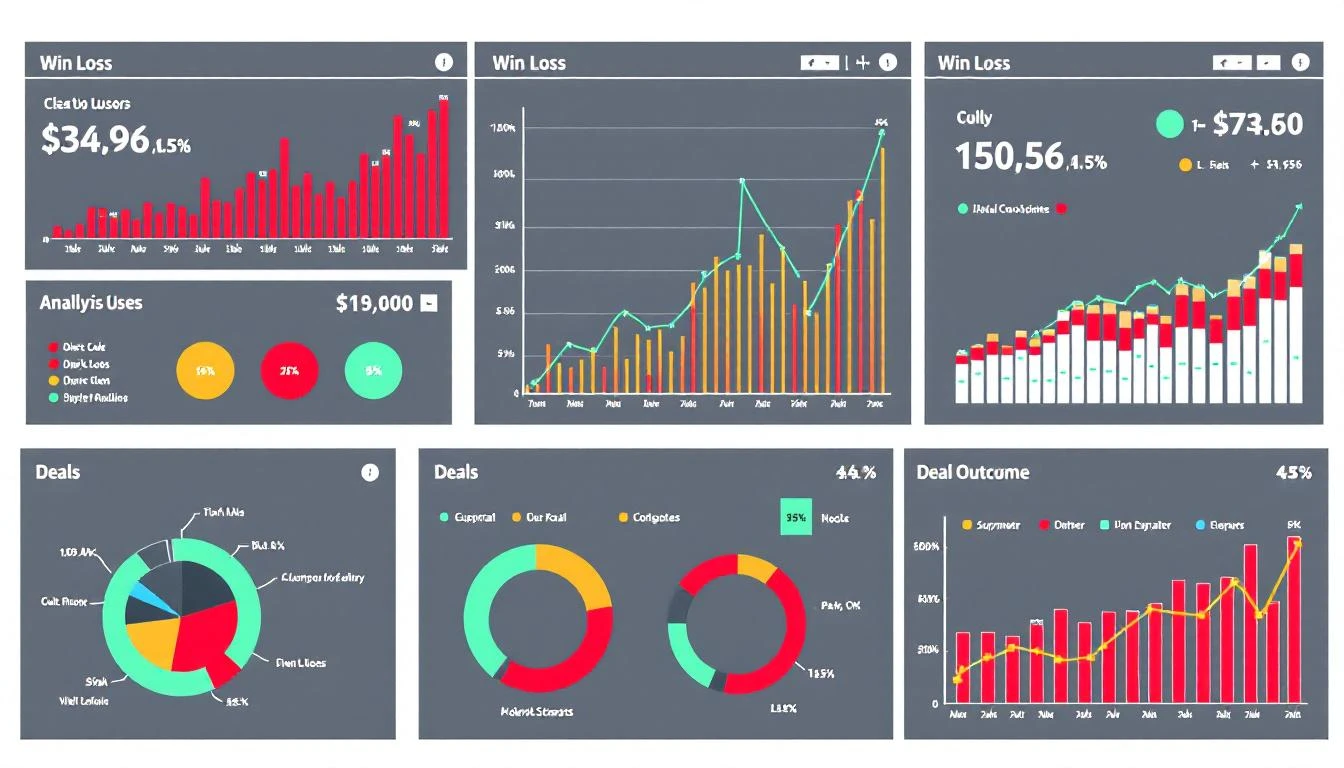
Why Win/Loss Analysis Gets Ignored
Be honest: when was your last systematic win/loss review?
The barriers:
- Time - Who has 2 hours to review every lost deal?
- Objectivity - Reps don't want to document their own failures
- Data access - Insights are scattered across CRM, calls, emails
- Analysis skills - Pattern recognition at scale requires statistical thinking
- Action gap - Even with insights, translating to playbook changes is hard
AI solves all five. It's infinitely patient, has no ego, can access all data sources, excels at pattern recognition, and can generate specific recommendations.
What AI Can Discover
Here's what Claude found in a real 200-deal analysis:
## Winning Patterns Identified

### Timing
- Won deals: Average 28 days demo-to-close
- Lost deals: Average 67 days demo-to-close
- Inflection point: Deals not closed by Day 45 have 70% loss rate

### Stakeholder Involvement
- Won deals: 2.8 stakeholders average
- Lost deals: 1.4 stakeholders average
- Key finding: Deals with finance involved by Stage 3 close at 3.2x rate

### Communication
- Won deals: 15.3 email exchanges average
- Lost deals: 8.7 email exchanges average
- Prospect-initiated emails: 2.4x higher in won deals

### Competitive
- 43% of losses mentioned competitor in final call
- When competitor mentioned, win rate drops from 34% to 18%
- Exception: When we addressed competitor in first call, win rate recovered to 29%

### Pricing
- "Too expensive" cited in 27% of losses
- BUT: Deals with ROI discussion before proposal had 4.2x higher win rate
- Finding: Price objection is proxy for value not established
You can't see these patterns by reviewing deals one at a time. You need to analyze them all at once.
Building Your Win/Loss Analysis System
Step 1: Gather Your Data
Export from your CRM, call recording tool, and email:
# Codex: Export closed deals with full context
codex run "Export all closed deals from HubSpot from 2025.
Include for each deal:
- All stage transitions with dates
- Associated contacts with titles
- All logged activities (calls, emails, meetings)
- Notes fields
- Close reason (if lost)
- Deal amount
- Industry and company size

Output as JSON with one file per deal."
Step 2: Load Call Transcripts
If you use Gong, Chorus, or similar:
# Pull transcripts for closed deals
codex run "For each deal in closed-deals/,
find and attach all call transcripts from Gong.
Create a summary of key discussion points per call."
Step 3: Run the Analysis
This is where Claude's context window shines:
# Prompt for Claude

I'm loading data from 150 closed deals (75 won, 75 lost).

For each deal, I have:
- CRM record with stages, timeline, amount
- Contact list with titles
- Activity log (emails, calls, meetings)
- Call transcript summaries
- Close reason (for lost deals)

Analyze this data and identify:

## 1. Timing Patterns
- Average time in each stage (won vs. lost)
- Where do deals stall?
- What's the "point of no return" after which deals rarely close?

## 2. Stakeholder Patterns
- Which titles correlate with wins?
- Multi-threading impact
- When should economic buyer be involved?

## 3. Activity Patterns
- Email/call volume differences
- Who initiates contact (us vs. them)?
- Meeting frequency and types

## 4. Competitive Patterns
- How often are competitors mentioned?
- Which competitors do we lose to most?
- What objections do competitors raise against us?

## 5. Objection Patterns
- Most common objections in lost deals
- Objections that appeared in WON deals (how were they overcome?)
- Objections that are deal-killers

## 6. Messaging Patterns
- What topics correlate with wins?
- What phrases appear in winning call transcripts?
- What questions do winning deals ask?

Output actionable findings with specific recommendations.

Step 4: Generate Recommendations
After analysis, ask Claude to create playbook updates:
Based on the win/loss analysis, generate:

## 1. Updated Qualification Criteria
Current: BANT
Recommended changes based on what actually predicts wins

## 2. Stage-Specific Actions
For each sales stage, what must happen to maintain win probability?

## 3. Red Flag Alerts
Signals that should trigger manager intervention

## 4. Competitive Playbook Updates
Specific responses to competitor objections that worked

## 5. Training Priorities
Skills gaps evident from lost deal patterns
Sample Analysis Output
Here's a real (anonymized) analysis result:
# Win/Loss Analysis: Q4 2025

**Dataset:** 147 closed deals ($2.3M total pipeline)
- Won: 52 deals, $892K (35% win rate, 39% of value)
- Lost: 95 deals, $1.4M

---

## Key Finding #1: The 30-Day Cliff

Deals not progressing past discovery within 30 days have
an 82% chance of loss.

**Current behavior:** Reps nurture stalled deals for 60-90 days
**Recommendation:** Implement "Day 30 Decision" - either advance
or disqualify. Reallocate time to higher-probability deals.

**Expected impact:** 15% reduction in wasted effort,
8% increase in win rate (more focus on viable deals)

---

## Key Finding #2: Multi-Threading Is Non-Negotiable

Single-threaded deals: 18% win rate
Multi-threaded (2+): 41% win rate
Multi-threaded (3+): 58% win rate

**Current behavior:** Only 34% of deals involve 2+ contacts
**Recommendation:**
- Block demo scheduling until 2 contacts identified
- Add "champion + economic buyer" to Stage 3 requirements
- Create "introduce a colleague" email template

**Expected impact:** 12-18% increase in win rate

---

## Key Finding #3: ROI Before Pricing

Deals where ROI was discussed before pricing: 47% win rate
Deals where pricing came first: 19% win rate

**Current behavior:** Pricing often shared in first discovery call
**Recommendation:**
- Remove pricing from discovery decks
- Create ROI calculator to use in discovery
- Pricing only after value quantified

**Expected impact:** Reduce "too expensive" objection by 40%

---

## Key Finding #4: Competitor Strategy

Top competitor losses:
1. Warmly (31% of competitive losses)
2. Apollo (24%)
3. ZoomInfo (18%)

**Warmly losses:** Prospects cited "more signals"
- Win-back opportunity: Our playbook converts signals to action
- Winning talk track: "Signals without workflow creates noise, not pipeline"

**Apollo losses:** Prospects cited "better database"
- Reality: Apollo doesn't do visitor ID or playbook
- Gap: We're not differentiating early enough

**Recommendation:** Competitor mention in Stage 1 triggers battlecard
delivery and follow-up question: "What would success look like
with [Competitor]?"

---

## Key Finding #5: Champion Indicators

Deals with strong champion: 61% win rate
Deals without: 14% win rate

**Champion behaviors (in won deals):**
- Forwarded our content internally (identified in 78% of wins)
- Introduced us to colleagues (identified in 65% of wins)
- Asked about implementation timeline (identified in 71% of wins)

**No-champion signals:**
- "I'll share this with my team" (never follows up)
- All communication through champion only
- No questions about internal process

**Recommendation:** Create "champion test" checklist.
If 3+ no-champion signals, either find new champion or disqualify.

---

## Immediate Actions

1. **Sales process change:** Add multi-threading requirement to Stage 2
2. **Training:** ROI conversation workshop (2 hours)
3. **Enablement:** Update battlecards for Warmly and Apollo
4. **Tooling:** Create champion indicator dashboard
5. **Metrics:** Track "Days in Stage" with 30-day alerts
Automating Ongoing Analysis
Don't do this once—automate it:
# openclaw cron config
- name: "monthly-win-loss"
  schedule: "0 9 1 * *"  # First of every month
  task: |
    Export closed deals from last month
    Run win/loss analysis
    Compare patterns to historical baseline
    Generate insights report
    Send to #sales-leadership
Monthly analysis catches trends early. Quarterly is too late.
From Analysis to Action
Insights mean nothing without execution:
1. Update Your Sales Process
If multi-threading matters, make it a stage requirement. Don't just recommend it—enforce it in CRM.
2. Build Training Around Patterns
Found that ROI conversations drive wins? Don't just tell reps—run a workshop with roleplay.
3. Create Real-Time Alerts
If deals stalling past 30 days are doomed, alert managers at Day 25. Intervene before it's too late.
4. Track Leading Indicators
Traditional metrics (win rate, deal size) are lagging. Track the behaviors that predict wins:
- Multi-threading rate
- Days to Stage 3
- ROI discussion completion
- Champion identification
5. Close the Loop
Quarterly, compare new win/loss data to see if changes worked. Iterate.
The Compound Effect
Here's why AI-powered win/loss analysis matters:
- First month: You identify 3 key patterns
- Second month: You implement process changes
- Third month: Win rate increases 5%
- Sixth month: Team internalizes new behaviors
- End of year: 15-20% win rate improvement
That's not marginal. On a $2M pipeline, that's $300-400K in additional closed revenue.
Try our AI Lead Generator — find verified LinkedIn leads for any company instantly. No signup required.
Conclusion
Your closed deals contain the playbook for your future wins. But only if you extract the patterns.
AI makes win/loss analysis practical for the first time. No more quarterly post-mortems that get ignored. No more gut-feel assumptions about what works. Instead: data-driven insights that compound over time.
Load your deals into Claude. Ask the right questions. Build better playbooks. Win more.
Want AI-powered deal intelligence built into your workflow? MarketBetter tracks every touchpoint, surfaces patterns, and helps your team replicate winning behaviors. Book a demo to see how AI can improve your win rate.