
The AI SDR Tech Stack: Tools We Actually Use at MarketBetter [2026]

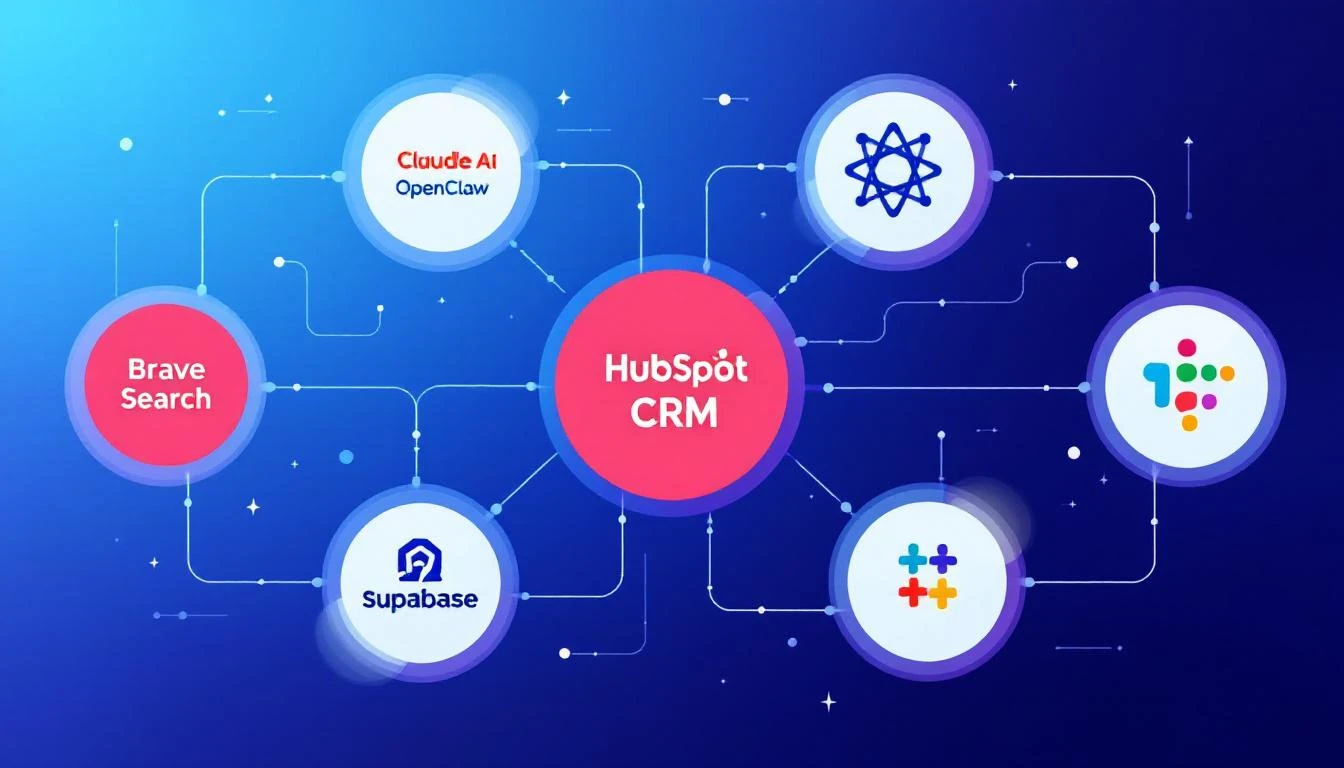
Everyone talks about "AI for sales." Few share what they actually use.
At MarketBetter, we don't just build AI-powered SDR tools — we use them. Every day. Our entire GTM motion runs on an AI-first stack that handles everything from lead research to email personalization to competitor intelligence.
This isn't a theoretical "you could do this" post. This is our actual stack, with real tools, real workflows, and honest assessments of what works and what doesn't.
Why Build an AI-First GTM Stack?
The math is simple:
Traditional SDR workflow:
- 40% of time on research
- 30% on manual data entry
- 20% on email/call prep
- 10% actually selling
AI-augmented SDR workflow:
- 10% reviewing AI research
- 10% approving personalized content
- 10% on strategy and exceptions
- 70% actually selling
The shift isn't about replacing humans. It's about removing the grunt work so SDRs can do what they're good at: building relationships and closing deals.
Our Core Stack: The Foundation
1. OpenClaw (AI Agent Orchestration)
What it does: Runs our AI agents as persistent assistants with memory, tools, and the ability to work autonomously.
How we use it: We have multiple specialized agents that handle different parts of our GTM motion:
- Content research and creation
- Competitor intelligence gathering
- Lead enrichment and scoring
- Email personalization
Why it matters: Without an orchestration layer, AI is just a chat interface. OpenClaw turns it into an actual worker that can remember context, access tools, and complete multi-step tasks without constant babysitting.
The honest take: Setup isn't trivial. You need technical chops to configure agents properly. But once it's running, the leverage is enormous. One well-configured agent can do the work of multiple human hours daily.
2. Claude (AI Reasoning Engine)
What it does: The brain behind our agents. Handles complex reasoning, writing, and decision-making.
How we use it:
- Writing personalized outreach
- Analyzing competitor positioning
- Summarizing call transcripts
- Generating content briefs
Why Claude over GPT-4? For sales tasks specifically:
- Better at following complex instructions
- More natural writing style (less "AI-sounding")
- Stronger at maintaining context across long conversations
- More reliable at structured output
The honest take: Claude is more expensive than GPT-4-turbo for high-volume tasks. We use Claude for quality-critical work (outreach, content) and sometimes GPT-4 for bulk processing where good-enough is fine.
3. HubSpot (CRM + Automation)
What it does: Our central system of record for all customer and prospect data.
How we integrate AI:
- AI agents read deal context before generating outreach
- Automatic enrichment of new contacts with AI-gathered intel
- Activity logging from AI workflows
- Lead scoring enhanced with AI signals
Why not just use HubSpot's AI? HubSpot's native AI is improving, but it's generic. Our stack lets us:
- Use custom prompts optimized for our ICP
- Integrate signals HubSpot doesn't have
- Control exactly how AI interacts with our data
The honest take: HubSpot's API is solid but rate-limited. We cache aggressively and batch operations to avoid hitting limits during high-activity periods.
The Research Layer: Where AI Shines Brightest
4. Brave Search API (Real-Time Intelligence)
What it does: Programmatic web search without the Google tax.
How we use it:
- Real-time company news before outreach
- Competitor monitoring (pricing changes, product launches, hiring)
- Industry trend research for content
- Finding contact info and social profiles
Why Brave over Google?
- Better pricing for API access
- Less aggressive rate limiting
- Cleaner results without SEO spam
Pro tip: Combine search with web scraping. Search finds the pages; scraping extracts the data. AI then synthesizes it into usable intelligence.
5. LinkedIn Sales Navigator
What it does: B2B prospecting and intent signals.
How we integrate AI:
- AI reviews prospect activity before outreach
- Automated analysis of shared connections
- Content engagement tracking
The honest take: LinkedIn's API access is restrictive. We mostly use it manually but have AI help process and analyze the data we extract.
The Content Engine: AI-Generated At Scale
6. Replicate (Image Generation)
What it does: Creates custom images for blog posts and social content.
How we use it:
- Workflow diagrams for tutorials
- Quote cards for social sharing
- Featured images for blog posts
- Comparison graphics
Why Replicate?
- Pay-per-image pricing (no subscriptions)
- Fast generation via Flux
- API-friendly for automation
The honest take: AI-generated images still need human review. About 70% are usable on first try; the rest need re-generation or light editing.
7. Our Blog Pipeline
The workflow:
- AI agent receives content brief (topic, keywords, angle)
- Agent researches using web search
- Agent writes first draft in Docusaurus MDX format
- Agent generates 2-3 images
- Agent creates GitHub PR
- Human reviews and merges
- Auto-deploy to production
Volume: We're pushing 5+ blog posts daily during content sprints.
Quality control: AI writes, humans approve. Every piece gets a human eye before publishing. But the human review takes 5 minutes instead of the 2+ hours writing would take.
The Communication Layer: Personalization at Scale
8. Email (Microsoft 365 + AI Drafts)
The workflow:
- AI researches prospect
- AI generates personalized draft
- Human reviews in drafts folder
- Human sends (or edits then sends)
Why not fully automated sends? Trust. We want human judgment on anything that goes out under our name. AI proposes; humans dispose.
Personalization elements AI handles:
- Recent company news references
- Industry-specific pain points
- Role-specific messaging
- Timing recommendations
9. Slack (Internal Communication)
How AI plugs in:
- Automated alerts for important signals
- Daily briefings from agents
- Quick queries to AI from any channel
The honest take: The key is making AI accessible where work happens. Forcing people to switch contexts kills adoption.
The Intelligence Layer: Knowing Your Market
10. Supabase (Data Lake)
What it does: Stores and organizes all the intelligence our AI gathers.
What we track:
- Competitor intel (pricing, features, positioning)
- Customer insights (pain points, wins, objections)
- Content performance (what's working)
- Agent activity (what's been done)
Why Supabase?
- PostgreSQL flexibility
- Real-time subscriptions
- Simple API
- Generous free tier
The power move: When agents research a competitor, the insights go into Supabase. Next time anyone asks about that competitor, the answer is instant — no re-research needed.
What's NOT in Our Stack (And Why)
We Don't Use: Automated LinkedIn Outreach Tools
Why not: LinkedIn actively bans accounts that automate. The risk isn't worth it. We use LinkedIn for research and manual engagement only.
We Don't Use: AI Voice Callers (For Cold Outreach)
Why not: The tech isn't there yet for cold calls. AI voice works for appointment reminders and simple transactions, but complex sales conversations still need humans.
We Don't Use: "All-in-One" AI Sales Platforms
Why not: They're jacks of all trades, masters of none. Purpose-built tools connected by AI orchestration outperform monolithic platforms.
Results: What This Stack Delivers
Since implementing this AI-first approach:
Research time: Down 80% (from 2 hours to 25 minutes per prospect deep-dive)
Email personalization: Every email is personalized. Previously, only high-value targets got custom messages.
Content output: 10x increase in blog production without adding headcount.
Competitor intelligence: Real-time vs. quarterly reports.
Lead response time: Under 5 minutes for inbound vs. industry average of 47 hours.
Building Your Own AI SDR Stack: Where to Start
If You're Technical
- Start with OpenClaw + Claude
- Connect to your CRM via API
- Build research workflows first (highest immediate ROI)
- Add content generation next
- Layer in communication drafting
If You're Not Technical
- Start with ChatGPT/Claude directly for individual tasks
- Use Zapier to connect tools
- Focus on one workflow at a time
- Consider platforms like MarketBetter that package AI-powered SDR workflows without requiring technical setup
The Honest Assessment
What AI does well:
- Research and synthesis
- First-draft writing
- Pattern recognition across large datasets
- 24/7 availability for routine tasks
What AI still struggles with:
- Nuanced relationship building
- Complex negotiation
- Reading emotional cues
- Knowing when rules should be broken
The winning formula: AI for scale and speed. Humans for judgment and relationships.
What's Next for Our Stack
We're actively working on:
- Better lead scoring — Using AI to analyze intent signals across multiple sources
- Automated call prep — Briefing documents generated before every sales call
- Real-time competitive intel — Alerts when competitors make moves
- Predictive outreach timing — AI learning when prospects are most receptive
Try our Tech Stack Detector — instantly detect any company's tech stack from their website. No signup required.
Try It Yourself
Building an AI-first GTM stack isn't about buying one magic tool. It's about connecting specialized tools with AI orchestration.
Start small. Pick your biggest time sink. Automate that one thing. See results. Expand.
Want to see AI-powered SDR workflows in action? Book a demo of MarketBetter to see how we turn intent signals into actionable playbooks for your SDRs — no AI expertise required.