
AI-Powered Sales Playbook Generator with GPT-5.3 Codex [2026]
Most sales playbooks are created once and forgotten. They sit in a shared drive, slowly becoming irrelevant as your market, product, and buyers evolve.
What if your playbook updated itself—generating new scripts, objection handlers, and discovery questions based on your latest wins, losses, and market intelligence?
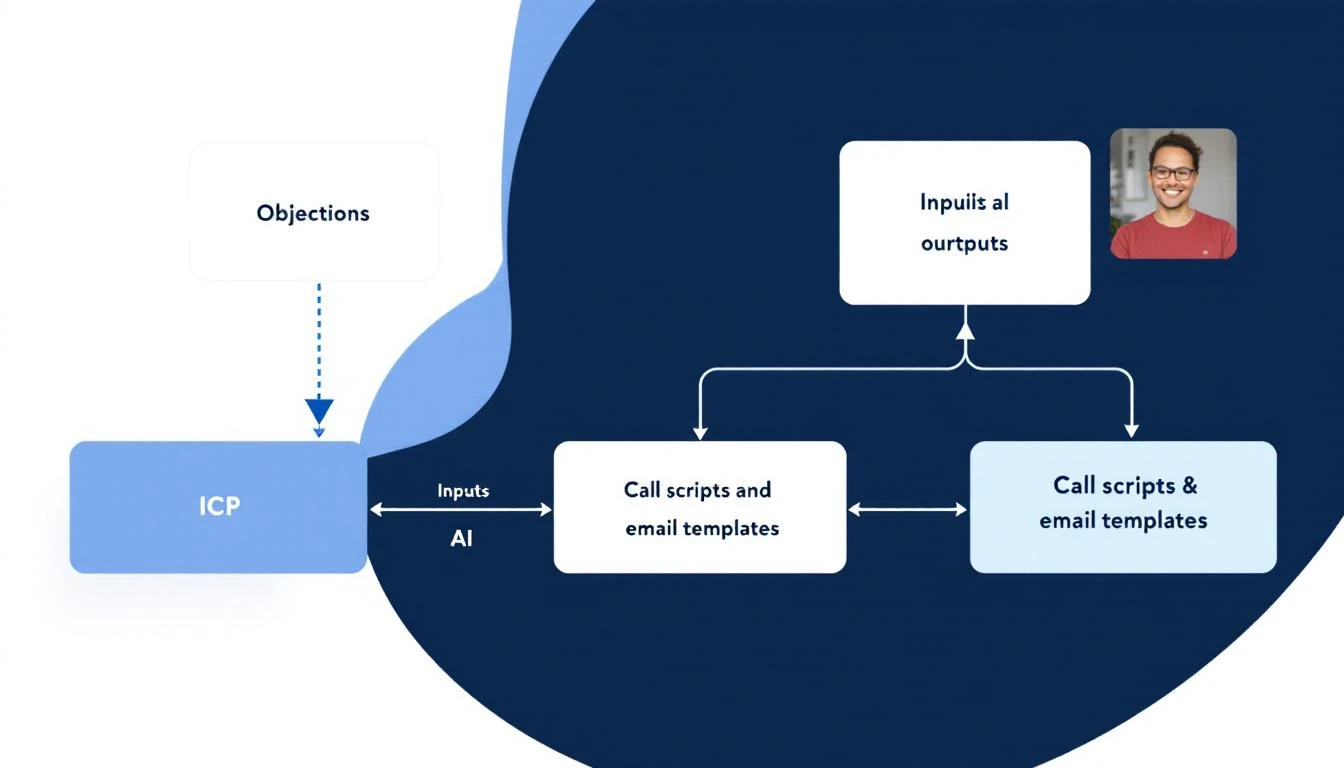
This guide shows you how to build an AI-powered sales playbook generator using GPT-5.3 Codex that creates and maintains sales collateral dynamically, keeping your team armed with relevant, battle-tested content.
Why Static Playbooks Fail
The traditional playbook lifecycle:
- Month 1: Product marketing spends 40 hours creating comprehensive playbook
- Month 2: Sales team references it occasionally
- Month 3: New competitor emerges, playbook doesn't mention them
- Month 6: New feature launched, not in playbook
- Month 12: Playbook is 80% outdated, nobody uses it
The core problem: Playbooks are documents, not systems.
The Dynamic Playbook Advantage
An AI-powered playbook generator:
| Static Playbook | Dynamic Playbook |
|---|---|
| Created once | Continuously updated |
| Generic scripts | Personalized by persona/industry |
| Outdated objection handling | Real objections from recent calls |
| Same for all reps | Adapts to rep style and territory |
| Lives in a doc | Embedded in workflow |
What We're Building
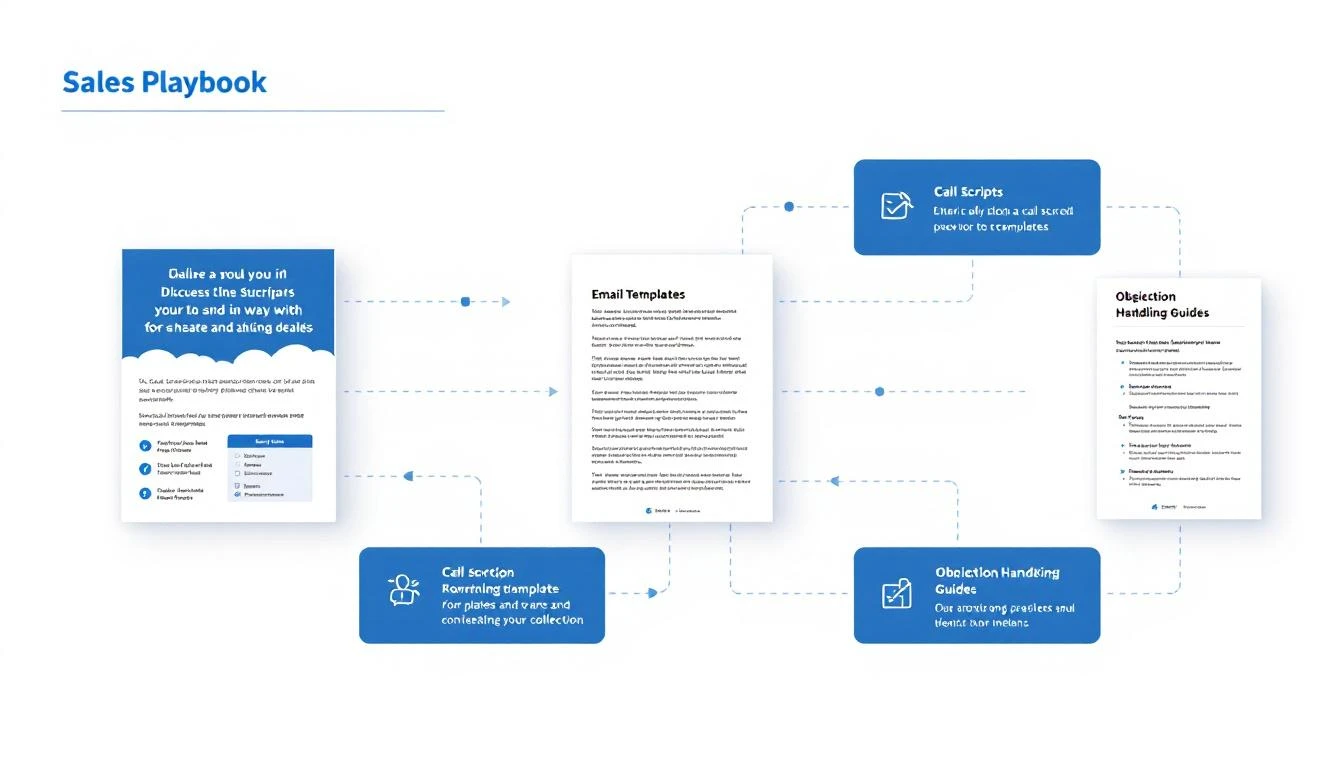
A playbook generator that produces:
- Discovery Questions — Tailored to persona, industry, and company size
- Call Scripts — Opening hooks, value props, close attempts
- Email Templates — Cold, follow-up, breakup sequences
- Objection Handlers — Based on real objections from calls
- Competitive Battlecards — Auto-updated from market intel
All generated dynamically, personalized to context, and kept current.
Step 1: Define Your Playbook Inputs
Before generating content, you need structured inputs:
# playbook-inputs.yml

company:
  name: "MarketBetter"
  product: "AI-powered SDR platform"
  main_value_prop: "Turn intent signals into pipeline. Tell SDRs WHO to contact AND WHAT to do."
  differentiators:
    - "Daily playbook with prioritized tasks"
    - "Website visitor identification"
    - "AI-powered personalization at scale"
    - "Smart dialer with context"
  pricing:
    standard: "$99/user/month"
    enterprise: "Custom pricing"
    enterprise: "Custom"

icp:
  primary:
    title: "VP of Sales"
    company_size: "50-500 employees"
    industry: "B2B SaaS"
    pain_points:
      - "SDR productivity is low"
      - "Too many tools, no single source of truth"
      - "Leads aren't being worked fast enough"
      - "Personalization at scale is impossible"
  secondary:
    title: "SDR Manager"
    company_size: "20-200 employees"
    pain_points:
      - "Reps spend too much time researching"
      - "Can't track what's working"
      - "Lead quality is inconsistent"

competitors:
  warmly:
    positioning: "Intent data + visitor ID"
    weakness: "No action layer—shows WHO but not WHAT to do"
  apollo:
    positioning: "Sales intelligence + sequences"
    weakness: "Data breadth over workflow optimization"
  sixsense:
    positioning: "ABM + intent"
    weakness: "Complex, expensive, enterprise-only"

recent_objections:
  - "We already use [competitor]"
  - "Our SDRs are doing fine manually"
  - "We don't have budget right now"
  - "Can you integrate with our CRM?"
  - "What makes you different from ChatGPT?"
Step 2: The Discovery Question Generator
Generate persona-specific discovery questions:
codex "
Generate 15 discovery questions for a sales call with a VP of Sales at a mid-market B2B SaaS company.

Context:
- They're evaluating SDR productivity tools
- Pain points: SDR efficiency, lead prioritization, personalization at scale
- Our product: MarketBetter, AI-powered SDR platform

Requirements:
- 5 situation questions (understand current state)
- 5 problem questions (uncover pain)
- 3 implication questions (highlight cost of inaction)
- 2 need-payoff questions (envision solution)

Make questions conversational, not interrogative.
Format with the question type labeled.
"
Sample output:
## Situation Questions

1. "Walk me through how your SDR team prioritizes who to contact each day. What does that process look like?"

2. "What tools are your SDRs using today for prospecting and outreach? How many tabs do they typically have open?"

3. "When a new lead comes in—say, from your website—what's the typical response time before someone reaches out?"

4. "How are you currently measuring SDR productivity? What metrics matter most to you?"

5. "Tell me about your tech stack for sales. How integrated is everything, or are there gaps?"

## Problem Questions

6. "Where do you feel your SDRs are spending time that isn't directly leading to conversations?"

7. "What's frustrating about your current lead prioritization? Are the right leads getting attention?"

8. "When it comes to personalization, how are your reps making outreach relevant? What's the struggle there?"

9. "Have you noticed any patterns in the leads that slip through the cracks?"

10. "What's the feedback from your SDRs about their tools? Where do they push back?"

## Implication Questions

11. "If your SDRs are spending—say—30% of their time on research and prioritization, what does that cost you in terms of conversations not happening?"

12. "When leads aren't contacted within the first hour, what typically happens to those opportunities?"

13. "How does the inconsistency in lead quality affect your forecasting and pipeline predictability?"

## Need-Payoff Questions

14. "If your SDRs had one prioritized list each morning—with the research already done—how would that change their day?"

15. "What would it mean for your team if you could respond to every qualified lead within 5 minutes, 24/7?"
Step 3: Call Script Generator
Generate opening scripts that hook attention:
codex "
Create 5 cold call opening scripts for reaching VP of Sales at mid-market SaaS companies.

Context:
- Product: MarketBetter, AI-powered SDR platform
- Key hook: 'We help SDR teams go from 20 tabs to one task list'
- Avg customer result: 70% less manual SDR work

Requirements:
- Each script: 15-20 seconds max
- Different angles: pain, result, curiosity, referral, trigger-based
- Include pattern interrupt / permission-based opening
- Natural language, not robotic

Format each with:
- Angle
- Script
- When to use
"
Sample output:
## Script 1: Result-Based Opening

**Angle:** Lead with outcome
**When to use:** Cold call, no prior engagement

"Hi [Name], this is [Rep] from MarketBetter. I'll be brief—we help SDR teams cut 70% of the manual work in their day.
Most teams we talk to are drowning in tabs and tools.
Do you have 30 seconds for me to see if that's relevant to your team?"

---

## Script 2: Curiosity Hook

**Angle:** Create intrigue
**When to use:** Voicemail follow-up, warm lead

"Hey [Name], quick question—how many tabs do your SDRs typically have open right now?
Most teams tell us 15-20. We help collapse that to one.
Worth a 5-minute conversation to see if we can do the same for you?"

---

## Script 3: Pain-Based Opening

**Angle:** Acknowledge frustration
**When to use:** Cold call to teams with known tech sprawl

"[Name], I know SDR leaders are getting pitched constantly, so I'll cut to it.
If your reps are spending more time researching leads than talking to them, that's the problem we solve.
Is that a challenge you're dealing with right now?"

---

## Script 4: Trigger-Based Opening

**Angle:** Reference event/news
**When to use:** Company just raised funding, expanded team

"Hey [Name], saw [Company] just closed your Series B—congrats.
When teams scale, SDR productivity usually becomes a bottleneck.
Are you thinking about that, or is now not the right time?"

---

## Script 5: Permission-Based Interrupt

**Angle:** Respect their time
**When to use:** Any cold call, works universally

"Hi [Name], I know I'm interrupting your day—not a sales pitch, I promise.
We work with SDR teams at [similar company]. Just wanted to see if it's worth a conversation.
If not, totally respect that. Can I get 30 seconds to explain?"
Step 4: Objection Handler Generator
Generate responses to common objections:
codex "
Create objection handling scripts for these 5 objections:

1. 'We already use Apollo/ZoomInfo/6sense'
2. 'We don't have budget right now'
3. 'Our SDRs are doing fine manually'
4. 'What makes you different from ChatGPT?'
5. 'We need to get buy-in from IT first'

Context:
- Product: MarketBetter, AI-powered SDR platform
- Key differentiator: We tell SDRs WHO to contact AND WHAT to do—competitors just show data
- G2 rating: 4.97 stars

Requirements:
- Acknowledge the objection first
- Reframe without being dismissive
- Provide specific proof point or question
- Include a soft close to continue conversation

Format:
- Objection
- Handle (what to say)
- Why it works (brief explanation)
"
Sample output:
## Objection 1: "We already use Apollo/ZoomInfo/6sense"

**Handle:**
"Makes sense—most teams we work with use one of those. Quick question: do your SDRs start each day with a clear, prioritized list of who to contact and exactly what to say?

Because that's the gap we fill. Tools like Apollo give you the data. We turn it into action. It's not either/or—we actually make Apollo more useful.

Would it help if I showed you how we integrate with what you already have?"

**Why it works:** Positions as complementary, not competitive. Asks a question they'll likely answer "no" to, creating need.

---

## Objection 2: "We don't have budget right now"

**Handle:**
"Totally understand—budgets are tight everywhere. Let me ask though: if there was a way to get 70% more output from your current SDR team without adding headcount, would that justify finding budget?

Most teams we work with aren't adding spend—they're reallocating from tools that aren't working.

What if we looked at whether MarketBetter could replace something you're already paying for?"

**Why it works:** Reframes from cost to ROI. Suggests reallocation, not new spend.

---

## Objection 3: "Our SDRs are doing fine manually"

**Handle:**
"That's great to hear—you've clearly built a strong team. Curious though: what percentage of their day would you say goes into research, list building, and prioritization versus actual selling?

In our experience, even high-performing teams spend 30-40% on non-selling work. That's time that could be conversations.

What if I showed you how teams like [similar company] got back that time without changing what's working?"

**Why it works:** Doesn't challenge their team—validates, then introduces opportunity cost.

---

## Objection 4: "What makes you different from ChatGPT?"

**Handle:**
"Great question—we get that a lot. ChatGPT is a general AI assistant. You can ask it questions, and it'll answer.

MarketBetter is a purpose-built sales system. It doesn't wait for questions—it proactively tells your SDRs who to call, when to call them, and what to say, based on real intent signals.

Think of it this way: ChatGPT is a really smart assistant. MarketBetter is like hiring an AI SDR manager who runs your team's playbook 24/7.

Does that distinction make sense?"

**Why it works:** Clear analogy that positions MarketBetter as specialized, not generic AI.

---

## Objection 5: "We need to get buy-in from IT first"

**Handle:**
"Completely understand—security and compliance matter. A few things that usually help:

First, we're SOC 2 certified. Second, we integrate via standard APIs—nothing custom or risky. Third, I can send over our security documentation before our next call.

What if I prepared an IT-friendly one-pager that answers the questions they typically ask? That way, you're armed when you bring it up internally.

What concerns do you think IT will raise?"

**Why it works:** Proactively addresses concerns, offers to help champion internally, asks what specific blockers might arise.
Step 5: Continuous Update System
The real magic: keeping playbooks current.
// playbook-updater.js

const updatePlaybook = async () => {
  // Pull recent data sources
  const [callRecordings, winLossData, competitorIntel, productUpdates] = await Promise.all([
    getRecentCallRecordings(),    // From Gong/Chorus
    getWinLossAnalysis(),          // From CRM
    getCompetitorChanges(),        // From Recon agent
    getProductChanges()            // From product team
  ]);

  // Analyze new objections from calls
  const newObjections = await codex.analyze(`
    Review these recent call transcripts and identify:
    1. Objections that aren't in our current playbook
    2. Objections where our current response isn't working
    3. New competitive mentions

    Transcripts:
    ${callRecordings.map(c => c.transcript).join('\n\n---\n\n')}

    Current objection handlers:
    ${currentPlaybook.objections}
  `);

  // Generate updated content
  if (newObjections.hasNewObjections) {
    const newHandlers = await codex.generate(`
      Create objection handlers for these new objections:
      ${newObjections.objections.join('\n')}

      Use our standard format and reference recent wins:
      ${winLossData.recentWins}
    `);

    await updatePlaybookSection('objections', newHandlers);
    await notifyTeam('New objection handlers added', newHandlers);
  }

  // Update competitive battlecards
  if (competitorIntel.hasChanges) {
    const updatedBattlecards = await codex.generate(`
      Update these battlecard sections based on new intel:
      ${competitorIntel.changes}

      Current battlecards:
      ${currentPlaybook.battlecards}
    `);

    await updatePlaybookSection('battlecards', updatedBattlecards);
  }

  // Add new product talking points
  if (productUpdates.hasNewFeatures) {
    const featureTalkingPoints = await codex.generate(`
      Create sales talking points for these new features:
      ${productUpdates.features}

      Include: what it does, who cares, how to pitch it
    `);

    await updatePlaybookSection('product', featureTalkingPoints);
  }

  console.log('Playbook updated:', new Date().toISOString());
};

// Run weekly
cron.schedule('0 9 * * 1', updatePlaybook);
Step 6: Personalized Playbook Delivery
Don't just create content—deliver it in context:
// personalized-playbook.js

const getPlaybookForCall = async (rep, prospect) => {
  const context = {
    prospect: await enrichProspect(prospect),
    rep: rep.preferences,
    previousInteractions: await getHistory(prospect.email)
  };

  const personalizedPlaybook = await codex.generate(`
    Create a personalized call prep sheet for this upcoming call:

    Rep: ${rep.name} (style: ${rep.style})
    Prospect: ${context.prospect.name}, ${context.prospect.title} at ${context.prospect.company}
    Industry: ${context.prospect.industry}
    Company size: ${context.prospect.employees} employees
    Previous interactions: ${context.previousInteractions}

    Generate:
    1. 3 personalized opening lines (based on prospect's LinkedIn/news)
    2. 5 discovery questions specific to their industry
    3. Top 3 objections likely for this persona
    4. Competitive positioning (they might be evaluating: ${context.prospect.techStack})
    5. Recommended next steps based on qualification

    Match ${rep.name}'s communication style: ${rep.style}
  `);

  return personalizedPlaybook;
};
Connecting to MarketBetter
MarketBetter takes this concept further—the playbook isn't a document, it's embedded in the daily workflow:
- Morning task list includes personalized talking points for each call
- Call prep auto-generated based on prospect research
- Objection handling surfaced in real-time during calls
- Post-call suggests specific follow-up messaging
Your SDRs don't reference a playbook—they work inside one.
See the AI-powered playbook in action →
Try our AI Lead Generator — find verified LinkedIn leads for any company instantly. No signup required.
Implementation Checklist
Ready to build your playbook generator?
- Define playbook inputs (ICP, value prop, competitors)
- Set up Codex CLI or API access
- Generate initial discovery questions
- Create call script variations
- Build objection handler library
- Connect to call recording analysis (Gong/Chorus)
- Set up automated weekly updates
- Build personalized delivery for reps
- Track which content performs best
The best sales playbooks aren't written once—they evolve. With GPT-5.3 Codex, your playbook becomes a living system that learns from every call, adapts to market changes, and keeps your team armed with what actually works.
Want more AI-powered sales tools? Check out our guides on AI objection handling and competitive battlecards with Claude.