
How to Build an AI Objection Handler with Claude Code [2026]
Every SDR knows the feeling: you're on a call, the prospect throws a curveball objection, and your mind goes blank.
"Your pricing is too high." "We're happy with our current solution." "Now's not a good time."
The best SDRs have battle-tested responses for every objection. But what if you could give every rep on your team that same expertise — instantly?
With Claude Code and AI coding agents, you can build an objection handler that provides real-time responses, personalized to your prospect and situation.
Why Traditional Objection Handling Training Fails
Sales teams spend thousands on objection handling training. SDRs memorize scripts. Role-play sessions happen quarterly.
And then reality hits:
- Reps forget the scripted responses under pressure
- Objections evolve — buyers get more sophisticated
- Context matters — the same objection requires different responses for a startup vs. enterprise
- New reps can't access tribal knowledge from top performers
The result? 67% of lost deals cite "objections not adequately addressed" as a contributing factor.
The AI Objection Handler Solution
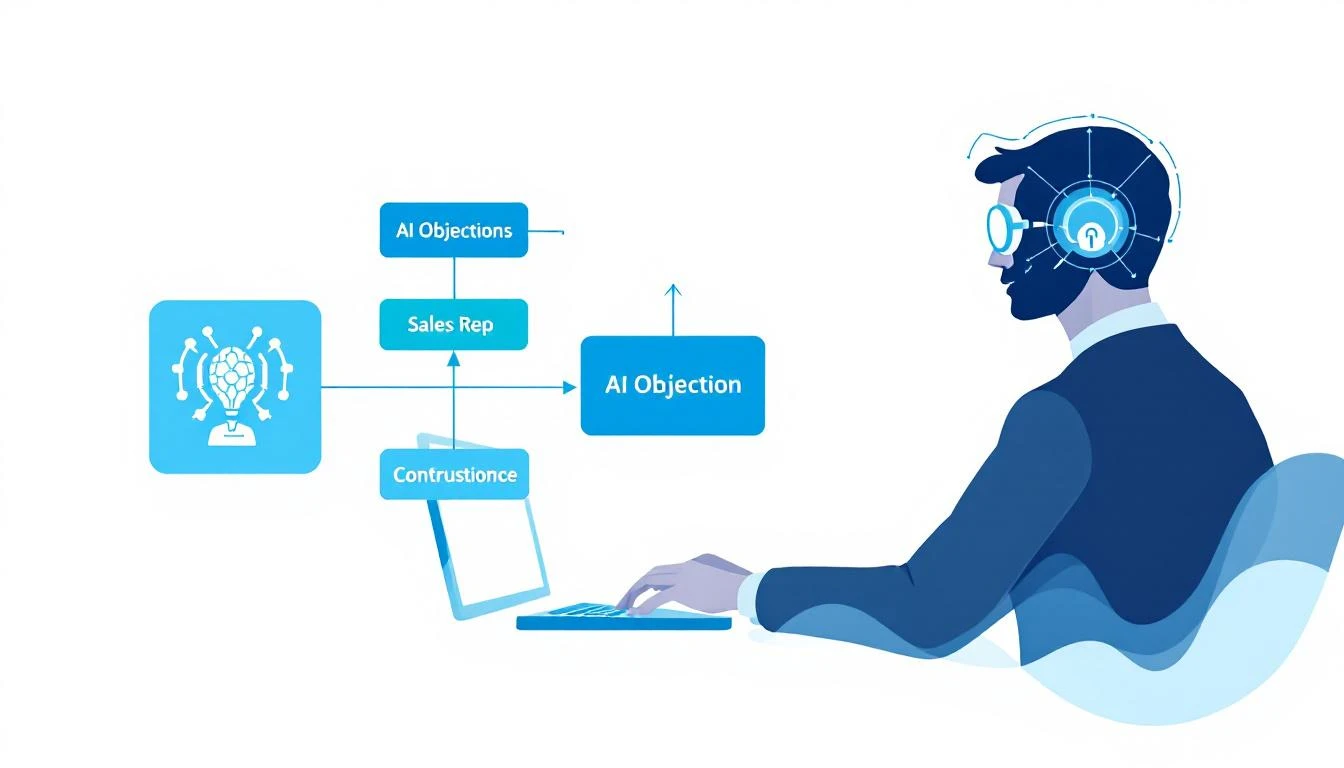
Instead of relying on memory, build a system that:
- Captures objections in real-time (from call transcripts or chat)
- Classifies the objection type instantly
- Generates a personalized response based on prospect context
- Learns from successful rebuttals over time
Here's how to build it with Claude Code.
Setting Up Your Objection Handler
Step 1: Define Your Objection Categories
First, map the objections your team actually faces. Most B2B sales objections fall into these categories:
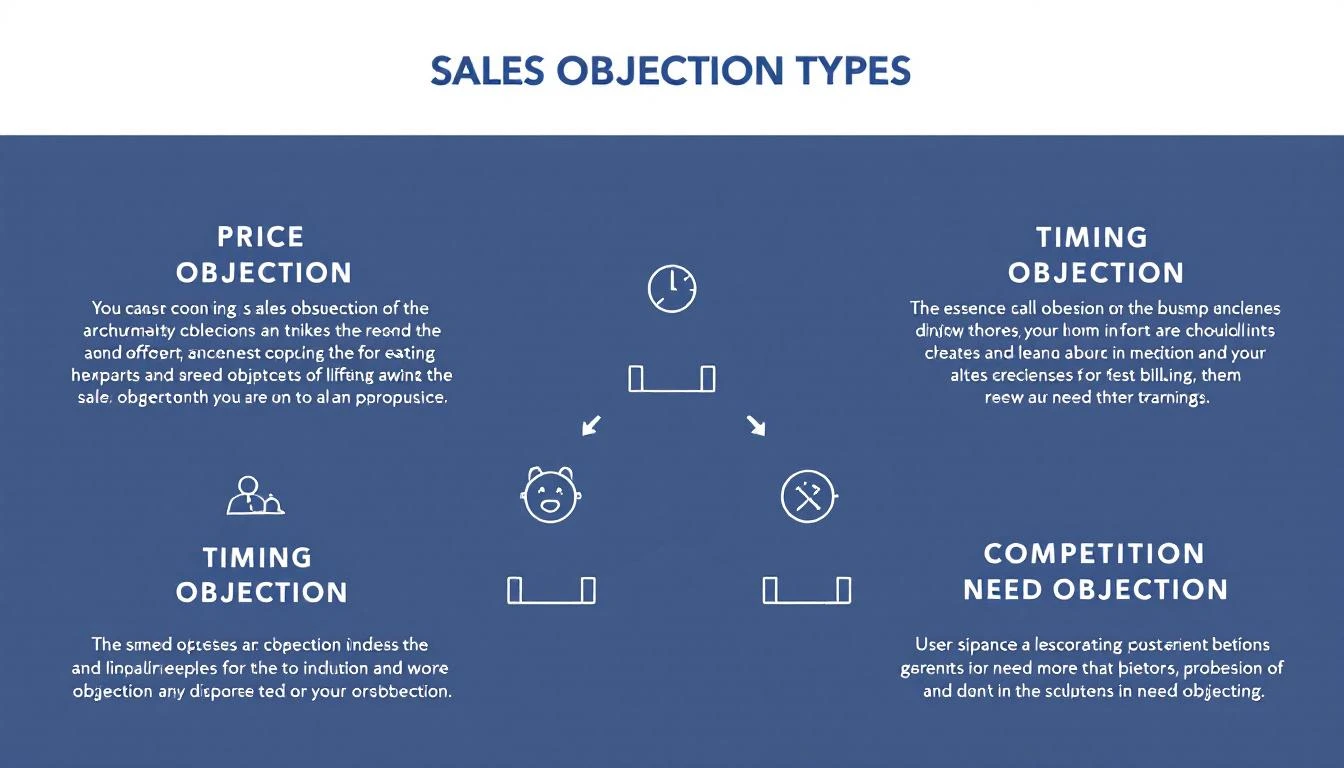
Price objections:
- "It's too expensive"
- "We don't have the budget"
- "Your competitor is cheaper"
Timing objections:
- "Now's not a good time"
- "We just signed a contract with someone else"
- "Check back next quarter"
Need objections:
- "We're not sure we need this"
- "Our current process works fine"
- "This isn't a priority right now"
Trust objections:
- "We've never heard of your company"
- "How do we know this will work?"
- "We got burned by a similar product before"
Authority objections:
- "I need to run this by my boss"
- "This decision involves multiple stakeholders"
- "Let me check with procurement"
Step 2: Create Your Response Library
Before AI can help, you need source material. Document your best responses:
## Objection: "Your pricing is too high"

**Context needed:** Company size, current spend, pain points

**Response framework:**
1. Acknowledge the concern
2. Reframe value vs. cost
3. Quantify the ROI
4. Offer flexible options

**Example response (SMB):**
"I hear you — budget matters. Quick question: how many hours per week does your team spend on [manual task]? At $50/hour, that's $X per month. MarketBetter typically cuts that by 70%, meaning you'd see ROI in [timeframe]. Would it help to start with our Standard plan to prove value first?"

**Example response (Enterprise):**
"For teams your size, the real cost isn't the software — it's the opportunity cost of slow response times. Your competitors using AI respond to leads in 5 minutes. You're at 2 hours. That's [X deals] per quarter going to faster responders. Let's look at the math together."
Step 3: Build the Claude Code Integration
Here's a system prompt that turns Claude into your objection handling expert:
You are an elite B2B sales objection handler for MarketBetter, an AI-powered SDR platform.

When given an objection, you:
1. Classify the objection type (price, timing, need, trust, authority)
2. Consider the prospect's context (company size, industry, pain points)
3. Generate 2-3 response options from conversational to assertive
4. Include a follow-up question to keep the conversation moving

Response format:
**Objection Type:** [classification]
**Situation Assessment:** [brief analysis]

**Option 1 (Conversational):**
[response]

**Option 2 (Value-Focused):**
[response]

**Option 3 (Direct Challenge):**
[response]

**Recommended Follow-Up Question:**
[question]

Never be defensive. Always pivot to value. Keep responses under 3 sentences each.
Step 4: Add Real-Time Context
The magic happens when you feed in prospect data:
const prospectContext = {
  company: "TechCorp Industries",
  size: "200 employees",
  industry: "Manufacturing IoT",
  currentTool: "Salesforce + manual prospecting",
  painPoints: ["slow lead response", "inconsistent outreach"],
  dealSize: "$45,000 ARR",
  competitorsMentioned: ["Apollo", "ZoomInfo"]
};

const objection = "We're already using Apollo — why would we switch?";

// Claude processes with full context
const response = await claude.complete({
  prompt: `
    Prospect context: ${JSON.stringify(prospectContext)}
    Objection: "${objection}"

    Generate objection handling responses.
  `,
  system: OBJECTION_HANDLER_PROMPT
});
Real Responses for Real Objections
Let's see the AI objection handler in action:
Objection: "We're happy with our current solution"
AI Response Options:
Option 1 (Conversational): "That's great — what do you love most about it? I ask because our customers who switched from [their tool] said the same thing, until they realized they were spending 3 hours daily on tasks that take us 15 minutes."
Option 2 (Value-Focused): "Perfect — you should be! Quick question: is your current solution telling you WHO to call, or just giving you data and leaving the 'what to do' part to your SDRs? That's where we see the biggest gap."
Option 3 (Direct Challenge): "I'd be worried if you weren't. The question isn't whether your current tool works — it's whether your SDRs are hitting their numbers. Are they?"
Objection: "Now's not a good time — check back next quarter"
AI Response Options:
Option 1 (Conversational): "Totally get it — what's consuming your focus right now? Sometimes the thing keeping you busy is exactly what we solve."
Option 2 (Value-Focused): "Makes sense. What's driving that? If it's pipeline, funny enough — that's our whole thing. If it's internal projects, I'll set a reminder. Which is it?"
Option 3 (Direct Challenge): "I hear that a lot. Here's the thing: your competitors aren't waiting for next quarter. Every week without AI-powered outreach is X leads going to faster responders. What would need to change for this to become a priority now?"
Integrating with Your Sales Stack
Option 1: Slack Bot for Live Calls
Build a Slack bot that reps can query mid-call:
/objection "They said Apollo is cheaper"

🎯 **Objection Type:** Price/Competition

**Quick Response:**
"Apollo's great for data. We're not competing with them — we're completing your stack. They tell you who to call. We tell you what to say and when to say it. Most of our customers use both. Are you seeing gaps between having data and actually booking meetings?"

**Follow-up:** "What's your current show-rate on meetings booked through Apollo outreach?"
Option 2: Gong/Chorus Integration
Pipe call transcripts to Claude for real-time objection detection:
- Call transcript streams to your system
- AI detects objection in real-time
- Suggested response appears in rep's sidebar
- Rep uses or adapts the response
- Outcome logged for training data
Option 3: OpenClaw Automation
For asynchronous objections (email, LinkedIn), use OpenClaw agents:
# OpenClaw agent config
triggers:
  - email_received
  - linkedin_message

workflow:
  - detect_objection: true
  - if_objection:
      - classify_type
      - fetch_prospect_context
      - generate_response_options
      - draft_reply
      - notify_rep_for_review
Training Your AI Over Time
The best part? Your objection handler gets smarter:
Track What Works
Log every objection and response with outcomes:
{
  "objection": "Your pricing is too high",
  "context": { "company_size": "50", "industry": "SaaS" },
  "response_used": "Option 2 (Value-Focused)",
  "outcome": "Meeting booked",
  "deal_closed": true,
  "notes": "Prospect responded well to ROI math"
}
Identify Patterns
After 100+ interactions:
- Which responses work best for enterprise vs. SMB?
- What objection types kill deals most often?
- Which reps have the best rebuttal success rates?
Refine Your Prompts
Feed winning responses back into Claude:
Here are our top 10 responses to "now's not a good time" that resulted in booked meetings. Use these as templates for similar objections:

1. [winning response with context]
2. [winning response with context]
...
The Bottom Line
Building an AI objection handler isn't about replacing your reps — it's about giving every rep on your team the confidence and tools to handle any curveball.
What you get:
- Real-time response suggestions during calls
- Consistent messaging across your team
- Faster ramp time for new SDRs
- Data on what objections are killing deals
What it costs:
- Claude API: ~$0.01 per objection processed
- Your time: ~2 hours to set up
- Ongoing: Review and refine responses monthly
The math is simple: if better objection handling saves even one deal per month, you've paid for a decade of AI costs.
Try our AI Lead Generator — find verified LinkedIn leads for any company instantly. No signup required.
Start Building Today
Ready to give your SDRs an unfair advantage?
- Document your top 20 objections and best responses
- Set up Claude Code with the prompt template above
- Integrate with your sales stack (Slack, Gong, or email)
- Track outcomes and refine
Need help building AI-powered sales automation? Book a demo with MarketBetter — we've built these systems for dozens of GTM teams.
Your competitors are already using AI for objection handling. The question is: are you?