
Building an AI-Powered Lead Routing System with Codex [2026]

Your lead routing is broken.
A prospect fills out a demo form at 2 PM. They get assigned to a rep at 4 PM. The rep emails them the next morning. By then, they've already booked calls with two competitors.
The data is brutal:
- Leads contacted within 5 minutes are 21x more likely to qualify
- Average B2B response time: 42 hours
- 78% of buyers choose the vendor who responds first
In 2026, lead routing shouldn't take hours. It shouldn't even take minutes. With OpenAI's GPT-5.3 Codex, you can build intelligent routing that matches leads to reps in seconds—based on fit, capacity, expertise, and likelihood to close.
This guide walks you through building that system.
Why Traditional Lead Routing Fails
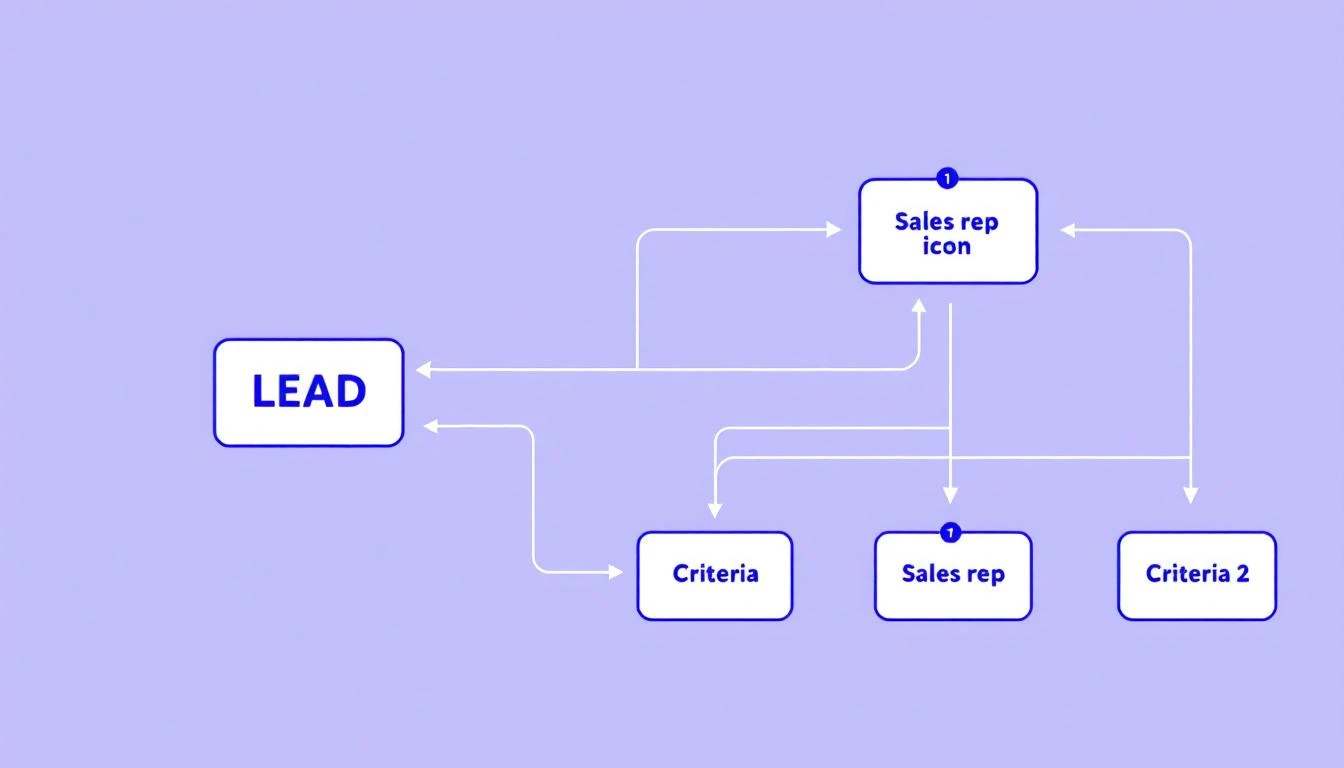
Most companies use one of these routing methods:
Round Robin
- How it works: Leads distributed equally to all reps
- The problem: Your best rep gets the same load as your newest hire. High-value leads go to reps without relevant experience.
Geographic/Territory
- How it works: Leads assigned by region or named accounts
- The problem: Territories become outdated. Hot leads sit in cold territories. Territory conflicts create friction.
First Available
- How it works: Whoever claims it first gets it
- The problem: Creates a feeding frenzy. Aggressive reps hoard leads. Less assertive reps (who might be better fits) never get chances.
Manual Assignment
- How it works: Manager reviews and assigns each lead
- The problem: Creates bottleneck. Manager goes to lunch, leads wait. Scale breaks the model entirely.
What all these miss: Context. They don't understand the lead OR the rep. They're just moving names between buckets.
What AI-Powered Routing Looks Like
Intelligent routing considers:
About the Lead:
- Company size, industry, and technographics
- Stated pain points and urgency signals
- Previous interactions with your brand
- Predicted deal size and likelihood to close
About Available Reps:
- Current capacity and workload
- Historical win rates for similar leads
- Industry/vertical expertise
- Time zone and availability
- Relationship to the account (existing contacts)
The Match:
- Which rep has the highest probability of closing THIS lead?
- Who can respond fastest right now?
- Who has relevant case studies and references?
This is exactly what GPT-5.3 Codex can evaluate—instantly.
Architecture: The AI Routing Engine
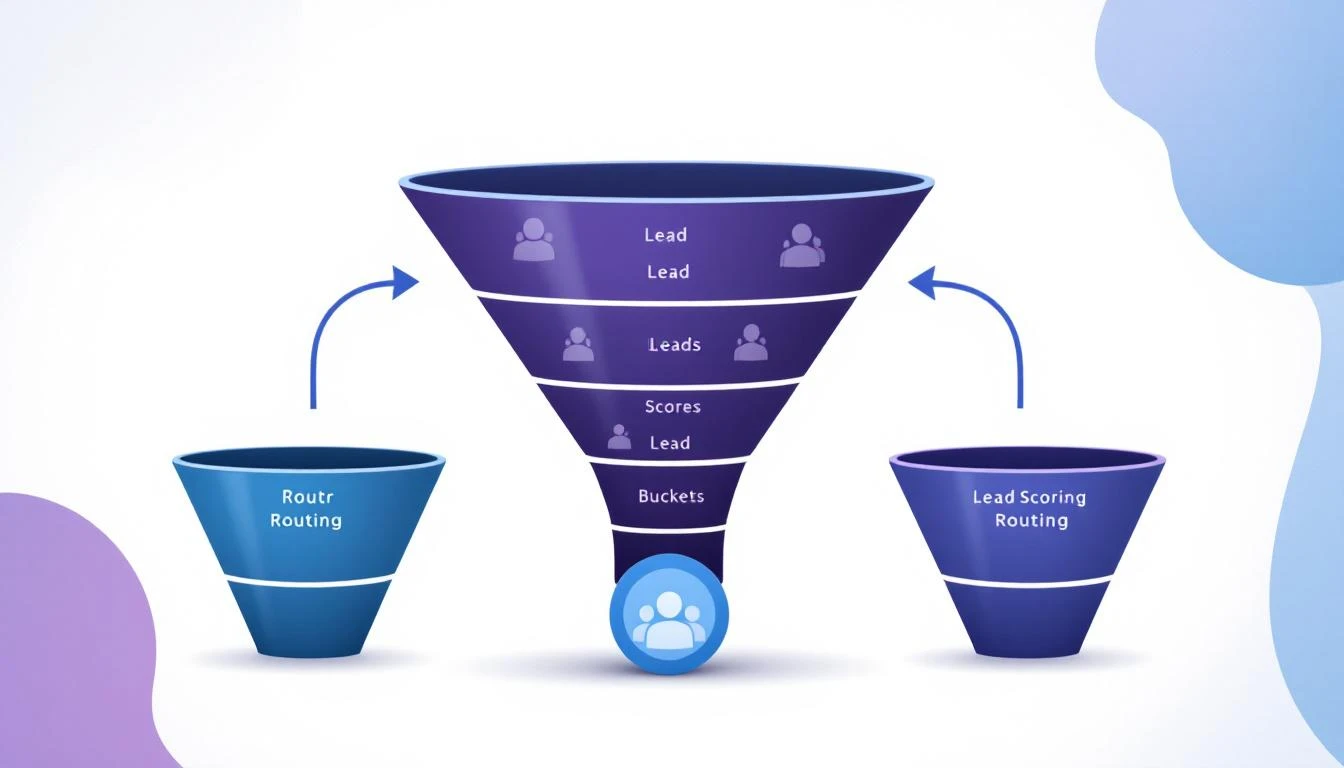
Here's how to structure your Codex-powered routing system:
┌─────────────────────────────────────────────────────────────┐
│                      Lead Sources                            │
│  (Forms, Chat, Events, Intent Data, Inbound Calls)         │
└─────────────────┬───────────────────────────────────────────┘
                  │
                  ▼
┌─────────────────────────────────────────────────────────────┐
│                   Lead Enrichment Layer                      │
│  (Clearbit, Apollo, LinkedIn, Technographics)              │
└─────────────────┬───────────────────────────────────────────┘
                  │
                  ▼
┌─────────────────────────────────────────────────────────────┐
│              Codex Routing Decision Engine                   │
│                                                              │
│  1. Score lead (fit + intent + urgency)                     │
│  2. Pull rep availability + capacity                        │
│  3. Match based on expertise + history                      │
│  4. Select optimal rep                                       │
│  5. Handle edge cases (overflow, escalation)                │
└─────────────────┬───────────────────────────────────────────┘
                  │
                  ▼
┌─────────────────────────────────────────────────────────────┐
│                     CRM Assignment                           │
│  (HubSpot, Salesforce, Pipedrive)                          │
└─────────────────┬───────────────────────────────────────────┘
                  │
                  ▼
┌─────────────────────────────────────────────────────────────┐
│              Notification & Action Layer                     │
│  (Slack alert, Email, Calendar invite, Sequence start)      │
└─────────────────────────────────────────────────────────────┘
Building with GPT-5.3 Codex
Codex's mid-turn steering makes it ideal for routing—you can adjust decisions in real-time as context changes.
Step 1: Set Up the Routing Agent
# lead_router.py
import openai
import json
from datetime import datetime
from typing import Dict, List, Optional

class CodexLeadRouter:
    def __init__(self):
        self.client = openai.OpenAI()
        self.routing_rules = self.load_routing_rules()

    def load_routing_rules(self) -> Dict:
        """Load your company's routing configuration."""
        return {
            "high_value_threshold": 50000,  # ARR threshold for enterprise routing
            "response_sla_minutes": 5,
            "max_leads_per_rep_per_day": 15,
            "expertise_tags": [
                "healthcare", "fintech", "saas", "manufacturing",
                "retail", "logistics", "cybersecurity"
            ],
            "escalation_triggers": [
                "competitor_mentioned",
                "budget_over_100k",
                "c_level_contact",
                "existing_customer"
            ]
        }

    def get_rep_roster(self) -> List[Dict]:
        """Pull current rep availability and stats from CRM."""
        # In production, this queries your CRM/database
        return [
            {
                "id": "rep_001",
                "name": "Sarah Chen",
                "status": "available",
                "current_leads_today": 8,
                "expertise": ["saas", "fintech"],
                "win_rate_ytd": 0.34,
                "avg_deal_size": 45000,
                "timezone": "America/New_York"
            },
            {
                "id": "rep_002",
                "name": "Marcus Johnson",
                "status": "available",
                "current_leads_today": 12,
                "expertise": ["healthcare", "manufacturing"],
                "win_rate_ytd": 0.28,
                "avg_deal_size": 72000,
                "timezone": "America/Chicago"
            },
            {
                "id": "rep_003",
                "name": "Emily Rodriguez",
                "status": "in_meeting",
                "available_in_minutes": 25,
                "current_leads_today": 6,
                "expertise": ["saas", "cybersecurity", "fintech"],
                "win_rate_ytd": 0.41,
                "avg_deal_size": 38000,
                "timezone": "America/Los_Angeles"
            }
        ]

    def route_lead(self, lead: Dict) -> Dict:
        """Use Codex to determine optimal routing."""

        reps = self.get_rep_roster()

        routing_prompt = f"""
        You are an expert sales operations analyst. Route this lead to the optimal sales rep.

        ## Lead Information
        {json.dumps(lead, indent=2)}

        ## Available Reps
        {json.dumps(reps, indent=2)}

        ## Routing Rules
        {json.dumps(self.routing_rules, indent=2)}

        ## Your Task
        Analyze the lead and select the best rep based on:
        1. Industry/vertical expertise match
        2. Current capacity (leads today vs max)
        3. Historical win rate for similar deals
        4. Availability for fast response
        5. Deal size alignment

        If this is a high-value or escalation-trigger lead, note that in your reasoning.

        Return JSON:
        {{
            "selected_rep_id": "rep_xxx",
            "selected_rep_name": "Name",
            "confidence_score": 0.0-1.0,
            "reasoning": "Brief explanation",
            "is_escalation": boolean,
            "escalation_reason": "if applicable",
            "recommended_action": "immediate_call|email_sequence|schedule_call",
            "talking_points": ["point 1", "point 2", "point 3"]
        }}
        """

        response = self.client.chat.completions.create(
            model="gpt-5.3-codex",  # New Feb 2026 model
            messages=[
                {"role": "system", "content": "You are a sales routing optimization engine."},
                {"role": "user", "content": routing_prompt}
            ],
            response_format={"type": "json_object"}
        )

        routing_decision = json.loads(response.choices[0].message.content)
        return routing_decision

    def apply_routing(self, lead: Dict, decision: Dict):
        """Execute the routing decision in your CRM."""

        # Update lead owner in CRM
        self.update_crm_owner(lead['id'], decision['selected_rep_id'])

        # Send notification to rep
        self.notify_rep(
            rep_id=decision['selected_rep_id'],
            lead=lead,
            talking_points=decision['talking_points'],
            action=decision['recommended_action']
        )

        # If escalation, also notify manager
        if decision['is_escalation']:
            self.notify_manager(lead, decision)

        # Start appropriate sequence
        if decision['recommended_action'] == 'email_sequence':
            self.enroll_in_sequence(lead['id'], 'inbound_nurture')

        return {"status": "routed", "decision": decision}
Step 2: Real-Time Webhook Handler
# webhook_handler.py
from flask import Flask, request, jsonify
from lead_router import CodexLeadRouter

app = Flask(__name__)
router = CodexLeadRouter()

@app.route('/webhook/new-lead', methods=['POST'])
def handle_new_lead():
    """Process incoming leads from any source."""

    lead_data = request.json

    # Enrich lead data first
    enriched_lead = enrich_lead(lead_data)

    # Get AI routing decision
    decision = router.route_lead(enriched_lead)

    # Apply the routing
    result = router.apply_routing(enriched_lead, decision)

    # Log for analytics
    log_routing_decision(enriched_lead, decision)

    return jsonify({
        "status": "success",
        "assigned_to": decision['selected_rep_name'],
        "response_time_ms": result.get('processing_time_ms')
    })

def enrich_lead(lead: Dict) -> Dict:
    """Add enrichment data from multiple sources."""

    enriched = lead.copy()

    # Add company data (Clearbit, Apollo, etc.)
    company_data = get_company_enrichment(lead.get('company_domain'))
    enriched['company_size'] = company_data.get('employees')
    enriched['industry'] = company_data.get('industry')
    enriched['technologies'] = company_data.get('tech_stack', [])
    enriched['funding'] = company_data.get('funding_total')

    # Add contact data
    contact_data = get_contact_enrichment(lead.get('email'))
    enriched['title'] = contact_data.get('title')
    enriched['seniority'] = contact_data.get('seniority')
    enriched['linkedin_url'] = contact_data.get('linkedin')

    # Add intent signals if available
    intent_data = get_intent_signals(lead.get('company_domain'))
    enriched['intent_score'] = intent_data.get('score', 0)
    enriched['intent_topics'] = intent_data.get('topics', [])

    return enriched
Step 3: Mid-Turn Steering for Edge Cases
One of Codex's killer features is mid-turn steering—adjusting the AI's approach while it's working. This is critical for routing edge cases:
def route_with_steering(lead: Dict) -> Dict:
    """Use Codex mid-turn steering for complex routing scenarios."""

    client = openai.OpenAI()

    # Start the routing conversation
    conversation = client.chat.completions.create(
        model="gpt-5.3-codex",
        messages=[
            {"role": "system", "content": "You are routing a new lead."},
            {"role": "user", "content": f"Route this lead: {json.dumps(lead)}"}
        ]
    )

    initial_decision = conversation.choices[0].message.content

    # Check if we need to steer
    if "existing_customer" in lead.get('tags', []):
        # Steer toward customer success team
        conversation = client.chat.completions.create(
            model="gpt-5.3-codex",
            messages=[
                {"role": "system", "content": "You are routing a new lead."},
                {"role": "user", "content": f"Route this lead: {json.dumps(lead)}"},
                {"role": "assistant", "content": initial_decision},
                {"role": "user", "content": "Wait—this is an existing customer. Route to their current CSM or account manager instead of new business reps."}
            ]
        )

    elif lead.get('estimated_value', 0) > 100000:
        # Steer toward enterprise team
        conversation = client.chat.completions.create(
            model="gpt-5.3-codex",
            messages=[
                {"role": "system", "content": "You are routing a new lead."},
                {"role": "user", "content": f"Route this lead: {json.dumps(lead)}"},
                {"role": "assistant", "content": initial_decision},
                {"role": "user", "content": "This deal is over $100K. Apply enterprise routing rules—senior AE only, immediate manager notification, white-glove treatment."}
            ]
        )

    return json.loads(conversation.choices[0].message.content)
Production Considerations
Speed Optimization
For sub-second routing:
- Pre-compute rep availability: Cache rep status, update every 60 seconds
- Async enrichment: Start enrichment calls in parallel
- Model selection: Use Codex for complex decisions, rules engine for simple ones
- Queue management: Handle spikes with a fast queue (Redis/SQS)
# Fast routing with pre-computed context
class FastRouter:
    def __init__(self):
        self.rep_cache = {}
        self.cache_ttl = 60  # seconds

    async def route_lead(self, lead: Dict) -> Dict:
        # Get cached rep data (< 1ms)
        reps = self.get_cached_reps()

        # Quick rules check first (< 5ms)
        quick_match = self.apply_quick_rules(lead, reps)
        if quick_match:
            return quick_match

        # Fall back to Codex for complex decisions (200-500ms)
        return await self.codex_route(lead, reps)

    def apply_quick_rules(self, lead: Dict, reps: List) -> Optional[Dict]:
        """Handle obvious cases without AI."""

        # Existing customer → their CSM
        if lead.get('is_customer'):
            csm = self.get_assigned_csm(lead['company_id'])
            if csm:
                return {"selected_rep_id": csm['id'], "reasoning": "existing_customer"}

        # Named account → account owner
        account_owner = self.get_account_owner(lead.get('company_domain'))
        if account_owner:
            return {"selected_rep_id": account_owner['id'], "reasoning": "named_account"}

        # Hot lead + one obvious best rep
        if lead.get('intent_score', 0) > 80:
            best_available = self.get_best_available_rep(reps, lead['industry'])
            if best_available and best_available['current_leads_today'] < 5:
                return {"selected_rep_id": best_available['id'], "reasoning": "hot_lead_best_fit"}

        return None  # Needs AI routing
Handling Failures
def route_with_fallback(lead: Dict) -> Dict:
    """Ensure every lead gets routed, even if AI fails."""

    try:
        # Try AI routing
        decision = router.route_lead(lead)
        return decision

    except openai.RateLimitError:
        # Fall back to round robin
        return fallback_round_robin(lead)

    except openai.APIError:
        # Fall back to rules-based
        return fallback_rules_engine(lead)

    except Exception as e:
        # Last resort: assign to manager for manual routing
        log_error(f"Routing failed for lead {lead['id']}: {e}")
        return {
            "selected_rep_id": "manager_001",
            "reasoning": "routing_failure_escalation",
            "is_escalation": True
        }
Measuring Routing Quality
Track these metrics to optimize your routing:
# routing_analytics.py
def calculate_routing_metrics(period_days: int = 30) -> Dict:
    """Measure routing effectiveness."""

    return {
        # Speed metrics
        "avg_time_to_route_ms": 340,
        "avg_time_to_first_contact_min": 4.2,
        "sla_compliance_rate": 0.94,  # % routed within 5 min

        # Quality metrics
        "routing_accuracy": 0.87,  # % of leads that stayed with initial assignment
        "rep_satisfaction_score": 4.2,  # Out of 5
        "lead_satisfaction_score": 4.5,  # From post-call surveys

        # Outcome metrics
        "conversion_rate_ai_routed": 0.24,
        "conversion_rate_manual_routed": 0.18,
        "avg_deal_size_ai_routed": 48000,
        "avg_cycle_time_ai_routed_days": 32,

        # Efficiency metrics
        "leads_per_rep_variance": 2.1,  # Lower = more balanced
        "expertise_match_rate": 0.78,  # % where rep had relevant expertise
    }
Try our AI Lead Generator — find verified LinkedIn leads for any company instantly. No signup required.
Integration with MarketBetter
If you're using MarketBetter, our Daily SDR Playbook already includes intelligent routing:
- Visitor identification → automatic enrichment → AI routing → rep notification in under 60 seconds
- Intent signals factor into routing priority
- Smart Dialer pre-loads the highest-priority leads for each rep
- No manual assignment needed—the playbook tells each rep exactly who to contact
This is the "WHO + WHAT TO DO" approach that turns signals into action.
Ready to route leads to revenue faster? See how MarketBetter automates the entire SDR workflow →