Identify Anonymous Website Visitors The Right Way
If you've ever stared at your website analytics, you know the feeling. You see a flood of traffic, but most of it vanishes without a trace. The first step to fixing this is to stop thinking of that traffic as just a number and start seeing it for what it is: a massive, untapped goldmine.
The process is about connecting the dots—using the right tools and a smart strategy to turn anonymous data points like IP addresses and browsing behavior into real company names and actionable sales intelligence. This guide provides an actionable framework to do just that.
The Hidden Value in Your Anonymous Traffic

It’s a familiar frustration for any marketer or sales leader. That analytics dashboard shows thousands of visitors, but almost none of them fill out a form. They come, they click around, and they leave.
The hard truth is that 97-98% of your website traffic is completely anonymous. They never give you a name, an email, or any sign of who they are. That staggering number represents a huge pool of missed opportunities. And with privacy shifts from Apple, Mozilla, and now Google's phase-out of third-party cookies, this challenge is only getting tougher. You can get a deeper dive into this trend over at listkit.io.
The Real Cost of Anonymity
Letting all that traffic walk away isn't just about missed leads; it's actively costing you money and holding your business back. When you're operating in the dark, the consequences are very real. Let's compare two scenarios:
| Scenario A: Operating Blind | Scenario B: With Visitor Identification |
|---|---|
| Wasted Ad Spend: You drive accounts to your site but can't prove ROI because you don't know who arrived. | Actionable Ad Spend: You identify which target accounts from your ad campaigns are landing on your site, proving ROI and enabling immediate sales follow-up. |
| Ineffective Personalization: Every visitor gets the same generic pitch, tanking engagement. | Actionable Personalization: You tailor the website experience for returning companies, showing them relevant case studies and content to boost conversion rates. |
| Missed Sales Opportunities: High-intent buyers from your dream accounts visit your pricing page, and your sales team is completely clueless. | Actionable Sales Opportunities: Your sales team gets a real-time alert the moment a target account hits the pricing page, allowing them to engage at the peak of buyer intent. |
The real challenge isn't just about lead capture. It's about understanding intent. Knowing which companies are actively researching your solutions lets you engage them at the perfect moment, turning a passive website visit into a real sales conversation.
Shifting from Passive to Active Intelligence
It's time for a mindset shift. Your website isn't just a digital brochure; it needs to become an active intelligence-gathering machine. By putting the right tech and strategies in place, you can start to ethically unmask this anonymous traffic.
This guide will walk you through the practical, no-fluff methods to identify who's on your site. We’ll cover how to connect those anonymous visits to real companies, analyze their on-site behavior to figure out who's serious, and build workflows that feed these hot leads straight to your sales team. This is how you turn anonymous data into a powerful, predictable pipeline.
Choosing Your Visitor Identification Technology
Trying to pick a visitor identification platform can feel like walking through a funhouse. Every vendor promises the world, but it's crucial to look past the flashy marketing and understand what’s actually running under the hood. The tech you choose will make or break your results.
The most basic tools still rely on reverse IP lookup, a method that matches a visitor's IP address to a company's known IP range. It’s a decent starting point, but its reliability has tanked with the rise of remote work. An IP address might point to a company, but it just as easily could be a coffee shop or a home office.
Deeper Than an IP Address
This is where more advanced platforms create separation. They use sophisticated identity graph technology, which is a fancy way of saying they connect billions of digital breadcrumbs—device IDs, hashed emails, cookies, and more—to build a persistent, unified profile of a user. The result? You get a much clearer picture of who is on your site, often down to the specific person. You can get a full breakdown of how this works in our guide to person-level visitor identification.
Good identification is only half the battle, though. The real magic happens when that data is enriched. Tools that integrate B2B data enrichment layer on crucial firmographic and demographic details, turning an anonymous signal into a highly qualified, actionable lead for your sales team.
To make sense of the options, it helps to see them side-by-side. Each technology serves a different purpose, and what's right for a startup won't be enough for a enterprise team.
Comparison of Visitor Identification Technologies
| Technology Type | Typical Accuracy | How It Works | Best For | Actionable Use Case |
|---|---|---|---|---|
| Reverse IP Lookup | Low to Medium | Matches visitor IP address to a known company IP block. | Small businesses needing basic company-level insights on a tight budget. | Identifying large companies visiting your site to inform broad marketing trends. |
| Cookie Matching | Medium | Uses third-party cookies to sync visitor data across different websites. | B2C marketing or retargeting campaigns where individual behavior is key. | Retargeting a specific user with ads for a product they viewed. |
| Identity Graph | High | Connects billions of data points (device IDs, hashed emails) to create a persistent user profile. | B2B companies focused on ABM, sales intelligence, and high-value lead generation. | Triggering a real-time alert to a sales rep when a specific decision-maker from a target account visits the pricing page. |
| Form Submissions | Very High | Captures user-provided information directly from forms on your site. | Nurturing known leads and converting inbound interest into direct conversations. | Enrolling a user in a specific email nurture sequence after they download a whitepaper. |
Ultimately, the best approach often combines these technologies. An identity graph gives you the initial signal, enrichment adds context, and a form submission confirms direct interest.
Accuracy Is Everything
Here's the brutal truth: the single most important metric is accuracy, and the gap between the best and the rest is staggering. The 2025 State of the Website Visitor Identification Industry Report found that two-thirds of providers tested had abysmal accuracy rates of just 5-30%.
Think about that. Your team could be chasing ghosts 95% of the time.
In sharp contrast, top-tier solutions hit accuracy rates between 65-85%. The best platforms typically identify 15-40% of total B2B traffic with a company match accuracy of 85-95%. You can read the full report on data accuracy to see the data for yourself.
A tool with low accuracy doesn't just give you bad data—it actively misleads your sales team, torching their time and your budget on dead-end leads. Verified accuracy isn't a "nice to have"; it's the only way to get a positive ROI.
When you're vetting vendors, you need to be direct. Don't let them hide behind vague talk of "proprietary algorithms." Get answers to these questions:
- Actionable Step: Ask Vendors to Define Their Metrics. During a demo, ask: "Can you please differentiate your identification rate from your accuracy rate?" A good vendor will answer clearly. A vague answer is a red flag.
- Data Sources: Where, specifically, does your identity graph data come from?
- Match Rate: What percentage of our total website traffic can you realistically identify?
- Accuracy Rate: What is your verified accuracy for matching a visit to the correct company and the right person?
- Compliance: How do you ensure compliance with privacy laws like GDPR and CCPA?
- Integrations: How clean is the integration with our CRM and marketing automation stack?
Choosing the right tool comes down to weighing these factors against your goals. If you're just dipping your toes in, a simple IP lookup tool might seem fine. But if you’re serious about strategic, account-based marketing, you need the precision that only a high-quality identity graph can deliver.
Decoding Visitor Intent with Behavioral Analysis
 Okay, knowing the company name behind a visit is a huge win. But the real magic happens when you figure out why they’re on your site at all. This is where you graduate from identification to interpretation, shifting the focus from "who" to "what do they actually want?"
Actions always speak louder than anonymous data. When you start tracking what visitors do—the pages they hit, the content they consume—you can read their intent and spot buying signals long before a form ever gets filled out. It’s about translating clicks into a clear story about a prospect's needs.
From Clicks to Clues
Think of it as digital body language. Every click, scroll, and download is a breadcrumb that tells you something about where they are in their buying journey. A single click is just noise, but a pattern of clicks reveals a clear narrative.
You can learn to spot high-intent accounts by watching for a few key actions. These are the behaviors that signal genuine, active interest.
Some of the most telling moves include:
- Pricing Page Visits: Anyone repeatedly checking your pricing page isn't just window shopping. They're in evaluation mode.
- Case Study Engagement: Time spent on success stories means they're trying to picture themselves using your solution to solve their own problems.
- Key Content Downloads: Grabbing a technical whitepaper or a deep-dive buyer's guide shows a much deeper level of research and commitment.
- Demo Video Views: If someone watches more than 75% of your product demo, that’s one of the strongest buying signals you can possibly get.
Once you start analyzing these patterns, you can begin to truly identify anonymous website visitors who are actively in-market, which lets you focus your team's energy where it matters most. For more on this, the team at Lift AI offers some great research on how user actions signal intent.
Building a Behavioral Scoring Model
The next step is to make all this insight actionable. A behavioral scoring model is just a system that assigns points to different on-site actions, automatically flagging the accounts that show the most promise. This isn't guesswork; it's a data-driven way to surface your hottest leads.
Setting up a basic model is pretty straightforward. You simply assign higher scores to actions that are more closely tied to a purchase. Here’s a quick way to think about it:
| Low-Intent Behavior (Lower Score) | High-Intent Behavior (Higher Score) | Actionable Next Step for Sales |
|---|---|---|
| Visited the blog homepage | Read three articles on a specific topic | Add to a topic-specific nurture email sequence. |
| Clicked on the "About Us" page | Visited the "Integrations" page | Send a targeted email mentioning how your tool integrates with their tech stack. |
| Spent 30 seconds on the homepage | Spent over 3 minutes on a product page | Trigger an alert for the account owner to review their activity. |
| Downloaded a top-of-funnel eBook | Watched a full demo video | Immediately route to sales as a Marketing Qualified Lead (MQL) for direct follow-up. |
This scoring system works quietly in the background, building a prioritized list of accounts for your sales team. Instead of having them blast out cold calls to a massive list, they can zero in on prospects who have already raised their hands with their behavior.
Imagine your sales team getting an instant alert: "An account from your target list just watched the entire demo video and is now on the pricing page." That's the power of behavioral analysis—it turns your website into a proactive lead generation engine.
This approach also drives smarter, more relevant conversations. Knowing what a prospect actually cares about lets your team craft outreach that hits the mark every time. For more on this, check out our guide on developing effective marketing personalization strategies. This is how you stop guessing and start turning raw data into closed deals.
Putting Your Visitor Identification Workflow Into Action
Okay, so you've picked your tech and you're getting a feel for reading the digital body language of your visitors. Now for the fun part: making that intelligence do something. A powerful tool collecting dust is just an expensive dashboard. The real value is unlocked when you weave this data directly into the daily rhythm of your sales and marketing teams.
It all starts with a simple piece of code. Your visitor identification provider will hand you a small tracking script, usually just a snippet of JavaScript. This is typically a one-time setup. You can either pop it directly into your website's header or, if you're using one, deploy it through a tag manager. Quick and simple.
Think of this script as the central nervous system for your entire identification strategy. It’s what collects the raw data that fuels everything else. As soon as it goes live, your platform will start connecting the dots between those anonymous visits and real-world company profiles.
Create a Seamless Data Flow
With data pouring in, the immediate priority is getting it to your team where they already work. This means setting up clean integrations with the tools they live in every day—most importantly, your Customer Relationship Management (CRM) platform.
Top-tier identification platforms offer native integrations with CRMs like Salesforce and HubSpot. This is huge. It allows you to automatically push rich, identified company data straight into your system of record. Instead of your sales reps manually digging for new leads, the insights just appear right where they manage their pipeline. This is non-negotiable for building a scalable process, and you can get a deeper look at connecting these systems in our guide on effective customer data platform integration.
The goal here is to eliminate friction. The easier it is for your team to access and act on this intelligence, the more deals you'll actually close from it.
Your identification tool is the scout that spots an opportunity. Your CRM is the command center where the plan of attack gets organized. If the link between them is broken, the message never gets through.
Light Up Real-Time Sales Alerts
One of the most powerful things you can do with this data is create real-time alerts. These are automated pings that fire the instant a high-value account does something meaningful on your website.
Here are a few high-impact alert workflows you can build right away:
- Actionable Workflow 1: Target Account Alert. Trigger: A company on a rep’s named account list visits any page. Action: Send an instant Slack message to that account owner with a link to the company's activity log.
- Actionable Workflow 2: High-Intent Behavior Alert. Trigger: Any identified company with >50 employees spends more than 60 seconds on the pricing page. Action: Automatically create a "High-Intent" task in your CRM for the appropriate rep to follow up within 24 hours.
- Actionable Workflow 3: Competitive Alert. Trigger: A known competitor's domain is identified on your site. Action: Send a summary email to a specific list of marketing and sales leaders.
These alerts flip the switch for your sales team, moving them from reactive to proactive. They can now engage prospects at the absolute peak of their interest.
Finally, don't forget about marketing. This data is gold for your ad campaigns. You can build dynamic audiences based on the companies your platform identifies, allowing you to launch razor-sharp retargeting campaigns on platforms like LinkedIn. Suddenly, you're serving ads only to companies that just showed they're interested. This closes the loop, turning anonymous traffic into a warm, engaged audience you can nurture and win.
Using Visitor Data Ethically and Building Trust
The power to identify anonymous visitors isn't just a sales tactic; it's a huge responsibility. How you handle this data is the difference between building a lasting relationship and completely eroding customer trust. One wrong move and your brand’s reputation takes a serious hit.
The guiding principle here is simple: use what you learn to create a better, more relevant experience. The goal is helpful personalization, not creepy surveillance. It all comes down to being upfront about what you're collecting and giving visitors clear control over their information.
Navigating the Regulatory Landscape
Let's be clear: privacy isn't optional anymore. Rules like GDPR in Europe and CCPA in California have drawn sharp lines in the sand for how businesses handle personal data. Ignoring them can lead to massive fines and a public relations nightmare.
Making sure you're on the right side of the law is critical, especially when navigating global privacy regulations. And while B2B data is often viewed differently than consumer data, the core principles of transparency and consent are non-negotiable.
Here’s a practical checklist to keep your visitor identification program ethical and compliant:
- Actionable Step: Update Your Privacy Policy. Spell it out. Clearly state that you use technology to identify visiting companies for B2B marketing. Explain what data you collect (like IP addresses and browsing behavior) and what you do with it.
- Actionable Step: Implement Clear Consent. No ambiguous language. Use cookie banners that give users a real choice to opt-in or opt-out, especially in regions where the law demands it. Compare your banner's language to industry leaders. Is it as clear and simple as theirs?
- Actionable Step: Anonymize When You Can. Not every insight needs to be tied to a specific person. For broader trend analysis, use aggregated or anonymized data whenever possible.
This infographic breaks down the typical flow of processing visitor data, from the initial tracking all the way to taking action.
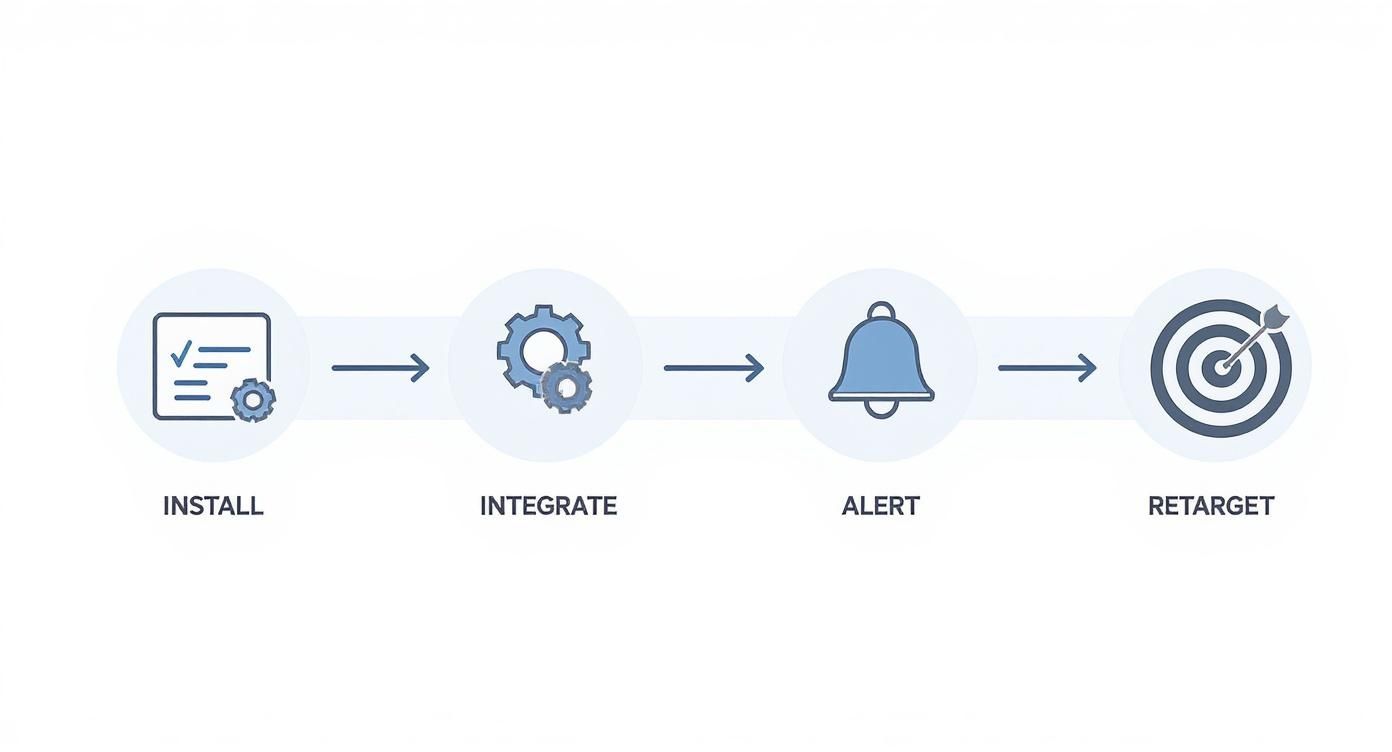
Think of each step in this process as a checkpoint where you need to double-down on data ethics to maintain trust.
From Compliance to Customer Confidence
Just ticking the legal boxes isn't the goal. The real win is earning genuine confidence from your audience. When visitors trust that you're using their data to actually help them, they're far more likely to engage.
Transparency is the new currency of marketing. When you're open about how you identify anonymous website visitors, you're not just complying with the law—you're demonstrating a respect for your audience that builds loyalty and long-term value.
This philosophy has to trickle down to your sales and marketing outreach. Ditch the generic "I saw you were on our website" line. Instead, lead with value based on the content they viewed. Compare these two approaches:
| Creepy & Ineffective | Helpful & Actionable |
|---|---|
| "Hi, I saw someone from your company was looking at our pricing page." | "Hi, I'm reaching out because companies in the manufacturing space are often evaluating solutions like ours for [solve X problem]. I thought you might find this case study on how [Peer Company] achieved [Y result] useful." |
The second approach turns a potentially invasive interaction into a helpful, relevant conversation. You're respecting their intelligence and privacy, and in doing so, turning ethical data use into a powerful competitive advantage.
Unpacking The Details: Common Questions About Visitor Identification
Jumping into visitor identification always brings up a few critical questions. Is this even legal? How good is the data, really? And once I have it, what am I supposed to do with it? Let's get those sorted out so you can build a strategy that’s not just effective, but also trustworthy.
Is It Legal to Identify Anonymous Website Visitors?
Yes, for B2B marketing, it’s generally legal—but with a huge asterisk. You have to operate strictly within privacy regulations like GDPR and CCPA.
It all comes down to transparency. Your website's privacy policy needs to be crystal clear, stating that you use technology to identify visiting companies, which is usually based on their IP addresses. If you're dealing with jurisdictions that demand explicit consent, your site has to get a clear opt-in from users before any tracking kicks off.
Most B2B tools work by matching an IP address to a company profile, which is considered public business information and typically keeps you in the clear. Still, it's absolutely crucial to work with a reputable provider who lives and breathes this stuff and puts legal compliance first.
How Accurate Are Visitor Identification Tools?
This is the make-or-break question, and the answer is: it varies wildly. Accuracy is everything.
A lot of the cheaper, low-end tools have frankly dismal accuracy rates, sometimes landing as low as 5-30%. Using data like that just sends your sales team on wild goose chases and burns their trust. It’s one of the most important things to grill a vendor on when you're comparing options.
On the other end of the spectrum, the top-tier platforms that use advanced identity graphs can hit 65-85% accuracy when identifying the actual person and up to 95% accuracy matching a visit to the right company. The difference is night and day.
A pro tip when you're vetting a vendor: always ask them to separate their identification rate (how many visitors they can put a name to) from their accuracy rate (how often that name is actually correct). Get it in writing, then run a trial to see the data quality for yourself. Don't take their word for it.
What Should I Do with the Data Once I Identify a Visitor?
Data sitting in a dashboard is worthless. You have to put it to work. The information you get from visitor identification should immediately plug into your sales and marketing workflows to turn those insights into actual revenue.
Here’s where the rubber meets the road:
- Actionable Step: Enrich and Route Leads. The first step is to take the identified company data and enrich it with contact info for the right decision-makers. Then, get those hot leads routed straight to the right sales rep in your CRM. No delays.
- Actionable Step: Set Up Real-Time Alerts. This is a game-changer. Create automated Slack or email pings for your sales team the moment a target account hits a key page—think pricing, case studies, or a demo request. This lets them jump in with immediate, relevant outreach.
- Actionable Step: Personalize the Experience. Use the data to tailor what returning visitors see. If a company from the manufacturing industry comes back, show them a case study from a peer. It’s a simple way to show you’re paying attention.
- Actionable Step: Launch Targeted Ads. Finally, use this data to build custom audiences for razor-sharp ad campaigns on platforms like LinkedIn. You'll stop wasting ad spend on companies that have zero interest and focus only on those already checking you out.
Ready to stop guessing and start converting your anonymous traffic into a real sales pipeline? marketbetter.ai uses an advanced, AI-powered identity graph to pinpoint high-intent accounts on your site and deliver actionable insights straight to your team. See what you're missing at https://www.marketbetter.ai.