7 Best Omnichannel Marketing Example Breakdowns for 2025
Omnichannel marketing isn't just about being on multiple channels; it's about creating a unified, seamless customer conversation across all of them. A multichannel strategy simply offers various ways to engage, but a true omnichannel approach integrates them. The customer's cart follows them from their phone to their laptop, a store associate knows their online wishlist, and support tickets are resolved without repeating information. To make it look this easy requires a complex, data-driven strategy.
This article moves beyond theory to dissect 7 powerful omnichannel marketing example breakdowns from leading brands and platforms. We will analyze their specific strategies, compare their approaches, and provide actionable takeaways you can use to build your own cohesive customer journeys. Each breakdown will show you exactly how these companies connect disparate touchpoints and what you can do to replicate their success.
To understand the technical aspects that enable a truly seamless customer journey, exploring specific platform omnichannel features is essential. Get ready to see what a truly integrated customer experience looks like in practice and learn how to replicate these successes in your own marketing efforts.
1. Amazon: A Deep Dive into Omnichannel Case Studies
When searching for a detailed omnichannel marketing example, starting with foundational knowledge is crucial. Amazon serves as the world's largest digital bookstore, offering an unparalleled collection of books, case studies, and strategic guides dedicated to this very topic. While other platforms offer articles, Amazon provides access to comprehensive, long-form content from marketing experts, academics, and industry veterans.
Unlike a standard Google search that returns a mix of blog posts and ads, Amazon’s platform is structured to help you evaluate and select in-depth resources. You can instantly compare frameworks, check author credentials, and read peer reviews from other marketing professionals. This curated experience is ideal for anyone looking to move beyond surface-level definitions and into actionable, strategic analysis.
Why It Excels for Finding Examples
Amazon’s primary advantage is its sheer volume and user-driven filtering system. The platform allows for a more targeted research process than general search engines.
- Massive Selection: Access thousands of titles, from academic textbooks to practical handbooks filled with real-world case studies of omnichannel success.
- User-Generated Vetting: Leverage thousands of reader ratings and detailed reviews to gauge a book's quality and relevance before purchasing. This is a significant advantage over single-author blogs.
- "Look Inside" Feature: Preview chapters, tables of contents, and indexes to confirm a book contains the specific examples and strategic breakdowns you need.
Actionable Tips for Using Amazon
To maximize your search for a powerful omnichannel marketing example, use the platform strategically.
- Use Specific Search Queries: Instead of "omnichannel marketing," try "omnichannel retail case studies," "B2B omnichannel strategy," or "omnichannel customer journey examples." This will surface more targeted and useful content.
- Filter by Publication Date: Ensure the examples are current by filtering your search results to show books published in the last 1-2 years. Omnichannel tactics evolve quickly.
- Check Kindle Samples: Download free Kindle samples to your phone or desktop to get a substantial preview of the content before committing to a purchase.
| Feature Comparison | Amazon | General Blog Search |
|---|---|---|
| Content Depth | High (full books, case studies) | Variable (often surface-level) |
| Vetting | Strong (reviews, ratings) | Weak (author bias is common) |
| Structure | Organized (chapters, index) | Unstructured |
| Cost | Varies (free samples, affordable eBooks) | Free |
While some books may present dated information, the ability to sort by publication date and read recent reviews mitigates this risk. For professionals seeking vetted, in-depth examples to model their strategies after, Amazon remains the most comprehensive and reliable starting point.
Website: https://www.amazon.com
2. Coursera: Structured Learning with Real-World Applications
For those seeking a more academic and structured approach to finding an omnichannel marketing example, Coursera offers a powerful alternative. The platform hosts university-backed courses, such as the Wharton School's Omnichannel Retail Strategy Specialization, which moves beyond theory and into guided application. This specialization is designed to teach professionals how to apply omnichannel concepts using detailed case studies from brands like Disney and Starbucks.
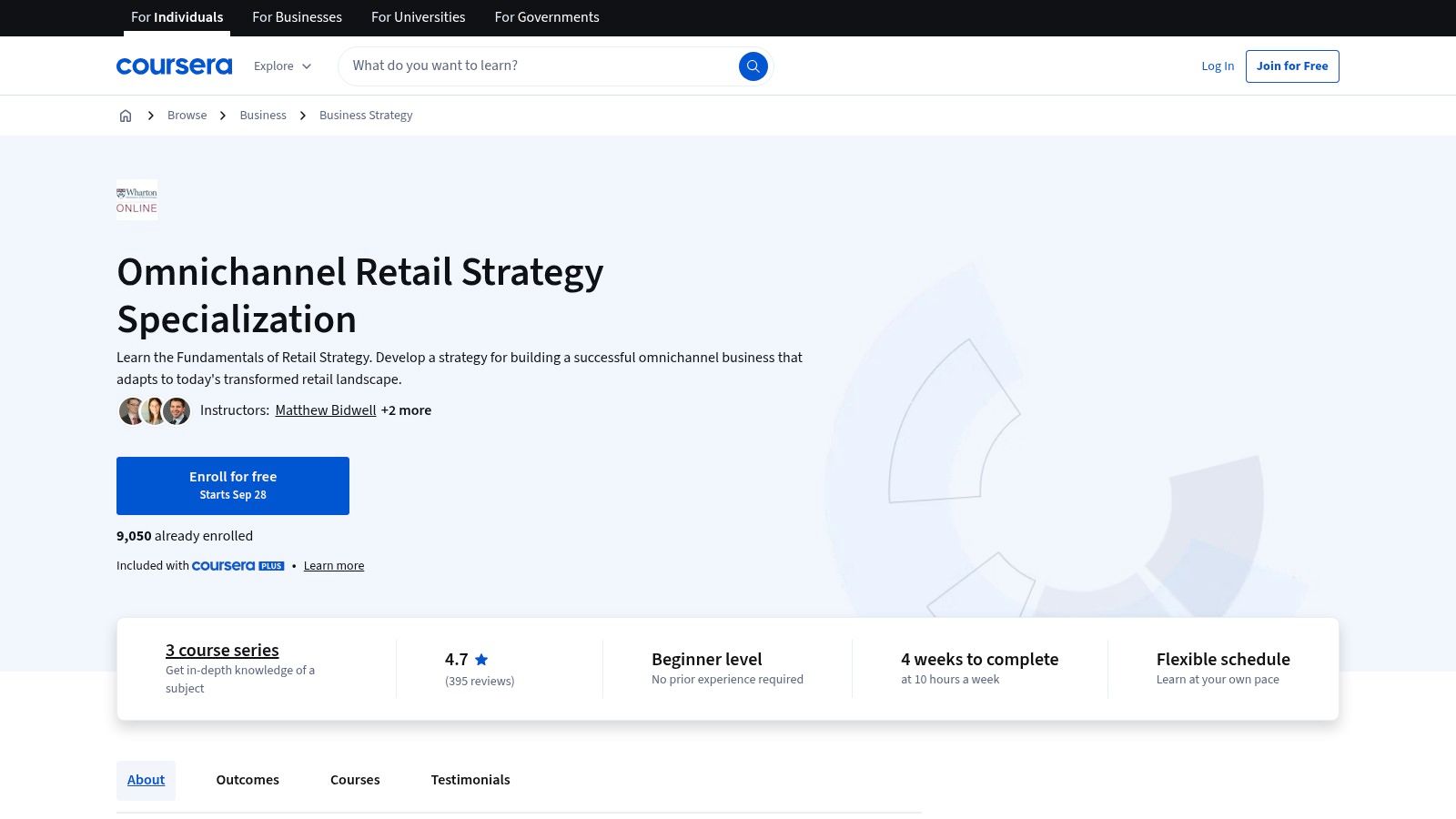
Unlike passively reading a blog post, Coursera provides a hands-on learning environment. The platform’s courses include video lectures, readings, and graded assignments that require you to analyze and deconstruct successful strategies. This structured format is ideal for marketing professionals who want not only to see examples but also to build the analytical skills needed to implement similar tactics in their own organizations.
Why It Excels for Finding Examples
Coursera's primary strength is its rigorous, curriculum-based approach combined with flexible, self-paced learning. It offers a clear path from understanding concepts to applying them.
- University-Vetted Content: Courses are developed by top institutions like the Wharton School, ensuring the examples and frameworks are credible and academically sound.
- Project-Based Learning: The specializations often culminate in a hands-on project where you apply omnichannel principles to a real-world business problem.
- Expert-Led Instruction: Learn directly from professors and industry experts who break down complex case studies into digestible lessons.
- Professional Certification: Earn a shareable certificate upon completion to showcase your expertise in omnichannel strategy to employers and professional networks.
Actionable Tips for Using Coursera
To get the most value from Coursera for finding an omnichannel marketing example, approach it like a professional development tool.
- Audit Courses First: Many courses, including the Wharton specialization, allow you to audit the content for free. This lets you access the video lectures and readings to see the examples before committing to the paid certificate track.
- Focus on Specializations: Look for multi-course "Specializations" instead of individual courses for a more comprehensive and in-depth exploration of the topic.
- Engage with Discussion Forums: Use the student forums to ask questions and discuss case studies with peers and instructors, gaining different perspectives on the strategies presented.
| Feature Comparison | Coursera Specialization | General Marketing Blog |
|---|---|---|
| Content Depth | High (structured curriculum, projects) | Variable (often single-focus articles) |
| Vetting | Strong (university-backed) | Weak (author opinion, sponsored content) |
| Structure | Organized (modules, graded tasks) | Unstructured |
| Cost | Subscription-based (free audit option) | Free |
While some case studies may use simulated data rather than live metrics, the platform's academic rigor ensures the strategic principles are sound. For marketers seeking a guided, educational experience that translates directly into applicable skills, Coursera provides an unmatched learning environment.
Website: https://www.coursera.org/specializations/wharton-retail-strategy
3. HubSpot: Your Hub for Actionable Omnichannel Frameworks
For those seeking a practical omnichannel marketing example without the commitment of purchasing a book, HubSpot is an indispensable resource. It offers a rich library of free articles, templates, webinars, and tools focused on omnichannel implementation. This makes it an ideal destination for marketers who need to quickly translate theory into action.
Unlike platforms that only provide theoretical discussions, HubSpot equips you with tangible assets. Their content often breaks down how well-known brands like Disney and Sephora orchestrate their customer experiences. More importantly, it provides downloadable templates for mapping out your own customer journeys, turning abstract concepts into concrete project plans. This blend of inspiration and application is what sets HubSpot apart as a go-to educational hub.
Why It Excels for Finding Examples
HubSpot's strength lies in its ability to bridge the gap between examples and execution. The platform is designed to not only show you what good omnichannel looks like but also give you the tools to build it yourself.
- Curated Brand Breakdowns: Access detailed analyses of successful omnichannel strategies from leading consumer brands, updated regularly for relevance.
- Free Journey Mapping Templates: Download ready-to-use templates to visually orchestrate your own omnichannel customer journeys, saving significant time.
- On-Demand Webinars: Watch expert-led sessions that dive deep into the tactics and technologies behind effective omnichannel campaigns.
Actionable Tips for Using HubSpot
To get the most value from HubSpot, focus on its practical tools rather than just reading articles.
- Download and Customize Templates: Don't just read about customer journeys; actively map your own using their free templates as a starting point. This is the first step to making the strategy real for your business.
- Filter by Content Type: Use the blog's search functionality to find "templates," "webinars," or "guides" specifically related to omnichannel to access the most actionable assets.
- Analyze Their Use Cases: Pay attention to how HubSpot positions its own software as a solution. These case studies provide insight into how a CRM can enable person-level identification and seamless cross-channel experiences. You can learn more about HubSpot's approach to identity resolution and its impact on omnichannel strategies.
| Feature Comparison | HubSpot | General Marketing Blogs |
|---|---|---|
| Content Depth | Medium-High (templates, webinars) | Variable (often surface-level) |
| Vetting | Strong (in-house expert content) | Weak (author bias is common) |
| Actionability | High (downloadable tools) | Low (mostly theoretical) |
| Cost | Free (some content is gated) | Free |
While some of the best resources require an email signup, the value provided in return is substantial. For marketing professionals and teams needing to quickly build and deploy an omnichannel strategy, HubSpot offers the most direct path from learning to doing.
Website: https://blog.hubspot.com/service/omni-channel-experience
4. Shopify: From Inspiration to Omnichannel Implementation
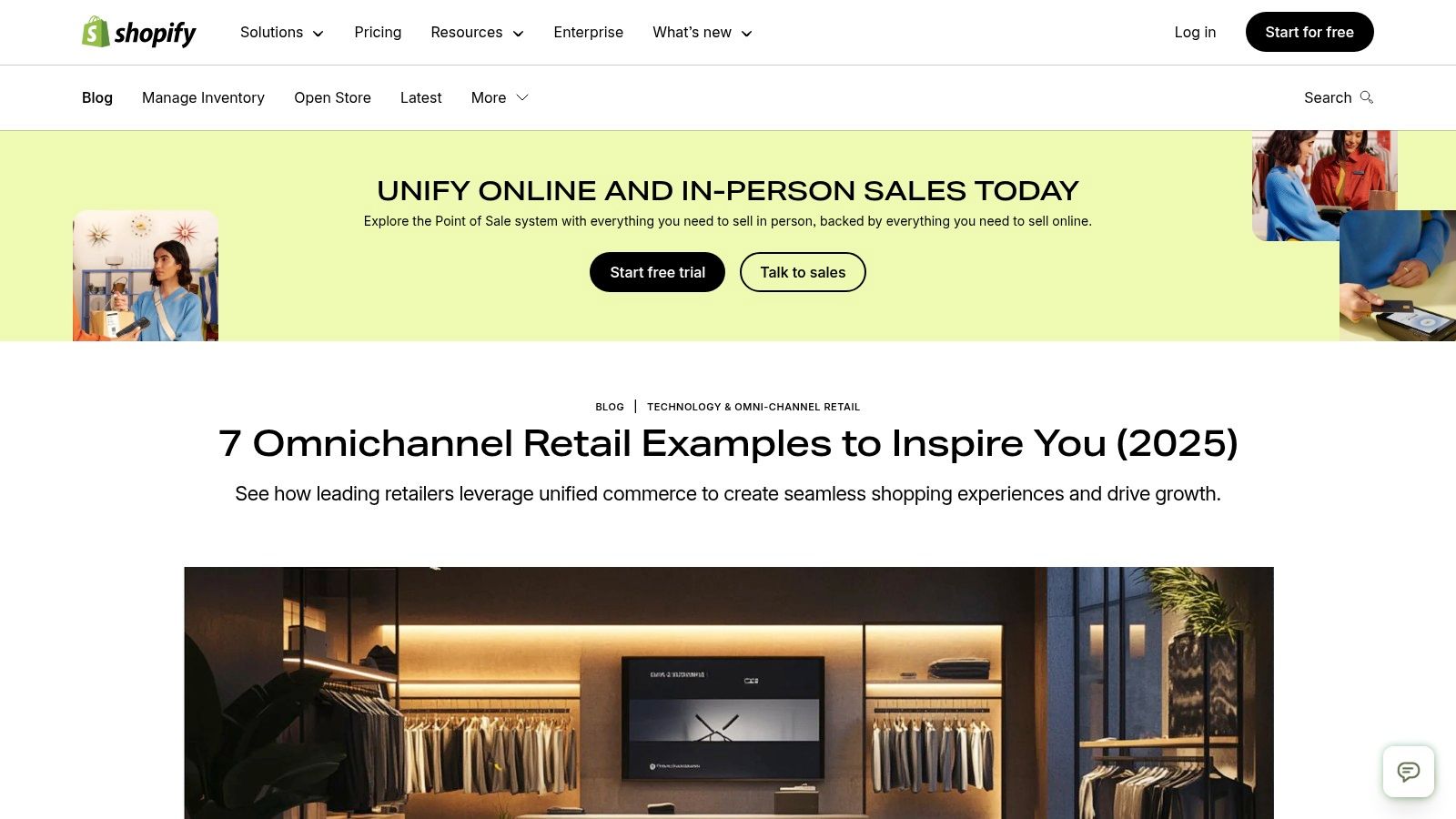
For businesses seeking a practical omnichannel marketing example, Shopify offers a unique combination of inspiration and execution. The platform showcases real-world brand case studies that detail how retailers unified their online stores, physical point-of-sale (POS), and social commerce channels. Unlike purely informational blogs, Shopify connects these success stories directly to the tools that made them possible.
This approach transitions the concept of omnichannel from an abstract strategy to a tangible business model. Users can read about a brand's success with curbside pickup and then immediately explore the Shopify POS features and app integrations required to implement it. This dual focus on "how they did it" and "how you can do it" makes it an invaluable resource for entrepreneurs and marketing professionals ready to take action.
Why It Excels for Finding Examples
Shopify’s strength lies in demonstrating achievable omnichannel strategies powered by its own ecosystem. The platform provides a clear pathway from case study to implementation, which is a distinct advantage over theoretical articles.
- Actionable Case Studies: Each example is a brand actively using Shopify, providing a transparent look at how features like unified inventory and social selling work in practice.
- Integrated Toolset: It presents a native POS system, extensive app marketplace, and logistics support (BOPIS/BOPAC), showing exactly what's needed to build a similar experience.
- Unified Commerce Focus: The examples emphasize a seamless customer journey, from an Instagram ad to an in-store purchase, all tracked within a single system.
Actionable Tips for Using Shopify
To get the most out of Shopify’s resources, focus on both the strategic narrative and the underlying technology.
- Deconstruct the Customer Journey: As you read a case study, map out the customer's path. Note every touchpoint, from social media discovery to the final sale, and identify the Shopify feature enabling it.
- Explore the App Ecosystem: If a case study mentions a specific function (like loyalty programs or advanced inventory), search the Shopify App Store to find the exact tools they used. This turns inspiration into a concrete shopping list.
- Use Case Studies for Your Business Case: Leverage these real-world examples to justify technology investments to stakeholders, showing proven ROI from other merchants. You can learn more about how successful brands leverage platforms like Shopify.
| Feature Comparison | Shopify Examples | Marketing Blogs |
|---|---|---|
| Content Focus | Platform-driven implementation | Broad strategic theory |
| Actionability | High (linked tools and apps) | Low (often lacks specific tools) |
| Perspective | Merchant-centric (real results) | Analyst-centric (observations) |
| Cost | Free (for case studies) | Free |
While the examples are inherently platform-centric, they offer an unparalleled, replicable blueprint for building an omnichannel strategy. For businesses wanting to see how theory translates into sales, Shopify provides the most direct and actionable examples available.
Website: https://www.shopify.com/retail/omnichannel-retail-examples
5. Salesforce Service Cloud: Bridging Marketing and Service
To truly understand an omnichannel marketing example, one must look beyond campaigns and into the technology that powers seamless customer interactions. Salesforce Service Cloud provides the operational backbone for connecting marketing efforts with real-time customer service. It enables businesses to manage and route customer queries from any channel, ensuring the conversation continues fluidly whether it started on social media, email, or a phone call.
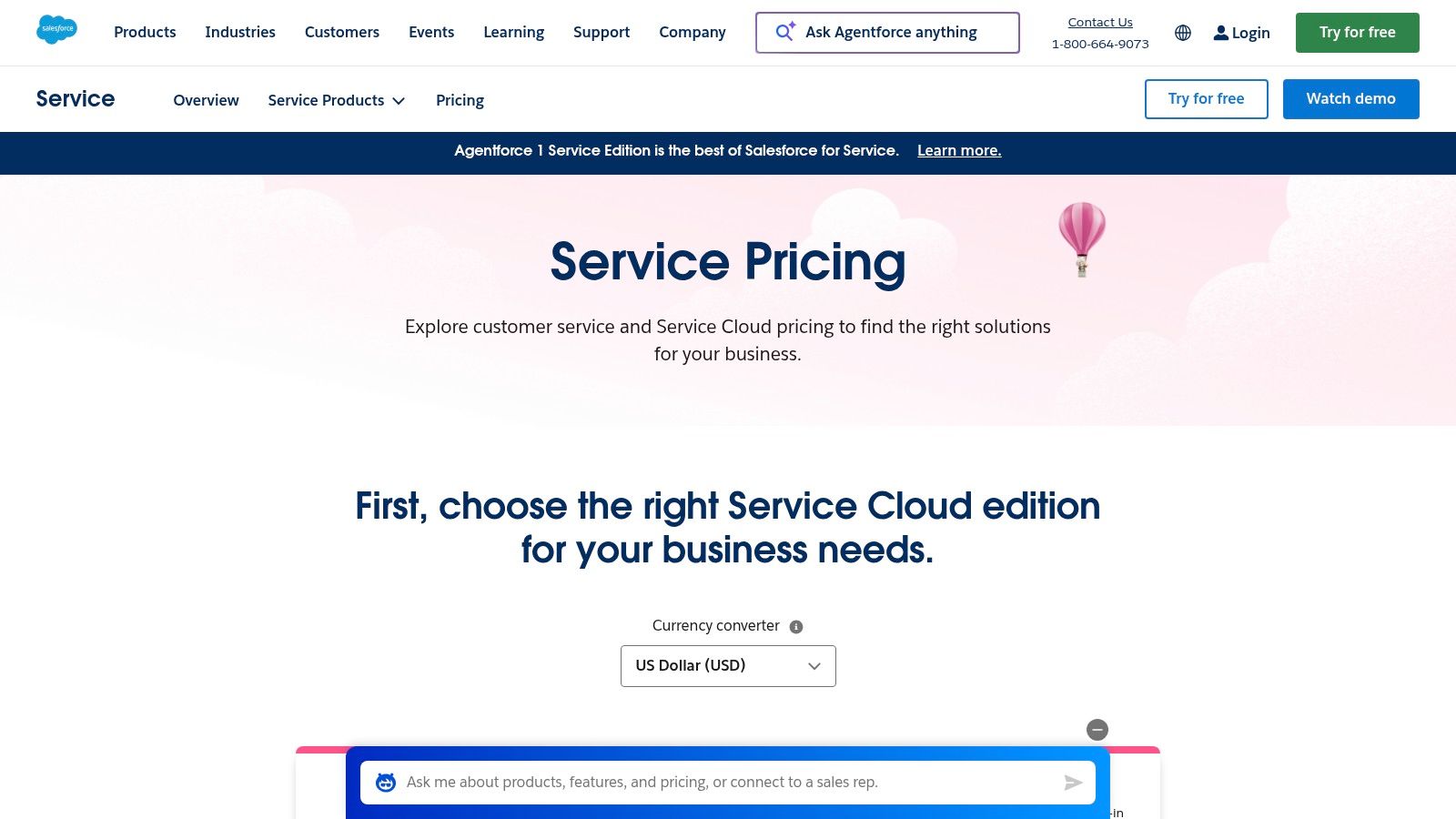
Unlike platforms focused solely on marketing automation, Service Cloud integrates support touchpoints directly into the customer profile. This gives both marketing and service teams a unified view of every interaction, preventing disjointed experiences where a customer has to repeat information. For professionals mapping out a true end-to-end omnichannel strategy, exploring how a tool like Service Cloud handles post-conversion engagement is essential.
Why It Excels for Omnichannel Execution
Salesforce Service Cloud's strength lies in its robust, enterprise-grade routing and workload management, which ensures marketing promises are met with exceptional service. It transforms support from a cost center into a core part of the customer journey.
- Unified Agent Experience: Consolidates interactions from voice, messaging, and digital channels into a single console, giving agents full context on a customer's marketing history.
- Intelligent Omni-Channel Routing: Automatically directs cases to the right agent based on skill, availability, and workload, ensuring prompt and effective resolutions.
- Comprehensive Analytics: Provides dashboards that track service metrics across all channels, allowing marketers to see how support interactions impact customer loyalty and lifetime value.
Actionable Tips for Using Salesforce Service Cloud
To leverage this platform for a holistic omnichannel strategy, focus on integrating its capabilities with your marketing goals.
- Map Customer Service Journeys: Use its tools to outline how inquiries initiated from marketing campaigns (e.g., a chatbot on a landing page) are routed and resolved. This connects marketing actions to service outcomes.
- Explore the AppExchange: Look for integrations that connect your specific marketing automation tools (like Pardot or Marketo) directly with Service Cloud to create a seamless data flow.
- Analyze Pricing Tiers: Carefully review the different pricing editions to identify which one includes the necessary "Omni-Channel" features for your specific use case, as these are critical for execution.
| Feature Comparison | Salesforce Service Cloud | Standard Help Desk Software |
|---|---|---|
| Channel Integration | Native (voice, chat, social, email) | Often siloed or requires add-ons |
| Routing Logic | Advanced (skills-based, workload) | Basic (round-robin or manual) |
| Marketing Integration | Deep (part of unified CRM) | Limited (basic data sync) |
| Cost | Higher (per-user, tiered plans) | Lower (often simpler pricing) |
While the platform’s implementation can be complex and its pricing is at a premium, its ability to unify marketing and service is unmatched for enterprises. For teams looking to build a resilient omnichannel experience that extends beyond the initial sale, Salesforce Service Cloud offers the foundational technology. You can explore a detailed case study to see how TWNEX achieved this synergy.
Website: https://www.salesforce.com/service/pricing/
6. Adobe Journey Optimizer: Orchestrating the Enterprise Omnichannel Experience
When an omnichannel marketing example needs to be executed at an enterprise scale, the conversation shifts from individual tools to unified orchestration platforms. Adobe Journey Optimizer is an industry-leading solution built for large organizations that need to manage complex, real-time customer journeys across a vast array of digital and physical touchpoints. It moves beyond simple campaign management to offer a centralized hub for data, decisioning, and delivery.
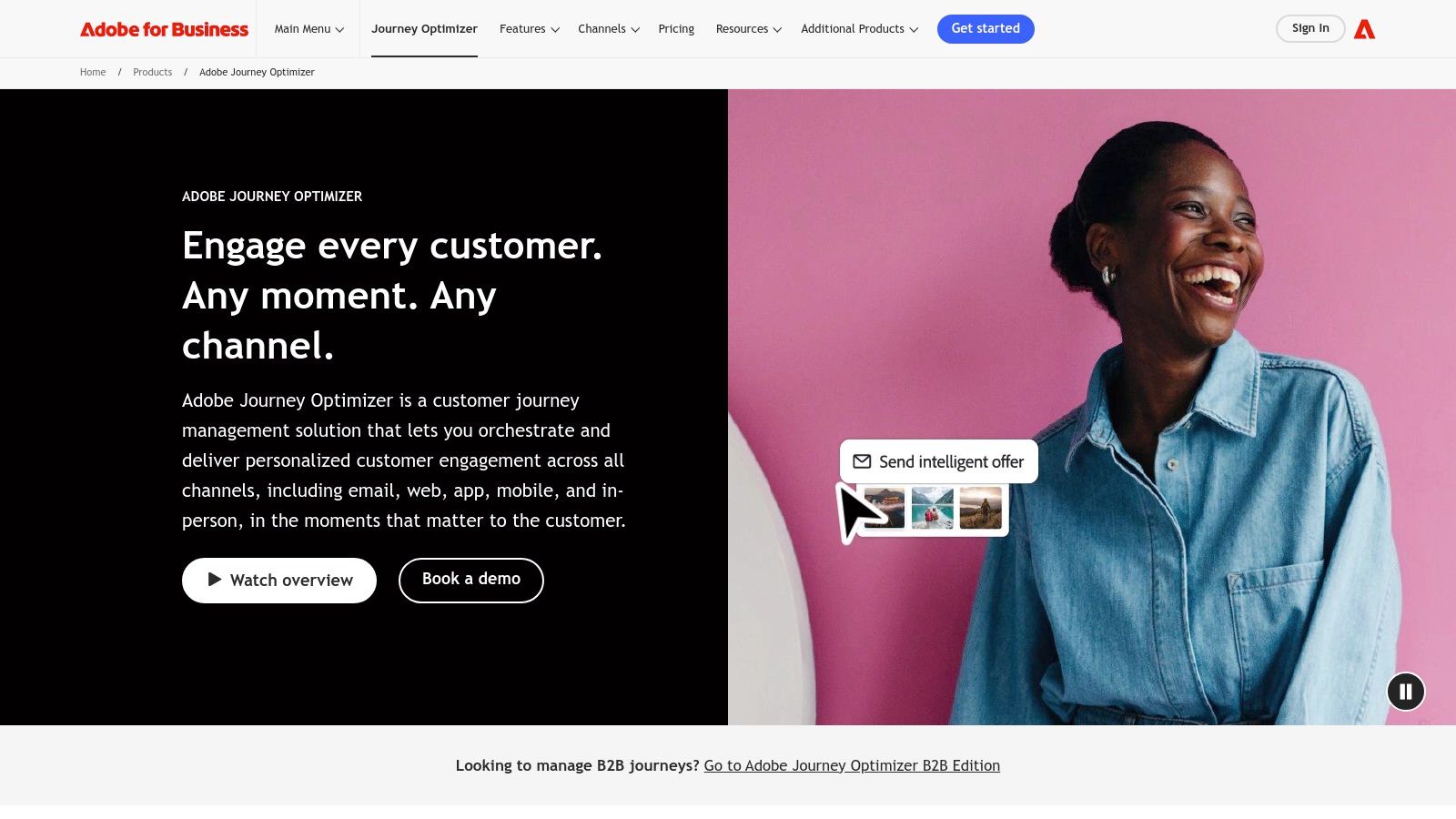
Unlike point solutions that handle a single channel like email or SMS, Adobe Journey Optimizer is engineered to unify customer profiles from disparate sources and use that data to trigger personalized interactions at the exact right moment. Its visual journey canvas allows marketers to design, test, and deploy sophisticated workflows that adapt to customer behavior in real time, making it a powerful engine for building a truly connected experience.
Why It Excels for Omnichannel Execution
Adobe’s strength lies in its deep integration with the Adobe Experience Cloud and its ability to handle immense volumes of data and customer interactions. This makes it an ideal platform for enterprises aiming to deliver hyper-personalized experiences.
- Real-Time Unified Profile: It consolidates data from CRM, analytics, and other sources into a single, continuously updated customer profile.
- AI-Powered Decisioning: The platform uses artificial intelligence to determine the next best action or offer for each individual, optimizing for business goals.
- Native Cross-Channel Support: Seamlessly orchestrate messages across email, SMS, push notifications, in-app messages, and web channels from one interface.
Actionable Tips for Using Adobe Journey Optimizer
To effectively leverage this powerful platform, teams must focus on data strategy and iterative testing.
- Start with Data Unification: Prioritize connecting your key customer data sources to build a robust unified profile. A journey is only as good as the data powering it. This is your foundational action item.
- Map a Core Customer Journey: Instead of trying to orchestrate everything at once, select one high-impact journey (e.g., cart abandonment or new user onboarding) to build and optimize first.
- Utilize AI Experimentation: Use the built-in AI tools to A/B test different paths, messages, and timing within your journeys to continuously improve performance.
| Feature Comparison | Adobe Journey Optimizer | Standard Marketing Automation |
|---|---|---|
| Data Integration | Deep (real-time, unified profile) | Basic (list-based, often siloed) |
| Personalization | 1:1, AI-driven | Segment-based |
| Channel Scope | Native cross-channel orchestration | Primarily email-focused with add-ons |
| Cost & Complexity | High (quote-based, requires resources) | Low to Medium (SaaS pricing) |
The primary drawbacks are the significant cost and implementation complexity, which place it out of reach for most small to mid-sized businesses. However, for large enterprises seeking a scalable, governed, and intelligent platform to build a true omnichannel marketing example from the ground up, Adobe Journey Optimizer is a top-tier choice.
Website: https://business.adobe.com/products/journey-optimizer/adobe-journey-optimizer.html
7. Harvard Business Review Store
When you need an omnichannel marketing example backed by rigorous academic research and strategic business analysis, the Harvard Business Review (HBR) Store is an indispensable resource. It shifts the focus from purely tactical descriptions to high-level strategic frameworks, profitability models, and leadership perspectives. HBR provides access to concise, data-driven articles, case studies, and reports authored by leading academics and industry consultants.
Unlike general marketing blogs that may offer anecdotal evidence, HBR delivers content grounded in quantitative and qualitative research. This makes it a go-to source for CMOs, VPs, and strategists who need authoritative material to build a business case, inform executive-level decisions, or train their teams. The platform is designed for professionals seeking citable, credible insights rather than just inspiration.
Why It Excels for Finding Examples
HBR’s strength lies in its credibility and focus on the "why" behind an omnichannel strategy, not just the "how." It connects omnichannel execution directly to financial outcomes and competitive advantage.
- Data-Backed Insights: Articles are based on extensive research, providing reliable data and frameworks for analyzing omnichannel profitability and customer lifetime value.
- Leadership Perspective: Content is tailored for senior leaders, focusing on the organizational changes, investment decisions, and strategic shifts required for successful implementation.
- Curated Learning Paths: HBR often suggests related reading, helping you build a comprehensive understanding of a topic by connecting articles on customer experience, retail innovation, and digital transformation.
Actionable Tips for Using HBR Store
To extract maximum value, approach the HBR Store with a strategic mindset.
- Search for "Topic + Case Study": Use queries like "omnichannel retail case study" or "customer journey integration" to find specific, in-depth analyses.
- Utilize Preview Options: Read the article abstracts and executive summaries to quickly assess relevance before purchasing the full PDF. This is a crucial cost-saving step.
- Explore Related Content: When you find a relevant article, check the "Related" section for complementary pieces that provide a more holistic view of the strategy.
| Feature Comparison | Harvard Business Review Store | Industry Blogs |
|---|---|---|
| Content Depth | High (research-based, strategic) | Variable (often tactical, anecdotal) |
| Vetting | Very Strong (peer-reviewed) | Weak (author or brand bias) |
| Structure | Organized (abstract, key findings) | Often unstructured, list-based |
| Cost | Paid (per article/subscription) | Free |
While individual articles carry a price tag, their value as authoritative, citable resources for building internal strategy presentations is unparalleled. For leaders needing to justify significant omnichannel investments, the data-driven examples found on the HBR Store are a critical tool.
Website: https://store.hbr.org/product/how-to-make-the-most-of-omnichannel-retailing/F1607A
Omnichannel Marketing Examples Comparison
| Platform | Implementation Complexity 🔄 | Resource Requirements ⚡ | Expected Outcomes 📊 | Ideal Use Cases 💡 | Key Advantages ⭐ |
|---|---|---|---|---|---|
| Amazon | Low – simple search and purchase process | Minimal – requires internet and device | Quick access to diverse examples and user reviews | Finding broad, practical omnichannel marketing examples | Vast catalog with fast delivery and ratings |
| Coursera | Medium – structured courses with projects | Moderate – time investment, course fees | Deep, academic understanding with certification | Learners seeking structured, university-backed content | Rigorous, real-world case studies and projects |
| HubSpot | Low – mostly free resources, some signups | Low – free content, some lead-gen gating | Practical templates and brand example access | Marketers needing free, ready-to-use materials | Frequent content updates and downloadable tools |
| Shopify | Medium – platform and app ecosystem setup | Moderate to high – platform fees and apps | Unified commerce execution and retail case insights | Merchants wanting integrated POS and social commerce | Clear case narratives with practical tools |
| Salesforce Service Cloud | High – complex platform and integrations | High – licensing, setup, and training | Robust omni-channel service and marketing integration | Enterprises requiring advanced customer support workflows | Enterprise-grade features and analytics |
| Adobe Journey Optimizer | Very High – enterprise-level orchestration | Very high – dedicated setup and services | Scalable, personalized omnichannel campaign management | Large brands needing AI-driven personalization | Strong AI and governance capabilities |
| Harvard Business Review | Low – easy digital access or print purchase | Low to medium – purchase cost per article | Research-backed insights and strategic recommendations | Executives seeking credible, data-driven analysis | Authoritative content for leadership use |
From Inspiration to Implementation: Your Next Steps
We've explored a range of powerful omnichannel marketing example showcases, from Amazon's integrated retail ecosystem to HubSpot's seamless educational journey. The common thread weaving through each success story is a relentless focus on the customer, powered by a unified data strategy and the right technology stack. They prove that omnichannel isn't just a buzzword; it's a fundamental shift in how businesses build relationships.
The core lesson is clear: true omnichannel excellence begins with breaking down internal silos. Whether it's connecting sales data from Salesforce Service Cloud with marketing campaigns in Adobe Journey Optimizer, or integrating your Shopify store with your support channels, the goal is to create a single, coherent view of each customer. This unified profile is the bedrock upon which personalized, context-aware experiences are built.
Turning Examples into Actionable Strategy
Studying a great omnichannel marketing example is one thing, but replicating its success requires a strategic approach. Here are the actionable next steps to bridge that gap:
- Map Critical Customer Journeys: Don't try to boil the ocean. Identify the 2-3 most critical paths your customers take, such as the journey from initial awareness to first purchase, or from active user to loyal advocate. Focus your initial efforts here.
- Audit Your Data and Tech Stack: Analyze where your customer data currently lives. Is it fragmented across different platforms? For many, the first step is investing in a solution that can unify this information. This might mean better integrating your existing tools or adopting a centralized platform.
- Prioritize a Single Source of Truth: The success of brands like Coursera and HBR relies on knowing a user's history across all touchpoints. Your CRM, CDP, or marketing automation platform should serve as the central hub for all customer interactions, ensuring every channel has access to the same up-to-date information.
- Operationalize Your Vision: Building the strategy is crucial, but execution is what delivers results. For businesses looking to operationalize a truly seamless marketing and sales experience, exploring a guide to leveraging outsourced ecommerce solutions can provide actionable insights for streamlining operations and scaling efforts effectively.
Ultimately, the best approach is iterative. Start small, prove the value with one key customer journey, and then scale your omnichannel efforts across the organization. The examples in this article demonstrate that a consistent, customer-centric experience isn't just a competitive advantage; it's the new standard.
Ready to move from studying examples to building your own best-in-class omnichannel experience? marketbetter.ai unifies your customer data, automates personalization across channels, and provides the predictive analytics needed to turn insights into revenue. See how our platform can help you orchestrate seamless customer journeys by visiting marketbetter.ai to learn more.